

A brand used to live in a few places you could point at. A logo, a shopfront, a TV spot. Now it also lives in an Instagram caption someone wrote at 11 pm, a one-star review nobody has answered, a chatbot reply, a creator’s unboxing video and an AI summary that describes your company without asking you first.
Nobody tracks all of that by hand. That’s where AI in brand management comes in. Teams use it to read through customer data, draft and adapt content, watch what people are saying and work out which campaigns moved anything.
The catch? Customers aren’t universally thrilled. In a Gartner survey of 1,539 US consumers, published in March 2026, half said they would rather give their business to brands that avoid generative AI in consumer-facing content.
So this isn’t an argument for handing your brand to a model. AI-powered branding works when the software does the heavy, repetitive lifting and people keep the taste, the judgement and the final say. Below, you’ll see where AI helps, which tools are worth a look, what Coca-Cola, Netflix, Unilever and Cadbury have done with it, where it goes wrong, and a six-step plan to start with.
Table of Contents
What Is AI in Brand Management?
AI in brand management is the use of machine learning, generative AI and automation to research audiences, create and check brand content, monitor reputation and measure brand performance. It supports human brand decisions. It doesn’t make them for you.
You’ll also hear the idea called artificial intelligence in branding, and the label stretches far enough that two companies can mean very different things by it.
Understanding the Role of AI in Modern Branding
Think of it as four jobs. Reading comes first: AI can work through reviews, survey answers, social posts and sales data in the time an analyst takes to open the spreadsheet. Then pattern-spotting, which is what machine learning does best. It might notice that customers who mention packaging also keep mentioning gifts.
Drafting is the third job. Generative AI produces first versions of copy, images and campaign ideas, and first versions are all they should ever be. The fourth is the dull one: resizing creatives, tagging files, sorting support queries. Automation takes that off your team’s plate.
Put the four together and brand decisions rest on better evidence. If the data going in is any good, that is.
How AI Differs from Traditional Brand Management
The shift is mostly about speed and frequency. The thinking behind brand work hasn’t changed.
| Area | Traditional approach | AI-assisted approach |
| Research | Manual desk research and periodic studies | Automated analysis of reviews, social posts and market data |
| Segmentation | Fixed groups based on age, income or location | Groups built from behaviour and updated as data changes |
| Content | Written and designed from scratch | AI drafts, people edit and approve |
| Monitoring | Quarterly or end-of-campaign check-ins | Continuous tracking with alerts |
Take a hypothetical tea brand that runs a brand tracker every quarter. The old routine means a survey, a few weeks of waiting and a slide deck. With AI, the team reads three months of reviews and social comments in an afternoon, notices people keep calling the packaging a good gift, then runs a smaller, sharper survey to test the idea. The survey still matters. It just asks better questions.
AI in brand management means using machine learning, generative AI and automation to support brand research, content, monitoring and measurement. It moves brand work from periodic manual checks to continuous, data-assisted ones, while strategy, creative direction and final approval stay with people.
Why Are Businesses Using AI to Manage Their Brands?
Because there’s now more brand activity than any team can follow by hand. Channels, customer opinions and data have all multiplied, and AI takes the research and repetition so people can spend their time on decisions that need judgement.
The money is following. Gartner’s 2026 CMO Spend Survey, run from January to March among 401 CMOs, found marketing leaders putting an average of 15.3% of their budgets into AI. Only 30% said their organisations were ready to scale it. Enthusiasm is running ahead of readiness.
Faster and More Informed Decision-Making
A competitor’s new campaign, a dip in sentiment, a pricing shift. Teams used to hear about these weeks later. When AI summarises market and customer data on a rolling basis, you see the change while it’s still small enough to act on.
Better Understanding of Customer Expectations
Reviews, support tickets and comments are honest in a way surveys rarely are. Nobody reads ten thousand of them, though. AI can sort them into themes, so you notice that delivery complaints and product quality are two separate problems with two separate owners.
Managing Multiple Digital Channels
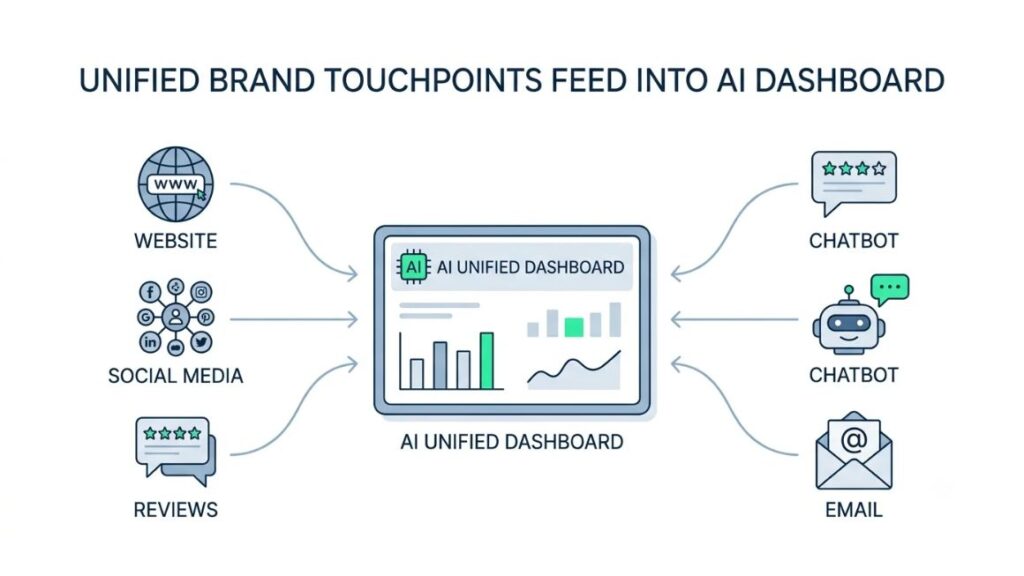
Your website says one thing, your Instagram another, and the email team has a voice of its own. That’s what weak brand identity management looks like day to day. AI tools can check drafts against your voice rules and flag drift, which protects brand consistency without a manager reading every post.
Improving Marketing Efficiency
Resizing banners, writing twelve subject-line variants, tagging last month’s creative. None of it needs your best strategist. AI marketing automation handles that kind of repeat work, though the hours it frees only matter if they go into strategy instead of more output.
Key Applications of AI in Brand Management
AI shows up in six parts of brand work: identity, content, customer behaviour, reputation, customer experience and measurement. Most teams start with content or monitoring because the payoff is easiest to see there, and that’s also where most AI-driven marketing budgets land first.
1. Building a Stronger Brand Identity
Identity work starts with listening. AI can map who your audience is, what rivals promise them and where the gaps sit, which gives positioning a factual starting point. It can also throw up visual directions and message variations to react to.
Reacting is the useful part. Someone with taste still has to choose.
2. Creating and Managing Brand Content
This is where generative AI for branding is most visible: first-draft copy, concept sketches, one asset adapted for five platforms. Unilever’s in-house design studio, Sketch Pro, uses a mix of large language models, Adobe Firefly and Google Veo 3, according to TechInformed’s 2025 report. In Jakarta, it produced Ramadan content for Rinso and Sunlight that pulled more than six million organic TikTok views.
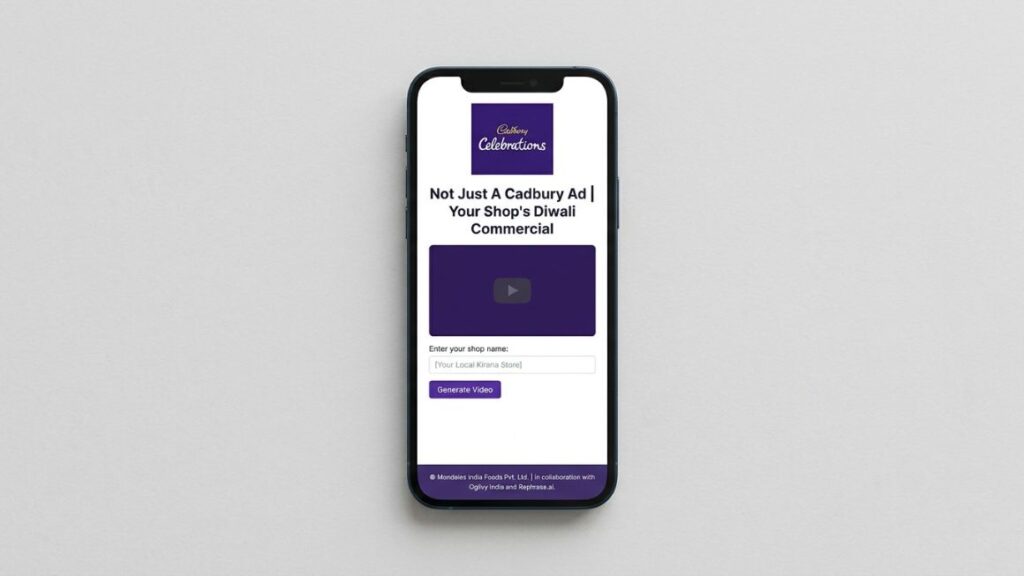
India has a strong example too. For Diwali 2021, Mondelez India and Ogilvy used Rephrase.ai’s technology to recreate Shah Rukh Khan’s face and voice naming local shops, then served each version by the viewer’s pincode. Diwali accounts for more than 45% of Cadbury Celebrations’ annual sales, per Wavemaker’s case study, so the stakes weren’t small.
The sensible setups feed approved guidelines into the tool first, so drafts start on brand instead of being fixed afterwards.
3. Understanding Customer Behaviour
Purchase histories, browsing paths and support chats all leave a trail. AI links them so you can see which customers behave alike and where journeys stall. You may find a segment nobody on the team had named.
Also Read: AI Agent for Customer Segmentation: Transform Customer Insights with Automation
4. Monitoring Brand Reputation
Most reputation damage starts small: a few angry posts, a pattern in reviews, a rumour. Brand reputation management used to mean someone checking in on Mondays. Modern brand monitoring tools scan reviews, social posts and news around the clock, flag negative spikes and group complaints by topic, so your team can respond in hours rather than days.
5. Improving Customer Experience
Chatbots answer the repeat questions at 2 am. Recommendation engines suggest the next product or show. AI-powered personalization adjusts emails and offers to what each person has actually done. The risk is obvious (you’ve met a bad chatbot), so keep an easy route to a human.
6. Measuring Brand Performance
Awareness, engagement, sentiment, campaign effect. These used to sit in four different reports. AI brand analytics pulls them into one view and points at what moved, though correlation still isn’t proof of cause. Treat the dashboard as a source of questions, not a verdict.
Teams apply AI in brand management most often to content creation, reputation monitoring, customer experience and performance measurement. The strongest results come from pairing automation with approved brand guidelines and human review, as Unilever’s Sketch Pro studio and Cadbury’s 2021 Diwali campaign show.
How AI Helps Businesses Build a Stronger Brand Strategy
AI shortens the research phase and makes audience and competitor evidence easier to see. You still decide what the brand stands for. AI brand strategy work simply means that decision starts from evidence instead of a hunch and a few old slides.
Market and Competitor Research
Give AI your rivals’ websites, ads and reviews and it can summarise how each one positions itself and where customers feel underserved. It won’t tell you which gap is worth chasing. That part is judgement.
Audience Segmentation and Targeting
Segments built on behaviour and shared interests tend to be more useful than age brackets. AI can propose them from your own customer data, and you write messages that fit each one. Check that the segments make sense to a human before you spend on them.
Data-Driven Brand Decisions
Customer insights, campaign results and shifts in preference feed straight into the next round of decisions. Here’s a hypothetical start-up in skincare. Its reviews keep praising how gentle the product feels, while its ads shout clinical strength. AI sorts three thousand comments into themes in an afternoon, the team sees the mismatch and moves the positioning towards gentleness, then watches whether reviews and sales respond. No promised outcome. Just a better question to test.
Best AI Tools for Brand Management in 2026
No tool fixes a weak brand. A lot of software claims to cover AI in brand management, so choose by the job, the stack you already run, your budget and how much training your team can absorb. Here’s where six popular options fit.
ChatGPT works as a general-purpose assistant for audience research, messaging drafts, brainstorming and talking through strategy. It’s only as good as your prompts and your fact-checking.
Canva covers visual content, brand templates and marketing designs, with AI features built into the workflow. Handy for small teams that need on-brand assets fast.
Adobe Firefly generates and edits images for creative exploration and asset development. Unilever’s Sketch Pro studio uses it.
Brandwatch, owned by Cision, is a social listening suite. Its Iris AI layer summarises conversations and spots trends across more than 100 million sources, according to its 2026 documentation, which is the kind of base you need for brand sentiment analysis.
HubSpot pairs a CRM with marketing workflows and customer communication, so brand messages and customer data sit in one system.
Frontify stores brand guidelines and assets, so people pull the approved logo and not the one from 2019.
Start with one tool tied to one problem. Add the next when the first has earned its place.
Also Read: Agentic Marketing Platforms: The Complete Guide to AI Agents That Plan, Execute & Optimize Marketing
Real-World Examples of AI Transforming Brand Management
Three global brands show three different sides of AI: creative experiments, personalisation and operations. None of them is a clean success story, which is partly why they’re worth studying.
Coca-Cola: AI and Creative Brand Experiences
Coca-Cola’s AI story started in 2023 with Create Real Magic, a platform built with OpenAI and Bain & Company that let fans make artwork from the brand’s archive. Its holiday ads followed. The 2025 “Refresh Your Holidays” campaign included AI-driven reimaginings of the 1995 “The Holidays Are Coming” spot, alongside a traditionally filmed spot, “A Holiday Memory.” Public reaction was mixed, according to Marketing-Interactive.
Coca-Cola didn’t drop the experiment. It did pair it with human-shot work. That looks like a sensible hedge.
Netflix: Understanding Audience Preferences
A 2015 paper by Netflix executives Carlos Gomez-Uribe and Neil Hunt reported that about 80% of hours streamed came from the homepage recommendation system, with the rest from search. They also estimated that personalisation and recommendations together save the company more than $1 billion a year by keeping subscribers from cancelling.
Those figures are more than a decade old, so read them as a snapshot, not today’s number. The idea has aged well, though. People don’t want a bigger catalogue. They want a shorter path to something they’ll enjoy, and Netflix’s 2017 engineering post on artwork personalisation shows it applies even to the image shown for the same title.
Unilever: AI Across Marketing and Brand Operations
Unilever says it runs more than 500 AI applications across the business. The best documented marketing one is digital product twins: 3D copies of its products used to generate imagery. At Nvidia’s GTC conference in March 2025, chief growth and marketing officer Esi Eggleston Bracey said imagery was being produced twice as fast and at half the cost. Unilever’s own newsroom later cited up to 55% savings and 65% faster turnaround on content creation, with Dove, TRESemmé, Vaseline and Clear among the brands using the approach.
Unilever also describes a brand-safe AI training repository it calls Brand DNAi. Guardrails like that matter more than the flashy twins. Keep in mind that these are the company’s own figures, not independent audits.

Benefits of Using AI in Brand Management
The main payoffs are time saved, sharper customer insight, more relevant messages, quicker market signals and room to grow. Each one depends on the quality of your data and on people checking the output.
Improved Efficiency and Productivity
Repeat tasks shrink. Unilever’s reported 65% faster content turnaround is the headline case, though your numbers will vary with how much of your content is repeatable.
Better Customer Understanding
Reviews, tickets and conversations become themes you can act on, instead of a folder nobody opens.
More Relevant Marketing Communication
Messages that reflect what someone actually did tend to land better than blasts. Tend to. Not always.
Faster Market Insights
You see a competitor’s move or a shift in sentiment in days, not at the next quarterly review.
Greater Scalability for Growing Businesses
A five-person team can cover channels and languages that used to need ten people. That works best when the guidelines are solid, because scaling a muddled brand just muddles it faster.
None of the benefits of AI in brand management arrive automatically. They need clean data, clear guidelines and a person reading what goes out.
Challenges and Risks Businesses Should Understand
AI in brand management carries five main risks: losing the human touch, data privacy, wrong information, off-brand output and eroding trust. All five are manageable, but only if somebody owns them.
Losing the Human Touch
Brands earn loyalty through feeling, humour and the occasional daring choice. A model trained on what already exists drifts toward the average. If your content starts sounding like everyone else’s, treat that as your warning sign.
Data Privacy and Security
Pasting customer data into a public chatbot is a quick way to create a compliance problem. Find out what each tool stores, who can see it and where it’s processed, and check the data protection rules in every market you sell to.
Inaccurate AI-Generated Information
Models state wrong things with total confidence. An invented statistic or a claim your product can’t back up is your problem, not the tool’s. Fact-check anything public-facing.
Brand Voice and Identity Problems
Let five people prompt five tools and you’ll get five brand voices. Written rules help. So does AI brand governance: a named owner, approved sources, a review step and a record of what the AI was allowed to do. Unilever’s Brand DNAi suggests large companies treat this as infrastructure.
Consumer Trust and Transparency
Gartner’s survey of 1,539 US consumers, fielded in October 2025, found that 50% would rather give their business to brands that avoid generative AI in consumer-facing content. And 68% said they frequently wonder whether what they see is real. Gartner’s advice is plain: say when AI is used, explain what it’s doing and let customers opt out.
Gartner’s March 2026 survey of 1,539 US consumers found that 50% prefer brands that avoid generative AI in consumer-facing content, and 68% frequently wonder whether what they see is real. Brands that use AI should say when and where, and give customers a way to opt out.
How to Implement AI in Your Brand Management Strategy?
Adding AI in brand management doesn’t need a big programme. Six steps, in this order, will do.
Step 1. Define Your Brand Goals
Pick one or two: awareness, engagement, reputation, marketing efficiency or customer experience. “Use AI” isn’t a goal. “Answer every review within a day” is.
Step 2. Understand Your Target Audience
Gather what you already own: customer research, reviews, support tickets and sales data. Work out what people expect from you before you ask AI to write anything.
Step 3. Choose the Right AI Tools
Match a tool to the problem from Step 1. One tool, one job. Resist signing up for everything that launched this month.
Step 4. Establish Brand Guidelines
Write down your voice, approved messages, visual identity and content standards. Then add AI usage rules: what may be generated, what must be human-made and what needs sign-off.
Step 5. Keep Human Oversight
A person reviews public-facing content, major creative decisions and anything sensitive before it goes out. No exceptions for “quick” posts.
Step 6. Measure and Improve
Track the goal from Step 1 against real customer response, then change whatever isn’t working. Review monthly at first.
Picture a hypothetical five-person handloom label selling through its own website and Instagram. Its goal is to answer every review within a day. The team gathers a year of reviews and messages, picks one listening tool and one drafting assistant, writes a one-page voice guide that bans invented claims, has a person approve every public reply, and checks each month whether response times and ratings move. It’s modest. That’s the point.
Also Read: Brand Management Strategy: The Discipline Behind Enduring Brands
Future Trends That Will Shape Brand Management
AI in brand management is heading toward four shifts: agentic AI, real-time personalisation, smarter brand intelligence and a bigger premium on authenticity.
Agentic AI and Autonomous Brand Workflows
Agentic AI means systems that decide and act, not just suggest. A paper published online in Global Business Review in January 2026 describes agentic AI in branding as autonomous systems capable of independent decision-making, learning and adaptation. The law firm Davis+Gilbert warned in April 2026 that regulators will likely treat AI decisions as the company’s own, and that brands need audit logs, record-keeping and escalation paths. So set permissions, decide what needs human approval and keep a trail.
Real-Time Customer Personalisation
Messages, offers and creative will shift with behaviour and context, which is exactly what that Global Business Review paper’s title promises. The line between helpful and creepy is thin. Consent and clear opt-outs matter more as the personalisation gets sharper.
AI-Powered Brand Intelligence
Monitoring is moving beyond counting mentions. Predictive analytics in marketing already forecasts which segments will respond and which topics are heating up. Harvard Business Review’s March 2026 issue carried an article by Oguz Acar and David Schweidel that adds a new job: tracking how AI assistants describe your brand, not only what people post about it.
Greater Focus on Brand Authenticity
When anyone can produce polished content in minutes, originality becomes the differentiator. A human voice, a point of view and honesty about AI use will count for more. Gartner’s numbers suggest customers are already paying attention.
Conclusion
AI in brand management works best as a very fast assistant with no sense of taste. It can read more, draft quicker, watch more channels and measure more than your team ever could. It can’t decide what your brand stands for, or notice when a joke lands badly.
Brands that pair its speed with clear values and a real grasp of their customers will have the edge, and Gartner’s numbers say honesty about AI use will matter too. Start small: one problem, one tool, one person accountable.
If you’d like structured, hands-on practice with AI tools, the YUP AI Marketing course at Young Urban Project is a good place to start. You’ll work on real marketing problems instead of just reading about them, which is how most of this actually sticks.
Frequently Asked Questions (FAQs)
What is AI in brand management?
AI in brand management means using artificial intelligence to support brand strategy, customer research, content development, reputation tracking and decisions. Machine learning finds patterns in customer data, generative AI drafts content, and automation handles repetitive tasks. People still set the direction and approve anything that goes public.
How does AI help in brand management?
It helps you understand customers faster, tailor communication, track how the brand is performing and cut repetitive marketing work. Reviews and comments become themes, drafts get adapted for each channel, and dashboards show what’s moving. The time saved should go into strategy and creative decisions.
Can AI create a complete brand identity?
Not on its own. AI can suggest names, visual directions, taglines and messaging to react to, which speeds up exploration. But a brand identity rests on strategic choices about who you serve and what you stand for, and those need human direction. Treat AI output as a starting sketch.
What are the best AI tools for brand management?
It depends on the job. ChatGPT suits research and drafting, Canva handles on-brand design, Adobe Firefly generates images, Brandwatch tracks online conversations, HubSpot connects customer data to marketing workflows, and Frontify keeps guidelines and assets in one place. Choose based on your problem, budget and existing tools.
How can small businesses use AI for branding?
Start cheap and narrow. Use a free or low-cost assistant to research competitors and summarise customer reviews, a design tool for content, and basic alerts to catch mentions of your name. Write a one-page voice guide first so outputs stay on brand, and review everything before publishing.
Will AI replace brand managers?
Unlikely. AI can take over repetitive work like reporting, tagging and first drafts, but strategic judgement, leadership, creative taste and relationships with teams, agencies and customers stay human. Brand managers who learn to direct AI well will probably do better than those who ignore it.
What are the biggest risks of using AI for branding?
Customer data privacy, inaccurate or invented content, inconsistent messaging, unclear intellectual property ownership of AI-generated assets, and falling customer trust if AI use isn’t disclosed. Most of these shrink with approved sources, written usage rules, human review and honest disclosure about when AI is involved.
What is the future of AI in brand management?
Expect more agentic AI that works within set permissions, real-time personalisation, predictive brand intelligence, and tighter scrutiny of transparency and accountability. The brands that win will probably pair automation with clear guardrails, human review and a voice customers recognise as human.