

Imagine running an online store where hundreds of people visit every day. Some browse, some add items to their carts, a few buy. Plenty vanish after a single page. What separates the buyer from the browser?
That’s the question sitting behind every one of the AI customer data analysis tools in this guide. The answer usually exists already. It’s just scattered across your website analytics, your CRM, your ad accounts and your support inbox, and nobody has pulled it together.
AI helps with that, and with the slow part that comes after: spotting patterns, predicting what customers will do next and turning it into something your team can act on this week. Below you’ll find 15 tools worth shortlisting, what each does well and where it falls short, plus how to choose one, how to start and which mistakes burn budgets.
Table of Contents
What Are AI Customer Data Analysis Tools?
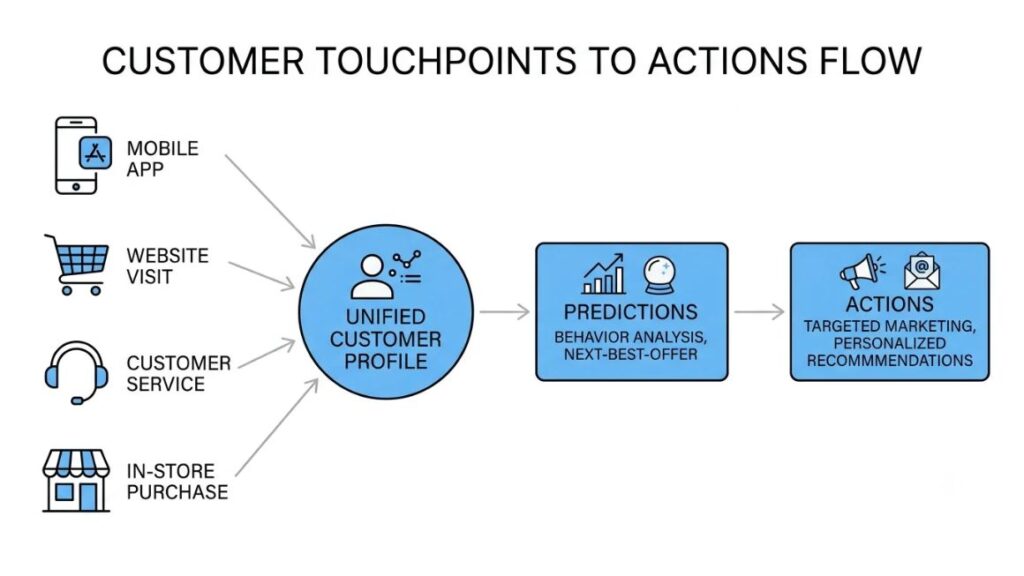
AI customer data analysis tools are software that collects customer data from several sources, uses machine learning to find patterns in it, and turns those patterns into predictions or recommendations. In practice, that means answers to questions like who’s likely to buy, who’s about to leave and why.
Think of it as an analyst who reads every click, ticket and review without getting tired. Some tools are narrow and read only survey comments. Others sit across your whole stack. A customer data platform, or CDP, is software that merges records from every source into one profile per person. Vendors sell the rest under other labels, such as AI customer analytics software, BI dashboards and feedback tools, and the categories overlap more than the brochures admit.
How Do These Tools Work?
Most follow the same five steps, and the result is what vendors call AI-powered customer insights: findings you can act on, not raw tables.
- Collect data from touchpoints such as your site, app, CRM and support desk.
- Combine records so one person isn’t three separate rows.
- Find patterns, like what people do before they buy or cancel.
- Predict what’s likely next using machine learning.
- Recommend an action, such as a segment to target or a customer to call.
What Types of Customer Data Can They Analyse?
Almost anything with a customer attached:
- Purchase history
- Website and app activity
- Customer feedback
- Email engagement
- Social media interactions
- Customer support conversations
- Demographic and transactional information
Together, these feed customer behavior analysis, which means studying what people actually do rather than only what they say in surveys.
Also Read: Best Customer Funnel Analysis Tools to Track and Optimize Conversions in 2026
15 Best AI Customer Data Analysis Tools in 2026
No single one of these AI customer data analysis tools is the best for every business. The right choice depends on your data volume, the software you already run, your budget and the kind of insight you need most.
Treat the 15 below as a shortlist. Features change fast, and a few of these products changed names or owners recently, so confirm anything that matters on the vendor’s official page.
1. Google Analytics 4
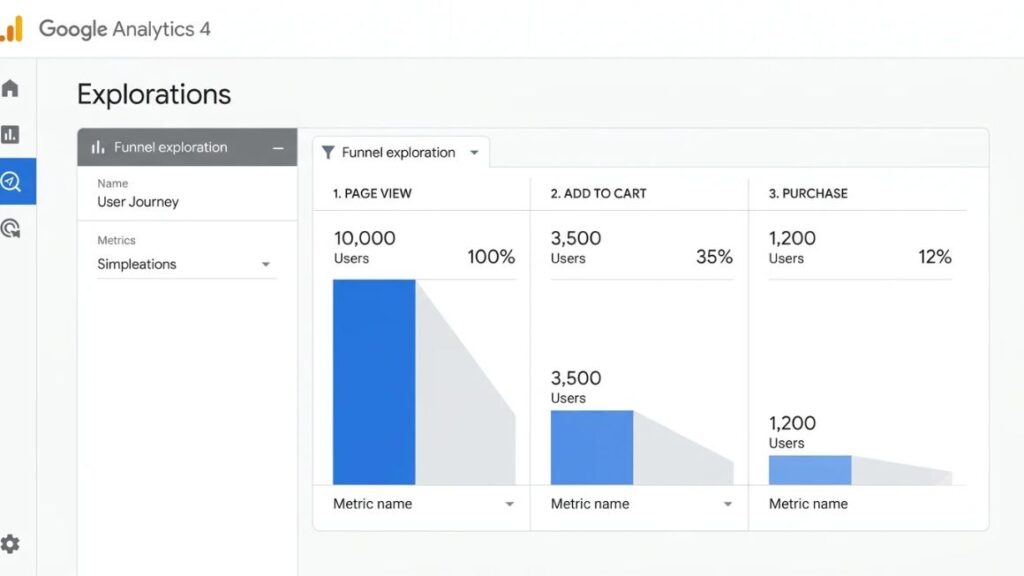
Google Analytics 4 (GA4) tracks website and app behaviour through events, so every click, scroll and purchase counts as a data point. Its predictive metrics, such as purchase probability and churn probability, only appear when your property meets Google’s eligibility rules, mainly enough purchasers and returning users.
Best for: Businesses analysing website and app behaviour.
Limitation: It’s not a full CDP, so it won’t hold your CRM or support records.
2. Salesforce Data 360 (formerly Data Cloud)
Salesforce renamed Data Cloud to Data 360 at Dreamforce in October 2025, and it now sits under the Agentforce 360 umbrella. It builds unified customer profiles, resolves identities across sources and feeds segments and AI predictions back into Salesforce products.
Best for: Businesses already running Salesforce.
Limitation: Implementation and licensing can get complicated.
3. Adobe Real-Time CDP
Adobe’s Real-Time CDP keeps live customer profiles and builds audiences you can push to other channels for personalisation. Adobe is adding AI agents, including an Audience Agent that flags audience-size changes.
Best for: Large organisations with complicated customer journeys.
Limitation: It needs budget, skills and careful technical planning.
4. Twilio Segment
Segment collects customer events, routes them to your other tools and, through Unify, resolves identities into single profiles. Its predictions feature covers customer lifetime value prediction, churn and purchase likelihood for events you track.
Best for: Teams with many data sources and marketing systems.
Limitation: Advanced setups usually need developer help, and audiences and predictions require its paid Engage tier or add-on.
5. Amplitude
Amplitude handles product analytics: journeys, funnels, retention and cohorts. It’s a strong pick for customer journey analytics inside a product. Its Global Agent, launched in February 2026, answers questions in natural language and runs root-cause analysis.
Best for: SaaS businesses and product teams.
Limitation: It focuses on product behaviour, not complete customer data management.
6. Mixpanel
Mixpanel is event-based, built around funnels, retention, flows and breakdowns of how people use an app. Its natural-language assistant, originally called Spark, is now the Mixpanel Agent, so non-analysts can ask questions in plain English.
Best for: Digital products and mobile applications.
Limitation: Results depend on clean, consistent event tracking.
7. Microsoft Power BI
Power BI builds interactive dashboards from many data sources, with Copilot for natural-language questions and report building. For companies already on Microsoft 365, it’s a common first step into AI-driven business intelligence.
Best for: Businesses already using Microsoft technologies.
Limitation: It needs proper data modelling, or the dashboards mislead.
8. Tableau
Tableau built its name on visualisation. At Tableau Conference in May 2026, Salesforce showed its Agentic Analytics Platform, and conversational analytics, where people ask questions without writing SQL, was listed as available now.
Best for: Data-driven teams and enterprises.
Limitation: Advanced analysis often needs specialist knowledge.
9. Qualtrics XM
Qualtrics measures customer experience through surveys, feedback and sentiment trends. In March 2026 it added automated text analytics and Experience Agents, which were still in preview at launch.
Best for: Organisations focused on customer experience.
Limitation: It’s not primarily a website behaviour analytics platform.
10. Zendesk
Zendesk reports on support operations through Explore, with AI agents and Copilot alongside. It bought HyperArc, an AI analytics firm, to add generative AI insights on top of Explore.
Best for: Customer service teams.
Limitation: It’s less suited as a standalone platform for analysing every touchpoint.
11. Heap
Heap captures clicks, taps and page views automatically, so you can analyse behaviour you never planned to track. It’s been part of Contentsquare since the acquisition closed in December 2023, and it’s sold both on its own and inside the Contentsquare suite.
Best for: Product and growth teams.
Limitation: Autocapture doesn’t replace good event definitions and data governance.
12. Pendo
Pendo connects product usage analytics to in-app guides and user feedback. You can segment users and message them inside the product.
Best for: SaaS businesses.
Limitation: It specialises in digital product experiences.
13. Domo
Domo pulls data from many systems into one place, then runs dashboards, automated reports and AI-assisted insights on top.
Best for: Businesses managing data across several departments.
Limitation: Cost and complexity both need checking early.
14. Chattermill
Chattermill reads customer feedback from reviews, surveys and support tickets, then groups themes and tags sentiment. It handles customer sentiment analysis at a volume no human team could tag by hand.
Best for: Businesses with large volumes of customer feedback.
Limitation: It’s qualitative by design, so it won’t show click behaviour.
15. Thematic
Thematic automatically sorts open-ended feedback from surveys and reviews into recurring themes and tracks sentiment over time.
Best for: Businesses wanting to know what customers are saying.
Limitation: It’s a feedback specialist, not a replacement for a full analytics stack.
The best AI customer data analysis tool depends on the job. GA4 suits web and app behaviour, Mixpanel and Amplitude suit product analytics, Salesforce Data 360, Adobe Real-Time CDP and Twilio Segment suit customer data management, and Qualtrics, Chattermill and Thematic suit feedback.
Comparison of the Best Tools at a Glance
Here are the 15 AI customer data analysis tools side by side, so you can narrow the list fast.
| Tool | Best suited for | Main strength | Business size |
| Google Analytics 4 | Website analytics | Traffic and behaviour insights | Small to large |
| Salesforce Data 360 | Customer data management | Unified customer profiles | Medium to enterprise |
| Adobe Real-Time CDP | Personalisation | Real-time audience activation | Enterprise |
| Twilio Segment | Data integration | Customer data collection | Small to enterprise |
| Amplitude | Product analytics | User behaviour and retention | Small to large |
| Mixpanel | Product analytics | Funnels and event tracking | Small to large |
| Power BI | Business intelligence | Reporting and visualisation | Small to enterprise |
| Tableau | Advanced analytics | Data visualisation | Medium to enterprise |
| Qualtrics XM | Customer experience | Feedback and experience insights | Medium to enterprise |
| Zendesk | Customer support | Support analytics | Small to enterprise |
| Heap | Digital analytics | Automatic event capture | Small to medium |
| Pendo | Product experience | Product usage insights | Small to large |
| Domo | Business intelligence | Data integration and dashboards | Medium to enterprise |
| Chattermill | Customer feedback | Feedback intelligence | Medium to enterprise |
| Thematic | Feedback analysis | Identifying customer themes | Small to enterprise |
These are our editorial fit categories, not official vendor rankings. Pricing and plan limits change often, so check each vendor’s own page before you buy.
Key Benefits of Using AI for Customer Data Analysis
The biggest benefit of AI customer data analysis tools is better decisions, made faster. They spot patterns across thousands of customers that no person scrolling through spreadsheets would catch, then point at what to do about them.
Understand What Your Customers Actually Want
Reviews, search terms and repeat purchases reveal preferences nobody mentions in a survey. When the same complaint shows up across dozens of tickets, you’ve found a product or messaging gap.
Make Better Marketing Decisions
Customer segmentation tools group people by what they do rather than how old they are, so your budget follows the groups that convert.
Improve Customer Retention
Customer retention analytics watches for quiet warning signs: fewer logins, longer gaps between orders, more support contacts. Customer churn prediction turns those signs into a list of at-risk accounts your team can contact before the cancellation arrives.
Save Time on Manual Reporting
Automated dashboards and weekly summaries replace the Monday-morning spreadsheet ritual. Your analyst spends less time building reports and more time arguing about what they mean. That’s the useful part.
Deliver More Relevant Customer Experiences
Recommendations and offers that match what someone did last week feel helpful. The same message sent to everyone feels like noise. Qualtrics estimates close to $3 trillion in sales is at risk from poor customer experiences, per its September 2026 platform announcement.
Here’s a hypothetical example. An online store notices that a group of shoppers views the same running shoe four or five times in two weeks and never buys. A size-guide email or a small price-drop nudge, sent only to that group, costs little and is easy to test.
How Businesses Use AI to Analyse Customer Data
Uses for AI customer data analysis tools differ by industry, but the pattern doesn’t: connect the data, find the leak, fix it, measure again.
Ecommerce and Online Retail
Shopping behaviour is the obvious starting point. AI flags abandoned carts, products that are often bought together and the browsing patterns that come before a purchase, then feeds better recommendations back into the site and your emails.
SaaS and Technology Businesses
Here the question is adoption. Which features do paying users touch, who’s gone quiet, who’s close to a plan limit? Tools like Amplitude and Mixpanel answer those, and the answers point to upgrade prompts and rescue campaigns.
Digital Marketing Agencies
Agencies juggle many clients’ data. Good marketing analytics tools compare campaign performance, expose high-performing segments and show which audiences deserve more budget.
Customer Support Teams
Support data is full of signal. Teams analyse complaints, spot recurring problems, measure satisfaction and tighten response processes. TruGreen, a US lawn-care company, uses Qualtrics Experience Agents in post-service surveys, and Qualtrics reports a 30% drop in escalations. That’s a vendor-reported result, so treat it as a data point, not a promise.
How to Choose the Right Tool for Your Business?
Choosing among AI customer data analysis tools starts with the problem, then integrations, AI features, pricing and privacy, in that order. If a tool can’t connect to your CRM and ad accounts, its clever features won’t matter.
Understand Your Business Requirements
Write down the one question you need answered. “Why do carts get abandoned?” points to different software than “Why do subscribers cancel?”
Check Data Integration Capabilities
A customer data analytics platform is only as useful as its connectors. Check that it talks to your CRM, website, ad platforms, ecommerce store and support desk, and ask how often the data refreshes.
Evaluate AI Features
Look for predictive modelling, automated reporting, natural-language queries, pattern recognition and sentiment detection. Predictive customer analytics is the one people overpay for, so ask what data a prediction needs before it works.
Consider Pricing and Scalability
Free plans, like standard GA4 or Power BI Desktop, suit early-stage work. Usage-based pricing, such as Salesforce’s consumption model for Data 360, rewards light use and punishes surprises. Per-seat subscriptions are predictable. Enterprise contracts are negotiable and slow.
Check Data Privacy and Security
Ask every vendor about:
- Customer consent handling
- Who can access which data
- Encryption
- Data retention controls
- Regulatory fit, including GDPR if you serve EU residents
India adds its own layer. The Digital Personal Data Protection Act, 2023 now has rules, notified in November 2025, and the core duties on notices, security safeguards and breach reporting are scheduled to apply from May 2027, with consent-manager rules from November 2026. MeitY has floated shortening that window, so check the current position before you sign anything.
Choosing customer analytics software starts with the problem, not the product. Check integrations, then AI features, pricing and privacy. India’s DPDP Rules, notified in November 2025, phase in main obligations through May 2027.
How to Get Started With AI-Powered Customer Analysis?
With AI customer data analysis tools, start small: one goal, a few data sources, one tool, one test. Most beginners stumble by analysing everything at once.
Step 1: Define One Clear Business Goal
Pick something measurable, like reducing abandoned carts or improving repeat purchases. One goal.
Step 2: Collect Relevant Customer Information
List only the data sources that touch that goal. For abandoned carts, that’s site events, order data and email engagement.
Step 3: Select a Suitable Analytics Platform
Match the tool to your goal, budget and technical resources. A small team shouldn’t buy an enterprise CDP to answer a funnel question.
Step 4: Analyse Patterns and Customer Behaviour
Look for trends that actually move your goal. Not every data point deserves attention.
Step 5: Turn Insights Into Action
Change something real: a campaign, an onboarding email, a checkout step.
Step 6: Measure the Results
Track conversion rate, repeat purchase rate, customer retention, customer acquisition cost and revenue per customer.
Say an online clothing store finds that customers who view one category several times are likelier to buy after seeing relevant recommendations. It can test that with a personalised campaign and compare conversion rates against a control group that gets the usual emails.
Common Mistakes to Avoid When Analysing Customer Data
Most failures with AI customer data analysis tools aren’t technical. They’re habits.
Collecting Too Much Irrelevant Data
More data doesn’t mean better insight. It means more noise, more storage cost and more privacy exposure.
Depending Entirely on AI Recommendations
A prediction is a hypothesis. Have a person check it against context before budget moves, because models can be confidently wrong.
Ignoring Data Quality
Duplicate records, incomplete information and inconsistent tracking quietly poison results. Fix the plumbing before you trust the dashboard.
Choosing Expensive Software Without a Clear Goal
Impressive demos sell software. Your requirements should.
Ignoring Customer Privacy
Be upfront about what you collect and why, and get permission where the law requires it. Customers notice. Regulators do too.
Latest Trends Shaping Customer Data Analysis in 2026
Across AI customer data analysis tools, vendors have shipped some of this and merely predicted the rest. Here’s which is which.
AI Agents and Real-Time Customer Insights
Confirmed: Salesforce put Data 360 under Agentforce 360 in October 2025, and Adobe offers an Audience Agent that manages audiences and flags changes. Real-time customer analytics feeds agents like these. How autonomous they’ll become is still a prediction.
Predictive Rather Than Reactive Analysis
Twilio Segment already ships predictions for purchase, churn and lifetime value. Twilio’s 2024 State of Personalization Report adds a forecast: 86% of business leaders expect a major shift from reactive to predictive personalisation. Forecast, not fact.
Natural-Language Data Analysis
This one’s real and shipping. Tableau offers conversational analytics, Mixpanel’s Spark became the Mixpanel Agent, and Amplitude launched its Global Agent in February 2026. You can ask questions in everyday language, though you should still check what query actually ran.
Unified Customer Profiles
Identity resolution, the matching of one person across devices and systems, now sits at the centre of Salesforce Data 360, Adobe Real-Time CDP and Twilio’s Unify. Profiles are the unglamorous part that makes every other feature work.
Responsible AI and Data Governance
Expect more scrutiny of privacy, transparency, accuracy and human oversight. Qualtrics kept its Experience Agents in preview at launch while customers tested governance for automated actions.
Conclusion
Match the tool to the job, not the hype:
- Google Analytics 4 for website and app insights
- Mixpanel or Amplitude for product behaviour
- Salesforce Data 360 or Adobe Real-Time CDP for enterprise customer data management
- Twilio Segment for connecting multiple data sources
- Qualtrics or Chattermill for customer feedback insights
- Power BI or Tableau for business reporting
The best software isn’t the one with the most AI features. It’s the one that helps you understand your customers and make better decisions.
Knowing which tool to buy is half the job. The other half is knowing what to ask your data once it’s connected. That’s the skill YUP’s Analytics course is built around, so if you want to build it properly, start there.
Frequently Asked Questions
What are AI customer data analysis tools?
They’re software platforms that gather customer data from sources like your website, CRM and support desk, then use machine learning to find patterns, predict behaviour and recommend actions.
Which AI tool is best for analysing customer data?
It depends on the job. GA4 suits website behaviour, Mixpanel and Amplitude suit product usage, Salesforce Data 360 and Adobe Real-Time CDP suit large customer data programmes, and Qualtrics or Chattermill suit feedback.
Can small businesses use AI to analyse customer data?
Yes. Start with free or low-cost options such as GA4 and Power BI Desktop, which cover traffic, behaviour and reporting. Enterprise platforms like Adobe Real-Time CDP can wait until your data is complicated and you have a team to run them.
How does AI help businesses understand customer behaviour?
It recognises patterns across large datasets, groups customers into segments, predicts likely actions such as buying or cancelling, and automates analysis you’d otherwise do by hand. You move from “what happened” to “what’s likely next”.
Are AI customer analytics tools expensive?
Costs run from free tiers to enterprise contracts. Standard GA4 is free, Salesforce describes Data 360 pricing as consumption-based, and enterprise tools are usually quoted individually. Check each vendor’s pricing page, because plans change often.
Is customer data analysis possible without technical knowledge?
Often, yes. Dashboards, visual reports and natural-language assistants like the Mixpanel Agent or Tableau’s conversational analytics let non-technical people ask questions in plain English. Complex setups, like identity resolution, still usually need technical help.
Is customer data safe when using AI analytics software?
It can be, if you choose carefully. Look for encryption, access controls, clear retention settings and consent handling, and make sure your use follows rules such as GDPR and India’s DPDP Act.
What is the difference between a CRM and a customer analytics tool?
A CRM manages customer relationships and interactions: contacts, deals, tickets. An analytics tool studies data to find patterns and insights. Some platforms combine both, which is why the line keeps blurring.