

Two businesses sell almost the same thing at almost the same price. Customers remember one of them, trust it, and come back without comparing. The other keeps discounting just to stay visible.
Advertising rarely explains that gap. What does is everything customers associate with a business, how steadily it delivers, and whether the promise it made matches what actually turned up at their door. Brand management fundamentals are the habits that build and protect those associations, whether you run a five-person shop or a national company.
This guide covers identity, positioning, customer experience, trust and measurement. You’ll finish with a practical framework and a few templates you can use this week. Nothing here guarantees fast growth or instant recognition, because brands don’t work that way. They get built slowly, through small decisions made again and again.
Table of Contents
What Is Brand Management and Why Does It Matter?
Understanding the meaning of brand management
Brand management is the ongoing work of shaping, delivering, monitoring and improving how people perceive a business, product or service.
Look at the word “ongoing”. It covers what you say about yourself and what customers actually go through when they deal with you. A lovely campaign followed by a rude delivery call is still your brand. So is the email that never got answered. Brand management fundamentals start from that slightly uncomfortable fact. Customers judge the whole picture, not just the part you designed.
Branding versus brand management
People use the two terms as if they mean the same thing. They don’t. Branding establishes how a business wants to be recognised: the name, the look, the voice, the promise. Brand management keeps that identity and promise relevant and believable as time passes.
Picture a coffee shop whose branding says quality and warmth. Wooden counter, handwritten menu, a friendly name on every cup. Then the service turns out to be uneven. One morning the barista greets you like a regular, a week later your order takes twenty minutes and nobody looks up. The branding hasn’t changed at all. The experience has quietly contradicted it.
Closing that gap is brand management work. A new logo won’t do it.
The business benefits of managing a brand effectively
Getting brand management fundamentals right pays off in a handful of ways. People recognise you faster. You stand apart from similar options. Customers feel more confident choosing you. A solid reputation can support pricing power. That means you aren’t forced to discount every time a competitor does. Add a few years and these gains build into brand equity, the commercial value a name carries beyond the product itself. They also feed customer brand loyalty, which is where repeat business comes from.
Now, the caution. Strong branding can support business performance. But it can’t make up for a poor product or weak service. Anyone who tells you otherwise is selling something.
Brand management is the ongoing process of shaping, delivering, monitoring and improving how people perceive a business, product or service. It covers both what a company communicates and what customers actually experience. Branding sets the intended identity, while brand management keeps that identity credible over time.
The Core Principles Behind a Strong Brand
You don’t need a marketing degree for this part. Brand management fundamentals boil down to five ideas. Each one maps to a question you can answer about your own business.
Know your audience and their needs
Start with the people who pay you. Not a persona on a slide. Actual customers: what pushed them to buy, what worried them, what they expected, and what they were choosing between at the moment they chose you. Those moments matter most, because that’s where one business beats another.
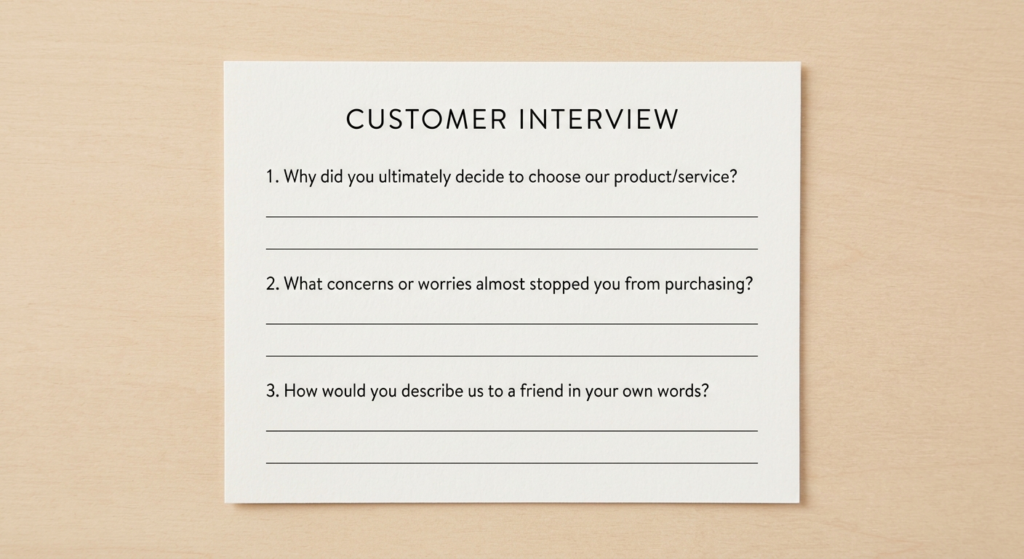
Try this. Interview five existing customers and ask why they picked you, what almost stopped them, and how they’d describe you to a friend. The last answer tends to be the most useful. The words they use are the words your messaging should borrow, and they’re often nothing like the ones on your website.
Establish a clear identity and personality
A business expresses itself through its name, its look, its tone of voice, its messaging and, less obviously, its behaviour. How quickly you answer a complaint is part of your personality too. Put together, these make up your brand identity.
Here’s the catch. That’s the intended version. What customers come away believing is the perception, and it forms from what they see and experience, not from what you meant. The two rarely match perfectly. Ask a few customers to describe you in three words, then compare their three with yours. The distance between the lists tells you plenty.
Decide what makes the business different
If a customer can’t say why they’d choose you over the alternative, they’ll choose on price or habit. Differentiation means giving them a reason, and the reason has to be a benefit they care about, not a feature you’re proud of. “Handmade” means little. “Ready in ten minutes, never rushed” might mean a lot to someone on a commute.
Brand positioning is the place you want to hold in a customer’s mind compared with other options. This template helps you pin it down:
For [target audience], [brand] is the [category or solution] that provides [distinctive benefit], because [reason to believe].
The last clause does the heavy lifting. Without a reason to believe, a positioning statement is just a wish.
Deliver a consistent experience
Your website, ads, social posts, packaging, sales conversations and support replies should feel like parts of one business. When they don’t, people get uneasy without quite knowing why.
Brand consistency doesn’t mean identical creative everywhere, though. A LinkedIn post and an Instagram story can look and sound different. What has to stay put is the promise and the feel of dealing with you. Think of a person rather than a template: same character, different outfits depending on the occasion.
Build trust through actions
Trust is the part you can’t fake for long. NielsenIQ’s Consumer Outlook: Guide to 2026, published on 29 September 2025 and based on feedback from nearly 19,000 consumers in 27 countries, reports that 95% of consumers say trust is critical when choosing a brand. Keep the context in mind. That’s what people say matters to them, not a record of what they bought. It still matches how most of us feel as customers.
Trust gets built in dull ways. Product quality that holds up. Delivery dates that are met. Prices explained before checkout, not after. Claims you can back up. Brand reputation management, in practice, is mostly this: doing what you said you’d do, and owning it quickly when you didn’t. It’s the least glamorous of the brand management fundamentals and probably the one that matters most.
A strong brand rests on five things: knowing who you serve, expressing a clear identity, standing for something distinctive, delivering the same promise at every touchpoint, and earning trust through actions. In NielsenIQ’s Consumer Outlook: Guide to 2026, 95% of consumers said trust is critical when choosing a brand.
How to Build and Manage a Brand Step by Step?
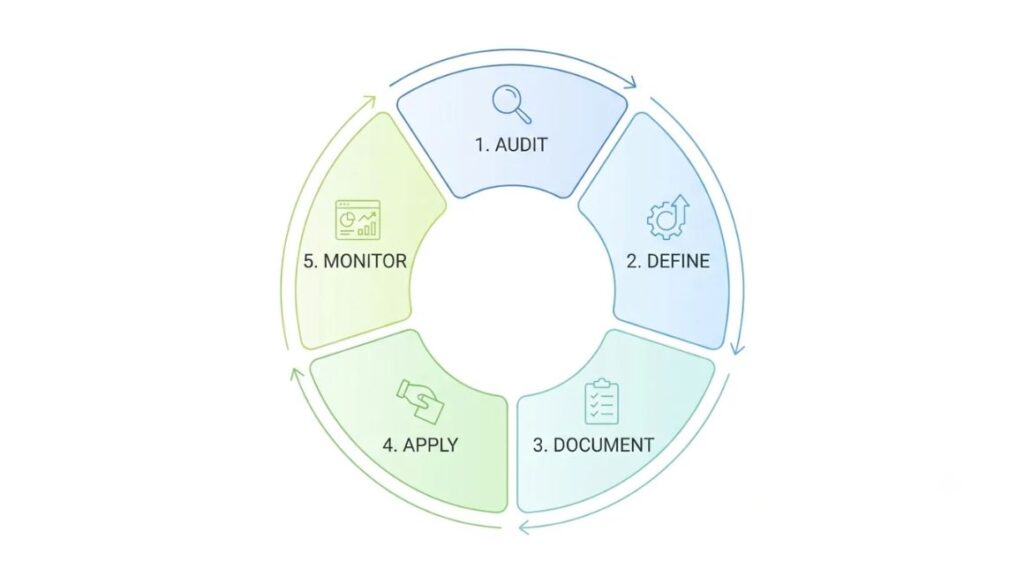
Five steps, and you’ll loop back through them more than once. That’s normal. The brand management process isn’t a project with an end date. It’s a cycle you keep running, and here’s how it breaks down.
Step 1: Audit the current brand
Before changing anything, find out what you’ve got. Brand management fundamentals always begin with an honest look at what’s already out there. So go through customer feedback, your website copy, social profiles, existing creative files, competitor activity and what people say about you in reviews. Then build a simple inventory with three columns: what’s working, what’s inconsistent, what needs attention.
You’ll probably find small embarrassments. An old tagline on a forgotten page, two slightly different shades of your colour, a support template that sounds like someone else wrote it. Write them all down. They’re your easy wins.
Step 2: Define the purpose, audience, and promise
Now get specific about who you serve, which problem you solve, and what a customer can reliably expect from you. “The best quality” and “customer-first service” mean nothing, because every competitor says them too. “Delivered in two days or shipping is free” means something. So does “every plan reviewed by a real accountant”.
Write the promise in a sentence a new hire could repeat without checking notes. If they can’t, it’s too vague or too long. A good brand management strategy fits on a single page long before it grows into anything bigger.
Step 3: Create clear messaging and visual standards
Take what you’ve decided and write it down: the core message, the words you prefer and the ones you avoid, colour and type rules, logo usage, plus a few examples of good and bad communication. That document is your set of brand guidelines. A practical version runs to a few pages, not a hundred.
Why bother? Because without it, every new designer, freelancer or sales rep guesses, and guesses drift. A shared document lets a team of ten, or an agency you’ve never met, produce work that sounds like you.
Step 4: Apply the strategy across customer touchpoints
Next, push the decisions out to where customers meet you: the website, organic content, paid campaigns, email, customer support, packaging and any offline contact such as a shop floor or an event stall. Treat these as one system rather than separate teams’ projects. A quick test helps. Pick one customer, follow them from first ad to first support reply and note every place the tone, promise or look changes. Each gap is a fix for next month. Brand management fundamentals only count once they reach the places customers actually touch.
The hard rule is that your experience has to back up what your marketing claims. Promise fast support and then leave tickets sitting for three days, and the ad turns into evidence against you.
Step 5: Monitor feedback and improve over time
Set a recurring review. Look at customer sentiment, campaign performance, reviews and any change in what customers need. Monthly suits fast-moving businesses, quarterly suits most others.
And resist redesigns driven by boredom. A brand should evolve when evidence supports it, not every time a new trend shows up on your feed. Plenty of businesses change their look at the first wobble in sales, when the real cause was pricing or a stock problem.

Real-World Examples and Best Practices
Brand management fundamentals look tidier on paper than in real life. Two examples are enough to show the difference, and a long list of famous logos wouldn’t teach you more.
Apple: A recognizable and coherent experience
Apple’s products, stores, packaging and communications share a recognisable restraint: clean surfaces, plenty of white space, little clutter. A 2015 MacRumors report, citing an internal memo, said Apple was steering third-party accessory makers selling in its stores toward mostly white packaging with simpler fonts, new photography, higher-quality materials and consistent compatibility labels. That’s a company managing even the parts it doesn’t make.
Coherent doesn’t mean frozen, though. ArchDaily notes that since the first Apple Store opened in 2001, Apple has changed its store and lighting design concept five times. The feel stayed recognisable while the execution moved on.
None of this proves that design alone drives Apple’s results, and claiming so would be silly. What it shows is a company treating the whole experience as one thing.
Nike: Connecting products with a broader idea
Nike links its sports products to a bigger idea: athletic ambition, performance and personal achievement. Its mission centres on bringing inspiration and innovation to athletes everywhere, and an asterisk on the word “athlete” carries the line “If you have a body, you are an athlete.” The “Just Do It” slogan dates from 1988, and according to Nike’s newsroom the company reintroduced it in September 2025 through its “Why Do It?” campaign.
The useful part is what one clear central idea does. It narrows creative decisions. When a brand knows what it stands for, a hundred possible campaigns shrink to the few that fit, and stories across different sports and markets still sound like Nike.
Lessons smaller businesses can apply
India has its own proof. Amul’s topical ads have run since 1966, and Business Standard reported in 2016 that the campaign had produced more than 4,000 creatives in fifty years while the format barely changed: a topical headline, the Amul girl, the brand name.
So what travels down to a small business?
- Choose one clear promise.
- Repeat a message people can recognise.
- Make the actual product or service prove it.
- Write standards that every employee or outside agency can follow.
The goal isn’t to copy large brands. The principles just scale. A three-person bakery can pick one promise and repeat it as steadily as a multinational can.
How to Measure Brand Performance and Long-Term Progress?
Measure on four levels: exposure, perception, customer behaviour and commercial outcomes. Even brand management fundamentals need a scoreboard, but no single number on it proves a brand is strong.
Track the right indicators
Brand awareness figures, for instance, tell you whether people know you exist. They don’t tell you whether people like you. That’s why brand performance metrics work best as a set, read together.
| What to measure | Example indicators |
| Recognition | Aided and unaided awareness |
| Perception | Brand associations and customer surveys |
| Reputation | Review sentiment and recurring complaints |
| Loyalty | Repeat purchases and retention |
| Commercial impact | Conversion rate, revenue, and customer acquisition cost |
Be careful with the bottom row. Sales or conversion can move because of pricing, distribution, seasonality or product quality, none of which is branding.
Build a simple reporting routine
Set a baseline first. Then review the same handful of metrics monthly or quarterly, and tie what you find to business objectives. Likes and impressions are the classic vanity numbers: easy to collect, hard to connect to anything.
Gartner’s research backs the point. Its survey of 426 senior marketing leaders, run from September to October 2025 and announced in June 2026, found that 84% of companies are stuck in what Gartner calls a “brand doom loop”: weak measurement, low confidence in the results, and then even less funding. Gartner analyst Julie Reeves says marketers “need to move beyond tracking brand metrics in isolation” and show how brand connects to revenue and customer experience. Gartner’s release adds that companies with a strong brand strategy were twice as likely to exceed growth goals. It’s a survey of marketing leaders and shows a link, not proof of cause.
No single indicator proves brand strength, so measure recognition, perception, reputation, loyalty and commercial impact together. Gartner’s 2025 survey of 426 senior marketing leaders, announced in June 2026, found that 84% of companies are stuck in a “brand doom loop” of underinvested measurement and falling confidence. Set a baseline, review a consistent set of metrics monthly or quarterly, and connect them to business goals.
Modern Trends Changing the Way Brands Are Managed
Treat these as things worth watching, not laws of nature. A neighbourhood plumber and a fintech app won’t feel them equally, and none of them replaces the brand management fundamentals above.
Generative AI and changing discovery habits
People now ask AI tools to compare products and shortlist brands, so information about you is being summarised somewhere you don’t control. A Skyword survey (fieldwork by Dynata in April 2026, 1,000 US adults, published June 2026) found that when AI-generated information conflicts with a brand’s own messaging, only 29% of consumers trust the brand, and 54% look for outside validation.
It’s a vendor-run, US-only sample, so take it as direction rather than gospel. The practical response: keep your website accurate and consistent, earn credible mentions elsewhere, and have a person check anything AI writes about you or for you.
Authenticity, trust, and community
What a brand says in public should match what it does. Reviews, customer conversations, creator partnerships and the way you respond to criticism are all public evidence. A calm, specific reply to a bad review often does more than a polished ad.
Consistency across digital channels
Search, social, email and paid ads usually get written by different people in different weeks. Fragmented messaging confuses customers. A shared messaging framework fixes most of it, and digital brand management is largely that: one framework, many channels, reviewed together.
Common Mistakes to Avoid
Most of these come from skipping brand management fundamentals in favour of something that feels faster.
- Treating a logo redesign as the strategy. Settle the promise and positioning first, then redraw the logo if you still need to.
- Trying to appeal to everyone. You end up memorable to no one. Pick a core customer and serve them properly.
- Changing messages and visuals too often. Nothing sticks. Hold steady, and change only when evidence says so.
- Promising what you can’t deliver. Make smaller promises and beat them.
- Ignoring bad reviews. Prospects read them. Reply, fix the cause, follow up.
- Counting clicks and nothing else. Add a customer survey and a repeat-purchase figure.
- Publishing AI-written content unchecked. Verify every fact and read it aloud to see if it sounds like you.
A Practical 30-Day Brand Improvement Plan
Thirty days is enough to apply brand management fundamentals in small bites. Here’s a four-week rhythm.
- Week 1, Audit. Review existing messaging, customer feedback and competitor positioning.
- Week 2, Clarify. Define your target audience, core promise, differentiation and key messages.
- Week 3, Implement. Update priority customer touchpoints and document your standards.
- Week 4, Measure. Set baseline metrics, spot the gaps and schedule the next review.
Put one hour a week in the calendar for this, same day and time, and treat it like a client meeting. A rushed hour beats a skipped week. Don’t wait for a perfect month either. Meaningful improvement comes from regular practice, not from trying to fix every asset at once.
Conclusion
A brand isn’t built by a campaign or a launch week. It’s the pile-up of every message, product, delivery and conversation, and customers add it all up whether you planned for that or not.
So don’t start with everything. Pick one thing this week: sharpen the customer promise, fix an inconsistency you spotted in the audit, or set up a reliable way to hear from customers. One is plenty to begin. Brand management fundamentals work through repetition.
If you’d like practical marketing thinking like this in your inbox, Young Urban Project’s Crystal Clear Newsletter is a good place to keep going, and the learning resources and workshops at YUP are there when you want to go deeper.
Frequently Asked Questions About Brand Management
What are the fundamentals of brand management?
Brand management fundamentals are six habits: understanding customers, developing a clear identity, differentiating the offering, delivering consistently, building trust and measuring results. Each one supports the others, so skipping one tends to weaken the rest.
What are the five key elements of a strong brand?
Five practical ones: audience understanding, clear positioning, a recognisable identity, a consistent experience and credible delivery. That’s a working framework, not a universally fixed industry standard.
What is the difference between branding and brand management?
Branding establishes how a business presents itself. Brand management maintains and improves the relationship between that intended presentation and how people actually perceive the business in the real world.
How can a small business manage its brand?
Brand management fundamentals scale down well. Begin with a clear customer promise. Add consistent messaging, documented visual standards, regular customer feedback and a few relevant performance indicators. That’s enough for a business of any size to start.
How often should a brand strategy be reviewed?
Monitor regularly, then run a more structured review every six to twelve months, or sooner if customer needs, market conditions or business objectives change significantly. Treat that as practical guidance, not a rigid rule.