
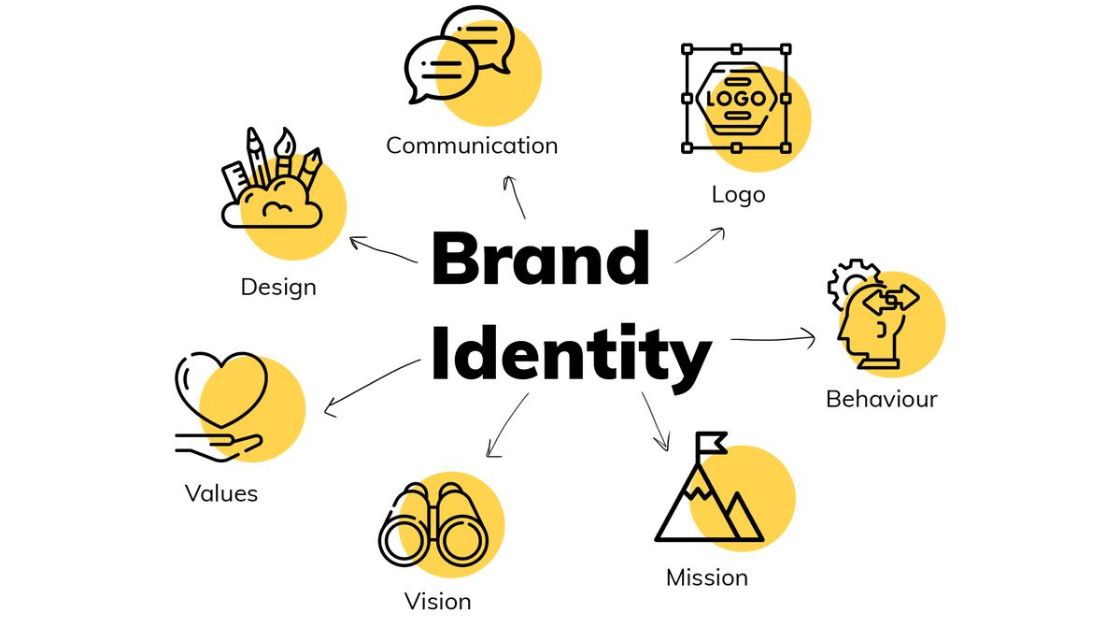
Most brands have a logo. But having a logo isn’t the same as having a clear identity. And even fewer brands manage that identity consistently enough to create the same feeling every time someone interacts with them—whether it’s through a billboard, product packaging, a customer support conversation, or a sponsored Instagram post.
Brand identity management is what helps a brand stay memorable instead of being overlooked. It involves clearly defining who you are as a brand, communicating that identity consistently, and maintaining it over time as your business grows, market conditions change, and customer expectations evolve.
This article covers everything from what brand identity actually means and why it matters, to how you build one and measure whether it’s working. If you’re building a brand from scratch, or you’ve inherited one that feels inconsistent and unfocused, this is where to start.
Read More: brand management overview
Table of Contents
What Is Brand Identity?
Brand identity is the collection of visual, verbal, and emotional elements a company uses to express who it is, what it stands for, and how it wants to be perceived. It’s the logo, yes, but also the colors, the typography, the way the brand speaks, the stories it tells, and the feeling it leaves behind.
A strong brand identity makes your business instantly recognizable without the customer needing to see your name. Think of the Coca-Cola red, or boAt’s bold, youth-first energy across every touchpoint. These companies don’t just have assets. They have a coherent identity that travels consistently from product design to packaging to social media to customer service.
The distinction between brand identity and brand image matters here. Brand identity is what you put out. Brand image is what people actually perceive. The goal of brand identity management is to close the gap between the two.
Key Takeaways
- Brand identity is the full system of visual and verbal elements you control, not just your logo.
- It shapes perception, builds recognition, and earns trust before a customer ever speaks to you.
- Brand identity management is the active process of defining, maintaining, and evolving that identity over time.
Why Is Brand Identity Important?
Here’s a number worth sitting with: according to Lucidpress’s 2021 Brand Consistency Report, consistent brand presentation across platforms can increase revenue by up to 33%. That’s not a soft brand benefit. That’s a commercial argument.
But why does identity have that kind of impact? There are four specific reasons.
It’s a Market Differentiator
In categories where products are close to equality, identity is the differentiator. Mamaearth competes in a market full of skincare and baby care brands. Its identity, built around natural ingredients and honest, millennial-friendly communication, is what made it stand out before its formulations became well known. The identity did the work first.
It Helps Build Trust and Brand Loyalty
People trust what feels familiar. A brand that looks and sounds the same across every touchpoint signals stability. It signals that someone is actually running the brand with intention. That consistency builds the kind of trust that turns first-time buyers into repeat customers.
Inconsistency does the opposite. If your website feels premium but your packaging looks cheap, or your Instagram sounds playful but your customer support emails read like legal notices, people notice. They don’t always say so. They just don’t come back.
It Molds Consumer Perception
Brand identity doesn’t just describe what you are. It shapes what people believe you are. Nykaa positioned itself as a beauty authority, not just a retailer, through its educational content, editorial-quality photography, and expert-led communication. That identity positioned it as a trusted destination rather than just another e-commerce platform. Perception was built deliberately.
It Supports Brand Equity
Brand equity is the commercial value that comes from consumer perception of your brand vs a generic equivalent. A bottle of Coca-Cola and an unbranded cola cost very different amounts, and consumers are often willing to pay more for the branded one without a material difference in the product. That premium is brand equity, and it is entirely built on brand identity over time.
Brand identity is the complete system of visual, verbal, and emotional signals a company controls to shape how it is perceived. Consistent brand identity increases revenue by up to 33%, according to Lucidpress’s 2021 Brand Consistency Report. It supports brand equity by creating a perceived value that goes beyond product attributes alone.
Elements of a Strong Brand Identity
Brand identity isn’t one thing. It’s a system. Here’s what that system is built from.
Logo
Your logo is the most visible, portable piece of your identity. It travels everywhere: your website, packaging, social profiles, business cards, and email signatures. A good logo communicates something about who you are without needing words. It doesn’t need to be clever. It needs to be Unique and to hold up at every size and in every context.
Brand Colors
Colors carry psychological weight. Red signals energy, urgency, or passion. Blue communicates trust and stability. Green often signals health, sustainability, or freshness. Your brand color palette is one of the fastest recognition signals you have. Across all the noise of a social media feed, a distinctive color combination stops the scroll before the copy or the logo does.
Zepto, for example, uses deep purple as its primary brand color, a deliberate departure from the red-orange palette that dominates quick commerce. It’s a small but consistent signal that reinforces its identity as a premium speed brand.
Typography
Typography is often overlooked, but it plays a bigger role than many people realize. The fonts you choose start communicating your brand’s personality even before people read the words. A serif font can create a sense of tradition and authority, while a geometric sans-serif often feels modern and precise. Handwritten or script fonts tend to feel more personal, friendly, and approachable. That’s why your font choices should be intentional and consistent, not based on what happens to look good at the moment.
Brand Imagery and Photography Style
How you show people, places, and products tells a story about who your brand is for and what kind of world it inhabits. A fast fashion brand and a sustainable fashion brand can sell similar products, but their photography will look completely different in terms of light, setting, model diversity, and color grading. That difference is identity.
Brand Name
Your name is the foundation of your identity. It needs to be distinctive, easy to spell, easy to say, and available. But beyond the practical criteria, it should carry the right emotional associations for your category. “boAt” evokes lifestyle and energy in a way that “XYZ Audio” doesn’t. Names do work.
Brand Tone and Voice
Brand tone and voice are how your brand sounds across all written and verbal communication. Voice is consistent; it’s your brand’s personality in words. Tone shifts by context; you wouldn’t write a customer complaint response in the same tone as a product launch post, but the underlying personality stays the same.
Get this wrong, and everything else suffers. A brand that looks premium but writes like a nervous intern will lose the perception battle before the product even gets a chance.
Brand Story
Your brand story is the narrative of why you exist, not just what you sell. It’s the founder’s moment of frustration that led to the product. It’s the problem you saw that nobody else was solving. A compelling brand story gives customers a reason to care that goes beyond the transaction.
Tagline or Slogan
Not every brand needs a tagline. But when it works, it’s one of the most compact pieces of brand identity you can own. Nike’s “Just Do It” is three words that carry a philosophy. A good tagline should communicate your brand’s core value in language your customer actually uses.
Understanding Brand Identity: What Most Brands Miss
Most early-stage brands spend 80% of their identity budget on the logo and call it done. That’s the wrong prioritization.
The elements people interact with most are voice, imagery, and color. Before a new customer clicks on your ad, they see your color and your headline. Before a returning customer decides whether to recommend you, they think about how your brand made them feel. Those things are not in the logo.
Fast Fact: According to a 2023 report by Demand Metric, brands that maintain consistent brand presentation are 3 to 4 times more likely to experience strong brand visibility than those that don’t. Consistency beats novelty in the long run.
There’s also a common trap around the aspiration gap. Brands define an identity based on who they want to be rather than who they currently are and who their customers actually see. When there’s too much distance between the identity you project and the experience you deliver, consumers feel the disconnect. It erodes trust faster than a bad product review.
The brands that get identity right start from the inside: who are we, what do we actually deliver, who is our customer, and what do they already believe about us. Then they build outward.
Read More: brand positioning
Building a Brand Identity That Sticks
Strategies Are Research-Driven
You can’t define a brand identity in a vacuum. The brands that build identities that actually stick start with structured research: customer interviews, competitor audits, category analysis, and an honest internal assessment of what the brand is capable of consistently delivering.
Duolingo ran deep research into what made language learning intimidating before they built the irreverent, gamified identity that now dominates the category. Their green owl mascot, their punchy notifications, their meme-friendly social media presence: all of it was a direct response to what their research told them about their audience’s relationship with learning.
The Core Elements of Brand Building
Once you have researched, the core building blocks of brand identity need to be assembled in the right order. Start with values and purpose. Then build the visual and verbal system from that foundation. Never start with the logo and reverse-engineer the values afterward. That’s decoration, not identity.
The four-layer structure that works best:
- Brand foundations: purpose, values, positioning, personality
- Brand expression: name, tagline, voice, tone
- Brand visuals: logo, color palette, typography, imagery style
- Brand touchpoints: how all of the above appear across specific channels and formats
Investment and Resources
Strong brand identity requires investment, and that investment goes beyond the initial design sprint. Brand guidelines need to be created and maintained. Teams need training. Assets need to be produced at a quality. And periodic audits need to happen to catch drift before it becomes a brand consistency problem.
For a growing D2C brand, the minimum viable investment is a well-documented brand guidelines document, a locked set of approved assets, and a clear internal owner for brand decisions. Without those three things, brand drift happens automatically.
How to Create a Brand Identity in 5 Steps
Step 1: Define Your Brand’s Core Values
Start with the fundamentals. What does your brand believe? What would you refuse to compromise on? What do you want customers to feel every time they interact with you? Your core values are the filter through which every brand decision passes. If you don’t have them clearly articulated, every design and copy decision becomes subjective and inconsistent.
Spend real time here. Three to five values, defined with specificity, are more useful than a list of twelve generic words.
Step 2: Analyze Customer Behavior
Who is your customer today, and who do you want them to be? What do they respond to? What do they find off-putting? What do they say about your category in unsponsored moments: the reviews they leave, the language they use, the comparisons they make?
This step is where many brands skip to competitors and forget to actually study their customers. Both matter. Competitor analysis tells you what the market already looks and sounds like. Customer behavior tells you where there’s a gap.
Step 3: Design Your Brand’s Look and Feel
With values and customer insight in hand, the design work can start. The brief to your designer or agency should communicate personality, not just aesthetic preference. Don’t say “we want something modern.” Say “we want to feel authoritative but approachable, like a trusted expert friend, for 28 to 35-year-old urban professionals who already know the basics.”
The more specific your brief, the more specific and defensible the output.
Step 4: Keep Your Brand Identity Consistent
Consistency is where most brands fail. The initial identity work gets done, assets get produced, and guidelines get written. Then six months later, the social media team starts using a different font, the sales team creates their own deck template, and the customer support team writes in a completely different voice.
Brand guidelines don’t enforce themselves. You need an owner, an audit process, and a simple way to make it easy for every team to access approved assets.
Step 5: Prepare to Evolve and Adapt
No brand stays frozen. Markets change, audiences evolve, and brands need to grow with them. The key is evolving deliberately, not reactively. A brand refresh is different from a rebrand. Refreshing is updating the expression of an identity while keeping its core intact. Rebranding is changing the core itself, which is a much bigger decision and should only happen when the existing identity has become a genuine barrier to growth.
Coca-Cola has evolved its visual identity dozens of times over a century while keeping its core identity, the feeling of simple pleasure and universal belonging, completely intact. That’s the model.
Creating a brand identity requires defining core values first, then building visual and verbal systems from that foundation. Consistency across all touchpoints is the most critical factor in making an identity durable. Brands that evolve deliberately, updating expression without abandoning core values, maintain the strongest long-term recognition and equity.
3 Inspiring Brand Identity Examples
Apple
Apple’s brand identity is built on three values: simplicity, creativity, and human empowerment through technology. Every element of the brand, from its product design to its packaging to its advertising to its retail experience, expresses those three values with exceptional consistency. The 1984 Super Bowl ad, the Think Different campaign, and the current Shot on iPhone series are decades apart, but feel like they come from the same brand. That’s because they do.
Coca-Cola
Coca-Cola’s brand identity is one of the best case studies in emotional positioning. The brand has spent over a century consistently associating itself with happiness, togetherness, and simple moments of pleasure. It’s not a functional claim. No one buys Coca-Cola because it’s nutritious. They buy it because the brand has successfully made them feel something. That emotional association is built through consistent brand identity over an extraordinarily long period. The red, the script logo, the contour bottle: all identity work that compounds over time.
Duolingo
Duolingo is one of the most interesting recent brand identity case studies. The brand took what could have been a dry, educational app and built an irreverent, meme-literate, almost unhinged identity around its green owl mascot Duo. This identity works because it perfectly matches what its audience, young adults who are slightly guilty about not completing their lessons, actually responds to. The brand’s TikTok presence, its self-aware humor, and its personality-driven notification copy are all expressions of the same core identity.
What Is Brand Identity Management?
Brand identity management is the ongoing process of defining, communicating, protecting, and evolving a brand’s identity across every touchpoint where it appears. It’s not a one-time project. It’s a function.
The work includes creating and maintaining brand guidelines, training internal teams, managing external agency and vendor compliance, auditing brand expression across channels, responding to brand consistency issues as they arise, and making deliberate decisions about when and how the brand should evolve.
Brand identity management is what makes the difference between a brand that has done good identity work and a brand that actually holds onto it over time.
The Role of Brand Guidelines in Identity Management
Brand guidelines, sometimes called a brand book or style guide, are the operational foundation of brand identity management. They document every element of the brand system: what colors are approved and in what combinations, what typefaces are used and how, what the logo looks like and how it cannot be used, what the brand voice sounds and doesn’t sound like.
Good brand guidelines don’t just describe the brand. They explain the reasoning behind decisions. When teams understand why the brand makes the choices it does, they make better decisions in edge cases that the guidelines didn’t anticipate.
Brand Identity Management for Small Businesses
Small businesses often assume that brand identity management is a large company concern. It’s not. It matters at every scale, it’s just simpler to implement when you’re smaller.
A small business brand identity management plan needs three things:
A documented brand identity, even a simple one-page brand reference covering logo usage, approved colors, font choices, and key tone-of-voice guidelines, is infinitely better than nothing. It gives every person who touches the brand a shared reference point.
A clear internal owner, someone needs to be responsible for brand decisions. In a small business, that’s usually the founder. Whoever it is, the responsibility should be explicit, not assumed.
An audit habit: Set a quarterly reminder to look at your brand across its key touchpoints: website, social profiles, packaging, and email templates. Look for drift. Fix what’s inconsistent.
The investment doesn’t need to be large. The discipline does.
Brand identity management for small businesses requires three foundations: a documented brand identity, a clear internal owner, and a regular audit habit. Smaller teams have the advantage of faster alignment. The risk is that without explicit management, brand drift happens faster at a small scale because there are fewer checks on individual decisions.
The Benefits of Effective Brand Management
1. Increased Brand Awareness
A consistently presented brand gets recognized faster and more reliably. According to a 2022 report by Marq (formerly Lucidpress), 85% of organizations have brand guidelines, but only 30% consistently enforce them. The 30% that do enforce them see significantly faster awareness building because every piece of communication reinforces the same signals.
Swiggy’s brand awareness in India is partly a function of how consistently it has used its orange color, its distinct typeface, and its playful, food-first tone across years of high-frequency consumer touchpoints. The color alone triggers recognition now, before any text is read.
2. Stronger Customer Loyalty
Brand loyalty isn’t just about product satisfaction. It’s about how the brand makes people feel over time. When brand identity is managed well, it creates a sense of familiarity and belonging that goes beyond the product category. Customers start to see themselves as fans, not just users.
According to Harvard Business Review, increasing customer retention rates by 5% increases profits by 25% to 95%. Brand consistency is one of the core drivers of retention. People return to what feels familiar and trustworthy.
3. Competitive Advantage
In categories where products are largely interchangeable, a strong brand identity is one of the few defensible competitive advantages. It can’t be copied exactly. Competitors can imitate features, undercut pricing, and replicate distribution. They can’t replicate the accumulated perception a well-managed brand identity builds over time.
Mamaearth’s early market position in natural skincare was largely a brand identity advantage. The products were credible, but the identity, its natural-first positioning, its transparency messaging, and its millennial-friendly visual system created a moat that gave the company time to build product depth.
4. Higher Revenue and Profitability
The commercial case for brand identity management isn’t soft. Brands with strong identities consistently command price premiums, experience lower customer acquisition costs as organic word-of-mouth and search performance improve, and maintain higher margins because they don’t need to compete on price.
A 2024 McKinsey study on brand value found that the top quartile of brands by identity strength outperformed the bottom quartile on total shareholder return by 2 to 1 over a ten-year period. Brand management isn’t a marketing line item. It’s a financial strategy.
Measuring Brand Management Success
Brand management isn’t just execution. It’s a measurement. Here’s how to know whether it’s working.
Brand Awareness Metrics
Brand awareness tells you how many people in your target market know you exist and can recognize you. The key metrics are aided awareness (did you recognize the brand when prompted?) and unaided awareness (which brands can you name in this category without prompting?). These are typically tracked through surveys. At scale, tools like YouGov BrandIndex provide ongoing panel data. For smaller brands, quarterly brand tracking surveys run through Google Forms or Typeform are a practical starting point.
Search volume for your brand name is a free, always-on proxy for brand awareness. A rising trend in branded search is a strong signal that recognition is growing.
Customer Loyalty Indicators
Net Promoter Score (NPS) is the most common loyalty metric: asking customers how likely they are to recommend the brand on a 0-10 scale. Repeat purchase rate and customer lifetime value (LTV) are the behavioural counterparts to the attitudinal NPS data.
Social listening tools like Brandwatch or Sprinklr track how people talk about your brand unprompted, which is one of the most honest indicators of whether your brand identity is landing the way you intended.
Financial Impact
Brand equity has financial expressions. Monitor them. Price premium: Can you charge more than generic competitors for a comparable product? Share of wallet: Are loyal customers spending more over time? Revenue per customer, is it growing as brand strength grows? These numbers connect brand management back to business performance.
Read More: brand equity measurement
Common Brand Identity Management Mistakes to Avoid
Brand identity management fails in predictable ways. Knowing the common mistakes means you can sidestep them before they cost you.
Letting brand guidelines gather dust. Brand guidelines that nobody reads don’t manage anything. They need to be a living reference that teams actually consult, and that gets updated when brand decisions are made. If yours haven’t been touched in two years, treat them as a first draft.
Inconsistency across channels. Your brand should feel like the same entity on Instagram, in your email campaigns, in your packaging, and in your customer support replies. Different teams managing different channels without a shared brand reference is how brands end up feeling fragmented. A customer who follows you on social and then receives a formal, corporate-sounding email feels the disconnect immediately.
Rebranding without a strategic reason. Rebranding because the brand feels “boring” or because a new marketing hire wants to make their mark is a common and expensive mistake. Every brand refresh should be driven by a specific business problem: a new audience to reach, a category to enter, a negative association to overcome. Cosmetic change without strategic purpose creates confusion, not improvement.
Confusing brand identity with marketing campaigns. Campaigns come and go. Brand identity is permanent. A campaign can express the brand identity brilliantly, but it isn’t the identity itself. Brands that confuse the two often end up with a different “brand” every six months as campaigns change, which is the opposite of the recognition and consistency that brand identity is supposed to build.
Conclusion
Brand identity management isn’t the exciting part of marketing. It doesn’t generate the kind of short-term results that a successful campaign does. But it’s the foundation that makes everything else more effective.
The brands that win over time, whether that’s Apple at a global scale or a D2C startup in its first three years, are the ones that define their identity with clarity, express it with consistency, and manage it with discipline. They don’t reinvent themselves every quarter. They build, compound, and protect.
Start with your values. Build your visual and verbal system from there. Document it, enforce it, audit it, and evolve it deliberately. The recognition you want doesn’t happen from one great campaign. It accumulates from thousands of consistent moments.
If you want to go deeper on brand management as a career or practice, the Crystal Clear Newsletter covers brand strategy, consumer behaviour, and marketing fundamentals every week for marketers who want to stay sharp.
Frequently Asked Questions
What is brand identity in simple terms?
Brand identity is everything a company consciously uses to express who it is and how it wants to be perceived. It includes visual elements like the logo, colors, and typography, as well as verbal elements like tone of voice, tagline, and brand story. Brand identity is what you control. Brand image is what people perceive.
What is the difference between brand identity and brand image?
Brand identity is the deliberate set of signals a company puts out. Brand image is how those signals are received and interpreted by consumers. The goal of brand identity management is to close the gap between the two: to ensure that what you intend to communicate actually lands the way you intended.
Why does brand identity matter for small businesses?
Brand identity helps small businesses compete without necessarily competing on price. A clear, consistent identity builds recognition and trust faster, makes marketing more effective because every piece of communication reinforces the same signals, and creates a perception of quality and credibility that larger budgets alone can’t manufacture.
How is brand identity different from brand strategy?
Brand strategy is the plan: the decisions about who you are, who you serve, and how you position yourself relative to competitors. Brand identity is the expression of that strategy: the visual and verbal system you use to communicate it. Strategy comes first. Identity follows.
How long does it take to build a strong brand identity?
Building initial brand identity assets, logo, guidelines, and core messaging can take weeks to months, depending on the complexity and investment. Building the recognition and trust that a strong brand identity creates takes years of consistent expression. There are no shortcuts. The compounding effect of consistency over time is what creates true brand recognition.
What is brand voice and why does it matter?
Brand voice is the consistent personality of your brand expressed through language. It determines whether your brand sounds warm or formal, playful or authoritative, straightforward or aspirational. It matters because language is the most frequent touchpoint most consumers have with a brand, and inconsistent voice signals either disorganization or inauthenticity.
Can a brand identity be too rigid?
Yes. A brand identity system that allows no flexibility strangles creativity and makes it impossible to adapt to new contexts or audiences. Good brand identity management defines what must be consistent (core values, logo usage, primary colors, voice fundamentals) while leaving room for expression to flex across channels, campaigns, and formats.
What tools are used for brand identity management?
Common tools include Frontify, Bynder, and Brandfolder for brand asset management and guideline distribution. Canva has built brand kit functionality that works well for smaller teams. Sprinklr and Brandwatch are used for social listening and brand health monitoring. At the enterprise level, Lucidpress is common for ensuring on-brand document creation across large teams.
How do you know if your brand identity isn’t working?
Warning signs include low brand recognition in customer surveys, high price sensitivity (customers switching to cheaper competitors easily), negative or confused feedback about what the brand stands for, inconsistent experience across touchpoints, and declining branded search volume. If customers can’t clearly articulate what your brand is about or why it’s different, the identity work isn’t done.
What’s the difference between a brand refresh and a rebrand?
A brand refresh updates the expression of an existing identity: updating the logo, refreshing the color palette, modernizing the typography, and tightening the messaging. The core values and positioning stay the same. A rebrand changes the core itself: new positioning, new audience, new values. A rebrand is a major strategic decision. A refresh is a maintenance task.