

Most founders notice brand problems only after they show up as sales problems. A support ticket that says “I didn’t realize this was your product.” A customer comparing you on price because nothing else set you apart. A new hire who can’t describe what the company stands for in one sentence. None of these look like branding issues at first. They are.
That’s the importance of brand management in one sentence: it decides whether people recognize you, trust you, and come back, or forget you the moment a cheaper option shows up. This article breaks down what brand management actually involves, why it matters more now than it did five years ago, the strategy and tools that make it work, and the mistakes that quietly cost brands their position in the market.
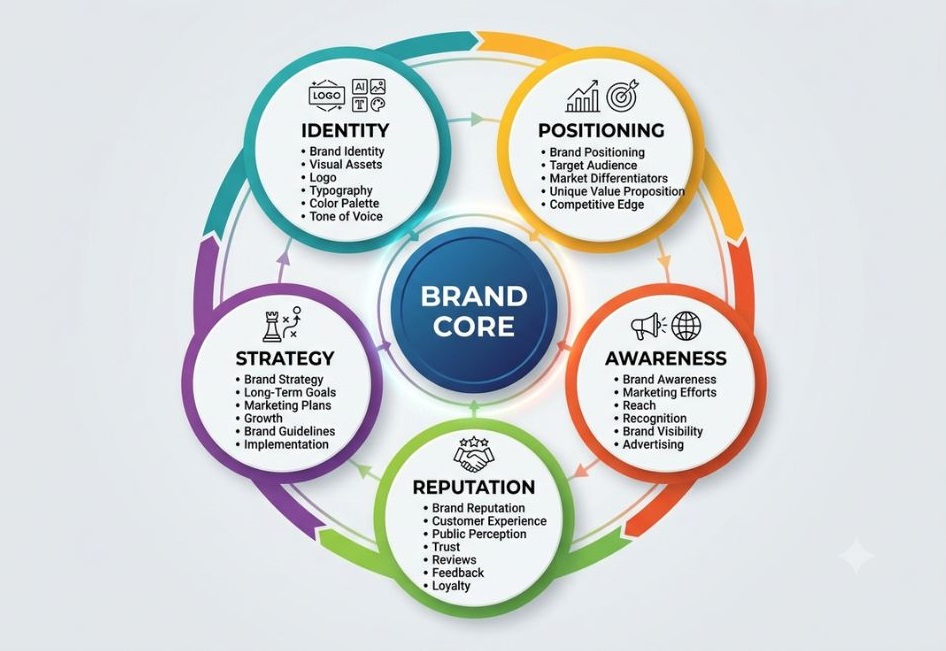
Table of Contents
What Is Brand Management?
Brand management is the ongoing process of shaping how a business is perceived, monitoring that perception, and correcting course when it drifts from what the business intends. It covers everything from the logo on your packaging to the tone of a customer service reply.
Most people think branding stops once the logo and colors are locked. It doesn’t. A logo is a design decision made once. Brand management is a discipline practiced every day, across every team that touches a customer.
Think of it this way: marketing gets people to notice you once. Brand management gets them to trust what they noticed enough to come back. The two work together, but they aren’t the same job, and treating them as one is where a lot of companies go wrong.
Why Growing Businesses Can’t Ignore Brand Management
Skip this and you end up competing on price. That’s the short version. A business with no distinct brand has nothing to defend margin with when a competitor undercuts them, and nothing to fall back on when growth slows.
This is where the importance of brand management becomes hard to argue with. According to a 2019 State of Brand Consistency Report from Lucidpress (now Marq), companies that maintain consistent branding across every touchpoint saw revenue increases of up to 33%, with 68% of respondents reporting growth of 10 to 20% tied directly to consistency efforts. That’s not a design metric. That’s a revenue line.
boAt built a category out of this exact logic. Before boAt, Indian audio accessories were mostly unbranded, commodity products sold on price alone. boAt built a recognizable identity around youth culture and bold design, and it now competes with global names like JBL and Sony in a category it essentially created a market for. The product specs weren’t radically different. The brand was.
Consistent brand presentation across all customer touchpoints can lift revenue by 10 to 33%, according to Lucidpress’s State of Brand Consistency Report (2019). The gap between companies that manage their brand deliberately and those that don’t shows up directly on the revenue line, not just in awareness metrics.
Why Branding Matters More Than Ever
Attention is the scarcest resource any business competes for now, and that changes what branding has to do. It used to be enough to be seen. Now you have to be remembered in a feed that resets every few seconds.
The importance of branding today comes down to trust replacing proximity as the main driver of purchase decisions. Edelman’s 2025 Trust Barometer Special Report on brand trust found that 80% of people trust the brands they personally use more than they trust institutions like government or media. That’s a bigger vote of confidence than most governments get.
And that’s exactly why inconsistent branding hurts more now than it did a decade ago. A customer who sees mismatched messaging on Instagram versus your website doesn’t think “different team, different day.” They think something is off. AI-driven search tools compound this: when Google’s AI Overviews or ChatGPT try to summarize what a brand stands for, inconsistent signals across the web make it harder for them to describe you accurately at all.
Key Benefits of Brand Management
The benefits of brand management show up in numbers that most founders only track after they’ve already lost them: churn, customer acquisition cost, and price sensitivity.
A managed brand earns three things unmanaged brands don’t:
- Pricing power. Customers who trust a brand are less likely to shop purely on price, which protects margin during competitive pressure.
- Lower acquisition cost over time. Recognition reduces the number of touchpoints needed before someone converts, which is why performance marketers increasingly track brand lift alongside ROAS.
- Employee alignment. A clearly managed brand gives hiring, sales, and support teams a shared reference point, so messaging doesn’t fracture as headcount grows.
Nykaa is a useful example here. Long before it dominated performance marketing on Meta and Google, it built a clearly defined brand voice around beauty education and community, not just product listings. That groundwork is a big part of why its paid acquisition later converted more efficiently than category peers running similar ad spend.
Building a Brand Management Strategy That Works
A brand management strategy is a documented plan for how a brand will be positioned, communicated, and protected across every channel and team. Without one, brand decisions get made ad hoc, by whoever is in the room that week.
Here’s how to build one that actually gets used, not filed away after the kickoff meeting.
- Audit your current perception. Pull reviews, social mentions, and support tickets. Look for the gap between how you want to be seen and how you’re actually described.
- Define your positioning statement. One sentence: who you serve, what you solve, and why you’re different from the next option they’d consider.
- Document brand guidelines. Visual identity, tone of voice, and messaging pillars, written down so no one has to guess.
- Assign ownership. Someone specific needs to approve brand decisions, or every team will interpret the brand differently.
- Set review cadence. Quarterly checks against the original positioning, not just when something breaks.
Setting Brand Guidelines
Guidelines only work if people actually use them. Marq’s 2025 data on brand consistency found that 95% of organizations have brand guidelines in place, but only 30% use them regularly. That gap is where most brand inconsistency comes from, not a lack of documentation.
Keep the guideline document short enough that a new hire reads it in one sitting. Long PDFs get skimmed once and forgotten.
Aligning Strategy With Business Goals
A brand strategy disconnected from business goals becomes a design exercise nobody outside the marketing team cares about. If the company is pushing into a premium segment next year, the brand strategy needs to signal that shift months before the product does.
Brand Development and Brand Building: Where They Overlap
Brand development is the process of evolving a brand’s positioning, offerings, and identity as the business itself grows or changes direction. It’s what happens when a company outgrows its original story.
Brand building is the day-to-day work of creating recognition and affinity, one interaction at a time, through content, campaigns, and consistent presence. Development is strategic and occasional. Building is tactical and constant.
Zepto is a clean case study in brand development. It started as a quick commerce delivery app competing purely on speed. As the category matured, Zepto had to develop its brand beyond “fast delivery” into a broader lifestyle and convenience play, expanding its messaging to match a widening product catalog. The core identity evolved without breaking what customers already recognized.
Brand Identity Management: Logo, Voice, and Visual Consistency
Brand identity management is the practice of maintaining consistent visual and verbal elements, logo, color palette, typography, and tone, across every place a customer encounters the brand. It’s the most visible layer of brand management, and the one customers notice fastest when it slips.
Inconsistency here isn’t just a design nitpick. When your Instagram grid, email templates, and packaging all look like they came from different companies, customers subconsciously question whether they’re dealing with the same business at all.
This is where tools like Frontify and Canva’s brand kit features earn their place, more on those shortly. For now, the standalone rule is simple: define it once, store it centrally, and make deviation the exception, not the norm.
Brand Positioning: Owning a Distinct Space in the Market
Brand positioning is the specific place a brand occupies in a customer’s mind relative to competitors, defined by what it does best and who it does it for. Good positioning answers one question clearly: why this brand instead of the next one on the shelf.
Mamaearth positioned itself early as the toxin-free, natural personal care brand at a time when most Indian FMCG players were competing on price or celebrity endorsement. That single, clearly held position let it charge a premium and build loyalty in a crowded category, well before it became a common claim across the industry.
Weak positioning tries to be everything to everyone. Strong positioning picks a lane and defends it, even when that means saying no to adjacent opportunities that dilute the story.
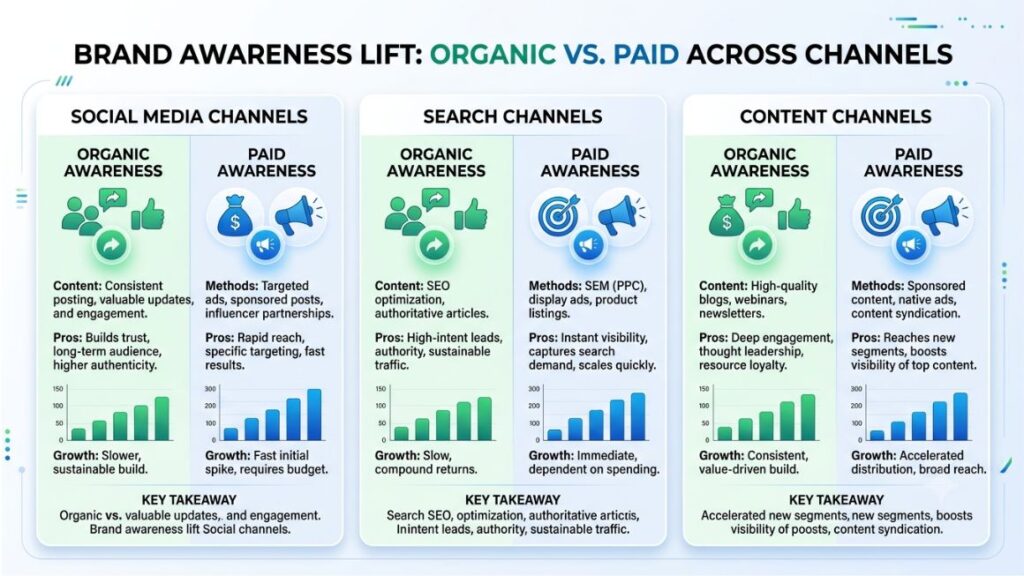
Growing Brand Awareness Across Channels
Brand awareness is the extent to which customers recognize and recall a brand when thinking about a category or need. It’s the entry point to every other brand metric that follows.
According to Nielsen, 63% of marketers rank brand awareness as the single most important metric for measuring marketing success, ahead of conversion-focused metrics. That ranking makes sense once you consider that awareness is the ceiling everything else operates under. You can’t convert someone who’s never heard of you.
Swiggy built awareness less through traditional advertising and more through consistently sharp, culturally tuned social copy that got shared organically. The lesson isn’t “be funny on Twitter.” It’s that awareness compounds fastest when the content itself is distinct enough to travel without paid distribution behind every post.
Brand Reputation Management: Protecting What You’ve Built
Brand reputation management is the ongoing practice of monitoring public perception and responding quickly when that perception is threatened. It’s the defensive half of brand management, and the one businesses invest in least until they need it badly.
The stakes are higher than most teams assume. Aon’s 2025 Global Risk Management Survey estimates that 83% of public companies will face a reputational crisis within five years significant enough to drop their share price by 20 to 30%. Campbell’s felt this directly in 2025, when comments from an executive triggered a consumer backlash and a 7.3% stock drop, wiping out roughly $684 million in market capitalization according to Terakeet’s analysis reported by Marketing Dive.
This is the second place the importance of brand management shows up in hard numbers, not just sentiment. A brand with strong reputation management in place responds within hours, not days, and has pre-approved messaging ready before a crisis hits, not drafted from scratch while it’s already trending.
A majority of public companies will face a reputation crisis capable of moving their share price within five years, per Aon’s 2025 Global Risk Management Survey. Brands with an active monitoring and response system in place recover measurably faster than those managing reputation reactively.
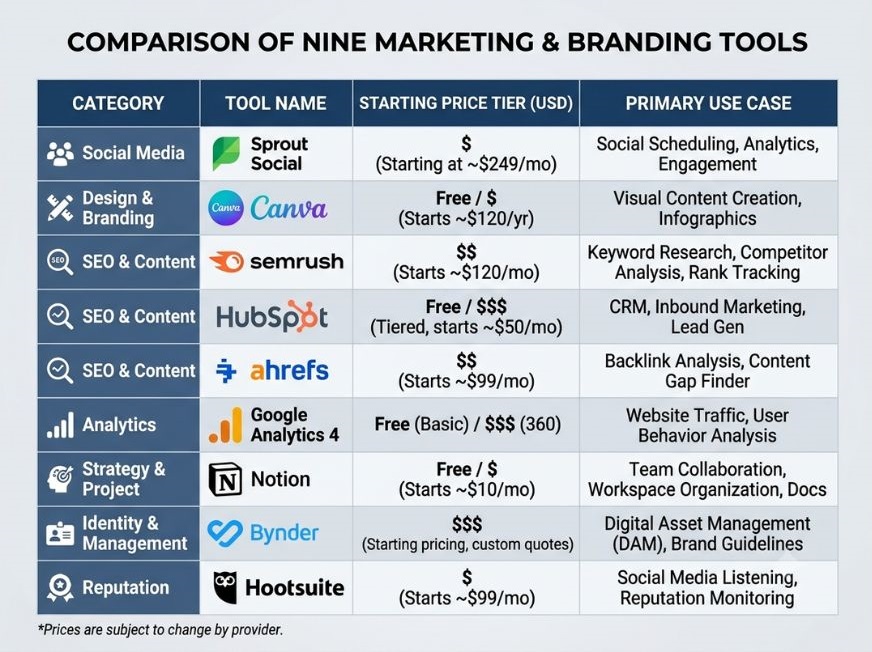
Essential Brand Management Tools, Explained
Choosing the right stack matters less than most vendors claim, but having no stack at all means brand drift goes unnoticed until a customer points it out publicly. Here’s what each category of tool actually does.
Brandwatch is a social listening and consumer intelligence platform that tracks brand mentions, sentiment, and emerging conversation trends across social platforms, news, and forums. Its Signals feature flags unusual spikes in mention volume, which is often the earliest warning sign of a reputation issue before it becomes a full crisis. Larger brand teams use it for competitive benchmarking as much as their own monitoring.
Brand24 does a similar job to Brandwatch at a fraction of the price, making it the more common choice for growing businesses. It tracks mentions across social media, blogs, and news in near real time, and its AI-powered sentiment scoring flags negative spikes automatically. The Discussion Volume Chart is particularly useful for spotting whether a campaign or a complaint is the thing actually driving conversation.
Meltwater focuses on media monitoring and PR analytics, tracking earned media coverage and calculating its estimated value. Its Media Intelligence dashboard is built for comms and PR teams who need to report reputation metrics to leadership in a language executives already understand, reach and impressions.
Sprout Social combines social media scheduling with a Listening module that surfaces brand health data alongside standard engagement metrics. Its Tag Performance Report lets teams track how specific campaigns or messaging pillars perform against brand awareness goals, not just likes and shares.
Hootsuite is primarily a scheduling and publishing tool, but its Streams feature doubles as a lightweight monitoring system for brand mentions and hashtags across connected platforms. It’s a reasonable starting point for teams not yet ready to invest in dedicated listening software.
Frontify is a brand identity management and digital asset management platform built specifically to solve the guideline problem covered earlier. Its Brand Portal centralizes logos, color codes, tone-of-voice documentation, and approved templates in one place that every team, including external agencies, can access without emailing someone for the latest logo file.
Canva for Teams includes a Brand Kit feature that locks fonts, colors, and logos into every template a team creates, which keeps social posts and one-off design requests visually consistent without needing a trained designer for every asset. It’s the most accessible option for small teams without a dedicated design function.
Ahrefs and SEMrush, while built primarily for SEO, both track branded search volume, the number of people searching your brand name directly. A rising trend line here is one of the cleanest proxies for brand awareness growth available, since it reflects unprompted recall rather than ad exposure.
Qualtrics and dedicated brand tracker surveys measure awareness, perception, and Net Promoter Score through structured, recurring research rather than passive listening. This is the only category here that captures what customers think but never say publicly, which listening tools structurally can’t reach.
Brand Management Best Practices for 2026
- Centralize brand assets in one platform. Scattered logo files and old guideline PDFs are how inconsistency creeps in, especially as remote and freelance contributors grow.
- Set a monitoring cadence, not just crisis response. Weekly sentiment checks catch small issues before they need a crisis plan at all.
- Train non-marketing teams on brand voice. Support and sales interactions shape perception as much as any campaign does.
- Revisit positioning annually, not just at rebrand time. Markets shift faster than most brand strategies get updated.
- Track branded search volume as a leading indicator. It’s one of the few awareness metrics that reflects genuine recall rather than paid reach.
- Build a reputation response protocol before you need one. Pre-approved holding statements and a clear escalation chain cut response time from days to hours.
This works well for consumer brands with public-facing social presence. B2B brands with longer sales cycles will find reputation risk lower velocity but harder to reverse once damaged, since fewer, higher-value relationships carry more weight per account.
Conclusion
Brand management isn’t a project with an end date. It’s the discipline that decides whether a customer trusts you enough to choose you again, and whether your team can survive the one bad week that every business eventually has. The businesses that treat it as ongoing work, not a one-time logo decision, are the ones still standing out five years from now.
Start small if you have to. Audit how your brand currently shows up, fix the biggest inconsistency first, and build from there. If you want a steady stream of practical breakdowns like this one, delivered before most marketers are talking about them, that’s exactly what the Crystal Clear Newsletter is built for.
FAQs
What is brand management?
Brand management is the ongoing practice of shaping, monitoring, and protecting how a business is perceived across every customer touchpoint. It includes visual identity, messaging tone, positioning, and reputation, and it never really finishes, unlike a one-time rebrand project.
What’s the difference between brand management and marketing?
Marketing focuses on campaigns that drive awareness and conversions within a defined period. Brand management is the longer-running discipline of keeping perception consistent across all those campaigns, plus every non-marketing touchpoint like customer service and product packaging.
How do you create a brand management strategy?
Start with an audit of current perception, define a clear positioning statement, document visual and verbal guidelines, assign an owner who approves brand decisions, and set a quarterly review cadence. Skipping the ownership step is the most common reason strategies fall apart after launch.
Do small businesses need brand management?
Yes, arguably more than large ones, since small businesses can’t outspend competitors and need differentiation to survive on something other than price. It doesn’t require a big budget, just consistency in how the business presents itself across its existing channels.
Is brand management really worth the investment?
The data supports it directly: Lucidpress’s 2019 State of Brand Consistency Report found consistent branding lifts revenue by up to 33%. The bigger risk is usually the cost of not doing it, which shows up later as price sensitivity and forgettable positioning.
Why do brand management efforts often fail?
Most failures come from guidelines that exist on paper but aren’t actually used, or from no single owner having final say on brand decisions. Marq’s 2025 research found 95% of companies have brand guidelines, yet only 30% use them consistently.
What’s the difference between brand identity and brand image?
Brand identity is what a company intentionally creates, its logo, colors, tone, and messaging. Brand image is how customers actually perceive it, which doesn’t always match the intended identity if execution or consistency slips.
How often should you update brand guidelines?
Review them at least annually, and update sooner if the business shifts target audience, launches a major new product line, or enters a new market segment. Guidelines that never change usually mean nobody’s actively using them to make decisions.
Who is responsible for brand management in a company?
Ideally a dedicated brand manager or marketing lead owns final approval, but every customer-facing team, sales, support, and product, plays a role in maintaining it day to day. Without a named owner, brand decisions default to whoever’s loudest in the room.
Can a damaged brand reputation be repaired?
Yes, but recovery speed depends heavily on how quickly and transparently the response happens. Brands with a pre-built reputation response protocol typically recover measurably faster than those improvising a response after a crisis has already gone public.