

Most product launches don’t fail because the product was bad. They fail because nobody outside the building understood why it mattered. A brilliant feature set with no positioning, no sales enablement, and no message testing behind it usually lands with a thud, and the team spends the next quarter wondering what went wrong.
That gap between “we built something good” and “the market gets it” is exactly what product marketing exists to close. Getting the product marketing fundamentals right early saves you from the far more expensive job of fixing a confused launch later.
Think of this as a working product marketing guide, not a theory lesson. It covers what product marketing actually does, the principles that hold it together, the process teams use to go from research to launch, and the tools that make each stage faster. If you’re setting up a product marketing function for the first time, or tightening one that already exists, you’ll walk away with something you can apply this week.
Table of Contents
What Is Product Marketing, and Why Does It Sit Between Product and Sales?
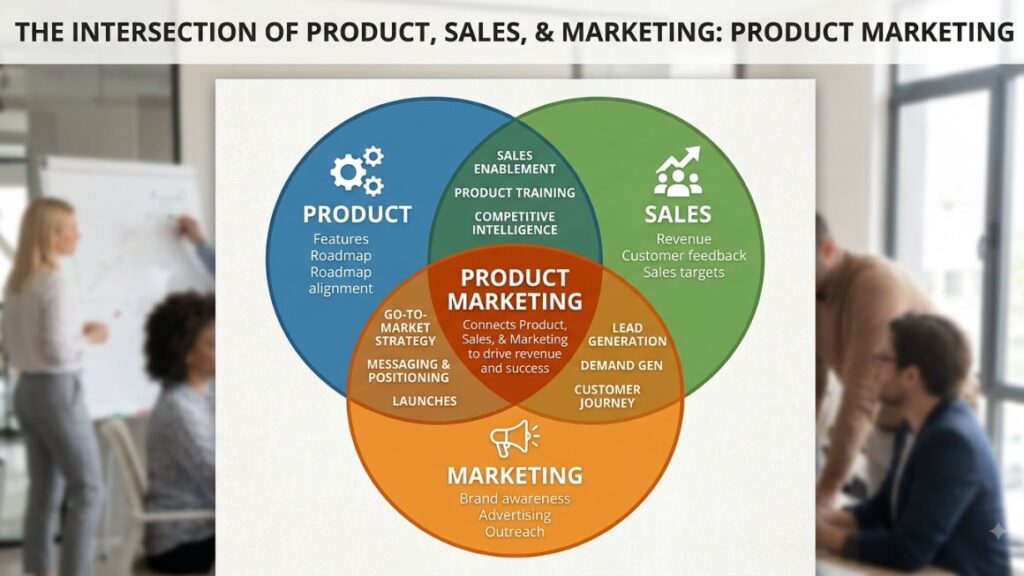
Product marketing is the function responsible for positioning a product, shaping its messaging, and driving its go-to-market so the right customers understand why it’s worth buying. It sits at the intersection of product, sales, and marketing, translating what engineering built into a story the market actually cares about.
That’s the one-line version. In practice, it’s messier. A product marketing manager, usually shortened to PMM, spends their week doing customer interviews, briefing the sales team on a new competitor, writing launch copy, and defending pricing decisions in a roadmap meeting they weren’t originally invited to.
If you’re new to the function, think of the product marketing basics as three connected jobs: understand the market better than anyone else in the building, translate that understanding into positioning and messaging, and make sure sales, marketing, and customer success can actually use it. Miss any one of those three and the other two collapse.
Zepto’s early positioning around “10-minute delivery” is a good example of this in action. The product itself, a quick commerce app, wasn’t unique. What made it stick was a product marketing decision to anchor the entire brand promise around speed as a single, ownable claim, rather than trying to compete on selection or price.
Product Marketing vs Product Management vs Growth Marketing
People confuse these three constantly, and the confusion causes real friction in org charts.
Product management owns what gets built and why, working from customer problems, business goals, and technical constraints. Product marketing owns how the market understands and buys what gets built. Growth marketing owns the acquisition and retention loops that get people into the product and back again.
Here’s a way to keep it straight: if the question is “should we build this,” that’s product management. If the question is “how do we explain this so people want it,” that’s product marketing. If the question is “how do we get more people to try and stick with this,” that’s growth.
In smaller companies, one person often wears two of these hats. That’s fine early on. It stops being fine once you have more than one product line, because positioning decisions start competing with roadmap decisions for the same person’s attention.
Product marketing sits between product management and growth marketing. Product management decides what to build, product marketing decides how the market understands it, and growth marketing decides how to acquire and retain users around it. Confusing these roles is one of the most common structural mistakes early-stage teams make.
Core Principles of Product Marketing
Frameworks and tools change. A handful of product marketing principles don’t, and they’re worth internalising before you touch a single template.
Positioning comes before messaging, not after. Too many teams write taglines first and try to reverse-engineer a market position from them. It should go the other way: decide who the product is for, what it replaces, and why it wins, and only then write the words.
Customer language beats internal language every time. If your positioning doc is full of terms only your engineering team uses, it will not survive contact with a real buyer. Pull phrases directly from sales calls and support tickets.
One primary message per audience segment. Trying to say five things to one segment means they remember none of them. This is the single most common mistake we see from teams that skip proper message testing before launch.
Positioning is falsifiable. If you can’t imagine a competitor or a customer disagreeing with your positioning statement, it’s probably too vague to be useful. Good positioning takes a stance.
Launches are a moment, adoption is a campaign. A launch day generates attention. What determines whether the product survives is everything you do in the following ninety days to drive actual usage.
From Research to Launch: The Process, Step by Step
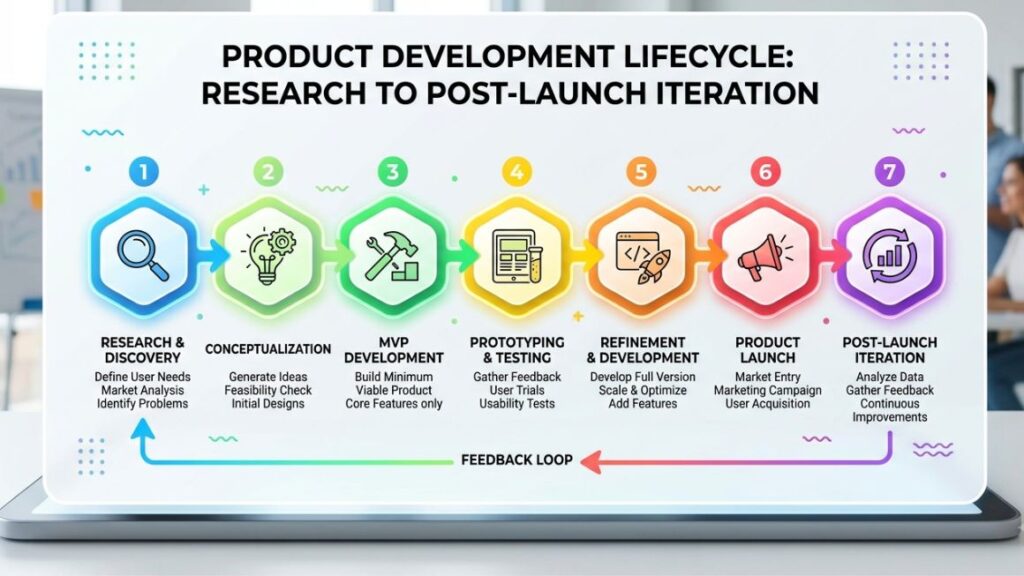
A repeatable product marketing process turns launches from chaotic scrambles into something your team can run predictably, quarter after quarter.
Step 1: Run structured market and customer research. Talk to at least ten to fifteen current or prospective customers before you write a single line of positioning. Ask about the problem they’re solving today, not the product you’re about to ship.
Step 2: Map the competitive landscape. Identify direct competitors, indirect substitutes, and the “do nothing” alternative, because that last one beats you more often than any named competitor does.
Step 3: Draft positioning and test it before you commit. Write two or three positioning options and run them past a panel of real buyers, not your internal Slack channel, before locking one in.
Step 4: Build the messaging house. Translate the chosen positioning into a primary value proposition, three supporting pillars, and proof points for each, so every team pulls from the same source document.
Step 5: Brief sales and customer-facing teams. A messaging doc nobody read is worthless. Run a live enablement session, record it, and give reps a one-pager they can actually use on a call.
Step 6: Coordinate the launch across channels. Align product, content, demand generation, and sales on a single launch date and a shared narrative, so a prospect sees the same story whether they land on the website or talk to a rep.
Step 7: Track adoption and iterate on messaging. Watch activation and feature adoption numbers for the first four to six weeks and adjust messaging where the data shows confusion, not just where it shows excitement.
Mamaearth’s shift toward “toxin-free” positioning followed roughly this arc. Research surfaced a specific parenting anxiety around chemical ingredients, that anxiety got translated into a clear, ownable claim, and the entire go-to-market, from packaging to influencer briefs, was rebuilt around that one message rather than a generic “natural beauty” pitch.
How a Strategy Framework Ties Product Marketing Together
A product marketing strategy without structure is just a collection of good intentions. You need a repeatable product marketing framework to turn strategy into something a team can actually execute against, launch after launch.
The four pillars of the framework
Most working frameworks reduce to four pillars: market understanding, positioning and messaging, go-to-market execution, and measurement. Skip market understanding and your positioning is a guess. Skip measurement and you’ll never know if the guess was right.
Each pillar needs an owner, even on a small team. Market understanding usually sits with the PMM directly. Go-to-market execution is shared with demand gen and sales enablement. Measurement should sit with whoever owns product analytics, so the numbers aren’t self-reported by the same team that wrote the messaging.
Turning the pillars into a document
A working product marketing strategy framework should fit on a few pages, not a fifty-slide deck nobody rereads after the kickoff meeting. Include the target segment, the positioning statement, the top three competitive differentiators, the launch tier, and the success metrics, in that order.
A practical strategy framework rests on four pillars: market understanding, positioning and messaging, go-to-market execution, and measurement. Each pillar needs a clear owner, and the strategy document itself should stay short enough that sales and product teams will actually reference it after launch day.
Keep the framework document living. Revisit it every time a major competitor moves, pricing changes, or adoption data tells you the original positioning missed the mark.
Essential Product Marketing Tools, Explained in Detail
The right stack doesn’t replace research and judgment, but it removes a lot of manual grunt work. Here’s what each category actually does and where it fits.
Klue and Crayon for competitive intelligence
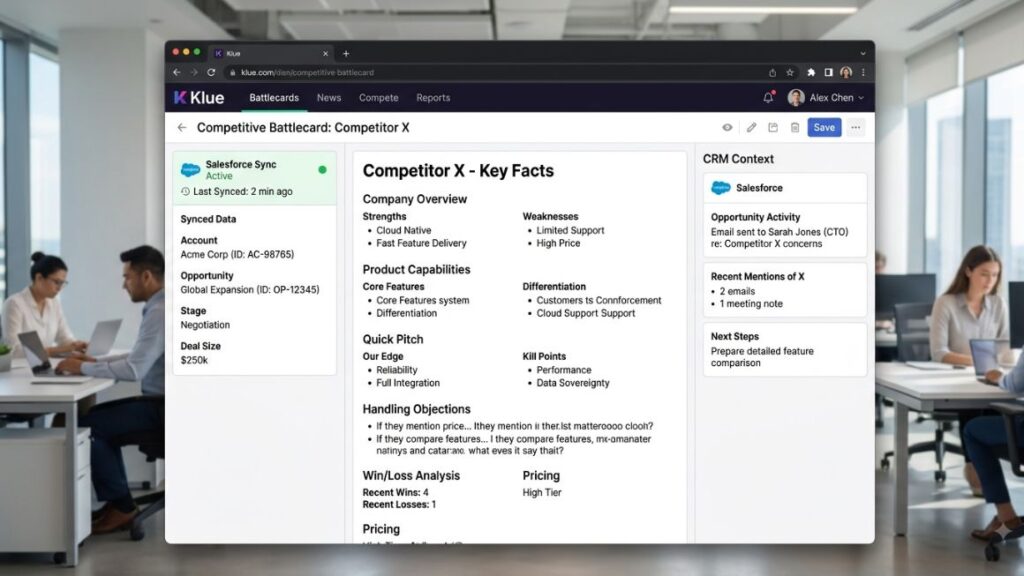
Klue and Crayon both automate competitive tracking by pulling changes from competitor websites, pricing pages, review sites, and social channels into a single feed. Instead of a PMM manually checking ten competitor sites every week, the tool flags what changed and routes battlecards to sales automatically inside Slack or the CRM. Crayon leans slightly more toward broad market signal aggregation, while Klue is built more tightly around sales battlecard workflows, so the choice usually comes down to whether competitive intel or sales enablement is the primary use case.
Wynter for message testing
Wynter runs your draft positioning and messaging past a panel of real B2B buyers who match your target persona, and returns qualitative feedback within a couple of days. This matters because internal teams are terrible judges of their own messaging. They know too much about the product to read a headline the way a cold prospect would. Wynter’s real value is catching confusing claims before they go live on the homepage, not after.
Productboard and Aha! for roadmap and feedback alignment
Productboard centralises customer feedback, feature requests, and usage signals so product marketing can see which capabilities customers are actually asking for, not just what engineering finds interesting to build. Aha! covers similar ground but adds stronger release and launch-planning features, letting PMMs tie a specific launch tier and go-to-market checklist directly to a roadmap item. Either tool closes the gap between “what we’re building” and “what marketing is planning to say about it.”
Amplitude and Mixpanel for product analytics
Amplitude and Mixpanel both track how users actually behave inside the product after a feature ships, which is the only reliable way to know if your messaging matched reality. If a new feature gets a lot of clicks from the announcement but low return usage, that’s a signal the positioning oversold the value or the onboarding didn’t finish the job. PMMs use these tools less for building dashboards themselves and more for pulling adoption curves that justify a message change or a second wave of enablement.
HubSpot for content and sales enablement distribution
HubSpot‘s content hub and sales enablement tools give product marketing a single place to publish battlecards, one-pagers, and email sequences that sales can pull from directly inside their CRM view. The advantage isn’t the content creation itself, it’s that reps see the latest version automatically instead of working off a six-month-old PDF someone emailed once and forgot about.
Gong for win-loss and messaging feedback
Gong records and analyses sales calls, and PMMs use it to hear, in the prospect’s own words, which parts of the messaging land and which get met with silence or objections. This is closer to real-time message testing than any survey, because it’s unscripted and happens at the exact moment a deal is won or lost.
Techniques That Actually Drive Product Adoption
Good product marketing techniques turn a solid strategy document into something customers actually notice. Message testing, tiered launches, and structured win-loss analysis are the three that carry the most weight.
Tiered launches match the amount of effort to the size of the change. Treating every minor feature update like a full company-wide launch burns out your team and trains customers to tune out announcements. Reserve the full press release, sales enablement blitz, and paid promotion for launches that genuinely change the buying decision.
Win-loss interviews, done consistently and not just after big losses, surface positioning gaps faster than almost anything else. Call five recently closed-lost prospects a quarter and ask them plainly why they chose someone else. The answers rarely match what your team assumed.
So why do so many teams skip this? Usually because nobody owns it, and it falls between sales and marketing until it falls off entirely. Assign it explicitly to one person, even if that person also does three other jobs.
Practices We’d Tell Any New PMM to Follow
A short list of product marketing best practices that hold up across most B2B and B2C teams we’ve seen.
- Talk to customers every single week, not just during a research sprint before a launch.
- Keep the messaging house to one page. If sales won’t read it, it doesn’t matter how good it is.
- Test positioning with real prospects before locking it in, not after the launch date is already announced.
- Give every launch a clear tier and a matching effort level, so not everything competes for the same attention.
- Review win-loss data monthly, and share it with product, not just with sales leadership.
Honestly, the biggest failure mode isn’t a bad framework. It’s skipping customer conversations because the team is busy shipping. That’s exactly when you need them most.
Concepts Every Product Marketer Should Know Cold
A handful of product marketing concepts come up constantly enough that you should be able to define them without reaching for a glossary.
Positioning is the mental space a product occupies in a buyer’s mind relative to alternatives, and it exists whether or not you deliberately choose it. Messaging is the specific language used to communicate that positioning across channels. A value proposition is a single, specific statement of the outcome a customer gets, stated in their terms, not yours.
Go-to-market, often shortened to GTM, is the full plan for how a product reaches and converts its target market, spanning positioning, pricing, channels, and sales motion together. A messaging house is the structured document, usually one primary message with three supporting pillars, that keeps every team’s language consistent.
Segmentation and ideal customer profile work sit underneath all of this. If you haven’t defined who you’re speaking to precisely, positioning work upstream of it will always feel generic, no matter how well written the copy is.
Conclusion
Product marketing works when positioning comes from real customer research, messaging stays consistent across every team that touches a prospect, and launches get sized to match their actual importance. None of that requires a huge team or an expensive stack. Getting the product marketing fundamentals right requires discipline about the process and a habit of talking to customers more than feels comfortable.
Start with one thing this week: pull up your current messaging and ask whether it uses your customers’ words or your engineering team’s. If you’re building this function from scratch or want a structured way to practice positioning, message testing, and go-to-market planning with real feedback, YUP’s Product Marketing course walks through the entire process with hands-on projects.
FAQs
What does a product marketing manager actually do day to day?
A PMM splits time between customer and competitive research, writing positioning and messaging, briefing sales teams, and coordinating launches across product, content, and demand generation. The exact mix shifts depending on whether a launch is active that week or the team is in a research phase.
Product marketing vs product management, what’s the real difference?
Product management decides what gets built based on customer problems and business priorities. Product marketing decides how the market understands and buys what gets built. They work closely together, but one owns the roadmap and the other owns the story.
How do I calculate whether a product launch actually worked?
Look past launch-day traffic and press coverage. Track feature adoption in the first four to six weeks, sales team win rates on deals that mention the new capability, and whether support tickets show customers understand what the feature does without extra explanation.
Who should own product marketing at an early-stage startup?
Usually a single generalist marketing hire or the founder, until the company has more than one product line or a dedicated sales team large enough to need consistent enablement. Past that point, a dedicated PMM hire pays for itself quickly.
Is product marketing worth investing in for a small B2C brand?
Yes, though the tools and cadence look different from B2B. A small D2C brand still needs clear positioning, a defined ideal customer, and message testing before a big campaign spend, even without formal battlecards or CRM integrations.
Why isn’t our new feature getting adopted even though the launch went well?
A strong launch day and weak adoption almost always point to a gap between the promise and the actual onboarding experience, or messaging that oversold the value. Pull usage data for the specific feature and compare it against what the launch messaging claimed it would do.
What’s the difference between positioning and messaging?
Positioning is the strategic decision about where a product sits relative to alternatives in a buyer’s mind. Messaging is the actual language, headlines, and talking points used to communicate that position across channels. Positioning comes first, messaging follows from it.
Do I need expensive tools to do product marketing well?
No. A spreadsheet, a shared doc, and consistent customer conversations will get a small team most of the way there. Tools like Klue, Wynter, or Amplitude speed up specific tasks at scale, but they don’t replace the underlying research and judgment.
How often should positioning be revisited?
Review it whenever a major competitor changes their pricing or claims, whenever your own pricing changes, and at minimum every six months even if nothing obvious has shifted, since markets move quietly before they move loudly.
What’s the biggest mistake teams make with product marketing?
Writing messaging before doing real customer and competitive research, then being surprised when it doesn’t land. The second most common mistake is treating launch day as the finish line instead of the starting point for a longer adoption push.