

Your backlog has 200 feature ideas. Sales wants one thing, engineering wants another, and the CEO just forwarded a competitor’s launch post with the words “why don’t we have this?” Nobody agrees on what comes next, so somebody has to decide. That somebody is usually the product manager.
This is why product manager skills go well beyond running meetings or updating tickets. The job is choosing the right problem. It’s about getting smart people to work on it and checking whether it worked.
This guide covers 15 skills that make that possible, from customer research and prioritization to AI literacy. Beginners will find a place to start. Experienced PMs will see where to grow next, along with the tools, a 30-day plan, and the mistakes that slow people down.
Table of Contents
What Does a Product Manager Actually Do?
A product manager decides what a team builds, in what order, and how to tell whether it worked. They don’t usually write the code or design the screens. They make sure the people who do are working on a problem worth solving.
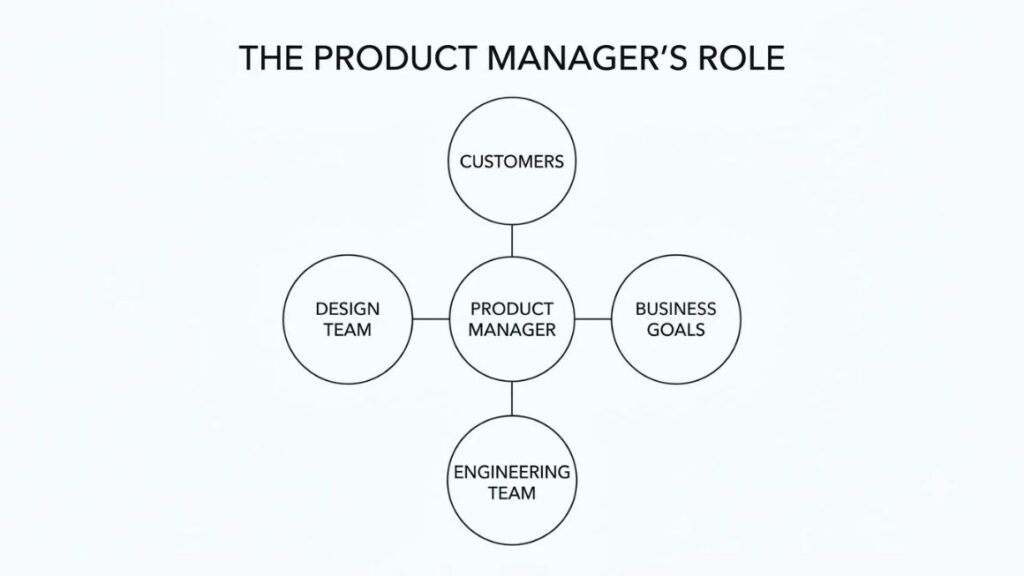
The role of a product manager in a modern business
Day to day, the product manager responsibilities come down to four jobs:
- Find customer problems and test whether they’re real opportunities
- Decide which problems get attention first
- Keep design, engineering, marketing, sales, and leadership pulling the same way
- Track what happens after launch, not just whether it shipped
A typical day in product management
There isn’t one. A Tuesday might hold a customer call, an hour inside a dashboard, a planning session, an argument about scope, and a decision that disappoints someone. In a startup, the same person may also write release notes and answer support tickets. In a larger company, a PM often owns one slice of a product and works with a dozen specialists. That range is why product manager skills matter more than any single job description.
How the role differs from related positions
Product, project, and program managers get mixed up constantly. The short version: a product manager owns the outcome, while the other two coordinate delivery.
| Role | Main question | What they own |
| Product manager | What should we build, and did it work? | Product outcomes |
| Project manager | Will this be delivered on time and on budget? | One project’s schedule and delivery |
| Program manager | How do several related projects fit together? | Coordination across projects |
A product manager decides what a team builds and why, then checks whether it worked. Project and program managers coordinate schedules and dependencies, while the product manager owns the outcome the work is meant to achieve.
15 Essential Product Manager Skills to Develop
The 15 skills below cover three things: understanding people and problems, making and explaining decisions, and getting work shipped. Product manager skills are the mix of customer understanding, business judgment, communication, and technical awareness a PM uses to choose what gets built and check whether it worked. Nobody has all 15 on day one. Most people are strong in four or five and build the rest over years.
Some of these are soft skills for product managers, like communication and negotiation. Others are commercial or technical. Many product management skills overlap. So working on one usually helps another. Each skill below comes with an example and one thing to practise.
1. Strategic thinking
Strategic thinking means connecting company goals to customer problems, then saying no to everything that doesn’t serve both. Every team has more ideas than time. Picture a subscription app where churn is climbing. Another feature feels productive, but fixing the onboarding drop-off may do more for retention. Strategy is picking that less exciting option on purpose. To practise, take your company’s top goal this quarter and list the three customer problems most likely to move it. Cross out anything that doesn’t fit.
2. Customer empathy and research
Customer empathy is understanding what users are trying to get done and what gets in their way. The catch is that what people say and what they do often differ. A user may ask for more filters while session recordings show nobody scrolls past the first result. Interviews and usability tests help you spot that gap. Practise by writing one problem statement from real evidence, such as: “New users abandon checkout at the address step because the form rejects valid PIN codes.” If you can’t point to the evidence, you’ve written a guess.
3. Prioritization and decision-making
Prioritization is choosing what to do first when everything feels urgent. You weigh customer impact, effort, risk and business value. Product prioritization frameworks help. But they’re decision aids, not answers. RICE, created by Sean McBride at Intercom, scores an idea as Reach times Impact times Confidence, divided by Effort. It works best for improvements to existing products and poorly for brand-new bets, where reach is a guess. MoSCoW, developed by Dai Clegg at Oracle in 1994, sorts requests into Must, Should, Could, and Won’t have this time.
When a request loses, write down why in two lines and share it. People accept “no” far better when they can see the reasoning. Practise by scoring five backlog items both ways and noting where the results disagree.
4. Clear communication
Clear communication means explaining a hard decision in plain words, in writing and out loud. Engineers need the why and the constraints. Executives need the trade-off and the expected result, in about three sentences. A good brief fits on one page. A good update says what changed, what’s at risk, and what you need from the reader. Practise by writing one decision, say delaying a feature to fix performance, twice: once for an engineer and once for a CEO. Read both aloud. If either one wanders, cut it.
5. Data literacy and analytical thinking
Data literacy is reading numbers well enough to ask better questions. Know the basics: conversion (people who complete an action), retention (people who come back), engagement, and churn (people who leave). Choose metrics tied to real outcomes. Time spent in an app can rise simply because the design confuses people. And correlation isn’t causation. Users of a feature may just be your most loyal customers already. Practise by picking an app you use and defining the one metric that tells you it’s working and one that warns you it isn’t.
6. Stakeholder management
Stakeholders are the people affected by your product’s direction: sales, support, legal, leadership. They want different things. A PM rarely has authority over any of them. So you rely on evidence and explicit trade-offs. Say a senior leader asks for a feature before a big client meeting. Don’t just say yes or no. Show what it would push out, what it costs and what evidence would move it up the list. Practise by listing your top five stakeholders and what each cares about most. Then check the list with them.
7. Technical understanding
Technical understanding means knowing enough about how software works to have honest conversations with engineers. That covers APIs (how systems talk to each other), databases, integrations and technical debt (shortcuts in code that make later changes slower). These technical skills for product managers don’t require writing production code. They help you judge scope, because a “simple” button that needs a third-party integration isn’t simple. Practise by asking an engineer to walk you through one feature, from tap to database, then redraw it yourself.
8. Problem-solving and critical thinking
Good problem-solving starts with refusing to jump to a solution. Find the root cause first, then test your assumptions against evidence. Say sign-ups drop. Mobile conversion is down, because the page loads slowly, because last week’s release added an uncompressed banner image. The fix is the image, not a redesign. Practise on a real metric dip. Write down the first explanation that comes to mind. Then list the evidence that would prove it wrong.
9. Roadmapping and planning
A roadmap turns direction into milestones with measurable outcomes. It isn’t a feature wish list. A wish list says “add dark mode, referrals, and chat.” A roadmap says “cut first-week drop-off, and here’s how we’ll test it.” Be honest about uncertainty. Time horizons such as now, next, and later beat exact dates you can’t promise.
10. Execution and delivery
Execution means turning an idea into requirements a team can build and test. Acceptance criteria, the conditions a feature must meet to count as done, prevent arguments late in the sprint. Scope will change and risks will appear. Name both early and offer options: cut scope, move the date, or add people. Practise by writing a short user story with three acceptance criteria for a “save for later” button, then ask an engineer and a designer what’s missing.
11. Business and commercial judgment
Commercial judgment is knowing how the product makes money and what it costs to run. Pricing, revenue, costs, unit economics (profit or loss per customer), and market position all shape what’s worth building. Here’s an illustrative example with made-up numbers. A subscription app spends Rs 800 to acquire a customer who pays Rs 100 a month. If customers stay six months, the company loses Rs 200 on each one. Better retention may be worth more than buying more users. Practise by sketching the unit economics of an app you use, labelling every assumption.
12. UX and design awareness
UX awareness means understanding usability, accessibility, user journeys, and prototyping well enough to work with designers from the start, not after requirements are locked. Designers spot problems a spec never will. Practise with a small usability test. Ask a few friends to book a train ticket on IRCTC or order from an app they’ve never used, and watch where they hesitate. Don’t help them. Note every pause.
13. Negotiation and conflict resolution
Negotiation is reaching a decision when teams and customers want incompatible things. Be open about how you decided and why some ideas have to wait. A respectful no sounds like this: “That’s a real problem, and it doesn’t make the top three this quarter. Here’s what’s ahead of it, and here’s when we’ll look again.” Practise by taking a request you recently turned down and rewriting your answer that way.
14. Experimentation and learning
Experimentation means stating a hypothesis and defining success before you launch a test. An A/B test splits users into groups to compare two versions. Netflix’s tech blog described using it to test title artwork in a 2016 post, and reported that the winning artwork raised viewing of those titles. Experiments have limits, though. Low traffic, short runs, and novelty effects can mislead, and a test can’t explain why people behaved a certain way. Pair it with interviews. Practise by writing “We believe X will change Y by Z” for one idea, plus the result that would make you drop it.
15. AI literacy and responsible product judgment
AI literacy is knowing how to use AI for research synthesis, drafting, analysis, and prototyping, and knowing where it fails. AI skills for product managers now include spotting hallucinations (confident but invented answers), judging bias and reliability, and protecting privacy. Product Focus’s 2026 survey of 677 product managers across 40 countries found 69% use AI frequently, up from 49% the year before. Treat generated answers as drafts. And keep sensitive information out of unapproved tools: Samsung restricted staff use of ChatGPT in 2023 after engineers uploaded internal source code. Practise by summarizing five real customer comments with AI, then checking every theme against the originals.
Strong product manager skills combine customer insight, prioritization, clear communication, and commercial judgment, with enough technical and AI literacy to question what engineers and tools tell you. No single skill carries a PM. What counts is choosing the right problem and proving the result.

Which Skills Matter Most at Different Career Stages?
Early in a career, the skills that matter most are research, structured problem-solving, communication, and basic analytics. With experience, strategy, prioritization, and influence take over. At senior levels, the work shifts to portfolio decisions and organizational alignment.
The product manager career path differs from company to company, but it often runs from associate product manager to product manager, then senior product manager, then group or director roles. Titles shift. So do the skills that earn the next step, and product manager skills don’t all age the same way.
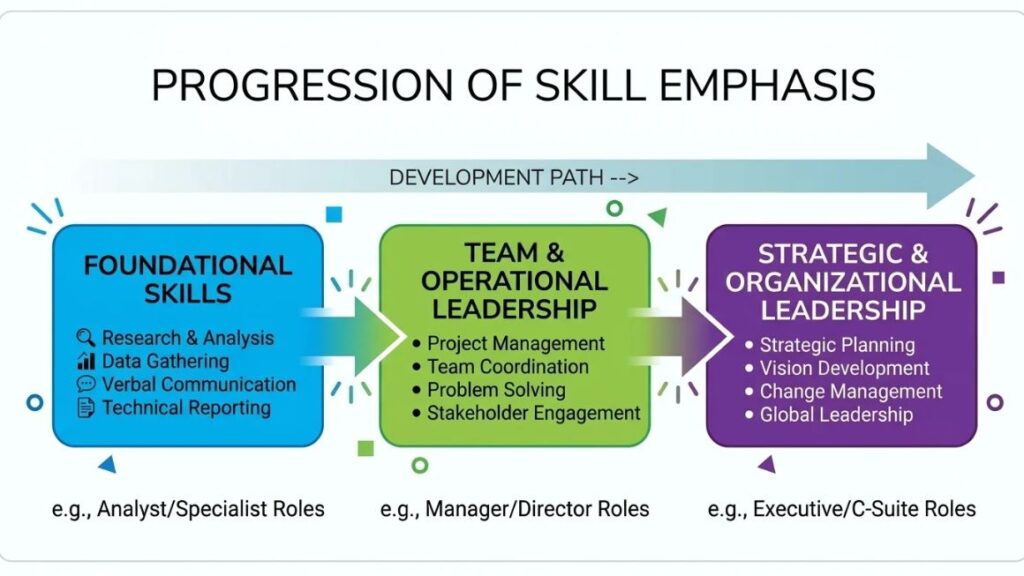
Skills to focus on as a beginner
Start with customer research, structured problem-solving, clear writing, and basic analytics. If you’re working out how to become a product manager, this is where your first hours should go. Early product manager skills are mostly about learning to see problems clearly. Analyse an app you already use and document one genuine user problem with evidence. That single exercise covers three of the four skills.
Skills expected of experienced professionals
By mid-career, you’re expected to choose the right problems, not just finish assigned ones. Strategy, prioritization, stakeholder influence, commercial judgment, and measurable impact carry more weight. In Productboard’s 2025 survey of 379 product professionals, 52% cited strategic thinking and 53% cited systems-level thinking as increasingly important skills in the AI era. Responsibility moves from completing tasks to deciding which tasks deserve to exist. That’s where product manager skills start showing up as business impact.
Skills for senior leadership
Senior leaders manage portfolios. They decide where limited people and money go, align several teams behind one direction, and answer for long-term business results. Tools matter less at this level. Judgment and influence matter more, and neither arrives with a software subscription.
Tools That Help You Put These Skills into Practice
Choose product management tools by the job in front of you, not by popularity. They support product manager skills but can’t replace them. Research needs interview and survey tools. Planning needs a tracker and a roadmap. Analytics needs event data and a way to test changes.
Tools for research and discovery
Dovetail stores interview recordings and notes so you can tag themes and find evidence later. Survey tools handle quick questions at a larger scale.
Tools for planning and collaboration
Jira and Linear track work through development. Roadmapping platforms, including Productboard and Jira Product Discovery, connect ideas to goals. For a small team, a spreadsheet works fine.
Also Read: 10 Best Product Backlog Management Tools in 2026
Tools for analytics and experimentation
Amplitude and Mixpanel show what users actually do: where they drop off and what brings them back. Experimentation platforms help you run A/B tests and read the results.
AI-assisted workflows
AI can summarize interview transcripts, cluster feedback, draft requirements, and help build quick prototypes. Verify every output against the source. Keep customer data and confidential plans out of tools your company hasn’t approved. Productboard’s 2025 survey found more than a third of product teams work without a formal AI governance policy, so you may need to set your own rules. A person reviews everything before it ships. And nobody needs every tool. Start with one for the task in front of you.
How to Build Practical Experience Without a Product Manager Job?
You can build real product manager skills without the title. Study a product you use, write a case study on one problem, and show your decisions.
Choose a product and identify one real problem
Pick an app or service you use every week. Look for friction you can see: a confusing step, a form that fails, a feature people ignore. Use evidence. Read app store reviews, watch someone else use it, check support forums. A hunch isn’t evidence.
Create a small case study
A case study defines the problem, shows the user evidence, proposes a solution, explains the trade-offs, and names the success metrics. Add a simple prototype or requirements document if it helps. Keep it short enough that someone will actually read it. A tight one-pager beats a twenty-slide deck nobody opens.
Build a portfolio around decisions and outcomes
Explain what you investigated, what you chose, what you rejected, and what you learned. Be upfront about which projects are simulated and which shipped for real. Hiring managers can tell, and the honest version holds up better under questions. It also gives you real material for product management interview questions, since most ask how you’d prioritize, handle a disagreement, or measure success.
A Practical 30-Day Learning Plan
Spend one week each on users, priorities, metrics, and presentation. By day 30, you’ll have one case study and a clear view of which product manager skills to practise next.
Week 1: Understand users and problems
- Analyse an existing product and write a concise problem statement. Use app reviews, a short chat with one real user, or your own notes as evidence.
Week 2: Prioritize and plan
- Compare three possible solutions and justify the one you prefer. Write down what you’d give up with each. The trade-off is the whole point.
Week 3: Define metrics and requirements
- Draft a short product brief with acceptance criteria and success measures. Pick one main metric and one guardrail metric, such as support tickets, so a win in one place doesn’t hide a loss in another.
Week 4: Present your case study
- Summarize your reasoning, assumptions, trade-offs, and next steps. Show it to a friend or colleague, ask what’s unclear, and revise once.
- End with a portfolio-ready document and a self-assessment.
Common Mistakes to Avoid When Developing Your Skills
Most mistakes in building product manager skills come down to learning without applying. These six show up most, and each is easy to fix once you spot it.
- Collecting certifications without using them. A certificate proves attendance. A case study proves skill.
- Memorizing frameworks without their limits. RICE and MoSCoW are aids, not verdicts.
- Chasing feature delivery over outcomes. Shipping isn’t the goal. Changing customer behaviour is.
- Treating dashboards as a substitute for customers. Numbers show what happened. Conversations show why.
- Trusting AI-generated research without checking. Verify the sources and the numbers.
- Claiming results you can’t demonstrate. Interviewers will ask for details.
Conclusion
Good product work sits where three things meet: understanding users, judging the business, and getting the work delivered. Reading about product manager skills helps for about a week. Using them is what sticks.
So pick one capability from this guide and practise it on a real project, or a simulated one that’s clearly labelled. Write down what you decided and why. That record becomes your evidence.
Feedback speeds all of this up. A mentor or a structured course can show you blind spots that self-study hides. If that’s what you’re after, take a look at Young Urban Project’s Product Management course. [CTA: insert link to YUP Product Management course]
FYQ: Frequently Asked Questions
What are the most important skills for a product manager?
The most important product manager skills are strategic thinking, customer understanding, prioritization, clear communication, data analysis, and execution. If you have to pick a starting point, start with customer understanding. Without it, the other skills get applied to the wrong problem.
Do product managers need coding skills?
No. Most PMs don’t write production code. They need technical literacy: enough understanding of APIs, data, and system limits to judge scope and ask good questions. Some roles, such as platform or developer-facing products, expect more depth, so check the job description.
Can I become a product manager without experience?
Yes, though it takes proof. Common routes include moving from marketing, engineering, design, analytics, or customer support, or starting as an associate product manager. Transferable skills help. A small, honest case study that shows how you think helps more.
How long does it take to develop these skills?
It depends on your background, how much you practise, and the role you want. Basic competence in these product manager skills, starting with research, prioritization, and writing, can come within a few months of deliberate practice. Professional mastery, especially strategy and judgment, usually takes years of real decisions.
Which tools should a beginner learn first?
Pick tools for a specific task, not a whole software stack. Need to organize interview notes? Try a research tool. Need to track work? Use a tracker like Jira or Linear. One tool per task is plenty to begin with.
How is AI changing the role of a product manager?
AI speeds up research synthesis, drafting, and analysis. It doesn’t replace judgment. Product Focus’s 2026 survey found 97% of PMs said AI improved their personal productivity, but only 64% said it improved product outcomes. Evaluation, strategy, and responsible use are where PMs add value.