

Product marketing trends in 2026 are reshaping how companies build, launch, and grow products. AI-driven personalization, data-led decision-making, and social commerce are no longer emerging ideas -they’re table stakes for teams serious about growth. This article covers everything you need to know about product marketing in 2026: what it is, how the process works, the key trends defining the discipline right now, the KPIs that actually matter, and how to build a career in it. Whether you’re a startup founder figuring out your go-to-market plan, a marketing manager looking to sharpen your positioning, or someone exploring product marketing as a career, this guide gives you a complete, practical picture of where the function stands today and where it’s headed.
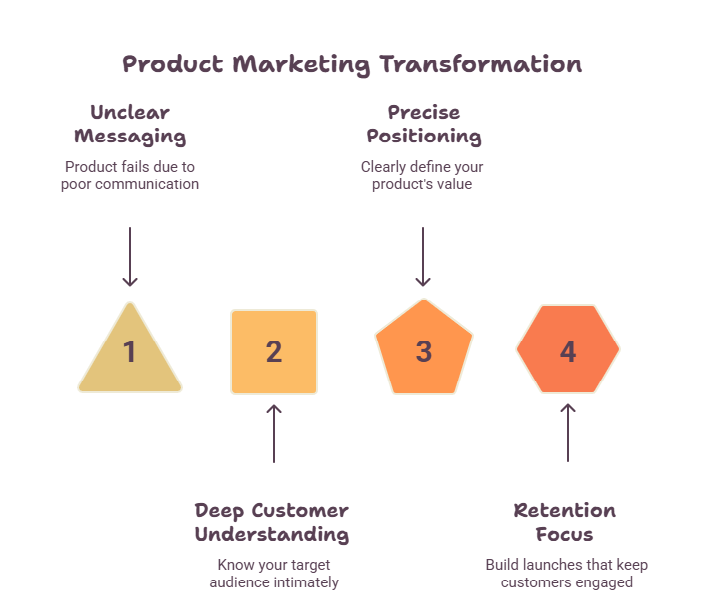
Table of Contents
Introduction
Most product launches fail. Not because the product was bad -but because the team couldn’t clearly explain who it was for, why it mattered, or why someone should choose it over the next option on the shelf. That’s a product marketing problem, not a product problem.
Product marketing has quietly become one of the most strategic functions in any company. It connects what a product does with why a customer should care. And in 2026, with AI changing how buyers research, how markets move, and how decisions get made, getting product marketing right has never been more consequential.
Product marketing trends this year point to one consistent theme: the teams that grow are the ones who understand their customers deeply, position with precision, and build launches that are as much about retention as acquisition. This article breaks down what those trends are, how the product marketing process actually works, what KPIs you should be tracking, and what a career in this discipline looks like.
What Is Product Marketing?
Product marketing is the function responsible for bringing a product to market and keeping it there. It spans customer research, positioning, messaging, pricing, launch execution, and sales enablement – sitting at the intersection of the product team, the sales team, customer success, and marketing communications.
Product marketing is defined as the discipline that translates product value into customer-relevant messaging, then uses that messaging to drive acquisition, adoption, and retention.
Where traditional marketing focuses on brand awareness or lead generation, product marketing focuses on making the right people understand why a specific product solves their specific problem better than anything else.
Read More: “go-to-market strategy.”
What Is a Product Marketing Strategy?
A product marketing strategy is a plan that defines who your product is for, what problem it solves, how you’ll position it against alternatives, and how you’ll reach and convert your target audience.
The core components of a working product marketing strategy are:
- Customer understanding – who you’re targeting and what they actually care about
- Positioning – where your product sits in the market relative to alternatives
- Messaging – how you communicate the product’s value across every channel
- Pricing – how you structure value exchange with different customer segments
- Launch planning – how you bring the product or feature to market
- Retention – how you keep customers engaged and growing after acquisition
A simple framework: Target customer + problem they face + how your product solves it + why it’s better than the next option. That’s it. Everything else extends from those four elements.
Product Marketing vs. Traditional Marketing
The clearest way to understand product marketing is to compare it with traditional marketing.
Traditional marketing asks: “How do we get more people to know about us?” Product marketing asks: “Why should a specific person choose this product, and what do they need to hear to make that decision?”
| Dimension | Traditional Marketing | Product Marketing |
| Primary goal | Brand awareness, lead volume | Market fit, product adoption, revenue |
| Metrics | Impressions, CTR, MQLs | Win rate, adoption rate, retention, NRR |
| Team interaction | Works with agencies, content, and paid teams | Works with product, sales, CS, and leadership |
| Activities | Campaigns, content calendars, ads | Positioning docs, launch plans, battlecards |
| Customer lifecycle focus | Top of funnel | Full lifecycle, especially activation and retention |
Why Product Marketing Matters for Growth
Here’s a number worth keeping in mind: according to a 2024 report by the Product Marketing Alliance, companies with a dedicated product marketing function are 2.3x more likely to meet or exceed revenue targets than those without one. That’s not because PMMs are magic — it’s because they prevent the most expensive mistake a company can make: building something customers don’t understand how to buy.
The Role of Product Marketing in Go-To-Market Success
Product marketing doesn’t just support the go-to-market launch. It owns it.
Before launch, product marketing runs the customer research that tells you whether you’re solving a real problem for a real segment, and builds the positioning that everything else in the launch depends on. During launch, it coordinates across product, sales, and marketing to make sure messaging is consistent, sales is trained, and the campaign is live. After launch, it monitors adoption and churn signals to figure out what’s working and what needs to change.
A real-world example: when Notion launched Notion AI in early 2023, the product marketing team made a deliberate choice not to lead with feature specs. They led with use cases — “Write faster. Think clearer. Work smarter.” That’s a positioning decision. It made Notion AI feel accessible to non-technical users who might have bounced if the headline were about LLM integration. That decision came from product marketing.
Product marketing owns the go-to-market process from pre-launch research through post-launch optimization. Teams with a structured product marketing function are significantly more likely to meet revenue targets, according to the Product Marketing Alliance’s 2024 State of Product Marketing report. The function reduces launch failure by ensuring positioning, messaging, and sales readiness align before any product reaches the market.
How Product Marketing Impacts Business Outcomes
Good product marketing improves revenue growth by increasing conversion rates at every stage of the funnel. It improves market penetration by helping sales articulate value to new segments. It builds a competitive advantage by establishing clear differentiation before competitors can close the gap.
And it reduces wasted spend. When positioning is wrong, no amount of paid advertising fixes it. Every rupee spent on Meta or Google Ads promoting a confusingly positioned product is a rupee that can’t be recovered.
Product Marketing Goals: From Audience Research to Revenue
The goals of product marketing aren’t abstract. They connect directly to acquisition, retention, and revenue. But they start with understanding people, not products.
Understanding the Target Audience
You can’t write good positioning if you don’t know who you’re positioning for. Most weak positioning comes from trying to appeal to everyone, which means it resonates with no one.
Customer personas are structured profiles of your target buyers. They include demographics (role, company size, industry), psychographics (motivations, fears, aspirations), buying behavior (how they research, who influences the decision), and the specific pain points that make them look for a solution like yours.
Customer journey mapping then shows you what that person experiences from the moment they realize they have a problem to the moment they become a loyal customer. At each stage – awareness, consideration, decision, retention – product marketing defines what the customer needs to see, hear, or understand.
Read More: “customer journey mapping“
Aligning Sales With Marketing Teams
One of the most common failure points in product marketing is when sales and marketing operate from different stories about what the product is and who it’s for.
Product marketing fixes this through cross-functional collaboration. It builds messaging that sales can actually use in calls, creates battlecards that help reps handle competitor comparisons, and runs internal training before every major launch. When product marketing is doing its job well, a sales rep and a social media post say the same thing about the product – in different words, but with the same core message.
Shared goals and shared metrics – like win rate, pipeline conversion, and expansion revenue – keep both teams pointed in the same direction.
Driving Revenue Through Customer Engagement
Acquisition gets the credit. But retention is where revenue actually lives.
Product marketing supports retention through educational content that helps customers get more value from the product, case studies that show what’s possible, and community building that creates peer-to-peer reinforcement. It also identifies upsell and cross-sell opportunities based on usage patterns, working closely with customer success teams to turn happy customers into expansion revenue.
The Product Marketing Process
The product marketing process isn’t a one-time launch checklist. It’s a continuous cycle of research, positioning, launch, and optimization. Here’s how it works in practice.
Market Research and Audience Segmentation
The process starts with understanding the market. That means running customer interviews, analyzing survey data, mining support tickets for recurring problems, and using tools like Hotjar, Mixpanel, or FullStory to understand how users actually interact with the product.
Segmentation then groups customers by meaningful criteria – not just demographics, but behavior. Usage-based segmentation in SaaS, for example, separates power users from casual ones. Geographic segmentation matters when pricing or competitive dynamics differ by market. Behavioral segmentation identifies who’s close to churning versus who’s expanding.
Crafting Positioning and Messaging
Positioning is the foundation. Everything else – copy, campaigns, sales scripts, onboarding flows – is built on top of it.
A strong positioning statement has four parts: the target customer, the problem they face, the solution you offer, and the reason to believe you over alternatives. It’s not a marketing tagline. It’s an internal strategic document that gives every team a shared lens for communicating about the product.
Messaging frameworks then translate positioning into the actual language used at each stage of the funnel. Core messaging explains the overall value. Value messages break it down by customer segment or use case. Feature messaging connects specific capabilities to specific outcomes. And objection handling prepares sales and marketing for the doubts buyers will raise.
Product positioning is the single most impactful input into product marketing effectiveness. According to the Product Marketing Alliance’s 2024 State of Product Marketing report, 91% of product marketing teams own positioning and messaging – the highest ownership rate of any PMM responsibility. A positioning statement should define the target customer, the problem, the solution, and the competitive differentiator in four clear components.
Defining Pricing and Value Proposition
Pricing is a positioning decision as much as it is a financial one. The model you choose signals what kind of product you are and who you’re for.
In 2026, the dominant pricing models in SaaS are subscription pricing (flat monthly or annual fee), usage-based pricing (pay for what you use – Stripe and Twilio are the canonical examples), freemium (free tier with paid upgrade), and hybrid models that combine features of each.
The value proposition, separate from pricing, is the customer-facing answer to: “What do I get out of this?” It leads with outcomes – time saved, revenue generated, problems eliminated – not features. The clearest value propositions communicate measurable ROI.
Building a Go-To-Market Plan
A go-to-market (GTM) plan is the operational blueprint for taking a product or feature to market. It covers market selection, target audience, positioning, distribution channels, success metrics, and a launch timeline.
The GTM checklist every PMM should work through before launch:
- Research complete – customer insights, competitive landscape, market sizing
- Messaging approved – positioning doc signed off by product, marketing, and sales
- Sales trained – internal enablement sessions done, battlecards distributed
- Assets prepared – landing pages live, sales decks ready, email sequences built
- Launch timeline finalized – every team knows what’s happening and when
Product Launch Execution
Pre-launch activities include beta testing with a small customer group, running internal training for sales and customer success, creating content that will go live on launch day, and, in larger launches, coordinating with influencers or press.
On launch day, the campaign activates: email sequences go live, social posts go out, PR announcements are distributed, and sales start outbound outreach. Product marketing’s job on launch day is coordination and real-time monitoring.
Post-Launch Monitoring and Optimization
Launch day isn’t the finish line. It’s the start of the measurement phase.
Key areas to monitor: feature adoption rates (are users actually using what you built?), conversion rates at each funnel stage, qualitative user feedback from support tickets and interviews, and early churn signals from usage data. The optimization loop – analyze, learn, adjust, scale – is where most long-term product marketing value is created.
How to Create a Product Marketing Plan
A product marketing plan is a structured document that translates strategy into execution. Here’s how to build one.
Setting Goals With Measurable KPIs
Goals without measurement are intentions, not targets. Use the SMART framework: Specific, Measurable, Achievable, Relevant, Time-bound.
Common product marketing objectives that work well with this framework:
- “Increase feature adoption from 22% to 40% within 90 days of launch.”
- “Improve win rate against Competitor X from 31% to 45% in Q3.”
- “Reduce time-to-first-value from 14 days to 7 days by the end of H1.”
Vague goals like “increase awareness” or “improve positioning” aren’t goals – they’re directions.
Selecting Effective Marketing Channels
Not every channel works for every product. Owned channels – your website, email list, blog, and community platforms – are the foundation because you control them. They build long-term compounding value.
Earned channels – media coverage, partnerships, word of mouth – add credibility that owned channels can’t manufacture. Paid channels – search ads, social ads, influencer partnerships – accelerate distribution when you already know your message converts.
The sequence matters. Get your message working on owned channels first. Then amplify with paid. Running expensive paid campaigns on untested positioning is the fastest way to burn budget.
Developing a Content Calendar
Product marketing content isn’t the same as content marketing content. It’s more focused: product update announcements, customer case studies, comparison pages, and educational resources that build the category.
Content planning best practices for PMMs: publish consistently rather than in bursts, align content campaigns with product launches and seasonal buying cycles, and review performance data monthly to cut what isn’t working.
Read more: “content calendar for product marketing.”
Budgeting and Resource Allocation
Marketing budgets in product marketing are typically split across advertising, tools and technology, content production, and events or webinars.
For teams building their first PMM function, the most common resourcing mistake is underinvesting in research. Customer interviews cost almost nothing compared to a failed launch. Prioritize qualitative research over production until you know your positioning holds.
Product Marketing Trends Shaping Growth in 2026
These aren’t predictions. They’re already happening. The teams that are winning this year have operationalized all of them.
AI-Driven Personalization
AI is changing what buyers expect from product experiences. Personalized onboarding flows that adapt based on a user’s job role, usage patterns, and stated goals are no longer a premium feature – they’re a baseline expectation.
Tools like Pendo, Appcues, and Intercom now use AI to identify which users are struggling with which parts of the product and trigger contextual in-app guidance automatically. Product marketing’s job is to define the messaging logic behind these interventions – the AI runs the delivery.
Predictive recommendations – surfacing the right feature to the right user at the right moment – are increasing feature adoption rates significantly for SaaS companies running them. That’s a direct PMM outcome.
The ethical dimension matters here. Using AI to personalize messaging based on behavioral data requires clear consent, transparent data practices, and honest communication about what’s being tracked. Brands that ignore this are building trust debt that shows up in churn.
AI-driven personalization is one of the defining product marketing trends of 2026. Product marketing teams now use AI tools, including Pendo, Appcues, and Intercom to deliver adaptive onboarding flows, predictive feature recommendations, and dynamic messaging based on real-time user behavior. The strategic work – defining the messaging logic and customer segments – remains a human responsibility
Data-Led Decision Making
First-party data has become a strategic asset. As third-party cookies continue to phase out and privacy regulations tighten across markets, companies that invested in their own customer data infrastructure are significantly better positioned for targeting, attribution, and personalization.
Real-time customer insights – understanding what a segment is doing right now, not what they did last quarter – are changing how product launches are sequenced. Teams are doing smaller, faster launches with immediate feedback loops rather than big sequential releases with 90-day review cycles.
Predictive analytics, used well, helps PMMs identify which customer segments are most likely to expand, which are most likely to churn, and what messaging works for each. This shifts product marketing from reactive to proactive.
Social Commerce and Digital-First Launches
The buyer journey for software and digital products increasingly runs through creator content before it reaches a brand’s owned channels. On LinkedIn, YouTube, and Instagram, practitioners review tools, share workflows, and recommend products to audiences that trust them more than any brand ad.
Product-led and creator-led launches are growing in parallel. When Linear, the project management tool, launched in India, its strongest acquisition channel wasn’t paid search -it was developer communities and creator content. That’s social commerce in a B2B context.
Live shopping and community-driven growth models are accelerating in the D2C space. Indian brands like Mamaearth and boAt have built significant acquisition channels through live commerce on Meesho and Instagram Live, with product marketing owning the messaging and offer design.
Sustainable, Purpose-Driven Branding
Buyers – both B2B and B2C – increasingly want to know what a company stands for, not just what it sells. According to a 2024 Edelman Trust Barometer report, 71% of consumers say it’s important to buy from brands that reflect their values.
The product marketing implication: brand trust is now a product differentiator. ESG commitments (Environmental, Social, and Governance), transparent supply chains, and honest communication about what a company is and isn’t doing build the kind of trust that survives competitive pressure.
The risk is greenwashing – claiming sustainability credentials that aren’t real. Companies that overstate their ESG commitments are increasingly being called out, and the reputational cost is high. Communicate what you’re actually doing, not what sounds good.
Hybrid Online-Offline Product Experiences
The clean separation between digital and physical buying journeys is gone. Customers research online, experience offline, buy through whichever channel is most convenient, and expect the experience to be consistent regardless.
Omnichannel customer journeys – where in-app messaging, email, in-person events, and live support create one coherent experience – are becoming standard for high-growth SaaS companies. Interactive product demonstrations at events, paired with follow-up digital sequences, are driving conversion rates that neither channel achieves alone.
Other Emerging Trends Worth Watching
Customer-led growth shifts the acquisition engine from marketing-driven to customer-referral-driven. Product marketing’s role is to build the advocacy infrastructure – referral programs, case study pipelines, and community platforms.
Product-led growth evolution is moving beyond simple freemium to sophisticated usage-based models where the product itself creates qualified sales opportunities. Product marketing owns the messaging that converts product-qualified leads (PQLs) into paying customers.
Privacy-first marketing is no longer a compliance exercise. It’s a positioning opportunity. Brands that make privacy a visible feature – as Apple has done with its App Tracking Transparency framework – earn trust and differentiation simultaneously.
What Is Product Marketing Actually Responsible For?
According to the Product Marketing Alliance’s 2024 State of Product Marketing report, here’s what PMMs actually own across companies:
Product Positioning and Messaging (91%)
Positioning drives every downstream decision in marketing, sales, and product. When positioning is sharp, sales conversations go faster, campaigns convert better, and customers understand the product without hand-holding. Product marketing owns this function at 91% of companies – the highest of any PMM responsibility.
Managing Product Launches (80.9%)
Launch ownership means coordinating every team involved in bringing a product or feature to market. Not contributing to it. Owning it. That includes defining success metrics, running the pre-launch checklist, coordinating cross-functional timelines, and running the post-launch review.
Sales Enablement and Collateral (80.9% & 78.7%)
Product marketing creates the materials that help sales close: sales decks, battlecards, one-pagers, competitive comparison sheets, and objection-handling guides. Battlecards, specifically, are one of the highest-leverage PMM deliverables – they directly improve win rates against specific competitors.
Read More: “sales battlecards“
Customer and Market Research (69.7%)
Continuous customer research isn’t a quarterly project. It’s an ongoing input. Voice-of-customer programs, regular customer interviews, and systematic feedback collection from support and sales give product marketing the raw material for positioning updates, launch messaging, and feature prioritization input.
Competitive Intelligence (65.2%)
Monitoring competitors isn’t about copying them. It’s about identifying the gaps in the market they’re leaving open and adjusting your positioning to claim them before they close. Regular competitive analysis – covering pricing changes, feature launches, messaging updates, and customer reviews – is a core PMM responsibility.
Managing the Website and Digital Touchpoints (65.2%)
Product pages, landing pages, and conversion optimization all fall under product marketing at a majority of companies. These are the places where positioning meets the buyer directly – getting them right has a direct line to conversion rate and revenue.
How to Measure Success: Modern PMM KPIs
The worst thing a product marketer can do is report on vanity metrics. Impressions and social follows don’t tell you whether product marketing is driving business outcomes. These do.
Win/Loss Ratios
Win rate measures the percentage of competitive deals your company wins. Loss analysis – specifically, why you’re losing – is even more valuable. If you’re consistently losing to one competitor on pricing, that’s a positioning problem. If you’re losing on features, that’s a product roadmap input. Either way, product marketing owns the diagnosis.
Feature Adoption Rate
Feature adoption rate measures the percentage of active users engaging with a specific product feature. Low adoption after a launch usually means one of three things: the feature wasn’t positioned clearly enough, the in-app onboarding wasn’t effective, or the feature doesn’t actually solve a problem customers have. Product marketing can affect the first two directly.
Sales Confidence Score
Sales confidence score, typically gathered through internal surveys, measures how prepared sales reps feel to sell the product and handle objections. It’s a leading indicator of win rate. If reps don’t feel confident, they’re going to fumble or discount. Product marketing fixes this through better enablement.
Additional KPIs Every Product Marketer Should Track
- Customer acquisition cost (CAC) – what it costs to acquire a new customer
- Customer lifetime value (LTV) – total revenue a customer generates over their relationship with you
- Net revenue retention (NRR) – revenue retained plus expansion minus churn, expressed as a percentage; above 100% means you’re growing from existing customers
- Product-qualified leads (PQLs) – leads who have experienced meaningful product value and are therefore more likely to convert
- Time-to-value – how long it takes a new customer to experience the outcome that justified their purchase
- Expansion revenue – additional revenue from existing customers through upsells and cross-sells
How Is Product Marketing Different From Other Marketing Roles?
Product marketing sits next to several adjacent functions, and the boundaries often blur. Here’s how to think about each one.
Product Marketing vs Marketing Communications
Marketing communications (MarCom) handles the execution of campaigns – writing copy, managing channels, and running creative production. Product marketing defines what those campaigns say and who they’re for. When a launch campaign goes live, MarCom runs the copy and channel; product marketing wrote the messaging framework behind it.
The overlap happens in launch campaigns, where product marketing and MarCom work closely together. The division is roughly: PMM owns the strategy and message, MarCom owns the execution and format.
Product Marketing vs Brand Marketing
Brand marketing focuses on perception at the company level – awareness, reputation, and emotional association. Product marketing focuses on purchase decisions at the product level. A brand marketing campaign might build trust. A product marketing campaign converts that trust into a specific product adoption.
Both functions care about consistency, but they measure different things. Brand marketing tracks awareness and sentiment. Product marketing tracks adoption and win rate.
Product Marketing vs Demand Generation
Demand generation creates a pipeline – it brings leads into the funnel. Product marketing converts those leads – it gives them the positioning, messaging, and content that makes a purchase decision clear. In practice, the two functions need each other. Demand gen needs PMM’s positioning to build effective campaigns. PMM needs demand gen’s pipeline to validate whether messaging is working.
Product Marketing vs Field Marketing
Field marketing is geographically or event-focused – regional campaigns, trade shows, and in-person activations. Product marketing is audience-focused and channel-agnostic. The two collaborate closely on event-based launches, customer engagement events, and regional expansion campaigns.
How to Start a Career in Product Marketing
Product marketing is one of the fastest-growing marketing roles, particularly in SaaS and tech. The function is expanding because companies that once relied on generalist marketers are realizing that product-specific expertise drives better outcomes.
The Skills That Matter Most
You don’t need a specific degree. You need a combination of skills that most marketing backgrounds can develop:
- Market research – the ability to design and run customer interviews, analyze survey data, and synthesize insights into actionable positioning
- Storytelling – translating product capabilities into customer-relevant narratives
- Communication – working cross-functionally with product, sales, and executive teams
- Analytics – reading data fluently enough to identify adoption patterns, churn signals, and campaign performance
- Strategic thinking – connecting market dynamics to go-to-market decisions
Educational Backgrounds That Transition Well
Marketing, business, and communications degrees are natural fits. But some of the best PMMs come from product management (they understand the product deeply), customer success (they understand what customers actually value), and sometimes engineering or design (they can translate technical capabilities into clear language).
The degree matters less than the portfolio.
Building a Product Marketing Portfolio
You don’t need a PMM job title to build a PMM portfolio. Projects you can create independently:
- A positioning exercise for a product you use – pick any SaaS tool and write a positioning statement, messaging framework, and competitor comparison
- A mock launch plan for a product feature
- A competitive analysis of a market you know well
- A messaging framework, including objection handling
These exercises demonstrate the core skill set more directly than academic credentials.
Read More: “product marketing certifications“
Typical Career Path for Product Marketers
- Associate PMM / Marketing Coordinator – entry-level, typically focused on content and research support
- Product Marketing Manager – owns positioning and launches for one product or product line
- Senior PMM – leads complex launches, mentors junior PMMs, manages stakeholder relationships
- Director of Product Marketing – manages a team, sets PMM strategy across multiple products
- VP of Marketing / CMO – strategic leadership, typically spanning multiple marketing functions
The jump from PMM to Director is where cross-functional leadership and measurable revenue impact become the deciding factors.
Common Mistakes New Product Marketers Make
Ignoring customer research is the most expensive one. New PMMs often want to jump straight to messaging. But messaging built without customer input is just guessing out loud.
Overemphasizing features is the second most common mistake. Features describe what a product does. Benefits describe what a customer gets. Buyers make decisions based on benefits.
Weak sales alignment means the best positioning doc in the world stays a Google Doc. If sales aren’t trained, enabled, and bought in, it doesn’t exist in practice.
Key Takeaways and What to Do Next
Product marketing in 2026 isn’t a support function. It’s a revenue function. The companies growing fastest this year share a common trait: they have sharp positioning, clear GTM processes, and product marketing teams that own both.
The product marketing trends shaping this year – AI-driven personalization, data-led decision making, social commerce, and purpose-driven branding – aren’t things you can afford to ignore. They’re the conditions under which your competitors are operating. Understanding them is the minimum. Operationalizing them is the advantage.
The foundation hasn’t changed: customer understanding is still what separates effective product marketing from noise. Every framework, every trend, every KPI connects back to knowing who your customer is, what they need, and why your product is the right answer.
If you’re a practitioner, the action is simple. Audit your current positioning statement. If you can’t articulate in two sentences who your product is for, what problem it solves, and why it’s better than alternatives, that’s your starting point. Everything downstream – messaging, campaigns, sales enablement, launches – is easier when that foundation is solid.
Want to go deeper on product marketing? YUP’s Product Marketing course covers positioning, GTM strategy, launch execution, and sales enablement with real-world case studies and frameworks you can apply immediately. If you’re building toward a career in product marketing or sharpening your current practice, it’s the fastest structured way to get there.
FAQs: Product Marketing Trends
What is the core difference between a Product Manager (PM) and a Product Marketing Manager (PMM)?
A Product Manager owns what gets built – prioritizing features, writing product specs, and working with engineering. A Product Marketing Manager owns how the product gets positioned and sold – customer research, messaging, launches, and sales enablement. PMs focus on the product roadmap; PMMs focus on the market strategy. In practice, the two roles work closely together, especially on launch planning.
How has AI changed the role of product marketing in 2026?
AI has shifted product marketing execution significantly, particularly in personalization and analytics. Tools now automate adaptive onboarding flows, predictive feature recommendations, and real-time messaging optimization based on user behavior. But the strategic work – defining positioning, understanding customer segments, and deciding what to say and why – remains a human function. AI handles delivery; PMMs define the logic behind it.
What is solutions marketing, and how does it differ from product marketing?
Solutions marketing focuses on a customer problem and builds a multi-product or multi-service bundle to address it. Product marketing focuses on a specific product and its value proposition. In enterprise software, solutions marketing is common when a single product isn’t enough to solve a complex customer problem. Product marketing is the building block; solutions marketing packages those blocks for a specific segment or use case.
What are the most important KPIs for a product marketer?
The KPIs that best reflect PMM impact are win/loss ratio, feature adoption rate, net revenue retention (NRR), product-qualified leads (PQLs), time-to-value, and sales confidence score. Revenue metrics matter more than activity metrics. Tracking impressions or content views without connecting them to adoption or pipeline is the fastest way to lose budget authority.
What is a Go-To-Market (GTM) strategy?
A GTM strategy is the operational plan for bringing a product or feature to market. It defines the target audience, the positioning, the distribution channels, the sales approach, and the metrics for success. GTM strategy is owned by product marketing in most companies and involves cross-functional coordination across product, marketing, sales, and customer success. A GTM strategy that isn’t aligned across all four functions usually underperforms regardless of the product’s quality.
How does product marketing support the sales team?
Product marketing supports sales through messaging frameworks, battlecards, one-pagers, competitive comparison sheets, and internal training sessions. Battlecards are probably the highest-leverage deliverable – they give reps specific answers to specific competitor comparisons. Sales enablement effectiveness is typically measured through sales confidence scores and win rate improvements.
What is competitive intelligence in product marketing?
Competitive intelligence is the ongoing process of monitoring competitor products, pricing, messaging, and positioning to identify gaps and opportunities. Product marketing uses it to adjust positioning when competitors move, to build battlecards for sales, and to identify underserved segments. Good competitive intelligence is continuous – not a one-time analysis done at the start of a product cycle.
How do you identify a target persona?
A target persona is built from research, not assumptions. Run customer interviews with your best existing customers, analyze behavioral data from your product and marketing channels, review support tickets and sales call notes for recurring language, and look at CRM data to identify patterns in your highest-LTV accounts. The output is a structured profile covering role, company context, goals, pain points, buying process, and objections.
What is the typical career path for a product marketer?
Most product marketing careers follow this progression: Marketing Coordinator or Associate PMM, then Product Marketing Manager, then Senior PMM, then Director of Product Marketing, then VP of Marketing or CMO. The timeline varies by company size and growth stage. In a high-growth startup, you can move from Associate PMM to Director in three to four years. In a larger organization, it typically takes longer.
What are the biggest product marketing challenges in 2026?
The biggest challenges right now are proving revenue impact with clear metrics, keeping up with the pace of AI tool integration in the marketing stack, managing the volume of customer data while maintaining privacy compliance, and building alignment between product, sales, and marketing in increasingly distributed teams. The companies handling these challenges well tend to have PMMs who are equally comfortable with data as with narrative.
How can small businesses apply product marketing principles effectively?
Small businesses don’t need a dedicated PMM role to use product marketing principles. Start with one clear positioning statement: who is your product for, what problem does it solve, and why is it better than the alternatives? Build your website copy, sales conversations, and marketing content from that statement. Run at least five customer interviews before every major launch. And track win rate and customer retention as your primary metrics – not traffic or follower counts.
What is the difference between product positioning and brand positioning?
Product positioning defines where a specific product sits in the market relative to alternatives – for a specific audience, solving a specific problem, at a specific price point. Brand positioning defines where the company sits in the mind of the market overall – the values, personality, and reputation that all products carry. Brand positioning is broader and longer-term. Product positioning is specific and adjustable as markets evolve.
How often should a product marketing strategy be updated?
At a minimum, review your positioning and messaging after every major launch, significant competitive move, or notable shift in customer feedback. For fast-moving markets – SaaS especially – a quarterly review cycle is reasonable. Annual reviews are too slow. The trigger isn’t the calendar; it’s a change in the market, customer behavior, or competitive landscape significant enough to affect why customers choose you.
Is product marketing more important for B2B or B2C?
Product marketing is essential in both, but the activities look different. In B2B, PMM focuses heavily on sales enablement, competitive intelligence, and account-level messaging because purchase decisions involve multiple stakeholders and long cycles. In B2C, PMM focuses more on consumer positioning, launch campaigns, and digital experience. The function matters equally in both contexts – the emphasis just shifts based on how buying decisions get made.
What is the core difference between a Product Manager (PM) and a Product Marketing Manager (PMM)?
A Product Manager owns what gets built – prioritizing features, writing product specs, and working with engineering. A Product Marketing Manager owns how the product gets positioned and sold – customer research, messaging, launches, and sales enablement. PMs focus on the product roadmap; PMMs focus on the market strategy. In practice, the two roles work closely together, especially on launch planning.
How has AI changed the role of product marketing in 2026?
AI has shifted product marketing execution significantly, particularly in personalization and analytics. Tools now automate adaptive onboarding flows, predictive feature recommendations, and real-time messaging optimization based on user behavior. But the strategic work – defining positioning, understanding customer segments, and deciding what to say and why – remains a human function. AI handles delivery; PMMs define the logic behind it.
What is solutions marketing, and how does it differ from product marketing?
Solutions marketing focuses on a customer problem and builds a multi-product or multi-service bundle to address it. Product marketing focuses on a specific product and its value proposition. In enterprise software, solutions marketing is common when a single product isn’t enough to solve a complex customer problem. Product marketing is the building block; solutions marketing packages those blocks for a specific segment or use case.
What are the most important KPIs for a product marketer?
The KPIs that best reflect PMM impact are win/loss ratio, feature adoption rate, net revenue retention (NRR), product-qualified leads (PQLs), time-to-value, and sales confidence score. Revenue metrics matter more than activity metrics. Tracking impressions or content views without connecting them to adoption or pipeline is the fastest way to lose budget authority.