

There is a Hermès Birkin bag with a five-year waiting list. No discounts. No flash sales. No influencer seeding deals. And demand keeps climbing.
That is not an accident. It is luxury brand management at its most deliberate. The rules that govern how luxury brands grow, protect their value, and stay desirable are almost the exact opposite of what works in mass-market marketing. Where most brands compete on price and availability, luxury brands compete on scarcity and meaning.
If you’re building a career in brand management, entering the luxury or fashion industry, or simply trying to understand how certain brands command irrational premiums decade after decade, this article covers everything you need to know. You’ll understand what luxury brand management actually involves, why exclusivity is the core mechanic, and what skills and career paths exist in this space.
Table of Contents
What Is Luxury Brand Management?
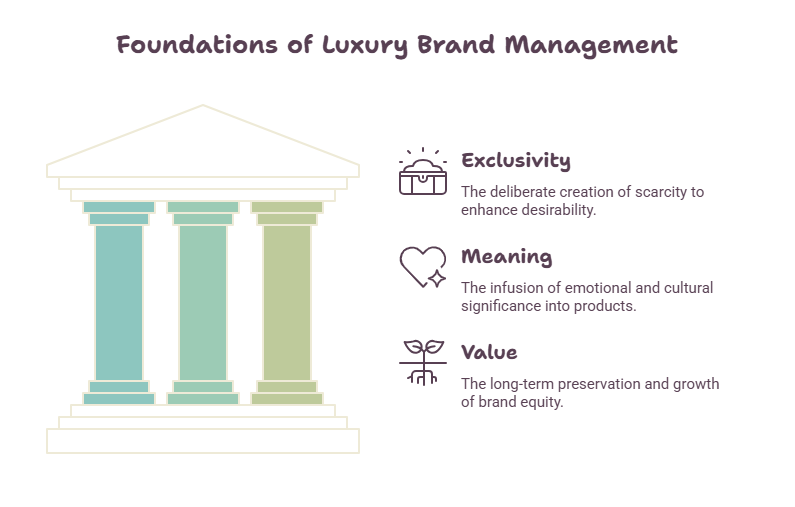
Luxury brand management is the discipline of building, protecting, and growing brands that command premium pricing through perceived exclusivity, craftsmanship, heritage, and emotional resonance. It is not simply about selling expensive products. It is about controlling perception, so completely that price becomes secondary to desire.
Traditional brand management asks: how do we reach more people? Luxury brand management asks: how do we stay out of reach enough to remain aspirational?
The two goals are structurally opposed. And that tension is exactly what makes luxury management its own distinct field.
Brands like Louis Vuitton (LVMH group), Gucci (Kering group), Rolex, and Chanel have mastered this balance over decades. In India, brands like Tanishq’s Rivaah collection or the couture houses showing at Lakme Fashion Week operate on some of the same principles, though the market dynamics differ considerably from Paris or Milan.
Luxury brand management is the practice of building and protecting brands that command premium pricing through scarcity, heritage, and emotional resonance. Unlike mass-market brand management, which prioritizes reach and accessibility, luxury brand management deliberately restricts availability to maintain desire. The discipline spans product strategy, distribution control, communication, and consumer psychology.
Read More: brand management fundamentals
Why Exclusivity Is the Core of Luxury
Most markets follow normal demand curves. Price goes up, demand goes down. Luxury markets often work in reverse. When Louis Vuitton raises prices, it frequently sees demand hold or increase. That is not irrational consumer behaviour. It is Veblen goods theory in action: for certain products, price is part of the signal.
The exclusivity mechanic works on two levels.
The first is supply-side exclusivity. You either can’t get it easily (Hermès Birkin), can’t afford it (Patek Philippe), or can’t get it at all without a prior relationship (certain Rolex references). Scarcity signals value. It also creates conversation. The waiting list for a Hermès Birkin is not just a supply chain reality; it is a marketing tool.
The second is identity-based exclusivity. Luxury is not only about owning something scarce. It is about signalling belonging to a group. Wearing Bottega Veneta in 2023 did not broadcast wealth the way a Gucci logo did. It whispered it, to people who knew. That quiet signal is more valuable to certain consumers than any screaming logo ever will be.
So why does exclusivity matter so much? Because the moment a luxury brand becomes too accessible, it stops being luxury. There’s a reason Burberry had to spend nearly a decade rebuilding after its chequered pattern became ubiquitous in the mid-2000s. Accessibility killed aspiration.
Exclusivity is the structural foundation of luxury brand value. Unlike mass-market brands, luxury brands deliberately limit supply and restrict access to maintain desire. When a brand becomes too accessible, it loses its aspirational positioning, as Burberry’s overexposure in the mid-2000s demonstrated.
Read More: brand positioning strategies
Key Strategies for Luxury Brand Management
Premium Brand Positioning
Premium brand positioning is about occupying the top of a category so decisively that no competitor feels like a real alternative.
Rolex doesn’t compete with Seiko on features. It occupies a different psychological category entirely. Premium positioning requires consistency across every touchpoint: packaging, retail environment, customer service language, advertising tone, and even the weight of the product box.
In India, Tanishq has spent years repositioning from accessible gold jewellery to a premium aspirational brand, using campaigns like “Remarriage” and “Ekatvam” to build emotional equity beyond metal pricing. The product alone doesn’t create the premium position. The meaning attached to it does.
A key principle: never discount. Price reductions in luxury are not a sales tactic. They’re a brand damage event. LVMH-owned brands famously destroy unsold inventory rather than outlet-price it, because excess supply at reduced prices destroys the signal that made the product desirable.
Niche Marketing Strategies
In luxury, niche is a feature, not a limitation. The goal is not to appeal to everyone. The goal is to appeal completely to a very specific type of person.
Niche marketing in luxury operates on cultural fluency. Bottega Veneta doesn’t run Instagram ads optimized for reach. It creates cultural moments through editorial, art world adjacency, and word of mouth among people who set the taste for others.
An Indian analogy: Sabyasachi Mukherjee built his brand on a very specific aesthetic — maximalist, rooted in Indian craft, unapologetically non-Western. He is not trying to reach everyone. He is reaching the consumer who sees his designs as a statement of cultural identity. That specificity created waiting lists and brand mythology without a single global advertising campaign.
Supply Control and Limited Editions
Supply control is one of the most powerful tools in luxury brand management. It includes production limits, controlled distribution, selective retail placement, and the deliberate use of limited editions.
Limited editions work for three reasons. They create urgency. They reward loyal customers before they reward new ones. And they generate cultural conversation that money can’t buy through paid media.
Rolex manages supply so tightly that authorized dealers frequently can’t fulfil orders for popular references. That scarcity isn’t just a manufacturing decision. It keeps grey-market prices above retail, which validates the brand’s pricing and keeps desire high.
Nike has used this mechanic brilliantly with its Jordan and SNKRS drops. Supreme built an entire brand identity on Thursday drops with fixed, very low supply. Both are studying from the same luxury playbook, even if their products sit at different price points.
Counterfeit Brand Protection
Counterfeiting costs the global luxury industry over $500 billion annually, according to the Organization for Economic Co-operation and Development (OECD)’s 2022 report. But the damage goes beyond lost revenue. Counterfeits dilute exclusivity.
Luxury brands fight counterfeiting on multiple fronts. Legal action against manufacturers and distributors. Authentication technology embedded in products, from NFC chips in Gucci bags to blockchain-backed certificates of authenticity. Consumer education about what genuine products look and feel like.
In markets like India, where luxury goods face significant parallel imports and counterfeit pressure, brand protection involves close coordination with customs authorities and platform monitoring for fake listings on marketplaces like Myntra and Tata CLiQ Luxury.
Counterfeiting poses both a revenue and brand equity threat to luxury brands. According to the OECD’s 2022 report, counterfeit trade costs the global luxury sector over $500 billion annually. Luxury brands increasingly use embedded authentication technology, including NFC chips and blockchain certificates, to protect product integrity and exclusivity.
Brand Heritage Preservation
Heritage is the luxury brand’s most defensible asset. Mass-market brands can be built in years. Authentic luxury heritage takes decades or generations, and it can’t be faked.
Preserving heritage means actively maintaining and communicating brand history. Chanel references its founding date of 1910 constantly. Rolex uses “1905” in its communications. Bulgari ties its Roman goldsmith origins to modern campaign imagery.
But preservation isn’t just nostalgia. The best luxury brands use heritage as a lens to make new products feel inevitable. When Dior revived the New Look silhouette under Maria Grazia Chiuri, it wasn’t retro. It was a conversation with history that made the present collection feel authoritative.
Managing the Luxury Product Lifecycle
The luxury product lifecycle looks very different from standard product lifecycle management. Where most products move through introduction, growth, maturity, and decline, luxury products are often deliberately held in a permanent tension between maturity and controlled scarcity.
Iconic products don’t retire. The Chanel No. 5 fragrance has been selling continuously since 1921. The Louis Vuitton Monogram canvas since 1896. These aren’t legacy products being phased out. They are the brand’s living proof of permanence.
New lines are introduced carefully. A luxury brand launching a new product category is a major strategic decision. Hermès entering fine watches took years of careful positioning to avoid diluting its leather goods heritage. Done wrong, an extension can fragment the brand’s meaning.
Product exits are managed, not abandoned. When a luxury brand discontinues a product, it typically does so by signalling rarity, not failure. Limited final editions. Brand archives. Museum exhibitions. The product’s end becomes part of its mythology.
For practitioners managing luxury portfolios, the key metric isn’t market share. It’s brand equity is measured over years, with particular attention to secondary market prices, brand search volume, and editorial placement.
Read More: product lifecycle management
Who Is the High-Net-Worth Consumer?
A high-net-worth consumer is the standard term for the primary luxury buyer. In practice, the luxury consumer landscape is far more segmented than a simple income bracket.
According to Bain and Company’s 2023 Luxury Study, the personal luxury goods market reached approximately 362 billion euros globally. But the buyer profiles within that number are distinct.
The Traditional Wealth Consumer knows brands across generations. They buy for quality and investment value, not to signal status. They often buy directly from heritage houses with which they have a personal relationship.
The Aspirational Luxury Consumer is younger, often first-generation wealth, and highly influenced by social proof. They’re the target of the accessible luxury tier, from Michael Kors to Coach to India’s growing luxury adoption among Tier 1 metro professionals.
The New Luxury Consumer in India is a growing segment. Consulting firm Euromonitor International estimated India’s personal luxury goods market at over $7.5 billion in 2023, growing faster than most Western markets. This consumer is younger, experiences luxury through travel and food as much as goods, and is highly digitally fluent but still expects in-person retail experiences.
Understanding which consumer segment you’re managing for changes everything: communication style, channel mix, product entry points, and service expectations.
The luxury consumer is not a monolithic group. According to Bain and Company’s 2023 Luxury Study, the personal luxury goods market reached 362 billion euros globally, with buyer segments ranging from traditional wealth consumers to younger aspirational buyers. In India, Euromonitor International estimated the personal luxury goods market at over $7.5 billion in 2023, with growth outpacing Western markets.
What Does a Luxury Brand Manager Do?
A luxury brand manager is responsible for protecting and building the brand’s equity, which is different from the typical brand manager role that focuses on volume, distribution, and market share.
In day-to-day terms, the role covers:
Brand positioning and communication: Ensuring that every piece of communication, from retail window displays to digital content, is consistent with the brand’s core identity and premium positioning.
Product launch and lifecycle management: Working with product and design teams to introduce new lines that extend heritage without diluting it.
Channel and distribution control: Deciding which retailers, markets, and platforms carry the brand. Luxury brand managers often argue against, not for, expanding distribution.
Consumer and market intelligence: Tracking what the high-net-worth consumer cares about, where they’re shopping, and what cultural signals they’re responding to.
Crisis and brand protection: Managing reputational events, counterfeit actions, and any brand communication that could damage the premium positioning.
What makes this role different from a standard brand management job is the tempo. Luxury brand managers work on longer time horizons. Quarterly targets matter less than decade-long brand equity trajectories. That requires a certain patience and confidence that isn’t common in marketing roles.
Skills Needed to Excel as a Luxury Brand Manager
The Importance of Creativity and Market Understanding in the Luxury Industry
You need both, and they’re in tension. Creativity drives the editorial vision and cultural relevance that keep a luxury brand desirable. Market understanding keeps it commercially viable.
The best luxury brand managers develop what the industry calls a “double vision”: the aesthetic sensibility to produce beautiful, culturally resonant work, and the business acumen to evaluate ROI, distribution economics, and brand equity metrics.
Core skills for the role:
Aesthetic intelligence: Understanding what looks and feels premium, being able to art-direct, give sharp creative briefs, and distinguish between what’s on-brand and off-brand on instinct.
Consumer psychology: Luxury buying is emotional and identity-driven. Understanding why people buy, not just what they buy, is foundational.
Brand storytelling: Luxury brands communicate through narrative, heritage, and emotion more than product features. Being a strong writer and communicator is a genuine differentiator.
Financial literacy: Understanding margins, pricing strategy, and the economics of limited editions and supply control.
Cross-cultural competency: Luxury is global. A brand manager at a house like LVMH or Kering needs to understand how the brand lands in Japan, the UAE, India, and the US at the same time.
In India specifically, the added skill of code-switching between global luxury brand standards and local consumer sensibilities is valuable. The consumer buying a Louis Vuitton bag at the DLF Emporio in Delhi is not culturally identical to the one buying it on Avenue Montaigne in Paris, even if the product is the same.
How to Become a Luxury Brand Manager
Building a Career in Luxury Brand Management
Career paths into luxury brand management typically come from three directions: fashion and design backgrounds, traditional business and MBA routes, or specialized luxury management programmes.
Luxury management programmes at institutions like ESMOD (Paris), Istituto Marangoni (Milan/London), or Parsons School of Design focus specifically on the luxury segment. In India, institutions like NIFT, Pearl Academy, and Symbiosis Institute of Design offer fashion and brand management courses that can feed into luxury roles.
MBA routes through schools that maintain strong fashion and luxury industry connections, like HEC Paris, Bocconi, or IE Business School in Madrid, are well-established entry paths into house management roles at LVMH, Kering, or Richemont.
That said, formal education is table stakes. What actually differentiates candidates is taste, cultural knowledge, and experience.
Gaining Experience in the Luxury and Fashion Industries
The luxury industry is relationship-driven. How you build early experience matters.
Starting with roles in luxury retail, even at the floor level, builds knowledge of how the brand operates in real consumer interactions. Understanding how sales associates at Dior or Burberry are trained to talk about heritage tells you more about the brand than any case study can.
Roles in luxury PR, editorial, or communications give you early exposure to how the brand communicates and positions itself. These are often overlooked entry points.
In India, the growing domestic luxury segment, including brands like Sabyasachi, Good Earth, and the luxury hospitality groups like Taj Hotels, offers a real hands-on experience that is increasingly valued by global luxury houses expanding into the Indian market.
Networking and Internships in Luxury Business Management
Internships at luxury houses are genuinely competitive. LVMH alone receives tens of thousands of applications annually for a limited number of positions.
Getting there requires a combination of relevant academic background, personal presentation that reflects brand alignment, and typically, some prior experience in adjacent creative industries.
Networking in luxury happens through the industry’s own events: fashion weeks, trade fairs like Baselworld for watches, and design exhibitions. Attending these, even as a student or early-career professional, builds the contextual knowledge that makes your conversations in interviews meaningful.
LinkedIn is useful for building visibility with talent managers, but luxury brand management is one of the few industries where who you know and who can vouch for you still carries considerable weight.
Career Progression: From Entry-Level to Managerial Roles
A typical luxury brand management career path looks like this:
Entry-level: Brand coordinator or assistant brand manager roles. Heavy on execution: managing content calendars, coordinating retail events, preparing briefs for agencies.
Mid-level: Brand manager or senior brand manager. Strategic decision-making over communications, product launches, and consumer research.
Senior level: Brand director or head of brand for a region or product category. P&L ownership, leadership of larger teams, and influence over product strategy.
Executive level: Chief Marketing Officer or similar, typically with responsibility across multiple categories or markets.
Progression in luxury is generally slower than in FMCG or performance marketing, and that is a feature, not a bug. The people who advance are those who demonstrate patience, cultural intelligence, and the ability to think in terms of brand equity over years, not quarters.
Fashion vs Luxury Brand Management: What’s the Difference?
This is a question worth spending real time on, because people conflate the two constantly.
Fashion brand management operates on seasonal cycles. Collections launch, drive press and consumer demand, then rotate out. The product has a built-in shelf life. Fashion brands can tolerate broader distribution, faster price reductions at the end of the season, and more experimental communication.
Luxury brand management operates on permanence. The goal is to build brands that feel timeless, not seasonal. Products don’t expire. Prices don’t fall. Distribution remains deliberately restricted.
There is, of course, significant overlap. Many luxury houses, like Chanel or Louis Vuitton, produce seasonal fashion. But the brand management discipline that governs them prioritizes long-term equity over short-term sell-through.
The career skills also differ. Fashion brand management rewards speed, trend literacy, and content production ability. Luxury brand management rewards patience, cultural depth, and strategic restraint.
For professionals in India’s growing fashion industry, understanding where the fashion-luxury boundary sits is important. Brands like Anita Dongre or Ritu Kumar operate in the premium Indian fashion space. They use some luxury mechanics (heritage storytelling, craft positioning, controlled distribution) but operate on fashion cycles. That hybrid positioning requires practitioners who understand both disciplines.
Read More: brand management careers
Opportunities in Fashion and Luxury Business Management
The luxury sector in India is growing faster than most practitioners realize. According to a 2023 Deloitte Global Powers of Luxury Goods report, India entered the top 10 fastest-growing luxury markets globally.
Opportunities exist across several areas:
Domestic luxury brand growth: Indian heritage brands in jewellery, textiles, and hospitality are professionalizing their brand management. Roles at houses like Sabyasachi, Tarun Tahiliani, or the luxury division of Titan (which operates Tanishq and Mia) are becoming increasingly sophisticated.
Global brand Indian market roles: As international luxury houses open more directly operated stores in India (Dior opened its first India store in 2023), they need local brand management talent that bridges global brand standards with local consumer insight.
Luxury adjacent sectors: Luxury hospitality, fine dining, premium automotive (Mercedes-Benz India, BMW India), and luxury real estate all require brand management professionals with comparable skills.
Digital luxury management: The intersection of luxury and digital is growing. Managing a luxury brand’s presence on platforms like Instagram and maintaining premium aesthetics while using performance media requires a specific kind of hybrid skill.
Emerging Trends in Fashion and Luxury Management
The Rise of Experiential Luxury
Younger high-net-worth consumers increasingly prioritize experiences over objects. Luxury travel, private dining, cultural events, and even luxury education are growing segments. Brand managers at traditional goods houses are building experience arms to capture this shift.
Bulgari’s hotels. Louis Vuitton’s restaurant in Osaka. These are not vanity projects. They’re brand management extensions that deepen the consumer relationship beyond a transaction.
Sustainability and the Luxury Paradox
Luxury and sustainability sit uncomfortably together. Luxury buyers value craft and longevity, which is inherently sustainable. But luxury production methods, supply chains, and packaging have environmental costs that younger consumers increasingly scrutinize.
Brands like Stella McCartney have built entire identities around sustainable luxury. Gucci has made public commitments to carbon neutrality. In India, brands using traditional crafts like Chanderi weaving or Banarasi silk are positioning handicraft as both heritage and environmental positioning.
From what we’ve seen with YUP learners studying brand management, sustainability strategy is now a standard exam topic in luxury management programmes globally, not an optional module.
Digital and Resale Market Dynamics
The luxury resale market, platforms like Vestiaire Collective, The RealReal, and India’s Confidential Couture, is now a legitimate channel that luxury brand managers must account for.
According to a 2023 Bain and Company report, the pre-owned luxury market reached 49 billion euros globally and is growing at twice the rate of the primary market. For brand managers, this creates both a threat (counterfeits entering the secondary market) and an opportunity (brand validation when secondary prices exceed retail).
Some brands, like Rolex, have now launched their own certified pre-owned programmes to control this channel rather than ignore it.
Personalization at Scale in Luxury
Hyper-personalization is becoming a genuine differentiator in luxury. Monogramming and bespoke services have always existed. What’s new is the application of data to personalize at scale without feeling mass-produced.
Net-a-Porter’s private client programme, which offers dedicated stylists and curated edits for top spenders, is a model others are studying. Luxury brands using CRM data to offer personalized product recommendations and early access, without making the process feel algorithmic, is the challenge practitioners are working on right now.
Conclusion
Luxury brand management is one of the most exacting disciplines in marketing. The skills it demands, restraint over reach, long-term thinking over quarterly pressure, aesthetic intelligence alongside financial acumen, are not common. That’s why practitioners who genuinely understand it are valuable.
The key principles are consistent across every luxury house that has lasted: protect exclusivity, preserve heritage, control distribution, and never mistake accessibility for growth. The brands that abandoned any one of those principles have spent years trying to recover.
For anyone building toward this career, the path is clear enough. Build taste through exposure. Gain experience close to luxury consumers. Understand the brand economics. And find every opportunity to work inside a house that takes brand management seriously before you’re running one.
If brand management is the direction you’re going, the Crystal Clear Newsletter covers strategy, brand equity thinking, and market intelligence from across the industry. Worth adding to your weekly reading.
Frequently Asked Questions
What is luxury brand management?
Luxury brand management is the discipline of building and protecting brands that command premium pricing through scarcity, heritage, and emotional resonance. It differs from standard brand management in that it prioritizes long-term brand equity over short-term volume or distribution.
Why is exclusivity so important in the luxury market?
Exclusivity maintains desire. When a luxury product becomes too widely available, it loses its aspirational quality. Luxury brands use supply restriction, selective distribution, and premium pricing to protect their positioning. Burberry’s brand rebuild after its mid-2000s overexposure is the most cited example of what happens when exclusivity breaks down.
What is the difference between luxury and premium brands?
Premium brands compete on quality and superior product attributes within a mainstream market. Luxury brands compete on identity, heritage, and scarcity. A premium brand can grow through broad distribution. A luxury brand typically cannot. Tanishq is premium. Cartier is a luxury. The management disciplines are different.
How do luxury brands protect against counterfeits?
Luxury brands use a combination of legal enforcement, embedded authentication technology (NFC chips, blockchain certificates), consumer education, and platform monitoring. According to the OECD’s 2022 report, counterfeiting costs the global luxury industry over $500 billion annually.
Who is the typical high-net-worth consumer in luxury?
There is no single profile. The high-net-worth consumer ranges from traditional inherited-wealth buyers to younger first-generation wealth consumers. In India specifically, the luxury consumer skews younger than in Western markets and experiences luxury through travel, food, and fashion in roughly equal measure.
What qualifications do you need to become a luxury brand manager?
Most luxury brand managers have backgrounds in business, fashion management, or related creative fields. Programmes at institutions like ESMOD, Istituto Marangoni, or HEC Paris are well-regarded. In India, NIFT and Pearl Academy offer relevant foundations. Experience in luxury retail, PR, or editorial work is often as valuable as formal qualifications.
Is luxury brand management a good career in India?
Yes, and it’s growing. India entered the top 10 fastest-growing luxury markets globally according to the Deloitte 2023 Global Powers of Luxury Goods report. International luxury houses are opening directly operated stores, domestic luxury brands are professionalizing, and luxury-adjacent sectors like hospitality and automotive are all growing their brand management functions.
What’s the difference between fashion and luxury brand management?
Fashion brand management operates on seasonal cycles and can tolerate broader distribution and promotional activity. Luxury brand management is focused on permanence, heritage, and controlled scarcity. Many luxury houses produce seasonal fashion, but the underlying brand management philosophy is different.
How does the luxury resale market affect brand management?
The luxury resale market now represents 49 billion euros globally, according to Bain and Company (2023), growing at double the rate of the primary market. Brand managers must monitor secondary market prices, manage counterfeit risk in resale channels, and increasingly consider launching brand-endorsed pre-owned programmes, as Rolex has done.
What are the biggest emerging trends in luxury brand management?
Experiential luxury, sustainability positioning, digital and resale market management, and personalization at scale are the four most significant trends shaping the discipline right now. Each requires brand managers to think beyond traditional product marketing into consumer relationship design.