

Two years ago, starting a side hustle meant either hiring help you couldn’t afford or doing everything yourself at half the speed a client expected. That gap has closed faster than most people have noticed. A single person with the right AI tools can now produce work that used to need a small team, and clients don’t care how the output got made. They care whether it’s good and whether it’s fast.
This isn’t about AI replacing your side hustle. It’s about AI removing the bottleneck that kept you from starting one. If you’ve been sitting on an idea because you didn’t have the design skills, the writing speed, or the production budget, that excuse is mostly gone now.
Below are 10 AI side hustles you can realistically start this month, each with the exact tools to use and a prompt to get your first deliverable done today.
Table of Contents
Why AI-Powered Side Hustles Work Right Now
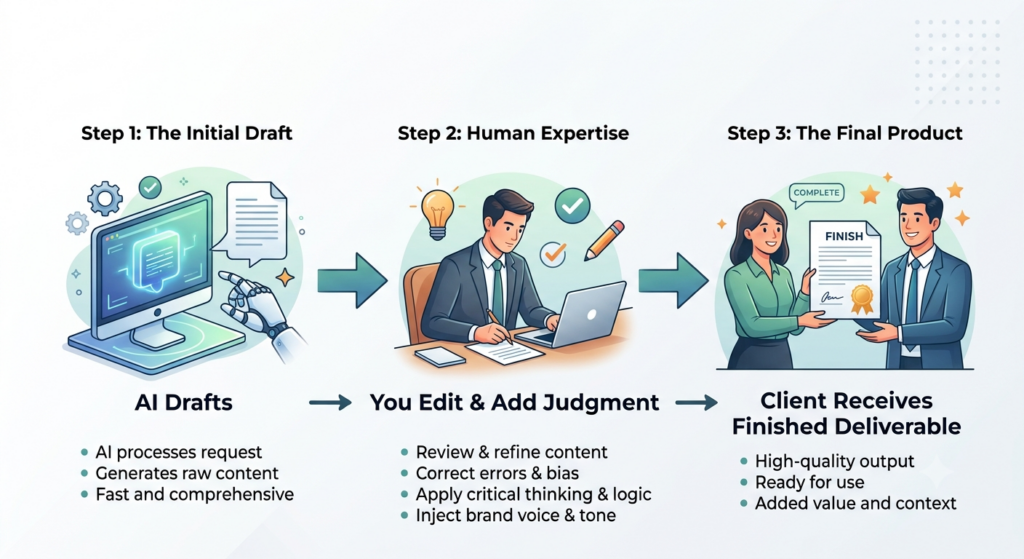
An AI side hustle is a service or product where generative AI tools handle the first draft, the heavy lifting, or the repetitive production work, while you provide judgment, editing, and the client relationship. The AI doesn’t replace you. It removes the part of the job that used to eat most of your time.
That distinction matters because it changes what you’re actually selling. You’re not selling raw hours anymore. You’re selling a finished outcome, faster and often cheaper than a client could get from a traditional agency or freelancer working without AI.
Three things changed to make this possible. Tools like Claude and Gemini now write coherent, structured long-form content instead of generic filler. Voice and video tools like ElevenLabs and Kling AI produce output that sounds and looks professional out of the box. And no-code automation platforms like n8n and Make let a single person set up systems that used to require a developer.
None of this means the work is effortless. A bad prompt still produces bad output. What’s changed is the speed at which a skilled person can go from idea to deliverable.
An AI side hustle uses generative AI tools to handle first drafts and repetitive production, while the operator provides editing, judgment, and client management. The shift lets a single freelancer deliver outcomes that used to require a small team, without lowering the quality bar clients expect.
1. AI-Powered Content Repurposing Service
This service turns one long piece of content, a podcast episode, a webinar recording, or a YouTube video, into a week’s worth of social posts for founders and creators who don’t have time to do it themselves.
Tools to use: YouLearn to summarize the source video, Claude to rewrite the summary into platform-specific posts, and Canva to turn key quotes into shareable graphics.
Most founders record long-form content because someone told them to, then never repurpose it because they don’t have the time. That’s the entire opportunity. You’re not creating new ideas. You’re extracting the ideas that already exist and packaging them for a different platform.
Start with this prompt in Claude:
“Here is a transcript of a [podcast/webinar]. Extract the 5 most quotable, counter-intuitive, or specific insights. For each one, write a LinkedIn post (150 words, hook in the first line, no emojis) and a short-form video script (30 seconds, spoken tone).”
Package this as “1 video in, 5 LinkedIn posts and 3 Reels scripts out” and price it per batch, not per hour. A founder who records one webinar a month will happily pay for a month of content pulled from it.
2. AI Resume and LinkedIn Optimization
Job seekers need their resume and LinkedIn profile to match the specific language of each role they apply to, and almost nobody has the time or objectivity to do that well for every application.
Tools to use: Claude for resume rewriting, and ChatGPT for generating LinkedIn headline and About section variations.
Here’s the actual prompt you’d use once you have the resume and job description in hand:
“Here is my resume and this job description. Rewrite my resume’s bullet points to mirror the language and priorities in the job description, without fabricating experience. Flag any gaps I should address in my summary.”
The honesty clause in that prompt matters. Clients trust you more, not less, when you tell them a gap exists instead of papering over it with AI-generated fluff. That’s also what keeps you out of trouble when a hiring manager asks a follow-up question the resume implied an answer to.
Package this as a “Resume plus LinkedIn Overhaul,” priced per application cycle rather than per hour. Job seekers rarely need this once. They need it every time they’re targeting a new role, which makes it a naturally repeatable service.
3. Faceless YouTube/Shorts Channel
You can build a niche channel, finance explainers, history facts, productivity tips, without ever appearing on camera. This removes the single biggest reason most people never start a YouTube channel: camera anxiety.
Tools to use: Claude for scriptwriting, ElevenLabs for voiceover, Midjourney or Ideogram for visuals, and CapCut for editing.
Step 1: Pick a niche narrow enough that you can become the obvious answer in it. “Finance” is too broad. “Personal finance for first-time Indian freelancers” is specific enough to build an audience around.
Step 2: Generate your first script using this prompt:
“Write a 60-second YouTube Shorts script on [topic] for a [niche] audience. Structure: hook (first 3 seconds), 3 key points, one surprising fact, call to action. Conversational tone, no jargon.”
Step 3: Feed the script into ElevenLabs for a natural-sounding voiceover, generate matching visuals in Midjourney or Ideogram, and assemble the whole thing in CapCut.
Monetize this two ways. Ad revenue is the obvious one, but it’s slow. The faster path is offering the same channel-building process as a service to small businesses that want a video presence without anyone on their team going on camera.
4. AI Chatbot and Automation Setup for Small Businesses
Small business owners keep hearing they need AI. Almost none of them know where to start, and most don’t have the time to figure it out. That gap is the business.
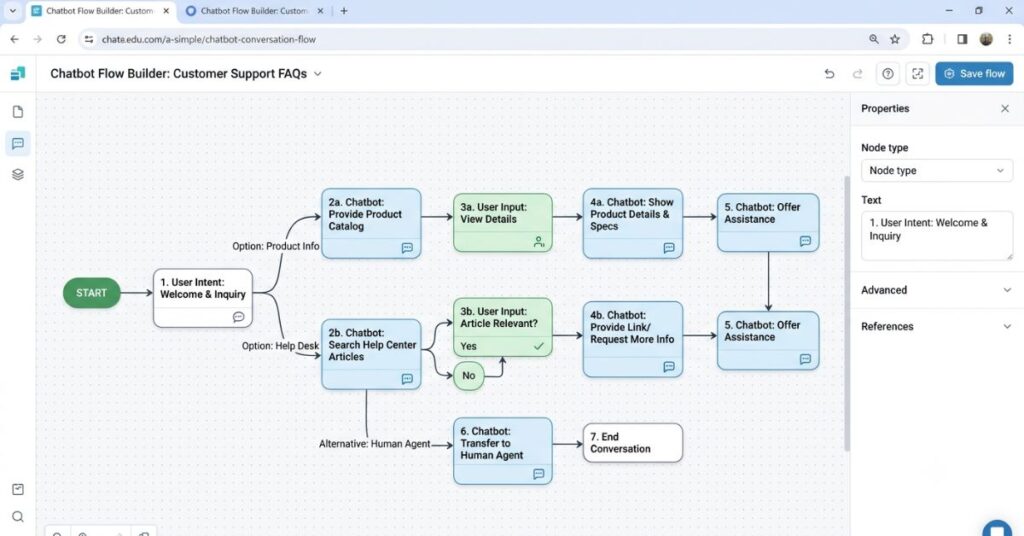
Tools to use: n8n or Make for the automation backend, and Claude to draft the chatbot’s conversation logic and FAQ responses.
Here’s how you’d start building the logic:
“Here is a list of the 10 most common customer questions for a [type of business]. Draft a chatbot conversation flow that answers each one, escalates to a human when needed, and sounds like a helpful staff member, not a robot.”
That last instruction, sounding like a helpful staff member instead of a robot, is the difference between a chatbot customers tolerate and one they actually use. Most small business chatbots fail because they sound like a script, not a person.
Target local businesses first: salons, clinics, restaurants, small clinics. Offer a flat “AI Front Desk Setup” package covering a WhatsApp or website chatbot plus booking automation. These businesses rarely have an in-house tech person, which means once you set it up, you’re also the one they call when something breaks.
5. AI-Assisted Freelance Writing and Editing
You can offer high-quality blog posts, newsletters, and website copy at scale by using AI as your first-draft engine, then applying your own editorial judgment on top.
Tools to use: Claude for drafting, and Gemini for a fact-checking and polish pass.
The starter prompt:
“Write a 900-word blog post on [topic] for [target audience]. Include a strong hook, 3 subheadings, one practical example, and a short conclusion with a call to action. Avoid generic AI phrasing, write like a specific, opinionated expert.”
The instruction to write like a specific, opinionated expert is doing more work than it looks like. Generic AI output reads like nobody in particular wrote it. Your editing pass is where you inject an actual point of view, a real example, or a detail only someone in that industry would know.
Position this service explicitly as “AI-assisted, human-edited.” That phrase does two things: it sets honest expectations with the client, and it differentiates you from both fully manual freelancers, who are slower, and raw AI output, which reads flat.
6. AI Voiceover and Audiobook Production
Creators and indie authors constantly need voiceovers, podcast intros, or short audiobook samples, and traditional studio voice actors are expensive for a short project.
Tools to use: ElevenLabs for voice generation or cloning, and Podcastle for editing and mastering.
Once you have a text excerpt, use this prompt to prepare it for narration:
“Here is a 500-word excerpt from a book. Break it into natural spoken sentences with pacing notes (pause, emphasis) for a voiceover artist to follow, keeping the author’s original tone.”
This step matters more than people expect. Text written for reading doesn’t automatically sound natural when read aloud. Breaking it into pacing notes before you generate the voiceover is what separates a smooth result from one that sounds rushed or flat.
Offer indie authors and course creators a flat per-minute rate for narrated content. It’s cheaper than hiring a studio voice actor and faster to turn around, which is exactly the trade-off self-published authors are looking for.
7. AI-Generated Presentation and Pitch Deck Design
Founders constantly need polished decks: pitch decks for investors, sales decks for prospects, investor updates for existing backers. Almost none of them enjoy building these, and most build them badly.
Tools to use: Gamma for deck generation, and Claude to structure the narrative before you touch a design tool.
Step 1: Get the founder’s rough idea structured with this prompt:
“Here is a rough outline of my business idea. Structure it into a 10-slide investor pitch deck outline: problem, solution, market size, business model, traction, team, ask. One clear idea per slide, no paragraphs.”
Step 2: Feed that structured outline into Gamma to generate the visual deck.
The reason this order matters: a beautifully designed deck with a weak narrative still fails in front of investors. Structuring the story first, then generating the visuals, is what makes the deck actually work in the room, not just look good in isolation.
A pitch deck’s narrative structure matters more than its visual polish. Building the story first (problem, solution, traction, ask) and generating the design second produces decks that hold up under investor questioning, not just ones that look clean in a preview.
Package this as “Pitch Deck in 48 Hours” at a fixed price for early-stage founders. Speed is the entire pitch here. Founders raising money are almost always working against a deadline.
8. AI Product Photography for E-commerce Sellers
Small e-commerce sellers on Instagram, Etsy, or Amazon can’t afford studio photography, but their product photos are often the single biggest reason their listings underperform.
Tools to use: Photoroom for background removal and editing, and Remove bg for quick background swaps.
Once you have a plain phone photo of a product, use this prompt to figure out the right direction:
“I have a plain product photo taken on a phone. Suggest 3 background/style options (minimalist white, lifestyle scene, gradient) that would make this product look premium for an Instagram shop.”
Package this as “10 product photos, studio-quality, in 24 hours.” Sellers running Instagram shops or small Amazon storefronts need a steady stream of new listing photos, which makes this a repeat-purchase service rather than a one-off.
9. AI Research and Report Summarization for Professionals
Busy professionals, consultants, analysts, and grad students don’t have time to read every report or paper relevant to their field. You can sell them curated summaries instead.
Tools to use: NotebookLM or Elicit for document analysis, and Claude for synthesizing the findings into a clean executive brief.
The prompt that does the actual synthesis work:
“Summarize this report into a 1-page executive brief: key findings (3-5 bullets), one data point that stands out, and 2 implications for [specific industry/role].”
The value here isn’t the summary itself. Plenty of people can summarize a report. The value is knowing which reports are worth summarizing for a specific professional’s specific role, which is a curation skill, not just a writing one.
Turn this into a subscription: “Get the 3 most important reports in your industry, summarized every week,” for a small monthly fee. Subscriptions are more valuable than one-off gigs because they compound. Once a client trusts your curation, they stop shopping around.
10. AI-Powered Personal Brand Coaching
Professionals increasingly understand they need a personal brand on LinkedIn or Instagram, but most don’t have the bandwidth to post consistently or the ideas to sustain it. You can combine AI-generated content ideas with your own strategic input and accountability.
Tools to use: Claude for content ideation and drafting, and Notion AI for organizing everything into a content calendar.
Starter prompt for generating a month’s worth of ideas:
“Based on this person’s job title, industry, and 3 recent wins, generate 15 LinkedIn post ideas across these categories: lessons learned, contrarian opinions, behind-the-scenes, and career milestones.”
Offer this as a monthly retainer covering content ideas, draft posts, and a content calendar. This works best for professionals who genuinely want visibility but keep failing to post consistently on their own. The AI removes the “I don’t know what to post” excuse. Your coaching removes the “I keep forgetting to post” one.
3 Rules That Make AI Side Hustles Actually Work
AI drafts, you finish. Every service above sells faster and cheaper output, not zero-effort output. Clients are paying for your judgment layered on top of the AI draft, not for the draft itself.
Productize instead of charging hourly. Package each service as a fixed deliverable, 5 posts, 10 photos, 1 deck, so you’re never stuck justifying your hours to a client who thinks AI should have made the whole thing instant.
Start with people you already know. Your first 3 clients should come from your existing network, not cold outreach. That’s how you validate the offer, work out your pricing, and fix the parts of your process that don’t hold up before you try to scale.
Conclusion
The tools listed here aren’t the hard part. Claude, ElevenLabs, Gamma, and the rest are all a signup away. The hard part, and the part that actually determines whether any of these 10 ideas turns into real income, is picking one, doing the first three projects well enough to get a testimonial, and packaging your offer so a client knows exactly what they’re paying for.
Start with the hustle that overlaps most with something you already understand, whether that’s writing, customer service, or design. The AI closes the skill gap. It doesn’t close the judgment gap, and that’s still yours to build.
If you want a structured way to build actual AI fluency instead of piecing it together from prompts alone, YUP’s AI Marketing course walks through exactly how to apply these tools inside a real business context, not just for a single side hustle.
FAQ
Is it actually legal or ethical to sell AI-generated work?
Yes, as long as you’re transparent about your process where it matters and you’re not misrepresenting AI output as fully original human work in contexts where that distinction matters, like ghostwriting agreements or academic work. Most clients care about the outcome, not the method, but being upfront builds trust.
Do I need to know how to code to start any of these?
No. Every tool listed here, from n8n to Gamma to ElevenLabs, is built for non-technical users. The automation and chatbot side hustle is the closest to “technical,” and even that only requires following a workflow builder’s visual interface, not writing code.
How much can I realistically charge for an AI side hustle?
It depends entirely on the niche and your positioning, but productized packages (a fixed set of deliverables at a fixed price) generally command higher effective rates than hourly billing, because clients are paying for the outcome, not your time.
Which of these AI side hustles is easiest to start with no experience?
Content repurposing and product photography editing tend to have the shortest learning curve, since the tools involved (Claude, Photoroom) have simple, guided interfaces and the deliverables are easy for a client to evaluate at a glance.
Do clients mind if they find out AI was involved?
Most don’t, as long as the final quality is high and you were honest about your process if asked directly. Problems usually arise from clients feeling deceived, not from AI being used. Being upfront about an “AI-assisted, human-edited” process, as with the freelance writing hustle, tends to build trust rather than break it.
Is this actually sustainable, or will AI tools just replace the need for a middle person like me?
The tools are getting better, but the bottleneck for most small businesses and individuals isn’t access to AI tools, it’s knowing which tool to use, how to prompt it well, and how to package the output into something usable. That curation and judgment layer is what you’re selling, and it’s holding up even as the underlying tools improve.
What if I don’t have a portfolio yet?
Do your first 2 to 3 projects at a reduced rate or for free for people in your network in exchange for a testimonial and permission to use the work as a sample. This is the fastest way to build the proof you need without waiting for a “real” client first.
Can I run more than one of these side hustles at the same time?
You can, but it’s usually better to prove out one service and get it profitable before adding a second. Splitting your attention across multiple offers before any of them has traction usually means none of them get good enough fast enough.
Do I need to pay for all these AI tools, or are there free options?
Most of the tools mentioned, including Claude, ChatGPT, and Canva, have usable free tiers that are enough to get your first few projects done. You can reinvest client revenue into paid tiers once you have consistent work coming in.