This blog breaks down plagiarism checker tools in a straightforward, practical way, explaining how they’re actually used in real writing situations, not just how they’re described in theory. It touches on what plagiarism really looks like in day-to-day work, including the kinds that slip through unnoticed until a tool catches them. The guide also goes into how these systems scan content, what the results really mean, and why the percentage alone doesn’t tell the full story. There’s also a comparison between traditional detection methods and newer AI-based checks, plus where each one fits. On top of that, it walks through using these tools without overcomplicating things and highlights what actually matters when reading reports and improving content quality.
Table of Contents
What Is Plagiarism?
Plagiarism gets reduced to “copying” most of the time. That’s only part of it. The real issue sits a bit deeper, using someone else’s thinking, structure, or phrasing without giving it its due.
In academic work, the rules are strict. But outside that space, blogs, marketing content, and even internal docs, it tends to get fuzzy. Teams move fast, deadlines pile up, and suddenly a paragraph sounds familiar… because it is. Not copied outright, just “inspired.” That’s where things usually slip.
The stakes have quietly gone up. Search engines don’t just look for exact duplicates anymore. They pick up patterns, repeated ideas, even thin variations of the same content across sites. So plagiarism today isn’t only a moral or academic concern, it’s a visibility problem too.
And then there’s credibility. Once readers start questioning originality, it’s hard to win that trust back. Doesn’t matter how good the next piece is. That doubt lingers.
Common Types of Plagiarism
Direct plagiarism is the obvious one. Copy, paste, done. Easy to spot, easy to avoid, yet it still happens, usually under time pressure or carelessness.
Self-plagiarism feels harmless at first. Reusing your own work should be fine, right? But in structured environments, universities and publications, it’s treated as duplication unless clearly referenced. It’s less about ownership, more about transparency.
Mosaic plagiarism is where things get messy. Pulling lines from different sources, tweaking a few words, stitching them together. On the surface, it looks original. Underneath, it’s not really new thinking.
Paraphrasing without citing is probably the most common issue. Change the wording, keep the idea, skip the source. That still counts. The wording changes, the ownership doesn’t.
Accidental plagiarism… that’s the tricky one. Notes get mixed up, sources aren’t tracked properly, and something slips through. No intent, but the result is the same. Happens more often than people admit.
What Are Plagiarism Checker Tools?
Plagiarism checker tools do something most humans simply can’t: scan massive volumes of content in seconds and find overlaps that would otherwise go unnoticed.
Under the hood, they break content into smaller chunks. Sentences, phrases, sometimes even patterns of wording. Then those chunks get compared against databases, web pages, research papers, journals, and archived content. Some tools go deeper than others, depending on what they have access to.
Not every match is a problem, though. That’s where people often misread these reports. A tool might flag a common definition or a widely used phrase. Technically a match, but not really plagiarism. Context matters more than the percentage.
There’s also this distinction that doesn’t get talked about enough: similarity vs plagiarism. A report shows similarity. It’s up to the writer (or reviewer) to decide whether that similarity crosses a line.
AI has changed how these tools behave. It’s no longer just about matching text word-for-word. Some systems now look at meaning, flow, and structure. So even if something is rewritten, it can still get flagged if it closely mirrors an existing source.
Useful? Yes. Perfect? Not quite. These tools are good at spotting signals. They’re not great at making final calls.
AI Plagiarism Detection vs Traditional Plagiarism Checkers
Traditional plagiarism checkers work in a fairly straightforward way. They look for matches, exact or near-exact, and show where your content overlaps with existing sources. Reliable for clear-cut cases.
AI-based detection takes a different route. Instead of asking “does this sentence exist somewhere else?”, it asks “does this feel like something derived from existing material?” Subtle difference, but it changes what gets flagged.
This becomes important with heavily paraphrased content. Traditional tools might miss it. AI-driven ones sometimes catch it. But they also bring in a bit of uncertainty.
For example, technical writing often follows similar structures. Two people explaining the same concept, say, a process or framework, might end up writing in a similar way. That doesn’t mean one copied the other. But AI tools can still raise a flag.
There’s also the whole AI-generated content angle. Some tools try to detect whether content was written by a machine. Results vary. Some are overly cautious, others barely catch anything. It’s still evolving.
In practice, relying on just one method isn’t ideal. Traditional tools handle direct matches well. AI detection adds another layer, sometimes helpful, sometimes noisy. Together, they give a clearer picture, but still not a final verdict.
Why Use Plagiarism Checker Tools?
Most teams don’t think about plagiarism checks until something breaks. A flagged submission. A duplicated blog post. A ranking drop that doesn’t quite make sense.
Running checks early changes that dynamic. It turns a reactive fix into a preventive step. Quietly, but effectively.
For students, it’s mostly about certainty. Submitting work without second-guessing whether something was missed in citations. That peace of mind matters more than it sounds.
Content teams deal with a different challenge: volume. Multiple writers, overlapping topics, similar briefs. Without checks, repetition creeps in. Not intentional, just inevitable over time.
Then there’s SEO. Duplicate or near-duplicate content doesn’t always trigger penalties instantly. It just weakens performance gradually. Pages compete with each other. Rankings stall. Traffic plateaus. Hard to trace back unless someone’s actively looking for it.
Publishers and media teams lean on these tools for credibility. One questionable piece can undo a lot of consistent work. Not worth the risk.
Key Benefits of Using a Plagiarism Detector
Keeping originality in check (without overthinking it)
Originality is easier to handle when there’s a proper check in place. Not flawless, and honestly, it doesn’t need to be. But it beats relying on memory or doing a rushed manual scan at the end. Over time, it just makes writing feel more controlled… less guesswork, more clarity.
Catching issues before they turn into trouble
This is the practical part most people care about. Once something is published, fixing it is messy, sometimes not even possible. A quick check before hitting publish helps avoid that situation. Academic submissions, web content, even client work… the timing of the check matters more than people think.
Forcing better writing decisions (quietly, but consistently)
There’s also this less obvious shift. When repeated phrases or close similarities get highlighted, it kind of forces a rewrite. Not in a dramatic way. More like a pause-and-rethink moment. And that’s where writing improves: sentences get tighter, wording becomes more intentional, and the final piece usually feels less “copied” and more thought-through.
Best Plagiarism Checker Tools for Research & Writing
There isn’t a single “best” plagiarism checker that works for everyone. That idea sounds nice, but it rarely holds up in real use.
Some tools are strict and academic. Others are quick and surface-level. A few try to sit in between, though they usually lean one way once you start using them regularly. So instead of chasing rankings or scores, it’s more useful to look at how each tool behaves in day-to-day writing.
A tool might look strong on paper… but feel clunky when actually used. Or the opposite, simple, but surprisingly reliable for the kind of content being worked on.
Scribbr
Scribbr feels built for situations where there’s no room for doubt. Not quick drafts. Final submissions.
Key Features
Scribbr’s strength comes from how deeply it scans. It doesn’t just look for exact matches; it picks up on reworded content, structural similarities, and overlaps with academic sources that most tools don’t even access. The reports are detailed, sometimes dense, but they leave very little ambiguity.
Best For
Students, researchers, and anyone dealing with formal writing where accuracy matters more than speed. Especially useful for theses, dissertations, or journal-ready drafts.
Pros and Cons
The biggest advantage is accuracy. It catches things others miss, particularly paraphrased sections. That alone makes it stand out.
On the flip side, it’s not built for quick iterations. Running multiple drafts through it can feel slow and a bit heavy. It’s more of a “final check” tool than something used mid-writing.
Paperpal
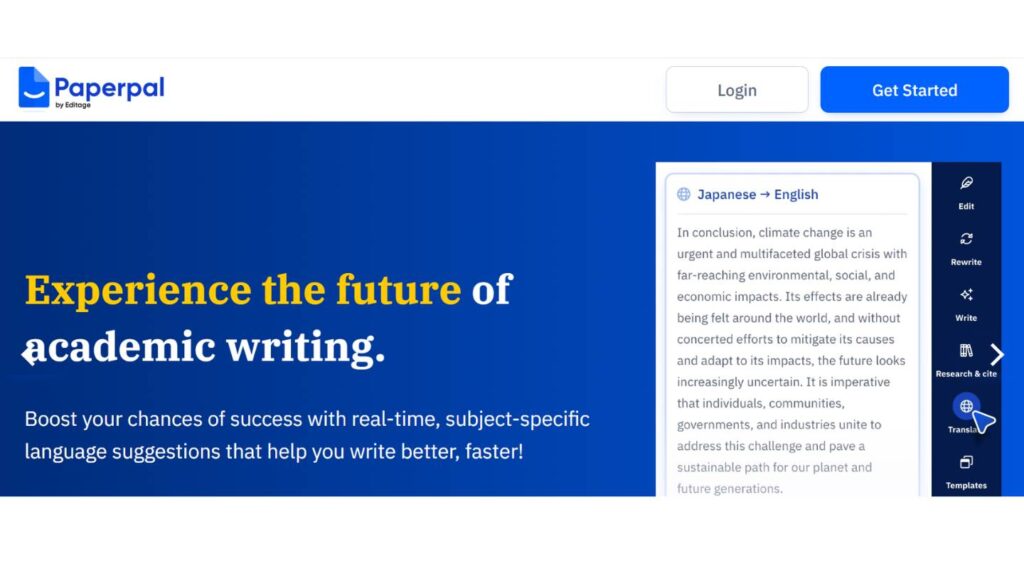
Paperpal leans heavily into research workflows. You can feel that almost immediately.
Key Features
Its biggest strength is access to large academic databases. That changes the quality of results. Instead of just web matches, it compares against research papers, journals, and published studies. It also does a decent job separating necessary citations from actual duplication.
Best For
Researchers, academics, and professionals are working on structured documents that need to pass formal review.
Pros and Cons
Very strong for academic validation. It understands context better than most tools in that space.
But it’s not something you’d use for everyday content. For blogs or marketing copy, it can feel like overkill. A bit too serious for lighter work.
PlagAware
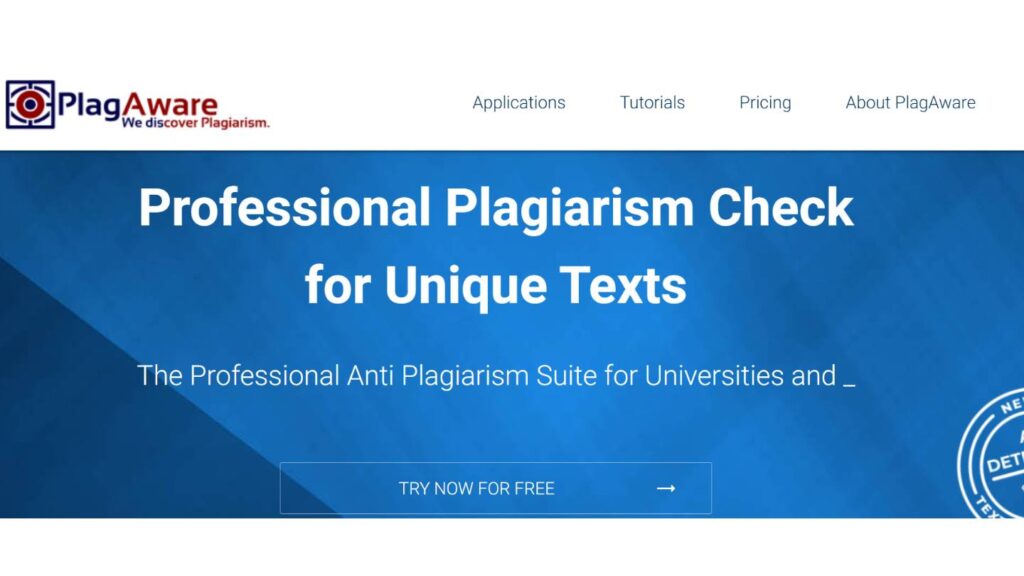
PlagAware sits somewhere in the middle, not too heavy, not too basic.
Key Features
It offers fairly deep scanning without overwhelming the user. The trial limit (up to 10 pages) is actually usable, which makes it easier to test properly. Reports are clean, readable, and don’t drown you in unnecessary highlights.
Best For
Freelancers, content teams, or anyone who needs reliable checks without going full academic mode.
Pros and Cons
Balanced performance is the main strength. It catches both direct matches and lighter paraphrasing fairly well.
It doesn’t go as deep as premium academic tools, though. For highly technical or research-heavy content, it might miss a few layers.
Grammarly
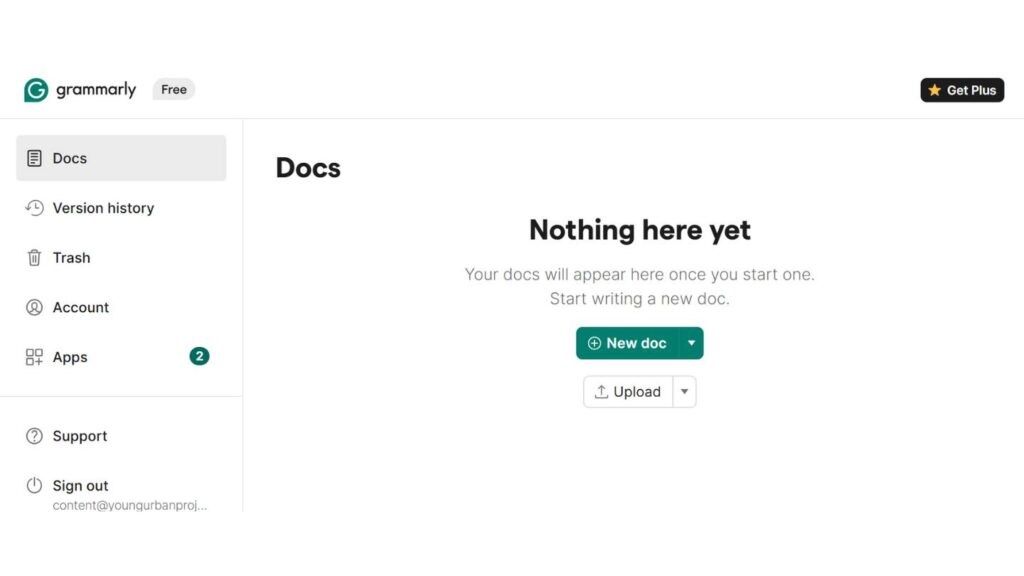
Grammarly’s plagiarism checker feels more like an extension than a standalone tool.
Key Features
It works alongside writing and editing, which makes it easy to run checks without switching tools. The integration is smooth. It also pulls from databases like ProQuest, adding some depth beyond basic web scans.
Best For
Writers who are already editing content and want plagiarism checks built into the same workflow, essays, articles, and general writing.
Pros and Cons
Convenience is the big win here. It fits naturally into the writing process.
But the detection itself isn’t the strongest. It’s good, not exceptional. For high-stakes content, it’s usually paired with something more thorough.
Compilatio
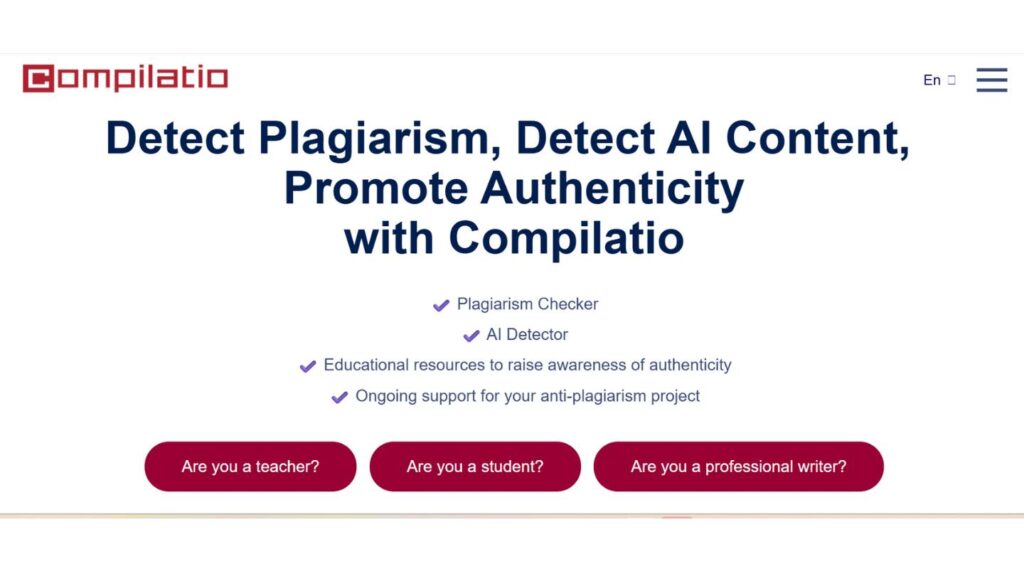
Compilatio feels structured. Almost institutional in the way it presents results.
Key Features
It focuses on compliance and clarity. Reports are formatted in a way that makes sense for academic review. It also integrates well with institutional systems, which explains its adoption in universities.
Best For
Educational institutions, faculty reviews, and structured academic environments.
Pros and Cons
Reliable and consistent. It does what it’s supposed to do without much noise.
At the same time, it’s not very flexible. For independent writers or marketers, it can feel a bit rigid… not quite built for that pace.
Prepostseo
Prepostseo is more practical than polished. And that’s not a bad thing.
Key Features
It handles sentence-level detection quite well. You can paste sections, run checks quickly, and move on. No heavy setup. It also supports multiple languages, which adds to its usability.
Best For
Bloggers, SEO writers, and content creators are working with shorter drafts or sections.
Pros and Cons
Fast and easy to use. Works well when checking parts of a document rather than the whole thing.
Depth is limited, though. For long-form or research-heavy content, it doesn’t always go far enough.
DupliChecker
DupliChecker is about simplicity. Nothing more, nothing less.
Key Features
It allows quick checks with a 1,000-word limit per scan. You can run multiple scans if needed, though that takes a bit of effort for longer content.
Best For
Quick validations, short articles, snippets, or early drafts.
Pros and Cons
Easy to access and straightforward. Good for basic duplication checks.
But it doesn’t handle nuance well. Paraphrased content often slips through. It’s more of a first pass than a final check.
Check-Plagiarism
Check-Plagiarism feels similar to DupliChecker, with a slightly different approach.
Key Features
It works better when checking specific queries or sections rather than entire documents. The interface is simple, and results come quickly.
Best For
Spot-checking small portions of text.
Pros and Cons
Useful for quick checks. Doesn’t require much setup.
Accuracy can be inconsistent. Especially with rewritten content,it doesn’t always pick up deeper similarities.
Quetext
Quetext keeps things focused. It doesn’t try to cover everything.
Key Features
It’s strong with exact-match detection. Highlights are clear, and source links are easy to trace. The reports feel clean, not cluttered.
Best For
Short content pieces where exact duplication needs to be ruled out.
Pros and Cons
Clarity is its strength. You can quickly see what’s matched and where.
The limitation is obvious: 500 words per check. That restricts how it’s used. Not ideal for long documents.
Copyleaks
Copyleaks has been pushing into AI detection alongside plagiarism checks.
Key Features
It offers broader detection that goes beyond direct matching. The 2,500-word trial is reasonably generous compared to others.
Best For
Writers who want both plagiarism and AI-related checks in one place.
Pros and Cons
Versatility is useful. It covers multiple angles.
Consistency, though, can vary. Some reports feel detailed, others less so. It’s not always predictable.
Small SEO Tools
Small SEO Tools is usually the first stop for quick checks.
Key Features
Fast scans, simple interface, no real learning curve. You paste content, run it, and get immediate results.
Best For
Early drafts or quick validations when time is tight.
Pros and Cons
Speed and accessibility stand out. It’s easy to use anytime.
But depth is limited. It’s not built for serious analysis, more of a rough check.
Plagiarism Detector
Plagiarism Detector sits at the basic end of the spectrum.
Key Features
Simple interface, minimal features, and straightforward results. No complexity, which can be useful in some cases.
Best For
Entry-level checks or very short content.
Pros and Cons
Easy to use and accessible.
Beyond that, it doesn’t offer much depth. It’s fine for basic use, but not something to rely on for important work.

Enroll Now: Advanced Digital Marketing Course
How to Use a Plagiarism Checker Online
Using a plagiarism checker looks more technical than it actually is. Once you’ve done it a couple of times, it’s mostly routine. The real difference isn’t in “how to run it” anyway, it’s in how the report gets read afterward. That’s where things usually go wrong. People rush it.
Most tools follow the same basic flow. Upload text, run scan, wait for results. Nothing complicated on paper. But the interpretation part… that needs a bit more attention than it usually gets.
Step 1: Add or upload your content
This part is usually straightforward. Paste the text in, upload a document, or drop a link if it’s already published somewhere. Most tools don’t really care how it comes in; they just need the content in one place.
Once added, the system quietly breaks everything down into smaller pieces. Sentences, phrases, fragments… all of it gets split so it can be compared against what’s already out there. Nothing visible yet, but this is where the checking actually starts.
Step 2: Run the scan and let it process
After hitting scan, there’s not much to do except wait. Sometimes it’s quick, sometimes it drags a bit, depending on file size and how heavy the tool’s database is.
Behind the scenes, it’s doing large-scale matching. Not just exact copying, but also close rewrites and similar sentence patterns. It’s more mechanical than people expect. No “understanding” in a human sense, just pattern alignment across massive datasets.
And yes, bigger documents slow things down. That’s just how it is.
Step 3: Go through the report properly
This is the part people tend to rush, and that’s usually where mistakes happen.
The percentage at the top? Useful, but not the full story. The real value is in the highlighted sections. Each one needs a bit of judgment; some are just common phrases, some are properly cited ideas, and some actually need rewriting.
Not everything flagged is a problem. And not everything unflagged is perfect either. The report is more like a map than a verdict. You still have to interpret it properly.
H3: How to Read a Plagiarism Report
A percentage on a report looks definitive, but it really isn’t. It doesn’t tell the full story. It just shows how much overlap was detected with existing content.
Highlighted sections are the first thing people notice. Some of them will be exact matches; those are straightforward. Others are partial matches, where only structure or phrasing overlaps. And then there are cases where it’s just common language showing up in multiple places.
Source links help make sense of it. They show where the match came from. Sometimes it’s obvious, like a definition that exists everywhere online. Other times, it’s a niche article or paper that needs a proper citation.
The tricky part is judgment. Not everything highlighted is a problem. But ignoring everything isn’t smart either. Somewhere in between is where good writing decisions happen. A bit of context, a bit of instinct, and a second look before moving on.
Features to Look for in the Best Plagiarism Checker Tools
Real-Time Reporting and Speed
Not all plagiarism tools behave the same once you start using them regularly. Some feel fast but shallow. Others are deeper but slower. Neither is automatically “better”; it depends on what kind of writing is happening.
Speed matters more than people admit. When you’re working through drafts, waiting too long for a scan breaks momentum. Even a small delay starts to feel bigger when it happens repeatedly.
Clear Feedback and Readable Reports
This part is underrated. A tool can detect everything correctly, but if the report is messy or overloaded, it slows everything down. Good reports don’t try to impress; they just make sense.
The best ones keep things readable without stripping away detail. That balance is harder than it looks.
Language Support and Global Usability
Content doesn’t always stay in one language anymore. Writers switch, mix, and localize. So tools that only work cleanly in English end up feeling limited pretty quickly.
Broader language support helps avoid blind spots, especially when content is adapted or repurposed across regions.
Scan Limits and Usage Restrictions
This one usually gets ignored until it becomes a problem. Free scans, monthly caps, word limits, none of it matters at first. Then suddenly it does.
When limits hit mid-workflow, switching tools or splitting content becomes annoying. Small friction, but it adds up.
Citation Support and Fixing Suggestions
Some tools now go beyond detection. They start suggesting fixes or even helping with citations directly. That shift is important because it saves time after the fact.
Instead of just saying “this matches,” better tools point toward what to do next.
Integration with Writing Platforms
Not always essential, but definitely helpful in busy workflows. When plagiarism checks sit closer to the writing environment, there’s less stopping and starting.
It’s more about reducing friction than adding features.
Make Your Writing Plagiarism-Free with Smart Tools
Why Prevention Works Better Than Correction
Most plagiarism issues don’t show up because someone copied intentionally. It usually happens earlier, during research, note-taking, or even when ideas are still forming loosely.
Fixing things at the end works, but it always feels reactive. By that point, rewriting becomes heavier than it should be.
Combining Tools for Better Accuracy
Relying on one tool sounds neat, but in practice, it misses things. Different tools catch different patterns. Some focus on exact matches, others on structure or phrasing similarity.
When used together (carefully, not blindly), they cover more ground. It’s less about stacking tools and more about filling gaps.
Rewriting Suggestions and Human Judgment
Rewriting suggestions can help, but they’re not decisions. Sometimes they improve clarity. Sometimes they just change wording without improving meaning at all.
That’s where judgment comes in. The goal isn’t just “different text”,it’s still about keeping intent intact while making it more original in expression.
Citation Generation and Fixing Gaps
A surprising number of “plagiarism issues” are actually missing citations. Not copied content, just uncredited references.
When citations are handled early, a lot of noise disappears from reports. It’s a small step, but it changes outcomes more than expected.
Maintaining Original Thinking
At the end of the day, tools don’t create originality. They only flag where things might overlap.
The real shift happens in writing itself, when ideas are formed independently instead of being shaped too closely around a source. Once that habit kicks in, everything else becomes easier to manage.
How to Avoid Plagiarism in Writing
Avoiding plagiarism sounds like a rulebook thing at first, but in real work, it’s more of a workflow problem. It usually doesn’t show up at the final stage. It starts much earlier, during research, while collecting references, sometimes even while just trying to move fast and get ideas down.
There’s a pattern that shows up often. Notes taken from multiple sources, a few copied lines “just for reference,” and then later everything gets mixed. Attribution gets delayed because the focus is on finishing the draft first. That delay is where trouble quietly builds up.
Another subtle issue is how easily writing can start echoing a source without copying it directly. Same structure, same sequence of ideas, just reworded. It doesn’t feel wrong while writing it, but once it’s compared side by side, the similarity becomes obvious.
Proven Ways to Prevent Plagiarism
Citation systems like APA, MLA, or Chicago are often treated as formatting requirements, but their real purpose is simpler: keeping ownership of ideas visible while everything is still in motion. When sources are marked properly during research itself, there’s less confusion later during writing.
Writing from scratch is still the most dependable way to stay clear. It’s slower, not always convenient, but it forces a different kind of thinking. Instead of following a source, the idea has to be rebuilt in its own form. That small shift changes the outcome more than expected.
Paraphrasing is where most misunderstandings happen. Changing words alone doesn’t really solve anything if the structure still mirrors the original. Proper paraphrasing usually happens after the idea is fully understood, not during the first attempt to rewrite it. That distinction matters more than it seems.
Editing or rewriting support can help clean things up, but there’s a line. If it starts replacing actual thinking, the writing slowly drifts back toward borrowed structure without anyone noticing. It becomes polished, but not necessarily original.
Proofreading tends to get reduced to grammar checks, but it plays a bigger role than that. It’s often the point where repeated phrasing, unnoticed similarity, or missing citations finally show up. Skipping it doesn’t always cause immediate issues, but when it does, it’s usually late.
In practice, avoiding plagiarism is less about strict rules and more about how naturally original thinking is allowed to form while writing.
Why Avoiding Plagiarism Matters
Plagiarism has always been about originality, but the context around it has changed a lot. There’s simply too much content being produced now, across too many platforms, for similarity to go unnoticed or ignored the way it once was.
Even small overlaps can start to matter, not because they’re always intentional, but because repetition has become easier to detect and compare at scale. Content doesn’t exist in isolation anymore; it sits alongside thousands of similar versions.
In academic environments, the impact is more direct. Submissions are reviewed more strictly, and similarity scores are treated as signals that need explanation, not just numbers on a report. Even accidental overlap can affect evaluation.
Outside academics, the effect is quieter but still real. Readers might not point it out directly, but familiarity shows up in engagement. Content that feels repetitive or too close to something else tends to lose attention faster, even if it’s technically correct.
There’s also the reputation factor, which doesn’t show up in any tool. Once originality is questioned, everything else starts getting read with a bit more skepticism. That shift is subtle, but it sticks.
Legal risks exist, too, especially around reused or improperly attributed content. It’s not always immediate, but when it surfaces, fixing it is rarely simple.
So avoiding plagiarism isn’t just about compliance. It’s about keeping the work distinct enough that it stands on its own without needing explanation.
Limitations of Plagiarism Checker Tools
Plagiarism checker tools help a lot, but they don’t give the full picture. They’re built to detect overlap, not to understand writing in a human sense. That gap matters more than it seems.
One common issue is false positives. Certain phrases are just… everywhere. Definitions, technical explanations, standard expressions. Tools flag them anyway, which can make a clean piece of writing look more problematic than it actually is.
Then there’s database coverage. No tool has access to everything. Private papers, paywalled content, and new publications that haven’t been indexed yet, these all sit outside the scan. So what gets flagged is only what the system can actually see.
AI-based detection adds another layer, but it’s not consistent. Sometimes structured, clean writing gets flagged simply because it follows predictable patterns. Other times, heavily rewritten content passes through without issues. It’s improving, but not stable enough to treat as a final judgment.
Key Limitations to Keep in Mind
Not every highlight in a report is a problem. Some are just common language doing what common language does.
Coverage gaps are always there. What shows up is only what’s inside the tool’s reach, not the full scope of existing content.
And most importantly, these tools don’t understand intent. They can show similarity, but they can’t decide whether something is properly credited, widely accepted knowledge, or just naturally overlapping expression.
That part still needs human judgment. Tools can point, but they don’t conclude.
Manual vs Automated Plagiarism Checking
There’s always been a bit of debate around this. Some people still prefer manual checking, while others rely completely on tools. In reality, neither side is fully right on its own. They work differently, and that difference matters more than choosing one over the other.
Manual checking sounds simple at first: just read, compare, and verify sources. But in practice, it becomes messy fast. When content is short, it’s manageable. When it’s long or research-heavy, things start slipping. Human memory isn’t built for tracking sentence-level similarity across dozens of sources.
At the same time, automated tools aren’t perfect either. They’re fast, consistent, and useful for scanning large volumes of text, but they don’t “understand” writing. They just detect overlap patterns. That gap shows up in edge cases.
Can Plagiarism Be Checked Manually?
Yes, but with limits. Manual checking usually involves going back to original sources, comparing phrasing, and checking whether ideas were properly credited. It works best when the number of references is small and clearly documented.
But once writing pulls from multiple sources, manual checking starts losing accuracy. Small overlaps, rephrased sentences, or indirect similarities are easy to miss. Not because of lack of effort, but because it’s just difficult to track everything mentally.
So manual checking still has value, but more as a final sense-check than a full verification method.
Pros and Cons of Manual Checking
Manual review has its strengths:
- It helps catch context issues that tools miss
- It builds a better understanding of the content itself
- It allows judgment instead of relying on percentages
But the limitations are just as real:
- Time-consuming, especially with long content
- Easy to miss subtle similarities
- Depends heavily on reviewer attention and experience
- Not scalable for regular or high-volume writing
Why Automated Tools Are More Efficient
Automated plagiarism checkers became common for a reason: they handle scale better. Large documents, multiple sources, quick scans… all of that is where they naturally fit.
They’re especially useful when working with deadlines or frequent publishing cycles. Instead of manually cross-checking everything, tools give a structured overview in seconds. That alone changes how quickly revisions can happen.
Still, efficiency doesn’t mean completeness. Tools reduce workload, but they don’t replace interpretation. A clean report still needs human judgment to decide what actually matters.
Conclusion
Plagiarism checker tools sit in a very practical space. They’re not perfect systems, and they’re not meant to be. Their real value is in reducing risk and catching what’s easy to miss during writing.
Across academic, editorial, and digital content work, the pattern is the same. Most issues don’t come from intentional copying. They come from overlap, shared references, similar explanations, or a structure that unintentionally aligns with existing work.
That’s where these tools help most. They bring visibility to something that’s otherwise hard to spot in real time.
But the final responsibility still stays with the writer. Tools can highlight similarities, flag risks, and suggest checks, but they don’t decide originality. That part still comes down to how the content is built, shaped, and reviewed.
Used well, plagiarism checkers don’t replace writing discipline; they support it. And that balance is usually what keeps content both clean and credible.
FAQs:
What are plagiarism checker tools?
Plagiarism checker tools are systems used to scan written work and compare it with existing content across websites, journals, and databases. They highlight sections that look similar or match other sources. In real use, they help writers, students, and editors catch overlap early so the content stays original and properly attributed before submission or publishing.
How do plagiarism detection tools work?
At a basic level, the tool breaks text into small chunks and runs it through huge databases of existing material. It’s looking for exact matches, but also near-matches and rephrased lines that still resemble original sources. When something lines up, it gets flagged in a report with links. That’s where the real checking begins, honestly.
What are the different types of plagiarism?
Plagiarism isn’t just copying paragraphs. Direct copying is one form, sure, but there’s also self-plagiarism, where old work gets reused quietly. Mosaic plagiarism is more subtle, patching bits from different sources. Then, paraphrasing without credit, and accidental cases, too. That last one happens more than people admit, usually from messy notes or rushed writing.
How can I avoid plagiarism in writing?
Most of it comes down to how writing starts. If the understanding is weak, the text will mirror the source too closely, even without intent. Writing in your own structure helps a lot. Citations matter, but so does pausing to reframe ideas properly. And a slow final read… that’s where many small issues usually show up.
What percentage of plagiarism is acceptable?
There isn’t a universal “safe” number. Some institutions are relaxed with small overlaps, especially for common phrases or technical terms. Others are strict even with minor similarity. The percentage alone doesn’t tell much. What matters is what’s actually highlighted, whether it’s properly cited material or something that shouldn’t have been reused.
Is 10% plagiarism acceptable in research papers?
Sometimes yes, sometimes no; it really depends on the institution’s rules. A 10% similarity score might include harmless matches like definitions or standard terminology. That part often gets overlooked. What needs attention is the nature of those matches, not just the figure on the report. Context matters more than the number itself, almost always.
How are plagiarism checker tools accurate?
They’re generally reliable when it comes to direct copying and widely published material. But accuracy isn’t absolute. It depends on how large the database is and how advanced the scanning system is. Some paraphrased content slips through, while common phrases can get flagged unnecessarily. So, useful, but not something to trust blindly.
Can plagiarism checkers detect paraphrased content?
Yes, many tools try to catch paraphrased writing by looking at sentence structure and patterns instead of just exact words. Still, it’s inconsistent. Light paraphrasing often gets flagged; deeper rewrites might not. That’s why relying only on the tool isn’t enough. Human reading still catches things the system quietly misses.
What is AI plagiarism detection?
AI plagiarism detection looks less at matching sources and more at writing behavior. It studies sentence flow, predictability, and structure to estimate whether text might be AI-generated or heavily influenced. It’s a different angle compared to traditional plagiarism tools. Not about copying, more about “how the writing feels,” if that makes sense.
Is AI detection the same as plagiarism detection?
No, they work differently. Plagiarism detection checks whether content exists elsewhere on the internet or in databases. AI detection doesn’t do that; it looks at writing patterns instead. One is about duplication, the other is about authorship signals. They can sit side by side in workflows, but they’re not interchangeable at all.
Can AI-generated content be plagiarism-free?
It can, yes. If it doesn’t directly copy from sources, it may pass plagiarism checks. But that doesn’t automatically make it perfect or publication-ready. Sometimes phrasing or structure can still feel close to existing material. And if facts are involved, those still need checking and proper attribution. Original doesn’t always mean complete.
How does Grammarly’s plagiarism checker work?
Grammarly scans text against a mix of online pages and academic databases. When it finds similarities, it highlights them and shows source links for reference. It’s not just about catching overlap; it also helps clean up writing along the way. Grammar, clarity, structure… it all kind of blends into one review process.
What is the best free plagiarism checker tool?
Free tools vary a lot. Some are fine for quick checks, others are limited in depth or word count. There isn’t a single “best” one for everyone. It depends on the use case; short blog posts, academic drafts, or light content review all need different levels of scanning. Free usually means trade-offs somewhere.
Which plagiarism checker is best for research papers?
For research work, tools that tap into academic databases perform better. Scribbr, Paperpal, and Compilatio are often used in those environments. They tend to go deeper and give more structured reports. That matters when citations, journals, and references are involved. Surface-level scanning just doesn’t cut it for serious academic writing.
Are plagiarism checker tools safe to use?
Most well-known tools are safe, especially the ones used in universities or professional settings. Still, safety depends on how they handle uploaded content. Some store files temporarily, others don’t. It’s not always obvious. So, checking privacy terms before uploading anything sensitive is a small but important habit.
Can I check plagiarism manually?
Yes, it can be done manually by comparing text with sources and reviewing citations carefully. But it’s slow, and honestly, not very practical for longer documents. Manual checking works better as a final layer rather than the main method. Automated tools handle scale; humans handle judgment. Both matter, just in different ways.
Do plagiarism tools store my content?
It depends on the platform. Some keep content temporarily to improve detection, others claim they don’t store it after scanning. Academic tools tend to be stricter about this. Still, policies vary. So before uploading anything unpublished or sensitive, it’s worth quickly checking how that specific tool handles data.
How do I cite sources correctly?
Citing sources means clearly showing where information came from using formats like APA, MLA, or Chicago. Each has its own structure, especially for in-text citations and reference lists. It can feel a bit rigid at first, but once it becomes a habit, it actually makes writing more transparent and easier to verify.
What are the consequences of plagiarism?
Consequences vary depending on where it happens. In academics, it can mean penalties or rejection of work. In publishing or online content, it often leads to loss of trust, sometimes permanent damage to credibility. In serious cases involving copyrighted work, legal action can also come into play. It’s rarely taken lightly anywhere.
Why is plagiarism bad for SEO and content marketing?
Plagiarism usually weakens long-term performance. Duplicate content doesn’t stand out, and it rarely builds authority. Search systems and readers both tend to favor originality. Beyond visibility, there’s also trust; once that’s affected, it’s hard to rebuild. So even if copied content “works” short-term, it doesn’t hold up over time.