

Explore AI Dubbing Tools, top software, features, use cases, and comparisons. Learn how AI is reshaping video localization and dubbing workflows.
AI dubbing tools are showing up everywhere in content workflows these days, and honestly, it’s not hard to see why. This blog breaks down what they actually are, how the whole system works behind the scenes, and why they’ve become such a practical option for anyone dealing with video at scale.
Instead of treating it like a “future tech” topic, the focus stays on real use, what works, what still feels off, and where things are heading. There’s a proper look at the best tools in the space, how they differ in speed, voice quality, and workflow style, and why different teams end up choosing completely different platforms for similar goals.
It also touches on something people notice only after using these tools for a while: the gap between convenience and true emotional accuracy. That part still matters more than most expect.
Table of Contents
Introduction:
What Are AI Dubbing Tools?
AI dubbing tools sit somewhere between translation software and full video production systems. At a simple level, they take spoken content in one language and recreate it in another using synthetic voices. But that description feels a bit too clean for what’s actually happening.
In practice, these tools are trying to solve a messy problem: how to make a video feel native in another language without rebuilding the entire production pipeline.
Traditionally, this meant scripting, translation, hiring voice actors, studio recordings, syncing audio, fixing timing issues… the whole chain. Time-consuming, expensive, and honestly, hard to scale.
Now the workflow is collapsing into a few clicks.
Upload a video – choose a language – get a dubbed version.
It sounds almost too simple, but that’s where the shift is happening.
A few distinctions that matter in real use:
- AI dubbing vs subtitles: Subtitles translate text, dubbing replaces the voice entirely. Dubbing usually holds attention better because viewers don’t need to constantly read.
- AI dubbing vs voice cloning: cloning is just replicating a voice. Dubbing includes translation, timing, and speech generation on top of that.
- AI dubbing vs human dubbing: humans still win on emotional nuance, especially in storytelling. AI wins on speed, cost, and scale.
What’s interesting is how quickly expectations are changing. A few years ago, robotic-sounding dubbed content was acceptable. Now audiences are starting to expect near-native flow, even if they don’t realize it consciously.
That pressure is what’s pushing the entire space forward.
How AI Dubbing Tools Work
AI dubbing isn’t one model doing everything. It’s more like a chain of systems passing information forward, each one handling a specific task.
Break it down, and it becomes easier to understand why mistakes still happen.
Speech recognition comes first
The system listens to the original audio and converts it into text. This sounds straightforward, but accents, speed, overlapping speech, or background noise can quietly break accuracy here.
If this step is off, everything after it inherits that error.
Then translation happens
The text is translated into the target language using natural language models. This is where literal translation starts failing.
Languages don’t map neatly. A phrase in English might need restructuring entirely in Hindi or Spanish just to sound natural.
So the system isn’t just translating words, it’s trying to preserve intent. Sometimes that works. Sometimes it over-corrects.
Voice generation brings it back into audio
This is where tools like ElevenLabs are often mentioned, mainly because of how close their output gets to natural speech.
The translated script is turned into spoken audio using:
- tone modeling
- pacing control
- emotional signals
- sometimes voice cloning
At this point, it starts sounding like a real speaker, though not always perfectly consistent across longer videos.
Lip sync is the finishing layer (when used)
Some platforms attempt to align speech with mouth movements. This is more common in avatar-based tools like HeyGen or enterprise platforms like Synthesia.
It works well in controlled videos. Less so in fast-moving, real-world footage.
The hard part nobody talks about
Emotion preservation.
A sentence can be translated correctly and still feel wrong because the emotional weight didn’t carry over. That gap is still one of the biggest challenges in AI dubbing systems today.
Key Features to Look for in AI Dubbing Software
Choosing a dubbing tool usually goes wrong when the focus is only on features instead of actual output quality. A long list of features doesn’t mean much if the final audio feels off.
A few things actually matter in real-world use:
Voice quality that doesn’t sound “produced.”
If the voice feels artificial, engagement drops quickly. Not slowly. Quickly. People don’t stick around to analyze it; they just leave.
Tools like ElevenLabs are often preferred because they manage to keep pace and tone closer to natural speech.
Language coverage that matches actual audience needs
100+ languages sound impressive, but most projects only need a handful. The real question is: how good is the tool in the specific languages you care about?
Quality matters more than quantity here.
Lip-sync accuracy (only when needed)
For faceless content, this doesn’t matter much. But for talking-head videos, ads, or training material, even slight misalignment becomes distracting.
Voice cloning capability
This is more of a branding decision than a technical one. Some teams want consistency across languages, others prefer localized voices.
Both approaches are valid depending on the use case.
Real-time vs post-production workflows
Real-time systems like CAMB.AI are useful for live events, sports commentary, or streaming.
Post-production tools give more control and usually better quality. Most content still sits here.
Integration and API support
This becomes important only when scaling. Manual workflows break down fast when dealing with large content libraries.
Pricing structure
This is where surprises usually happen. Per-minute pricing sounds cheap until content volume increases. Subscription models feel stable but can limit flexibility.
There’s no perfect model. Just trade-offs.
Benefits of Using AI Dubbing Tools for Video Localization
The biggest shift with AI dubbing isn’t just efficiency. It’s the ability to treat global audiences as part of the same content strategy instead of separate campaigns.
That changes how content is planned from the beginning. Additionally, invideo Agent helps creators prepare and scale content for global audiences through workflows where AI video dubbing simplifies adapting videos into multiple languages.
Faster global rollout
Instead of waiting weeks for localization, content can be adapted in parallel. That speed changes marketing cycles completely.
Lower production overhead
Traditional dubbing involves multiple roles and stages. AI reduces that chain significantly. Not to zero, but enough to change budgeting decisions.
Easier multilingual experimentation
This is where it gets interesting. Content can now be tested across languages without committing heavy resources upfront.
Some markets will respond better than expected. Others won’t. AI makes that testing affordable.
Better engagement in native languages
People naturally respond better when content feels local. Even if they understand English, native-language content usually holds attention longer.
This shows up in retention, watch time, and sometimes conversion rates.
Practical use cases where this is already happening:
- YouTube creators expanding into multiple regions
- EdTech platforms localizing lessons at scale
- Corporate training content for global teams
- OTT libraries expanding language availability
- Marketing teams running region-specific ad variations
There’s still a gap between “AI-dubbed” and “studio-quality dubbed,” especially in emotional storytelling. But for a lot of content types, that gap is already small enough that speed and scale matter more than perfection.
13 Best AI Dubbing Tools
This is where things get practical. Because honestly, most people don’t care about how AI dubbing works in theory. They want to know what actually delivers usable output without breaking workflows.
The tools below aren’t just random picks. They’re grouped based on what they’re genuinely good at, because no single platform “wins” at everything. That idea doesn’t really exist here.
CAMB.AI
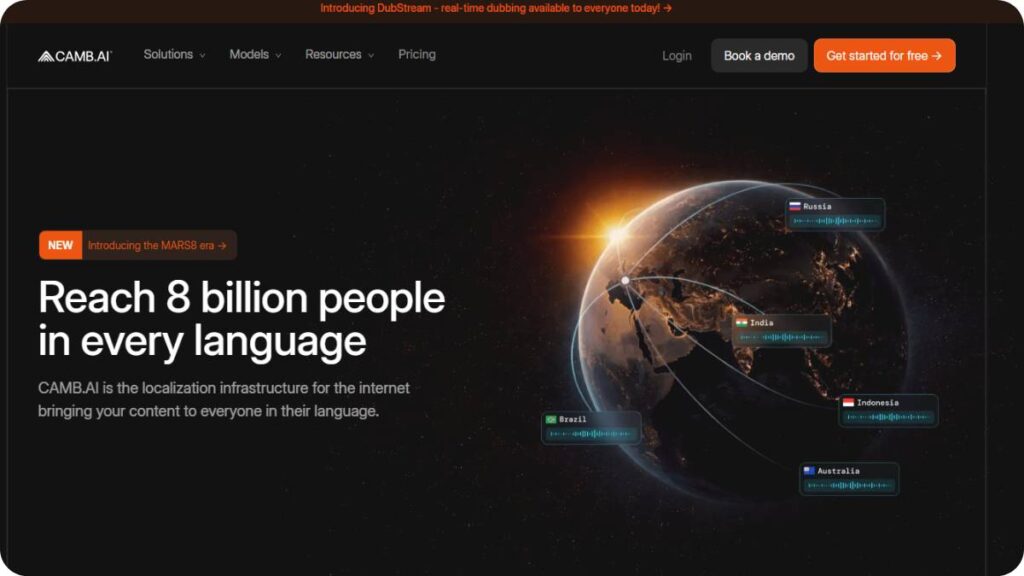
Best for Real-Time & Live AI Dubbing
CAMB.AI has carved out a very specific space: real-time multilingual dubbing. That alone sets it apart from most tools that focus on post-production workflows.
Where it stands out is in live environments. Think sports commentary, live events, streaming, or anything where translation needs to happen instantly without waiting for rendering cycles.
It supports a very wide language base and keeps latency low enough that conversations don’t feel “delayed,” which is usually the biggest problem with real-time systems.
Not perfect, though. In high-noise or emotionally complex speech, consistency can still fluctuate a bit. But for live use cases, it’s one of the few tools that actually feels production-ready.
ElevenLabs
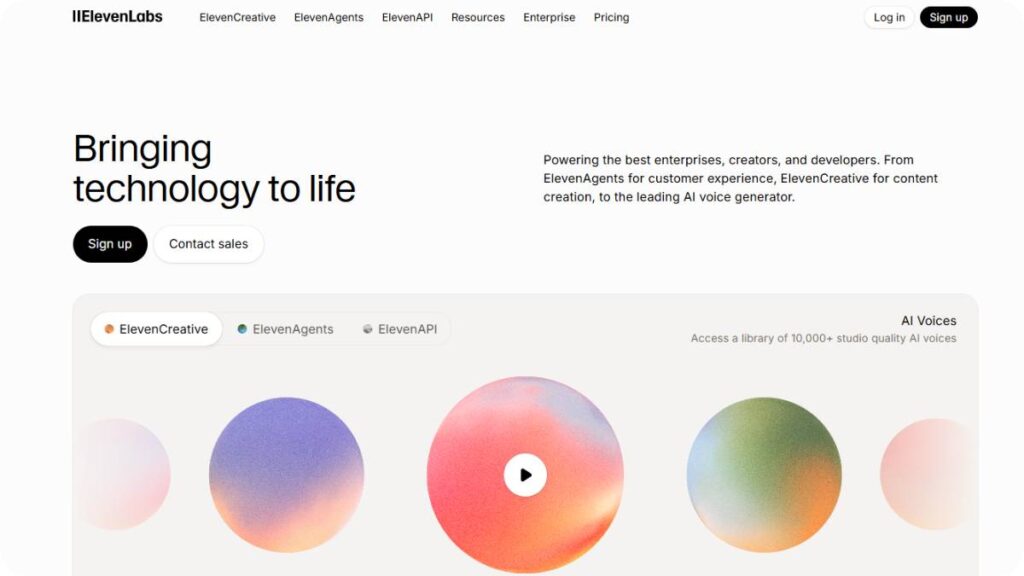
Best for Ultra-Realistic Voice Cloning
ElevenLabs is often the reference point when people talk about AI voice quality, and for good reason. The voice output is close enough to natural speech that it stops feeling like a “synthetic layer” in many cases.
What it does particularly well is emotional variation. The same sentence can sound calm, excited, or serious depending on how it’s modeled, and that matters more than most people realize.
It fits well in:
- podcasts
- storytelling content
- narration-heavy videos
- brand voice consistency across languages
Where it still struggles a bit is extreme multilingual nuance. Some languages carry rhythm and tone differently, and not every output fully captures that yet.
Still, for voice realism, it’s usually one of the first tools people end up testing.
HeyGen
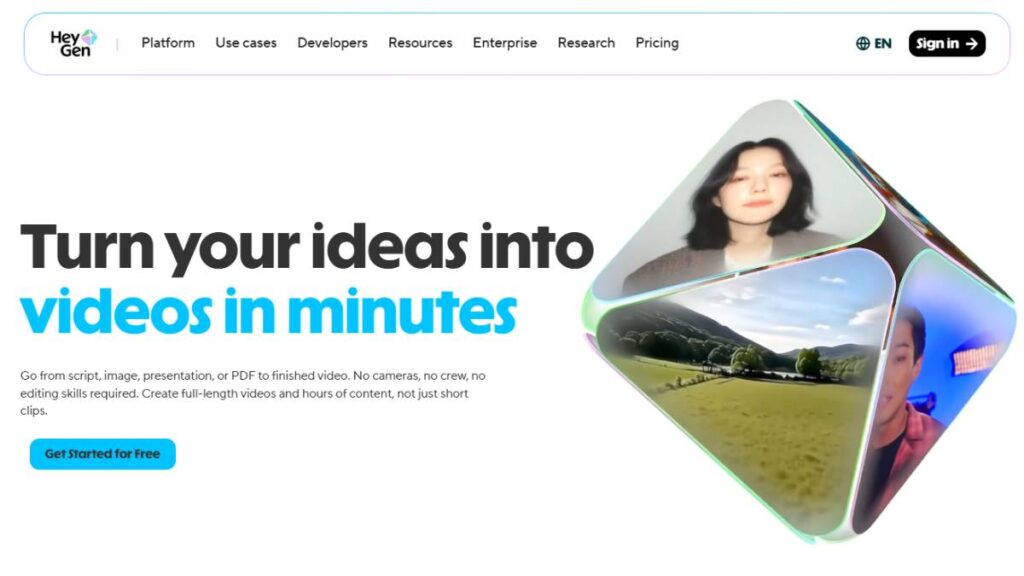
Best for AI Avatar + Dubbing Videos
HeyGen sits at the intersection of dubbing and avatar video generation. Instead of just translating audio, it builds a full video experience around it.
So the output isn’t only dubbed speech. It’s a talking avatar aligned with the translated voice.
This works especially well for:
- marketing videos
- explainer content
- product walkthroughs
- creator-led short videos
The lip-sync system is strong for controlled setups, though less reliable when source footage is chaotic or fast-moving.
It’s more of a “presentation layer” tool than a pure dubbing engine, which is actually its strength.
Synthesia
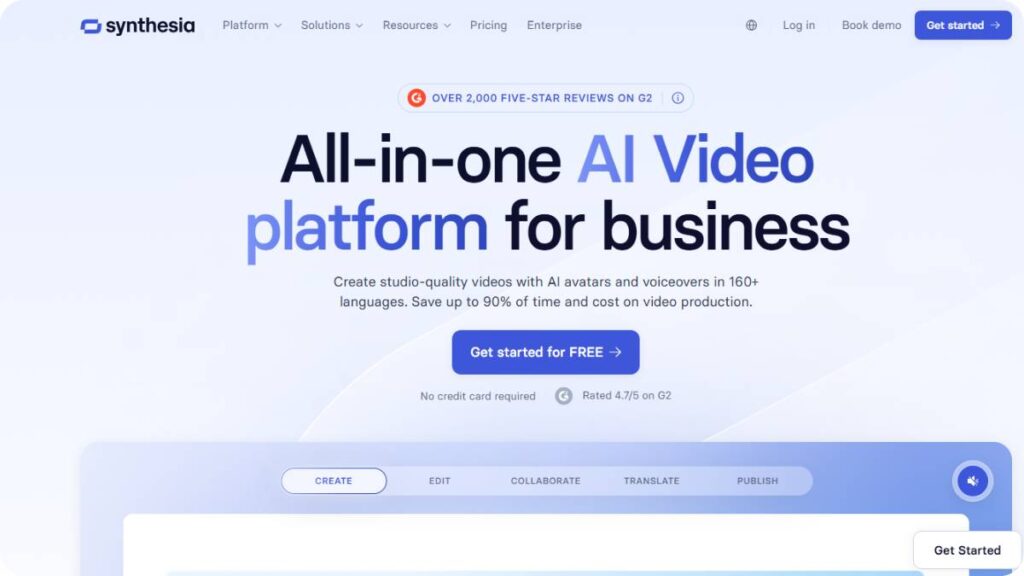
Best for Corporate Training Videos
Synthesia is built around structured content. Training videos, onboarding material, internal communication… that kind of ecosystem.
It focuses on AI presenters who can speak multiple languages without needing re-shoots. For enterprises, that alone saves a lot of production overhead.
The platform supports multiple languages and keeps things consistent across large content libraries.
Where it fits best:
- HR training modules
- compliance videos
- enterprise learning systems
- internal communication content
It’s not designed for highly creative storytelling. And that’s fine. It leans into clarity and consistency instead.
Rask AI
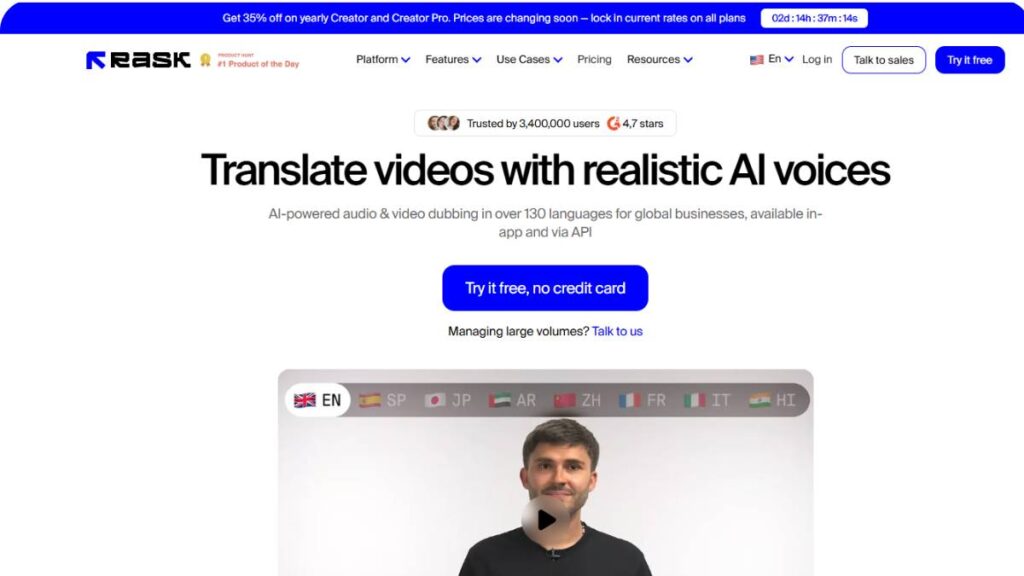
Best for Fast Video Translation Workflows
Rask AI is very creator-oriented. The workflow is simple: upload, translate, dub, export. No heavy configuration layers in between.
It’s widely used for YouTube and short-form content where speed matters more than perfect cinematic output.
It handles:
- automatic transcription
- translation
- voice generation
- subtitle syncing
The main advantage here is friction reduction. Less setup, more output.
It may not always deliver the most emotionally refined voice, but for scaling content quickly, it gets the job done.
Dubverse
Best for Scalable Content Localization
Dubverse is built with a more system-level approach in mind. It’s not just about single video dubbing, but handling bulk workflows.
API-first structure makes it useful for teams that need to localize content at scale rather than manually processing each file.
It supports batch translation pipelines, which is where it starts becoming more of an infrastructure tool than a standalone editor.
Best suited for:
- media libraries
- e-learning platforms
- content agencies handling volume
It’s less about flashy features, more about throughput.
Wavel AI
Best for Bulk Marketing & Ads Dubbing
Wavel AI focuses heavily on marketing workflows. Especially when multiple versions of the same creative need to be produced quickly.
It supports a wide range of languages and is built to handle batch processing without much manual intervention.
Where it fits naturally:
- performance marketing teams
- ad agencies
- social media campaign scaling
The biggest value here is repetition at scale. Once a workflow is set, it can generate multiple localized outputs without rebuilding each time.
Papercup
Best for Professional Media Dubbing
Papercup takes a slightly different approach by combining AI with human review layers.
That hybrid model matters in media environments where accuracy and tone consistency can’t be left entirely to automation.
It’s used in documentary-style content and broadcast-level localization where output quality has to pass editorial standards.
It’s slower than pure AI tools, but the tradeoff is higher reliability in tone-sensitive content.
Resemble AI
Best for Custom Brand Voice Creation
Resemble AI is more about identity than just dubbing. It allows brands to create and maintain a consistent voice across multiple languages and formats.
The emphasis here is on control:
- custom voice training
- API-based deployment
- scalable voice generation
This becomes useful when brands don’t just want translation, but a recognizable voice system that travels across markets.
It’s more technical in setup, but powerful for long-term brand audio strategy.
Maestra AI
Best for Subtitles + Dubbing Combo
Maestra AI combines transcription, subtitles, and dubbing in one place, which reduces the need to jump between tools.
This matters more than it sounds. Many workflows break not because of quality issues, but because teams use too many separate platforms.
It works well for:
- education platforms
- training libraries
- content repurposing workflows
Not the most specialized tool in any single category, but very efficient as an all-in-one system.
Kapwing
Best for Social Media Creators
Kapwing is already widely used in social content editing, and its AI dubbing features extend that same simplicity into multilingual workflows.
It’s not trying to replace full production tools. It’s built for quick editing and publishing cycles.
Best use cases:
- reels and shorts
- meme-style content
- fast turnaround edits
It works best when content needs to be created, edited, and published in one smooth flow without technical overhead.
OpusClip
Best for Short-Form AI Dubbing Automation
OpusClip focuses on extracting and repurposing content into short-form clips and then layering dubbing on top.
The interesting part here is automation. Instead of manually selecting clips, the system identifies moments that are likely to perform well.
Then it adapts them for platforms like Shorts or Reels.
It’s less about full video production and more about content recycling at scale.
Deepdub
Best for Enterprise-Grade Film Dubbing
Deepdub operates closer to traditional film dubbing workflows, but powered by AI systems designed for emotional depth.
It’s used in OTT and studio environments where content needs to feel cinematic, not just functional.
Where it stands out is emotional modeling. Dialogue-heavy content tends to retain more nuance compared to many automated systems.
It’s not the fastest tool in the list, but it’s built for quality-sensitive environments where tone matters as much as translation accuracy.
At this stage, one thing becomes fairly clear. There is no single “best AI dubbing tool.” The space is fragmented by design.
Some tools optimize for speed. Some for realism. Some for scale. And a few try to balance everything, usually with trade-offs.
The real decision isn’t about which tool is best overall. It’s about which one matches the content type being produced.
Enroll Now: AI Marketing Course
Comparison of Best AI Dubbing Tools
Comparing AI dubbing tools isn’t as clean as most tables make it look. On paper, many of them offer similar features. In reality, the difference shows up in tone quality, workflow speed, and how “usable” the output actually feels without heavy editing.
Voice realism comparison
This is usually the first filter people end up using, even if they don’t realize it upfront.
- High realism: ElevenLabs, Deepdub
- Balanced realism + utility: HeyGen, Resemble AI
- Functional but less expressive: most bulk automation tools
The key difference is not just clarity of voice, but whether the speech still feels “alive” after translation. Some tools nail pronunciation but flatten emotional variation, which becomes noticeable in longer videos.
Language coverage comparison
Most tools now claim “100+ languages,” but actual performance varies a lot by language pair.
- Strong global coverage: CAMB.AI, Wavel AI
- Moderate but stable quality: Maestra AI, Dubverse
- Creator-focused coverage: Rask AI
The practical reality: English – Spanish, French, Hindi, and Arabic are usually the most stable. Beyond that, quality can dip depending on dialect complexity.
Lip-sync quality comparison
This matters more for on-camera content than people initially expect.
- Strong lip-sync systems: HeyGen, Synthesia
- Basic alignment: most audio-first dubbing tools
- Minimal or no focus: bulk translation platforms
Lip-sync is still not perfect in fast speech or emotional scenes. It works best in structured, slower-paced content like explainers or training videos.
Speed & automation comparison
This is where workflows start to split into two categories: “creator speed” vs “production control.”
- High automation: Rask AI, OpusClip
- Balanced workflow control: Maestra AI, Dubverse
- Controlled, slower production: Deepdub
Faster isn’t always better. Speed often comes with less emotional refinement in output.
Pricing comparison (pattern-level insight)
Pricing models are all over the place, but they usually fall into three buckets:
- Subscription-based tools (predictable, good for steady creators)
- Usage-based pricing (better for scaling, risky if volume spikes)
- Enterprise licensing (custom pricing, high control, high cost)
Most teams underestimate usage-based models. They look cheap at first, then scale quietly becomes expensive.
Best use-case mapping (simple reality check)
- Creators – Rask AI, Kapwing
- Enterprises – Synthesia, Resemble AI
- Media studios – Deepdub, Papercup
- Educators – Maestra AI
There’s no universal winner here. It’s more about matching tool behavior to content type, not chasing the “best” platform.
Best AI Dubbing Tools by Use Case
This is usually where decisions actually get made. Not on feature lists, but on “what am I trying to produce?”
Best AI Dubbing Tools for YouTube Creators
Creators usually care about speed, simplicity, and decent voice quality without heavy editing.
- Rask AI for fast dubbing workflows
- Kapwing for editing + publishing in one place
- ElevenLabs when voice quality matters more than automation
YouTube content is less forgiving with monotone audio. Even small improvements in tone make a noticeable difference in retention.
Best AI Dubbing Tools for Marketing Agencies
Agencies usually juggle multiple clients, languages, and ad variations. Volume is the real constraint.
- Wavel AI for batch ad production
- Dubverse for API-driven scaling
- HeyGen for multilingual video creatives
The key here isn’t perfection. It’s consistency across dozens (sometimes hundreds) of variations.
Best AI Dubbing Tools for Corporate Training
Corporate content needs clarity more than creativity.
- Synthesia for structured training videos
- Maestra AI for subtitles + dubbing workflows
- Resemble AI for consistent brand voice systems
In this category, predictable output beats expressive output almost every time.
Best AI Dubbing Tools for OTT & Film Localization
This is where emotional accuracy and cinematic tone actually matter.
- Deepdub for film-grade dubbing
- Papercup for hybrid human-AI review workflows
- CAMB.AI for live broadcast adaptation
OTT workflows are less about speed and more about maintaining narrative consistency across languages.
Best AI Dubbing Tools for Short-Form Video (Reels/Shorts)
Short-form content is a different game entirely. Speed and virality matter more than polish.
- OpusClip for auto-clipping + dubbing
- Kapwing for quick edits and exports
- Rask AI for rapid localization
Here, the goal is simple: produce more variations, faster, and test what works.
AI Dubbing Tools for Different Languages & Regions
Language performance is where most AI dubbing tools quietly reveal their limitations. A tool might work extremely well in one language pair and feel noticeably weaker in another.
English – Spanish localization
This is currently one of the strongest and most stable pairs across most platforms. Sentence structure maps fairly well, and tonal adaptation is relatively smooth.
Hindi + Indian regional languages
Indian languages introduce more complexity due to:
- tonal variation
- context-heavy phrasing
- regional dialect differences
Some tools handle standard Hindi reasonably well, but dialect-heavy speech still shows inconsistencies.
European markets
Languages like French, German, Italian, and Portuguese generally perform well, especially for formal content. However, conversational tone can sometimes feel slightly “translated” rather than native.
Southeast Asia expansion
This is where variation increases significantly. Languages like Thai, Vietnamese, and Indonesian can behave differently depending on sentence complexity and speech speed.
The real challenge: dialect + accent adaptation
Even when translation is correct, accents and regional variations often create subtle disconnects.
For example:
- same language, different regions
- formal vs conversational tone mismatch
- cultural phrasing that doesn’t map directly
This is where AI still feels early. Not broken, but not fully mature either.
And in practice, this is usually the difference between “understandable content” and “content that actually feels native.”
Limitations of AI Dubbing Tools
AI dubbing has come a long way, but it still isn’t at the point where it can fully replace human judgment in every scenario. That gap shows up in subtle ways more than in obvious failures.
Loss of emotional depth in some tools
Even when the translation is correct and the voice sounds natural, something often feels slightly “flattened.” Emotional spikes, hesitation, sarcasm, or tension don’t always carry through cleanly.
This becomes more noticeable in:
- storytelling content
- interviews
- documentary-style narration
The words are there, but the feeling sometimes isn’t fully intact.
Lip-sync inaccuracies in complex scenes
Lip-sync works well in controlled environments. But once speech gets fast, overlapping, or emotionally intense, timing starts to drift.
Small mismatches aren’t always a problem. But when viewers start noticing mouth movements not matching speech, immersion breaks quickly.
Accent mismatch issues
This is one of the quieter limitations. A language might be correctly translated, but the accent or rhythm can feel slightly off for native listeners.
It’s not about correctness. It’s about familiarity.
For example:
- regional variations within the same language
- formal vs casual tone shifts
- cultural speech patterns that don’t translate cleanly
These nuances are still difficult for most systems to fully replicate.
Context translation errors
This is where things can get tricky. AI models are good at sentence-level translation, but weaker when meaning depends on broader context.
So sometimes:
- Jokes don’t land
- Sarcasm gets misread
- Idioms are translated too literally
The result isn’t wrong, but it feels slightly disconnected from intent.
Copyright & voice cloning risks
Voice cloning introduces an entirely different layer of concern.
Key risks include:
- unauthorized voice replication
- unclear usage rights for generated voices
- misuse in misleading or synthetic media
This is why most serious platforms now add consent checks or usage restrictions, but enforcement still varies across tools.
Overall, AI dubbing works well for scale, speed, and accessibility. But when emotional precision, cultural nuance, or legal sensitivity becomes important, human oversight still matters quite a bit.
Future of AI Dubbing Technology
The direction of AI dubbing is fairly clear, even if the timeline isn’t. Everything is moving toward faster, more adaptive, and more personalized voice systems.
Real-time multilingual communication
The biggest shift is toward instant translation during conversations. Not just recorded content, but live dialogue.
This could reshape:
- global meetings
- live streaming
- customer support
- international events
The idea is simple, but execution is hard: reduce translation delay to something that feels invisible.
Sub-500ms live translation systems
Latency is becoming the real battleground. Once translation feels “instant enough,” user experience changes completely.
At that point, language stops being a barrier in real-time interaction. But getting there consistently across languages is still a technical challenge.
Hyper-personalized voice avatars
Voice will likely become more identity-based over time.
Instead of generic synthetic voices, systems will lean toward:
- individual voice profiles
- brand-consistent voice models
- emotionally adaptive speech styles
This is where platforms like Resemble AI are already moving, focusing on custom voice identity systems rather than one-size-fits-all models.
AI-generated localized storytelling
This goes beyond dubbing. It’s about adapting content itself for different cultures, not just translating speech.
So the same video might:
- change examples
- adjust tone
- reframe references
Not just language switching, but narrative adaptation.
Integration with AR/VR and immersive content
As immersive media grows, dubbing won’t stay audio-only.
We’re moving toward:
- spatial audio translation
- avatar-driven multilingual interaction
- real-time translated virtual environments
It’s early, but the direction is clear: voice localization will become part of interactive media, not just video.
How to Choose the Best AI Dubbing Tool
Choosing a tool gets easier when the decision is based on constraints instead of features. Most confusion comes from trying to evaluate everything at once.
A more practical approach is to break it down.
Based on content type
Different content behaves differently.
- Talking-head videos – prioritize lip-sync + clarity
- Podcasts or narration – prioritize voice realism
- Ads and marketing – prioritize speed + variation
- Training content – prioritize consistency
Based on the budget
Budget usually determines workflow more than people expect.
- Low budget – usage-based tools or freemium models
- Mid-range – subscription tools with balanced features
- Enterprise – API-based or custom solutions
The mistake most teams make is underestimating scaling costs early on.
Based on language needs
Not all languages are equal in AI systems.
It helps to check:
- how well the tool handles your target language pairs
- whether dialects matter for your audience
- If regional variations are supported or ignored
Sometimes, a “100+ language” tool performs worse than a focused 10-language system.
Based on production speed
Speed matters when content volume is high.
- Fast turnaround – automation-heavy tools like Rask AI or OpusClip
- Balanced workflows – editing + control platforms like Maestra AI
- High-quality output – slower, more controlled systems like Deepdub
There’s always a trade-off between speed and refinement.
Based on the quality vs scalability tradeoff
This is probably the most important decision point.
- If quality matters most – prioritize emotional voice fidelity
- If scale matters most – prioritize automation and batch processing
- If both matter – expect hybrid workflows (AI + human review)
Tools rarely excel equally in both directions
Step-by-Step: How to Dub a Video Using AI Tools
Even though tools differ, the core workflow is surprisingly similar across platforms.
Upload video
The process starts by uploading the original content. Most tools support common formats like MP4, MOV, and sometimes direct links from platforms.
Select target language
This step looks simple, but it has a big impact. Some systems allow multiple dialect options, and choosing the wrong one can affect how “native” the output feels.
Choose voice or clone voice
This is where customization starts.
Options usually include:
- preset voices
- region-specific accents
- cloned voice models (if supported)
Cloning is useful for brand consistency, but not always necessary.
Generate dubbed output
The system processes:
- transcription
- translation
- voice generation
- timing alignment
This is usually the longest step, though still far faster than manual dubbing workflows.
Edit timing & subtitles
Most tools allow light adjustments after generation. This is where small fixes happen:
- syncing mismatched lines
- adjusting pacing
- correcting translation nuances
Not always required, but often useful for polishing.
Export for platforms (YouTube, TikTok, LMS)
Final output depends on where the content is going.
Common export formats include:
- platform-ready video files
- subtitle files (SRT, VTT)
- audio-only versions
- LMS-compatible formats
At this stage, content is ready for distribution across different audiences without needing separate production cycles.
The real shift here is not just automation. It’s how quickly content can move from “single-language production” to “multi-language distribution” without rebuilding everything from scratch.
Conclusion:
Are AI Dubbing Tools Worth It in 2026?
AI dubbing has quietly moved into that “default tool in the stack” category. Not flashy anymore, just practical. Most teams using video today don’t even debate whether to use it,they debate where it fits in the workflow.
And that’s probably the real shift.
Not replacement. Just redistribution of effort.
For example, expectations are very different depending on who’s using it:
- A YouTube creator mostly needs reach. If the voice is 85% natural and gets the job done quickly, that’s usually enough
- Marketing teams care about volume. Multiple variations, multiple languages, fast turnaround. Perfection slows everything down
- Edtech platforms lean toward clarity. Clean narration matters more than emotional performance
So the idea of “perfect dubbing” feels less relevant in most day-to-day use cases.
Across the ecosystem, patterns are pretty consistent:
ElevenLabs tends to show up wherever voice quality matters.
Synthesia and Resemble AI sit more in structured, enterprise workflows.
Rask AI and OpusClip are used when speed and content repurposing become the priority.
Deepdub still feels closer to traditional media standards when quality is non-negotiable.
No single tool really owns the space. And maybe that’s the point.
What matters more is being honest about the content itself. High-volume content behaves differently from narrative-driven or brand-sensitive work. Treating them the same usually creates unnecessary friction.
So yes, AI dubbing tools are worth it in 2026. Just not as a blanket solution for everything. They work best when expectations are set correctly, and when there’s still a bit of human judgment left in the loop for anything that carries emotional or brand weight.
FAQs: About AI Dubbing Tools
What is the best AI dubbing for?
There isn’t one clear winner because use cases vary so much. ElevenLabs is often chosen for voice quality, while Rask AI works better for fast production. Larger setups usually lean toward Synthesia or Deepdub, depending on whether the focus is corporate content or media-level output.
Are AI dubbing tools accurate?
They’re accurate enough for most standard content like explainers and narration. Where things get a bit uneven is tone and context. The translation is usually fine, but emotional intent or cultural nuance can feel slightly off without light manual adjustment.
Which AI tool is best for YouTube dubbing?
For YouTube, speed matters a lot. Tools like Rask AI and Kapwing are commonly used because they keep things simple. ElevenLabs often gets added when voice quality becomes important for keeping viewers engaged over longer watch times.
Can AI dubbing replace human voices and actors?
Not fully. It works well for informational content, training videos, and social media clips. But when performance, emotion, or character depth is important, human voice actors still bring something AI doesn’t consistently replicate yet.
Do AI dubbing tools support Indian languages?
Yes, many tools support Indian languages like Hindi and several regional ones. The support is there, but the quality can vary depending on the dialect. Some outputs sound very natural, others may need small corrections to feel more locally accurate.
Is AI dubbing legal for commercial use?
Generally, yes, but it depends on the platform’s licensing rules. The tricky part is voice cloning. Some tools require explicit consent for using or replicating voices, so usage rights should always be checked before commercial deployment.
Which AI tool has the best voice cloning?
ElevenLabs is often considered strong in voice cloning because it captures tone and emotional variation quite well. Resemble AI is also widely used in brand setups where maintaining a consistent voice identity matters across multiple languages.
How much do AI dubbing tools cost?
Pricing isn’t fixed. Some tools use subscriptions, others charge based on usage. Small creators usually start low, but costs can scale quickly when producing large volumes or working across multiple languages regularly.
Can AI dubbing sync lips perfectly?
Not really. It can get close in controlled scenarios, especially with slower speech. But perfect sync across all video types is still inconsistent. Fast speech and emotional delivery usually expose small timing mismatches.
What is the fastest AI dubbing software?
Tools like Rask AI and OpusClip are usually considered fast because they automate most of the workflow. They’re designed more for speed and content output than detailed manual control or fine-tuning.
How do AI dubbing tools translate videos in real time?
Real-time systems convert speech into text, translate it instantly, and generate synthetic voice output almost immediately. The delay is small, but it still depends on language complexity and processing load behind the system.
What is the difference between AI dubbing and AI voice cloning?
AI dubbing is the full process: translation, voice generation, and syncing. Voice cloning is just about copying how a voice sounds. Cloning can be part of dubbing, but it doesn’t handle translation or timing by itself.
Which AI dubbing tool is best for beginners with no editing skills?
Kapwing and Rask AI tend to be more beginner-friendly. They simplify the process so users don’t have to deal with complex editing steps. It’s more about quick output than detailed customization.
Can AI dubbing tools maintain the original speaker’s emotion and tone?
Sometimes yes, but not always. Basic tone usually carries over fine, especially in simple narration. But more subtle emotional layers like sarcasm, tension, or humor can get lost or softened during translation.
Do AI dubbing tools work for long-form videos like documentaries?
They do, but consistency becomes important. Longer videos need a stable tone across segments. That’s why tools like Deepdub or Papercup are often preferred in documentary-style workflows where narrative flow matters.
What are the privacy risks of using AI voice cloning in dubbing tools?
The main concern is the misuse of voice data. If permissions aren’t handled properly, cloned voices could be used in unintended ways. That’s why consent and platform policies matter more than most people initially assume.
Which AI dubbing tools offer free trials or free usage plans?
Most platforms offer some form of free trial, usually with limited minutes or features. It’s generally enough to test output quality before deciding whether to move to a paid plan.
Can AI dubbing tools automatically add subtitles along with voiceover?
Yes, most tools now generate subtitles alongside dubbed audio. It’s become a standard feature because it improves accessibility and helps content work better across multiple platforms.
How accurate are AI dubbing tools for regional accents and dialects?
Accuracy is improving, but still uneven. Standard language variants usually work well, but regional accents and local speech patterns can still feel slightly off. In those cases, a bit of manual correction helps make it sound more natural.