

Choosing the right omnichannel software has become far more important as customer journeys grow increasingly fragmented across email, chat, social media, SMS, voice, and ecommerce platforms. This guide breaks down the best omnichannel software platforms, comparing their features, strengths, pricing models, and integrations.
Table of Contents
Introduction
Customer conversations are messier than ever now. Someone discovers a brand through an Instagram ad, asks a question on WhatsApp, checks reviews on Google, abandons their cart on mobile, then finally buys after receiving an email three days later. And somehow, customers still expect businesses to remember everything.
That’s the reality most brands are dealing with.
The old setup, separate tools for email, live chat, social media, SMS, and support tickets, simply doesn’t hold up anymore. Teams end up working in silos, conversations get fragmented, and customers have to repeat themselves constantly. It creates friction everywhere. Support slows down. Marketing loses context. Sales teams miss intent signals. Retention drops quietly in the background.
This is exactly why omnichannel software has become a core part of modern customer operations.
Instead of treating every channel as a separate interaction, omnichannel platforms connect them into one continuous customer journey. A support agent can see previous email conversations while responding to live chat. Marketing teams can trigger personalized campaigns based on browsing behavior, purchases, or support interactions. Customers move between channels without feeling like they’re starting over every single time.
And honestly, that seamlessness is no longer a “nice-to-have.” It’s expected.
The shift is happening across nearly every customer touchpoint:
- Live chat
- SMS
- Voice support
- Social media DMs
- Mobile apps
- In-app messaging
- Self-service portals
What’s changed over the last couple of years is the role AI now plays inside these systems. Omnichannel customer engagement platforms are no longer just communication hubs. They’ve evolved into intelligent orchestration layers.
Modern platforms can now:
- Route conversations automatically
- Detect customer intent
- Personalize messaging in real time
- Summarize support conversations
- Prioritize high-value customers
- Automate repetitive support workflows
- Unify customer data across departments
And because customer acquisition costs keep rising, businesses are under pressure to maximize retention and lifetime value. That becomes difficult when customer communication is fragmented across disconnected tools.
A proper omnichannel communication platform solves that by creating a unified customer view. Marketing, support, and sales teams all work from the same context instead of isolated systems.
The result usually looks something like this:
- faster response times
- better customer satisfaction
- more personalized engagement
- higher conversion rates
- smoother customer journeys
- fewer dropped conversations
There’s also a major shift happening in customer expectations. People don’t really think in “channels” anymore. They just expect businesses to respond consistently wherever they are.
A customer might:
- Ask a question on Instagram
- continue the conversation over email
- receive updates via SMS
- speak with support on voice
- Complete the purchase on the desktop
From the customer’s perspective, it’s all one experience.
That’s the entire idea behind omnichannel customer experience software: creating continuity across every interaction instead of managing isolated communication streams.
The challenge, though, is that the market has become crowded. There are hundreds of platforms claiming to be “omnichannel,” but many are still just multichannel systems with better branding. Some are built for enterprise support teams. Others focus heavily on ecommerce automation. Some prioritize AI-powered customer service, while others are stronger in marketing automation or contact center operations.
Choosing the right platform depends heavily on business size, customer journey complexity, integration needs, and the channels that matter most to your audience.
That’s where this guide comes in.
The goal here isn’t to throw together a random list of software tools. It’s to break down what actually matters in an omnichannel platform, what features are worth paying for, where AI is genuinely useful, and which platforms are best suited for different business models.
Because in most cases, the “best” omnichannel software isn’t the biggest platform. It’s the one that fits your workflows without creating more operational complexity.
What Is Omnichannel Software?
Omnichannel software is a centralized platform that helps businesses manage customer communication across multiple channels while keeping conversations, customer history, and data connected in real time.
The important part is connected.
A lot of businesses still confuse multichannel systems with omnichannel platforms, but they’re not the same thing at all.
Multichannel setups simply give businesses multiple ways to communicate. Omnichannel software goes further by synchronizing those interactions into one unified customer experience.
So if a customer starts a conversation through live chat, follows up on email later, then contacts support on WhatsApp, the entire interaction history stays connected. The customer doesn’t need to repeat information, and internal teams aren’t operating blindly.
That continuity changes everything operationally.
Without omnichannel customer support systems, companies usually end up with:
- disconnected conversations
- duplicated support efforts
- inconsistent messaging
- fragmented customer data
- poor visibility across teams
And once customer volume increases, those issues compound quickly.
Modern omnichannel communication software acts as the operational layer connecting support, marketing, sales, and customer success functions together. It centralizes conversations, customer profiles, behavioral data, and engagement history inside one ecosystem.
Most platforms now support combinations of:
- SMS
- social messaging
- voice calls
- live chat
- in-app communication
- help desk ticketing
- chatbot interactions
Some platforms focus more heavily on customer support. Others prioritize marketing automation or customer engagement orchestration. Enterprise platforms often combine all three.
But the core purpose stays the same: delivering consistent customer experiences across channels without losing context.
How Omnichannel Software Works
At a technical level, omnichannel platforms work by syncing communication channels, customer data, automation workflows, and internal team operations into one system.
The customer usually sees a smooth, connected experience. Behind the scenes, though, there’s a huge amount happening simultaneously.
Most omnichannel software platforms rely on four major layers:
Communication Layer
This is where customer conversations happen.
Channels typically include:
- live chat
- Facebook Messenger
- Instagram DMs
- voice support
- SMS
- web forms
- mobile app messaging
The platform pulls all these conversations into a unified inbox so teams can manage interactions from one place instead of switching between disconnected tools.
Customer Data Layer
This is where customer profiles get centralized.
Modern omnichannel CRM software tracks:
- purchase history
- browsing behavior
- support tickets
- campaign engagement
- previous conversations
- customer preferences
- lifecycle stage
- subscription activity
This creates what most vendors call a “360-degree customer view.”
It sounds like marketing jargon sometimes, but operationally, it matters a lot. Teams make better decisions when context exists.
For example, support agents can instantly see whether someone is:
- a new lead
- a repeat customer
- a high-value account
- Currently in a sales pipeline
- frustrated by unresolved tickets
That changes how conversations are handled.
Automation Layer
This is where AI and workflow automation enter the picture.
Modern omnichannel customer engagement software can automate things like:
- ticket routing
- lead qualification
- customer segmentation
- abandoned cart recovery
- follow-up messaging
- support prioritization
- chatbot responses
- escalation workflows
Some AI-powered omnichannel platforms now go even further by predicting customer intent and proactively triggering engagement workflows before customers even contact support.
That’s becoming increasingly common in ecommerce, SaaS, and enterprise customer service environments.
Analytics Layer
This is the visibility layer.
Omnichannel analytics tools help businesses understand:
- channel performance
- response times
- customer satisfaction
- retention trends
- campaign attribution
- conversion paths
- support efficiency
And honestly, this is one of the biggest advantages of omnichannel systems compared to fragmented communication stacks. Businesses finally get visibility into the full customer journey instead of isolated touchpoints.
Omnichannel vs Multichannel: What’s the Difference?
This distinction matters more than most businesses realize.
A multichannel strategy means a company communicates through multiple platforms. But those channels usually operate independently.
An omnichannel strategy connects every interaction together.
At first glance, the difference sounds subtle, but operationally it’s massive.
Here’s what that looks like in practice.
| Omnichannel | Multichannel |
| Connected customer conversations | Separate communication channels |
| Shared customer history | Fragmented interaction history |
| Unified customer profiles | Isolated customer data |
| Consistent messaging across touchpoints | Different experiences per channel |
| Centralized reporting and analytics | Separate reporting systems |
| Personalized customer journeys | Disconnected engagement flows |
In a multichannel environment, a customer may need to explain the same issue repeatedly across departments.
In an omnichannel environment, the context travels with the customer.
That’s why businesses increasingly prioritize unified customer communication systems instead of stacking disconnected tools together.
The operational benefits become especially noticeable when businesses scale customer acquisition and support operations. Once customer volume increases across channels, fragmented systems become difficult to manage efficiently.
Omnichannel customer journey orchestration solves that by creating continuity between marketing, support, sales, and retention efforts.
And increasingly, customers notice when that continuity doesn’t exist.
Why Businesses Need Omnichannel Software
Rising Customer Expectations Across Channels
Customers have become incredibly channel-fluid.
People jump between devices and communication platforms constantly throughout the day without thinking about it. They might discover a product through TikTok, ask questions over Instagram DM, complete checkout on desktop, and contact support through WhatsApp later that evening.
Customers expect businesses to keep up with that movement naturally.
The problem is that most businesses historically built communication systems channel by channel over time. One platform for email marketing. Another for support tickets. Separate social media management tools. Different CRMs. Different reporting systems.
Eventually, everything becomes disconnected.
And customers feel those gaps immediately.
The frustration usually shows up in predictable ways:
- repeating information multiple times
- delayed responses
- inconsistent support experiences
- irrelevant marketing messages
- disconnected communication between departments
That kind of friction directly impacts retention now. Customers have too many alternatives to tolerate poor experiences for long.
This is one reason omnichannel customer experience software adoption has accelerated so quickly over the last few years. Businesses aren’t just optimizing communication anymore. They’re trying to reduce customer effort.
The easier interactions feel, the more likely customers are to stay engaged.
AI-Powered Customer Service Is Becoming Standard
AI has shifted customer expectations again, especially in support environments.
Customers now expect:
- faster resolutions
- instant responses
- 24/7 availability
- personalized recommendations
- intelligent self-service options
Not because every business has perfected AI support yet, but because enough major brands have normalized those experiences already.
Modern omnichannel customer service software increasingly includes:
- AI chatbots
- intelligent routing
- sentiment analysis
- automated summaries
- predictive recommendations
- conversation prioritization
Some platforms can now detect customer frustration patterns and escalate conversations automatically before situations worsen.
Others use AI to recommend help articles, generate responses, or personalize outreach campaigns based on customer behavior.
Of course, automation still needs oversight. Poorly implemented AI support systems can frustrate customers quickly. But when used properly, AI significantly improves scalability and response efficiency.
And businesses are under pressure to scale support without scaling headcount endlessly.
That’s pushing AI-powered omnichannel platforms into the mainstream much faster than many expected.
Customer Data Fragmentation Hurts Revenue
This is probably one of the most overlooked operational problems in growing businesses.
When customer data lives across disconnected systems, teams lose visibility into the actual customer journey.
Marketing teams don’t see support interactions.
Support agents don’t see sales context.
Sales teams don’t know engagement history.
Retention teams can’t identify behavioral patterns properly.
The result is disconnected customer experiences and inefficient decision-making everywhere.
It also affects revenue more directly than most businesses realize.
Fragmented data often leads to:
- poor targeting
- lower personalization accuracy
- missed upsell opportunities
- inconsistent communication
- higher churn
- weaker attribution tracking
Omnichannel CRM software helps solve this by consolidating customer information into centralized profiles that update dynamically across channels.
That unified visibility improves both customer experience and operational efficiency.
Omnichannel Platforms Improve Customer Retention
Acquiring customers keeps getting more expensive across nearly every major acquisition channel.
Retention matters more now.
And customer experience has become one of the strongest retention drivers available to businesses.
Customers stay longer when interactions feel smooth, contextual, and personalized.
That doesn’t happen consistently with fragmented systems.
Omnichannel engagement platforms improve retention because they help businesses:
- respond faster
- personalize communication
- maintain conversation continuity
- proactively solve issues
- reduce friction during support interactions
Even relatively small improvements in customer experience compound significantly over time.
Businesses with strong omnichannel engagement strategies often see improvements in:
- repeat purchases
- customer satisfaction
- loyalty metrics
- customer lifetime value
- renewal rates
And increasingly, those gains become competitive advantages.
Faster Support Resolution Across Teams
Operationally, disconnected systems slow support teams down constantly.
Agents waste time switching tabs, searching for context, escalating tickets manually, or requesting customer information repeatedly.
Omnichannel customer support software centralizes that information so teams can resolve issues faster without unnecessary back-and-forth.
Features like:
- shared inboxes
- AI ticket routing
- conversation history
- cross-team collaboration
- centralized customer profiles
all contribute to faster resolution times.
That matters both for customer satisfaction and operational costs.
Because as ticket volume grows, inefficient workflows become expensive very quickly.
Better Attribution and Customer Journey Tracking
Modern customer journeys are incredibly nonlinear now.
Someone might interact with:
- paid ads
- email campaigns
- organic search
- social content
- live chat
- SMS reminders
- support conversations
before converting.
Without omnichannel analytics, understanding which touchpoints actually influence conversions becomes difficult.
Omnichannel platforms help businesses track customer journeys more accurately across channels instead of evaluating interactions in isolation.
That visibility improves:
- marketing attribution
- campaign optimization
- lifecycle segmentation
- personalization
- retention strategies
And honestly, better visibility usually leads to better decisions everywhere.
Key Features to Look for in the Best Omnichannel Software
Choosing omnichannel software gets complicated fast because nearly every platform claims to offer “unified customer experiences” now.
But once you dig deeper, the differences between platforms become pretty significant.
Some tools are heavily support-focused. Others are essentially marketing automation platforms with omnichannel messaging added on top. Enterprise systems prioritize scalability and workflow complexity, while SMB-focused tools lean toward simplicity and ease of use.
The key is understanding which capabilities genuinely matter for your business model instead of getting distracted by bloated feature lists.
Unified Omnichannel Inbox
This is usually the operational foundation of the entire platform.
A unified omnichannel inbox centralizes customer conversations from multiple channels into one interface so teams can manage interactions without constantly switching systems.
That sounds simple, but it changes workflow efficiency dramatically.
Most modern omnichannel messaging platforms support combinations of:
- SMS
- Facebook Messenger
- Instagram DM
- live chat
- voice support
- in-app messaging
The important part isn’t just channel availability, though. It’s conversation continuity.
A good unified inbox preserves customer context across channels so conversations feel connected instead of fragmented.
The strongest platforms also support:
- internal collaboration notes
- conversation tagging
- assignment workflows
- SLA management
- conversation prioritization
- customer history visibility
Without those capabilities, inboxes become chaotic once support volume increases.
AI-Powered Automation and Chatbots
AI has moved from an optional feature to a core infrastructure surprisingly fast in omnichannel customer engagement software.
But there’s a big difference between useful AI automation and gimmicky automation.
The best AI omnichannel software improves operational efficiency without making customer experiences feel robotic.
Useful AI capabilities typically include:
- intelligent conversation routing
- automated ticket categorization
- AI-generated summaries
- chatbot support workflows
- sentiment analysis
- predictive engagement triggers
- suggested responses
- workflow automation
Conversational AI has improved significantly over the last couple of years as well. Many platforms now handle basic customer inquiries effectively before escalating more complex issues to human agents.
That reduces support load while still maintaining reasonable customer experiences.
AI personalization is another area evolving quickly.
Some omnichannel platforms now dynamically personalize:
- messaging sequences
- product recommendations
- support prioritization
- customer journeys
- campaign timing
based on behavioral data and customer intent signals.
The important thing, though, is maintaining balance. Over-automation can create frustrating customer experiences when businesses rely too heavily on AI without proper escalation paths.
CRM and Customer Data Platform (CDP) Integration
Omnichannel systems become significantly more valuable when customer data syncs properly across departments.
That’s why CRM and CDP integration matters so much.
Without integration layers, communication platforms often become isolated engagement tools instead of true customer experience systems.
The best omnichannel CRM software integrates deeply with platforms like:
- Salesforce
- HubSpot
- Microsoft Dynamics 365
- Shopify
- Zendesk
- ecommerce systems
- customer data platforms
This creates centralized customer profiles that update dynamically across touchpoints.
A strong integration setup usually enables businesses to track:
- purchase history
- support interactions
- browsing behavior
- marketing engagement
- subscription status
- sales activity
- customer lifecycle stages
inside one connected ecosystem.
That 360-degree customer view improves personalization, segmentation, support efficiency, and lifecycle management significantly.
Omnichannel Customer Journey Mapping
Customer journeys rarely follow predictable linear paths anymore.
People move across channels unpredictably, interact with multiple touchpoints before converting, and often re-enter funnels later through entirely different channels.
Omnichannel customer journey mapping helps businesses visualize and orchestrate those experiences more effectively.
The best platforms allow businesses to:
- map customer touchpoints
- automate engagement flows
- trigger personalized communication
- segment audiences dynamically
- build lifecycle workflows
Journey orchestration becomes especially valuable for:
- ecommerce brands
- SaaS onboarding
- subscription businesses
- enterprise sales funnels
- retention campaigns
because customer interactions typically span long periods and multiple communication channels.
Analytics and Reporting
Most businesses underestimate how difficult attribution becomes once customer journeys span multiple channels.
Without centralized omnichannel analytics, teams often make decisions using incomplete or fragmented data.
Strong reporting capabilities help businesses measure:
- response times
- customer satisfaction
- conversion attribution
- retention performance
- campaign engagement
- support efficiency
- channel effectiveness
- revenue impact
The strongest omnichannel customer engagement platforms also offer real-time dashboards and customizable reporting layers.
That visibility becomes increasingly important as communication complexity grows.
Ecommerce and Retail Integrations
For ecommerce brands in particular, integrations matter almost as much as the communication platform itself.
The best ecommerce omnichannel software integrates directly with platforms like:
- Shopify
- Magento
- WooCommerce
- BigCommerce
- POS systems
- inventory management platforms
These integrations allow businesses to unify customer engagement with transactional and behavioral data.
That enables workflows like:
- abandoned cart recovery
- post-purchase automation
- personalized recommendations
- loyalty campaigns
- shipping notifications
- customer retention flows
Retail brands increasingly rely on omnichannel platforms to bridge online and offline customer experiences as well.
Scalability for Enterprise Teams
A platform that works for a small support team may break operationally once conversation volume scales significantly.
Enterprise omnichannel software needs to support:
- high ticket volumes
- multiple departments
- global teams
- advanced permissions
- workflow automation
- multilingual support
- compliance requirements
- custom integrations
Scalability becomes especially important for businesses operating across regions or managing large customer service operations.
Security, Compliance, and Data Privacy
Customer communication platforms handle enormous amounts of sensitive data now.
That makes security and compliance non-negotiable.
Businesses evaluating omnichannel customer experience software should look closely at:
- GDPR compliance
- SOC 2 certification
- HIPAA support
- data encryption
- access controls
- audit logs
- user permissions
- data residency policies
Enterprise buyers especially prioritize compliance capabilities during vendor evaluations now.
And honestly, that trend will probably continue accelerating as customer privacy regulations expand globally.
15 Best Omnichannel Software Platforms
Choosing omnichannel software has become surprisingly difficult over the last few years. Not because there aren’t enough options, honestly, there are too many now, but because almost every platform claims to do everything.
In reality, most tools still have clear strengths and weaknesses.
Some are built around customer support. Others focus heavily on lifecycle marketing and ecommerce retention. Enterprise platforms prioritize workflow orchestration and customer data management, while smaller-business tools lean more toward usability and speed.
The best omnichannel software usually isn’t the platform with the longest feature list. It’s the one that fits how your teams actually operate.
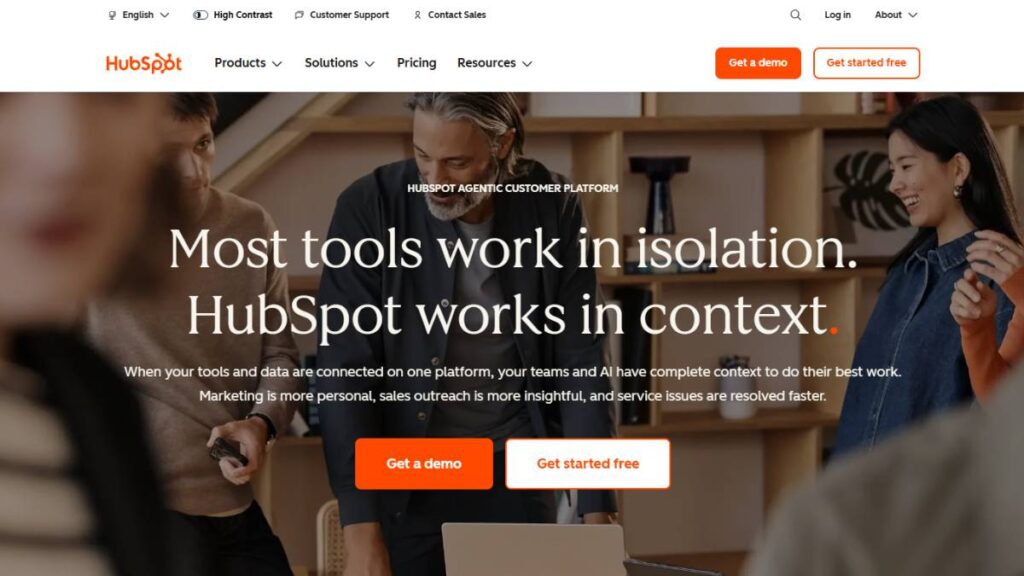
HubSpot
Best All-in-One Omnichannel CRM
HubSpot has become one of the most balanced omnichannel CRM platforms on the market, especially for HubSpot CRM customers that want marketing, sales, and customer support working inside one connected system.
That unified structure matters more than most companies realize initially. When support tickets, marketing engagement, customer conversations, sales pipelines, and automation workflows all sit inside the same ecosystem, teams stop operating in silos.
The platform handles omnichannel communication surprisingly well for a tool that originally started more heavily on the marketing side.
Key Features
- Unified CRM and customer profiles
- Email, live chat, SMS, and social integrations
- Marketing automation
- Shared omnichannel inbox
- Customer journey tracking
- AI-powered support workflows
- Knowledge base functionality
- Reporting dashboards
Pros
- Extremely intuitive interface
- Strong marketing + support alignment
- Excellent automation builder
- Fast onboarding experience
- Large integration ecosystem
Cons
- Pricing increases quickly as databases grow
- Enterprise reporting still has limitations
- Advanced customization can require higher-tier plans
Pricing
HubSpot offers free tools, though meaningful omnichannel functionality usually requires Professional or Enterprise plans.
Ideal Use Cases
- SMBs
- SaaS companies
- Service businesses
- Mid-market ecommerce brands
- B2B growth teams
HubSpot works particularly well for companies trying to centralize customer operations without introducing enterprise-level complexity too early.
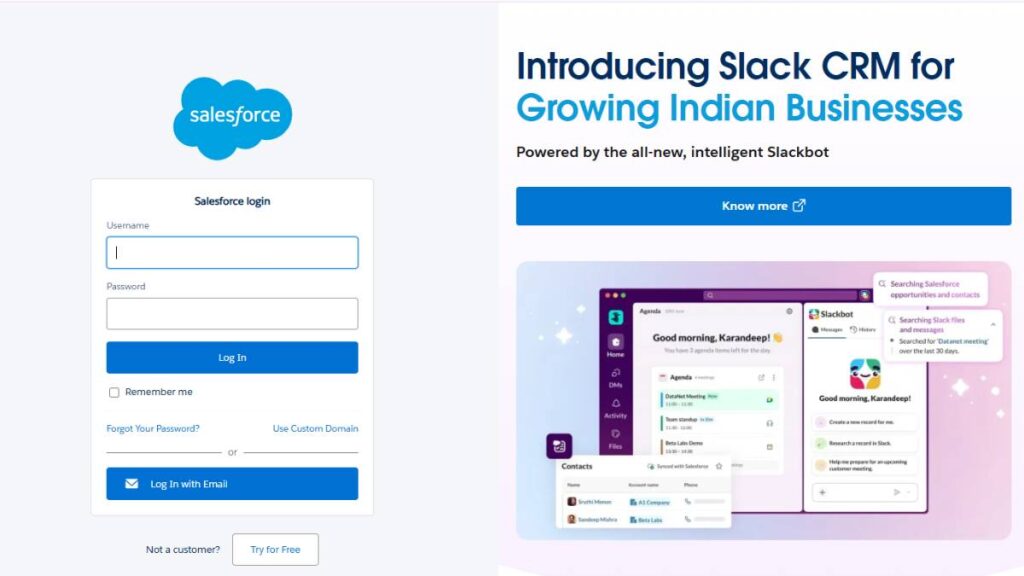
Salesforce
Best Enterprise Omnichannel Platform
Salesforce is still the heavyweight in enterprise omnichannel customer experience management.
The platform combines CRM infrastructure, customer service, analytics, automation, and customer data orchestration at an enormous scale. It’s highly customizable, deeply integrated, and designed for businesses with operational complexity.
That complexity cuts both ways, though.
For large enterprises, Salesforce can become the operational backbone connecting customer support, sales, marketing, and customer success. For smaller businesses, it can easily feel oversized and expensive.
Service Cloud remains one of the strongest enterprise customer service systems available, especially when paired with Data Cloud and Salesforce AI capabilities.
Key Features
- Service Cloud omnichannel routing
- Enterprise workflow automation
- Unified customer data management
- AI-driven personalization
- Cross-channel customer engagement
- Voice, messaging, chat, and email support
- Advanced analytics and reporting
- Enterprise-grade integrations
Pros
- Extremely scalable infrastructure
- Deep customization capabilities
- Powerful automation workflows
- Strong enterprise analytics
- Excellent ecosystem support
Cons
- Expensive implementation costs
- Steeper learning curve
- Ongoing administration requirements
- Complexity may overwhelm smaller teams
Pricing
Salesforce pricing varies significantly depending on products, support needs, integrations, and enterprise requirements.
Ideal Use Cases
- Global enterprises
- Large support organizations
- Financial services
- Healthcare operations
- Enterprise ecommerce businesses
For businesses managing high-volume customer operations across regions or departments, Salesforce remains one of the strongest enterprise omnichannel platforms available.
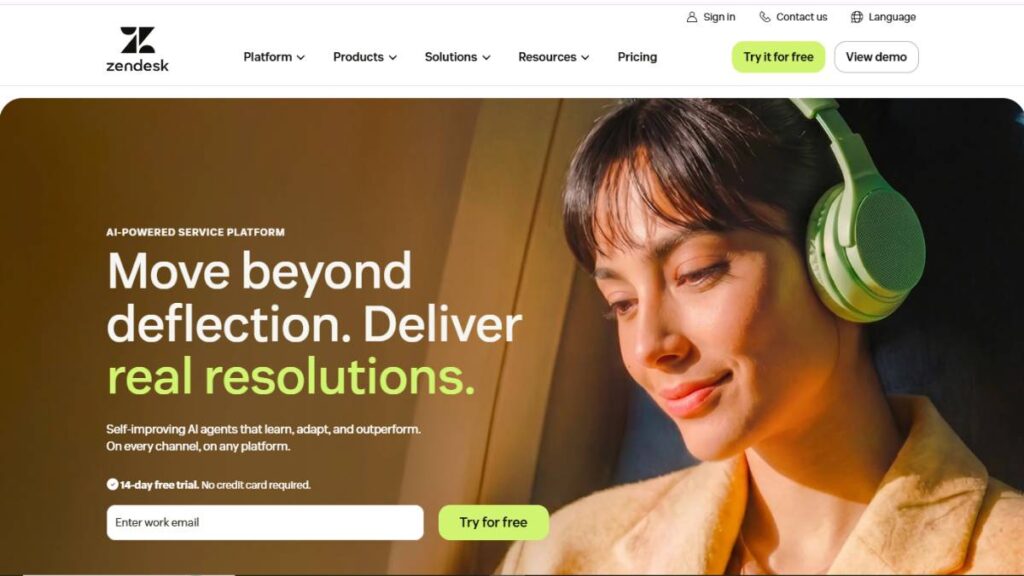
Zendesk
Best Omnichannel Customer Support Software
Zendesk still does customer support exceptionally well.
That sounds simple, but a lot of omnichannel platforms try to become everything at once and end up weakening the core support experience. Zendesk stays focused on helping support teams manage customer conversations efficiently across channels.
And honestly, that focus shows.
The platform centralizes communication from email, live chat, social media, messaging apps, and voice support into one connected workspace. Agents can move between conversations without losing customer history or context.
Zendesk’s AI capabilities have expanded quite a bit, too, especially around ticket automation, customer intent detection, routing, and support assistance.
Key Features
- Omnichannel support ticketing
- Shared support workspace
- AI-powered support automation
- Voice and chat support
- Social messaging integrations
- Help center management
- Workflow automation
- SLA tracking
Pros
- Excellent support infrastructure
- Clean, easy-to-use interface
- Strong automation capabilities
- Fast implementation
- Reliable scalability
Cons
- Pricing can escalate quickly
- Enterprise customization is somewhat limited
- Reporting depth varies across plans
Pricing
Zendesk offers multiple pricing tiers depending on support scale and AI requirements.
Ideal Use Cases
- Customer support teams
- Ecommerce brands
- SaaS companies
- Mid-sized enterprises
- High-volume support environments
For omnichannel customer support specifically, Zendesk remains one of the safest and strongest choices available.
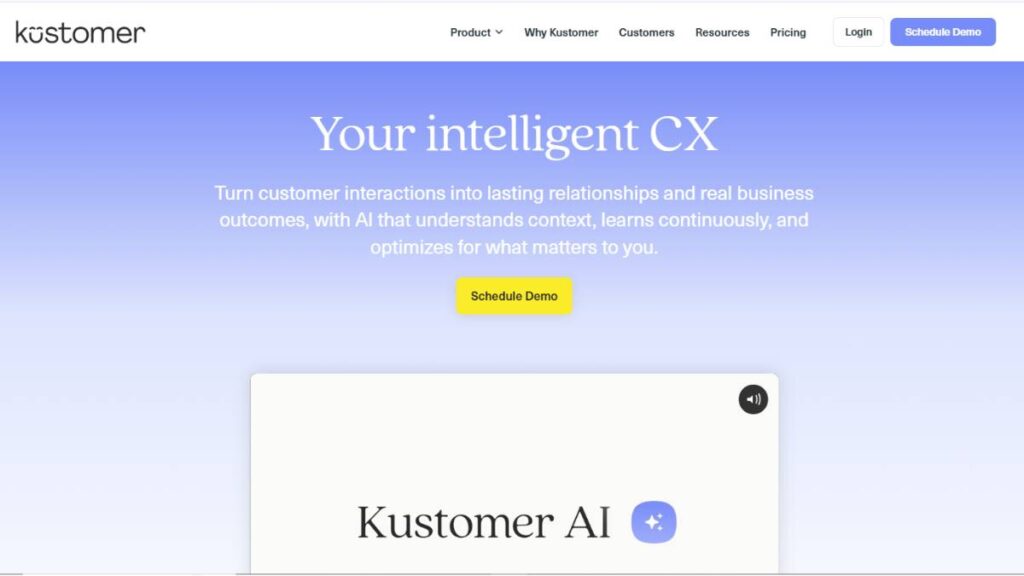
Kustomer
Best AI-Driven Customer Experience Platform
Kustomer approaches customer support differently than traditional ticketing platforms.
Instead of organizing communication around tickets, it organizes interactions around customers themselves. That creates much more conversational continuity across support channels.
The platform builds unified customer timelines combining:
- chat conversations
- email interactions
- social messaging
- voice support
- purchase history
- customer events
into one connected customer record.
That context-heavy approach works particularly well for modern support environments where customers move constantly between channels.
Key Features
- Unified customer timelines
- AI customer service workflows
- Omnichannel messaging support
- Intelligent routing
- CRM-style customer profiles
- Automated workflows
- Conversation management
- Customer intent tracking
Pros
- Strong customer context visibility
- Modern conversational support experience
- Flexible automation workflows
- Good AI integration
- Clean interface design
Cons
- Pricing targets mid-market and enterprise users
- Smaller integration ecosystem than Salesforce or Zendesk
- Advanced customization can require technical support
Pricing
Custom pricing based on support scale and operational complexity.
Ideal Use Cases
- Ecommerce brands
- Subscription businesses
- Conversational support teams
- DTC companies
- Customer-centric service operations
Kustomer works especially well for brands trying to create smoother, more personalized support experiences.
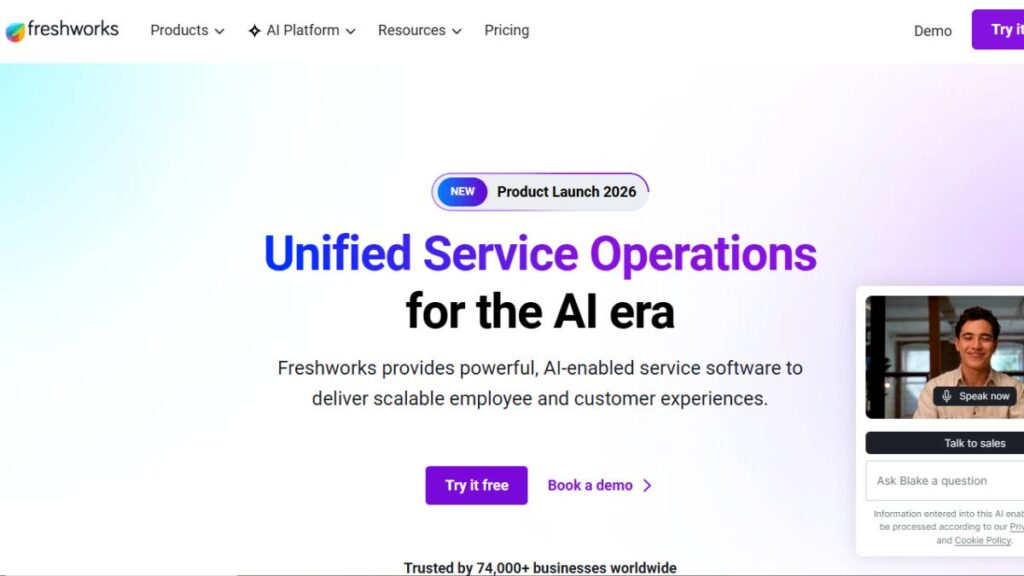
Freshworks
Best Budget Omnichannel Software
Freshworks has quietly become one of the best value-for-money omnichannel customer service platforms available.
It gives businesses a fairly comprehensive support ecosystem without forcing them into enterprise pricing structures too early.
That middle-ground positioning is exactly why so many growing businesses adopt it.
Freshdesk Omnichannel combines messaging, ticketing, automation, live chat, self-service, and voice support into one relatively accessible system.
Key Features
- Omnichannel support ticketing
- Shared inbox workflows
- Live chat and chatbot support
- Voice support integration
- Automation rules
- Customer self-service portals
- Reporting dashboards
- Knowledge base functionality
Pros
- Affordable compared to enterprise systems
- Easy onboarding experience
- User-friendly interface
- Strong SMB feature depth
- Flexible support workflows
Cons
- Enterprise customization has limits
- Analytics could be more advanced
- Some automation capabilities are less flexible than those of competitors
Pricing
Flexible SMB and mid-market pricing tiers.
Ideal Use Cases
- Small businesses
- Growing support teams
- Ecommerce operations
- Startups
- Mid-sized customer service teams
Freshworks is often the right choice for businesses needing strong omnichannel support without enterprise complexity.
Intercom
Best Conversational Customer Engagement Platform
Intercom still feels fundamentally different from most customer support platforms.
It’s less ticket-centric and much more conversation-centric. That distinction matters a lot for SaaS companies and digital-first businesses where customer engagement happens continuously instead of through isolated support requests.
The platform blends onboarding, support, messaging, automation, and lifecycle engagement into one conversational layer.
That makes Intercom particularly strong for customer activation and retention workflows.
Key Features
- Conversational live chat
- AI-powered customer messaging
- Product tours and onboarding
- Customer engagement automation
- Omnichannel support workflows
- Proactive messaging campaigns
- Help center functionality
- Behavioral targeting
Pros
- Excellent conversational UX
- Strong onboarding capabilities
- Great for SaaS workflows
- Effective automation tools
- Fast customer engagement workflows
Cons
- Pricing scales aggressively
- Traditional contact center features are limited
- Reporting depth varies
Pricing
Pricing depends heavily on support volume and AI usage requirements.
Ideal Use Cases
- SaaS businesses
- Product-led growth companies
- Subscription platforms
- Digital products
- Customer onboarding teams
Intercom performs best when customer engagement is tightly connected to product usage and lifecycle management.
Twilio
Best Developer-Friendly Omnichannel Communication Platform
Twilio is fundamentally infrastructure rather than packaged software.
That’s important to understand upfront.
Unlike plug-and-play omnichannel platforms, Twilio gives businesses a programmable communication infrastructure they can customize heavily across channels like:
- SMS
- voice
- video
- in-app messaging
This flexibility makes Twilio incredibly powerful for organizations with technical resources.
But businesses expecting fully packaged customer support workflows may struggle with implementation complexity.
Key Features
- Programmable communication APIs
- Omnichannel messaging infrastructure
- Voice and SMS automation
- WhatsApp integrations
- Authentication workflows
- Real-time communication support
- Global messaging infrastructure
- Custom workflow flexibility
Pros
- Extremely flexible architecture
- Highly scalable infrastructure
- Strong developer ecosystem
- Reliable global communication support
- Deep customization potential
Cons
- Requires technical implementation
- Not beginner-friendly
- Usage-based pricing can become unpredictable
- Operational complexity increases at scale
Pricing
Primarily usage-based pricing depending on communication volume.
Ideal Use Cases
- Developer-led businesses
- Enterprise communication infrastructure
- Custom customer engagement systems
- Large-scale messaging operations
Twilio is often the right fit when businesses need customization more than standardized workflows.
ActiveCampaign
Best Omnichannel Marketing Automation Platform
ActiveCampaign focuses heavily on lifecycle automation and customer engagement rather than traditional customer support operations.
And honestly, it does that really well.
The platform combines email marketing, CRM functionality, automation workflows, segmentation, and customer engagement orchestration into one fairly accessible ecosystem.
Where ActiveCampaign stands out most is automation flexibility. Businesses can build surprisingly advanced customer journeys without needing enterprise infrastructure.
Key Features
- Email and SMS automation
- Customer lifecycle workflows
- CRM functionality
- Behavioral segmentation
- Ecommerce automation
- Dynamic personalization
- Sales automation
- Engagement scoring
Pros
- Excellent automation builder
- Strong lifecycle marketing capabilities
- Relatively affordable pricing
- Good ecommerce integrations
- Powerful segmentation tools
Cons
- Limited enterprise support workflows
- Less suitable for large support teams
- Reporting depth could improve
Pricing
Flexible SMB and mid-market pricing plans.
Ideal Use Cases
- Ecommerce brands
- Lifecycle marketing teams
- SMB automation workflows
- Retention-focused businesses
- Subscription brands
For omnichannel marketing automation specifically, ActiveCampaign remains one of the strongest platforms in its category.
Klaviyo
Best Omnichannel Software for Ecommerce Brands
Klaviyo has become one of the dominant ecommerce customer engagement platforms for a reason.
The platform is deeply optimized for ecommerce retention, personalization, customer segmentation, and revenue-focused communication workflows.
Its integration ecosystem, especially around Shopify, is incredibly mature now.
Klaviyo gives ecommerce brands powerful visibility into customer behavior, allowing highly personalized campaigns based on:
- browsing activity
- purchase history
- engagement patterns
- predictive analytics
- lifecycle stages
Key Features
- Ecommerce customer segmentation
- Email + SMS automation
- Personalized product recommendations
- Predictive analytics
- Revenue attribution tracking
- Behavioral targeting
- Shopify integrations
- Retention workflows
Pros
- Exceptional ecommerce focus
- Powerful personalization capabilities
- Excellent Shopify connectivity
- Strong retention automation
- Revenue-centric analytics
Cons
- Limited traditional support functionality
- Primarily ecommerce-focused
- SMS pricing can rise quickly
Pricing
Free plans available for smaller brands with usage-based scaling.
Ideal Use Cases
- Shopify brands
- Ecommerce stores
- DTC businesses
- Retention marketing teams
- Lifecycle marketing operations
For ecommerce lifecycle marketing, Klaviyo remains incredibly difficult to beat.
Omnisend
Best for Email + SMS Omnichannel Campaigns
Omnisend focuses heavily on simplifying omnichannel marketing for ecommerce brands.
Compared to larger enterprise systems, the platform feels intentionally lightweight and straightforward. Businesses can launch coordinated email and SMS campaigns relatively quickly without dealing with excessive setup complexity.
That simplicity becomes a huge advantage for smaller teams.
Key Features
- Email and SMS automation
- Ecommerce campaign templates
- Customer segmentation
- Push notifications
- Cart abandonment workflows
- Shopify and WooCommerce integrations
- Campaign analytics
- Personalized messaging
Pros
- Easy setup experience
- E-commerce-friendly workflows
- Affordable SMB pricing
- Good automation templates
- Fast campaign deployment
Cons
- Less enterprise flexibility
- Narrower omnichannel capabilities
- Limited advanced customization
Pricing
Competitive pricing for SMB ecommerce businesses.
Ideal Use Cases
- Small ecommerce brands
- Shopify stores
- SMB lifecycle marketing
- DTC businesses
Omnisend works especially well for brands prioritizing straightforward ecommerce engagement workflows.
Adobe Experience Cloud
Best for Enterprise Personalization
Adobe Experience Cloud is built for enterprise-scale customer experience orchestration.
This isn’t lightweight software. It’s designed for organizations managing enormous amounts of customer data, personalization logic, digital experiences, and cross-channel engagement.
Adobe’s biggest strength is personalization depth.
The platform helps enterprises coordinate customer journeys across ecommerce, advertising, content, support, and customer engagement channels simultaneously.
Key Features
- Enterprise customer journey orchestration
- Advanced personalization engines
- Customer data management
- Cross-channel campaign coordination
- AI-powered optimization
- Analytics integration
- Content management workflows
- Ecommerce personalization
Pros
- Extremely advanced personalization
- Enterprise-grade scalability
- Powerful analytics ecosystem
- Strong customer data capabilities
- Excellent experience orchestration
Cons
- Very expensive implementation
- Significant complexity
- Requires specialized operational expertise
- Not practical for SMBs
Pricing
Enterprise custom pricing only.
Ideal Use Cases
- Enterprise ecommerce brands
- Global retail organizations
- Large digital experience teams
- Enterprise customer engagement operations
Adobe is strongest when customer experience personalization becomes a major strategic initiative.
Microsoft Dynamics 365
Best for Microsoft Ecosystem Users
Microsoft Dynamics 365 continues growing rapidly among enterprises already invested heavily in Microsoft infrastructure.
The platform combines CRM, customer service, automation, analytics, and omnichannel communication capabilities with deep integration across Microsoft tools.
For organizations standardized around Microsoft systems, that integration becomes an extremely valuable operational tool.
Key Features
- Omnichannel customer service
- Unified CRM functionality
- AI-assisted workflows
- Teams integration
- Customer journey tracking
- Workflow automation
- Voice and messaging support
- Enterprise analytics
Pros
- Strong Microsoft ecosystem integration
- Enterprise scalability
- Robust security infrastructure
- Flexible workflow customization
- Powerful analytics capabilities
Cons
- Learning curve can be steep
- Interface complexity in some modules
- Advanced setup may require technical expertise
Pricing
Enterprise-oriented modular pricing.
Ideal Use Cases
- Microsoft-first enterprises
- B2B organizations
- Large support operations
- Enterprise workflow management
Dynamics 365 works best inside organizations already heavily integrated into the Microsoft ecosystem.
Insider
Best AI-Powered Omnichannel Marketing Platform
Insider focuses heavily on predictive customer engagement and personalization across channels.
The platform combines customer data, AI-driven segmentation, automation, and cross-channel messaging into one customer engagement layer.
What stands out most is the orchestration capability across digital touchpoints.
Key Features
- Predictive customer segmentation
- Omnichannel engagement orchestration
- AI-driven personalization
- Behavioral targeting
- Cross-channel messaging
- Customer journey automation
- Ecommerce integrations
- Real-time engagement triggers
Pros
- Strong personalization capabilities
- Advanced engagement workflows
- Excellent ecommerce support
- Powerful customer targeting
- Strong cross-channel coordination
Cons
- Enterprise-oriented pricing
- Set up complexity for smaller teams
- More marketing-focused than support-focused
Pricing
Custom enterprise pricing.
Ideal Use Cases
- Enterprise ecommerce brands
- Digital retail companies
- Personalization-heavy businesses
- Customer engagement teams
Insider performs especially well for brands prioritizing predictive lifecycle engagement.
Genesys
Best Omnichannel Contact Center Software
Genesys has long been one of the strongest enterprise contact center platforms in the market.
The platform specializes in large-scale customer communication operations across voice, digital messaging, chat, and customer support environments.
Where Genesys excels is in operational sophistication.
The routing infrastructure, workforce management tools, and omnichannel coordination capabilities are extremely advanced.
Key Features
- Omnichannel contact center infrastructure
- Voice and digital routing
- Workforce engagement management
- AI-powered support automation
- Journey orchestration
- Enterprise analytics
- Cloud contact center operations
- Advanced workflow management
Pros
- Exceptional contact center capabilities
- Enterprise scalability
- Advanced routing infrastructure
- Strong operational analytics
- Reliable global support operations
Cons
- Enterprise implementation complexity
- Expensive deployment
- Requires operational expertise
- Less SMB-friendly
Pricing
Enterprise custom pricing.
Ideal Use Cases
- Enterprise call centers
- Financial services
- Telecommunications
- Large support operations
- Global customer service teams
Genesys remains one of the strongest enterprise omnichannel contact center platforms available.
Talkdesk
Best AI Contact Center for Support Teams
Talkdesk has positioned itself as a modern alternative to legacy contact center systems.
The platform combines cloud-native contact center infrastructure with AI-driven customer service workflows, automation, and omnichannel communication capabilities.
That modern architecture makes deployments faster and generally more flexible compared to older enterprise systems.
Key Features
- AI-powered contact center workflows
- Omnichannel support routing
- Cloud call center infrastructure
- Intelligent automation
- Workforce management
- Customer experience analytics
- Voice and digital engagement
- Real-time reporting
Pros
- Modern cloud-native platform
- Strong AI capabilities
- Faster deployment than legacy systems
- Good scalability
- User-friendly interface
Cons
- Enterprise pricing structure
- Some advanced customization limitations
- Analytics configuration can take time
Pricing
Custom pricing based on operational scale and support volume.
Ideal Use Cases
- Modern enterprise support teams
- AI-driven customer service operations
- High-volume contact centers
- Cloud-first customer support organizations
Talkdesk has become one of the strongest modern contact center platforms for businesses upgrading legacy customer support infrastructure.
Best Omnichannel Software by Use Case
The “best” omnichannel software depends heavily on what a business actually needs operationally.
A growing ecommerce brand has very different priorities compared to a global enterprise support center. Some businesses care more about customer retention automation. Others need voice infrastructure, ticket routing, or CRM synchronization.
This is where many software comparisons become misleading. Platforms shouldn’t really be compared in isolation. They should be evaluated against actual business use cases.
Best Omnichannel Software for Small Businesses
Small businesses usually need three things more than anything else:
- simplicity
- affordability
- scalability without operational chaos
That’s why platforms like HubSpot, Freshworks, and ActiveCampaign consistently perform well in this segment.
HubSpot works particularly well for growing businesses trying to centralize marketing, sales, and customer support into one ecosystem. The usability is strong, implementation is relatively fast, and teams usually adopt it quickly.
Freshworks is often a better fit for support-heavy SMBs that need omnichannel customer service workflows without enterprise complexity.
ActiveCampaign, meanwhile, is ideal for smaller ecommerce and lifecycle marketing teams focused heavily on customer engagement automation.
For most SMBs, ease of use matters more than massive enterprise customization capabilities.
Best Enterprise Omnichannel Platforms
Enterprise teams operate under very different conditions.
They typically need:
- advanced workflow orchestration
- large-scale customer data management
- governance controls
- complex integrations
- global scalability
- cross-department coordination
Salesforce remains one of the strongest enterprise omnichannel platforms because of its customization depth and massive ecosystem.
Adobe Experience Cloud excels for enterprises prioritizing personalization and customer journey orchestration across large digital ecosystems.
Genesys continues dominating large-scale contact center operations where advanced routing and workforce management are critical.
Enterprise software decisions also tend to involve much longer implementation timelines and operational planning cycles compared to SMB environments.
Best Omnichannel Ecommerce Platforms
Ecommerce brands usually care most about retention, personalization, and customer lifecycle communication.
That’s why Klaviyo and Omnisend perform so well in this category.
Klaviyo remains one of the strongest ecommerce omnichannel marketing platforms because of its segmentation depth, Shopify integration ecosystem, and retention automation capabilities.
Omnisend is often a better fit for smaller ecommerce brands that want fast deployment and easier workflow management.
Shopify integration quality matters heavily here, too. Ecommerce businesses rely heavily on real-time behavioral data syncing between storefronts, communication platforms, and customer engagement workflows.
Best Omnichannel Customer Support Platforms
Customer support environments require a different infrastructure entirely.
Speed, conversation continuity, routing efficiency, and workflow management matter far more than marketing automation features.
Zendesk remains one of the strongest omnichannel customer support platforms because of its operational simplicity and support-first architecture.
Kustomer excels for conversational support workflows where customer timelines and contextual engagement matter heavily.
Intercom works especially well for SaaS and digital businesses where customer conversations happen continuously throughout onboarding and product usage.
The best support platforms reduce operational friction for agents while preserving customer context across channels.
Best AI-Powered Omnichannel Platforms
AI is becoming deeply integrated into modern omnichannel customer engagement systems now.
But the best AI-powered omnichannel platforms aren’t necessarily the ones with the most automation features. They’re the ones using AI to improve customer experiences without making interactions feel robotic.
Insider performs especially well for predictive engagement and lifecycle personalization.
Talkdesk focuses heavily on AI-enhanced support operations and contact center automation.
Salesforce Einstein AI brings predictive analytics and intelligent automation into enterprise customer engagement workflows at massive scale.
The strongest AI implementations typically improve operational efficiency quietly in the background rather than replacing human interactions entirely.
How to Choose the Right Omnichannel Software
Choosing omnichannel software is rarely just a feature comparison exercise. It’s really an operational decision.
The wrong platform can create more complexity than it solves. The right one usually improves visibility, customer experience, and internal coordination fairly quickly.
The challenge is that businesses often buy software based on aspirational features instead of actual operational needs.
That’s usually where problems start.
Identify Your Main Communication Channels
Not every business needs every channel.
A SaaS company may rely heavily on live chat, onboarding flows, and in-app messaging. Ecommerce brands usually prioritize email, SMS, and retention automation. Enterprise support teams often need voice, ticketing, workforce routing, and social support capabilities.
The first step is understanding where customer conversations actually happen today.
That determines whether businesses should prioritize:
- support infrastructure
- marketing automation
- CRM synchronization
- messaging workflows
- voice support
- customer engagement orchestration
Trying to adopt every possible communication channel at once usually creates operational overload.
Evaluate Integration Capabilities
Integration quality matters more than most feature lists.
Omnichannel software rarely operates independently. It usually needs to connect with:
- CRM systems
- ecommerce platforms
- analytics tools
- support infrastructure
- payment systems
- marketing platforms
- internal business software
Poor integrations create fragmented data, duplicated workflows, and inconsistent customer experiences.
Businesses should evaluate integration ecosystems carefully before committing to long-term platforms.
Consider AI and Automation Features
AI capabilities are becoming increasingly important, but businesses should focus on practical operational value instead of marketing hype.
Useful automation improves:
- ticket routing
- customer segmentation
- lifecycle engagement
- support prioritization
- personalization
- workflow efficiency
But automation also needs oversight.
The best omnichannel customer engagement software uses AI to reduce friction without making interactions feel impersonal or overly scripted.
Compare Pricing and Scalability
Omnichannel software pricing can become surprisingly expensive as businesses scale.
Many platforms charge based on:
- users
- contact databases
- messaging volume
- support tickets
- AI usage
- automation limits
A platform that looks affordable initially may become expensive once communication volume increases.
Scalability matters operationally, too. Businesses should evaluate whether platforms can realistically support future customer growth without forcing expensive migrations later.
Assess Customer Support and Onboarding
This part gets overlooked constantly during software evaluations.
Implementation quality heavily affects adoption success.
Businesses should evaluate:
- onboarding resources
- migration support
- documentation quality
- customer success availability
- implementation timelines
- support responsiveness
Even excellent software becomes frustrating if onboarding experiences are weak.
Review Analytics and Reporting Depth
Customer visibility is one of the biggest reasons businesses adopt omnichannel platforms in the first place.
Reporting capabilities should help teams understand:
- Customer journeys
- Attribution patterns
- Engagement performance
- Support efficiency
- Retention metrics
- Channel effectiveness
Weak reporting often limits the long-term value of omnichannel systems significantly.
Common Challenges With Omnichannel Software
Omnichannel systems solve a lot of operational problems, but implementation rarely feels perfectly smooth.
Most businesses underestimate how much operational change happens once communication, customer data, support workflows, and engagement systems become centralized.
The technology matters. But process alignment matters just as much.
Data Silos and Integration Complexity
Ironically, many businesses adopt omnichannel platforms specifically because of fragmented systems, then discover integration challenges during implementation.
Customer data often exists across:
- CRMs
- Ecommerce platforms
- Support systems
- Analytics tools
- Email platforms
- Internal databases
Connecting those systems properly takes planning.
Without clean integrations, businesses still end up with fragmented customer visibility, duplicated workflows, and inconsistent reporting.
This becomes especially challenging for enterprises with legacy infrastructure.
High Enterprise Costs
Enterprise omnichannel software can become extremely expensive.
The software itself is usually only part of the investment.
Businesses often underestimate costs related to:
- Implementation
- Migration
- Integrations
- Onboarding
- Customization
- Consulting
- Internal operations
Large-scale deployments can take months before teams fully operationalize systems effectively.
That doesn’t mean enterprise platforms aren’t valuable. But organizations should evaluate long-term operational costs realistically.
AI Automation Requires Training
AI-powered customer engagement systems are improving quickly, but they still require oversight and operational tuning.
Automation workflows need ongoing optimization.
AI support systems can still:
- Misunderstand customer intent
- Escalate incorrectly
- Create frustrating customer experiences
- Over-automate conversations
Businesses adopting AI-heavy omnichannel platforms usually need strong operational governance to maintain quality customer experiences.
Channel Overload and Operational Complexity
More channels do not automatically create better customer experiences.
This is one of the biggest mistakes businesses make during omnichannel expansion.
Adding:
- SMS
- Live chat
- Social messaging
- Voice support
- In-app communication
All at once can overwhelm teams operationally if staffing and workflows aren’t aligned properly.
Businesses should prioritize channels customers actually use rather than trying to be everywhere simultaneously.
Customer Privacy and Compliance Risks
Customer communication platforms process enormous amounts of sensitive customer data now.
That creates growing compliance responsibilities around:
- GDPR
- SOC 2
- HIPAA
- Customer consent management
- Data storage
- Access permissions
- Audit logging
As privacy regulations continue evolving globally, compliance requirements will likely become even more demanding.
Businesses evaluating omnichannel software should treat security and compliance as core operational requirements rather than secondary checklist items.
Future Trends in Omnichannel Customer Experience
Omnichannel customer experience is changing fast. Faster than a lot of teams can realistically keep up with, honestly.
A few years ago, most businesses were still focused on connecting the basics. Email syncing with customer support. Maybe live chat tied into CRM records if the setup was mature enough. Back then, that already felt advanced.
Now it’s just expected.
Customers move between channels constantly, almost without thinking about it. They’ll message on Instagram during lunch, open a support ticket later from a laptop, then call support two days after that while standing in a store. And somehow they expect the business to remember all of it instantly.
Not “mostly remember.” Completely remember.
That shift is changing how omnichannel software platforms are being built. The conversation isn’t really about adding more channels anymore. Most companies already have more channels than they can properly manage. The bigger problem now is continuity. Making everything feel connected without creating operational chaos behind the scenes.
That’s the difficult part.
AI Agents and Autonomous Customer Support
AI-powered customer support is becoming deeply embedded into omnichannel customer service software now. Not as a flashy add-on feature either. More like operational infrastructure.
Still, there’s a difference between automation that actually helps customers and automation that just reduces headcount on paper.
A lot of earlier chatbot systems struggled because they felt painfully scripted. Customers could tell immediately they were trapped inside decision trees. The bots missed nuance, escalated too late, and often made support interactions longer instead of shorter.
Newer systems are improving, though. Quite a bit, actually.
Modern AI agents are getting better at understanding context, pulling customer history into conversations, identifying intent, and managing interactions across multiple touchpoints instead of isolated chat windows. That changes the experience dramatically.
So businesses are increasingly automating things like:
- Order updates
- Appointment scheduling
- Ticket routing
- Repetitive support questions
- Customer verification
- Basic troubleshooting
- Conversation categorization
without making the interaction feel entirely robotic.
But there’s probably a limit to how far full automation can realistically go.
Complex support situations still need people. Billing disputes. Escalations. Emotional conversations. High-value enterprise relationships. Customers notice pretty quickly when a company hides behind automation too aggressively, and once frustration builds, it’s hard to recover trust completely.
The platforms that will likely win over the next few years aren’t the ones replacing humans entirely. They’re the ones making transitions between automation and human support feel smooth enough that customers barely notice.
That distinction matters more than most vendors admit.
Predictive Customer Engagement
Predictive engagement is becoming one of the more important shifts in omnichannel customer experience, even if it doesn’t get talked about as loudly as generative AI or automation trends.
It’s less flashy. But operationally? Very significant.
Instead of reacting after customers take action, platforms are increasingly trying to predict behavior before it happens. Not perfectly, obviously. But well enough to influence outcomes earlier.
That includes identifying signals around:
- Churn probability
- Purchase intent
- Engagement timing
- Customer frustration
- Repeat purchase likelihood
- Support escalation risk
using behavioral data and customer journey patterns.
Ecommerce brands are already leaning heavily into this. If a customer browses products repeatedly, abandons checkout multiple times, opens support conversations, and then suddenly stops engaging altogether, modern systems can flag that pattern surprisingly early.
Support teams are doing similar things now, too. Certain customer behaviors tend to predict escalations before they happen publicly. Good omnichannel analytics platforms are starting to surface those patterns automatically.
What’s interesting is how quickly these capabilities are moving downstream.
Not long ago, predictive customer engagement was mostly enterprise territory because implementation costs were high and data infrastructure requirements were messy. Now, mid-market omnichannel platforms are introducing similar capabilities at much more accessible pricing levels.
That changes competitive dynamics quite a bit.
Voice + Chat + Social Commerce Integration
Customer journeys are messy now. That’s probably the most accurate way to describe them.
People don’t move through clean funnels anymore. They bounce between platforms constantly, usually across multiple devices at the same time.
A customer might:
- Discover a product through Instagram
- Ask questions over WhatsApp
- Check reviews on YouTube
- Visit the site from mobile later
- Convert through desktop email reminders
- Contact support via live chat afterward
all within a single buying cycle.
And honestly, many businesses still struggle to connect those touchpoints properly behind the scenes.
That’s why omnichannel communication software is shifting toward much deeper synchronization between channels instead of treating each platform independently.
Voice support is evolving especially fast here.
Traditional call centers used to operate almost separately from digital communication systems. Now voice interactions are increasingly tied into CRM history, chat transcripts, behavioral analytics, customer sentiment tracking, and real-time context syncing.
Social commerce is accelerating this even further.
Customers increasingly expect to discover, evaluate, purchase, and resolve support issues without ever leaving the channel they started from. The line between communication platform and commerce platform keeps getting thinner.
And that changes how omnichannel customer journeys need to be designed operationally.
Hyper-Personalization Using Customer Data Platforms
Basic personalization stopped being impressive years ago.
Using a customer’s first name in an email doesn’t really move the needle anymore. Customers expect far more context than that now.
They expect businesses to remember:
- previous purchases
- browsing behavior
- communication preferences
- loyalty status
- support history
- engagement patterns
without asking the same questions repeatedly across channels.
That’s why customer data platforms are becoming central to omnichannel customer journey orchestration.
Modern omnichannel software platforms are trying to combine CRM records, support interactions, transactional history, behavioral analytics, and marketing engagement into unified customer profiles that update continuously.
When it works properly, the experience feels seamless in ways customers immediately notice.
Recommendations become more relevant. Messaging arrives at better times. Support feels contextual instead of disconnected. Conversations continue naturally across channels instead of restarting every time.
But there’s tension here too.
Customers want personalization, up to a point.
Once personalization starts feeling invasive or overly predictive, trust can erode surprisingly fast. People are becoming much more aware of how businesses collect and use behavioral data, especially across advertising and communication ecosystems.
So the companies doing this well over the next few years will probably be the ones balancing relevance with restraint. That balance matters more than hyper-personalization alone.
Unified Commerce and Retail Omnichannel Experiences
Retail customer behavior has changed pretty fundamentally.
Customers don’t really separate “online shopping” and “offline shopping” anymore. Businesses still organize themselves that way internally, but customers usually don’t think in those categories at all.
To customers, it’s just one relationship with the brand.
They expect to:
- browse inventory online
- Buy through mobile
- Pick up in-store
- return through another location
- access loyalty rewards everywhere
- continue support conversations seamlessly
- track orders universally
without friction between systems.
That expectation is pushing ecommerce omnichannel software toward unified commerce models where customer data, inventory systems, support infrastructure, marketing automation, and transactional systems all work together more closely.
Retailers still operating disconnected systems are starting to feel pressure from this already.
Because once customers experience genuinely connected commerce journeys from stronger brands, patience for fragmented experiences disappears pretty quickly.
And realistically, that gap is only getting wider.
Conclusion:
Which Omnichannel Software Is Best?
The honest answer is that there isn’t one universally “best” omnichannel software platform.
Every vendor likes to position itself that way, obviously. But operationally, the right choice depends heavily on business model, communication complexity, customer expectations, internal workflows, and team maturity.
A smaller business usually doesn’t need massive enterprise infrastructure layered with endless customization. In fact, overcomplicated platforms often slow smaller teams down more than they help.
That’s why platforms like HubSpot and Freshworks continue gaining traction with SMBs. They’re easier to implement, easier to maintain, and generally less operationally overwhelming while still offering strong omnichannel customer engagement capabilities.
Ecommerce businesses operate differently, though.
Their priorities revolve much more around retention, repeat purchases, lifecycle communication, abandoned carts, customer segmentation, and post-purchase engagement. Platforms like Klaviyo and Omnisend are simply more aligned with those workflows, which is why ecommerce brands continue leaning toward them.
Support-heavy organizations have another set of priorities entirely.
High ticket volumes, multi-channel routing, response coordination, escalation management, support continuity, those operational realities matter more there than marketing automation alone. That’s where Zendesk, Kustomer, Intercom, Genesys, and Talkdesk tend to become stronger fits depending on scale.
Then there’s the enterprise layer.
Large organizations are dealing with global operations, compliance requirements, fragmented data systems, multiple departments touching the same customer journey, and incredibly complex integration environments. Platforms like Salesforce, Adobe Experience Cloud, Microsoft Dynamics 365, and Genesys dominate there for a reason. They’re built for operational depth, not just communication management.
One thing does seem pretty clear at this point, though.
Omnichannel customer experience is no longer a “competitive advantage” category. It’s becoming baseline infrastructure.
Customers expect continuity automatically now. They expect businesses to recognize context instantly across channels. And when that continuity breaks, even slightly, frustration builds much faster than it used to.
The businesses that will likely perform best over the next few years aren’t necessarily the ones adding the most communication channels.
They’re the ones creating the least friction between them.
That’s the real shift happening underneath all of this.
FAQs: Omnichannel Software
What is omnichannel software?
Omnichannel software helps businesses manage customer communication across multiple channels within one connected system. Instead of handling email, live chat, SMS, social media, and voice support separately, everything stays synchronized. So when customers move between channels, which happens constantly now, conversations continue without losing context or history midway through.
What is the difference between omnichannel and multichannel?
Multichannel communication means businesses use several channels independently, while omnichannel communication connects those channels into one continuous experience. The distinction sounds small initially, but operationally, it changes everything. Omnichannel systems synchronize conversations, customer history, and engagement data across platforms instead of leaving interactions fragmented between disconnected communication tools.
Which omnichannel platform is best for small businesses?
For most small businesses, HubSpot, Freshworks, and ActiveCampaign tend to strike the best balance between usability, automation, and scalability. They’re usually easier to implement without large technical teams or complex onboarding cycles. The better choice depends on whether the business prioritizes customer support, sales workflows, marketing automation, or broader customer engagement management.
Which omnichannel software is best for ecommerce?
Klaviyo and Omnisend remain two of the strongest omnichannel platforms for ecommerce brands because they’re heavily optimized for retention, segmentation, and customer lifecycle communication. Their integrations with Shopify, WooCommerce, and ecommerce ecosystems are mature, and that matters more than people sometimes realize once personalization workflows start scaling across channels.
What are the benefits of omnichannel customer support?
Omnichannel customer support improves continuity across email, live chat, social messaging, SMS, and voice support interactions. Customers spend less time repeating information, while support teams gain stronger visibility into customer history and engagement context. The result is usually faster issue resolution, smoother communication, and noticeably less customer frustration during support interactions.
Is omnichannel software expensive?
Pricing varies widely depending on business size, communication volume, feature depth, and implementation complexity. Smaller businesses can often start relatively affordably, while enterprise omnichannel platforms may involve substantial infrastructure investment. What surprises companies sometimes isn’t licensing alone; it’s integration work, onboarding, customization, training, and scalability costs over time.
Can omnichannel platforms integrate with CRM systems?
Yes, most modern omnichannel software platforms integrate directly with CRM systems like Salesforce, HubSpot, and Microsoft Dynamics 365. These integrations centralize customer conversations, purchase history, engagement behavior, and support interactions into unified customer profiles. Honestly, strong CRM connectivity is one of the biggest reasons omnichannel systems become operationally valuable long term.
What channels should omnichannel software support?
The best omnichannel setup depends less on “supporting every channel” and more on supporting the right ones consistently. Most businesses prioritize email, live chat, WhatsApp, SMS, social media messaging, and voice support first. Trying to activate too many communication channels too early often creates unnecessary operational complexity internally.
How does omnichannel software improve customer experience?
Omnichannel software improves customer experience mainly by reducing friction between communication touchpoints. Customers can move between channels without restarting conversations repeatedly or losing context midway through interactions. Support becomes faster, communication feels more personalized, and businesses maintain stronger continuity throughout the customer journey across departments and platforms.
What channels are included in omnichannel communication platforms?
Most omnichannel communication platforms support email, SMS, live chat, WhatsApp, Facebook Messenger, Instagram DM, social media messaging, and voice support. Enterprise platforms may also include chatbot systems, video communication, in-app messaging, customer communities, or e-commerce-specific engagement channels, depending on the platform’s specialization and operational focus.
What is the best omnichannel software for ecommerce brands?
For e-commerce-focused brands, Klaviyo is often considered one of the strongest options because of its advanced segmentation, retention automation, and lifecycle marketing capabilities. Omnisend also performs particularly well for brands wanting simpler workflows around email and SMS communication. Usually, integration quality matters just as much as automation depth itself.
Can omnichannel software integrate with Shopify and WooCommerce?
Yes, many omnichannel platforms integrate directly with Shopify, WooCommerce, Magento, and other ecommerce systems. These integrations help synchronize customer behavior, purchase history, support interactions, and engagement workflows into one connected system. Strong ecommerce integration becomes increasingly important once personalization and customer lifecycle automation begin scaling across channels.
Is omnichannel software suitable for small businesses?
Absolutely. Smaller businesses often benefit significantly because omnichannel systems reduce communication chaos early, instead of after operations become difficult to manage. Centralized conversations, shared customer context, automation, and faster response times help lean teams operate more efficiently without immediately needing large support or operations departments behind the scenes.
What’s the difference between omnichannel CRM and omnichannel support software?
Omnichannel CRM platforms focus more heavily on customer relationships, lifecycle management, centralized customer data, and sales workflows. Omnichannel support software prioritizes ticket handling, support routing, customer service operations, and conversation continuity. Some platforms combine both fairly well, though many still lean more strongly toward one operational category.
How much does omnichannel software cost?
Costs range widely depending on users, integrations, automation features, customer database size, and communication volume. Small businesses may spend relatively little monthly, while enterprise deployments can cost thousands per month once customization and scaling requirements grow. Long-term operational fit usually matters more than entry-level pricing alone.
What industries benefit most from omnichannel platforms?
Industries with high customer interaction volumes benefit the most, especially ecommerce, SaaS, retail, telecommunications, healthcare, hospitality, and financial services. Any organization managing customer communication across multiple touchpoints tends to see operational improvements once conversations, engagement history, and customer context become more centralized and synchronized internally.
What are the biggest challenges when implementing omnichannel software?
Integration complexity is usually the hardest part. Many businesses already operate fragmented systems with inconsistent customer data spread across departments. Aligning workflows, onboarding teams, synchronizing customer history, and coordinating channels operationally can become difficult during implementation, particularly inside larger organizations with legacy infrastructure already in place.
Which omnichannel software platforms offer AI capabilities?
Most major omnichannel platforms now include AI-driven functionality in some form. Salesforce, Zendesk, HubSpot, Intercom, Kustomer, Talkdesk, and Insider all offer automation, routing intelligence, conversational support, predictive engagement, or personalization capabilities. The depth and usefulness of those features still vary quite a bit between vendors.