
Link building isn’t just about getting more links; it’s about getting the right ones, and doing it without wasting time. This blog breaks down how Link Building Tools actually fit into that process. It walks through why these tools matter, what separates useful ones from the noise, and how they support everything from research to outreach and tracking. There’s also a closer look at 15 widely used tools, where they help, and where they don’t. Along the way, it touches on common mistakes, practical workflows, and how to keep things manageable. Not overly complicated, just a clearer way to approach link building with the right support in place.
Table of Contents
Introduction
Link building tools… they’re kind of the quiet workhorses behind websites that actually get noticed. At their core, these tools help you find, manage, and track backlinks: the links from other sites pointing to yours. And yes, not all links are created equal. A handful of strong, relevant links can do more for visibility than dozens of random ones scattered around the web.
Why bother with tools at all? Honestly, doing everything by hand is brutal. Clicking through pages, checking if links are alive, figuring out which ones carry weight; it’s a slog. Tools cut through the noise. They highlight opportunities, show what’s working, and basically make the whole process less of a guessing game.
There’s a bigger picture, too. Links aren’t just about traffic; they’re credibility markers. A well-placed link can signal authority, build trust, and even open doors to new partnerships. Knowing how to spot, evaluate, and manage links, and having some solid tools for it, can make a huge difference in getting noticed online.
The Importance of Using Link Building Tools
Doing link building manually… It’s easy to get lost. There’s a ton of clicking, checking, and following up. One missed opportunity, or worse, a spammy link, can throw off all your efforts. That’s exactly why tools exist; they streamline the messy stuff and let you focus on strategy instead of just busywork.
Here’s how they actually help:
- Speed things up: Tools can pull lists of potential link partners in minutes. Doing this by hand? Days, maybe weeks.
- Spot the good stuff: Not every link is worth chasing. Tools help you figure out which ones are strong and which ones might just waste your time.
- More than clicks: High-quality links can send actual interested visitors your way, not just random traffic.
- Smarter planning: Data from tools shows where you’re doing well, where competitors are winning, and where the gaps are.
Basically, they make link building less guesswork and more targeted. And in the long run, that matters a lot.
What Makes a Great Link Building Tool?
Here’s the thing: some tools look fancy but don’t actually help much. A great link-building tool isn’t about bells and whistles. It’s about giving you info you can actually act on, without making things more complicated.
Some essentials to watch for:
- Backlink analysis & monitoring: You need to know who’s linking, who isn’t, and if any links drop off. A tool that keeps track automatically is worth its weight in gold.
- Prospecting & outreach help: Reaching out to the right sites takes time. Tools that help organize contacts, send follow-ups, or suggest new prospects can save hours.
- Quality checks: Not every link is a good link. Tools that flag weak or spammy ones prevent wasted effort and potential headaches.
- Play nice with others: If a tool can tie into analytics or project management systems, your workflow stays smooth.
- No shady shortcuts: Some tools promise “link building hacks” but end up risky. Stick to the ones that encourage sustainable, legit practices.
At the end of the day, the best tools don’t make decisions for you; they give you a clearer picture, so your decisions actually count.
Top 15 Link Building Tools for 2026
There’s no shortage of link-building tools out there. Some are powerful but overwhelming. Others look simple… until you realize they barely scratch the surface. The trick isn’t finding a tool; it’s understanding what each one actually does well, and where it fits into the workflow.
Here’s a breakdown of tools that consistently come up in serious link-building conversations, along with what they’re actually useful for (and where they fall short, because no tool is perfect).
1. Ahrefs – Backlink Analysis, Competitor Research, Link Gap Analysis

Ahrefs tends to be the first tool people reach for when they want a clear picture of backlinks. And for good reason. The data is deep; sometimes almost too deep if you’re just getting started.
Where it really shines is competitor analysis. You can plug in any competing site and instantly see where their links are coming from. Not just domains, but specific pages, anchor text, patterns… the kind of stuff that usually takes hours to piece together manually.
The link gap feature is especially useful. It shows sites linking to competitors but not to you. That’s often low-hanging fruit; not guaranteed wins, but definitely worth a closer look.
It’s also strong on tracking. Lost links, new links, broken ones… all easy to monitor. That said, it can feel a bit heavy if all you need is quick outreach lists. This is more of a research powerhouse than a lightweight tool.
Still, for understanding why certain sites rank or attract links, it’s hard to beat.
2. Semrush – Backlink Auditing, Outreach, and Monitoring
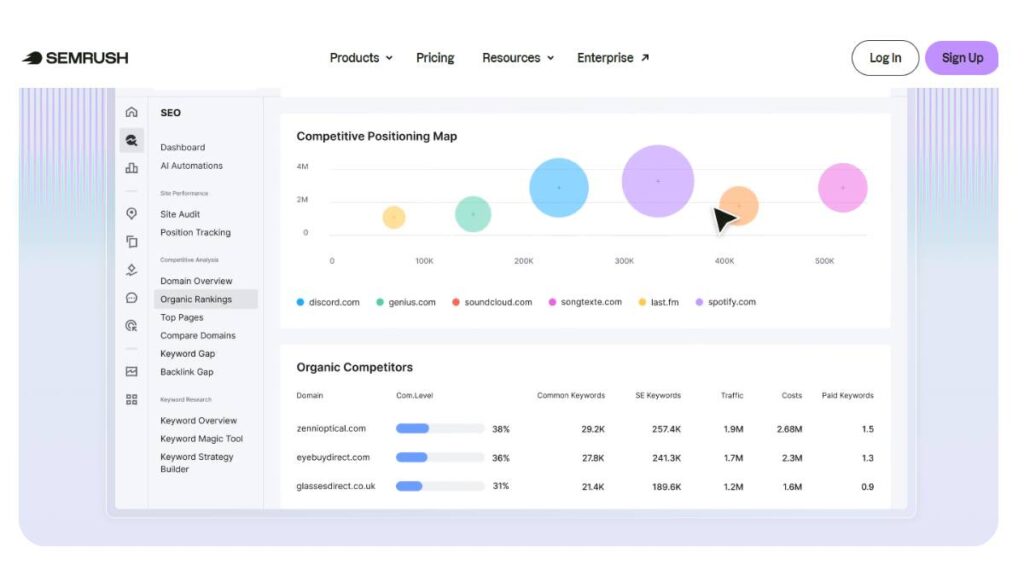
Semrush feels a bit more “all-in-one” compared to Ahrefs. Some prefer that, some don’t. But when it comes to link building, it covers a lot of ground.
The backlink audit feature is where many start. It flags potentially risky links; the kind you probably don’t want associated with your site. Not always perfect, but it gives a solid starting point.
Prospecting is built in, which is convenient. You can find sites, evaluate them, and move straight into outreach without switching tools. That flow matters more than people think: less friction = more action.
There’s also a campaign-style approach. You can manage outreach, track responses, and keep everything in one place. Useful if you’re running multiple campaigns or working with a team.
It may not go as deep as Ahrefs in pure backlink data, but it balances research and execution quite well.
3. Moz Pro – Domain Authority Tracking, Link Tracking, and Reporting
Moz has always leaned toward simplicity. That hasn’t changed much.
Its domain authority metric is widely used; sometimes overused, but still helpful as a quick benchmark. Not something to obsess over, but good for filtering prospects.
The backlink tracking is clean and easy to follow. You can see new links, lost ones, and general trends without digging through layers of reports. For many teams, that clarity is enough.
Where Moz stands out is usability. It doesn’t try to do everything at once. Instead, it focuses on giving you just enough insight to make decisions without overthinking them.
It’s probably not the first choice for deep competitor analysis, but for steady tracking and reporting, it holds up well.
4. Majestic – Trust Flow & Citation Flow, Historic Link Index
Majestic feels a bit… different. Not flashy. Not particularly modern-looking. But the data? Surprisingly useful once you get used to it.
The Trust Flow and Citation Flow metrics are its core. One focuses on link quality, the other on quantity. Together, they give a rough sense of whether a site is worth pursuing.
The historic index is where things get interesting. You can see how a site’s link profile has evolved over time. Sudden spikes, drops, patterns; all visible if you look closely.
It’s not the easiest tool to pick up, and the interface doesn’t do you many favors. But for digging into link quality and history, it still has a place. Especially when you’re trying to avoid questionable sites.
5. All in One SEO (AIOSEO) – Link Suggestions and Internal Link Management
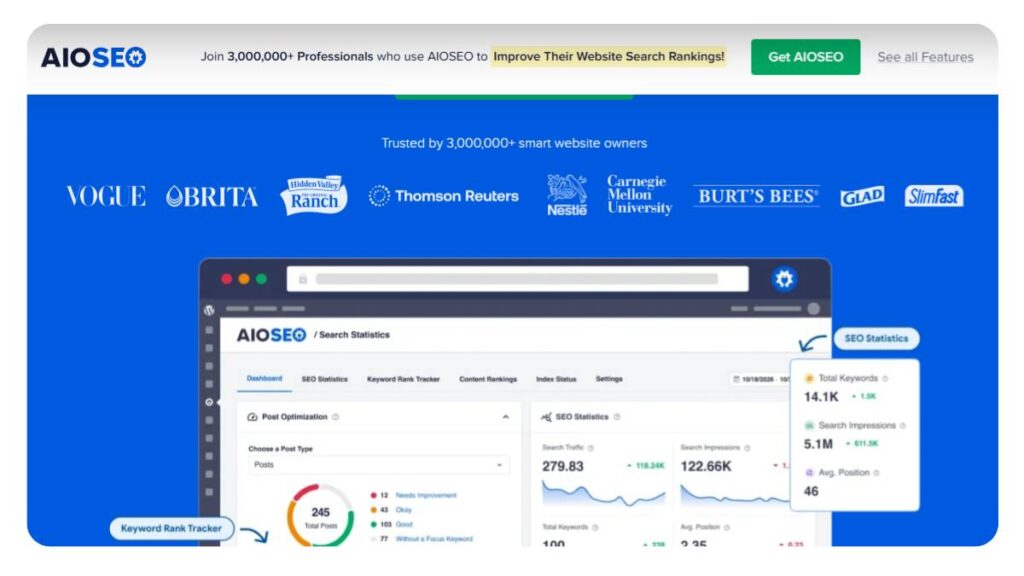
AIOSEO doesn’t usually come up in “link building tools” lists, but it probably should, at least for internal linking.
It works quietly in the background, suggesting links as you create or update content. No big dashboards, no complex reports. Just small nudges that keep your internal structure from falling apart.
Over time, that adds up. Pages stay connected. Important content doesn’t get buried. And users… well, they don’t hit dead ends as often.
It won’t help much with external backlinks or outreach. That’s not its role. But for keeping things tight internally, it’s one of those tools that earns its keep without making a lot of noise.
6. Broken Link Checker (BLC) – Find Broken Links for Quick Backlink Opportunities
This one is straightforward. Maybe a bit underrated too.
Broken Link Checker scans pages and finds links that no longer work. That’s it. But that “it” can turn into real opportunities.
If a site is linking to something that no longer exists, there’s a chance to step in with a replacement. It’s a softer approach to outreach; less pitching, more helping. And that tends to get better responses.
It also works on your own site, which is just as important. Broken internal links can quietly damage user experience and trust. Easy to overlook.
Not a flashy tool. But practical. And sometimes that’s what matters most.
7. Link Whisper – Internal Link Automation & Smart Suggestions
Internal linking usually gets pushed aside. Too manual, too time-consuming. Link Whisper fixes that, or at least makes it manageable.
It suggests internal links while you’re working on content. Not randomly; based on context. That part makes a difference.
It also highlights orphan pages, which are surprisingly common on growing sites. Pages with no internal links pointing to them… basically invisible unless someone lands there directly.
It’s not perfect. Suggestions sometimes need tweaking. But it removes a big chunk of the manual effort, which is often the real blocker.
8. Hunter.io – Email Prospecting for Link Outreach
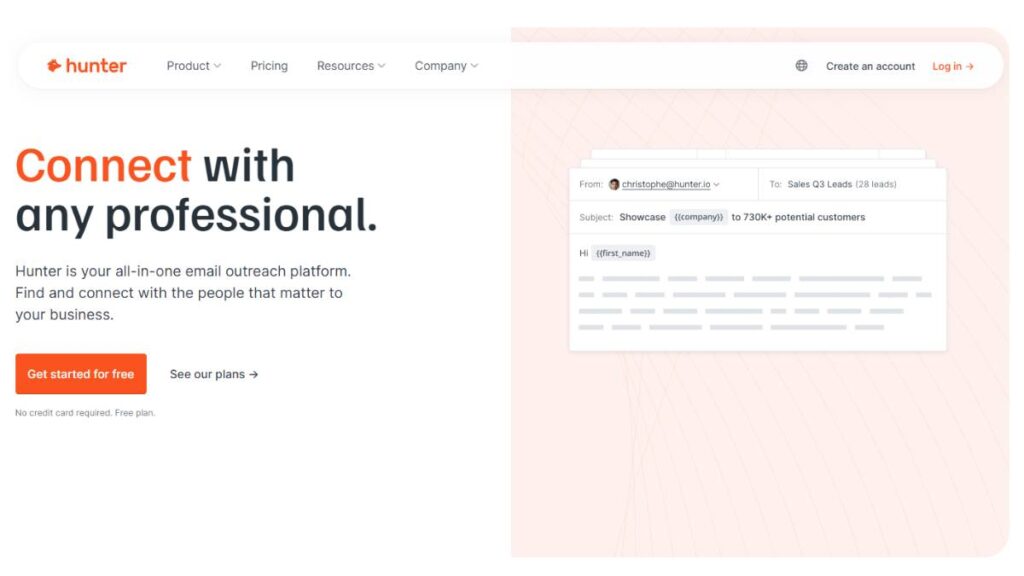
Finding contact details sounds simple. It’s not.
Hunter.io cuts through that by pulling verified email addresses tied to domains. It’s fast and generally accurate enough to rely on.
There’s also some basic outreach tracking; who’s been contacted, which emails bounced, that sort of thing. Nothing overly complex, but enough to stay organized.
Where it fits best is in the middle of the workflow. After you’ve found link opportunities, but before outreach begins. It doesn’t replace outreach tools, but it makes that step smoother.
9. Respona – Automated Outreach for Blogger and Journalist Connections
Respona leans heavily into outreach, but with a bit more structure than most tools in this space.
It combines prospecting and email campaigns, which helps reduce tool-switching. You can find opportunities, build lists, and reach out; all in one place.
The automation is there, but not overly aggressive. You can still personalize messages, which matters. Outreach that feels templated usually gets ignored.
It also tracks performance. Open rates, replies… small details, but useful for refining approach over time.
For content-driven link building, especially when targeting publishers or bloggers, it’s a solid option.
10. Pitchbox – Influencer Outreach and Link Building Campaigns
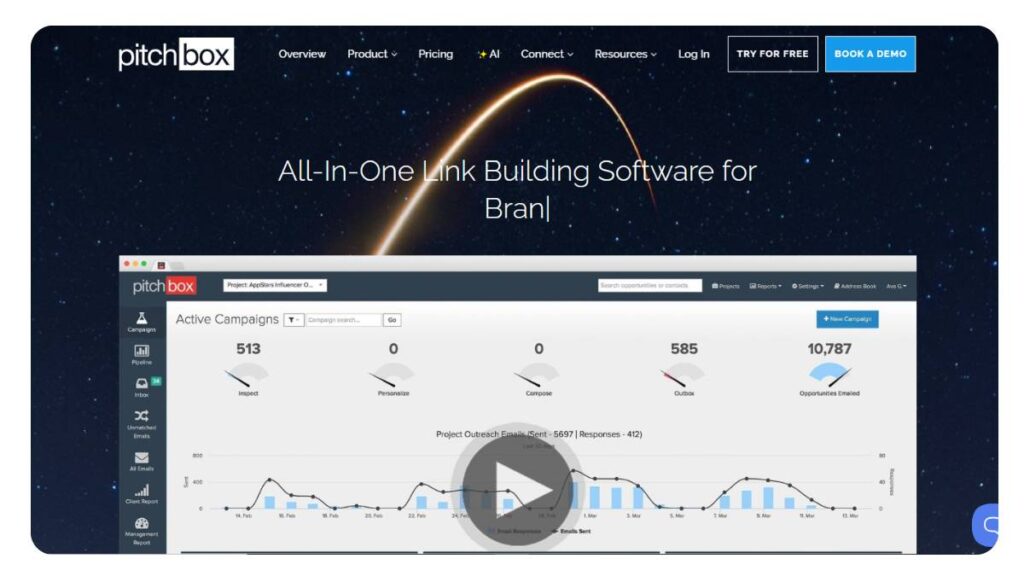
Pitchbox is built for scale. If outreach is happening across multiple campaigns, it starts to make more sense.
It helps manage conversations, automate follow-ups, and keep everything organized. Without that, things get messy quickly: missed replies, duplicated emails, lost opportunities.
It also integrates with prospecting tools, which keeps the workflow connected. Find – reach out – track – repeat.
It’s probably overkill for smaller setups. But for teams or agencies handling large volumes, it brings structure where things would otherwise fall apart.
11. Linkody – Monitor Backlinks, Detect Lost Links, Track Competitor Links
Linkody focuses on monitoring, and it does that fairly well.
You get alerts when backlinks are gained or lost. That alone is useful, especially when a valuable link disappears and needs follow-up.
It also tracks competitor backlinks, giving some visibility into what others are doing. Not as deep as bigger tools, but enough to spot patterns.
The interface is simple. Maybe a bit basic. But it gets the job done without overcomplicating things.
12. BuzzStream – Outreach Management and Relationship Building
BuzzStream is less about finding opportunities and more about managing them.
It keeps track of contacts, conversations, and follow-ups. Over time, that turns into a kind of relationship database.
That’s the real value here. Outreach isn’t just one email. It’s ongoing. Having context, previous conversations, responses, and notes makes a big difference.
It doesn’t try to do everything. But for keeping outreach organized and consistent, it’s reliable.
13. BuzzSumo – Identify Trending Content & Linkable Assets
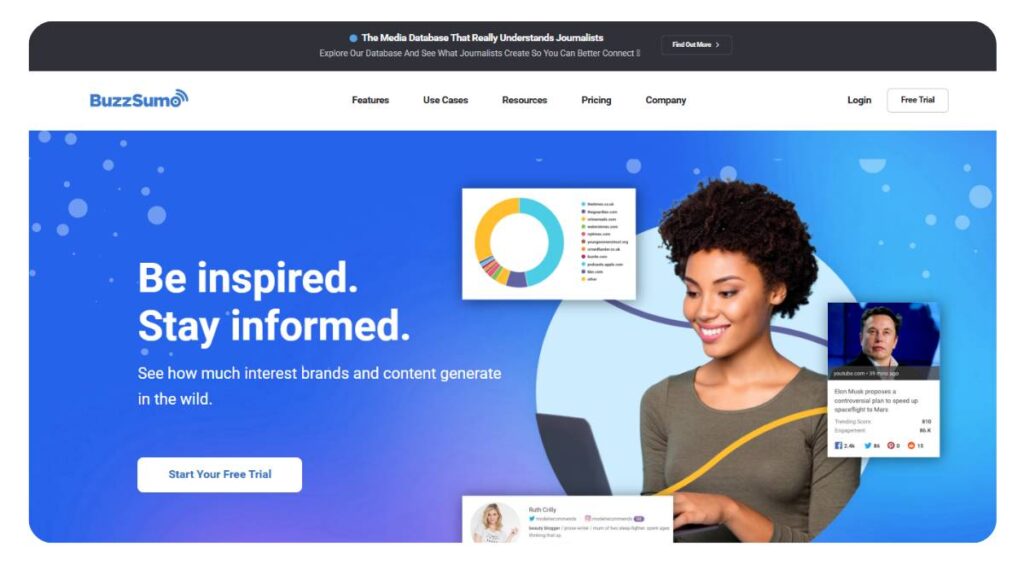
BuzzSumo takes a different angle. Instead of focusing on links directly, it looks at content that attracts attention.
You can see what’s being shared, what’s getting picked up, and which topics are gaining traction. From there, it’s easier to spot linkable ideas.
It also highlights who’s sharing that content. Potential outreach targets, basically.
Not a traditional link-building tool, but useful for shaping content that naturally earns links instead of forcing the process.
14. SE Ranking – Competitor Backlink Research and Monitoring
SE Ranking sits somewhere in the middle. Not too complex, not too basic.
It offers backlink tracking, competitor analysis, and general monitoring without overwhelming the user. That balance works well for smaller teams.
You can see who links to competitors, track your own links, and get a sense of overall direction. Not as detailed as premium tools, but often enough for practical use.
It’s one of those tools that doesn’t try too hard, and that’s actually a good thing.
15. Scraper – Extract Link Opportunities from Websites and Competitor Lists
Scraper is more of a utility tool. Simple, but effective in the right hands.
It helps pull data, URLs, lists, and potential prospects from web pages quickly. Instead of copying everything manually, you can extract it in seconds.
This becomes useful when building outreach lists at scale. Especially when analyzing directories, blog lists, or competitor backlinks.
On its own, it doesn’t do much. But paired with outreach tools, it speeds up one of the most repetitive parts of link building.
No single tool does everything. And trying to use all of them at once usually leads to more confusion than results.
A better approach… pick a few that fit how you work. One for research, one for outreach, maybe one for tracking. Keep it simple. Build from there.

Enroll Now: Advanced Digital Marketing Course
How to Use Link Building Tools Effectively
Having access to good tools is one thing. Knowing how to actually use them… that’s where most people get stuck. It’s easy to jump between dashboards, pull a bunch of data, and still not move forward. The process needs to stay simple; it turns into busywork.
A practical way to approach it looks something like this:
Step-by-Step Link Building Process Using Tools
1. Start with competitor backlinks
This is usually the fastest way to understand what’s working in your space. Look at a few competitors; not just the biggest ones, but those closer to your level too.
- Which pages are getting links?
- Are those links coming from blogs, directories, or media sites?
- Any patterns showing up more than once?
You’re not copying here. Just observing what’s already proven to work.
2. Identify high-quality prospects
Once you have a list, narrow it down. This part matters more than people think.
- Is the site relevant to your niche?
- Does it look active and maintained?
- Would a link from there actually make sense?
A smaller, cleaner list beats a massive one full of random sites.
3. Outreach & relationship building
This is where most campaigns fall flat. Not because of the tools, but because of the approach.
Keep it simple and specific.
- Mention why you’re reaching out
- Point to something relevant on their site
- Offer something useful (not just “please link to this”)
Follow-ups matter too. Not aggressively, just a nudge. People miss emails all the time.
4. Monitor and track backlinks
Once links start coming in, don’t just forget about them.
- Check if they stay alive
- See which ones bring actual traffic
- Notice which types of links perform better over time
This is where things start to compound. Patterns become clearer.
Tips for Combining Multiple Link Building Tools for Maximum Impact
No single tool does everything well. Trying to force one tool into every step usually slows things down.
A more practical setup looks like this:
- Use one tool for research (competitor links, opportunities)
- Another for outreach (email tracking, follow-ups)
- And something lightweight for monitoring
That’s it. No need to overcomplicate.
Also, don’t rely blindly on tool data. Sometimes a site looks good on paper but feels off when you actually visit it. Trust that instinct. Tools guide decisions; they don’t replace them.
Benefits of Link Building Tools
When used properly, these tools do more than just “save time.” They change how you approach link building altogether.
Save Time With Automated Link Prospecting
Manually finding link opportunities is slow. Really slow. Tools cut that down dramatically.
Instead of digging through search results for hours, you get a list in minutes. Not perfect, but good enough to start working with. That shift alone frees up time for the part that actually matters: outreach and relationship building.
Boost Website Rankings Faster
Strong backlinks still carry weight. There’s no getting around that.
Tools help you focus on links that actually move things forward, instead of chasing anything that looks remotely relevant. Over time, that focus tends to show up in better visibility and more consistent growth.
It’s not instant. Never is. But it’s a lot more predictable.
Generate More Targeted Traffic & Leads
Not all traffic is useful. A link from the right site can send visitors who already have context about what you do.
That’s where tools help: identifying sites that align with your audience, not just your keywords. When that alignment clicks, traffic feels less random and more intentional.
Identify Link Opportunities You Would Otherwise Miss
This one often gets overlooked.
There are always opportunities sitting just out of reach; broken links, unlinked mentions, competitor backlinks you hadn’t noticed. Tools surface those gaps.
Without them, you’re mostly guessing. With them, you’re working from actual signals.
Common Mistakes to Avoid With Link Building Tools
Tools can make things easier, but they can also lead you in the wrong direction if used blindly. A few patterns show up again and again.
Using Tools That Violate Google Guidelines
Some tools push shortcuts. Bulk link generation, automated placements, things that look tempting at first.
They might work briefly. Then they don’t. And cleaning up afterward is usually harder than building things properly in the first place.
If something feels too easy, it probably comes with a trade-off.
Chasing Quantity Over Quality
It’s easy to get caught up in numbers; more links, more domains, more everything.
But a handful of strong, relevant links often does more than dozens of weak ones. Tools can sometimes push volume because that’s what’s easy to measure.
The better approach is slower and more selective. Not always exciting, but it holds up over time.
Ignoring Link Relevance & Context
A link isn’t just a link. Where it sits, what surrounds it, and why it exists; all of that matters.
Tools won’t always tell you this clearly. You have to actually look at the page:
- Does the link fit naturally?
- Is the content related to your topic?
- Would a real person find it useful?
If the answer is no, it’s probably not worth it.
There’s a tendency to treat link building like a checklist; run a tool, send some emails, get links. In reality, it’s more layered than that.
The tools help, no doubt. But the thinking behind how they’re used… that’s what really shapes the outcome.
Conclusion
Link-building tools help, no doubt. But they’re not the strategy; they just support it. That’s something people tend to forget once they start relying too heavily on dashboards and numbers.
What actually moves things forward is clarity. Knowing which links matter, which ones don’t, and where to spend time. The tools just speed that up a bit. Sometimes a lot.
It’s also easy to overdo it. Too many tools, too many reports… suddenly you’re tracking everything and acting on nothing. Seen that happen more than once. A smaller, focused setup usually works better. One tool for research, one for outreach, maybe one for monitoring. That’s enough for most cases.
And then there’s consistency. This part is less exciting, but it’s what makes the difference over time. Links don’t build momentum overnight. They stack slowly, and the quality shows up later.
In the end, link building still comes down to relevance and trust. The tools just help you spot where those two already exist, and where they could.
FAQ: Link Building Tools
1. What Is the Best Link Building Tool for Beginners?
For beginners, simpler tools tend to work better. Clean interface, basic backlink tracking, maybe some competitor insights; that’s enough to start. Jumping straight into advanced platforms can feel overwhelming. It’s usually better to understand how links work first, then gradually explore more detailed tools as things start to make sense.
2. Are Free Link Building Tools Effective?
Free tools can get you started, no question. They cover basic checks, maybe some backlink data, and a few opportunities here and there. But they hit limits pretty quickly. Data isn’t always complete, and features are restricted. Useful in the early stages, yes. But eventually, most people outgrow them.
3. How Often Should I Monitor Backlinks Using Tools?
There’s no need to check backlinks every day. That just turns into noise. A review every couple of weeks usually works fine. If links are being built actively, maybe a bit more often. The goal is to spot changes: new links, lost ones, without getting stuck staring at reports.
4. Can Link Building Tools Improve SEO Rankings Quickly?
Not really. Tools don’t improve rankings on their own. They just make the process more efficient. Results depend on the links you earn and how consistent the effort is. Sometimes things move fast, but more often it’s gradual. The tools help guide decisions, not accelerate outcomes instantly.
5. What Are the Most Reliable Paid Link Building Tools?
The reliable ones are usually those known for consistent data and regular updates. Not necessarily the flashiest tools, but the ones people keep coming back to. Accuracy matters more than features. If the data can’t be trusted, everything else falls apart. Stability and usability tend to matter more in the long run.
6. How Do Link Building Tools Help With Competitor Analysis?
They show where competitors are getting their links from, which pages attract attention, and what kind of content earns those links. That’s valuable because it removes guesswork. Instead of experimenting blindly, you’re working from patterns that already exist in your niche. It gives direction, even if it’s not a complete roadmap.
7. Can Link Building Tools Detect Toxic or Spammy Links?
Most tools can flag suspicious links based on certain signals; low-quality domains, unusual spikes, things like that. It’s helpful, but not perfect. Sometimes good links get flagged, and bad ones slip through. A quick manual check still matters. Context usually tells the real story.
8. Are Link Building Tools Safe to Use With Google’s Guidelines?
The tools themselves aren’t the issue. It’s how they’re used. If they’re helping you find relevant sites and build genuine connections, that’s fine. Problems start when tools are used to chase shortcuts or scale things unnaturally. That’s where things tend to go wrong over time.
9. How Can I Automate Outreach Using Link Building Tools?
Most outreach tools let you set up email sequences, reminders, and follow-ups. That saves time on repetitive tasks. But the message itself still needs to feel personal. Automation should handle the process, not the tone. Otherwise, emails start to feel generic, and response rates drop pretty quickly.
10. Which Tools Are Best for Finding Broken Link Opportunities?
Tools that scan pages for broken links are ideal here. They highlight links that no longer work, which creates a natural opening for outreach. It’s a softer pitch; you’re helping fix something, not just asking for a link. That approach tends to get better responses when done properly.
11. Can Link Building Tools Help With Internal Linking?
Yes, some tools focus specifically on internal linking. They suggest connections between pages, highlight gaps, and help keep the structure organized. It’s not always exciting work, but it matters. Strong internal linking makes everything else, including external links, work more effectively.
12. How Do I Track Lost or Removed Backlinks Using Tools?
Most monitoring tools send alerts when links disappear or change. That’s useful because it gives you a chance to act quickly. Sometimes links get removed accidentally, sometimes content changes. Either way, catching it early makes it easier to respond instead of noticing weeks later.
13. Are Email Outreach Tools Effective for Link Building?
They can be, if used properly. They keep outreach organized, track conversations, and make follow-ups easier. But they don’t guarantee results. The quality of the message still matters more than the tool itself. A well-written, relevant email will outperform automation every time.
14. Can Link Building Tools Integrate With Other SEO Software?
Many of them do integrate with other platforms, which helps keep everything connected. Data flows more easily, and there’s less duplication of work. It’s especially useful when managing multiple campaigns or working with a team. Still, integration is helpful, not essential.
15. How Do I Measure the ROI of Link Building Efforts With Tools?
It usually comes down to tracking traffic, visibility, and conversions linked to those backlinks. Tools help connect the dots over time. It’s rarely immediate, though. Results tend to show gradually, so it’s more about trends than quick wins. Consistency matters more than short-term spikes.
16. What Is the Difference Between Link Prospecting and Link Monitoring Tools?
Prospecting tools help you find new opportunities: sites, pages, and contacts worth reaching out to. Monitoring tools track existing backlinks, showing what stays, what disappears, and what changes. Both are useful, just at different stages. One helps you build, the other helps you maintain.
17. Which Link Building Tools Are Best for Small Businesses?
Smaller teams usually benefit from simpler tools. Something easy to manage, not overloaded with features. A mix of basic backlink tracking and light outreach support is often enough. Going too complex too early can slow things down more than it helps.
18. How Can AI-Powered Link Building Tools Improve Results?
Some tools now offer smarter suggestions, pattern recognition, and automation features. They can speed up research and reduce manual effort. Still, they’re just assisting. Decisions around relevance, quality, and outreach approach still need human judgment. That part hasn’t changed much.
19. Can Link Building Tools Help Identify Influencers for Outreach?
Yes, many tools highlight authors, publishers, and sites active in specific niches. That makes it easier to find people who are actually worth reaching out to. It’s not just about any contact; it’s about the right one. That’s where response rates usually improve.