

Most affiliate publishers are stuck doing the same three things every week: writing product content, chasing keyword rankings, and checking which links actually convert. That loop eats hours that could go into finding new offers or scaling what already works. An AI Agent for Affiliate Marketing changes that math by handling research, drafting, on-page optimization, and link tracking on its own, with you reviewing output instead of producing it from scratch.
This matters more for affiliate marketing today than it did two years ago. According to Statista’s 2024 data, US affiliate spend is projected to cross $11.99 billion in 2025, and Influencer Marketing Hub reports that 78% of affiliates already lean on organic SEO as their primary traffic source. More publishers means more competition for the same keywords, and the ones who automate the repetitive parts are the ones who can publish faster without burning out.
In this guide, you will get a clear picture of what these automated systems actually do, the specific tools worth using for content, SEO, and conversions, and a step-by-step way to build your own workflow. You will also see where automation still needs a human hand, so you don’t hand off decisions that need your judgment.
Table of Contents
What This Kind of Automation Actually Does for Affiliates
An AI Agent is a software system that can plan a task, take multiple steps toward completing it, and adjust based on the results, without a person prompting every single action. That’s different from a basic chatbot, which only responds to whatever you type next.
For affiliate publishers, this usually plays out as a chain of actions rather than one output. The system might pull keyword data, draft a comparison post, insert commission links in the right spots, check the draft against SEO guidelines, and flag anything that needs a human review, all in one run instead of five separate tasks you’d normally do by hand.
A publishing automation system for affiliate sites is a tool that plans and executes multi-step tasks such as research, drafting, on-page formatting, and link placement with minimal manual input. Unlike a single-prompt chatbot, it chains actions together and adjusts based on intermediate results. This shifts the publisher’s role from producing content to reviewing and approving it.
Honestly, most affiliates overestimate how “autonomous” these systems are in practice. They still need clear instructions, brand guidelines, and a review step before anything gets published. Think of it less as a replacement and more as a very fast first draft machine that also handles the boring formatting work.
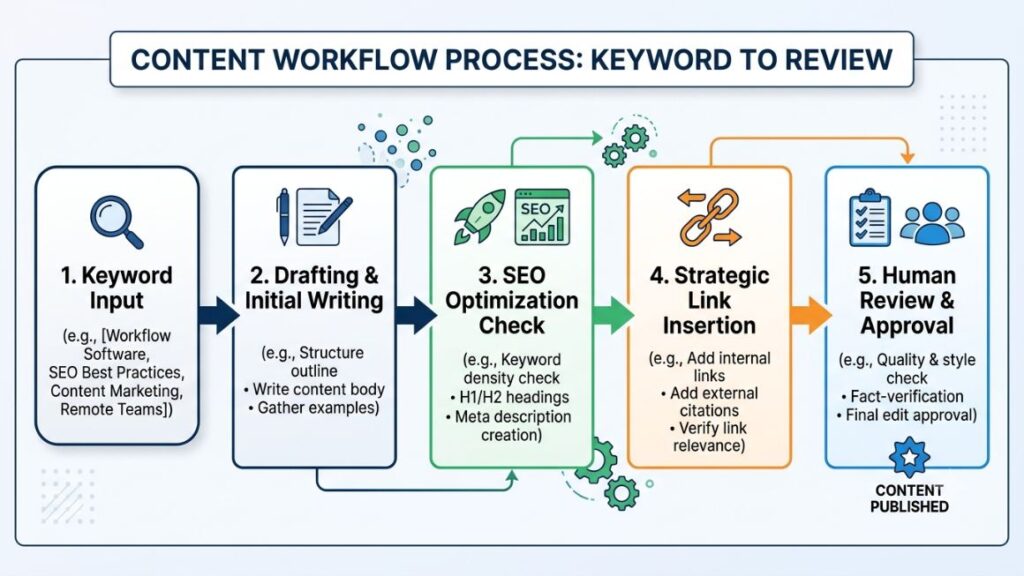
AI Tools That Handle Content Creation for Affiliate Sites
Content is where most publishers lose the most time, and it’s also where automation has matured the fastest. A handful of tools now cover the entire drafting process, from outline to publish-ready copy.
Jasper is built for marketing teams that need brand-consistent copy at volume. Its Brand Voice feature trains the tool on your site’s tone, then generates product reviews, comparison posts, and roundups that stay consistent across dozens of pages. For sites running 20-plus articles a month, that consistency matters more than raw speed.
Content at Scale was built specifically with SEO content programs in mind. It pulls in live SERP data before drafting, structures the article around what’s actually ranking, and outputs a piece that needs light editing rather than a full rewrite. Several publishers use it as the first step in a pipeline that ends with a human editor.
Koala Writer does something a little different. It’s built around “money page” content specifically, meaning product reviews, “best of” listicles, and comparison tables. It pulls Amazon product data directly, which saves the manual work of copying specs and pricing into a draft.
Copy.ai leans more toward shorter-form content: email sequences to a list, social captions promoting a new offer, and ad copy for testing traffic sources. It’s not the right fit for a 3,000-word buying guide, but it fills the gap around the main content.
None of these produce publish-ready work without a pass from a real editor. Google’s helpful content guidance still rewards material that shows direct experience with a product, and no tool can fake that a reviewer actually used what they’re recommending.
Choosing between these four usually comes down to volume and niche. A single-site publisher writing five reviews a month probably gets more value from Koala Writer’s product data pull than from Jasper’s brand-voice training, which pays off more once you’re managing several writers across multiple properties.
AI Tools That Handle SEO Automation
Content and SEO used to be separate jobs on a publishing site. Now the tools that draft content usually plug straight into the tools that optimize it, and the two feed each other.
Surfer SEO is the standard here. It scores a draft against the top-ranking pages for a target keyword, tells you which terms are missing, and flags word count and structure gaps in real time as you write. Its Content Editor connects directly to Jasper and several other writing tools, so drafting and optimizing happen in the same window.
Clearscope works on a similar principle but leans harder on natural language processing to catch related terms a keyword tool would miss. It’s a strong fit for competitive niches like finance or health, where topical depth carries more weight with Google than keyword density alone.
SEMrush’s ContentShake AI pulls topic research, competitor gaps, and a draft outline into one workflow, then hands off a structured brief you can feed into a writing tool. It’s especially useful for publishers managing multiple sites, since it can generate briefs in bulk rather than one at a time.
Ahrefs still leads on the research side. Its Content Gap tool shows keywords your competitors rank for that you don’t, and its Site Audit catches technical issues, broken commission links, redirect chains, thin pages, before they cost you rankings.
SEO automation for commission-based sites works in two layers. Research tools like Ahrefs surface keyword and competitor gaps, while optimization tools like Surfer SEO and Clearscope score drafts against live SERP data. Running both together closes the loop between what should rank and what actually gets published.
That said, none of these tools understand search intent the way a person who has read fifty SERPs for the niche does. A high content score on Surfer doesn’t guarantee a ranking. It just means you’ve covered the topics Google is currently rewarding for that query, which is a starting point, not a guarantee.
And a quick word of caution: don’t let a scoring tool talk you into padding an article with every related keyword it suggests. Readers notice bloated content faster than Google’s algorithm does, and a bounce is still a bounce even if your on-page score hit 95.
AI Tools and Systems That Improve Conversions
Traffic without conversions is a vanity metric, and this is the part of the stack most publishers set up last, if at all.
ThirstyAffiliates and Pretty Links both handle link cloaking and management, turning long, ugly URLs into clean internal links you can update in one place if a program changes its terms. Both also track click data per link, which tells you which placements on a page actually get used.
Voluum goes a step further into full tracking and attribution. It’s built for publishers running paid traffic alongside organic content, and it can automatically redirect traffic between offers based on real-time conversion performance, a process called auto-optimization.
Post Affiliate Pro sits on the other side of the relationship, useful if you run your own commission program rather than just promoting other people’s. It handles commission calculations, payout scheduling, and partner onboarding automatically.
Chatbot-style tools like Intercom Fin are showing up on these sites too, answering visitor questions about products directly on the page before they bounce. That’s a genuinely useful conversion layer for anything with a longer buying decision, like software or big-ticket electronics.
Personalization is the piece most publishers still handle manually, and it’s worth automating sooner rather than later. Tools like Mutiny and VWO let a site show different comparison tables or calls to action based on where a visitor came from, a returning shopper who bounced off a product page once tends to convert on a different message than someone landing fresh from a Google search. Setting this up takes an afternoon with either tool, and the lift in conversion rate on high-traffic pages usually justifies the setup time within the first month.
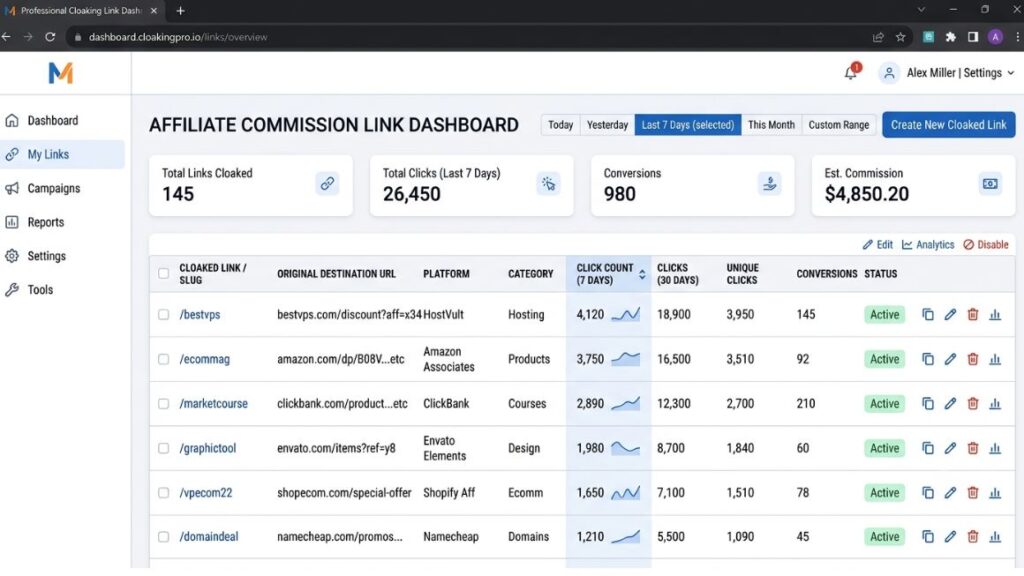
Here’s how these tools typically split by function:
- ThirstyAffiliates / Pretty Links for link management and click tracking
- Voluum for cross-offer traffic optimization
- Post Affiliate Pro for running your own program
- Intercom Fin for on-page buyer questions
Boat, the Indian electronics brand, runs a large commission-based publisher network, and several of the review sites promoting it use exactly this stack: cloaked links for tracking, a chatbot for spec questions, and a weekly export from Voluum to decide which articles get refreshed.
How to Build Your Own Automation Workflow
Buying five tools and hoping they work together rarely goes well. A workflow needs a clear order of operations, and it needs to run the same way every time.
- Define the trigger. Decide what starts the process, a new keyword added to a spreadsheet, a content calendar entry, or a scheduled weekly run.
- Connect research to drafting. Use Ahrefs or SEMrush to pull keyword data, then pass that data automatically into Content at Scale or Jasper using Zapier or Make, the two most common automation platforms for this handoff.
- Route the draft through an SEO check. Feed the output into Surfer SEO or Clearscope before it reaches a human editor, so obvious gaps get caught early.
- Insert links automatically. Set ThirstyAffiliates rules so specific product mentions auto-link to the right commission URL, rather than adding links manually in every draft.
- Schedule human review. Route the finished draft to an editor’s queue instead of publishing directly. This is the step publishers skip most often, and it’s the one that protects site quality.
- Track performance and feed it back. Pull click and conversion data from Voluum or your network dashboard weekly, and use it to decide which content gets updated versus retired.
Some publishers build a custom version of this using the Claude or ChatGPT API directly, writing a script that pulls keyword data, drafts a section, and checks it against a style guide before saving it to a CMS as a draft. That approach takes more setup time but gives far more control over tone and structure than an off-the-shelf tool.
A reliable automation workflow for commission-based publishing moves in a fixed sequence: keyword trigger, automated research handoff, drafting, SEO scoring, automatic link insertion, then mandatory human review before publishing. Skipping the review step is the most common reason automated content underperforms or gets flagged by Google’s helpful content systems.
Most affiliates try to automate all six steps in the same week. That almost never sticks. Build one connection, run it for two weeks, fix what breaks, then add the next piece.
Choosing the Right Tool Stack for Your Business
The right combination depends on how much content you publish and how many sites you run, not on which tool has the most features.
| Publisher size | Content tool | SEO tool | Conversion tool |
|---|---|---|---|
| Solo, 1 site | Koala Writer | Surfer SEO | ThirstyAffiliates |
| Small team, 2-5 sites | Content at Scale | Clearscope | Pretty Links + Voluum |
| Agency, 5+ sites | Jasper + custom API workflow | Ahrefs + SEMrush | Voluum + Post Affiliate Pro |
Solo publishers rarely need Voluum’s traffic-routing features. That complexity pays off once you’re running paid traffic across several offers at once, which is closer to what an agency or a multi-site operator handles day to day. A single reviewer running one niche site is usually better off putting that budget into Surfer SEO credits and a faster hosting plan instead.
Budget matters here too, and it adds up faster than most people expect. Jasper starts around $49 a month, Surfer SEO around $89, and ThirstyAffiliates is closer to $49 a year for a single site license. Stack a full content-plus-SEO-plus-conversion setup and a solo publisher is looking at $150 to $250 a month before Voluum or a custom API workflow enters the picture. That’s a real cost, and it only makes sense once your content output or revenue can absorb it. A site pulling in $300 a month in commissions has no business paying $200 a month for tooling, no matter how good the tools are. Run the math on your current output first, then decide which layer of the stack earns its subscription.
Where Automation Still Needs a Human
This may not apply to every niche, but in most cases, the review step is non-negotiable. Google’s E-E-A-T guidance rewards demonstrated first-hand experience, and no automated system has actually used the product it’s reviewing.
There’s also the fraud and compliance side. According to industry research published by Marketing LTB in 2025, estimated fraud rates run between 5% and 15% of total commission spend, and automated systems can’t catch every case of a network flagging suspicious activity or a program changing its terms overnight. Someone still needs to check payout statements and program terms on a regular basis.
Full disclosure matters here too. The FTC requires clear affiliate disclosures on any page with monetized links, and that’s a compliance decision, not a content-generation task. No automated tool should be making that call for you. This is also where the difference between B2C and B2B shows up: a B2B software review with a long sales cycle needs far more editorial judgment than a quick coupon page, even if both run through the same drafting pipeline.
Wrapping Up
Automation doesn’t replace the judgment that makes a publishing business actually earn money. It removes the repetitive work, drafting, keyword scoring, link formatting, so you can spend your time on the decisions that need a person: which offers to promote, how to disclose them honestly, and what your audience actually needs to hear before they buy.
Start small. Pick one part of your workflow, probably content drafting or link management, automate that piece first, and measure whether it actually saves time before adding the next tool. Most publishers who build a full stack in one weekend end up undoing half of it a month later. That’s the real promise of an AI Agent for Affiliate Marketing: not a hands-off business, just fewer hours spent on the parts that don’t need your judgment.
If you want to go deeper into building automated workflows for marketing tasks like this one, YUP’s AI Marketing course walks through setting up these exact systems step by step, and the Hotskill app gives you hands-on practice with the prompting and tool-chaining skills this entire workflow depends on.
Frequently Asked Questions
What is an autonomous content system in affiliate publishing?
It’s a software system that completes multi-step publishing tasks, research, drafting, SEO checks, and link insertion, with minimal manual input at each stage. It differs from a chatbot because it chains actions together rather than responding to one prompt at a time.
How is this different from a basic AI writing tool?
A basic writing tool generates one output per prompt. A more advanced system plans several steps, pulls in outside data like SERP rankings or product specs, and adjusts its output based on what it finds before handing you a finished draft.
How do I set up automation for my commission-based site?
Start by connecting one research tool to one drafting tool using Zapier or Make, then add an SEO scoring step with Surfer SEO or Clearscope. Build the workflow one connection at a time rather than automating everything at once.
Who should actually use this kind of automation?
Solo publishers putting out more than a few articles a month and agencies running multiple sites both benefit, though the tool stack looks different for each. If you’re publishing fewer than five pieces a month, manual work may still be faster than setting up automation.
Is this actually worth the cost for a smaller site?
It depends on your publishing volume and margins. Tools like Surfer SEO or Koala Writer often pay for themselves once you’re publishing four or more articles a month, but a small site publishing occasionally may not see a clear return yet.
Will Google penalize AI-assisted content on commission sites?
Google has stated it doesn’t penalize content for being AI-assisted, but it does penalize thin, unhelpful content regardless of how it was produced. The risk isn’t the tool, it’s skipping the human review and first-hand experience that make a review credible.
What do most publishers get wrong when automating content?
The most common mistake is skipping the human editing and disclosure step to publish faster. Automated drafts that go live without review tend to read generically and often miss the compliance details a program requires.
Can one tool handle content, SEO, and conversions together?
Not well. Most publishers combine at least three separate tools, one for drafting, one for SEO scoring, and one for link management or tracking, connected through an automation platform like Zapier rather than relying on a single all-in-one product.
How much technical skill do I need to build this kind of workflow?
Basic setups using Zapier or Make require no coding at all, just connecting accounts and setting trigger rules. Custom workflows built on the Claude or ChatGPT API need some scripting knowledge, though templates for this are widely available.
Does this replace the need for an editor or program manager?
No. It removes repetitive drafting and formatting work, but decisions around offer selection, disclosure compliance, and quality control still need a person reviewing the output before it goes live.