

AI Advertising Tools have quietly become one of those things marketers can’t really ignore anymore. This blog walks through how they actually fit into day-to-day advertising work in 2026, not in theory but in the real, messy reality of running campaigns. From what these tools are and how they behave inside platforms like Google or Meta, to why they matter more now for scaling performance, it covers the full picture without overcomplicating it.
There’s also a closer look at different types of tools, where they help, where they fall short, and the common mistakes teams keep repeating. The point is simple: AI can speed things up, sometimes a lot, but knowing when to trust it and when to step in still makes the difference.
Table of Contents
What Are AI Advertising Tools?
The term gets thrown around a lot, and honestly, it’s easy to lump everything into “AI” and move on. But in advertising, these tools are doing something quite specific; they’re handling decisions that used to sit with marketers, and doing it continuously.
At a simple level, AI advertising tools are systems that take in campaign data, process patterns, and act on them. Not just report back. Act. That’s the key difference most people miss.
AI advertising tools definition in digital marketing
AI advertising tools are platforms that use machine learning and data models to automate and improve how ads are created, targeted, and optimized. Instead of setting fixed rules and hoping they hold up, these tools adjust based on what’s actually happening inside campaigns.
It’s less about control, more about direction.
How AI is used in online advertising (machine learning, automation, predictive analytics)
There are a few layers to how this plays out in real campaigns.
Machine learning handles pattern recognition, such as what kind of users are clicking, who converts, and when performance drops. Over time, it gets sharper. Not perfect, but noticeably better than static rules.
Automation then takes those insights and applies them. Budgets shift. Bids adjust. Audiences refine. This happens in the background, often faster than anyone could manage manually.
And then there’s predictive analytics. This part tries to answer the uncomfortable question early: Is this likely to work or not? It doesn’t always get it right, but it reduces blind testing. That alone saves budget.
Types of AI used in advertising platforms (generative AI, predictive AI, optimization AI)
Not all AI tools are built the same, even though they get grouped.
Generative AI focuses on output, copy, visuals, and variations. It’s what speeds up production.
Predictive AI leans into forecasting. It looks at historical data and tries to estimate outcomes. Helpful when deciding what to test next.
Optimization AI is more operational. It keeps campaigns running efficiently, tweaking bids, reallocating spend, and adjusting targeting without needing constant input.
Most tools mix these, but usually lean toward one strength. That matters when choosing later.
How AI ad tools integrate with platforms like Google Ads, Meta Ads, and TikTok Ads
These tools don’t replace ad platforms. They sit on top of them, quietly pulling data in and pushing decisions back out.
Think of it like an extra layer. Campaigns still run inside Google Ads or Meta Ads, but the logic driving them, the adjustments, the testing, the budget shifts, comes from the AI tool.
On platforms like TikTok Ads, where trends move fast, that layer becomes even more useful. Manual tweaks just don’t keep up the same way.
Difference between traditional PPC tools and AI-powered advertising tools
Traditional PPC tools follow instructions. If X happens, do Y. That’s the model.
AI tools don’t wait for instructions in the same way. They learn from patterns and adjust before issues become obvious. Sometimes that means making changes that feel early… or even unnecessary at first glance. But over time, those small adjustments tend to stack up.
It’s less reactive. A bit more anticipatory. And that shift changes how campaigns behave, especially at scale.
Why AI Advertising Tools Are Essential
There’s a point where manual control stops being an advantage and starts slowing things down. Advertising has crossed that point.
Not because marketers forgot how to run campaigns, but because the environment changed, with more data, faster auctions, and fragmented attention. Too many moving parts.
Shift from manual campaign management to AI automation
Manual setups still work in small pockets. Smaller budgets, limited campaigns, controlled environments. But once things expand, multiple channels, larger audiences, it gets messy.
Delays creep in. Adjustments happen late. Opportunities slip.
AI tools don’t fix everything, but they remove that lag. Changes happen as the data changes. Not hours later. Not next week.
Role of AI in improving ROAS, CTR, and conversion rates
Most performance gains don’t come from big breakthroughs. They come from getting the basics right, consistently.
Better targeting leads to higher CTR. Stronger creative alignment improves conversions. Smarter budget allocation lifts ROAS.
AI helps with those fundamentals. Quietly. Repeatedly.
And over time, those small improvements stop being small.
Real-time audience targeting using intent signals
Targeting has moved past simple demographics. Age and location still matter, sure, but they don’t explain intent.
AI tools look at behavior, search patterns, engagement signals, browsing activity, and build audiences around that. These aren’t fixed segments either. They shift as behavior shifts.
Which means campaigns stay relevant… even when user intent changes quickly.
AI-driven personalization in ads
Personalization used to feel like a bonus. Now it’s expected.
Different users see different versions of the same campaign, different messaging, different visuals, sometimes even different offers. All based on what the system believes will resonate.
Managing that manually? Not realistic anymore.
Importance for performance marketing and scaling campaigns
Scaling exposes weaknesses. What works at a small budget often falls apart when spending increases.
Audiences get saturated. Costs rise. Creatives lose impact.
AI tools help manage that transition. They test faster, find new pockets of performance, and shift budget before things plateau too hard.
It doesn’t remove risk entirely. But it makes scaling feel less like guesswork.
Key Benefits of Using AI Advertising Tools
The benefits aren’t always dramatic at first glance. It’s more subtle than that. Small efficiencies, better decisions, fewer wasted moves.
But give it time, and those gains compound.
Automated ad creation
Creating multiple ad variations used to take time. A lot of it.
AI tools speed that up. Headlines, descriptions, visuals, they can generate several versions in minutes. Some will miss the mark, obviously. But a few tend to land well.
And that’s enough to get momentum.
Smart audience targeting and segmentation
Static audiences age quickly. What worked last month doesn’t always hold up now.
AI-driven segmentation adjusts in the background. It refines who sees what, based on how people behave. Sometimes it uncovers segments that weren’t even considered initially.
Those unexpected pockets? Often, the best results come from.
Predictive performance analytics
This part is quietly useful.
Instead of testing everything blindly, AI tools estimate which directions are more likely to perform. Not guarantees, just probabilities.
But even that reduces wasted spend. And cuts down on unnecessary experiments.
Budget optimization and bid automation
Budget allocation is one of those areas where small mistakes get expensive fast.
AI tools monitor performance across campaigns and shift spend toward what’s working. Bids adjust based on competition, timing, and conversion likelihood.
It’s not always perfect. But it’s faster than manual adjustments, and usually more consistent.
Cross-channel campaign management
Running ads across multiple platforms often feels disconnected. Different dashboards, different data, different strategies.
AI tools help bridge that gap. They bring data together and apply a more unified logic across channels.
Not seamless, but definitely more aligned.
Faster A/B testing and iteration cycles
Testing is still essential. That hasn’t changed.
What has changed is the speed. AI tools can run multiple variations, identify patterns early, and push winning versions faster.
Less waiting. More doing.
Types of AI Advertising Tools
Not every tool is trying to solve the same problem, even if they all sit under the same “AI” label. Breaking them into categories helps make sense of what’s actually needed and what’s just extra.
AI Ad Creation Tools
These tools focus on generating the assets themselves, copy, visuals, and sometimes full ad sets.
They’re especially useful when creative fatigue sets in. Instead of reworking the same ideas, they produce variations quickly. Some will feel off. That’s normal. But a few usually stand out.
Over time, patterns start to emerge, what tone works, what formats perform better, and that feedback loop improves future outputs.
Tools like AdCreative AI and AdMake AI are built around this idea of speed plus iteration.
AI PPC Optimization Tools
Optimization tools don’t create ads; they refine what’s already running.
They look at keyword performance, bidding patterns, and cost efficiency. Then they suggest or apply adjustments. Sometimes small ones. But those small changes tend to add up.
Adzooma AI is a typical example, layered on top of existing campaigns, nudging them toward better performance without a full rebuild.
AI Audience Targeting Tools
Targeting tools dig into behavior.
They analyze signals, site visits, engagement, search intent, and build audiences that shift over time. These aren’t static segments. They evolve as users interact.
That flexibility matters, especially in markets where attention changes quickly.
Warmly AI leans heavily into intent-based targeting, focusing on users who are closer to taking action.
AI Creative Testing Tools
Creative testing tools try to answer a tricky question early: what’s likely to work?
Instead of launching multiple variations and waiting for results, they simulate or predict performance based on past data. Not flawless, but directionally helpful.
Marpipe AI is known for this kind of predictive approach, helping narrow down options before spending heavily.
AI Video Advertising Tools
Video content is effective, but producing it consistently can be a bottleneck.
AI video tools simplify that process. They turn text or basic inputs into short-form video ads, often optimized for social platforms.
Pencil AI focuses on both creation and performance prediction, which helps balance creativity with results.
AI Analytics & Insights Tools
Analytics tools tie everything together.
They don’t just show numbers, they surface patterns. What’s working, what’s slipping, where opportunities might be hiding.
Ryze AI is one example of a platform that turns raw data into something more usable, without requiring deep manual analysis every time.
15 Best AI Advertising Tools in 2026
There’s a noticeable shift happening in how advertisers pick tools now. A couple of years ago, most decisions were based on features. Today, it’s more about what actually removes friction from the workflow. That could mean saving time, improving targeting accuracy, or just making campaign decisions a little less guessy.
Also worth saying, not every “AI advertising tool” is doing anything particularly advanced. Some are just smarter layers on top of existing systems. Others go deeper and actually change how campaigns are managed. That distinction matters more than it seems at first.
The tools listed here fall into different buckets. Some are built for automation at scale, others for creative production, and a few focus almost entirely on data interpretation. What connects them is that they solve something real. Not perfectly, but well enough to justify their place.
Albert AI
Best for: full-funnel automation
Albert AI is one of those platforms that tends to come up when teams are managing complex, multi-channel campaigns and don’t want to manually coordinate everything anymore.
It operates more like an autonomous system than a helper tool. Campaign structures, bidding strategies, audience segments, budget distribution… all of it gets adjusted continuously based on performance signals. Not in batches, but almost in real time.
What’s interesting is how it approaches the funnel. Instead of optimizing top-of-funnel and bottom-of-funnel separately, it looks at how they influence each other. That’s where a lot of inefficiencies usually hide.
There’s a trade-off, though. Giving up that level of control isn’t easy, especially for teams used to hands-on optimization. It takes some adjustment and probably a bit of trust-building with the platform.
Warmly AI
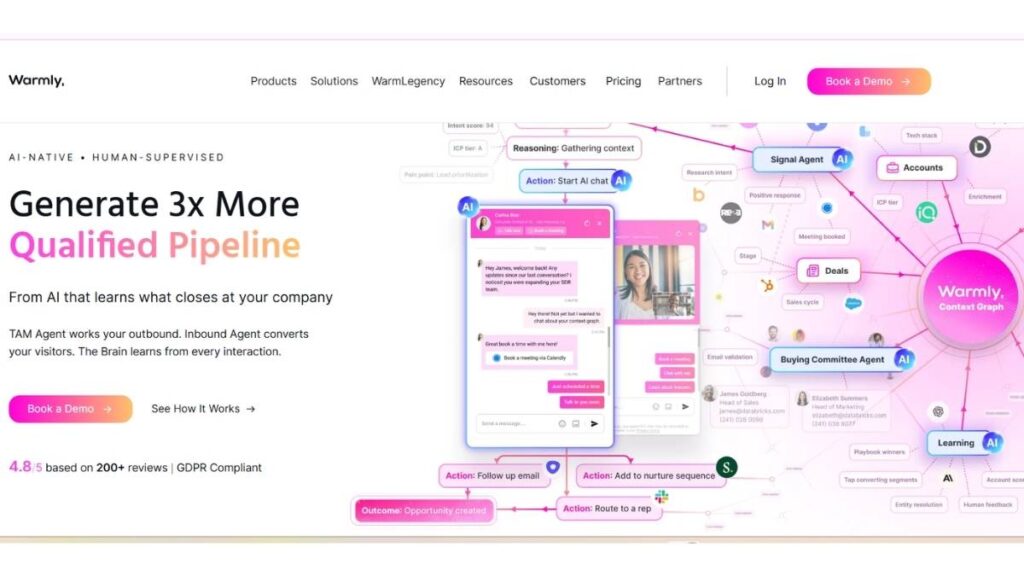
Best for: high-conversion segmentation
Warmly AI is built around a simple idea, but one that’s becoming more important by the day: not all traffic is equal, and not all audiences deserve the same attention.
Instead of focusing on broad targeting, it zeroes in on intent signals. Things like repeated site visits, specific engagement behaviors, and company-level indicators in B2B environments. These signals often get overlooked in standard campaign setups.
The result is usually a smaller audience pool, but one that’s far more likely to convert. That shift from volume to quality can feel uncomfortable at first, especially if teams are used to chasing scale.
Of course, the effectiveness depends heavily on data quality. Weak or incomplete data limits what the tool can actually do. That’s not unique to Warmly, but it’s more noticeable here.
Madgicx AI
Best for: Facebook & Instagram ads
Madgicx sits in a space that’s already crowded, Meta ad optimization, but manages to stay relevant because it addresses very practical problems.
Campaign performance on Meta platforms tends to fluctuate a lot. What worked last week might suddenly stop working, sometimes without a clear reason. Creative fatigue sets in quickly, audience overlap becomes an issue, and costs creep up.
This tool steps in by continuously analyzing performance and suggesting adjustments. It can automate certain aspects like budget allocation and audience targeting, but it doesn’t completely take over. That balance is actually helpful.
It still leaves room for strategic input, which matters more than most automation-first tools acknowledge.
AdCreative AI
Best for: ad copy + visuals
AdCreative.ai focuses on one of the most persistent bottlenecks in advertising, generating enough creative variations to test properly.
In most campaigns, the limitation isn’t ideas, it’s execution speed. Producing multiple versions of ads, each slightly different, takes time. This tool reduces that gap significantly by generating both copy and visuals in bulk.
There’s also a scoring system that predicts performance, which can be useful as a rough filter. Not something to rely on blindly, but helpful when narrowing down options.
The outputs can feel a bit formulaic after a while. That’s probably the biggest limitation. Still, for early-stage testing or rapid iteration cycles, it does its job.
Pencil AI
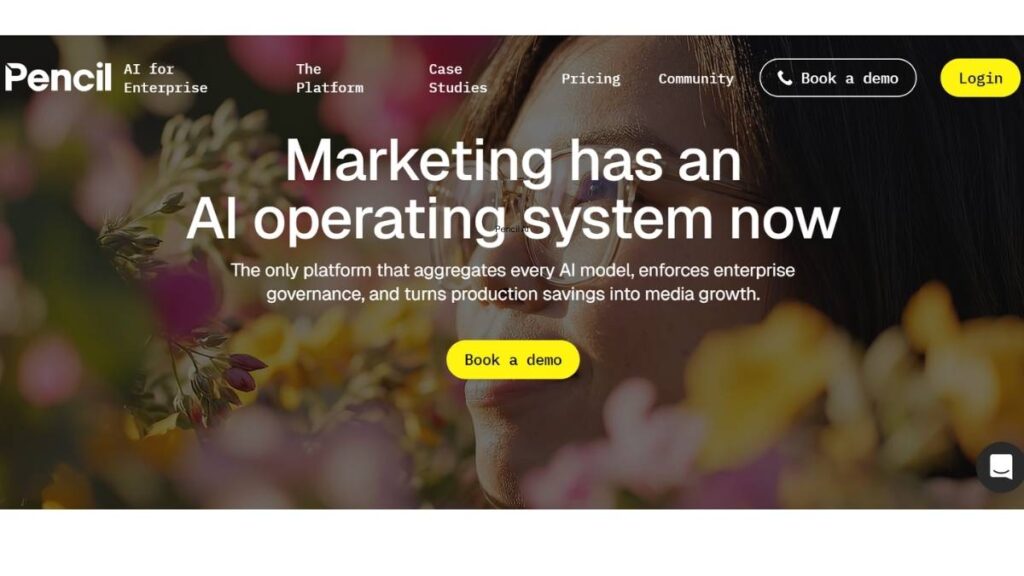
Best for: video marketing
Pencil AI addresses a challenge that’s become more obvious recently: the growing demand for video content in advertising.
Short-form videos, in particular, require constant production. Trends change quickly, attention spans are short, and creative fatigue sets in even faster than with static ads.
This tool generates video ads and provides performance predictions before launch. That pre-launch feedback can help avoid investing in creatives that are unlikely to perform.
It’s especially relevant for platforms like TikTok and Instagram, where volume and speed often matter more than perfect polish.
Adzooma AI
Best for: Google Ads automation
Adzooma takes a more measured approach compared to fully automated systems.
Rather than running campaigns autonomously, it analyzes existing setups and highlights areas for improvement. That could be keyword gaps, bidding inefficiencies, or structural issues within campaigns.
It’s closer to a diagnostic tool than a replacement for campaign management. For many teams, that’s actually preferable.
It fits well into workflows where control still matters, but guidance is needed to make better decisions consistently.
Birch AI
Best for: budget allocation
Birch AI focuses on budget distribution, which tends to become more complicated as campaigns scale.
Different channels perform differently over time. Costs fluctuate, audiences shift, and performance can vary day by day. Managing budgets manually across all of this becomes difficult.
The tool adjusts spending dynamically based on performance signals, moving budget toward what’s working and away from what isn’t.
It’s not a complete solution on its own, but it removes a layer of constant monitoring that often drains time and attention.
Lapis AI
Best for: performance optimization
Lapis AI is designed for a specific phase of campaign growth, when something starts working and needs to be scaled efficiently.
Instead of focusing heavily on testing new variations, it identifies patterns in high-performing campaigns and amplifies them. That could mean increasing spend, expanding audiences, or refining targeting.
It’s not particularly useful in the early stages when data is limited. But once campaigns reach a certain level of stability, it becomes more relevant.
AdMake AI
Best for: quick ad production
AdMake AI is built around speed rather than depth.
It allows teams to generate multiple ad variations quickly, tailored to different audiences or campaign angles. This is especially useful when testing new ideas or launching campaigns under tight timelines.
The quality of outputs can vary. Some feel polished, others less so. But the main value lies in reducing production time.
It’s often used alongside other tools rather than as a standalone solution.
Uplane AI
Best for: strategic planning
Uplane AI operates at a higher level compared to most tools on this list.
Instead of focusing on individual campaigns, it looks at overall media allocation. Which channels deserve more budget, which ones are underperforming, and how different channels contribute to overall results.
This kind of perspective is often missing when teams are deeply involved in daily optimizations.
It’s less about execution and more about direction, which makes it particularly useful for larger campaigns.
Creatopy AI
Best for: design workflows
Creatopy focuses on managing creative production at scale without losing consistency.
As campaigns expand across platforms and formats, maintaining brand identity becomes more challenging. This tool helps standardize that process.
It allows teams to create, adapt, and resize creatives efficiently, reducing repetitive design work.
For agencies or in-house teams handling multiple campaigns, this can make workflows noticeably smoother.
Marpipe AI
Best for: reducing ad spend waste
Marpipe approaches testing from a predictive angle.
Instead of running all variations live and waiting for results, it evaluates creatives beforehand to estimate their likelihood of success.
This helps narrow down the number of variations that need real budget behind them.
It doesn’t replace testing entirely, but it makes the process more focused and less wasteful.
Ryze AI
Best for: performance analytics
Ryze AI focuses on making sense of campaign data rather than executing changes.
It identifies trends, highlights anomalies, and provides a clearer understanding of performance patterns.
That kind of clarity is often underestimated. Without it, optimization decisions tend to rely on assumptions rather than evidence.
It’s not the most visible part of the stack, but it plays an important role.
Bestever AI
Best for: scaling campaigns
Bestever AI is built for situations where volume becomes the priority.
As campaigns scale, the demand for new creatives increases rapidly. Without enough variation, performance tends to plateau.
This tool generates large numbers of ad creatives quickly, helping maintain momentum.
It’s less focused on nuance and more on output, which works well in high-growth phases.
Pixis AI
Best for: enterprise advertisers
Pixis is designed for larger organizations dealing with complex advertising ecosystems.
It combines creative generation, optimization, and analytics within a single platform. The level of automation is relatively advanced, covering multiple aspects of campaign management.
That said, it comes with a certain level of complexity. Implementation and ongoing management require resources.
For enterprise teams, that trade-off often makes sense. For smaller teams, it can feel like too much.
Looking across these tools, a pattern starts to emerge. No single platform does everything perfectly, despite what marketing pages might suggest.
Some tools are better at speeding up execution. Others improve decision-making. A few attempt to cover both, with varying degrees of success.
The real advantage comes from understanding where the gaps are in current campaigns, and then choosing tools that address those specific gaps. Not just the ones that sound the most advanced.

Enroll Now: AI-Powered Performance Marketing Course
How to Choose the Best AI Advertising Tool
Choosing the right tool sounds straightforward on paper. In reality, it’s where most teams get stuck… or worse, end up overpaying for something they barely use.
A good starting point is not the tool itself, but the campaign objective. That tends to get skipped. If the goal is brand awareness, tools built around creative production and reach optimization make more sense. If the focus is conversions, then targeting precision and bid automation matter more. Mixing those up leads to frustration pretty quickly.
Budget plays a bigger role than most admit. Some tools look affordable at first, but scale costs aggressively once usage increases. Others feel expensive upfront, but replace multiple tools at once. It’s not just about price; it’s about what gets replaced or simplified.
Platform compatibility is another quiet deal-breaker. A tool might work well for one ecosystem but feel clunky or limited in another. Campaigns running across Google, Meta, and TikTok need something that either integrates smoothly… or at least doesn’t create more manual work.
Then there’s usability. Some tools offer deep automation but come with complexity that slows teams down. Others are simpler but require more manual input. Neither is inherently better; it depends on how the team prefers to work.
And finally, integration. This part often gets overlooked until it becomes a problem. Tools that connect well with CRM systems, analytics platforms, and existing workflows tend to stick. The rest… usually don’t last long.
It’s less about finding the “best” tool and more about finding one that fits into how campaigns are already being run, or how they should be run.
AI Advertising Tools vs Traditional Advertising Tools
The shift from traditional advertising tools to AI-driven ones didn’t happen overnight. It’s been gradual, almost subtle in some cases. But the difference in how campaigns are managed now is hard to ignore.
Traditional tools rely heavily on manual input. Campaign structures, bidding strategies, audience segmentation… all defined and adjusted by the marketer. That approach works, especially with experience, but it comes with limitations. Mainly time and scale.
AI-driven tools approach the same problems differently. Instead of waiting for manual changes, they process large amounts of data continuously and adjust in real time. That alone changes the pace of optimization.
Speed is one of the biggest differences. Traditional setups often rely on periodic reviews. Daily, weekly, sometimes longer. AI tools operate constantly. That doesn’t always mean better decisions, but it does mean faster reactions.
Cost-efficiency also shifts. Manual management can lead to inefficiencies, missed opportunities, and delayed optimizations. AI tools reduce some of that, though not completely. There’s still room for waste if the strategy isn’t solid.
Then there’s the creative side. Traditional advertising leans heavily on human intuition and experience. AI tools introduce data-driven suggestions into that process. Sometimes helpful, sometimes… a bit too generic.
It’s not really a case of one replacing the other. The better approach tends to combine both. Human judgment still matters. Probably more than ever, actually. AI just handles the repetitive, data-heavy parts that used to take up most of the time.
How to Use AI Advertising Tools Effectively (Step-by-Step)
Most tools don’t fail because they’re ineffective. They fail because they’re used without a clear structure. There’s a tendency to jump straight into automation without setting the groundwork first.
Step 1: Define campaign goals and KPIs
Everything starts here. Without clear goals, the tool has nothing meaningful to optimize toward. Awareness, traffic, conversions, retention… each requires a different setup.
KPIs should be specific enough to guide decisions. Not just “increase sales,” but something measurable. Otherwise, results become difficult to interpret.
Step 2: Choose the right AI tool
Not every tool fits every campaign. Some are built for scaling, others for testing, others for analysis.
Choosing the wrong category of tool creates friction later. It’s worth taking a bit of time here instead of switching tools mid-campaign.
Step 3: Input data and audience signals
This step tends to get rushed. It shouldn’t.
The quality of outputs depends heavily on the quality of inputs. Audience data, conversion signals, historical performance… all of it shapes how the tool behaves.
Incomplete or messy data leads to unreliable outcomes. That pattern shows up often.
Step 4: Generate creatives and ad copy
Once the foundation is set, creative production becomes easier.
Tools can generate multiple variations quickly, which helps with testing. But not every output should go live as-is. A quick review usually improves results.
There’s still a role for judgment here.
Step 5: Launch and monitor campaigns
After launch, it’s tempting to step back completely. That’s where things go wrong.
Even with automation, campaigns need monitoring. Not constant intervention, just awareness of how things are moving.
Early signals often reveal whether adjustments are needed.
Step 6: Optimize using AI insights
This is where most of the value comes in. Insights, patterns, performance signals.
But they need interpretation. Not every recommendation should be followed blindly. Some require context, others need validation.
Over time, a rhythm develops. The tool handles execution, while strategy and direction stay human-led.
That balance, more than anything else, tends to separate average results from strong ones.
Common Mistakes to Avoid When Using AI Advertising Tools
There’s a bit of a pattern here. Teams bring in AI advertising tools expecting things to “just improve.” Sometimes they do. But when they don’t, it usually comes down to how the tool is being used, not the tool itself.
One of the bigger issues is handing over too much control too early. Automation sounds great in theory. In practice, if the campaign direction isn’t clear, automation just accelerates confusion. It ends up optimizing for the wrong things… efficiently.
Creative tends to get neglected as well. There’s this assumption that more variations automatically lead to better results. Not quite. If the underlying message is weak, generating 20 versions of it doesn’t fix much. It just spreads the problem wider.
Audience data is another quiet problem. Most tools rely heavily on the inputs they receive. If that data is broad, outdated, or inconsistent, the targeting becomes guesswork. And then performance starts drifting, usually without a clear explanation.
Testing is where things often fall apart. Recommendations get implemented too quickly, without enough validation. Or the opposite, nothing gets tested properly and decisions are based on early signals that don’t hold.
Then there’s interpretation. Analytics can look convincing, but not everything needs action. A dip in performance might be temporary. A spike might not last. Without context, it’s easy to overreact or move too slowly.
None of this is particularly complicated. But it does require a bit of patience… and some restraint. The tools work better when they’re guided, not left entirely on their own.
Future of AI Advertising Tools
Things are moving, not in a dramatic, overnight way, but steadily.
There’s a clear push toward more autonomous systems. Not just tools that assist, but ones that handle larger parts of the campaign cycle. Planning, execution, optimization… all connected. It’s already happening in pieces.
Creative production is shifting, too. Video especially. The speed at which ads are produced now compared to even a couple of years ago… it’s noticeably different. More variations, shorter lifecycles, quicker refresh cycles. That changes how campaigns are structured.
Prediction is becoming a bigger part of the process. Instead of reacting to what users do, systems are trying to anticipate it. Not perfectly, of course. But enough to influence targeting and timing decisions.
Privacy is shaping a lot of this, probably more than most people realize. With less reliance on third-party tracking, there’s more focus on first-party data and contextual signals. That forces a different kind of thinking around audiences.
There’s also more integration happening across tools. Campaign data, CRM data, content workflows… It’s all starting to connect. That’s useful, but it also adds complexity. Systems become more powerful, but harder to manage without structure.
It’s not all smooth progress. Some areas will move faster than others. But overall, things are leaning toward more automation, more prediction, and tighter data ecosystems.
Conclusion:
Are AI Advertising Tools Worth It?
Short answer… yes. But probably not for the reasons most expect.
They don’t magically fix campaigns. That expectation usually leads to disappointment. What they do is remove a lot of the repetitive, time-consuming work that used to slow things down.
Campaigns can move faster. Adjustments happen sooner. Data gets processed at a scale that’s hard to manage manually.
But the fundamentals haven’t changed. Clear positioning still matters. Strong creatives still matter. Audience clarity… maybe more than ever.
Without those, even the most advanced tools struggle to produce meaningful results.
For growing teams, the value is pretty clear. Less time spent on manual tasks, more room to focus on strategy. For experienced marketers, it’s more about leverage. Doing more with the same resources, without burning out the process.
So yes, they’re worth using. At this point, it’s hard to stay competitive without them.
Just not as a replacement for thinking. More like an extension of it.
FAQs: AI Advertising Tools
What are AI advertising tools?
AI advertising tools sit on top of platforms like Google Ads or Meta Ads and quietly take care of the repetitive stuff. Bidding, targeting tweaks, reporting, and even creative suggestions in some cases. They don’t “understand” marketing like a strategist would, but they’re good at spotting patterns in data and reacting faster than manual workflows usually allow.
How do AI tools improve ad performance?
Mostly through timing and consistency. They catch shifts in performance early, like when a campaign starts wasting budget or when a new audience segment begins converting better. Instead of waiting for weekly checks, adjustments happen in near real time. That small difference often adds up over weeks of spending.
Are AI advertising tools suitable for small businesses?
Yes, but only if they’re kept simple. Small teams don’t really need full automation stacks. What usually helps more is clean reporting, basic optimization, and faster creative testing. Overcomplicating things early tends to backfire, honestly. It adds noise instead of clarity.
Which AI tool is best for Google Ads optimization?
There isn’t one clear answer here. Most decent tools focus on keywords, bidding behavior, and intent signals. The real difference shows up in how well the tool reads conversion data and reacts to it. Not how many features it has sitting in the dashboard.
Can AI create ad creatives automatically?
Yes, it can generate copy, visuals, and even video concepts. But the output is uneven. Some variations work surprisingly well, others feel repetitive or slightly off in tone. Most teams still treat it as a starting point, not a final output. Human review still ends up doing the finishing work.
Do AI advertising tools replace marketers?
Not really. They remove a lot of repetitive execution work, but not the thinking part. Things like positioning, messaging, audience strategy, and creative direction still sit with marketers. The shift is more about focus, less time tweaking, more time deciding what actually matters.
Are AI ad tools expensive?
It depends on how advanced the setup is. Basic tools are fairly accessible and usually cover optimization suggestions or creative support. As features get deeper, especially enterprise-level automation, pricing increases quickly. Sometimes they replace multiple tools, so the cost balances out a bit there.
What is the best AI tool for Meta Ads?
Tools that focus on creative testing and audience refinement tend to work best for Meta. The platform changes fast, and creative fatigue shows up quickly. The real value is in catching that early and shifting budgets before performance drops too far. Automation alone isn’t enough here.
How accurate are AI ad performance predictions?
They’re helpful, but not something to rely on blindly. Predictions are built from past data, so they work best when conditions stay stable. When markets shift or new creatives are introduced, accuracy can drift. They’re more like direction indicators than fixed outcomes.
Can AI tools manage multi-channel campaigns?
Yes, partially. They can connect data across platforms like Google, Meta, and TikTok, which helps with reporting and budget decisions. But each platform behaves differently, and AI doesn’t always fully account for that. Some level of manual oversight still remains necessary.
How do AI advertising tools optimize ad budgets automatically?
They monitor signals like conversions, CTR, and cost per result. When something performs better, more budget gets pushed toward it. When performance drops, spend gets pulled back. It runs continuously in the background, reducing obvious waste over time, though not eliminating it completely.
Can AI advertising tools run campaigns without human input?
Technically, yes, but it rarely works well in practice. Campaigns can be launched and adjusted automatically, but without direction, things drift. Strategy still matters more than automation. Otherwise, the system ends up optimizing for short-term signals without understanding the bigger goal.
What data do AI ad tools need to perform effectively?
Clean tracking is the foundation. Conversion events, audience behavior, historical campaign data… all of it feeds the system. If the data is incomplete or messy, results become unreliable. The tool starts guessing instead of optimizing, and performance becomes inconsistent.
Are AI advertising tools safe for handling customer data?
Most established tools follow standard privacy and compliance rules. Still, safety isn’t just about the tool itself. It also depends on how data is collected, stored, and connected. Consent setup and tracking structure matter just as much as the platform being used.
Which AI advertising tools are best for beginners?
Beginners usually do better with tools that guide decisions instead of fully automating everything. Something that explains performance changes, suggests improvements, and keeps setup simple. Too much automation early on can make it harder to actually understand what’s driving results.
How do AI tools improve ad targeting accuracy?
They pick up behavioral patterns that are easy to miss manually. Things like repeat engagement, timing signals, and conversion behavior over time. As more data builds up, targeting becomes more refined because the system learns who actually converts, not just who clicks.
Can AI advertising tools integrate with CRM platforms?
Yes, and this is where they become more useful in real setups. CRM integration connects ad performance with actual customer outcomes. That helps improve attribution and makes targeting decisions more grounded instead of relying only on platform-level metrics.
What industries benefit the most from AI advertising tools?
Industries running high-volume, performance-driven campaigns see the most value. E-commerce, SaaS, fintech, lead generation… basically any space where testing, scaling, and optimization happen constantly. The more complex the funnel, the more useful these systems tend to become.
How do AI advertising tools help in A/B testing?
They speed up the testing cycle by generating variations quickly and analyzing results faster than manual setups. Instead of long waiting periods, patterns show up sooner. That helps identify winners earlier, although final decisions still benefit from human judgment and context.
What are the limitations of AI advertising tools?
They rely heavily on data quality and setup. If inputs are weak, outputs suffer. They also struggle with deeper brand nuance and creative direction. So while they improve speed and execution, they don’t replace strategic thinking. That part still has to be handled by marketers.