

Background removal used to be the kind of task that made junior designers quietly dread Monday mornings. Hours in Photoshop, fighting with stray pixels, getting the hair mask almost right, then accidentally flattening the layer. Today, AI background remover tools do that job in seconds. Not kind of, actually seconds. And the results, for most standard use cases, are genuinely good.
This guide covers 13 of the best AI background remover tools available right now. Some are free, some are paid, some are built for solo creators, and some are designed for teams processing thousands of images a week. There’s also a breakdown of how these tools actually work under the hood, what to look for before picking one, and honest answers to the questions that keep coming up. If background removal is part of your workflow, product photos, social content, marketing assets, whatever, this is worth reading front to back.
Table of Contents
What Are AI Background Remover Tools?
Simple enough to explain: they’re software tools, almost always web-based, that use machine learning to find the main subject in a photo and cut away everything behind it. The result is a PNG with a transparent background, ready to be placed on anything else.
What makes them interesting is how much better they’ve gotten at doing this without human input. Old-school background removal meant using a lasso tool, selecting subject edges by hand, zooming in at 400% to fix where the algorithm got confused by a curl of hair or the edge of a glass. Even skilled editors found it tedious.
The AI versions don’t work the same way. They’ve been trained on enormous image datasets and learned to identify what “subject” means across all kinds of photos, people, products, animals, and objects. They segment the image automatically. Most of the time, the output is clean enough to use without any touching up.
The harder cases, a person with curly hair in front of a textured wall, a glass bottle where you can see through the product itself, a dog with fluffy fur, those still separate the good tools from the mediocre ones. More on that shortly.
Where people actually use these:
- E-commerce sellers who need product shots on white or custom backgrounds. Amazon, Shopify, and similar platforms have strict image requirements. You can’t always control the shoot environment.
- Marketing teams who need clean assets for ads, landing pages, and email campaigns, fast, without waiting on a design queue.
- Social media creators who want consistent backgrounds across their content, or who use green screen-style compositing.
- Everyday users who need a clean headshot, want to remove a cluttered background from a family photo, or are building something creative.
How Does AI Background Removal Actually Work?
Worth understanding at a basic level, because it helps you know why some tools handle hard images better than others.
When an image gets uploaded to one of these tools, it runs through a deep learning model, typically a convolutional neural network trained on image segmentation. The model has seen millions of labeled examples: “this pixel belongs to the subject, this one belongs to the background.” From all that training, it’s learned patterns. Contrast, depth cues, object recognition, edge sharpness.
It produces what’s called a segmentation mask. Think of it like a stencil, a map of which parts of the image should stay and which should go. Then a refinement layer cleans up the boundary, smooths transitions, and tries to handle tricky spots like hair.
The output file has an alpha channel, which is the technical term for the transparency layer in a PNG. That’s what lets you drop the cutout onto any new background cleanly.
Hair and fur are the classic hard cases because individual strands don’t have clean edges, there’s light passing through, color variation, and often background color bleeding into the strand itself. Tools that handle this well typically use secondary models trained specifically on fine-edge cases, or let you manually refine the mask after the initial cut.
Why Even Bother With AI Tools Instead of Photoshop?
The speed argument is obvious. But it’s worth being more specific about what that actually means in practice.
A product catalog shoot for a mid-size retailer might generate 300 images. Manual retouching in Photoshop, even fast, competent retouching, takes 10 to 20 minutes per image. That’s 50 to 100 hours of editing labor. A team using batch processing in Photoroom or Claid.ai gets those same 300 images done in a fraction of that time, often within an hour or two.
It’s also accessible. Not everyone running an online store has a Photoshop subscription and knows how to use Select and Mask. These AI tools don’t require any of that. Upload and download, that’s genuinely the whole workflow for most users.
And honestly, the quality has gotten close enough that for the majority of commercial use cases, it’s hard to justify the manual hours. There are still situations where Photoshop wins, and that’s covered later in this guide, but those are increasingly edge cases.
How to Pick the Right Tool
Not every tool is right for every situation. A few things worth checking before committing:
Accuracy on your type of images. This is the real test. Don’t rely on the demo images the tool shows you; upload your actual photos. A tool that’s great for simple product shots might fall apart on portraits or complex backgrounds.
Batch processing. If volume matters, check whether the tool does actual bulk uploads or just processes one image at a time. These are very different things.
Ease of use vs. control. One-click tools are great until you need to refine something. More capable tools have manual editing options, but they take longer to learn. Know which tradeoff fits your situation.
What else does the tool do? Background replacement, AI-generated backdrops, image upscaling, object removal, and several tools bundle these in, and it genuinely adds value.
Free plan limits. Almost every tool has a free tier, but they vary enormously. Some give you full-resolution exports; most don’t. Some add watermarks. Some limit you to a handful of images per month. Worth checking before getting attached to a tool.
API access. For developers or teams that want automated workflows, this matters a lot. Not all tools have a proper API.
14 Best AI Background Remover Tools in 2026
Design.com AI Background Remover
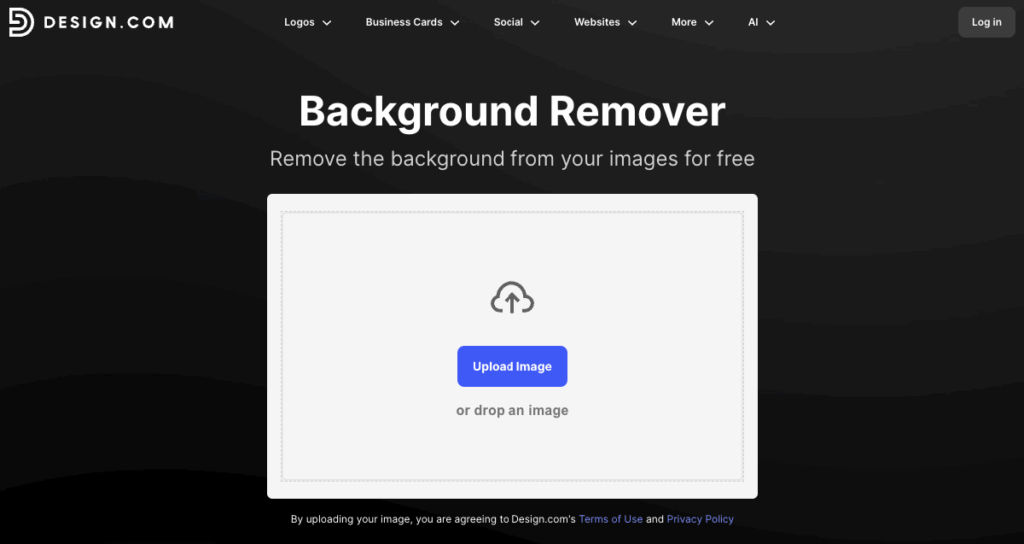
Best Free Background Remover for Branding Projects Design.com’s AI Background Remover makes background removal fast and accessible. All you have todo is upload your image, and its AI automatically removes the background in seconds. It will give you a transparent image that’s clean enough for logos, product photos, marketing graphics, presentations, and
other branding materials.
But what makes it stand out is how it’s integrated with the rest of Design.com’s ecosystem. It means that you can immediately use the transparent image in different branded templates within the platform – no
need to switch between multiple tools.
The AI Background Remover is free to use, letting you create transparent images without subscribing to any paid plans.
Best for: Small businesses, marketers, entrepreneurs, and anyone who wants a free, easy-to-use background remover.
| Tool | Best for | Pricing | Platform | Standout Features |
| Design.com AI Background Remover | Free background removal +branding | Free (paid plans available for full access on other branding tools) | Web | AI background removal with seamless integration into logos, websites, social media, business cards, and other branding assets |
Remove.bg
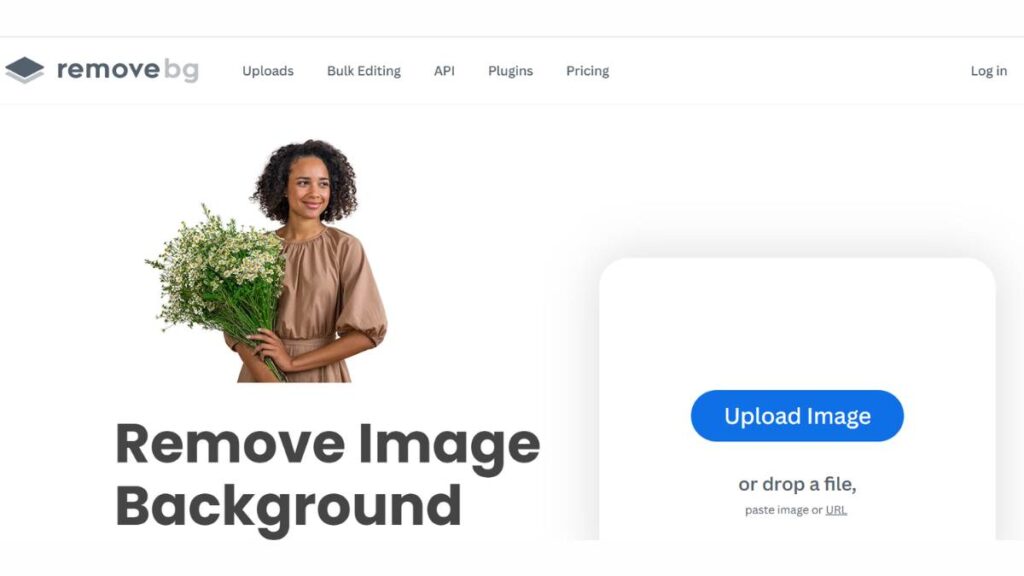
Remove.bg has been at this longer than most competitors, and it shows. The accuracy is consistently strong; it handles hair, product shots, and complex backgrounds better than the majority of tools in this category. Upload time to finished cutout is typically under five seconds for standard images.
The API is one of the best in the category. Businesses plug it directly into their workflows, Shopify stores, internal tools, and apps. There’s a Photoshop plugin as well. The integration options are broad.
Free plan: You get a low-resolution preview, which is mostly useful for testing. HD downloads require credits. Pricing starts around $0.20 per image on the lower end, decreasing with volume. There’s also a subscription option for regular use.
One honest note: it’s not always perfect on very fine hair or translucent objects. Nothing in this category is. But the refinement brush helps, and the base accuracy is high enough that heavy fixing is rarely needed.
Best for: General-purpose use, teams needing API integration, and anyone who wants reliable output without much thinking.
Claid.ai

Best for E-Commerce at Scale
Claid.ai is less of a background remover and more of a full product image pipeline. Background removal is in there, but it also does AI photoshoots, background generation, image enhancement, retouching, and resizing, all via API or the web app.
For a brand managing thousands of SKUs, this is genuinely valuable. You can feed in raw product shots and get marketplace-ready images out the other side, with consistent styling, without a photo studio or a large editing team. The quality is high, and the batch API handles volume well.
Pricing leans enterprise; it’s built for teams and businesses, not casual users. Worth the cost if you’re dealing with significant image volume.
Best for: E-commerce teams, brands with large catalogs, marketplace sellers needing automated visual production.
Photoroom
Best for Product Photography (Especially Small Sellers)
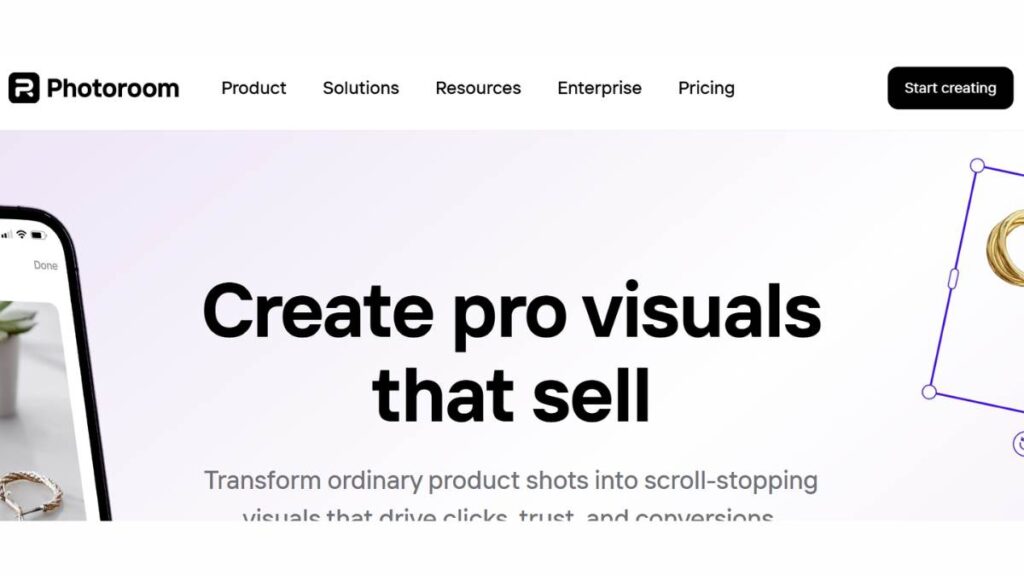
Photoroom sits in an interesting spot, powerful enough for serious sellers, approachable enough for someone running their first Shopify store. Background removal quality is solid, but the more useful thing is the full workflow around it. AI-generated backgrounds, templates sized for specific platforms, batch editing that actually works.
The AI backdrop generation is better than expected. You can describe what you want, a minimalist studio, a kitchen surface, a textured backdrop, and it produces something usable. Not always perfect, but much faster than licensing stock images or doing it in Photoshop.
Available on web and mobile. A free plan exists with limitations; Pro unlocks HD exports, batch processing, and more background options.
Best for: Solo sellers, small-to-medium e-commerce businesses, anyone who wants more than just a cutout.
Canva Background Remover
Best Built-In Option for Canva Users
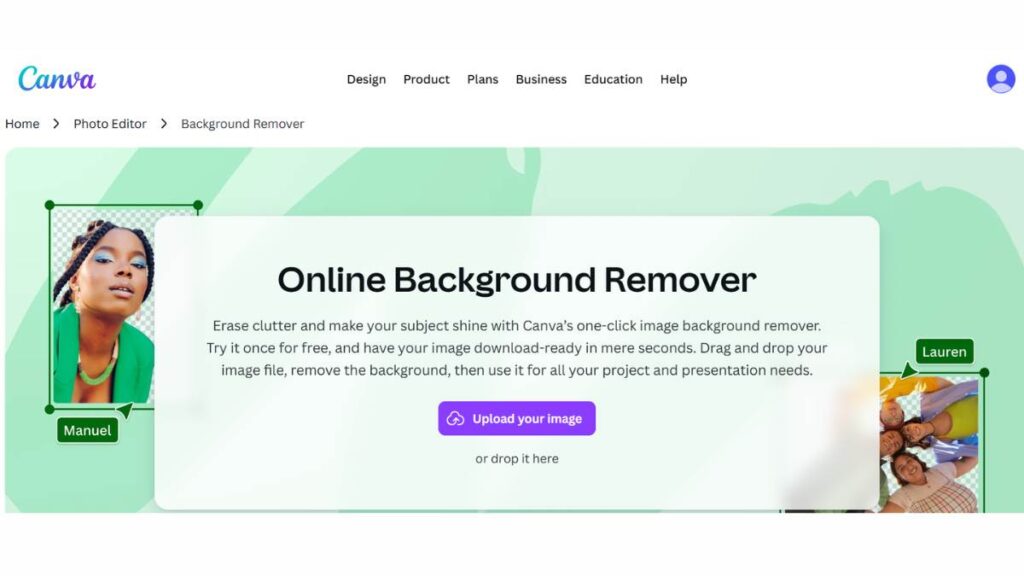
If the workflow already lives in Canva, and for a lot of marketers and content creators it does, the background remover built into the editor is more useful than any standalone tool. Remove the background, drop in a new one, add text, export. All without switching tabs.
It’s not the most powerful tool by any metric. Edge detection is decent, not outstanding. But the convenience factor is real. There’s no exporting, re-importing, or managing multiple apps.
Background removal is a Canva Pro feature. It’s not on the free plan.
Best for: Marketers and creators already using Canva, beginners who want a single tool for everything.
Adobe Firefly / Adobe Express
Best for Professionals
Adobe’s AI push has been significant. Adobe Firefly powers generative AI features across Express and the broader Creative Cloud suite, and the background removal in this ecosystem is among the most accurate available, particularly for complex images.
Beyond removal, Firefly lets you generate replacement backgrounds from text prompts. The generative fill feature means you can remove an object, describe what should be there instead, and have it filled in convincingly. For agencies and designers doing high-end ad creative, this changes the workflow considerably.
It’s expensive if you’re not already in Creative Cloud. But if you are, it’s already built in.
Best for: Designers, agencies, Creative Cloud subscribers, professionals where output quality is non-negotiable.
Pixelcut
Best for Mobile Editing
Most background removal tools work fine on mobile, but weren’t really designed for it; the UI feels ported over from a desktop app. Pixelcut is the exception. It’s built for phones, available on both iOS and Android, and the editing experience actually works with touch controls.
Templates are optimized for social formats. Background options cover common use cases for creators, solid colors, gradients, and lifestyle images. Results are solid for portraits and product shots.
Free plan available. Pro subscription adds HD exports and unlocks additional features.
Best for: Content creators, sellers who shoot and edit on their phone, social media managers who work primarily on mobile.
Clipdrop
Best Free Option
Clipdrop is built by Stability AI, the team behind Stable Diffusion, and the free tier is unusually good. No watermarks on downloads, which is rare. Background removal quality is genuinely solid, not a watered-down free version of something better.
The additional tools are worth mentioning: image upscaling, object removal, relighting (adjusting where the light source appears to come from), and cleanup. It’s become a kind of Swiss Army knife for AI image editing. All for free, up to usage limits.
Paid plans exist for higher volume. But the free version is useful enough that a lot of people never feel the need.
Best for: Users who want a quality free tool without watermarks, designers who want a versatile AI editing kit without paying a subscription.
Pixelbin
Best for Developers
Pixelbin is an image transformation platform where background removal is one function among many. Resize, compress, convert, retouch, it’s all accessible through a well-documented API. For teams building automated image workflows into a SaaS product, an app, or an e-commerce platform, this is worth looking at seriously.
It’s not built for casual users. The web interface is there, but the real value is the API and the scalability. If you need to process large image volumes programmatically without managing infrastructure, Pixelbin handles it cleanly.
Best for: Developers, SaaS teams, any technical workflow that needs programmatic image processing.
Erase.bg
Best for Simplicity
Erase.bg does exactly what the name says, and nothing more. Upload an image, background comes off, download the result. The interface has no learning curve because there’s almost nothing to learn.
Quality is fine for typical product images and portraits with clean backgrounds. It struggles with complex cases, detailed hair, translucent objects, but for the majority of straightforward edits, it works. Fast, free at low resolution, paid options for HD.
Best for: Beginners, anyone who needs quick one-off edits, situations where simplicity matters more than maximum accuracy.
Cleanup. Pictures, Best for Object Removal Alongside Background Work
Cleanup. Pictures is a little different from everything else on this list. The primary function is removing unwanted elements from photos, background people, objects, text overlays, and watermarks by painting over them with a brush. The AI fills in what should be there.
That said, it handles full background removal too, and the two use cases complement each other. Remove the background, realize there’s a shadow or object that shouldn’t be in the foreground either, clean it up, all in one place.
Free plan with limited exports. Paid plan for HD resolution and more credits.
Best for: Photographers, editors who need to clean up images beyond just the background, and anyone dealing with cluttered product or portrait shots.
Fotor Background Remover
Best for Casual All-in-One Editing
Fotor is a general-purpose photo editor with background removal built in. It’s not going to outperform specialized tools on accuracy, but it covers a lot of ground, including color correction, retouching, collage creation, design templates, and background removal.
For someone who needs occasional background edits as part of broader photo touchup work, the all-in-one nature is convenient. No need to bounce between apps.
The free plan has limits. Fotor Pro unlocks full features.
Best for: Casual users, beginners, and anyone who wants a general editor with background removal included.
Pixlr Remove BG
Best No-Install Browser Tool
Pixlr has been around since the early days of browser-based image editing, and the background remover fits into its existing editor naturally. No installation required. For most people, no account is required to do a basic edit.
Results are competent on simple images, clean subjects, and relatively uncluttered backgrounds. Detailed cutouts don’t come out as well as with dedicated tools. But it works, it’s free, and you can continue editing the image in the Pixlr editor immediately after.
Best for: Occasional edits, users who don’t want to install software or create accounts, quick turnaround, simple jobs.
Deep Dream Generator
Best for Complex and Creative Editing
Deep Dream Generator is primarily known for AI art generation, and that background is relevant; the models tend to handle complex image processing tasks with more sophistication than simpler tools. Background removal on detailed or unusual images holds up better here than on several more popular options.
It’s not a beginner tool. The interface assumes some familiarity with AI image editing. But for advanced users working on complex cutouts or creative compositing, the quality ceiling is higher.
Best for: Advanced users, creative professionals, complex images where simpler tools struggle.
Checkout: AI Marketing Course
Comparison Table
| Tool | Best For | Pricing | Platform | Standout Feature |
| Remove.bg | Overall use + API | Credits (~$0.20/img) | Web, API, Plugin | Strong API + integrations |
| Claid.ai | E-commerce at scale | Enterprise/custom | Web, API | Full visual pipeline |
| Photoroom | Product photography | Free / Pro | Web, iOS, Android | AI backgrounds + batch |
| Canva | Canva users | Pro plan | Web, iOS, Android | In-editor workflow |
| Adobe Firefly | Professionals | CC subscription | Web, Desktop | Generative AI quality |
| Pixelcut | Mobile creators | Free / Pro | iOS, Android | Mobile-first UX |
| Clipdrop | Free use | Free / Paid | Web | No watermarks free |
| Pixelbin | Developers | API-based | API + Web | Scalable API pipeline |
| Erase.bg | Quick/simple edits | Free / Paid | Web | Dead-simple UI |
| Cleanup.pictures | Object + background | Free / Paid | Web | Inpainting + removal |
| Fotor | Casual editing | Free / Pro | Web | All-in-one editor |
| Pixlr | No-install browser | Free | Web | Nothing to install |
| Deep Dream Gen. | Complex/creative | Credits | Web | AI art model depth |
Free vs. Paid: What You’re Actually Giving Up
Free plans get you started. That’s genuinely their purpose, and some of them are useful enough for low-volume personal use. But the limitations are real, and worth knowing before committing to a tool.
Free tier limitations vary by tool, but usually include some combination of: low resolution exports, watermarks on downloaded images, a monthly cap on how many images you can process, and no batch processing.
That last one catches people off guard. Processing 20 images one by one is fine. Processing 500 that way is not.
Paid plans typically unlock HD or full-resolution downloads, batch processing, priority speed, and in some cases, better accuracy (because the paid API tier gets more processing power). For business use, any real commercial volume, a paid plan pays for itself in labor costs pretty quickly.
Credit-based pricing, which several tools use, means you pay per image processed. Subscription pricing is flat monthly. For predictable high-volume use, subscriptions usually work out cheaper. For occasional or variable use, credits give more flexibility.
Which Tool for Which Use Case
E-commerce: Claid.ai for larger operations with API needs. Photoroom for smaller sellers who want simplicity with solid output.
Social media and content creation: Pixelcut on mobile. Canva for anyone already designing there.
Developers and automation: Remove.bg API is the most established. Pixelbin for a broader image transformation pipeline.
Free without watermarks: Clipdrop, no contest.
Professionals and agencies: Adobe Firefly, especially if already in Creative Cloud.
How to Use Any of These Tools
Most tools follow the same steps. It’s not complicated.
Upload the image, JPG, PNG, or WEBP work on most platforms. The AI processes it, usually in a few seconds. Review the edges. If something looks off, a strand of hair that got chopped, or part of the subject is missing, use the manual refinement brush that most tools include. Optionally add a new background. Download the final PNG.
That’s really it. The more you use a specific tool, the more you’ll know which image types it handles cleanly and which ones need a touch of manual work.
Problems That Come Up and How to Fix Them
Rough or jagged edges. Use the refinement brush. If the tool doesn’t have one, try a different tool. Remove.bg and Photoroom both include this. Choosing a higher-accuracy tool from the start is the better fix.
Hair is coming out wrong. This is the single hardest problem in background removal. Remove.bg, Adobe Firefly, and Claid.ai handle it best. On other tools, try the manual brush to recover strands. Very complex cases may still benefit from Photoshop’s Select and Mask.
Low-resolution output. Almost always a free plan restriction, not a tool capability issue. Upgrade to a paid plan or try a tool with a more generous free tier, like Clipdrop.
Transparent or reflective objects. Glasses, bottles, and packaging where you can see through to the background are genuinely hard. Adobe Firefly handles it best. Expect to do some manual refinement regardless of which tool you use.
AI Background Remover vs. Photoshop
There are still cases where Photoshop wins. Complex compositing with multiple layers, highly precise masking for commercial print work, and situations where a small error in the cutout will be visible at large scale, these benefit from Photoshop’s level of manual control.
But for most everyday commercial use? The AI tools have closed the gap enough that the speed advantage dominates. A task that takes 20 minutes in Photoshop takes 20 seconds in Remove.bg or Photoroom, with comparable output quality for standard uses.
Plenty of working designers keep both in the toolkit. AI tools for volume and speed, and Photoshop, when the job demands precision that automation can’t quite deliver yet.
Where This Is Heading
Video background removal is the obvious next frontier. What video calling software already does in real time, removing the background live, is slowly moving into proper video editing. Removing backgrounds from recorded footage automatically, frame by frame, with consistent masking, is getting more capable. It’s not mainstream yet, but it’s close.
AI-generated replacement backgrounds are already happening. Photoroom and Claid.ai let you describe a background and generate it. Adobe Firefly’s generative capabilities take this further. The quality will improve, and the prompting will get more precise.
The broader shift is background removal becoming one step in a larger AI pipeline: shoot raw, remove background, generate environment, upscale, format for platform, done. Tools are moving in this direction. The friction between steps is decreasing.
Conclusion: Just Pick One and Test It
The honest recommendation: start with Clipdrop if cost is a concern. Start with Remove.bg if you want the most reliable accuracy. If you’re selling products, try Photoroom’s free plan on a batch of real product images. If you’re already in Adobe Creative Cloud, just use Firefly; it’s already there.
Most of these tools have free tiers or trials. The only way to know which one works for your specific images is to actually test it. Demo images on a product page don’t tell you how a tool handles your particular use case.
Whatever the workflow, product catalog, social content, marketing assets, or personal photos, there’s a tool in this list that fits it.
FAQs:
What is the best AI background remover tool?
Remove.bg is the most consistently recommended option for general use. It’s fast, handles a wide range of image types well, has a mature API, and integrates with tools like Photoshop and Shopify. For product photography specifically, Photoroom and Claid.ai are strong alternatives. The best tool ultimately depends on your images and workflow; test a couple of free tiers before deciding.
Are AI background remover tools free?
Most offer free plans, but with real limitations. Resolution is usually capped, watermarks are common, and monthly credits run out fast. Clipdrop is notable for offering clean, watermark-free exports on its free tier. For HD output or processing more than a handful of images regularly, a paid plan is necessary. Pricing is typically credit-based or subscription, depending on the tool.
Which tool is best for product photos?
Claid.ai and Photoroom are the strongest options for product photography. Both support batch processing, offer AI-generated backgrounds, and are built with marketplace image requirements in mind. Photoroom suits smaller sellers well; Claid.ai fits better for larger operations needing API integration and high-volume automation. Either way, both beat manually editing product shots in Photoshop.
Can AI remove complex backgrounds like hair?
Yes, though quality varies significantly by tool. Remove.bg, Adobe Firefly, and Claid.ai tend to handle hair and fine edges better than others. No tool is flawless on very complex cases, wind-blown hair or dense fur against a busy background will still need some manual refinement. But the improvement over what manual selection tools used to require is substantial.
Do these tools reduce image quality?
The background removal process itself doesn’t degrade quality on reputable tools. What people often experience as quality loss is actually a resolution cap on free plans; the download comes out smaller than the original. Paid plans on most tools deliver full original resolution. For high-resolution print work, confirm the tool exports at your required dimensions before committing.
What is the fastest background remover?
Remove.bg, Erase.bg, and Clipdrop all process typical images in under five seconds. Speed varies with file size and current server load. For bulk images, Claid.ai and Photoroom batch processing are faster overall than uploading images individually; even if per-image speed is similar, the batch workflow eliminates manual repeat steps.
Are AI background remover tools safe to use?
The established tools, Remove.bg, Canva, Adobe, Photoroom, have clear privacy policies and don’t retain uploaded images for training or other purposes beyond processing. Always review the privacy policy before uploading sensitive material. Lesser-known tools with vague terms are worth being cautious about, particularly for confidential product imagery or personal photos.
Which tool works best on mobile?
Pixelcut is purpose-built for mobile and offers the best experience on iOS and Android. Photoroom also has a capable mobile app with most of its web features intact. Canva’s mobile app handles background removal, too, which is useful for creators who design entirely on their phone. Desktop-first tools tend to be clunky on mobile, even when they technically function.
Can I use AI background remover tools for bulk images?
Yes, but batch processing is almost always a paid feature. Remove.bg, Claid.ai, and Photoroom handle bulk jobs well. For automated large-scale processing, thousands of images routed through an API, Remove.bg, and Pixelbin are the most practical options. Free plans rarely include any real batch capability beyond uploading files individually.
What is the difference between Remove.bg and Canva’s background remover?
Remove.bg is a dedicated tool with stronger edge detection, API access, and better performance on complex images. Canva’s remover is built into the Canva editor, convenient for users already working there, but not as powerful as a standalone solution. If output quality and API integration matter, Remove.bg is clearly better. If you’re designing in Canva anyway and the images aren’t particularly complex, Canva’s built-in tool is practical enough.
How accurate are AI background remover tools compared to manual editing?
For straightforward subjects, solid product shots, standard headshots, objects against uncomplicated backgrounds, the top AI tools are close enough to manual quality that the difference is negligible for most commercial use. On genuinely complex cases, skilled manual editing in Photoshop still has the edge. The practical gap has narrowed considerably in the past two years.
Which AI background remover gives the highest-resolution output?
Adobe Firefly and Remove. bg consistently delivers the best-quality high-resolution exports. Claid.ai performs well here too, especially for product images. Resolution availability almost always comes down to plan tier; most tools limit resolution on free plans and unlock full output on paid ones, so this is less about the tool’s capability and more about which plan you’re on.
Can AI background remover tools work on low-quality or blurry images?
They can detect and remove backgrounds from lower-quality images, but the edges suffer proportionally. If the source image lacks sharpness, the cutout boundary will too. Starting with a well-lit, reasonably sharp photo produces a dramatically better result. Clipdrop includes an AI upscaler that can improve image quality before or after background removal, which helps in some cases.
Do AI background remover tools support batch processing?
Yes, most do, on paid plans. Remove.bg, Claid.ai, and Photoroom are the most reliable for batch jobs. Developer teams using the API can automate bulk processing without any manual uploading at all. If batch processing is central to your use case, check exactly how it works before purchasing; some tools call their multi-upload feature “batch” when it’s really just a queue.
Which AI tool is best for portraits?
Adobe Firefly and Remove.bg handle portraits best, particularly when there’s complex hair involved. Photoroom is also strong for portrait-adjacent product shots. The key variable in portrait removal is how well the tool handles hair. Test your specific images, because curly or flyaway hair on one tool might come out clean, and on another might look like chunks are missing.
Can I replace the background after removing it?
Yes. Most tools offer this as an integrated next step. Solid colors, uploaded custom images, and AI-generated scenes are all common options. Photoroom, Canva, and Claid.ai are particularly good for background replacement. Adobe Firefly goes further; you can describe a background in text and have it generated. That last capability is increasingly useful for lifestyle and campaign imagery.
Are there AI background remover tools with no watermark on the free plan?
Clipdrop is the clearest example, free exports, no watermark. Pixlr’s free plan also avoids watermarks in most cases. Most other tools in this category add watermarks on free downloads, which is how they nudge users toward paid plans. If clean exports without paying are the requirement, Clipdrop is the default recommendation.
Which AI background remover is best for beginners?
Canva’s background remover, Photoroom, and Erase.bg are the easiest starting points. All three work without any learning curve. Erase.bg is particularly no-frills: upload, process, download. Canva makes sense if there’s any design work happening alongside the background removal. Beginners don’t need maximum accuracy; they need something that works without reading documentation.
Do these tools work offline?
No, essentially all AI background remover tools are cloud-based. The processing happens on remote servers, which is why they work so quickly without requiring powerful hardware on your end. There’s no offline alternative that delivers comparable quality currently. Adobe Creative Cloud apps have some offline functionality, but background removal still uses cloud processing.
How do AI background remover tools handle hair and fur?
The better tools use secondary refinement models specifically trained on fine-edge detection. Remove.bg, Adobe Firefly, and Claid.ai invest the most in this area. Results on hair and fur have meaningfully improved in the past couple of years. Very challenging cases, dense fur against a complex background, extremely fine flyaway strands, still benefit from using the manual refinement brush that most platforms include as a fallback option.