

Many products fail even when they’re well-made. They fail because nobody remembers them.
You can have the best formula, the cleanest UX, the most competitive price and still lose to a brand that customers just feel something about. That feeling isn’t luck. It’s the result of a deliberate product branding strategy. And if you’re building a product without one, customers are left to figure things out on their own. Without one, customers have to work out for themselves why your product matters. This article covers exactly what product branding is, how it works, and how to build one that holds up – not just at launch but over the long run. Whether you’re taking a new product to market or trying to fix one that’s gone invisible, there’s something useful here.
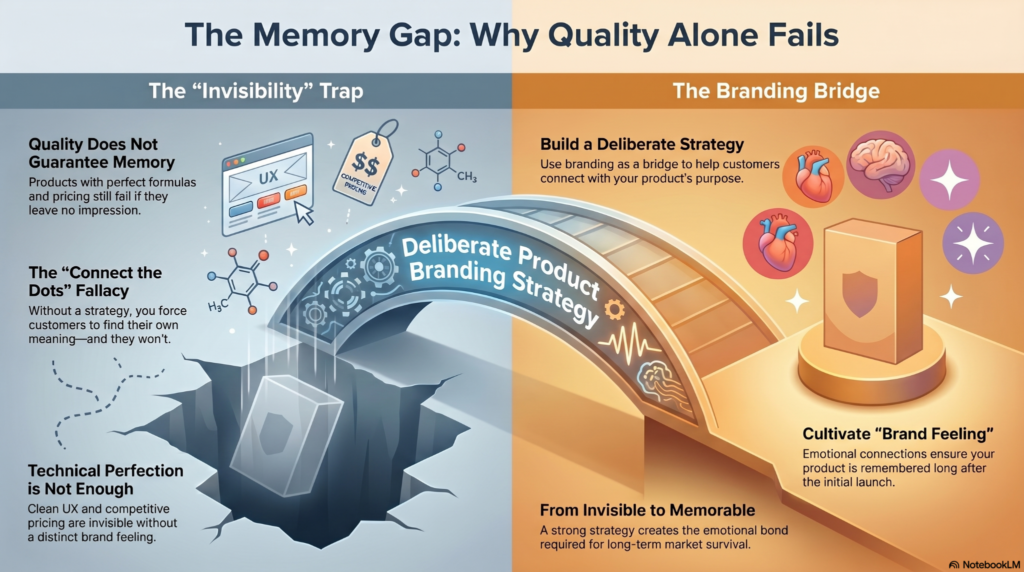
Table of Contents
What Is Product Branding? A Working Definition
Product branding is the process of giving a specific product its own distinct identity, separate from the company that makes it, so that customers recognise, recall, and prefer it over alternatives.
That’s the definition. But what it means in practice is more interesting.
A product brand is the sum of everything a customer associates with that product: the name, the visual design, the promise it makes, the feeling it creates, and the reputation it has earned. When you see a red can with that particular typeface, you don’t think “beverage by a large American corporation.” You think Coca-Cola. That’s the work a product branding strategy does over time.
Product branding is the process of shaping a distinct identity for a specific product so that it is immediately recognisable and preferred by its target audience. It goes beyond naming and logo design to encompass the product’s promise, personality, and emotional associations. A strong product brand makes the product the obvious choice in a competitive market.
Product Branding vs Corporate Branding: What’s the Difference?
More marketers should pay attention to this difference because it matters.
Corporate branding is the identity of the organisation as a whole. It shapes how investors, employees, partners, and the general public perceive the company. Tata Group has a corporate brand. So does Procter and Gamble. You trust the company.
Product branding is specific to a single product or product line. It speaks to the customer who buys that thing. Ariel and Tide are both Procter & Gamble products. They compete directly in some markets. But they each have their own distinct brand identity, their own personality, their own customer relationship. The corporate brand doesn’t do that work. The product brand does.
The two can coexist and often should. A strong corporate brand can lend credibility to a new product launch. But over time, the product brand has to earn its own trust. Customers don’t buy Procter & Gamble. They buy Ariel.
Where it gets complicated: some companies run a branded house model (like Apple, where everything is Apple Watch, Apple TV, Apple Music) and others run a house of brands model (like Hindustan Unilever, where Surf Excel, Dove, and Lakme each live separately). Neither is wrong. The choice depends on your portfolio strategy and how different your products are from each other.
Why Investing in Product Branding Pays Off
Here’s the honest case for spending real time and money on this.
A strong product branding strategy does three things for your business simultaneously. First, it reduces price sensitivity. When customers have a strong preference for your product, they pay more for it and feel better about doing so. According to a 2024 study by Kantar BrandZ, the top 100 most valuable brands globally command an average price premium of 23% over unbranded competitors in the same category.
Second, it cuts customer acquisition costs over time. Brand recognition means customers come to you. You don’t have to fight for every impression from scratch.
Third, it gives new products a running start. A product that launches under a trusted brand already starts the relationship with credibility; it doesn’t have to start from zero.
That said, product branding isn’t free, and it’s not fast. The brands that look effortlessly recognisable today spent years earning that position. So if you’re expecting a rebrand to fix a broken product in one quarter, that’s not what this is.
Why Is Product Branding Important?
Because without it, your product can end up looking just like every other option in the market.
Commodities compete on price. That’s a race you will eventually lose to whoever has better margins or lower costs. Branding is how you exit that race. When customers have a relationship with your product, price becomes one factor among many, not the deciding one.
There’s also the memory issue. Consumers are exposed to thousands of brand messages every day. A product without a clear, consistent identity gets filtered out. The brain doesn’t store what isn’t distinctive. A product branding strategy forces you to make choices about what your product stands for, how it looks, how it sounds, and what it promises. Those choices are what give the brain something to hold on to.
And then there’s loyalty. Customers who connect with a product brand come back, refer others, and forgive occasional slip-ups in ways that transactional customers simply don’t. According to Edelman’s 2023 Trust Barometer, 81% of consumers said they need to trust a brand to buy from it. Trust is built at the product level, in every interaction.
Product branding is critical because it moves a product from commodity to preference. Consistent brand identity gives customers something to remember and trust, reducing price sensitivity and increasing repeat purchase rates. According to Edelman’s 2023 Trust Barometer, 81% of consumers say trust is a prerequisite for purchase.
What Makes a Strong Product Brand?
Strong product brands don’t happen by accident. They share a few consistent traits.
Stand Out from the Competition
Distinctiveness is not the same as being different for the sake of it. Your product brand needs to be distinct in a way that matters to your target customer. Mamaearth didn’t just make natural skincare products; it built a brand identity around transparency and toxin-free formulations at a time when Indian personal care was dominated by large conglomerates with opaque ingredient lists. That specific distinctiveness earned it a shelf in the minds of health-conscious urban buyers.
Ask yourself: when your product is sitting alongside four competitors on a shelf or a search results page, what makes a customer’s eye stop on yours? If you can’t answer that clearly, neither can your customer.
Focus on a Specific Target Audience
Trying to appeal to everyone is how product brands go grey and forgettable. The clearer your picture of who this product is for, the sharper every branding decision becomes. Your visual language, your tone, your packaging choices, your pricing signals, all of it gets easier and more consistent when you know exactly who you’re talking to.
boAt built one of India’s fastest-growing consumer electronics brands not by targeting “anyone who listens to music” but by anchoring squarely on young, urban, value-conscious music lovers who wanted style alongside functionality. That clarity is visible in everything from their product colours to their Instagram content.
Show Your Product
This sounds obvious. It often gets skipped anyway.
Your product itself is part of your brand. How it looks, how it feels, what it’s made of, and how it performs when a customer first picks it up or opens it for the first time. Apple has made the unboxing experience a branding moment because the product presentation is inseparable from the brand promise.
Don’t bury your product behind generic lifestyle photography or vague aspirational messaging. Show what it does. Let the product do some of the talking.
How to Combine the Product with Brand Identity
Brand identity is the visible and sensory expression of your brand: the logo, the colour palette, the typography, the packaging, the tone of voice, and the visual style across all touchpoints.
The product and its brand identity need to tell the same story. If your product promises precision and reliability but your visual identity is playful and chaotic, that contradiction registers with customers even when they can’t articulate it. It creates friction.
Here’s a practical way to think about it. Start by writing one sentence that describes what your product does, in plain language. Then write one sentence that describes how your product makes customers feel. The space between those two sentences is where your brand identity lives.
Zepto, for example, sells grocery delivery. That’s what it does. What it makes customers feel is something like: effortless, almost magical speed, without the guilt of stepping out. Their branding, colour choices, copy tone, and product experience all contribute to that feeling.
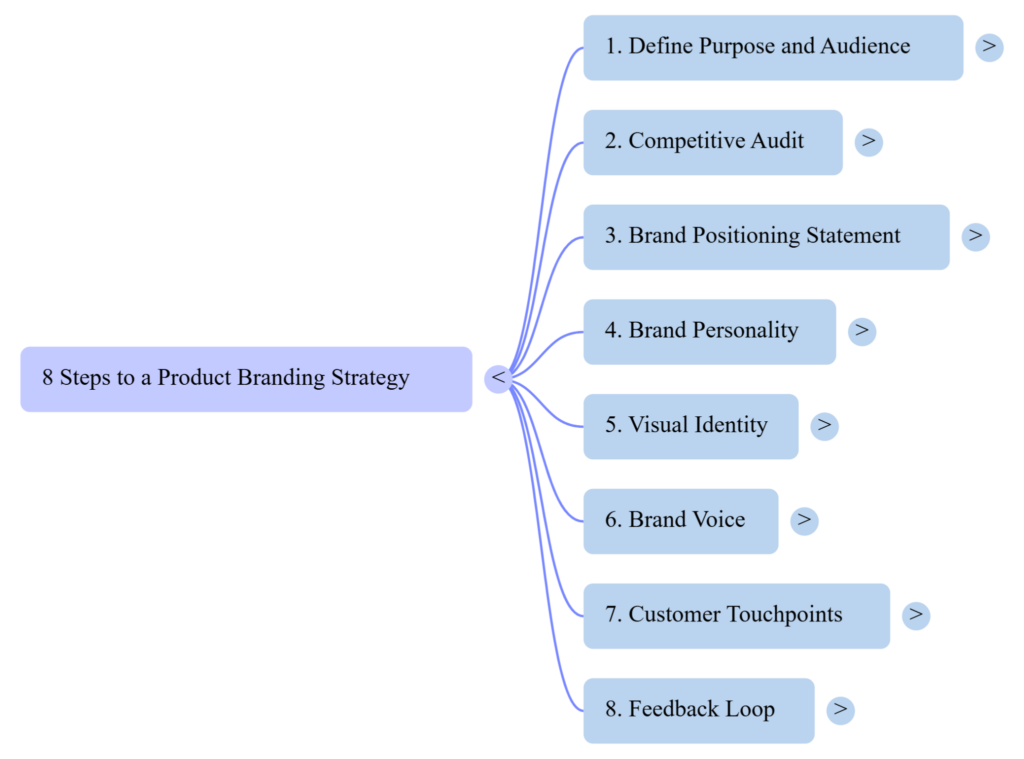
How to Build a Better Product Branding Strategy: 8 Steps
This isn’t a theoretical framework. Each step requires a real decision, not a brainstorm.
Step 1: Define what your product actually does and for whom. Not what it could do. Not what it does for everyone. The specific job it does for a specific person. Write this down in one sentence.
Step 2: Audit your competitive space. Look at the top 5 products competing for the same customer. Map what each one stands for. Find the white space: the position that’s underserved or unclaimed.
Step 3: Write your brand positioning statement. The classic format: For target audience, product name is the category that core benefit because reason to believe. This is internal. It’s not a tagline. It’s the North Star for every branding decision that follows.
Step 4: Develop your brand personality. Pick 3 to 5 adjectives that describe how your brand should feel. Think of your brand as a person at a party. How do they talk? What do they wear? Are they the loudest person in the room or the most quietly confident?
Step 5: Build your visual identity. Logo, colour palette, typography, packaging design. Every visual element should be consistent with the personality you defined in Step 4 and immediately recognisable in your category.
Step 6: Define your brand voice. How does your brand write and speak? Formal or casual? Playful or serious? Warm or crisp? Write a one-page voice guide with examples of on-brand and off-brand language. This matters more than most teams think.
Step 7: Map every customer touchpoint. List every place a customer encounters your product brand: search results, social ads, packaging, in-store shelf, customer service, and post-purchase email. Your brand identity needs to be consistent across all of them, not just the hero moments.
Step 8: Build a feedback loop. Brand perception is what your customers believe, not what you intend. Survey customers at regular intervals. Track how your brand attributes are landing. Adjust when there’s a gap between what you want to stand for and what customers actually think.
Building a product branding strategy requires moving through eight deliberate steps: defining the product’s specific job-to-be-done, auditing the competitive space, writing a brand positioning statement, developing a brand personality, building a visual identity, defining a brand voice, mapping all customer touchpoints, and maintaining a feedback loop on brand perception.
Examples of Product Branding Done Right
Real examples are more useful than abstract principles. Here are three.
Example 1 – Apple
Apple’s product branding strategy is built on the idea that technology should feel human and beautiful. Every product Apple makes carries the same promise: sophisticated simplicity. The packaging is minimal. The device feels premium in your hand before you’ve turned it on. The retail experience is designed so that the product is always the hero.
What makes Apple’s product branding particularly effective is its consistency across wildly different product categories. The iPhone, the MacBook, the AirPods, and the Apple Watch all feel like they come from the same world. That’s not accidental. It’s the result of a brand identity system with almost no tolerance for deviation.
Example 2 – Nike
Nike doesn’t sell shoes. Nike sells the belief that anyone can be an athlete. That position, “Just Do It,” has been the core of their product branding strategy since 1988, and it still holds.
What’s instructive about Nike is how they’ve applied the same brand promise to categories as different as running shoes, basketball gear, and training equipment. The product changes. The brand conviction doesn’t. And because the promise is universal (you don’t have to be a professional athlete to feel like one), it works for a 17-year-old in Mumbai and a 45-year-old in Manchester.
Example 3 – Coca-Cola
Coca-Cola is a master class in emotional branding at scale. The product is, technically, a carbonated sugar drink. The brand promise is joy, togetherness, and shared moments. That gap between product reality and brand experience is enormous, and Coca-Cola has spent over a century bridging it through consistent visual identity, seasonal marketing, and a red colour association so strong that most people can identify the brand from the shade of red alone.
What newer brands can learn from Coca-Cola: sensory distinctiveness accumulates. When you use the same colour, the same typeface, and the same visual language consistently for years, you start owning that sensory territory in your category. You don’t have to say your name. The colour says it for you.
Types of Product Branding Strategies
Once your brand foundation is in place, you need to decide how you’ll actually build and sustain it. There are four main execution routes.
1. Relay Your Value Through Feature Marketing
This strategy makes the product’s specific capabilities the hero. It works particularly well for tech products, health and wellness items, and anything where a tangible feature can be demonstrated clearly. Dyson runs on feature marketing. Every campaign is built around showing the engineering: the cyclone technology, the motor specs, the airflow. The brand becomes synonymous with the feature.
The risk: features get copied. A feature-led product brand needs to continuously innovate or pair feature marketing with a stronger emotional narrative.
2. Drive Engagement Through Content
Content builds brand recall over time by consistently showing up in places where your target audience already spends time. Rather than interrupting customers with ads, you become part of their information diet.
Nykaa is a good example. Their content strategy, spanning beauty tutorials, product reviews, and editorial content, built a brand that customers trusted before they’d even made a purchase. The content did the brand-building work that traditional advertising couldn’t have done as efficiently for a D2C brand in a cluttered category.
3. Build Stronger Customer Relationships Via Communities
Community-based branding gives customers a reason to stay connected to the brand beyond the transaction. Cult. Fit built much of its brand equity through in-person and online communities around fitness. Harley-Davidson’s owner groups are one of the most cited examples of community-led brand loyalty globally.
The brand becomes a shared identity, not just a product. When customers can say “I’m a [brand] person” and mean it socially, you’ve built something harder to replicate than any feature.
4. Share Your Story Through Live Events
Events create brand moments that no digital channel fully replicates. The in-person experience, the energy, the shared memory: these register differently in the brain. Apple’s product launch events are a branding exercise as much as a product announcement. People who weren’t at the event watch the keynote anyway, because the event itself is a brand signal.
For smaller brands, this doesn’t require stadium-scale events. A well-run pop-up, a workshop, or a product sampling activation can create the same quality of first-person brand memory at a fraction of the cost.
The Benefits of Product Branding
Stand Out
In most categories, the field is crowded, and the products are genuinely similar. Branding is how you escape that parity. A distinctive brand makes your product the first thing that comes to mind when the need arises, not one option among many.
Build Customer Trust
Trust is earned through consistency. When your product delivers the same experience every time, and your brand communication matches what customers find when they actually use the product, trust accumulates. That trust is the most durable competitive advantage a product can have. Competitors can match your features, your price, and your distribution. They can’t easily replicate ten years of earned trust.
Spread Brand Awareness
Strong product brands generate word-of-mouth. Customers who feel positively about a product brand share it, not because they’re asked to, but because the brand has become part of how they see themselves. This organic spread is cheaper and more credible than any paid media.
Read More: “brand awareness“
Ten Types of Branding Strategies
Product branding doesn’t exist in isolation. It’s one of ten distinct branding approaches companies use. Understanding where product branding fits helps you make smarter portfolio decisions.
1. Employer branding is how a company presents itself to current and potential employees. It shapes talent attraction and retention.
2. Personal branding is the deliberate management of an individual’s public identity, common among founders, executives, and public-facing professionals.
3. Corporate branding is the overall identity of the organisation, shaping perception among investors, media, and the general public.
4. Product branding gives a specific product its own distinct identity, independent of the corporate brand. The subject of this article.
5. Service branding applies similar principles to services rather than physical products, where the experience delivery is the brand.
6. Retail branding shapes the identity of the retail environment itself, from store design to customer service style.
7. Online branding specifically governs how a brand presents across digital touchpoints: website, social media, search, and email.
8. Luxury branding uses exclusivity, heritage, and craftsmanship signals to justify premium pricing and create aspiration.
9. Ethical branding builds brand equity around values: sustainability, fair trade, and social impact. Brands like Patagonia and The Body Shop built their equity here.
10. Collaborative branding brings two brands together to create a product or campaign that borrows equity from both. Think the Nike x Apple partnership that gave running shoes a soundtrack.
Most companies use several of these simultaneously. The key is making sure they reinforce rather than contradict each other.
Choosing the Right Product Branding Strategy for Your Business
There’s no universal answer here. But three questions cut through most of the complexity.
What Branding Strategy Suits Your Sector?
The right product branding strategy for a fast-moving consumer goods product is not the same as for a SaaS tool or a luxury fashion label. FMCG products need to win at retail, which means shelf presence, packaging distinctiveness, and price-point signalling all matter enormously. SaaS brands live and die by their onboarding experience, their customer success reputation, and their presence in industry communities. Know your category’s rules before you try to break them.
What Makes Your Brand Unique?
This is the question most brand workshops spend three hours on and still don’t answer clearly. Push past the obvious. “Better quality” is not unique. “Faster delivery” is not unique. Go deeper: what is the one thing your product does or represents that competitors either can’t or won’t claim? That’s your territory.
How Do You Want to Be Perceived in the Market?
Perception is not always the same as reality, and that’s not a criticism. It means that brand positioning is a strategic choice. You decide what you want customers to think and feel about your product, and then you build every customer touchpoint to deliver that perception consistently. If you don’t make this choice deliberately, the market will make it for you, and you probably won’t like what it decides.
Getting Your Branding Right
The brands that get this right share one practice: they test their brand perceptions against reality regularly. They survey customers, track brand recall metrics, and watch how new customers describe the product in their own words. That last one is particularly revealing. When a new customer describes your product to a friend, they’re giving you unfiltered brand perception data. Listen to it.
Building Something Customers Actually Remember
Most products fade not because they were bad but because they were forgettable. Same category, same price range, same features as the three things next to them. That’s not a product problem. It’s a brand problem.
A well-executed product branding strategy does the hard work of carving out a specific, memorable position in the customer’s mind and then reinforcing it consistently across every touchpoint. It takes time. It takes discipline. But the brands that have it, Apple, Coca-Cola, boAt, and Nike, carry compounding advantages that become harder to dislodge with every passing year.
The starting point is simpler than most people expect: know exactly who this product is for, decide what it stands for, and then make sure every customer interaction reflects those two decisions with complete consistency. The rest is execution.
If brand strategy is something you want to get sharper on, the YUP Crystal Clear Newsletter covers the thinking behind the brands and campaigns that actually work – practical, no-fluff, twice a week. Worth a look.
Read More: “brand positioning“
FAQs about Product Branding Strategy
What is a product branding definition in simple terms?
Product branding is the process of creating a distinct identity for a specific product so that customers can recognise, remember, and prefer it over competing options. It includes the product’s name, visual design, personality, and the emotional associations it builds over time.
What is the difference between product branding and corporate branding?
Corporate branding shapes how the world sees the company as a whole. Product branding creates a separate, specific identity for an individual product. A company like Hindustan Unilever has one corporate brand but dozens of product brands, including Surf Excel, Dove, Pond’s, and Lakme, each with their own distinct identity and customer relationship.
How do you build a product branding strategy from scratch?
Start with a positioning statement that defines who the product is for, what it does, and why customers should believe it. Then develop the brand personality, visual identity, and voice. Map every customer touchpoint and ensure the brand experience is consistent across all of them. Track brand perception regularly and adjust where the gap between intent and reality is wide.
Who should invest in a product branding strategy?
Any company with a product that competes in a category where customers have a choice. If customers can walk past your product and pick a competitor, you need a product branding strategy. This applies to D2C brands, SaaS companies, FMCG manufacturers, and B2B product companies alike.
Is product branding the same as marketing?
No. Marketing drives awareness and demand in the short term. Branding builds recognition, trust, and preference over the long term. Marketing campaigns end. Brand perception accumulates. Good marketing is more effective when it’s built on a strong product brand, but the two are not interchangeable.
How long does it take to build a strong product brand?
Honestly, longer than most companies plan for. Meaningful brand recognition in a competitive category typically takes two to five years of consistent effort. That’s not a reason to delay, it’s a reason to start earlier than you think you need to. The brands that feel obvious and inevitable today started building that perception years before they looked that way.
What’s the most common mistake in product branding?
Inconsistency. A brand that looks one way in its ads, sounds different in its customer service emails, and feels completely different in its packaging is not a brand. It’s a collection of disconnected touchpoints. Customers can’t build a relationship with something that changes every time they encounter it.
Can a small brand compete with a big brand on branding?
Yes, but not by trying to out-spend them. Small brands win on specificity. A brand that is sharply, precisely right for a specific audience is more memorable than a brand that’s vaguely appealing to everyone. Focus beats scale in the early stages of brand building.
What is brand positioning, and how does it relate to product branding?
Brand positioning is the specific place your product occupies in the customer’s mind relative to competitors. It’s the strategic foundation of your product branding strategy. Everything else, the visual identity, the voice, the marketing, sits on top of the positioning. If the positioning is unclear or undifferentiated, no amount of creative execution will fix it.
How do I measure whether my product branding strategy is working?
Track a combination of brand recall (can people name your product without prompting?), brand association (what words do customers use to describe your product?), and preference share (when customers are choosing, how often do they choose you?). NPS and repeat purchase rate are also useful proxies for brand health.
What’s the difference between a brand identity and a brand image?
Brand identity is what you intend: the name, the visual design, the voice, the values you put out into the world. Brand image is what customers actually perceive. A strong product branding strategy closes the gap between the two. When identity and image are well aligned, the brand feels authentic. When they diverge, customers sense the inauthenticity even if they can’t name it.