
This guide breaks down everything you need to understand about a demand-side platform without overcomplicating it. It walks through how Demand Side Platforms actually work in real-time, how they connect with SSPs and ad exchanges, and what really happens behind those milliseconds of bidding. You’ll also get a practical look at targeting, media buying types, auctions, and how to choose the right platform based on real-world needs. Toward the middle, it covers the best Demand Side Platforms in 2026 and where each one fits. Whether you’re figuring out basics or refining campaigns, this blog gives a grounded, no-fluff view of how programmatic advertising actually runs today.
Table of Contents
What Is a Demand Side Platform
A demand side platform, or Demand Side Platform, is where advertisers go to buy digital ads without all the back-and-forth that used to define media buying. No endless email threads. No manual negotiations for every placement. Just one system that connects to a massive pool of inventory and handles buying decisions in real time.
At its core, a Demand Side Platform sits between advertisers and the open internet. It plugs into ad exchanges and supply-side platforms (SSPs), where publishers make their inventory available. But calling it just a connector doesn’t quite capture what’s going on. A good Demand Side Platform is constantly making judgment calls, tiny ones, happening thousands of times per second.
Every impression gets evaluated. Worth bidding on? How much? Does it align with the campaign goal, or is it just noise?
That’s the real shift. Advertising used to be about buying placements, homepage banners, premium slots, and fixed deals. Now it’s about buying people. Or more accurately, moments when a user shows some level of intent.
And that changes everything.
Instead of saying, “show this ad on this site,” the thinking becomes, “show this ad to someone who looks like they might convert.” The platform handles the rest.
Under the hood, a Demand Side Platform is doing a few things over and over:
- Looking at available impressions
- Matching them against the targeting criteria
- Deciding whether to bid
- Adjusting bids based on what’s working (and what isn’t)
It all happens fast. Really fast. Faster than the page load most of the time.
A simple scenario helps ground this.
Someone opens a travel article, maybe something about Bali or Thailand. That page has ad space. Before anything fully loads, a request goes out saying, in effect, “there’s a user here, here’s what’s known about them, who wants this impression?” Multiple advertisers get that signal. Their Demand Side Platforms evaluate it instantly. Some pass. Some bid. One wins.
Ad shows. Page loads. Done.
The interesting part is not the speed, it’s the selectivity. The Demand Side Platform is filtering constantly. Not every impression is worth paying for, and that’s where a lot of efficiency comes from.
And honestly, that’s why Demand Side Platforms matter now more than ever. The digital landscape is messy, too many channels, too many devices, privacy changes everywhere, and costs are creeping up. Trying to manage that manually? It just doesn’t scale.
Automation isn’t a “nice to have” anymore. It’s the baseline.
How Does a Demand Side Platform Work?
The mechanics behind a Demand Side Platform can feel a bit abstract until you see the sequence play out. Once it clicks, though, the whole programmatic ecosystem starts to make sense.
Campaign Setup in a Demand Side Platform
Everything begins here, and this part tends to get underestimated.
Inside the Demand Side Platform, campaigns are configured with a mix of targeting, budget, and goals. Sounds straightforward, but the quality of these inputs shapes everything that follows. Loose targeting usually leads to wasted spend. Overly narrow targeting can choke delivery. There’s a balance, and it’s rarely perfect on the first go.
Audience definitions can go pretty deep: demographics, browsing patterns, intent signals, device usage, and even time-of-day behavior. Some setups lean heavily on first-party data. Others rely more on modeled audiences. Depends on what’s available.
Budget and bidding strategy come next. Whether the goal is clicks, conversions, impressions, or something more specific like CPA, the Demand Side Platform needs a clear signal. Without that, optimization becomes guesswork.
Then come the creatives. Display, video, native, whatever fits the campaign. Not the most technical part, but definitely not trivial either. Creative fatigue is real, and Demand Side Platforms won’t fix weak messaging.
At this stage, nothing is live yet. Think of it more like setting constraints before the system starts making decisions.
User Visits a Website or App
This is where everything shifts from setup to execution.
A user lands on a website or opens an app that has ad placements available. That publisher is connected to an SSP, which manages and offers its inventory to the market.
As the page begins loading, the SSP sends out a request to an ad exchange. This request includes whatever data is available, anonymized, but still useful. Device type, general location, browsing context, and maybe some behavioral signals.
Not a full profile. But enough to make a decision.
This moment, the ad request, is what kicks off the entire chain reaction.
Real-Time Bidding (RTB) Auction Begins
Once the request hits the exchange, an auction opens up.
Multiple Demand Side Platforms get access to that same opportunity at the same time. Each one quickly checks: does this impression match any active campaign criteria?
If there’s no match, it’s ignored. Happens a lot, actually. Most impressions get filtered out almost instantly.
If there is a match, the Demand Side Platform moves forward. This is where real-time bidding (RTB) comes into play, though it’s less about “bidding” in the traditional sense and more about rapid decision-making.
The core question is simple:
Is this impression valuable enough to compete for?
If yes, the Demand Side Platform prepares a bid. If not, it steps aside.
Demand Side Platform Bidding Process
Now the system starts weighing variables.
Not just one or two signals, but a mix, past behavior, likelihood to convert, page context, device, location, and previous campaign data. Some of it is deterministic, some of it is modeled.
This is where machine learning earns its keep. Over time, the Demand Side Platform learns patterns, which types of users convert, which placements underperform, and which combinations tend to waste budget.
The bid amount reflects all of that.
And it’s not static. The same user might be worth very different amounts depending on context. Someone casually browsing isn’t the same as someone showing purchase intent, even if they look similar on paper.
That nuance matters. It’s where a lot of campaign efficiency comes from.
Winning the Auction & Ad Display
Once all bids are submitted, the auction wraps up almost immediately.
Depending on the auction type, the highest or most competitive bid wins. The winning creative is then served to the user, all before the page fully loads.
From the outside, it feels seamless. The ad just appears.
Behind the scenes, though, there’s a lot happening in a very short window. Multiple systems interacting, decisions being made, bids being evaluated, all in milliseconds.
And then it resets. Next impression, same process.
Campaign Optimization & Reporting
This is where things start to compound.
Every impression, every click, every conversion feeds data back into the Demand Side Platform. Over time, patterns emerge. Some segments perform better. Some placements consistently underdeliver. Certain creatives fatigue faster than expected.
The Demand Side Platform adjusts accordingly.
Bids shift. Budget gets reallocated. Targeting tightens or expands. It’s not a one-time optimization; it’s continuous.
And that’s the real advantage here. Traditional media buying locks decisions in upfront. Programmatic doesn’t. It adapts.
Metrics like CTR, CPA, and ROAS become signals, not just reports. The system uses them to refine future decisions.
Results don’t usually spike overnight. But give it enough data, and campaigns tend to get sharper. More efficient. Less waste.
Demand Side Platform vs Supply Side Platform
The Demand Side Platform vs SSP distinction trips people up at first, but it’s actually pretty straightforward once the roles are clear.
Demand Side Platforms are used by advertisers. SSPs are used by publishers.
That’s the cleanest way to frame it.
A Demand Side Platform helps advertisers decide which impressions to buy and at what price. An SSP helps publishers decide how to sell their inventory and maximize its value. Same ecosystem, different priorities.
Demand Side Platforms tend to focus on:
- Who the user is
- Whether they’re worth targeting
- How much to bid
SSPs, on the other hand, are focused on:
- Getting the best price for each impression
- Managing available inventory
- Connecting to multiple demand sources
Between them sits the ad exchange, basically the marketplace where these decisions meet.
The flow, when simplified, looks something like this:
User lands on a site – SSP sends an ad request – exchange opens an auction – Demand Side Platforms evaluate and bid – winning ad is served
Each step depends on the previous one. Break the chain anywhere, and nothing happens.
One subtle but important difference, Demand Side Platforms are trying to avoid wasting money. SSPs are trying to avoid undervaluing inventory. That tension is what drives the auction dynamics.
Also worth noting: advertisers don’t use SSPs directly, and publishers don’t operate through Demand Side Platforms. The separation keeps things scalable and efficient.
If campaigns are being run, everything happens inside the Demand Side Platform. If inventory is being monetized, it’s managed through the SSP.
Once that distinction is clear, the rest of the programmatic starts to feel a lot less opaque.
10 Best Demand Side Platforms
Picking a Demand Side Platform sounds simple until it isn’t. On paper, most of them promise the same things: reach, targeting, and optimization. In practice, they behave very differently once real money starts flowing through them.
Some platforms are built for control. Others are built for speed. A few try to do both and end up being… fine at everything, great at nothing.
So instead of thinking “which Demand Side Platform is best,” it’s usually better to ask, what kind of campaigns are being run, and how much control is actually needed?
Here’s a closer look at the ones that keep coming up in serious buying conversations.
Epom Demand Side Platform
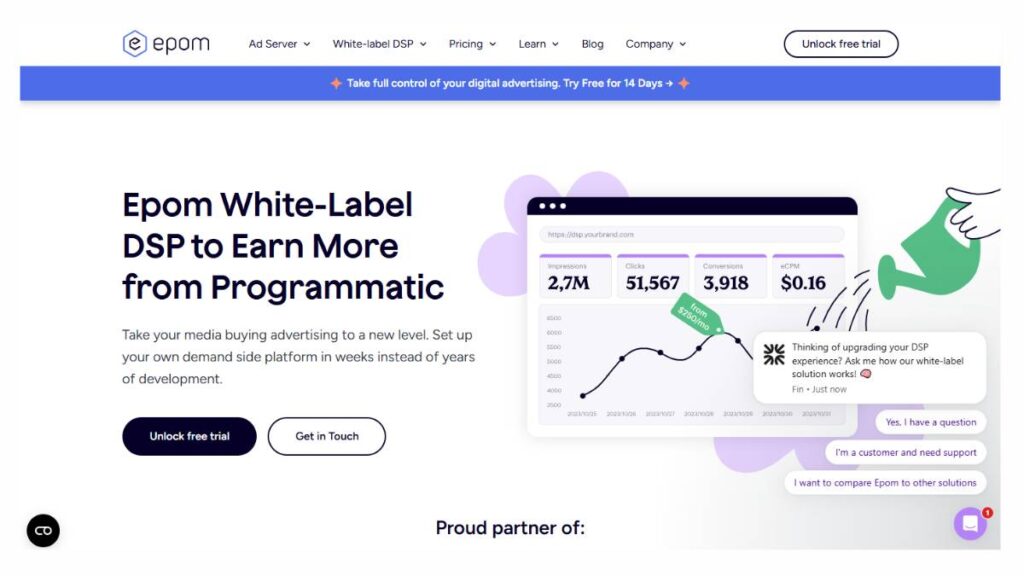
Epom sits in an interesting spot. It’s not trying to compete head-on with the big, closed ecosystems. Instead, it leans into flexibility, especially for agencies or teams that want something closer to a custom setup.
The white-label angle is a big part of that. You’re not just using a platform; you can shape how it looks, how it’s presented, even how it fits into your broader stack. That matters more than it sounds, particularly for agencies managing multiple clients under one roof.
On the buying side, it handles display and video well, with decent access to inventory. The optional DMP layer is useful too, especially if there’s a need to build and segment audiences more precisely instead of relying purely on third-party data.
It’s not the most beginner-friendly Demand Side Platform out there. There’s a bit of setup involved, and it expects some technical comfort. But once it’s configured properly, it gives a level of control that’s hard to get from plug-and-play platforms.
BidMind
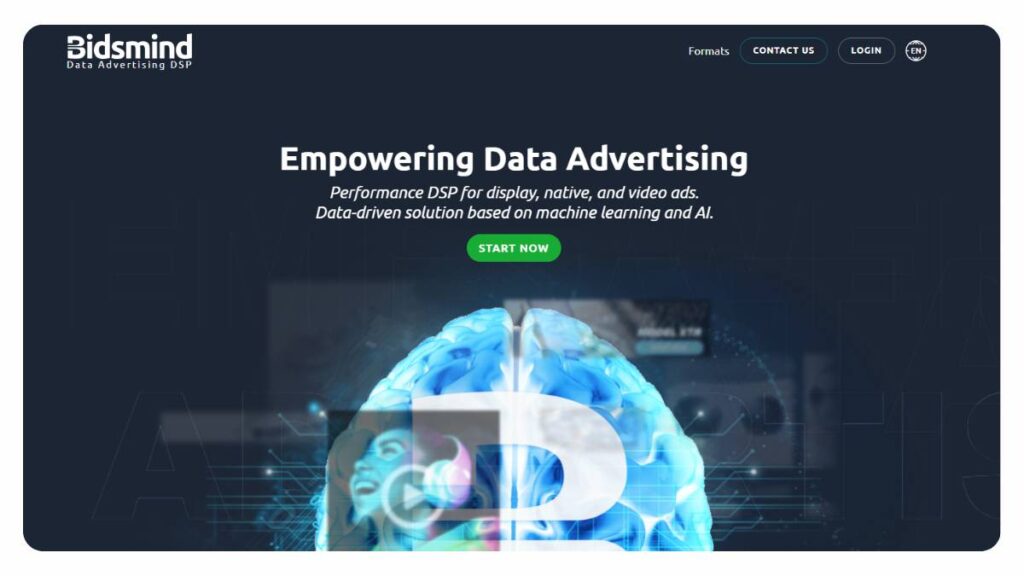
BidMind feels built for people who don’t want to spend weeks just learning the interface. It’s fairly straightforward, and that’s intentional.
The platform leans heavily into CTV and mobile, which is where a lot of performance-driven budgets are shifting anyway. Campaign setup is quick, optimization cycles are fast, and there’s less friction compared to more complex Demand Side Platforms.
What stands out is how quickly campaigns start stabilizing. Not perfect, but faster than expected. That’s useful when testing multiple angles, creatives, audiences, geos, without burning too much budget in the learning phase.
That said, it’s not overloaded with advanced customization. If the goal is deep control over every variable, it might feel limiting. But for teams that care more about execution speed than endless tweaking, it does the job well.
Eskimi Demand Side Platform
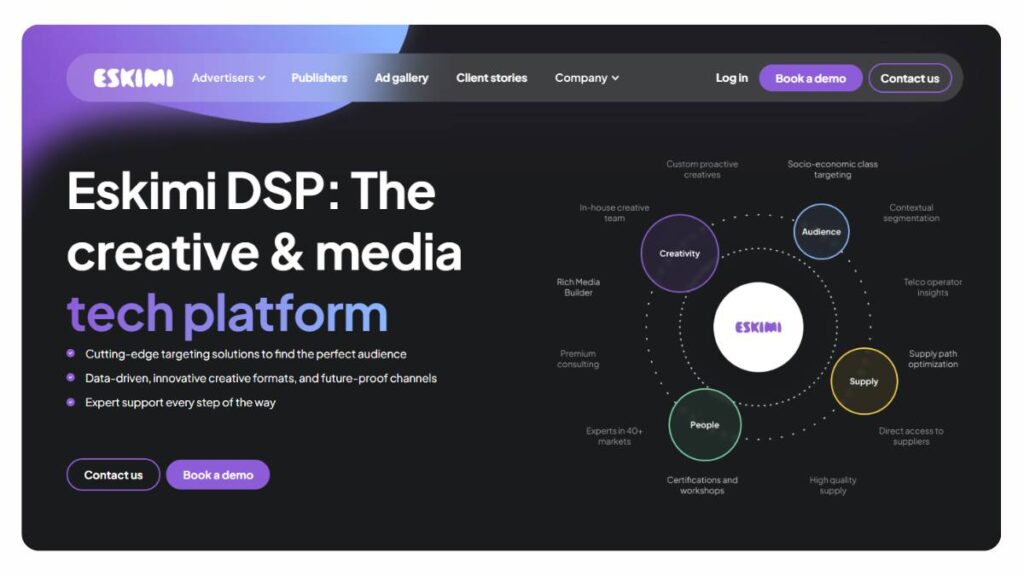
Eskimi is a bit different. It’s not just about buying impressions, it’s about how those impressions actually show up.
The platform puts a lot of emphasis on creative formats. Rich media, interactive ads, mobile-first experiences, that’s where it really leans in. And to be fair, that’s an area where many Demand Side Platforms feel a bit… generic.
Targeting is solid, nothing unusual there. But the way creatives are handled can make a noticeable difference, especially for campaigns where engagement matters more than just clicks.
It tends to work well for brand-heavy campaigns or anything that needs to stand out visually. For pure performance marketing, it’s still usable, just not its strongest angle.
SmartyAds Demand Side Platform
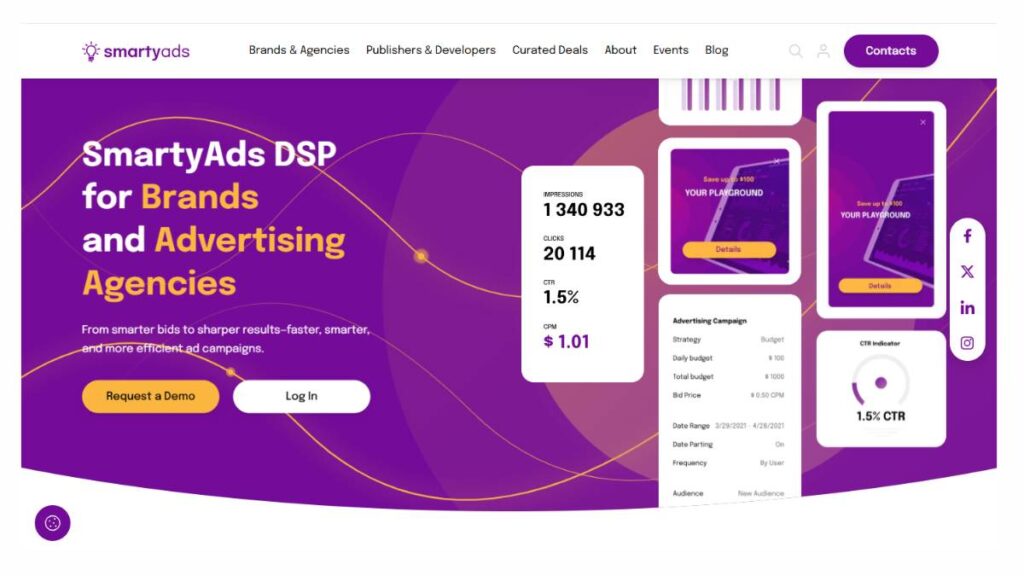
SmartyAds feels like it was built with flexibility in mind, but without going overboard.
It’s developer-friendly, which matters if there’s a need to integrate it into an existing system or tweak how campaigns are structured. APIs are there, customization is possible, and it doesn’t feel locked down.
At the same time, the interface isn’t overwhelming. Most day-to-day tasks, such as setting up campaigns, adjusting bids, and checking performance, are fairly intuitive.
One thing worth noting is that it strikes a balance. Not the most advanced in terms of AI-driven optimization, not the simplest either. Somewhere in the middle.
That middle ground works well for teams that want control, but don’t want to deal with enterprise-level complexity every single day.
Adform Demand Side Platform
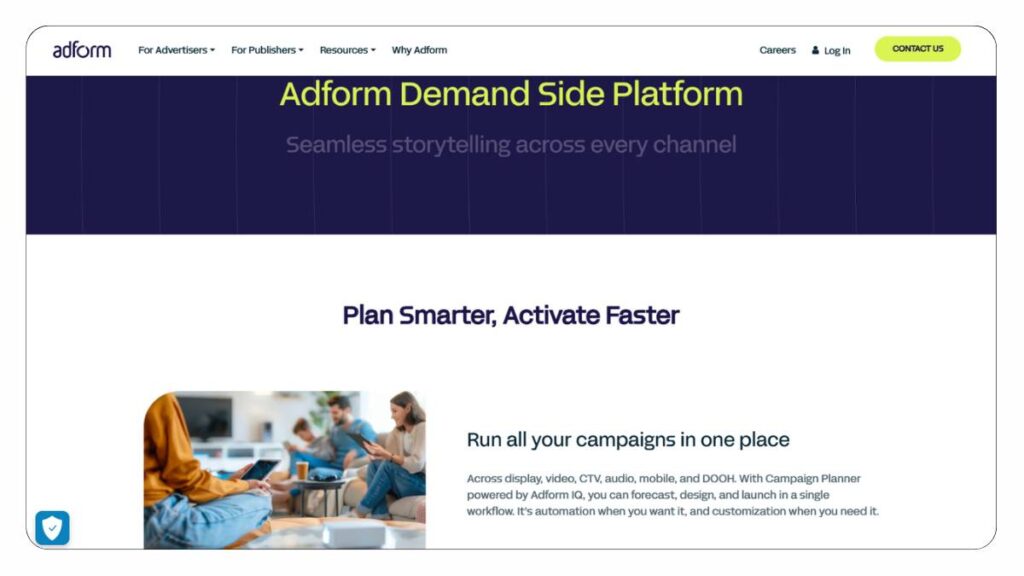
Adform is built for scale. You can feel it pretty quickly.
Large campaigns, multiple markets, complex attribution models, that’s where it performs best. There’s a strong focus on data, especially when it comes to tracking performance across different touchpoints.
The CPA optimization capabilities are solid, and reporting goes deep. Not just surface-level metrics, but detailed breakdowns that actually help in decision-making.
But there’s a trade-off. It’s not the easiest platform to get comfortable with. The interface takes time. The setup takes time. And without a clear strategy, it can feel a bit overwhelming.
For experienced teams, though, that complexity becomes an advantage. More levers to pull, more room to optimize.
Google Display & Video 360 (DV360)

DV360 is everywhere. Or at least, it feels that way.
The biggest advantage here is access, especially to premium inventory and Google-owned channels. YouTube alone makes it a serious contender for video-heavy campaigns.
Integration with the broader Google ecosystem is another plus. Data flows more smoothly, reporting is centralized, and cross-channel campaigns are easier to manage.
But there’s a flip side. It’s a bit of a closed system. Less transparency in certain areas, less flexibility compared to independent Demand Side Platforms. You’re playing within Google’s framework.
Still, for scale and reach, it’s hard to ignore. Especially for large advertisers who already rely heavily on Google’s stack.
RTB House

RTB House is very focused. It knows what it’s good at and sticks to it.
Retargeting is the core strength here. The platform uses deep learning models to personalize ads based on user behavior, and that shows up in performance, particularly for ecommerce.
Dynamic ads, product recommendations, and re-engagement flows, all handled well. It’s designed to pick up where initial interest was shown and push users closer to conversion.
It’s less about finding new audiences and more about converting existing ones. That distinction matters.
For brands with strong traffic but lower conversion rates, it can be a useful addition to the stack.
MediaMath
MediaMath has been around long enough to see multiple shifts in programmatic. That experience shows, especially in how the platform approaches transparency and control.
It’s an independent Demand Side Platform, which means it’s not tied to a single ecosystem. That opens up more inventory sources and gives advertisers more flexibility in how campaigns are structured.
Omnichannel support is strong, including display, mobile, video, and even emerging channels. And the integrations with external data sources are fairly robust.
But it’s not lightweight. The interface can feel dense, and there’s a learning curve. It’s not something you just jump into and figure out in a day.
For teams that want control and are willing to invest time into setup and optimization, it works well. For smaller teams, it might feel like too much.
AdLib Demand Side Platform
AdLib tends to fly under the radar a bit, but it fills an important gap.
It’s aimed at mid-market advertisers, teams that have moved past basic tools but aren’t operating at enterprise scale yet. That positioning makes sense once you start using it.
There’s enough flexibility to customize campaigns, including white-label options, but it doesn’t overwhelm with complexity. Setup is manageable, reporting is clear, and performance is generally stable.
It’s not trying to be everything. And that’s probably why it works for the segment it targets.
A practical choice for growing teams that need more control without jumping into heavyweight platforms.
The Trade Desk
The Trade Desk is often seen as the “serious” Demand Side Platform, the one agencies and large brands gravitate toward when performance really matters.
It offers a high level of control across targeting, bidding, and measurement. CTV is a major strength here, along with data-driven audience segmentation.
The platform also puts a strong emphasis on transparency, which is a big deal in programmatic, where things can get opaque quickly.
But it’s not beginner-friendly. There’s depth everywhere, which is great if you know what you’re doing, not so great if you don’t.
For experienced teams, though, it opens up a lot of possibilities. Fine-tuning campaigns, testing strategies, scaling efficiently, all very doable.
At the end of the day, no Demand Side Platform is perfect. Each one has trade-offs.
The real decision usually comes down to this: how much control is needed, how fast campaigns need to move, and how complex the setup is willing to get.
Everything else, features, dashboards, and positioning tend to matter a bit less once campaigns go live.

CheckOut: Online Performance Marketing Training
Types of Programmatic Media Buying
Real-time bidding (RTB)
Programmatic buying gets lumped into one bucket, but in practice, it’s a mix of different approaches. Some are wide open, some are tightly controlled, and most teams end up using a combination without even thinking about it that way.
The most common starting point is real-time bidding. That’s the open auction environment; anyone connected to the exchange can bid on an impression. It’s fast, flexible, and gives access to a huge amount of inventory. Also, a lot of budgets quietly disappear if targeting isn’t sharp. Open auctions don’t filter much on their own.
Programmatic direct
Then there’s programmatic direct. This is closer to traditional buying, just without the manual execution. The deal is agreed upfront, pricing, placements, volume, and then the Demand Side Platform handles delivery. It’s cleaner. More predictable. Usually shows up in campaigns where brand safety matters or where specific placements are non-negotiable.
Private marketplace (PMP)
Private marketplaces sit somewhere in between. Publishers open up select inventory to a limited group of advertisers. Not fully public, not fully locked down either. CPMs tend to be higher, but so is the quality of placements. Less noise, fewer random impressions slipping through.
Preferred deals
Preferred deals take it one step further. No auction, at least not in the usual sense. Advertisers get the first look at the inventory at a fixed price. They can decide impression by impression whether to take it or leave it. If they pass, it goes to the open market. It’s selective, and it works well when certain audiences or placements are consistently valuable.
Automated guaranteed buying
And then there’s automated guaranteed. Pretty much what it sounds like. Inventory is reserved ahead of time, pricing is fixed, and delivery is guaranteed. No bidding wars. No surprises. It feels old-school, but there’s a reason it still exists; some campaigns need that level of certainty.
Most setups don’t rely on just one of these. Open auctions for scale, PMPs for quality, direct deals for control. Mix depends on goals, budget, and how much risk is acceptable.
Programmatic Advertising Auctions Explained
First-price vs second-price auctions
Auctions are where a lot of the real decision-making happens, but they’re not as straightforward as they sound. It’s not just “highest bid wins” and move on. There’s a bit more going on under the surface.
Two main types show up in programmatic, first-price and second-price auctions.
In a first-price auction, the highest bidder wins and pays exactly what they bid. No adjustments. If ₹120 is bid, ₹120 is paid. Simple, but it forces discipline. Overbidding gets expensive fast.
Second-price auctions work differently. The highest bidder still wins, but pays just above the second-highest bid. So if one bid comes in at ₹120 and the next is ₹90, the winner might pay ₹91 or so. That setup used to encourage more honest bidding, since there was less fear of overpaying.
Over time, most exchanges have shifted toward first-price models. More transparent, fewer hidden mechanics. But also less forgiving if bidding strategies aren’t dialed in.
How bidding strategies affect costs
Then there are floor prices. Publishers set minimums for what they’re willing to accept for an impression. If bids don’t meet that threshold, the impression doesn’t sell. Straightforward, but it changes how campaigns compete for inventory.
This is where things get a bit messy.
If floor prices are high, bids need to rise just to stay in the game. Push too hard, and costs climb. Stay too conservative, and delivery drops. There’s no perfect setting; it’s a constant adjustment.
Floor prices and bid shading
That’s why most Demand Side Platforms use bid shading. It’s basically a way to estimate the lowest winning bid instead of blindly bidding high every time. Doesn’t always hit perfectly, but it helps avoid overpaying on every impression.
So auctions aren’t just about bidding more. They’re about reading the environment, pricing, competition, inventory quality, and adjusting accordingly. Small tweaks here can make a noticeable difference over time.
Types of Programmatic Ad Targeting in Demand Side Platforms
Behavioral targeting
Targeting is where campaigns either come together… or fall apart. The platform can be great, inventory can be solid, but if targeting is off, performance usually follows.
There are a few main ways Demand Side Platforms approach targeting, and each one behaves a bit differently.
Behavioral targeting is the obvious one. It looks at what users have done before, sites visited, content consumed, patterns over time, and uses that to predict what they might do next. Works well when the signals are strong. Less so when data gets patchy, which is happening more often lately.
Contextual targeting
Contextual targeting takes a step back from the user and looks at the page instead. What’s the content about? What’s the intent behind it? An ad for hiking gear on an outdoor blog, for example. No need to track the user directly. It’s simpler, but it’s making a comeback for a reason.
Geo-targeting
Geo-targeting is more straightforward. It limits ads to specific locations, countries, cities, and sometimes smaller areas. Useful for local campaigns, obviously, but also for filtering out irrelevant traffic in broader campaigns.
Device targeting
Device targeting comes into play more than expected. People behave differently on mobile versus desktop versus connected TV. Shorter sessions, different intent, different engagement patterns. Treating all devices the same usually leads to missed signals.
Retargeting/remarketing
Retargeting is where things get more focused. These are users who have already interacted with a brand in some way. Visited the site, browsed products, and maybe dropped off before converting. Warmer audience. Higher intent. Usually, a lot of conversions come from.
Lookalike audience targeting
Lookalike targeting builds on that. Instead of just going after known users, it tries to find others who behave similarly. It’s not exact, but it helps expand reach without starting from zero. Quality depends heavily on the source data, though.
First-party vs third-party data targeting
Data type matters too.
First-party data, collected directly from users, has become more valuable. It’s cleaner, more reliable, and less affected by privacy changes. CRM data, site visitors, app users… that kind of thing.
Third-party data still exists, but it’s not as dependable as it used to be. Coverage is uneven, accuracy varies, and regulations are tightening. It’s still useful in some cases, just not something to lean on too heavily.
AI-powered predictive targeting
Then there’s predictive targeting. This is where the Demand Side Platform tries to identify users who might convert, even if they haven’t shown obvious intent yet. It’s less transparent, a bit harder to validate, but it can work well at scale when enough data is available.
In reality, strong campaigns don’t rely on just one targeting method. They layer them. Behavioral signals, contextual relevance, and first-party data all work together, with the Demand Side Platform adjusting as performance data comes in.
Because targeting isn’t about reaching more people. It’s about avoiding the wrong ones.
Types of Demand Side Platform Service Models
Not all Demand Side Platforms are meant to be used the same way. Some expect you to run everything yourself. Others barely let you touch the controls. And then there are a few that sit somewhere in between, which is usually where things get interesting.
Self-serve Demand Side Platform platforms
Self-serve Demand Side Platforms are exactly what they sound like: you log in, set up campaigns, manage budgets, tweak targeting, and handle optimization on your own.
This model works well for teams that want control. You can test quickly, adjust bids in real time, pause things when needed, and generally stay close to the campaign. There’s no waiting for someone else to make changes.
But it comes with responsibility. If targeting is off, if bids are too aggressive, if creatives don’t land, there’s no buffer. The platform won’t fix strategy mistakes. It just executes what it’s told.
Self-serve tends to suit performance-focused teams, especially those comfortable with data and willing to get hands-on.
Full-service Demand Side Platform platforms
Full-service Demand Side Platforms take a different approach. Here, the platform provider, or their team, manages campaigns on your behalf.
That includes setup, optimization, reporting, and sometimes even creative guidance. It’s more like working with a managed partner than operating a tool.
This can be useful if internal resources are limited or if programmatic isn’t a core strength yet. Campaigns get handled by people who (ideally) know the platform inside out.
The trade-off is control. Changes take longer. Visibility can feel limited. And sometimes, priorities don’t fully align, especially if the same team is managing multiple clients.
Still, for brands that don’t want to build in-house expertise right away, it’s a practical option.
Hybrid Demand Side Platform models
Hybrid models try to combine both approaches. Part of the campaign might be managed internally, while certain aspects, like optimization or scaling, are supported externally.
This setup works well when teams want control but also need backup. For example, running day-to-day campaigns in-house but relying on external support for larger pushes or more complex setups.
It’s flexible, but it requires clarity. Without clear boundaries, it can get messy, with overlapping responsibilities, slow decisions, or duplicated work.
When it’s structured properly, though, it gives a good balance between control and support.
White-label Demand Side Platform solutions
White-label Demand Side Platforms are a different category altogether. These are platforms that can be rebranded and used as part of your own offering.
They’re mostly used by agencies or ad tech companies that want to build their own programmatic solution without starting from scratch.
Control is the main advantage here. Everything from the interface to features can be tailored. But it also means more responsibility, setup, maintenance, integrations, all of it.
Not something most brands need. But for agencies looking to scale or differentiate, it’s worth considering.
Benefits of Using a Demand Side Platform
The value of a Demand Side Platform doesn’t show up all at once. It builds over time , as campaigns run, data accumulates, and decisions get sharper. At first, it can feel like just another tool. Then the efficiency starts to kick in.
Automated media buying at scale
Manual media buying just doesn’t keep up anymore. Too many impressions, too many variables, too many decisions happening too fast.
Demand Side Platforms handle that scale without slowing down. Thousands of impressions are evaluated every second, bids are adjusted constantly, and campaigns are running across multiple channels at once.
Not perfect, but far more efficient than trying to do this manually.
Improved ad spend efficiency (reduce waste)
A big chunk of digital ad spend usually gets wasted. Wrong audience, wrong timing, wrong placement.
Demand Side Platforms help cut that down. Don’t eliminate it completely, that’s unrealistic, but reduce it.
By filtering impressions, adjusting bids, and learning from performance data, they gradually push spend toward what actually works.
It’s not instant. But over time, the difference shows.
Advanced audience targeting
Targeting is where Demand Side Platforms go beyond basic ad platforms.
Instead of broad segments, you get layered targeting, behavior, context, location, device, and past interactions. Combine that with first-party data, and it gets even more precise.
The result isn’t just reaching more people. It’s reaching fewer, but more relevant ones.
Cross-channel advertising (display, video, CTV, mobile)
Users don’t stick to one channel. They move between devices, platforms, formats, often within the same day.
Demand Side Platforms make it easier to follow that movement. One campaign can run across display, video, mobile, and even connected TV.
It’s not perfectly unified, but it’s closer than managing each channel separately.
Real-time campaign optimization
This is where Demand Side Platforms quietly outperform traditional buying.
Campaigns aren’t fixed once they go live. They adjust. Constantly.
- Bids shift based on performance
- Budgets move toward better-performing segments
- Underperforming placements get phased out
It’s not dramatic in the moment. Small changes, repeated often. But over time, those adjustments add up.
Access to premium ad inventory
Through private marketplaces and direct deals, Demand Side Platforms open up inventory that isn’t always available in open exchanges.
Higher-quality placements, better visibility, safer environments.
Costs are higher, yes. But for certain campaigns, especially brand-driven ones, it’s worth it.
Centralized campaign management dashboard
Instead of juggling multiple platforms, Demand Side Platforms bring everything into one place.
Campaign setup, targeting, reporting, and optimization are all handled through a single interface.
It doesn’t remove complexity entirely, but it makes it manageable. And that alone saves time.
How to Choose the Right Demand Side Platform
Choosing a Demand Side Platform isn’t just about features. Most platforms check similar boxes at a high level. The real difference shows up once campaigns start running.
Budget and pricing models (CPM, CPA, CPC)
Budget sets the tone early.
Some Demand Side Platforms work better with large budgets. Others are more flexible. Pricing models matter too, CPM, CPA, CPC; each one changes how performance is measured and optimized.
If the pricing structure doesn’t align with campaign goals, things get inefficient quickly.
Ad inventory quality and reach
Not all inventory is equal. Some platforms offer a broad reach but mixed quality. Others focus on premium placements with limited scale.
The right balance depends on the campaign.
Awareness campaigns might prioritize reach. Performance campaigns usually care more about quality and relevance.
Targeting capabilities
This is where platforms start to separate.
Basic targeting is everywhere. The difference lies in how deep it goes, data integrations, audience modeling, retargeting options, and lookalike accuracy.
Stronger targeting usually leads to better efficiency. But it also requires cleaner data to work properly.
Integrations (DMP, CDP, CRM)
A Demand Side Platform rarely works in isolation.
It needs to connect with other systems, DMPs, CDPs, and CRM tools to make full use of available data.
Without these integrations, targeting becomes limited. Campaigns rely more on generic data instead of something tailored.
Reporting and analytics features
Reporting isn’t just about numbers. It’s about clarity.
Some Demand Side Platforms provide detailed breakdowns that actually help with decisions. Others offer surface-level metrics that look fine but don’t explain much.
Good reporting answers questions. Why did performance drop? Which segments are driving conversions? Where is spend being wasted?
If those answers aren’t clear, optimization slows down.
Ease of use (self-serve vs managed)
Some platforms are intuitive. Others take time.
If the interface slows things down, it becomes a problem, especially when quick adjustments are needed.
The choice between self-serve and managed also plays into this. More control usually means more complexity.
Transparency and brand safety
Programmatic isn’t always transparent. That’s been an issue for years.
Knowing where ads are being placed, how bids are calculated, and what fees are involved all matter.
Brand safety is part of this, too. Ads showing up in the wrong environment can do more harm than good.
Support for omnichannel campaigns
Most campaigns don’t stay in one channel anymore.
A good Demand Side Platform should handle multiple formats, display, video, mobile, and CTV, without forcing everything into separate silos.
It doesn’t have to be perfect across all channels, but the transition should feel smooth.
Choosing a Demand Side Platform is less about picking the “best” one and more about finding the right fit.
Different teams, different goals, different constraints. The platform that works well for one setup might feel limiting in another.
And that’s normal.
Demand Side Platform Advertising Use Cases Across Industries
Different industries don’t use Demand Side Platforms in the same way. Same platform, completely different intent. What works for ecommerce would feel off in fintech, and vice versa. The mechanics stay the same, targeting, bidding, optimization, but how they’re applied changes quite a bit.
Ecommerce (dynamic retargeting, product ads)
Ecommerce leans heavily on intent. Someone browses a product, maybe adds it to the cart, then leaves. That gap, between interest and purchase, is where Demand Side Platforms do most of the work.
Dynamic retargeting plays a big role here. Showing the exact product someone viewed, sometimes with slight variations, price drops, offers, bundles, keeps the message relevant without overcomplicating it.
There’s also prospecting. Finding new users who behave like existing buyers. Not always perfect, but when it clicks, it scales well.
The tricky part is frequency. Push too hard, and ads start feeling repetitive. Pull back too much, and potential conversions slip away. Finding that balance usually takes a few iterations.
Fintech (customer acquisition, compliance-safe targeting)
Fintech is a different game. Performance matters, but so does compliance. Messaging, targeting, even placement, everything needs to stay within certain boundaries.
Demand Side Platforms help by narrowing down audiences based on intent signals. Users researching loans, credit cards, investments, those kinds of behaviors.
But targeting has to stay clean. No overly aggressive assumptions, no risky placements. That’s where private marketplaces and curated inventory tend to come in.
Conversion cycles are longer, too. People don’t sign up for financial products on impulse. So campaigns focus more on nurturing, staying visible without being intrusive.
iGaming (geo-targeting, high-intent audiences)
iGaming is heavily dependent on location. Regulations vary by region, sometimes even by city. So geo-targeting isn’t just useful, it’s critical.
Demand Side Platforms allow campaigns to be tightly restricted to allowed regions, while excluding everything else. That alone reduces a lot of wasted spend.
Beyond that, it’s about identifying high-intent users. People are already engaging with similar platforms or showing relevant behavior patterns.
Competition is intense, though. CPMs can climb quickly. So efficiency matters more than scale in many cases.
Nonprofits (awareness campaigns, donor targeting)
Nonprofits approach Demand Side Platforms differently. It’s less about immediate conversion, more about awareness and engagement.
Campaigns often focus on storytelling, getting in front of the right audience, in the right context, without overwhelming them.
Targeting tends to rely on interest-based signals and contextual alignment. For example, running campaigns alongside content related to social issues, community work, or global causes.
Donor targeting comes in later. Retargeting users who have already interacted with campaigns, visited donation pages, or engaged with content.
Budgets are usually tighter, so efficiency matters. Every impression needs to count.
Hospitality (travel intent targeting, seasonal campaigns)
Hospitality runs on timing.
Travel intent signals, searches, content consumption, and browsing patterns help identify users who are planning trips. That window can be short, so campaigns need to react quickly.
Demand Side Platforms make it easier to capture that intent across channels. Someone researching destinations today might see ads for hotels, flights, or packages within hours.
Seasonality plays a big role, too. Campaigns ramp up around holidays, peak travel periods, or regional events.
There’s also retargeting, reminding users about destinations they’ve explored, nudging them back before they book elsewhere.
Demand Side Platform vs DMP vs CDP: What’s the Difference?
These three get mixed up all the time. Understandably so. They all deal with data, audiences, and targeting , just in different ways.
Demand Side Platform vs DMP vs CDP explained
A Demand Side Platform is where media buying happens. It’s the execution layer , bidding on impressions, running campaigns, optimizing performance.
A DMP, on the other hand, is more about data collection and segmentation. It gathers audience data (mostly anonymous), organizes it into segments, and makes it usable for targeting.
Then there’s the CDP. This one focuses on first-party data , real users, not anonymous profiles. It builds persistent customer records based on interactions across different touchpoints.
So in simple terms:
- Demand Side Platform = buying ads
- DMP = organizing audience data
- CDP = managing customer data
They’re connected, but not interchangeable.
When to use each platform
Demand Side Platforms are used when campaigns need to run , straightforward.
DMPs come into play when there’s a need to structure and activate audience data at scale, especially when working with third-party data or large datasets.
CDPs are more relevant when first-party data becomes the focus. CRM data, website interactions, app usage , all tied back to actual users.
Most setups don’t use all three equally. Some skip DMPs entirely and rely more on CDPs. Others still use DMPs for specific use cases.
Depends on the data strategy, really.
Why modern stacks are shifting toward CDPs
There’s been a noticeable shift toward CDPs in recent years.
Part of it is privacy. Third-party data isn’t as reliable as it used to be. Regulations, browser changes , all of that has reduced its effectiveness.
First-party data, on the other hand, is more stable. It’s collected directly, with consent, and tends to be more accurate.
CDPs help make sense of that data. They unify it, keep it updated, and make it usable across channels , including Demand Side Platforms.
It’s not a complete replacement for DMPs in every case, but the direction is clear. More control, more ownership over data.
Common Challenges with Demand Side Platforms
Demand Side Platforms solve a lot of problems, but they come with their own set of challenges. Some are technical. Others are more strategic. Most show up once campaigns are already running.
Ad fraud and invalid traffic
Not every impression is real. Bots, low-quality placements, fraudulent traffic , it’s all part of the ecosystem.
Demand Side Platforms have filters and detection systems, but they’re not perfect. Some level of invalid traffic still slips through.
That’s why monitoring matters. Looking beyond surface metrics, checking where impressions are coming from, and cutting off sources that don’t add value.
Data privacy and cookie deprecation
Data is getting harder to access.
Third-party cookies are fading out. Privacy regulations are tightening. Tracking is becoming less reliable.
This affects targeting, measurement, attribution , pretty much everything.
Demand Side Platforms are adapting, but it’s not a smooth transition. Strategies that worked a few years ago don’t always hold up now.
Learning curve for beginners
Demand Side Platforms aren’t plug-and-play tools.
There’s a learning curve , understanding bidding, targeting, optimization, reporting. It takes time to get comfortable.
And mistakes can be expensive. Wrong settings, poor targeting, inefficient bids , budgets can disappear quickly.
That’s why smaller teams sometimes struggle early on.
Transparency issues in programmatic ads
Programmatic has had transparency issues for a while.
Not always clear where ads are being placed, how fees are structured, or how bids are calculated.
Some Demand Side Platforms are better than others here. More visibility, clearer reporting. But it’s still something to watch closely.
Because without transparency, optimization becomes guesswork.
Conclusion:
When you should use a Demand Side Platform
A Demand Side Platform makes sense when scale, precision, and speed start to matter.
If campaigns are limited to a few platforms, manual buying might still work. But once things expand , multiple channels, larger audiences, more complex targeting , it gets harder to manage without automation.
That’s where Demand Side Platforms fit in. Not as a replacement for strategy, but as a way to execute it more efficiently.
Who benefits the most (agencies, brands, startups)
Agencies benefit because they manage multiple campaigns across clients. A Demand Side Platform helps keep everything centralized.
Brands benefit when they want more control over targeting and spend, especially at scale.
Startups… it depends. Early-stage teams might not need a Demand Side Platform right away. But once growth becomes a priority, it starts to make more sense.
Final takeaway on programmatic advertising
Demand Side Platforms aren’t magic. They don’t fix weak strategy or poor messaging.
But when used properly, they make a noticeable difference.
Better targeting. Smarter spending. Faster optimization.
And over time, that adds up.
FAQs: Demand Side Platforms
Which is the best Demand Side Platform for mobile advertising?
There’s no clean winner here. Mobile success usually comes down to execution, not the logo on the dashboard. Some platforms do lean heavily into app inventory or mobile signals; that’s true. But if creatives aren’t built for small screens or targeting is off, performance drops fast. The setup carries more weight than the platform.
How do I evaluate Demand Side Platform inventory quality quickly?
A quick scan tells a lot. Look at actual placements, domains, and apps where ads are landing. If something feels low-effort or irrelevant, it probably is. Deep impressions with weak engagement are another giveaway. Private deals tend to feel cleaner. Open exchange can still work; it just needs a closer eye.
Is a DMP still useful with first-party data?
Still around, just not the center of gravity anymore. DMPs help when there’s a mix of data sources, especially third-party. But when most of the strategy leans on owned data, CDPs start to take over quietly. It’s less of a switch and more of a slow shift happening across stacks.
What are retail media networks vs Demand Side Platforms?
Retail media networks sit inside walled gardens. Ads run where the purchase is already happening, which changes the game a bit. Demand Side Platforms operate outside that, across sites, apps, and exchanges. More reach, more flexibility, but also more noise. Different environments, different expectations.
How does a Demand Side Platform improve campaign performance?
It’s rarely dramatic. Small changes, over and over, bids adjust, budgets move, audiences get trimmed or expanded. Over time, things tighten up. Waste drops. Good segments get more attention. Without that loop, campaigns just sit there, doing the same thing, hoping for better results.
What is the cost of using a Demand Side Platform?
Costs don’t always show up neatly. Some platforms take a cut of spend, others bundle fees into CPMs. Then there’s data, integrations, maybe service layers on top. The bigger issue isn’t the fee itself; it’s whether the money is actually working. Inefficient spending costs more than platform fees.
What is a demand-side platform in simple terms?
At a basic level, it’s a system that buys ads automatically. Instead of manual deals, it uses data to decide which impressions matter. It’s less about buying space and more about picking moments, when the right user shows up, at the right time. That’s where the value sits.
How does a Demand Side Platform make money?
Mostly through fees tied to spending. Could be a percentage, sometimes baked into pricing, sometimes separate. A few layers get added depending on features or data usage. It’s not always crystal clear, which is why digging into pricing early saves headaches later.
What is the difference between a Demand Side Platform and an ad exchange?
The Demand Side Platform makes decisions, whether to bid, how much, and which audience matters. The ad exchange just runs the marketplace. It connects buyers and sellers, processes bids, and closes the auction. One thinks, the other facilitates. Both needed, but very different roles.
Are demand-side platforms only for large businesses?
Not strictly, but they do lean that way. Bigger budgets and more data make Demand Side Platforms easier to work with. Smaller teams can still use them, especially self-serve options, but things get tricky without enough volume. It’s less about company size, more about how ready the setup is.
What types of ads can you run using a Demand Side Platform?
Quite a spread. Display, video, native, mobile, and even connected TV. Most campaigns end up mixing formats anyway. It usually comes down to where attention sits, which decides what gets used, not just what’s available.
What is real-time bidding (RTB) in Demand Side Platform advertising?
RTB is just fast decision-making at scale. A page loads, an impression becomes available, and multiple advertisers bid in a fraction of a second. Highest relevant bid wins. From the outside, nothing looks different. Behind the scenes, it’s constant micro-auctions happening nonstop.
Can small businesses use self-serve Demand Side Platform platforms?
They can, but it’s not plug-and-play. Self-serve means full control, which sounds great… until optimization comes into play. Without some experience, spending can disappear quickly. A lot of smaller teams test slowly or pair Demand Side Platforms with simpler channels first.
What is the minimum budget required for a Demand Side Platform?
No fixed threshold, but tiny budgets struggle. Demand Side Platforms learn from data, and that needs volume. If spend is too low, the system doesn’t get enough signals to adjust properly. It’s less about hitting a number and more about having room to test, fail a bit, and refine.
How do Demand Side Platforms use first-party data?
They plug into it, CRM, site data, app behavior, and build segments from there. Since it’s owned data, it’s usually cleaner and more reliable. That makes targeting sharper. Especially now, when third-party signals aren’t as dependable as they used to be.
What is frequency capping in Demand Side Platform advertising?
It’s just a limit on repetition. Without it, the same user might see an ad too many times, which usually backfires. Set it too tight, and the reach suffers. Too loose, and fatigue kicks in. Small setting, but it changes how a campaign feels to the audience.
How do Demand Side Platforms prevent ad fraud?
There’s a mix of filters, third-party verification, and pattern checks running in the background. Bots and suspicious traffic get flagged or blocked. Still, it’s not perfect. Some level of noise always exists, which is why ongoing monitoring matters more than one-time fixes.
What is a private marketplace (PMP) in Demand Side Platforms?
A PMP is a more controlled setup. Limited buyers, selected inventory, usually from known publishers. It costs more, but quality tends to hold up better. Fewer surprises. For campaigns where brand safety or consistency matters, that trade-off often feels worth it.
How long does it take to see results from Demand Side Platform campaigns?
Not instant. Early days can feel uneven while data builds up. After a few days, patterns start showing. Real improvements usually take longer, a couple of weeks, sometimes more. It’s a gradual curve, not a quick spike.
Can Demand Side Platforms integrate with Google Analytics or CRM tools?
Most of them do. Integrations pull in first-party data and make tracking more reliable. Setup can take a bit of effort, though, and not always be smooth. Once it’s in place, reporting becomes clearer, and targeting decisions get a lot more grounded.
What skills are needed to use a demand-side platform effectively?
It’s a mix. Part analytical, part practical. Understanding how targeting works, how bids influence outcomes, and how to read performance without overreacting is the core. Tools change. The thinking behind decisions matters more, and that takes some time to build.