
Brand consistency sounds easy until multiple teams, agencies, regional offices, and marketing channels start working at the same time. That’s usually where things begin slipping. Old logos get reused, messaging changes slightly across campaigns, and suddenly the brand starts feeling fragmented without anyone noticing immediately. This blog breaks down how a Brand Management Platform helps businesses bring structure back into marketing operations. It covers the core features, practical benefits, implementation challenges, industry use cases, and the top platforms shaping the space. There’s also a closer look at AI, governance, workflow efficiency, and why centralized brand control matters much more now than it did a few years ago.
Table of Contents
What Is a Brand Management Platform?
A brand management platform is what keeps a brand from slowly turning into a mess as it grows. Not overnight, but gradually. One team updates a logo here, another tweaks a color there, agencies interpret guidelines differently, and suddenly the brand starts feeling… slightly off.
That’s usually the moment companies realize something central is missing.
At its core, a brand management platform is a structured system where all brand assets, rules, and content live together. Not scattered across drives, email threads, or random design tools. Everything sits in one place, controlled, organized, and ready to use.
Brand management platform meaning in digital marketing
In digital marketing terms, it’s less about “software” and more about control of identity across chaos.
Campaigns move fast. Social content moves faster. And multiple teams are constantly creating variations of the same message. Without a central system, brand consistency becomes more of a hope than a process.
A brand management platform quietly solves that by keeping assets, templates, and messaging aligned. Not in a rigid way, but in a way that reduces confusion. People don’t have to guess what’s correct anymore. That alone changes a lot.
How a brand management platform works for modern businesses
Most platforms function like a controlled hub. Upload assets once, and they become accessible across teams. Logos, campaign creatives, product images, brand guidelines… all structured and searchable.
But the real shift is behavioral. Teams stop asking “where is this file?” or “is this the latest version?” Those small questions disappear over time, and work just flows a bit smoother.
There’s also version control, permissions, and approval flows. Nothing dramatic on the surface, but underneath it prevents a lot of brand drift.
Difference between brand management platform vs brand management software
This gets mixed up often.
Brand management software usually focuses on one function, like storing assets or hosting guidelines. A platform goes wider. It connects those functions into a system.
So instead of just storing content, it manages how content is created, approved, shared, and reused. That difference becomes more obvious as teams scale.
Role of brand management platforms in brand consistency and governance
Consistency sounds easy until multiple teams, regions, and agencies enter the picture.
At that point, things naturally fragment. One campaign looks slightly different from another. Tone shifts a bit. Visual spacing changes. None of it is intentional, but it happens anyway.
A brand management platform acts like a quiet backbone. It doesn’t force creativity, but it sets boundaries. And those boundaries actually help creativity stay aligned instead of drifting off course.
Governance here is less about restriction and more about avoiding brand confusion at scale.
Why Brand Management Platforms Matter
Branding today is happening everywhere at once. Search results, social feeds, AI summaries, marketplaces, apps… even places that didn’t exist a few years ago.
And that’s exactly why brand control has become harder, not easier.
Rise of AI-generated content and brand consistency challenges
AI content creation has made things faster, no doubt. But speed comes with a side effect. Volume increases, variations multiply, and suddenly there’s more content than anyone can realistically monitor.
And that’s where small inconsistencies creep in. A slightly different tone here, an off-brand phrase there. Nothing obvious at first. But over time, it adds up.
A brand management platform helps anchor everything back to approved messaging and assets. Think of it as a stabilizing layer when content production gets too fast to manually oversee.
Importance of centralized brand control in global marketing teams
Global teams don’t think in one straight line. Different markets behave differently, respond differently, and even prefer different tones.
Without central control, each region slowly builds its own version of the brand. Sometimes that works. Most times, it creates fragmentation.
A centralized system doesn’t remove flexibility, but it keeps the core identity intact. So whether a campaign runs in one country or ten, the brand still feels like the same entity.
How Google SGE and AI Overviews reward structured brand authority
Search has started behaving differently. It doesn’t just show links anymore, it summarizes, interprets, and stitches information together.
In that environment, structured and consistent brand information matters more than ever. When messaging is scattered across the web, even AI systems struggle to form a clear narrative about the brand.
A strong internal brand system indirectly supports external clarity. It ensures that wherever brand content appears, it carries the same structure and meaning.
Shift from manual branding to automated brand governance systems
Manual branding workflows used to be normal. Email approvals, file sharing, version confusion… it was just part of the process.
But it doesn’t scale well. Especially when content demand keeps increasing.
Modern brand management platforms shift that workload into automation. Approvals move automatically, assets update centrally, compliance checks run in the background. Not flashy, but extremely practical.
The result is simple: less chasing files, more actual marketing work getting done.
Key Features of a Modern Brand Management Platform
Most modern platforms look similar on the surface, but the difference is in how deeply they integrate into daily marketing operations.
It’s not just storage anymore. It’s structure, speed, and control working together quietly in the background.
Digital asset management (DAM) for brand content centralization
At the center of almost every platform sits digital asset management.
This is where all brand content lives. Logos, product images, videos, campaign designs. Everything in one place.
But the real value shows up in retrieval. Instead of digging through folders or Slack messages, teams just search and find what they need in seconds. That small time saving compounds more than expected.
Brand guidelines and brand portal management tools
Brand guidelines used to be static PDFs that nobody opened after the first week.
Now they’re living systems. Interactive, updated, and directly connected to assets.
So when someone is designing or creating content, they’re not guessing. They’re referencing rules that are actually embedded in the workflow, not sitting somewhere forgotten.
AI-powered search, tagging, and smart asset discovery
Searching for the right asset used to be a pain point in almost every marketing team.
AI has changed that a bit. Assets are tagged automatically, categorized based on content, and surfaced based on intent rather than filenames.
It sounds small, but it removes a lot of friction from day-to-day work. People stop remembering file names and start thinking in terms of outcomes.
Workflow automation for marketing and creative teams
Approvals are usually where things slow down.
Someone forgets to reply, feedback gets lost, or a version sits waiting for days without progress.
Workflow automation smooths this out. Tasks move through predefined stages, notifications happen automatically, and visibility improves without constant follow-ups.
Template-based content creation with brand locking rules
Templates are becoming a quiet backbone for scaling content.
They allow teams to create quickly without breaking brand rules. Certain elements stay locked, while others remain flexible for customization.
So content stays consistent, but not rigid. That balance matters more than it sounds.
Integration with CRM, CMS, and marketing automation tools
A brand doesn’t live in isolation. It connects to campaigns, customer journeys, and content distribution systems.
When integrations are strong, updates flow across systems automatically. No duplicate uploads, no version mismatches.
It just keeps everything aligned without manual effort.
Analytics, brand performance tracking, and usage insights
Some platforms now show how assets are actually being used. Which creatives are downloaded more, which ones are ignored, which formats perform better.
Not in a heavy analytics sense, but enough to spot patterns over time. And those patterns often influence better creative decisions without forcing them.
Benefits of Using a Brand Management Platform for Businesses
The impact of a brand management platform usually doesn’t show up as a single big change. It shows up in small improvements across workflows, communication, and output quality.
And those small improvements add up quietly.
Improved brand consistency across all marketing channels
This is where most companies feel the difference first.
Once everything flows through a centralized system, inconsistencies start fading. Ads look aligned. Social posts feel connected. Even internal materials start matching the same tone.
It’s not about perfection, but about reducing randomness.
Faster campaign execution and reduced production delays
Campaigns often get delayed for reasons that are honestly avoidable. Missing files, unclear approvals, outdated assets.
With a structured system in place, most of that friction disappears. Teams spend less time searching and more time producing.
Better collaboration between creative, marketing, and sales teams
One of the less talked about benefits is how it improves internal alignment.
Creative teams know what marketers actually need. Sales teams can access updated materials without waiting. Marketing doesn’t have to repeatedly explain brand rules.
Things just feel more connected.
Stronger compliance for regulated industries
In regulated industries, brand communication isn’t just about consistency. It’s about control.
Having a centralized approval system ensures only compliant content goes out. That reduces risk and avoids last-minute corrections that can be costly.
Reduced asset duplication and operational cost savings
Without structure, teams often recreate assets that already exist somewhere in the system.
It doesn’t happen intentionally, but it happens often. A centralized platform reduces that duplication and makes reuse easier.
Over time, that saves both time and production cost.
Scalable brand governance for global organizations
Scaling brands isn’t just about producing more content. It’s about keeping identity intact while doing it.
As teams grow and regions expand, brand management platforms provide the structure needed to maintain alignment without slowing down operations.
That balance is what makes them valuable in the long run.
17 Best Brand Management Platforms
There’s no single “perfect” brand management platform that fits every company. That’s something teams usually figure out after a few painful tool migrations. What works for a global enterprise often feels heavy for a mid-sized marketing team, and what feels simple for startups quickly becomes limiting at scale.
So instead of chasing a perfect tool, it makes more sense to understand what each platform is actually good at, where it fits, and where it starts to struggle a bit.
Below is a grounded breakdown of widely used brand management platforms across different categories.
Enterprise-Grade Brand Management Platforms
These platforms usually sit at the core of large organizations. They’re built for governance, structure, compliance, and scale. Not necessarily the most “fun” tools, but definitely the most disciplined ones.
Papirfly
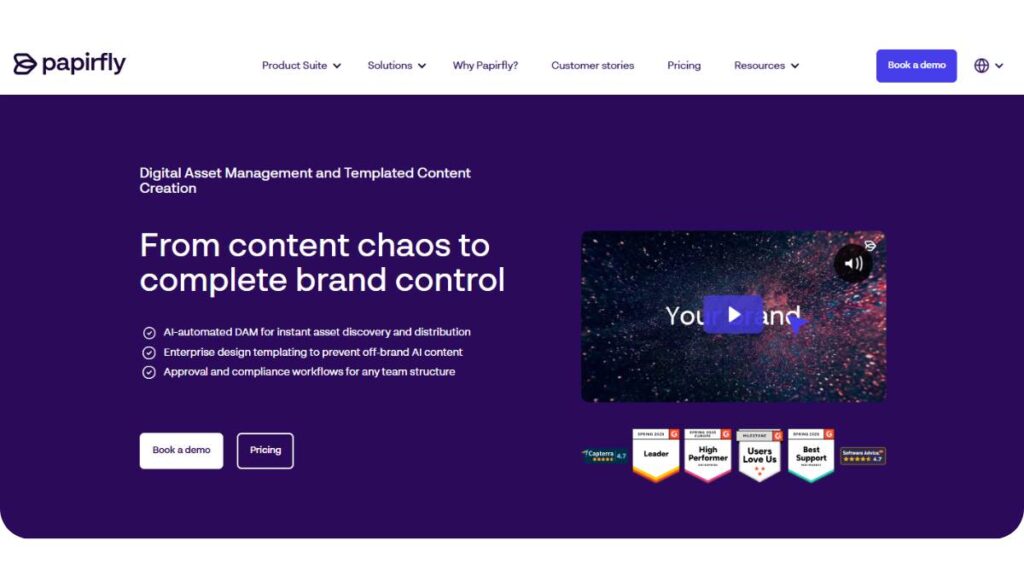
Enterprise brand control and global governance
Papirfly is often chosen by companies that need strict brand consistency across multiple regions and teams.
Best for
Large enterprises managing global brand guidelines and high-volume content production
Key features
- Centralized brand asset library
- Brand guidelines portal with controlled access
- Template-based content creation
- Multi-market content localization support
Pros
- Strong governance structure for global teams
- Keeps branding extremely consistent across regions
- Good balance between control and usability
Cons
- Can feel rigid for creative-heavy teams
- Requires proper onboarding to unlock full value
- Not ideal for small teams or fast-moving startups
Bynder
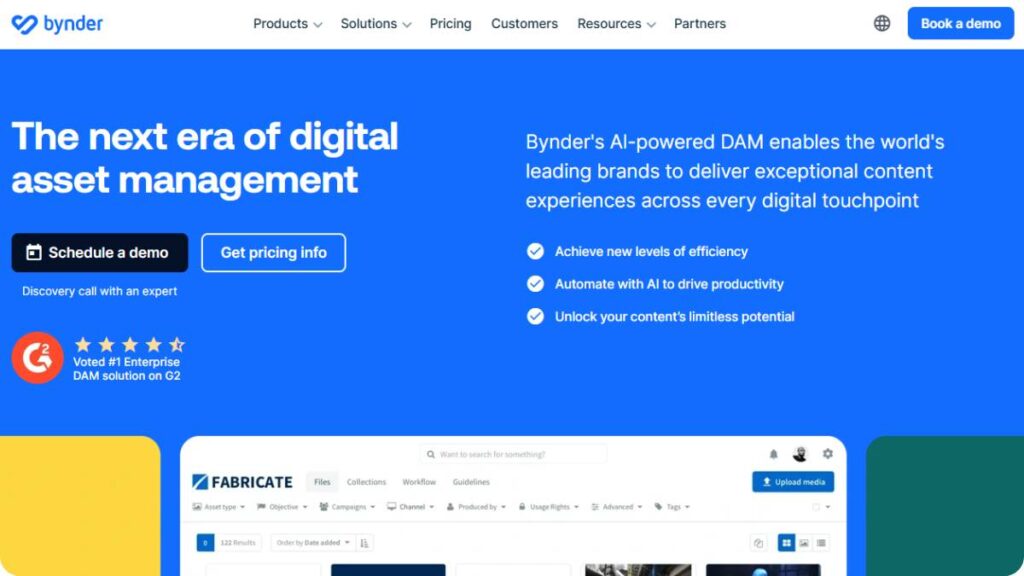
Advanced digital asset management for large enterprises
Bynder is one of the more established names in the DAM space, especially for enterprise-level asset management.
Best for
Organizations heavily focused on digital asset management with structured workflows
Key features
- AI-powered asset tagging and search
- Advanced DAM with version control
- Brand guidelines hub
- Workflow and approval automation
Pros
- Extremely strong asset management system
- Clean interface for enterprise usage
- Good integrations with marketing stacks
Cons
- Pricing can be on the higher side
- Full customization may require technical setup
- Slight learning curve for non-technical users
Frontify
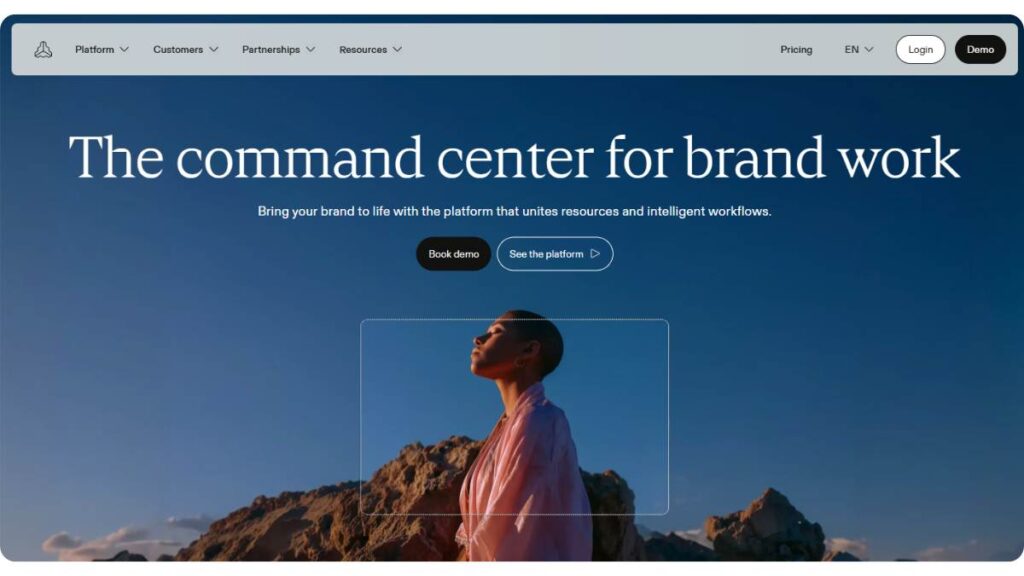
Best for brand guidelines and documentation systems
Frontify is widely known for making brand guidelines actually usable, not just stored.
Best for
Teams that want living brand guidelines and structured documentation
Key features
- Interactive brand guideline creation
- Digital asset management
- Collaboration tools for design and marketing teams
- Brand portal customization
Pros
- Extremely strong for brand consistency documentation
- Easy to understand and navigate
- Good collaboration features
Cons
- Less powerful as a full DAM compared to others
- Can feel limited for complex enterprise workflows
- Works best when paired with other tools in some setups
Brandfolder
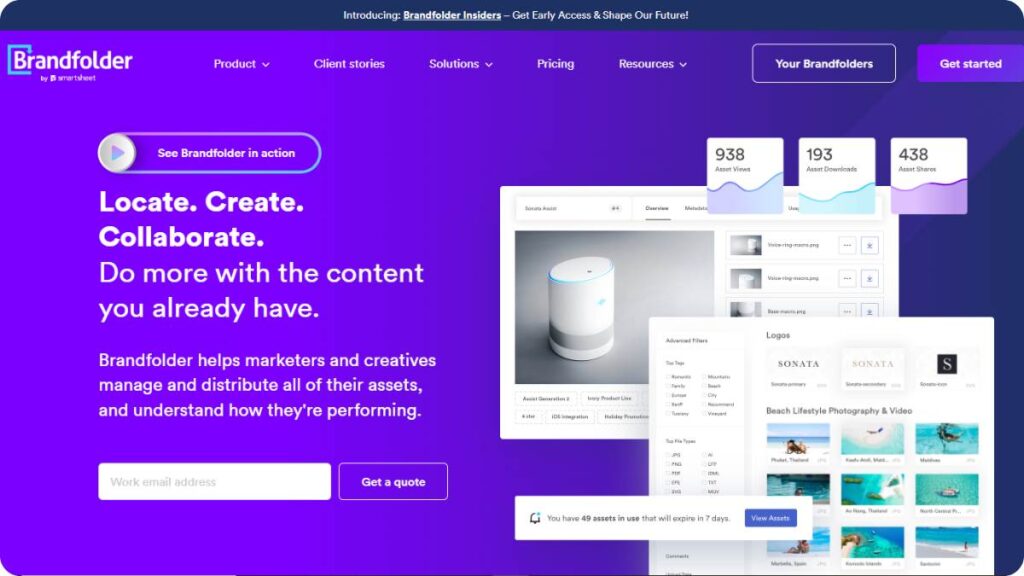
DAM with embedded brand governance tools
Brandfolder focuses heavily on making asset management and brand control feel connected rather than separate systems.
Best for
Teams needing strong asset governance with simple usability
Key features
- Smart asset organization and tagging
- Brand guidelines integration
- Usage analytics for assets
- Permission-based asset control
Pros
- Very intuitive for marketing teams
- Strong visibility into asset usage
- Good balance between control and simplicity
Cons
- Less flexible for complex enterprise workflows
- Limited creative production features
- Advanced features locked in higher tiers
Lytho
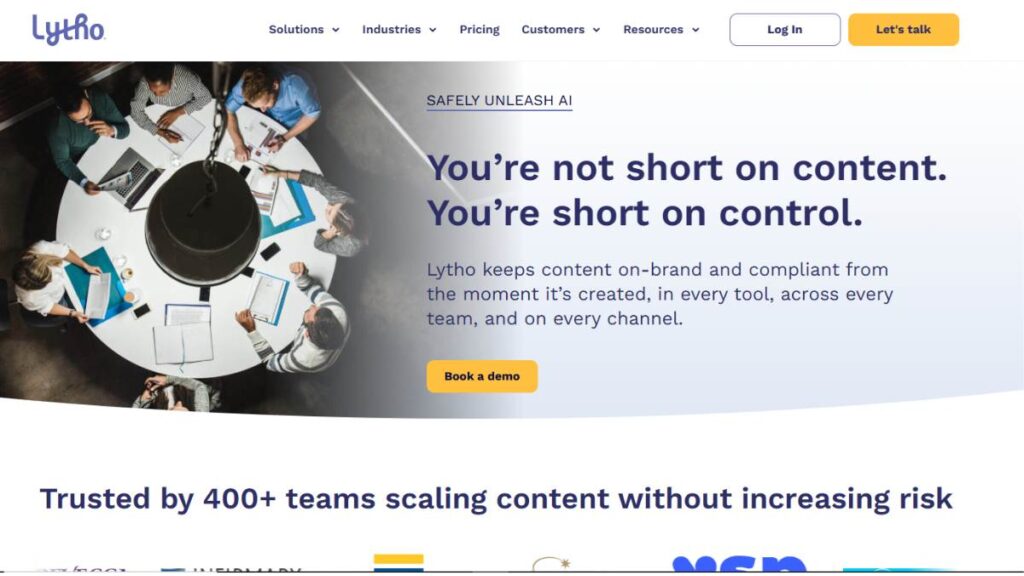
Creative workflow + brand management integration
Lytho is more focused on creative operations alongside brand management, which makes it slightly different from pure DAM platforms.
Best for
Marketing teams with heavy creative production workflows
Key features
- Creative project management tools
- Brand asset library
- Workflow automation for approvals
- Content planning tools
Pros
- Strong creative workflow integration
- Helps reduce bottlenecks in production
- Useful for marketing-heavy organizations
Cons
- Not a pure enterprise DAM system
- Learning curve for non-creative teams
- Less depth in advanced governance features
Canto
Scalable DAM for mid-market teams with AI capabilities
Canto sits comfortably in the mid-market space, often chosen by teams that are growing fast but not yet enterprise-heavy.
Best for
Mid-sized companies needing scalable digital asset management
Key features
- AI-powered asset tagging
- Visual search capabilities
- Brand asset organization
- Basic workflow and sharing tools
Pros
- Easy to adopt and implement
- Good AI search features for asset discovery
- Scales reasonably well with growth
Cons
- Limited enterprise-grade governance features
- Not deeply customizable
- Workflow tools are fairly basic
Acquia DAM (Widen)
Enterprise DAM for Acquia ecosystem
Acquia offers Widen as part of its broader digital experience ecosystem.
Best for
Enterprises already using Acquia’s digital experience tools
Key features
- Advanced DAM capabilities
- Metadata-driven asset organization
- Workflow automation
- Strong integration within Acquia ecosystem
Pros
- Extremely robust DAM structure
- Strong enterprise scalability
- Good for content-heavy organizations
Cons
- Works best inside Acquia ecosystem
- Setup can feel complex
- Less intuitive for smaller teams
MediaValet
Microsoft-centric enterprise media management
MediaValet is often chosen by organizations deeply invested in Microsoft infrastructure.
Best for
Enterprises using Microsoft-based collaboration tools
Key features
- Cloud-based DAM
- Microsoft ecosystem integration
- AI tagging and search
- Global asset distribution
Pros
- Strong enterprise security and scalability
- Smooth Microsoft integration
- Reliable global performance
Cons
- Interface can feel slightly dated
- Less creative-focused features
- Better suited for structured enterprises than agile teams
Creative & Marketing Execution Platforms
This category is a bit different from pure enterprise brand systems. These tools are not always “governance-heavy,” but they show up where brand actually gets used daily , campaigns, social media, ads, and content production.
In practice, many teams end up using one of these alongside a DAM system. Not always by design… sometimes it just evolves that way because marketing never sits still.
Marq
Template-driven brand content creation platform
Marq (formerly Lucidpress) is built around one simple idea: give teams controlled templates so they can create fast without breaking brand rules.
Best for
Marketing teams that need consistent, on-brand content at scale without relying on designers every time
Key features
- Lockable brand templates for print and digital assets
- Drag-and-drop editor for non-designers
- Brand asset centralization inside templates
- Multi-channel content export
Pros
- Keeps branding surprisingly tight even with non-designers creating content
- Reduces dependency on design teams for small updates
- Works well for franchises and distributed teams
Cons
- Not ideal for complex design work
- Feels template-bound, which can limit creativity
- Advanced customization is somewhat restricted
Canva
Design-first brand management for SMBs and teams
Canva is often the first tool teams adopt when they want design speed without hiring full design capacity. Over time, it has quietly evolved into a lightweight brand management layer for many businesses.
Best for
Small to mid-sized teams that want fast content creation with basic brand control
Key features
- Brand kits for fonts, colors, and logos
- Template library for social, ads, and presentations
- Collaboration tools for teams
- Basic approval workflows in higher tiers
Pros
- Extremely easy to adopt, almost no learning curve
- Huge template ecosystem for fast content creation
- Works well across non-design teams
Cons
- Brand governance is relatively light compared to enterprise tools
- Can lead to design saturation (too many similar-looking assets)
- Asset control is limited in complex organizations
Sprinklr
Unified customer experience + brand management suite
Sprinklr sits closer to an enterprise-level experience platform, but it plays a strong role in brand consistency across customer-facing channels, especially social and digital.
Best for
Large organizations managing brand experience across multiple digital touchpoints
Key features
- Unified social media management
- Content publishing and approval workflows
- Customer experience analytics
- Brand monitoring across channels
Pros
- Strong centralized control for large teams
- Covers multiple aspects of digital experience, not just content
- Good for enterprises managing global brand presence
Cons
- Can feel heavy and complex for smaller teams
- Requires structured onboarding and setup
- Not purely focused on creative production
Hootsuite
Social media brand presence management
Hootsuite is one of the older but still widely used platforms for managing brand presence on social channels.
Best for
Teams focused mainly on scheduling and managing social media brand activity
Key features
- Social media scheduling and publishing
- Content calendar management
- Basic brand monitoring
- Team collaboration tools
Pros
- Simple and reliable for social scheduling
- Works well for small to mid-sized marketing teams
- Good for maintaining consistent posting cadence
Cons
- Limited deeper brand governance features
- Analytics can feel surface-level
- Not suitable as a full brand management system
Sprout Social
Social listening + brand engagement management
Sprout Social focuses more on engagement and insights than just publishing. It’s often used by teams that care about brand perception as much as content output.
Best for
Brands that want strong social listening combined with publishing workflows
Key features
- Social media publishing and scheduling
- Advanced engagement inbox
- Social listening and sentiment tracking
- Reporting and analytics dashboards
Pros
- Strong focus on audience engagement insights
- Clean, user-friendly interface
- Good balance between publishing and analytics
Cons
- Can get expensive as teams scale
- Not a full brand governance platform
- Limited asset management capabilities
Agorapulse
Social media publishing and brand monitoring
Agorapulse is a practical tool for teams that want structured social media management without too much complexity.
Best for
Mid-sized teams managing publishing, engagement, and monitoring in one place
Key features
- Social scheduling and queue management
- Inbox for comments and messages
- Basic social listening
- Reporting tools
Pros
- Very straightforward to use
- Strong inbox management system for engagement
- Affordable compared to enterprise tools
Cons
- Limited brand governance capabilities
- Not designed for large enterprise workflows
- Analytics depth is moderate
Brand Monitoring & Reputation Management Platforms
This layer is slightly different from the creation tools. Instead of helping teams produce content, these platforms focus on how the brand is being talked about across the internet.
And honestly, this is where many brands get their reality check.
Brand24
Social listening and brand mention tracking
Brand24 is built around monitoring brand mentions across social media, blogs, and news platforms.
Best for
Businesses wanting real-time brand mention tracking and sentiment visibility
Key features
- Real-time mention tracking
- Sentiment analysis
- Keyword and competitor monitoring
- Alerts for spikes in activity
Pros
- Easy to set up and use
- Good real-time monitoring coverage
- Useful for reputation tracking
Cons
- Sentiment accuracy can sometimes feel inconsistent
- Limited deep analytics compared to enterprise tools
- Not a content creation or management platform
Brandwatch
Advanced consumer intelligence and analytics
Brandwatch is more advanced and data-heavy compared to basic listening tools.
Best for
Enterprises focused on deep consumer insights and brand perception analysis
Key features
- Large-scale social listening
- Consumer trend analysis
- AI-powered insights and categorization
- Competitive benchmarking
Pros
- Very powerful analytics engine
- Strong for long-term brand research
- Deep segmentation of audience insights
Cons
- Can feel overwhelming for non-analytical teams
- Requires training to use effectively
- Pricing is enterprise-oriented
Cision
Media monitoring and PR-focused brand reputation management
Cision is widely used in PR and communications teams for media monitoring and press intelligence.
Best for
PR teams managing media coverage and brand reputation across news channels
Key features
- Media monitoring across global publications
- Press release distribution tools
- Influencer and journalist database
- Brand mention tracking
Pros
- Strong PR and media focus
- Wide global media coverage
- Useful for reputation management at scale
Cons
- Less relevant for day-to-day marketing teams
- Interface can feel traditional
- Primarily PR-driven rather than marketing-drive

Enroll Now: Brand Management course
Use Cases of Brand Management Platforms Across Industries
Brand management platforms don’t really sit in one department anymore. They quietly stretch across marketing, sales, compliance, and even operations in some cases. What changes is how each industry uses them, not whether they need them.
In practice, the need usually shows up when teams start saying things like “this doesn’t look like us anymore” or “why are we using different versions across regions?” That’s typically the breaking point.
Retail & eCommerce brand management at scale
Retail moves fast. Seasonal campaigns, product drops, influencer content, marketplace listings… everything is constantly changing.
The challenge isn’t just volume, it’s alignment. A product might look one way on a website, slightly different on Amazon, and completely different on social ads if there’s no central system.
Brand management platforms help keep product visuals, descriptions, and promotional creatives aligned across every channel. It also reduces the common issue of outdated creatives still floating around in active campaigns.
There’s also a practical benefit here: teams stop recreating the same assets over and over again just because they can’t find the original version.
Financial services brand compliance and governance
Financial services are less about creative freedom and more about precision. Every word, every visual, every disclaimer matters.
In this environment, inconsistency isn’t just a branding issue; it can become a compliance risk.
Brand management platforms help enforce strict approval workflows and ensure only pre-approved messaging goes live. This becomes especially important when multiple branches or advisors are publishing content independently.
Over time, it creates a controlled communication system where brand expression exists, but within defined boundaries.
Automotive brand consistency across dealer networks
Automotive brands face a slightly unique problem. The central brand might be strong, but dealerships often operate with a degree of independence.
That’s where inconsistency creeps in. Local ads, regional promotions, even showroom materials can start drifting away from the core brand identity.
A brand management platform helps standardize everything from brochures to digital campaigns while still allowing localized customization. It keeps the brand recognizable, whether someone is viewing it in one city or another.
Healthcare brand communication and regulatory control
Healthcare communication has to balance clarity, empathy, and compliance. That combination is not easy to manage at scale.
Different departments, hospitals, or clinics often produce their own content, which can lead to inconsistent messaging.
Brand management platforms bring structure into this by centralizing approved communication materials and ensuring only compliant content is distributed. This is especially useful when patient-facing communication needs to stay accurate across multiple touchpoints.
Hospitality and franchise marketing standardization
Hospitality and franchise models rely heavily on consistency. A customer expects the same experience, whether they are interacting with one branch or another.
But in reality, franchise marketing often becomes fragmented because each location adapts campaigns slightly differently.
A brand management platform helps standardize marketing assets while still allowing controlled customization for local relevance. Menus, promotional banners, and seasonal campaigns all stay aligned with the core brand identity.
How to Choose the Right Brand Management Platform
Choosing a brand management platform is rarely a straightforward decision. On paper, most tools look similar. In reality, the difference shows up only after teams start using them at scale.
The key is not picking the “best” platform in general, but the one that actually fits how a team works day to day.
Step 1 – Identify brand management workflow gaps
Before even looking at tools, it helps to understand where things are breaking internally.
Sometimes the issue is asset chaos. Sometimes it’s approval delays. Sometimes it’s inconsistent messaging across teams.
Those gaps usually decide what kind of system is needed. A lightweight setup might work for asset storage, but not for governance-heavy environments.
Step 2 – Evaluate DAM vs full brand governance platforms
This is where many teams get stuck.
A digital asset management system focuses mainly on storing and retrieving assets. A full brand management platform goes further by adding rules, workflows, and governance layers on top.
The decision usually comes down to one question: is the problem just storage, or is it control and consistency across teams?
If it’s only about finding files faster, DAM might be enough. If brand inconsistency is the real issue, a broader platform becomes more relevant.
Step 3 – Check integration with marketing tech stack
A brand system doesn’t operate alone. It connects with design tools, content systems, CRM platforms, and publishing channels.
If integration is weak, teams end up doing manual work anyway, which defeats the purpose.
So the focus should be on how smoothly the platform fits into existing workflows rather than how many features it lists.
Step 4 – Scalability for multi-location and global teams
Scalability is often underestimated at the beginning.
What works for a single marketing team can start breaking when multiple regions or departments get added.
A strong platform should handle different levels of access, localization needs, and content variations without creating chaos. Otherwise, it becomes just another tool instead of a system.
Step 5 – AI capabilities and automation readiness
AI features are becoming common, but not all of them are equally useful.
Some platforms use AI for simple tagging or search improvements, while others go deeper into automation of workflows and content organization.
The key here is not to get distracted by labels, but to check whether automation actually reduces manual effort in real workflows.
Step 6 – Pricing models and total cost of ownership (TCO)
Pricing is not just about subscription cost. It includes onboarding time, training effort, integration work, and long-term maintenance.
Some platforms look affordable initially but become expensive when scaled across teams. Others feel costly upfront but reduce operational friction significantly over time.
So the real question is not “how much does it cost?” but “what does it replace?”
Brand Management Platform vs Digital Asset Management (DAM) Explained
This comparison comes up a lot, and honestly, it’s where most confusion starts.
At a surface level, both systems deal with brand assets. But their purpose and depth are quite different once you actually use them in a real workflow.
Key differences in functionality and purpose
A digital asset management system is mainly about storage and organization. It’s a structured library for brand files, images, videos, documents, and design files.
A brand management platform includes DAM, but adds layers on top. Things like brand governance, workflow automation, approval systems, and sometimes even content creation tools.
So one is focused on “where things are,” and the other is focused on “how things are created, approved, and used.”
That difference becomes more obvious as teams grow and complexity increases.
When DAM is enough vs when a full platform is needed
A DAM system is usually enough when:
- The team is small or mid-sized
- Asset chaos is the main issue
- There is minimal need for strict brand enforcement
- Content creation is centralized
A full brand management platform becomes more relevant when:
- Multiple teams or regions are involved
- Brand consistency starts breaking across channels
- Approval workflows are complex
- Content is created at high volume across departments
It usually starts as a storage problem and slowly becomes a governance problem. That’s when the shift happens.
How modern platforms merge DAM + brand governance + AI
Modern systems are no longer cleanly separated. Most platforms now combine DAM with governance and automation features in one environment.
So instead of just storing assets, they also:
- Control how assets are used
- Automate approvals
- Enforce brand rules
- Improve search through AI tagging
- Track how content is being used across channels
The direction is pretty clear. These tools are becoming less about storage and more about operational control of brand identity.
And for teams managing scale, that shift is not optional anymore.
How Brand Management Platforms Improve Marketing Efficiency
Marketing inefficiency usually doesn’t come from lack of talent. It comes from fragmentation.
Assets live in different places. Approvals happen across email threads. Teams recreate work because they can’t find the latest version. Campaigns get delayed for reasons nobody even remembers two weeks later.
A strong brand management platform quietly removes a lot of that operational noise.
Not instantly, and not perfectly. But over time, workflows become cleaner, faster, and far less dependent on manual coordination.
Faster campaign execution across global teams
One of the biggest bottlenecks in modern marketing is coordination.
Global campaigns involve regional teams, agencies, freelancers, compliance reviewers, and internal stakeholders all touching the same campaign assets at different stages. Without structure, timelines stretch unnecessarily.
Brand management platforms centralize that process.
Teams can access approved templates, current brand assets, and localized campaign materials without waiting for endless back-and-forth communication. Instead of rebuilding campaigns from scratch in every market, teams adapt pre-approved structures faster.
This matters more than it sounds because speed compounds in marketing. A delayed campaign launch doesn’t just waste time, it affects seasonal timing, paid performance, and competitive positioning.
And honestly, a lot of delays have nothing to do with strategy. They come from operational chaos.
Reduced dependency on manual approvals
Manual approval systems are surprisingly fragile.
One stakeholder misses an email. Another reviews an outdated version. Somebody downloads the wrong file and suddenly the process resets itself.
Brand management platforms reduce this friction by automating approval flows and version control. Assets move through predefined stages instead of depending entirely on human follow-ups.
That doesn’t remove oversight, which is important. It just reduces repetitive coordination work that slows teams down unnecessarily.
The practical impact becomes obvious in large organizations where hundreds of assets move through approval pipelines every month.
Real-time brand consistency enforcement
Brand inconsistency usually happens gradually.
A sales presentation uses outdated colors. A regional campaign changes messaging slightly. A social media template drifts away from brand guidelines because someone “adjusted” it quickly.
Individually, these things feel minor. Collectively, they weaken brand identity over time.
Brand management platforms enforce consistency in real time by controlling templates, approved assets, and usage permissions directly inside workflows.
So instead of correcting mistakes after campaigns launch, teams reduce inconsistencies before they happen.
That shift from reactive correction to proactive control changes operational efficiency more than most companies expect.
AI-driven asset reuse and optimization
Large organizations produce enormous amounts of content, but surprisingly little of it gets reused effectively.
Assets get lost inside folders, renamed inconsistently, or forgotten completely after campaigns end.
Modern platforms improve asset discoverability through AI-driven tagging and search systems. Teams can find existing content faster instead of recreating variations repeatedly.
That has a direct efficiency impact:
- Less duplicated creative work
- Faster campaign assembly
- Lower production overhead
- Better utilization of existing assets
And beyond efficiency, there’s another advantage here. Brands become more visually and structurally consistent because teams are pulling from approved content ecosystems rather than improvising constantly.
Role of AI in Modern Brand Management Platforms
AI has started reshaping brand management quietly rather than dramatically.
It’s less about replacing creative decision-making and more about managing scale. Because once brands start producing content across dozens of channels and markets, manual systems simply struggle to keep up.
That’s where AI starts becoming operationally useful.
AI-powered tagging and smart asset organization
Asset management used to rely heavily on manual tagging.
Which sounds manageable until a company has hundreds of thousands of images, campaign files, videos, presentations, and localized variations sitting inside one system.
AI-powered tagging changes this by automatically categorizing assets based on visuals, metadata, context, and usage patterns.
So instead of searching exact filenames, teams search naturally:
“holiday campaign banner”
“product lifestyle image”
“approved healthcare infographic”
And the system surfaces relevant assets quickly.
This may sound like a convenience feature, but operationally it saves huge amounts of time across large teams.
Generative AI for brand-safe content creation
Generative AI inside brand platforms is evolving carefully because brand safety matters more than speed alone.
Most organizations don’t want unlimited content generation. They want controlled generation inside predefined brand boundaries.
That’s why many modern platforms are introducing systems where generated content pulls from approved tone guidelines, templates, and visual rules rather than creating completely unstructured outputs.
The real value here is consistency at scale.
Marketing teams can produce localized or personalized variations faster while still staying aligned with approved messaging and design systems.
Not perfect consistency, because no system truly achieves that, but much tighter alignment than manual scaling usually allows.
Predictive analytics for brand performance tracking
Brand management used to focus mostly on asset storage and governance. Increasingly, it’s becoming tied to performance intelligence.
AI-driven analytics can now identify patterns around asset usage, engagement behavior, and content performance across channels.
For example:
- Which creative styles get reused most often
- Which branded assets drive stronger engagement
- Which campaign structures perform better regionally
- Which content formats consistently underperform
This creates a feedback loop where brand decisions become more informed over time instead of purely subjective.
And honestly, that’s becoming increasingly important as content volume grows faster than human analysis capacity.
AI-assisted brand compliance and governance
Compliance review is one of the least glamorous parts of marketing operations, but also one of the most critical in regulated industries.
AI-assisted governance systems help monitor whether assets align with approved brand standards before publication. This includes things like:
- Logo usage validation
- Color consistency checks
- Template enforcement
- Restricted language monitoring
- Regional compliance verification
The goal isn’t replacing legal or brand teams. It’s reducing avoidable errors before they move into production environments.
For large enterprises especially, that operational layer matters a lot.
ROI of Brand Management Platforms
The ROI of a brand management platform is rarely visible in one dramatic metric. It usually shows up across dozens of smaller operational improvements that compound over time.
Less duplicated work. Faster approvals. Better campaign consistency. Fewer compliance mistakes. Stronger asset reuse.
Individually, these things may not seem transformational. Together, they change how efficiently marketing organizations operate.
And for larger companies especially, operational efficiency eventually becomes a revenue conversation, not just a process conversation.
Cost savings from reduced content duplication
Most organizations produce far more duplicate content than they realize.
One team recreates a presentation because they can’t find the latest version. Another redesigns assets that already exist somewhere inside a shared drive. Regional teams build separate variations of campaigns independently.
This happens constantly in fragmented environments.
Brand management platforms reduce that duplication by centralizing assets and improving discoverability. Teams spend less time rebuilding and more time adapting existing approved materials.
The savings here are not only creative costs. They also include:
- Reduced agency dependency
- Lower design revision cycles
- Fewer production bottlenecks
- Less wasted campaign development time
Over a year, that operational reduction becomes surprisingly meaningful.
Increased campaign speed-to-market
Speed matters more now than it did a few years ago.
Campaign timing affects product launches, seasonal performance, paid media efficiency, and even competitor positioning. Delays are expensive, even when they don’t look expensive immediately.
Brand management platforms improve speed by reducing friction inside workflows:
- Faster asset retrieval
- Pre-approved templates
- Streamlined approvals
- Centralized collaboration
Marketing teams stop waiting on repetitive operational tasks and move campaigns forward faster.
And honestly, this is often where companies feel ROI first. Not in reporting dashboards, but in smoother execution.
Improved conversion rates through brand consistency
Brand consistency directly affects customer trust, even if consumers never consciously notice it.
When messaging, visuals, and positioning remain aligned across channels, brands feel more reliable and recognizable. That consistency reduces friction in customer perception.
On the other hand, fragmented branding creates subtle uncertainty:
- Different messaging across channels
- Inconsistent visuals
- Outdated campaign assets
- Mixed brand positioning
Those inconsistencies weaken confidence over time.
A centralized brand management platform helps maintain continuity across touchpoints, which often improves engagement quality and conversion performance indirectly.
Not because the platform itself increases conversions, but because clearer brands usually perform better than inconsistent ones.
Long-term brand equity improvement
Short-term efficiency gains are easier to measure. Long-term brand equity is harder, but arguably more important.
Strong brands are built through repetition and consistency over years, not isolated campaigns.
Brand management platforms support that consistency structurally. They help organizations maintain recognizable messaging, visuals, and positioning even as teams, markets, and campaigns evolve.
That creates cumulative value over time:
- Stronger customer recognition
- More stable brand perception
- Better alignment across channels
- Reduced dilution of identity
And once a brand becomes operationally consistent internally, external perception usually becomes stronger too.
Not instantly. But gradually, and in a much more sustainable way.
Implementation Guide for Brand Management Platforms
Implementing a brand management platform sounds straightforward until the real-world complexity starts showing up.
Because technically, installing software is the easy part. The difficult part is changing how teams actually work.
That’s where most implementations either succeed quietly or become frustrating internal projects nobody fully adopts.
Step-by-step onboarding and deployment process
Successful implementation usually starts smaller than expected.
Many companies make the mistake of trying to migrate every asset, workflow, and department at once. That often creates confusion instead of adoption.
A more practical rollout typically looks like this:
- Audit existing brand assets
- Remove outdated or duplicate materials
- Define governance rules clearly
- Structure access permissions
- Launch core workflows first
- Expand gradually across teams
The goal is not immediate perfection. It’s usability.
If teams can’t quickly understand where assets live or how workflows operate, adoption slows down almost immediately.
Migration from legacy DAM systems
Migration is usually the most underestimated stage.
Legacy systems often contain years of inconsistent file structures, duplicate assets, missing metadata, and outdated materials nobody cleaned properly.
Moving everything blindly into a new platform just transfers the chaos.
So before migration happens, organizations usually need a serious content audit:
- Which assets are still active
- Which versions are approved
- What metadata structures are needed
- Which workflows are still relevant
This cleanup phase takes time, but skipping it creates long-term operational problems later.
Training teams for adoption and usage
Even the best platform fails if teams don’t actually use it.
And adoption problems rarely happen because people dislike the software itself. Usually, the issue is workflow disruption.
People are attached to familiar systems, even inefficient ones.
Training therefore needs to focus less on features and more on practical day-to-day usage:
- How assets are accessed
- How approvals work
- How templates are updated
- How teams collaborate inside the system
The easier the transition feels operationally, the higher the long-term adoption rate tends to be.
Common implementation challenges and solutions
Most implementation challenges fall into predictable patterns.
The first is overcomplication. Organizations try to configure every workflow immediately, which creates unnecessary complexity.
The second is unclear governance. If nobody owns brand structure internally, systems become disorganized very quickly.
And third, there’s resistance from teams already overloaded with tools and processes.
The practical solution usually comes down to simplicity:
- Start with essential workflows first
- Assign clear platform ownership
- Standardize naming conventions early
- Keep onboarding lightweight initially
- Expand functionality gradually
The companies that succeed with these platforms rarely launch perfectly polished systems on day one. They build structure progressively.
Common Challenges in Brand Management Platforms
Brand management platforms solve many operational problems, but they also introduce new challenges if implementation and governance are handled poorly.
And this part matters because many organizations underestimate the human side of brand systems. Technology is usually not the hardest part. Alignment is.
User adoption resistance
Resistance is almost unavoidable during rollout.
Marketing teams already juggle multiple systems daily, so adding another platform can initially feel like additional overhead rather than improvement.
Some employees continue storing files locally. Others bypass workflows because “it’s faster.” Regional teams sometimes resist centralized governance altogether.
This usually happens when:
- The platform feels too complicated
- Workflows slow people down initially
- Training is unclear
- Teams don’t understand the operational benefit
Adoption improves when systems genuinely reduce friction instead of adding more process layers.
And honestly, people adopt tools faster when the platform saves them time immediately.
Integration complexity with existing tools
Most marketing ecosystems are already crowded.
CRM systems, CMS platforms, design software, project management tools, social publishing systems… everything needs to connect smoothly.
When integrations are weak or inconsistent, teams end up duplicating work manually. That creates frustration very quickly.
The challenge becomes larger in enterprise environments where older legacy systems are still deeply embedded into operations.
In practice, integration planning often matters just as much as platform selection itself.
Maintaining brand consistency at scale
Ironically, maintaining consistency becomes harder as organizations become more successful.
More campaigns, more markets, more regional customization, more content production. Eventually, brand control naturally starts weakening unless strong systems are in place.
But even with a platform, consistency requires active governance:
- Updated guidelines
- Regular asset maintenance
- Clear approval structures
- Ongoing content reviews
Without that operational discipline, even good platforms become messy over time.
Because systems alone don’t create consistency. Processes do.
Managing large digital asset libraries
Large asset libraries become surprisingly difficult to manage.
Thousands of campaign files, localized variations, duplicate uploads, outdated versions… without structure, search quality starts degrading quickly.
And once users stop trusting search results, they begin bypassing the system entirely.
That’s why metadata strategy matters so much:
- Consistent tagging structures
- Clear naming conventions
- Archive management processes
- Version control discipline
The organizations that manage this well treat digital assets almost like operational infrastructure, not just storage folders.
Because at scale, asset organization directly affects marketing speed and consistency.
FAQ:
What is a brand management platform, and how does it work?
A brand management platform gives companies one place to manage brand assets, approvals, templates, guidelines, and campaign workflows. Sounds simple on paper. In reality, it fixes a lot of day-to-day mess inside marketing teams. Instead of chasing logos across folders or reviewing outdated presentations, teams work from a shared system where approved brand material already exists and stays organized.
What is the difference between a brand management platform and a digital asset management system?
People mix these up constantly because there’s overlap. A DAM system mainly stores and organizes digital files. A brand management platform does that too, but adds governance, workflows, approvals, templates, permissions, and collaboration layers around the assets. One manages files. The other manages how branding actually moves through teams, campaigns, markets, and daily operations.
Which is the best brand management platform for large enterprises?
There’s honestly no perfect answer because enterprise needs vary wildly. Some organizations care more about compliance and governance, while others focus on creative workflows or localization. Bynder, Frontify, Papirfly, and Brandfolder keep showing up in enterprise conversations because they scale reasonably well. But the “best” platform usually depends on internal processes more than feature comparisons alone.
How does a brand management platform improve marketing efficiency and workflow speed?
Most marketing delays happen in boring places. Asset approvals. Version confusion. Teams are recreating files they already made six months ago. A good brand management platform cuts through that operational clutter. Teams find approved assets faster, workflows become cleaner, and campaigns move with fewer interruptions. Not magically faster overnight, but noticeably smoother after adoption settles in properly.
How much does a brand management platform cost on average?
Costs vary more than most buyers expect. Smaller platforms may start fairly affordable, but enterprise systems can become expensive once storage, integrations, onboarding, permissions, and customization enter the picture. Then there’s migration work, which people underestimate constantly. The platform subscription is only one piece of the total cost. Operational setup usually becomes the bigger conversation later.
Is Canva considered a brand management platform or just a design tool?
Mostly a design platform, though it’s gradually pushing into brand management territory. Canva now offers brand kits, shared templates, collaboration tools, and approval features that smaller teams find useful. But larger organizations usually outgrow it once governance, compliance, localization, and workflow complexity increase. It handles lightweight brand control well. Enterprise governance is a different thing entirely.
Can small businesses benefit from brand management platforms?
Definitely. Smaller teams often become disorganized faster because processes are informal early on. Assets end up scattered across drives, chats, desktops, and random folders nobody cleans properly. A lightweight brand management setup can create structure before that chaos grows. Even simple improvements around templates, approvals, and shared assets save time. Probably more than most small teams expect initially.
What key features should I look for in a brand management platform?
The basics matter more than flashy features most of the time. Strong asset organization, approval workflows, permissions, templates, search functionality, and integrations usually have the biggest operational impact. Beyond that, it depends on how complex the business is. Global teams may need localization support. Regulated industries may care more about governance and compliance controls.
How does AI enhance modern brand management platforms?
Mostly through automation and organization. AI helps platforms tag assets faster, improve search quality, surface relevant content, and identify duplicate materials across large libraries. Some systems also assist with governance checks and workflow recommendations. The practical value isn’t replacing creative teams. It’s reducing repetitive operational work that quietly eats hours across marketing departments every single week.
What industries use brand management platforms the most?
Retail, finance, healthcare, hospitality, automotive, and franchise businesses rely heavily on them because brand consistency becomes difficult once operations scale across locations or regions. Franchise systems especially tend to struggle without centralized control. Too many local teams creating disconnected materials. Eventually, companies realize branding problems are often workflow problems underneath. That shift changes how they operate.
How does a brand management platform help maintain brand consistency across teams?
It creates structure around how branding gets used daily. Teams access approved logos, messaging, templates, and campaign assets from one system instead of pulling random files from old folders. That alone reduces inconsistency quite a bit. Add permissions and workflows into the mix, and brand drift becomes easier to control before it spreads across multiple campaigns.
What are the benefits of using a brand management platform for global companies?
Global organizations deal with constant coordination problems between regional teams, agencies, and headquarters. Brand management platforms help centralize control without blocking local adaptation completely. That balance matters. Campaigns move faster, approvals become clearer, and teams stop duplicating work unnecessarily. Over time, operations feel more connected instead of every market functioning like its own isolated brand ecosystem.
Do brand management platforms support multi-language and multi-region branding?
Yes, most enterprise platforms support localization workflows now. Regional teams can adapt messaging, visuals, or campaign elements while still staying aligned with central brand guidelines. That flexibility matters because strict global standardization rarely works perfectly in practice. Markets behave differently. Good platforms allow controlled customization instead of forcing every region into identical campaign structures.
How secure are brand assets stored in brand management platforms?
Generally very secure, especially with established enterprise vendors. Most platforms offer encrypted storage, role-based permissions, authentication systems, and audit tracking for asset activity. Security becomes particularly important for regulated industries or global companies managing sensitive campaign materials. That said, security standards still vary between providers, so technical evaluation matters more than marketing claims during selection.
Can brand management platforms integrate with tools like Adobe, Slack, or HubSpot?
Yes, and integrations are honestly one of the biggest deciding factors now. Marketing teams already work across too many systems every day. If a platform doesn’t connect properly with design tools, CRM software, or communication platforms, workflows slow down fast. Strong integrations reduce duplication, manual uploads, and version confusion across departments. That operational efficiency adds up quietly.
What is the ROI of implementing a brand management platform?
The ROI usually comes from operational cleanup more than dramatic revenue spikes. Teams waste less time searching for files, recreating assets, or managing approvals manually. Campaigns move faster. Asset reuse improves. Brand consistency gets stronger over time. Individually, these gains seem small. Together, especially inside large organizations, they create meaningful long-term efficiency improvements across marketing operations.
How long does it take to implement a brand management platform?
Depends on how messy the existing system already is. Smaller businesses may complete implementation fairly quickly, while enterprise rollouts can take months because asset migration, governance planning, integrations, and training become larger projects. The cleanup phase often takes longer than expected. Old libraries usually contain duplicates, outdated assets, and inconsistent naming structures that nobody maintained properly.
What are the common challenges when adopting a brand management platform?
User adoption is usually the biggest issue. Not because people hate the platform itself, but because changing habits is difficult. Teams keep using old folders, legacy workflows, or local storage systems out of convenience. Integration problems can also create friction early on. And without clear governance, even good platforms eventually become cluttered and difficult to manage properly.
How do brand management platforms support social media brand management?
They help social teams access approved content quickly without hunting through scattered files or outdated folders. Templates, campaign assets, captions, and brand visuals stay centralized, which improves consistency across channels. Some platforms also integrate with publishing and monitoring systems directly. That becomes useful when managing large social calendars where speed and consistency need to coexist somehow.
What are the future trends in brand management platforms driven by AI and automation?
The direction seems pretty clear now. More automation, smarter governance, faster asset discovery, and tighter workflow control across growing content ecosystems. Content production is expanding too quickly for fully manual systems anymore. At the same time, brands still need consistency and oversight. Future platforms will probably focus on balancing speed with structure instead of prioritizing one over the other.