

A logo redesign goes out on Instagram before the print team has the updated files. A regional sales lead approves messaging that contradicts what the CMO said in a press interview two days earlier. A customer complaint thread on Twitter gets 40,000 views before anyone on the brand team even sees it. None of this is rare. It is Tuesday.
Brand management challenges show up the moment a company stops being a single founder’s voice and starts being a system of people, channels, and vendors all speaking for the same name. Get it wrong and you don’t just lose a campaign, you lose the thing that made people choose you over a cheaper competitor in the first place.
This article breaks down why brand management has gotten harder, the specific problems showing up across teams right now, the tools that actually solve them, and the strategies that hold a brand together as it scales.
Table of Contents
Why Brand Management Feels Harder Than Ever
Brand management is the ongoing work of shaping how a company is perceived, and then defending that perception across every place a customer runs into it. That sounds simple written down. It almost never is in practice.
Twenty years ago, a brand team controlled maybe four touchpoints: a logo, a tagline, print ads, and a storefront. Today a mid-sized company is showing up on its website, five or six social platforms, marketplaces like Amazon and Flipkart, customer support chats, influencer collaborations, review sites, and internal Slack channels where employees casually describe the product to friends. Every one of those is a place the brand can go off-script.
That’s the honest starting point for understanding modern brand management challenges: the number of surfaces a brand touches has multiplied faster than most teams’ ability to govern them. According to a 2024 Edelman Trust Barometer Special Report on Brand and Politics, 60% of respondents across 14 countries said they buy, choose, or avoid brands based on the brand’s politics. That single data point tells you brand perception is no longer built through advertising alone. It’s built through every visible decision a company makes, and customers are watching closely.
The growing difficulty of managing a brand today comes down to a multiplied number of customer touchpoints while brand teams stayed roughly the same size. Consumers now judge brands on social conduct, political positioning, and customer service response, not just advertising, which means a single misstep in any channel can undo years of brand equity.
The Root Causes Behind Today’s Toughest Branding Problems
Most brand management problems trace back to a handful of root causes, and they repeat across industries whether you’re running a D2C skincare label or a B2B SaaS company.
Brand Consistency Across Channels
This is the challenge every brand manager names first when you ask them. A product page says one thing, a WhatsApp broadcast says another, and the packaging insert hasn’t been updated in two years. According to Marq’s (formerly Lucidpress) State of Brand Consistency Report, companies with consistent branding see up to a 33% increase in revenue, while 81% of companies still deal with off-brand content.
Mamaearth ran into a version of this early on, when rapid marketplace expansion meant product listings on Amazon, Nykaa, and its own D2C site all carried slightly different claims and visuals. The fix wasn’t more creative talent. It was a shared asset system every team, including third-party sellers, had to pull from.
Brand Reputation Management in a Digital-First World
A single screenshot can travel further than a six-month ad campaign ever will. Reputation management used to mean handling press. Now it means monitoring Reddit threads, Instagram comment sections, and app store reviews in near real time, because that’s where buying decisions actually get influenced.
Managing Brand Perception During a Crisis
Crisis response separates brands that recover fast from ones that don’t. Zomato’s response to a viral customer complaint about a delivery agent, where the CEO personally addressed the situation within hours, is a good example of speed protecting brand equity. The brands that struggle usually aren’t the ones that made a mistake. They’re the ones that took three days to say anything about it.
Competing in Saturated, Look-Alike Markets
Walk through any quick commerce app and half the packaging looks interchangeable. When ten brands in a category use similar pastel palettes and near-identical Instagram aesthetics, differentiation becomes one of the harder challenges in brand management to solve with design alone. It increasingly comes down to tone of voice, founder visibility, and community, not just visual identity.
Getting Internal Teams to Actually Follow Brand Guidelines
Ask any brand manager what keeps them up at night and you’ll hear some version of this: sales decks, HR job posts, and regional marketing all drift from guidelines within weeks of a rebrand. This is one of the most common brand management challenges precisely because it isn’t glamorous. Nobody gets excited about enforcing a font rule, until the brand looks fragmented across fifteen different PDFs.
These issues rarely show up one at a time. A weak internal guideline system leads to inconsistent messaging, which leads to reputation confusion, which makes crisis response slower because nobody agrees on what the brand actually stands for. That’s how one unresolved gap compounds into several more, and it’s why fixing them requires both the right tools and the right process, not one or the other.
Essential Tools That Help Brands Stay Consistent and Protected
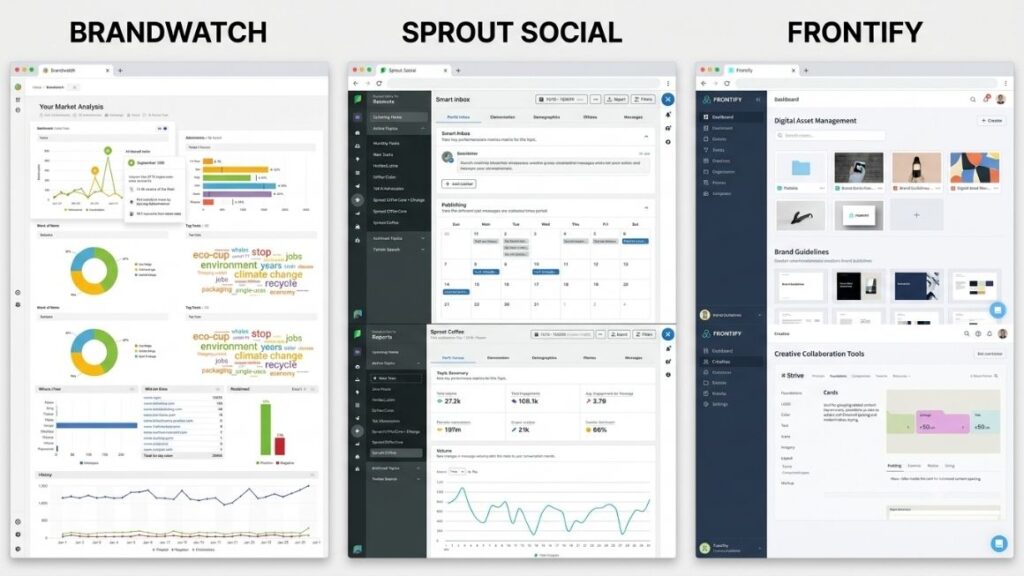
No single tool solves brand management on its own. What actually works is a stack covering monitoring, social consistency, asset governance, SEO reputation, and legal protection. Here’s what each category does and which tools are worth using.
Google Alerts for Free, Basic Brand Monitoring
Google Alerts is a free tool that emails you whenever new content matching a chosen keyword gets indexed by Google. Set an alert for your brand name, founder names, and product names, and you’ll get notified when news sites, blogs, or forums mention you.
It’s not sophisticated. It misses most social media chatter and has a delay of several hours to a day. But for early-stage brands with no monitoring budget, it’s the minimum viable setup and it costs nothing to run.
Brandwatch for Deep Social Listening
Brandwatch is a social listening and consumer intelligence platform that tracks brand mentions, sentiment, and conversation trends across social media, forums, news, and blogs. Where Google Alerts is reactive, Brandwatch is analytical. It shows you not just that people are talking about your brand, but whether the sentiment is trending positive or negative, which demographics are driving the conversation, and which competitor is gaining share of voice.
Enterprise brand teams use Brandwatch to catch a reputation dip before it becomes a full-blown crisis. If mentions spike and sentiment drops sharply within a two-hour window, that’s the kind of signal a human scanning Twitter manually would likely miss until it’s too late.
Sprout Social for Consistent Social Publishing and Response
Sprout Social is a social media management platform built for scheduling posts, managing multiple accounts from one dashboard, and tracking engagement across channels. Its real value for brand management sits in two features: the Smart Inbox, which pulls every comment and DM from every connected platform into a single queue so no customer complaint slips through, and approval workflows, which stop a junior team member from publishing off-brand copy without sign-off.
For a brand managing five social accounts across three regional teams, Sprout Social’s shared content calendar and tagging system is often the difference between a coordinated campaign and five versions of the same announcement going out at different times with different tone.
Semrush’s Brand Monitoring Toolkit for SEO and Mention Tracking
Semrush is best known as an SEO platform, but its Brand Monitoring toolkit tracks how often and where your brand is mentioned across the web, flags unlinked mentions you could convert into backlinks, and monitors competitor share of voice in search results. This matters for brand management because search results are often a customer’s first honest look at a brand, before they’ve even visited the website.
If a brand’s top Google results are dominated by a three-year-old negative review or an outdated Wikipedia stub, that’s a brand management issue no amount of Instagram content will fix. Semrush helps surface exactly which pages need active reputation work.
Meltwater for Media Monitoring and PR Measurement
Meltwater is a media intelligence platform used mostly by PR and communications teams to track press coverage, broadcast mentions, and journalist activity in real time. It’s the tool a brand team reaches for during a product launch or a crisis, when knowing within minutes whether a story is spreading in tier-one media versus a niche blog changes how you respond.
Meltwater’s AI-driven sentiment scoring also helps quantify reputation shifts over time, which is useful when a CMO needs to show leadership hard numbers on how a PR effort affected brand perception rather than a gut feeling.
Frontify for Brand Asset and Guideline Management
Frontify is a brand management platform built specifically to host brand guidelines, logo files, colour codes, typography rules, and approved imagery in one central, permission-controlled hub. Instead of a 40-page PDF nobody opens, Frontify turns guidelines into a searchable, living style guide that updates automatically when the brand evolves.
This directly solves the internal drift problem. When a new hire, freelancer, or regional agency needs the correct logo file or the exact brand voice guidelines, they pull it from Frontify instead of asking around on Slack and getting three different answers.
Canva for Brand Kits at Speed
Canva’s Brand Kit feature lets teams lock in brand colours, fonts, and logos so that anyone creating a social post or presentation, including non-designers, stays within approved visual boundaries by default. It’s not a replacement for a full brand asset system like Frontify, but for smaller teams producing high volumes of quick social content, it closes the gap between “we have guidelines” and “people actually use them.”
Corsearch for Trademark and Brand Protection
Corsearch is a trademark clearance and brand protection platform used to monitor for counterfeit listings, trademark infringement, and unauthorised use of brand assets across marketplaces and the web. This is the legal side of brand management, and it’s the one most growing companies ignore until a knockoff product shows up on a marketplace using their exact packaging.
For any brand selling on Amazon or Flipkart, tools like Corsearch (or in-house monitoring through the platforms’ own brand registry programs) are what actually stop counterfeit sellers from eroding customer trust in a name the real company spent years building.
Effective brand management runs on a layered tool stack: free monitoring tools like Google Alerts for basic coverage, social listening platforms like Brandwatch for sentiment intelligence, asset management systems like Frontify for internal consistency, and legal protection tools like Corsearch to stop counterfeiting. No single tool covers all five failure points brands typically face.
Building a Strategy That Keeps Your Brand Strong Over Time
Tools solve execution. Strategy decides what you’re executing in the first place. Strong brand management strategies start with a clear, documented answer to three questions: what does the brand stand for, who exactly is it for, and what does it sound and look like everywhere it shows up.
Skip that groundwork and every tool you buy just automates inconsistency faster.
Define a Brand Voice Document Before You Scale Content
A brand voice document defines the specific tone, vocabulary, and personality a brand uses in every piece of communication, and it should read like instructions, not adjectives. “Friendly and approachable” tells a copywriter nothing useful. “We use contractions, we never use exclamation marks in customer support replies, and we explain technical terms in one sentence before moving on” gives them something they can actually apply.
Zepto’s in-app copy and social presence carry a distinct, slightly cheeky tone that stays consistent whether you’re reading a push notification or a tweet reply. That consistency isn’t accidental. It comes from a documented voice guide that every writer, including freelancers, works from.
Centralise Brand Ownership Without Bottlenecking Teams
Someone needs final authority over brand decisions, but that person can’t approve every social caption or they become the bottleneck that kills speed. The practical middle ground is a tiered system: brand fundamentals (logo use, colour, core messaging, legal claims) require central sign-off, while day-to-day content follows documented guidelines with spot-check reviews rather than line-by-line approval.
Build a Crisis Response Playbook Before You Need One
Every brand should have a written response protocol covering who gets notified first, who has authority to post a public statement, and what the approval chain looks like when speed matters most. Airbnb’s trust and safety communications team operates on exactly this kind of pre-built playbook, which is why their public responses during incidents tend to arrive within hours rather than days.
Audit Every Channel Quarterly, Not Just During a Rebrand
Most brands only scrutinise consistency during a rebrand, then let it drift for the next two years. A quarterly audit, checking website copy, packaging, social bios, email signatures, and sales collateral against current guidelines, catches drift while it’s still a small fix rather than a full-scale cleanup project.
Best Practices for Protecting Your Brand Long Term
Building a brand is one job. Protecting it is a separate, ongoing one, and it’s where a lot of companies underinvest because the payoff isn’t visible until something goes wrong.
Following genuine brand management best practices means treating protection as infrastructure, not as a reaction to a crisis that already happened.
- Register trademarks early, including in markets you plan to enter within the next two to three years. Waiting until you’re actually expanding often means someone else has already claimed the name locally.
- Monitor marketplace listings weekly, not just when a customer complains about a counterfeit. Amazon’s Brand Registry and similar programs on Flipkart exist specifically for this.
- Keep a single source of truth for approved messaging claims, especially in regulated categories like skincare, food, or finance, where an unapproved claim can trigger regulatory action, not just a brand embarrassment.
- Train customer support teams on tone, because for most customers, a support chat is the most personal interaction they’ll ever have with your brand, and a robotic or rude reply undoes months of good marketing in one conversation.
- Review influencer and partner content before it goes live whenever contractually possible, since a single off-brand collaboration reaches an audience that assumes it’s an official brand statement.
boAt built a huge part of its brand equity around its India-first, youth-focused identity, and it protects that positioning aggressively by controlling how partners and resellers represent the product, right down to how listings are worded on third-party marketplaces.
Fixing Brand Problems Before They Spiral
Most brand management issues don’t start as disasters. They start as small, unaddressed inconsistencies that compound because nobody owns the fix.
Step 1: Identify Where the Inconsistency Is Coming From
Run a quick audit across your five highest-traffic touchpoints, your website, your top social channel, your packaging or product page, your customer support scripts, and your sales deck. Note every place messaging or visuals contradict your current guidelines.
Step 2: Trace It Back to a Process Gap, Not a People Problem
Nine times out of ten, inconsistency isn’t because someone was careless. It’s because they never had access to the current guidelines, or the guidelines were three versions out of date. Fix the access problem before you fix the content.
Step 3: Centralise the Fix in One Tool Everyone Actually Uses
Pick one system, whether that’s Frontify, a shared Canva Brand Kit, or even a well-maintained Notion page, and make it the only source anyone is allowed to pull brand assets from. Kill the old PDFs and shared drives once the new system is live, or people will default back to whatever’s fastest.
Step 4: Set a Recurring Check, Not a One-Time Cleanup
A cleanup without a recurring audit just resets the clock until the next drift cycle. Build the quarterly channel audit mentioned earlier into someone’s actual job description, not a task that gets skipped when the team gets busy.
The brands that handle this well aren’t the ones with the biggest design teams. They’re the ones that treat consistency as a system to maintain, not a project to finish once.
Where This Leaves Your Brand
Brand management challenges rarely announce themselves. They show up quietly, in a mismatched product listing, a delayed crisis response, or guidelines nobody bothered to check before publishing. By the time the damage is visible in your numbers, the fix usually takes far longer than prevention would have.
The brands that hold up under pressure aren’t the ones that never make mistakes. They’re the ones with the systems, the tools, and the documented processes to catch drift early and respond fast when something does go wrong.
If you’re looking to build a sharper, more structured approach to how you manage and grow a brand, YUP’s Crystal Clear Newsletter breaks down real brand and marketing strategy every week, drawn from what’s actually working for teams in the field right now.
FAQs
What are the biggest challenges brand managers face today?
The most common ones are maintaining consistency across channels, managing reputation in real time on social media, getting internal teams to follow brand guidelines, and differentiating in saturated markets. Most of these stem from brand teams not scaling their processes as fast as their number of customer touchpoints grows.
What’s the difference between brand management and brand marketing?
Brand marketing focuses on promoting the brand through campaigns, ads, and content to drive awareness and demand. Brand management is the broader, ongoing discipline of defining what the brand stands for and protecting that identity consistently across every touchpoint, including ones marketing doesn’t directly control, like customer support or sales.
How do I know if my brand has a consistency problem?
Pull five recent pieces of content from different teams, social posts, a sales deck, packaging copy, an email, and a support script, and compare them against your brand guidelines. If tone, visuals, or messaging noticeably differ across more than two of them, you have a consistency problem worth addressing.
Do small businesses really need brand monitoring tools?
Yes, though not the enterprise-tier ones. A free tool like Google Alerts covers basic monitoring for most early-stage brands. It’s worth upgrading to a paid platform like Brandwatch once your brand generates consistent social conversation or once you’ve had a reputation incident that free tools failed to catch early.
Is brand consistency actually worth the effort it takes?
The data backs it up. Marq’s State of Brand Consistency Report found consistent branding can drive a revenue increase of up to 33%, and that gap tends to widen as a company scales into more channels. Inconsistency isn’t a cosmetic issue, it’s a measurable drag on growth.
What should a brand crisis response plan actually include?
At minimum, it needs a clear chain of who gets notified first, who has authority to approve a public statement, a pre-approved holding statement template, and defined response time targets. Companies without this in place typically take two to three times longer to respond publicly, which is often the difference between a contained issue and a viral one.
Why do brand guidelines get ignored even after a rebrand?
Usually because the guidelines live somewhere hard to find or reference quickly, like a static PDF buried in a shared drive. Teams default to copying old content because it’s faster than hunting down the current version. Centralising guidelines in a searchable, always-updated tool solves most of this.
How often should a brand audit its channels for consistency?
Quarterly is a reasonable baseline for most growing companies. Fast-scaling brands adding new channels or regional teams frequently should audit monthly during that expansion phase, then move back to quarterly once things stabilise.
Can a small team handle brand management without a big budget?
Yes, with the right prioritisation. A documented one-page brand voice guide, a free Canva Brand Kit, and Google Alerts covers the essentials for most early-stage teams. The bigger investment isn’t tools, it’s the discipline to actually enforce the guidelines you already have.
What’s the biggest mistake companies make in brand management?
Treating it as a one-time project tied to a launch or rebrand instead of an ongoing operational discipline. Brands that succeed long term build recurring review cycles, clear ownership, and monitoring into their regular workflow rather than revisiting brand health only when something has already gone wrong.