

Pricing used to be one of those things teams set, reviewed once in a while, and moved on. That doesn’t hold up anymore. Markets shift too quickly, and small pricing mistakes compound faster than expected. This guide looks at how AI Pricing Optimization Tools are actually being used day to day, where they help, where they don’t, and what tends to get overlooked. It goes into how pricing decisions are shaped by data, how different models behave in practice, and why some businesses see results while others struggle. It’s not about constant price changes. It’s about making better calls, more consistently, with fewer blind spots.
Table of Contents
Introduction:
The Shift Toward AI-Driven Pricing Optimization
Pricing used to sit quietly in the background. Set once, maybe tweaked during a sale, then left alone. For a long time, that was enough.
It isn’t anymore.
What’s changed isn’t just competition; it’s the pace. Prices move faster now. Competitors adjust quickly, sometimes without making it obvious. Customers check alternatives more often, even if it’s just a quick scroll. And suddenly, pricing decisions that felt “fine” a few months ago start to look… off.
Most teams don’t notice this immediately. Revenue still comes in. Orders still happen. But underneath, there’s friction. Products that could be priced higher but aren’t. Others discounted too early. Margins are thinning out in places no one’s really watching.
That’s usually the point where things start to feel harder than they should.
AI-driven pricing comes into the picture here, not as some big transformation, but more as a response to complexity. There’s just too much happening at once for manual pricing to keep up. Too many products, too many signals, too many small decisions that quietly affect the bigger picture.
And pricing, whether it’s acknowledged or not, influences more than just revenue. It shapes perception. It affects how quickly inventory moves. It even changes how a brand is positioned in the market.
So the shift isn’t just about automation. It’s about treating pricing like a system that needs constant attention… not a number that gets set and forgotten.
What is AI Pricing Optimization?
At a glance, AI pricing optimization sounds straightforward: use data to set better prices. But the real difference shows up in how often and how intelligently those prices change.
Traditional pricing tends to be static. A price is set based on costs, maybe adjusted after looking at competitors, and then it stays there until something forces a change. It works, but it’s slow. And usually reactive.
AI pricing doesn’t wait for that trigger.
It continuously looks at what’s happening; how customers behave, how demand shifts, how competitors move; and adjusts pricing based on patterns, not just rules. That’s an important distinction.
Rule-based systems are still common. Things like:
- match the lowest competitor
- apply discounts when stock is high
- increase price when demand spikes
Useful, yes. But they follow instructions. They don’t really adapt beyond what they’ve been told.
AI models behave differently. They pick up on patterns over time. Sometimes subtle ones. For instance, certain products might consistently perform better at a slightly higher price point, even when competitors are lower. Or demand might drop off, not because of price, but because of timing or context.
Those kinds of insights don’t show up clearly unless something is actively analyzing the patterns behind them.
And this isn’t limited to one industry. It’s already embedded in everyday systems; airlines adjusting ticket prices constantly, ride-hailing apps increasing fares during peak demand, and online stores tweaking prices based on stock levels and competitor changes.
None of it is random. It just looks that way from the outside.
Why AI Pricing Optimization Matters
There’s a quiet pressure building around pricing, and it’s coming from multiple directions at once.
Costs are less predictable. Competition is more transparent. Customers are quicker to compare options. Put all that together, and pricing becomes less forgiving. Small mistakes don’t stay small for long.
What makes this tricky is that most pricing issues don’t show up as obvious problems. They show up as missed potential.
A product that could be priced slightly higher without affecting demand, but isn’t. Another that needs a faster markdown but lingers too long. Discounts are applied out of habit rather than necessity. Individually, these don’t feel urgent. Collectively, they impact performance more than expected.
AI pricing helps tighten those gaps.
Revenue is usually where the impact is easiest to see. Not through dramatic shifts, but through consistent, smaller improvements. Adjustments that align better with actual demand instead of assumptions.
Then there’s conversion, which tends to get oversimplified. Lower price doesn’t always mean higher sales. Sometimes it does the opposite. Pricing carries a signal about quality, about positioning, about value. Getting that signal right is where most of the nuance sits.
Inventory is another piece that often gets overlooked. Products sitting too long create pressure to discount. But discounting too aggressively eats into margins. Finding that balance manually is difficult, especially across a large catalog.
There’s also a competitive layer that builds over time. Businesses that adjust pricing more effectively don’t just react faster; they operate with better margins, clearer positioning, and fewer missed opportunities. It’s not always visible from the outside, but internally, the difference is noticeable.
How AI Pricing Optimization Works
Demand Signals in AI Pricing
Most pricing decisions start with demand, but not just the obvious kind.
Sales data tells part of the story. The more interesting signals are often indirect; what people are clicking on, what they keep revisiting, where they hesitate. That in-between behavior says a lot, even if it’s a bit messy to interpret.
For example, a product getting a lot of attention but fewer purchases might not have a demand issue at all. It might simply be priced slightly off. On the flip side, something selling out quickly at a steady price… there’s usually room to push that further.
Seasonality plays its role too, though it’s rarely as clean as expected. Some trends repeat predictably. Others don’t. External factors, events, shifts in consumer behavior, even small changes in timing, can influence demand in ways that aren’t immediately obvious.
Good systems don’t rely on a single signal. They piece together multiple ones and look for patterns that hold up over time.
Competitive Pricing Intelligence
No matter how strong internal data is, pricing doesn’t exist in a vacuum. Customers compare. Sometimes directly, sometimes just based on what feels reasonable.
Tracking competitors manually works for a while. Then it starts to slip. Prices change too often. New players enter without much noise. Others reposition quietly.
AI systems keep an ongoing view of this landscape. Not just who is cheaper or more expensive, but how frequently prices shift, how aggressive those changes are, and where each competitor sits overall.
What’s interesting is that matching the lowest price isn’t always the right move. In some cases, holding a slightly higher price works better, especially when the product or brand supports it. In others, being competitive is necessary just to stay in the game.
The nuance is in knowing when to do what. Blanket strategies rarely hold up for long.
Cost, Margin, and Constraints
This is where things get grounded in reality.
No pricing system, no matter how advanced, can ignore basic economics. Costs set the floor. Margins define what’s viable. And then there are internal constraints: policies, positioning, operational limits, that shape what’s actually possible.
Most setups include guardrails. Prices won’t drop below a certain margin. They won’t exceed certain thresholds either, depending on the strategy. These boundaries matter more than they seem at first glance. Without them, optimization can drift into decisions that look efficient but aren’t sustainable.
There’s also a practical layer here. Not every product needs to be treated the same way. Some are meant to drive volume. Others are meant to protect margins. A few might exist mainly to support the broader catalog.
Treating everything with identical logic tends to flatten performance instead of improving it.
AI Decision Engine (Output Layer)
Once all the inputs come together, demand, competition, and costs, the system produces an output. Usually a price recommendation. Sometimes a direct update.
On paper, that part looks simple. In practice, how it’s used makes all the difference.
Some teams prefer to review changes before applying them, at least in the beginning. It helps build confidence and catches edge cases early. Others move toward automation faster, especially when speed matters more than manual control.
There’s often a transition phase. Recommendations first, then partial automation, then broader rollout. Not forced; just gradual, based on how reliable the system proves to be.
Over time, something shifts. The need for constant oversight starts to fade. Not completely, but enough that teams can focus on strategy instead of adjusting prices one by one.
And that’s really the point. Not to remove humans from the process, but to take the repetitive, high-frequency decisions off their plate, so attention goes where it actually adds value.
12 Best AI Pricing Optimization Tools
Most “pricing tools” look similar on the surface. Dashboards, rules, and a bit of automation layered in. But once they’re inside a real business, multiple SKUs, messy data, constant competitor movement, that’s where the differences show up.
Some tools are built for control. Others for speed. A few try to do both, which sounds good… until things get complicated.
So instead of treating these as interchangeable, it helps to look at how each one actually behaves in practice, where it fits, and where it starts to fall short.
ClickUp
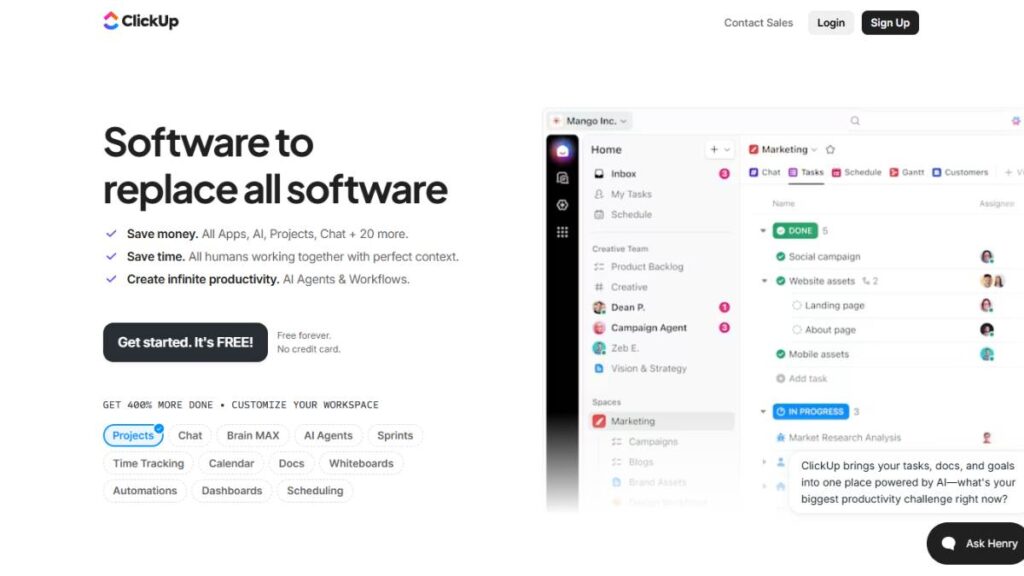
ClickUp isn’t a pricing engine. It’s more like the control center for pricing decisions. That distinction matters because a lot of teams don’t fail at pricing due to a lack of tools; they struggle because the process itself is messy.
This is where ClickUp tends to fit. It brings structure to something that’s usually scattered across spreadsheets, Slack messages, and last-minute decisions.
Best for
Teams that don’t yet have a formal pricing system but need coordination, especially where multiple departments touch pricing.
Key features
- Custom workflows to manage pricing updates and approvals
- Dashboards to track pricing performance across products
- Task automation to handle repetitive review cycles
- Collaboration tools that keep marketing, sales, and finance aligned
It works well when pricing decisions are still human-led but need better organization. Not a replacement for pricing logic, but a strong layer around it.
Pricefx
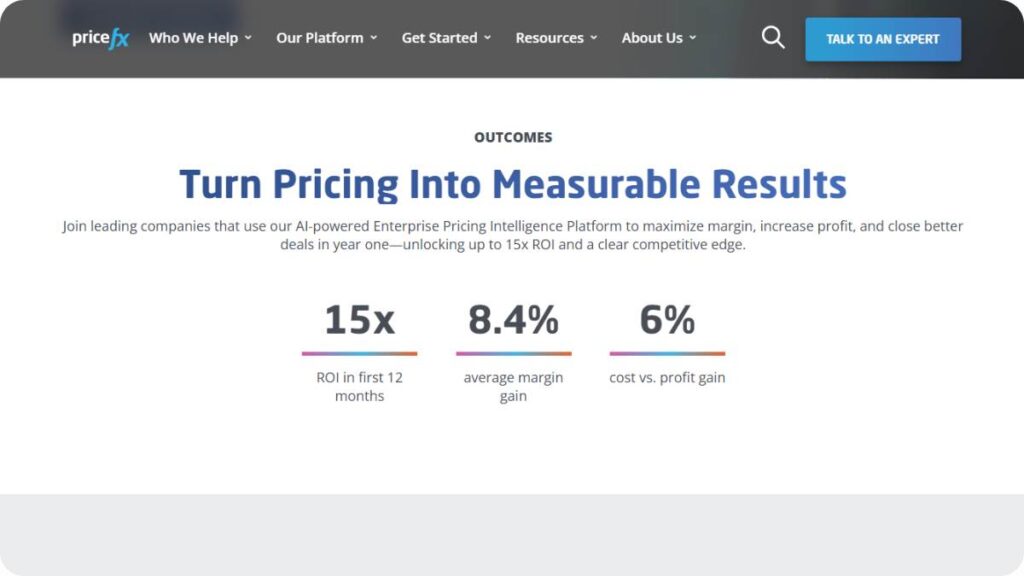
Pricefx leans heavily toward enterprise use. Not just because of its feature set, but because of how it approaches pricing as a structured, model-driven function rather than a reactive task.
It handles complexity well. Tiered pricing, contracts, regional variations… all the things that tend to break simpler systems.
Best for
Large businesses, especially B2B, where pricing involves negotiation, customization, and multiple variables.
Key features
- Advanced price modeling and simulation
- CPQ (Configure, Price, Quote) capabilities
- Margin and profitability analysis across segments
- Integration with ERP and CRM systems
There’s a learning curve. No way around that. But in the right setup, it replaces a lot of manual analysis that would otherwise take hours.
Competera
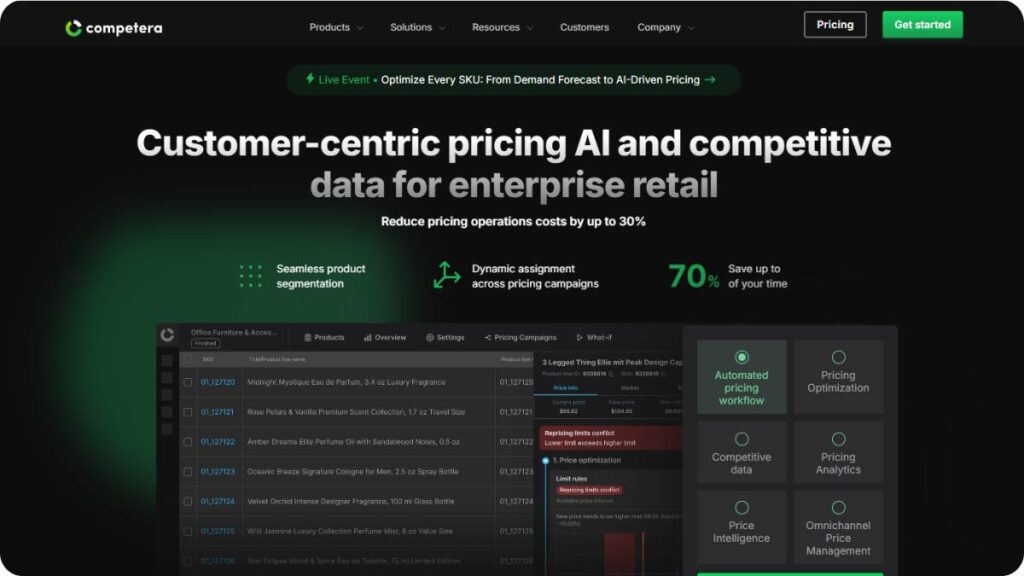
Competera focuses on something many tools gloss over: price elasticity. Not just what competitors are doing, but how customers actually respond to price changes.
That’s where it gets interesting. Because matching competitors doesn’t always lead to better outcomes. Sometimes the opportunity is in doing the opposite.
Best for
Retail businesses that want to align pricing with demand patterns rather than just competitor benchmarks.
Key features
- Demand-driven pricing models
- Price elasticity analysis across products
- Competitor monitoring with context (not just raw data)
- Scenario testing before applying changes
It performs best when there’s enough historical data to work with. Without that, it can feel a bit underutilized.
Prisync
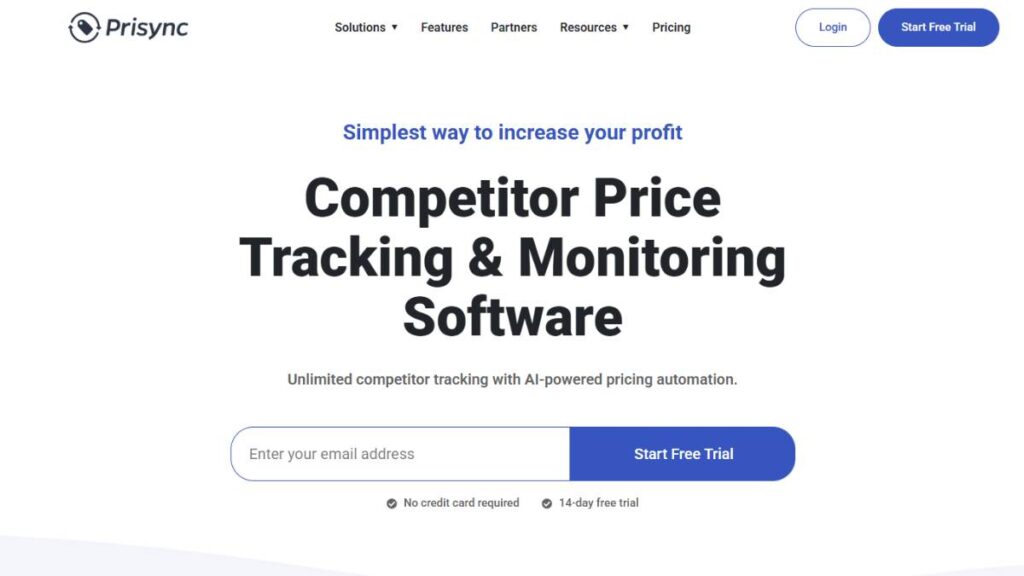
Prisync keeps things simple, and that’s not a bad thing. It focuses on competitor tracking and dynamic pricing without trying to turn into a full-scale pricing platform.
For many ecommerce businesses, that’s enough.
Best for
Online stores need real-time visibility into competitor pricing without a heavy setup.
Key features
- Automated competitor price tracking
- Dynamic pricing rules based on competitor changes
- Alerts for significant price movements
- Easy integration with ecommerce platforms
It’s not built for deep predictive insights. But for staying competitive day-to-day, it does the job reliably.
Omnia Retail
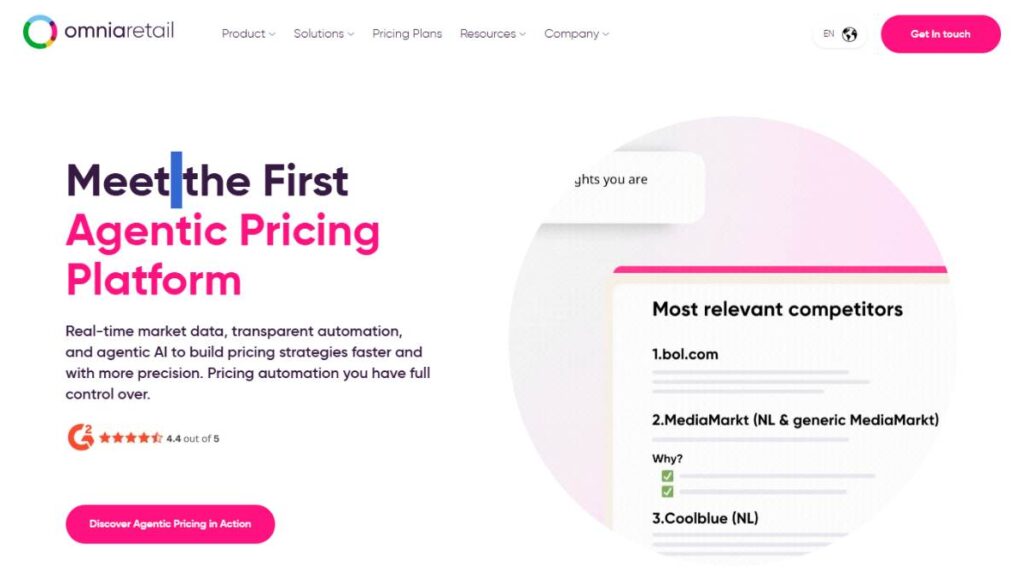
Omnia is built around the reality that pricing isn’t happening in just one place anymore. Online, offline, marketplaces… each channel behaves differently, but pricing still needs to feel consistent.
That balancing act is where most teams struggle.
Best for
Retailers managing pricing across multiple channels who need both control and flexibility.
Key features
- Omnichannel pricing management
- Combination of rule-based and algorithmic pricing
- Competitor tracking across different channels
- Pricing strategy alignment across regions and stores
It doesn’t force full automation, which is useful. Teams can stay in control where needed and automate selectively.
Price2Spy
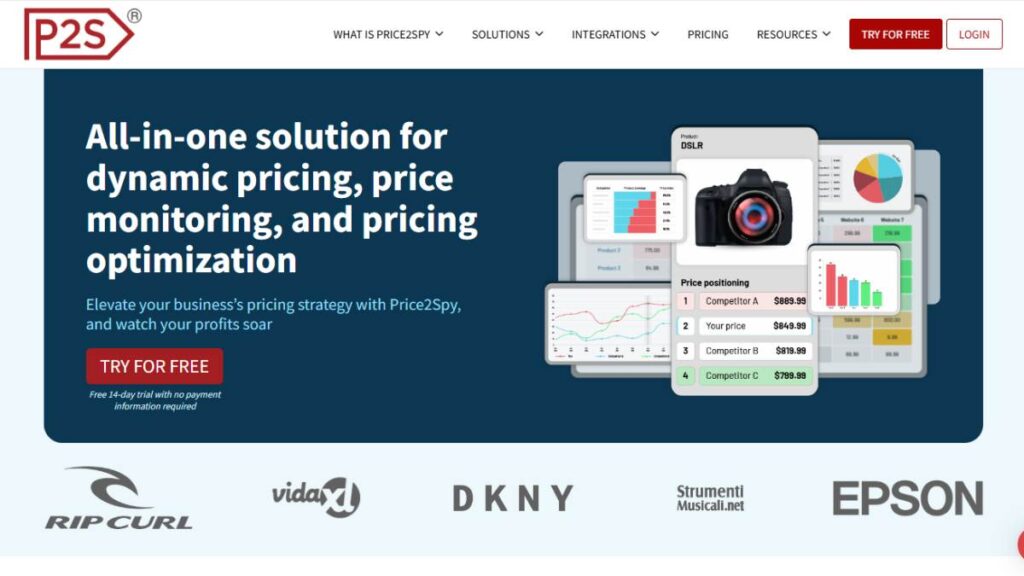
Price2Spy is very focused. It doesn’t try to optimize pricing in a predictive sense; it gives visibility into competitor behavior and lets teams react quickly.
That clarity alone can be valuable.
Best for
Businesses where competitor pricing heavily influences decisions and needs constant monitoring.
Key features
- Detailed competitor price tracking
- Historical price data for trend analysis
- Alerts and reporting for quick action
- Support for MAP (Minimum Advertised Price) monitoring
It’s more of an intelligence layer than a full pricing system. Works best when paired with internal decision-making processes.
BlackCurve
BlackCurve sits somewhere in the middle; not overly complex, but not overly basic either. It introduces predictive elements without overwhelming teams that don’t have dedicated pricing analysts.
That balance is harder to find than it sounds.
Best for
Small to mid-sized businesses looking to move beyond rule-based pricing without jumping into enterprise-level complexity.
Key features
- Predictive pricing recommendations
- Customer and product segmentation
- Margin optimization tools
- Simple dashboards for monitoring performance
It’s practical. Doesn’t try to do everything, but covers the parts that usually matter most.
Quicklizard
Quicklizard leans into speed and personalization. Pricing updates happen quickly, and there’s an emphasis on adjusting based on customer behavior, not just market conditions.
That shift toward personalization is where things are heading.
Best for
Businesses that want to tailor pricing dynamically based on user behavior and real-time signals.
Key features
- Real-time pricing engine
- Personalization based on customer segments
- Machine learning models for demand prediction
- Integration with ecommerce and analytics systems
It’s more dynamic than most. Which is great when managed well… but it does require a level of trust in the system.
tgndata
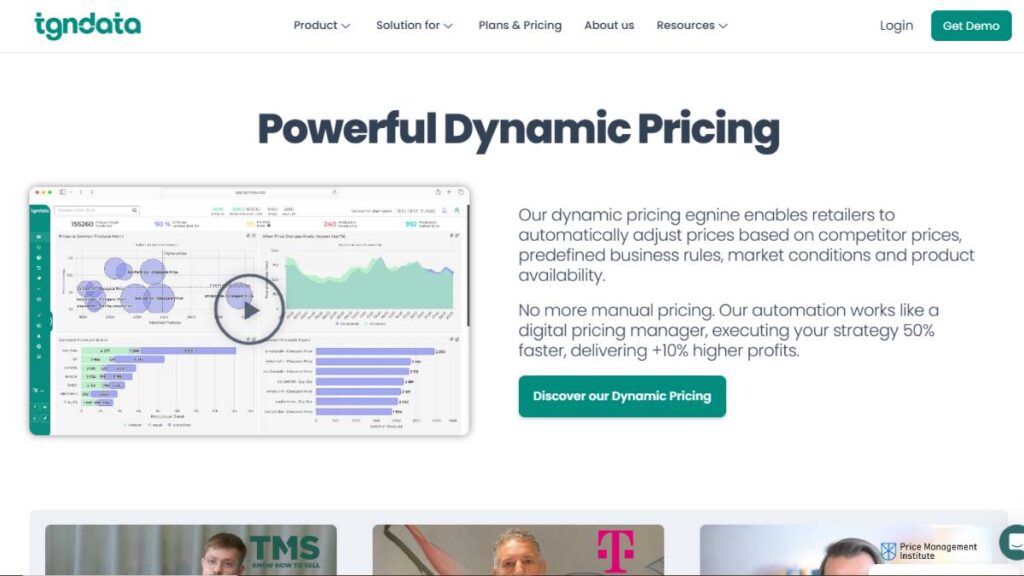
This one is more data-intensive. It’s designed for environments where pricing decisions rely heavily on large datasets and detailed analysis.
Not something that plugs in quickly. But that’s not the goal here.
Best for
Enterprises with complex pricing structures and large volumes of data to analyze.
Key features
- Advanced pricing analytics and insights
- Data modeling across multiple variables
- Custom pricing strategies based on deep analysis
- Integration with large-scale data systems
It’s less about quick adjustments and more about understanding pricing at a deeper level.
PriceLabs
PriceLabs is built for industries where demand fluctuates constantly: short-term rentals, hospitality, and travel. Static pricing simply doesn’t work in those environments.
It adapts quickly, which is the whole point.
Best for
Businesses in travel, hospitality, and rental markets experience frequent pricing changes.
Key features
- Dynamic pricing based on demand and seasonality
- Local market data integration
- Automated rate adjustments
- Forecasting tools for future demand
Outside of these industries, it’s less relevant. But within them, it’s almost essential.
PROS Pricing Software
PROS operates at a level where pricing is tightly linked to forecasting and revenue management. Think of industries where small pricing shifts impact large-scale outcomes.
It’s built for that level of precision.
Best for
Large enterprises in industries like airlines, manufacturing, and complex B2B environments.
Key features
- Real-time pricing optimization
- Demand forecasting models
- Revenue management integration
- Scenario planning for pricing strategies
There’s depth here. Which means setup takes time, but the payoff is in consistency and scale.
Vendavo
Vendavo focuses on B2B pricing, where things are rarely straightforward. Pricing isn’t just about products; it’s tied to deals, negotiations, and long-term relationships.
That adds layers most tools don’t account for.
Best for
B2B organizations that need to align pricing with sales processes and protect margins during negotiations.
Key features
- Margin optimization across deals
- Pricing guidance for sales teams
- Deal-level analytics and insights
- Integration with sales and CRM systems
It fits naturally into sales workflows, which is where a lot of pricing decisions actually happen in B2B.
Across all of these, the pattern is pretty clear. No single tool does everything perfectly. Some prioritize speed. Others go deep into analysis. A few try to balance both, with mixed results depending on the use case.
The better approach isn’t to chase the “most advanced” option. It’s to match the tool to how pricing decisions already happen, and then improve from there, step by step.

Enroll Now: AI Marketing Course
Comparison of AI Pricing Optimization Tools
Once a few tools are on the shortlist, the real question isn’t “which one is best?” It’s more practical than that. Which one fits how pricing actually works inside the business?
Because the differences show up quickly.
Some tools are built for speed: quick setup, rule-based adjustments, and fast reactions to competitors. Others go deeper, leaning on forecasting, modeling, and long-term margin optimization. Both can work. Just not in the same context.
Pricing model (subscription vs enterprise)
This is usually the first filter. Lighter tools tend to follow a subscription model: monthly pricing, easier onboarding, fewer dependencies. Good for ecommerce teams that need to move fast.
Enterprise platforms are a different story. Pricing is often customized, tied to implementation scope, data complexity, and integrations. They come with more power, but also more commitment. Not just financially, but operationally.
Best use case (ecommerce, SaaS, retail, B2B)
A tool built for ecommerce behaves very differently from one designed for B2B.
- Ecommerce tools focus on volume, speed, competitor tracking, and frequent updates
- B2B tools handle contracts, negotiations, and custom pricing structures
- Retail platforms sit somewhere in between, often balancing both online and offline complexity
- SaaS pricing tools lean more toward subscription logic, churn sensitivity, and packaging
Trying to force-fit a tool outside its natural environment usually leads to friction. Or worse, bad pricing decisions that look “data-driven” on the surface.
Level of AI sophistication
Not every tool labeled “AI” is doing the same kind of work.
At the simpler end:
- Rule-based automation with some predictive inputs
- Basic demand signals layered on top of fixed logic
Further up:
- Forecasting models that adjust based on patterns, not just triggers
- Elasticity modeling that tries to understand how customers react to price
And then the more advanced side:
- Systems that continuously learn from outcomes
- Real-time adjustments with minimal human intervention
More sophistication isn’t always better. In some cases, it just means less visibility and harder debugging when things go wrong.
Integration capabilities
This part gets overlooked, and it shouldn’t.
Pricing doesn’t live in isolation. It connects with:
- Ecommerce platforms
- ERPs
- CRMs
- Inventory systems
- Analytics tools
If integration is clunky, pricing decisions get delayed. Or worse, they happen in silos.
Clean integration tends to matter more than an extra layer of “intelligence.” Because even the best pricing model breaks down if the data feeding it is outdated or incomplete.
The Challenges of Traditional Pricing Management
Traditional pricing still exists in a lot of businesses. Spreadsheets, manual updates, periodic reviews. It works; until it doesn’t.
The problem isn’t that it’s completely broken. It’s that it struggles to keep up with how fast markets move now.
Static pricing strategies fail in dynamic markets
Prices set once and reviewed occasionally might have worked when competition was slower and demand was predictable.
That’s not the environment anymore.
Competitors change prices daily. Sometimes hourly. Customer expectations shift just as quickly. A static price starts drifting out of alignment almost immediately; too high in some cases, leaving conversions on the table. Too low in others, quietly eroding margins.
And the tricky part is… It’s not always obvious when that drift starts.
Human bias and delayed decision-making
Pricing decisions made manually tend to carry bias. Not intentionally, just naturally.
- Anchoring to past prices
- Overreacting to competitor moves
- Holding prices too long out of caution
- Discounting too quickly under pressure
Then there’s timing. By the time a pricing review happens, the market has already moved. What looks like a smart adjustment can end up being a delayed reaction.
Lack of real-time data processing
Modern pricing depends on signals: customer behavior, demand shifts, competitor activity, and inventory levels.
Manual systems can’t process all of that in real time. At best, they approximate. At worst, they ignore large chunks of it.
That gap shows up in subtle ways:
- Missed opportunities during demand spikes
- Overstock situations that could have been avoided
- Discounts applied too late to make a difference
Poor competitor visibility
Keeping track of competitor pricing manually is… messy.
It usually involves periodic checks, maybe a few tracked products, maybe some alerts. But it’s rarely comprehensive.
Which means decisions are made on partial information.
Sometimes that leads to overpricing. Sometimes unnecessary price cuts. Either way, it creates instability, pricing that reacts without full context.
And over time, that inconsistency compounds.
5 AI Pricing Models That Outperform Human Pricing Decisions
There’s a reason pricing is shifting toward models rather than rules. Not because rules don’t work, but because they don’t scale well when conditions keep changing.
These models approach pricing differently. Less about fixed decisions, more about continuous adjustment.
Dynamic Pricing Algorithms
This is the one most people recognize. Prices adjust based on real-time demand, competitor movement, and market conditions.
When demand rises, prices move up. When it softens, they adjust downward. Sounds simple, but the execution is where it gets nuanced.
The better systems don’t just react; they anticipate. They factor in patterns, not just current signals.
That’s what separates basic dynamic pricing from something more effective.
Inventory-Aware Discounting
Discounting usually happens for one reason: stock needs to move.
But blanket discounts tend to hurt margins more than necessary.
Inventory-aware models take a more controlled approach. They look at:
- Stock levels
- Sell-through rates
- Time remaining (seasonal products, expiring inventory)
Then adjust discounts accordingly. Some products get aggressive markdowns. Others barely move.
It feels more precise. Because it is.
Predictive Markdown Optimization
This goes a step further. Instead of reacting to slow-moving inventory, it tries to predict when a product will need a discount, and how much.
Timing matters here.
Discounting too early and unnecessarily reducing the margin. Too late, and the product may not move at all.
These models aim for that middle ground. Not perfect every time, but noticeably better than reactive discounting.
Personalized Pricing & Offers
Not every customer values a product the same way. Some are price-sensitive. Others aren’t.
Personalized pricing leans into that difference.
Based on behavior, browsing patterns, purchase history, engagement, prices, or offers can shift at an individual or segment level.
This doesn’t always mean showing completely different prices. Often it shows up as:
- Targeted discounts
- Bundled offers
- Limited-time incentives
Done carefully, it increases conversion without broadly lowering prices.
Contextual Product Bundling
Sometimes the better move isn’t changing the price of a single product; it’s changing how products are packaged together.
Bundling models look at:
- Frequently bought together items
- Complementary products
- Customer purchase patterns
Then create combinations that increase average order value while still feeling like a deal.
It’s a quieter form of pricing optimization. Less visible than price changes, but often just as effective.
Across these models, one pattern stands out. The shift isn’t just toward automation; it’s toward adaptability.
Pricing stops being a fixed decision and becomes something that evolves. Quietly, continuously, and in response to what’s actually happening in the market.
Types of AI Pricing Algorithms
Most pricing systems sound impressive when explained in one line. “Smart pricing.” “Automated optimization.” That kind of thing. But under the hood, they’re not all doing the same job.
Some are just structured rules. Others are closer to prediction engines. And a few… behave more like ongoing experiments than fixed systems.
That difference shows up pretty quickly once they’re in use.
Rule-Based Pricing Systems
This is the starting point for a lot of teams, even if it doesn’t get labeled that way.
You define conditions. Then define what happens when those conditions are met.
- If a competitor drops price, follow within a range
- If the stock is too high, trigger a discount
- If the margin gets tight, stop price cuts
Simple. Transparent. Easy to explain to anyone in the room.
And honestly, that clarity is useful.
The downside creeps in over time. Markets shift, competitors behave unpredictably, and demand patterns stop looking like they used to. The rules don’t adjust on their own. Someone has to keep tweaking them.
Miss a few updates… and the system starts making decisions that feel slightly off. Not obviously wrong. Just not quite right either.
Predictive Pricing Models
This is where things start leaning forward instead of reacting.
Instead of asking, “What just happened?”, these models try to answer, “What’s about to happen?”
They look at past data: sales, demand cycles, seasonality, and build a sense of direction. Not perfect foresight. But enough to move pricing ahead of the curve.
So instead of discounting after demand drops, prices adjust before the slowdown fully hits. Or they rise just ahead of a demand spike, not halfway through it.
That timing shift matters more than it sounds.
Of course, there’s a catch. If the underlying data is messy, predictions follow the same pattern. Clean inputs, decent outputs. Messy inputs… unpredictable behavior.
No real shortcut around that.
Real-Time Pricing Engines
Speed becomes the main focus here.
Prices aren’t reviewed every few days or even every few hours. They’re adjusted continuously, based on what’s happening right now: competitor changes, customer activity, and inventory movement.
It works well in fast-moving environments. Ecommerce, marketplaces, travel; places where waiting even a few hours can mean missed opportunities.
But there’s a balance to get right.
Too reactive, and pricing starts to feel unstable. Jumping up and down without a clear direction. Customers notice that, even if they can’t explain why.
The better setups put boundaries in place. Prices can move, but only within a certain range. That way, speed doesn’t turn into chaos.
Reinforcement Learning in Pricing
This one feels different from the rest.
Instead of relying purely on past data, the system learns by doing. It tries different pricing approaches, observes what happens, and adjusts over time.
Not in a straight line, though.
There’s trial and error built in. Some decisions won’t perform well. That’s part of the process. Over time, patterns start to emerge: what price points convert, where margins hold, and when demand drops off sharply.
It’s powerful, but not always comfortable.
Early stages can feel unpredictable. Results improve as more data comes in, but there’s a period where things are… a bit uncertain. For some businesses, that’s fine. For others, especially where pricing is sensitive, it needs tighter control.
How to Choose the Best AI Pricing Optimization Tool
Most comparisons focus on features. Dashboards, automation, integrations. All useful, sure. But that’s rarely what makes or breaks the decision.
The real question is simpler: Does this tool actually fit how pricing decisions happen day to day?
Because if it doesn’t, even a “better” tool ends up sitting on the sidelines.
Business size (startup vs enterprise)
Smaller teams usually need something that just works. Minimal setup, quick feedback, not a lot of overhead.
Enterprise setups are different. Pricing touches more systems, more people, more risk. There’s usually a need for structure, approvals, and deeper control.
Trying to force an enterprise tool into a small team slows everything down. Going the other way, using a lightweight tool at scale, creates gaps that show up later.
Industry-specific needs
Pricing isn’t one-size-fits-all. It never has been.
Ecommerce cares about speed and competitor movement. B2B deals with negotiation, contracts, and exceptions. Retail sits somewhere in between, juggling online and offline pricing.
Then there are subscription businesses, where price isn’t just about the first transaction; it’s tied to retention, upgrades, and perceived value over time.
A tool built for one context can technically work in another… but it usually feels awkward. Extra workarounds, missing pieces, things that don’t quite align.
Integration with ecommerce stack (Shopify, ERP, CRM)
This part tends to get underestimated.
Pricing decisions depend on data flowing in from different places: sales, inventory, customer behavior, and finance. If those systems don’t connect properly, things start to break in quiet ways.
Prices get updated based on outdated data. Inventory signals lag behind reality. Teams end up working off different numbers.
It doesn’t fail loudly. It just underperforms.
Clean integration fixes a lot of that. Not glamorous, but it matters.
Budget and ROI expectations
Not every business needs a complex pricing system.
Sometimes the goal is straightforward:
- Stop underpricing high-demand products
- Avoid unnecessary discounting
- Reduce manual effort
In those cases, simpler tools often deliver solid results.
More advanced platforms come into play when pricing complexity is already high: multiple segments, large catalogs, and constant variation. That’s where deeper systems start to justify their cost.
Otherwise, they can feel heavier than necessary.
Ease of implementation
This one gets ignored… until it becomes a problem.
A tool might look great in a demo, but if it takes months to implement or requires major process changes, momentum drops.
Faster implementation means quicker feedback. Teams see results sooner. Adoption becomes easier.
That doesn’t mean choosing the simplest option every time. But it does mean being realistic about how much change can happen at once.
Pricing isn’t just a system shift. It changes how people work, how decisions get made. That takes time.
How to Build and Implement AI Pricing Optimization
This is where things usually get messy.
Not because the approach is wrong, but because expectations are. There’s often an assumption that once the system is in place, pricing just… fixes itself.
In reality, it’s more gradual than that.
Step 1: Prepare High-Quality Pricing Data
Everything builds on this.
Sales data, competitor pricing, product performance;if these aren’t clean, the rest doesn’t hold up.
And “clean” usually means more work than expected. Missing values, inconsistent formats, and outliers that don’t make sense anymore. It takes time to sort through.
A bit tedious, honestly. But skipping it shows up later in the form of bad decisions that are hard to trace back.
Step 2: Define Pricing Guardrails
Before any system starts adjusting prices, there needs to be clear boundaries.
Minimum price. Target margin. Maximum discount. Things that shouldn’t be crossed, no matter what the data suggests.
These guardrails do two things. They protect the business from extreme decisions, and they make the system easier to trust.
Without them, pricing can drift into places that look fine in the short term… but create problems down the line.
Step 3: Train AI Pricing Models
This is where the data starts turning into something usable.
Different approaches can be used: forecasting, segmentation, and pattern recognition. What matters more is alignment.
What is the system trying to optimize for?
Revenue? Margin? Conversion rate?
It sounds obvious, but this is where things often go slightly off. If the goal isn’t clearly defined, the model can end up optimizing for the wrong outcome.
And it won’t always be obvious at first.
Step 4: Run Controlled Experiments
Rolling everything out at once is tempting. Also risky.
A better approach is to test in smaller pockets:
- A few product categories
- Specific regions
- Select customer segments
Compare outcomes. Watch how behavior changes.
Sometimes results confirm expectations. Sometimes they don’t. That’s useful either way.
This stage tends to surface insights that wouldn’t show up in theory.
Step 5: Align Teams and Processes
Pricing decisions don’t live in isolation.
Sales, marketing, and finance; each team interacts with pricing differently. If they’re not aligned, friction builds quickly.
Sales needs to understand how pricing is set. Marketing needs consistency in messaging. Finance needs visibility into margins and impact.
Without that alignment, even well-designed pricing systems face resistance. Not because they’re wrong, but because they don’t fit into how teams operate.
Step 6: Roll Out AI Pricing Gradually
Scaling too fast is where things tend to break.
A phased rollout works better. Start small, expand step by step.
That approach gives room to adjust. Fix what isn’t working. Build confidence internally.
Because at the end of the day, adoption matters just as much as accuracy.
If teams don’t trust the system, they won’t use it. And then even the best pricing model doesn’t really matter.
AI Pricing Optimization Use Cases Across Industries
Pricing doesn’t behave the same way across industries. What works in ecommerce can fall apart in B2B. What works in retail might feel too rigid for subscription businesses. The mechanics are similar, sure, but the context changes everything.
Retail & Ecommerce Pricing
This is where pricing moves fast. Sometimes uncomfortably fast.
Competitors adjust prices constantly. Customers compare options within seconds. And inventory keeps shifting in the background.
So pricing here tends to focus on responsiveness:
- Adjusting prices based on competitor movement, but not blindly matching
- Reacting to demand spikes without overcorrecting
- Managing discounting in a way that clears stock without training customers to wait for sales
There’s also a subtle balance between visibility and margin. Not every product needs to be the cheapest. Some just need to feel competitively priced.
That distinction matters more than most teams expect.
B2B Pricing Optimization
B2B pricing is less visible… but far more layered.
Prices aren’t always fixed. They’re negotiated. Shaped by contracts, relationships, and volume commitments. Two customers might pay very different prices for the same product, and both deals can still make sense.
Optimization here tends to focus on structure:
- Setting clear pricing floors so margins don’t erode during negotiations
- Providing guidance to sales teams so pricing decisions aren’t purely instinct-driven
- Identifying where discounts are unnecessary (this happens more often than expected)
It’s less about real-time changes and more about consistency. Keeping pricing aligned across deals without slowing down the sales process.
Supply Chain Optimization
Pricing and inventory are more connected than they appear on the surface.
Stock sits too long? Prices probably need to move.
Stock runs out too quickly? Prices might have been too low.
The connection isn’t always obvious in the moment, but over time it shows up in margins and cash flow.
This is where pricing starts working alongside supply chain decisions:
- Increasing prices slightly to slow demand when inventory is tight
- Applying targeted discounts to move excess stock before it becomes a problem
- Aligning pricing with restocking timelines and supplier constraints
It’s less about maximizing revenue on a single sale… and more about keeping the whole system balanced.
Finance & Revenue Management
At this level, pricing becomes less tactical and more strategic.
It’s not just about what price to set today, but how pricing decisions impact revenue over time.
Finance teams usually care about:
- Margin consistency across products and segments
- Predictability in revenue, not just spikes
- Identifying where pricing is quietly underperforming
This often leads to deeper analysis:
- Which products are priced below their perceived value
- Where discounts are cutting into profit without improving conversions
- How pricing changes impact long-term customer behavior
It’s slower work, but it shapes bigger outcomes.
Real-World Use Cases of AI Pricing
The interesting part about pricing isn’t the theory; it’s where small adjustments lead to outsized impact. Sometimes the changes are obvious. Other times, they’re buried in patterns that don’t stand out at first glance.
Detecting Structural Overpricing
Some products stay overpriced longer than expected.
Not dramatically overpriced; just enough to reduce conversions quietly. They don’t completely stop selling, so the issue doesn’t raise alarms. But performance lags behind similar products.
This is where patterns start to reveal the problem:
- Lower conversion rates compared to category averages
- Higher drop-offs at the pricing stage
- Competitors consistently priced just below
Adjusting those prices doesn’t always require a big drop. Sometimes a small shift brings the product back into a competitive range, and performance picks up quickly.
Identifying True Competitors
Not every competitor is obvious.
On paper, the market might look crowded. But in reality, customers tend to compare a smaller subset of products, based on price range, features, and brand perception.
That’s where pricing data becomes useful in a different way. It helps isolate:
- Which competitors actually influence buying decisions
- Which ones can be safely ignored
- Where pricing gaps exist within that smaller competitive set
Once that clarity is in place, pricing decisions become more focused. Less reactive to noise, more aligned with what customers actually consider.
Monitoring Price Match Rates
Matching competitor prices sounds simple. In practice, it’s uneven.
Some products match too often, cutting into margins unnecessarily. Others don’t match enough, losing potential sales.
Tracking how often prices align, or don’t, reveals those imbalances:
- Categories where price matching is overused
- Products where pricing is consistently out of sync
- Opportunities to hold higher prices without losing conversions
It’s less about matching everything, more about choosing where it actually matters.
Category-Level Pricing Shifts
Sometimes the issue isn’t with individual products. It’s with entire categories.
A category might be priced slightly too high compared to the market. Or slightly too low, leaving margin on the table across multiple products.
These patterns don’t always show up in isolation. They emerge when looking at performance across groups:
- Consistent underperformance across similar products
- Margins that are lower than expected across a category
- Competitor positioning that shifts over time
Adjusting at the category level often creates a cleaner, more consistent pricing structure.
Margin Opportunity Discovery
Margins tend to hide in plain sight.
Certain products can handle higher prices without affecting demand. Others are already at their limit, even if they appear profitable.
Identifying those differences is where pricing starts to feel more precise:
- Increasing prices slightly where demand remains stable
- Reducing unnecessary discounts on strong-performing products
- Shifting focus toward higher-margin items in competitive spaces
These changes are rarely dramatic. But over time, they compound.
Best Practices for AI Pricing Optimization
There’s no shortage of strategies when it comes to pricing. But the ones that hold up over time tend to share a few common traits.
Keep pricing rules simple and transparent
Complex pricing logic might look impressive, but it’s harder to manage. Harder to explain. And when something goes wrong, harder to fix.
Simple structures tend to perform better. They’re easier to adjust and easier for teams to trust.
Regularly review AI recommendations
Even well-performing systems drift over time.
Market conditions change. Competitors’ shift strategy. Customer behavior evolves.
Regular reviews keep pricing aligned with reality. Not constant intervention, just periodic checks to make sure things are still on track.
Add human oversight for sensitive products
Not every product should be fully automated.
High-visibility items, flagship products, or anything tied closely to brand perception often need an extra layer of review.
Automation works best when it knows where to step back.
Align pricing with brand positioning
Pricing isn’t just about numbers. It signals value.
Aggressive discounting can drive short-term sales, but it also shapes how customers perceive the brand. The same goes for consistently high pricing.
The goal is alignment; pricing that reflects how the brand wants to be positioned in the market.
Build clear reporting dashboards
Without visibility, pricing decisions become harder to evaluate.
Good reporting answers simple but important questions:
- What’s driving revenue changes?
- Where are margins improving or slipping?
- Which pricing adjustments are actually working?
Clear data keeps decisions grounded. It also makes it easier to spot problems early.
Conclusion:
Pricing is moving away from fixed decisions. That shift is already underway.
What used to be reviewed weekly or monthly is now adjusting continuously; sometimes quietly, sometimes more visibly. The pace has changed. Expectations have changed with it.
The next phase isn’t just about reacting faster. It’s about anticipating better.
Prices that adjust based on where demand is heading, not just where it’s been. Systems that factor in more signals, customer behavior, market trends, and inventory movement, without becoming overly complex.
There’s also a growing gap between businesses that adopt early and those that wait.
Early adopters tend to refine their pricing over time. They learn what works, where the limits are, and how customers respond. That learning compounds.
Late adopters don’t just start behind. They start without that accumulated understanding.
And in pricing, that difference shows up quickly; in margins, in conversion rates, in how competitive the business feels in the market.
It’s not about chasing the most advanced setup. It’s about moving away from static pricing, step by step, and building something that adapts.
Because the market already does.
FAQs:
How does AI pricing optimization work?
It starts with signals: sales trends, competitor prices, demand shifts, and then connects the dots. Instead of waiting for someone to review reports and decide, the system keeps adjusting as new data comes in. Not blindly, though. There are guardrails in place. So pricing moves, but within limits that still make business sense.
Can AI pricing be used in B2B businesses?
It fits surprisingly well. B2B pricing is messy by nature: custom deals, long sales cycles, inconsistent discounting. Hard to standardize. AI helps bring some structure to that chaos. It doesn’t replace negotiation, but it gives clearer boundaries. Teams stop guessing as much, which, in practice, is half the battle.
What data is required for AI pricing tools?
You need the basics: historical sales, costs, and product data. But the real value comes from layering in competitor pricing and demand signals. That’s where things get interesting. Still, none of it works if the data is unreliable. Clean, consistent data matters more than having every possible data point.
Do AI pricing tools increase profit margins?
They usually do, but not in a dramatic, overnight way. It’s more subtle. Prices get nudged up where demand allows, discounts get tighter where they were too loose, and slow stock gets cleared without panic. Small gains, repeated often. Over time, margins start to look different.
What are the best AI pricing optimization tools?
There isn’t one clear winner. It depends on the situation. Ecommerce teams often care about competitor tracking and speed. B2B companies need deeper pricing logic. Some tools automate everything, others act more like decision support. The “best” option tends to be the one that fits how pricing already works internally.
How is AI pricing different from dynamic pricing?
Dynamic pricing is what people see: prices changing. AI is what decides how those changes happen. Without AI, dynamic pricing usually runs on fixed rules. With AI, those rules evolve. It learns what works, what doesn’t. Same concept on the surface, but a very different level of control underneath.
What industries benefit the most from AI pricing optimization tools?
Anywhere pricing isn’t static. Retail, ecommerce, travel; those are the obvious ones because things move fast. But even slower industries, like manufacturing or wholesale, see benefits once complexity creeps in. If pricing decisions feel repetitive or inconsistent, there’s usually room to improve.
Can small businesses use AI pricing optimization software?
They can, though the approach is often lighter. Full automation isn’t always necessary. Even simple insights, like knowing when competitors change prices, can help. Starting small tends to work better. Trying to build a complex pricing system too early usually creates more friction than value.
What is price elasticity, and how does AI use it?
It’s basically how sensitive demand is to price changes. Some products can handle higher prices without much impact, while others drop off quickly. AI looks at past behavior to estimate this: what happened when prices shifted before. Over time, those estimates improve, which makes pricing decisions less of a gamble.
How often should AI pricing tools update prices?
Depends on the context. In fast-moving markets, frequent updates make sense. In others, too many changes can feel unstable. There’s a balance. Pricing should respond when something meaningful changes, not just because the system can update every hour. More isn’t always better here.
Do AI pricing tools integrate with Shopify and WooCommerce?
Most of them do, at least at a functional level. Product data flows in, prices get updated. The difference is in depth. Some integrations are fairly basic; others allow full automation. It’s worth checking that upfront, because it changes how much manual work is still needed.
What is the ROI of implementing AI pricing optimization?
It shows up in pieces. Slightly better margins, fewer unnecessary discounts, improved sell-through on slower products. Nothing flashy at first. But over time, those small improvements compound. That’s where the real return comes from: consistency, not one big pricing win.
Are AI pricing tools suitable for subscription-based businesses?
Yes, though the focus shifts a bit. It’s less about frequent price changes and more about structuring plans, managing discounts, and handling renewals. AI helps spot patterns; who might churn, who could upgrade. The impact is quieter, but it tends to build over time.
How does AI handle competitor price changes in real time?
It tracks them closely, but doesn’t react to everything. Not every competitor move matters. The system weighs context, demand, positioning, and margins before making a decision. That restraint is important. Otherwise, it turns into constant price matching, which rarely ends well.
What are the risks of using AI for pricing decisions?
The biggest one is letting it run without enough oversight. If the inputs are off or the rules aren’t clear, pricing can drift. Sometimes too aggressive, sometimes too cautious. There’s also the perception side; customers notice inconsistent pricing faster than expected. So checks still matter.
Can AI pricing tools prevent price wars?
They can reduce the chances. Instead of reacting instantly to every drop in the market, pricing decisions become more measured. The system looks at whether matching actually makes sense. Often, it doesn’t. That alone can help avoid unnecessary downward spirals.
How long does it take to implement AI pricing software?
Short answer: it varies. Simpler setups can be done in weeks. More complex ones take months, especially when multiple teams are involved. A lot of the time goes into aligning data and processes. The technical setup is only one part of it.
What kind of data accuracy is required for AI pricing models?
It doesn’t need to be perfect, but it needs to be dependable. Consistency matters more than precision. If the data reflects reality most of the time and gets updated regularly, the system can work with it. Problems start when data is outdated or scattered.
Do AI pricing tools comply with pricing regulations and laws?
They can, but only if they’re set up that way. The system follows the rules it’s given. So compliance depends on those rules being defined properly. Especially in regulated markets, that setup step is important. It’s not something to assume will happen automatically.
How does AI pricing impact customer trust and brand perception?
When pricing feels stable and fair, most customers don’t think about it much, which is a good sign. But if prices jump around without a clear reason, it can create doubt. That’s where careful control matters. Pricing isn’t just about numbers; it quietly shapes how the brand is perceived.