

AI Outreach Tools have quickly become a core part of modern sales and prospecting, but choosing and using them effectively isn’t always straightforward. This guide breaks down how AI Outreach Tools actually work, what makes them useful, and where they tend to fall short. It walks through key benefits, common mistakes, and what to look for when selecting the right platform. There’s also a detailed look at 13 widely used tools, covering different use cases, from cold email scaling to enterprise sales workflows. The goal isn’t just to list options, but to help make sense of how these tools fit into real outreach processes and what actually drives better results over time.
Table of Contents
What Are AI Outreach Tools?
AI outreach tools sit right at the intersection of sales, marketing, and automation. At a basic level, they help teams reach out to prospects, mostly through email, LinkedIn, and sometimes SMS, but they do it with a layer of intelligence that didn’t really exist a few years ago.
Earlier, outreach was mostly volume-driven. Bigger lists, more emails, more follow-ups. That worked… until it didn’t. Inboxes got crowded. People got better at ignoring anything that felt even slightly generic.
That’s where these tools come in.
Instead of just sending messages, they try to figure out what should be sent and to whom. Subtle difference, but it changes everything.
A good AI outreach tool typically handles a few things behind the scenes:
- It helps write emails that don’t sound like templates (at least, not obviously)
- It enriches lead data, so outreach isn’t based on half-empty profiles
- It connects multiple channels, email, LinkedIn, and sometimes calls, into one flow
- It keeps an eye on deliverability, which is easy to overlook until emails stop landing
The real shift is this: traditional tools focused on execution. Set up a sequence, press send, and track opens. Done.
AI-powered tools lean more into decision-making. Who’s worth reaching out to right now? What angle might land better? When should that follow-up go out so it doesn’t feel forced?
Not perfect, obviously. But a step closer to how a thoughtful human would approach outreach, just faster, and at scale.
How AI Outreach Tools Work
Underneath all the dashboards and templates, most of these tools follow a fairly predictable flow. It just doesn’t always look obvious from the outside.
First comes data. Always does.
The tool either pulls from its own database or connects with external sources, CRMs, enrichment platforms, and scraping tools. What matters is depth. Basic name + email lists don’t cut it anymore. The better platforms layer in company details, role context, and sometimes even intent signals.
Then comes segmentation. And this part is often underestimated.
It’s not just about grouping “founders” or “marketing heads.” It’s more about slicing the list in a way that actually changes the message. Early-stage startup founders don’t think like enterprise CMOs. Different triggers, different pain points. If segmentation is lazy, everything that follows feels off.
Once that’s in place, messaging gets built. This is where AI usually gets the spotlight, but it’s only as good as the inputs.
The tool generates variations, subject lines, opening lines, and body copy based on the data it has. Sometimes it pulls in recent company activity. Sometimes it just adapts tone. Either way, the goal is to avoid that stiff, templated feel most outreach still has.
Then sequences kick in. Not just one email, but a chain of touchpoints spread over days or weeks. Email first, maybe LinkedIn next, then a follow-up. Timing matters more than most people think. Too fast feels pushy. Too slow, and the context disappears.
Finally, there’s tracking. But not just surface-level metrics.
Open rates used to be the benchmark. Now, they’re… kind of noisy. Reply rates, positive responses, and actual conversions, those are the signals that matter. Good tools adjust based on that. Bad ones just report it.
One thing worth noting: none of this runs well on autopilot forever. It needs input. Tweaks. Occasional course correction. Otherwise, even smart systems start drifting into generic territory.
Key Benefits of Using AI Outreach Tools
The obvious benefit is speed. That’s what most people notice first.
Campaigns that used to take a full day, research, writing, and sequencing, can now be pulled together in an hour or two. Sometimes less. But speed alone isn’t the real advantage. Plenty of fast outreach still performs poorly.
The bigger shift is in precision.
When targeting improves, messaging tends to follow. Not automatically, but it gets easier to write something relevant when the underlying data makes sense. And relevance is what gets replies, not clever wording, not long emails, just relevance.
Reply rates usually improve when personalization feels real. Not just “Hi {First Name}” type personalization, but actual context. Mentioning something that signals the message wasn’t blasted to 500 people in one go. That’s where these tools help, connecting dots that would take too long to do manually.
There’s also a quiet benefit around deliverability.
Most teams don’t think about it until something breaks. Emails start landing in spam, domains get flagged, and reply rates drop overnight. Some of these platforms handle warm-ups, sender rotation, and basic spam checks. Nothing flashy, but it keeps things running.
On the pipeline side, predictive signals are starting to matter more. Not all leads are equal, and treating them that way usually wastes effort. Some tools surface accounts that show buying intent, based on behavior, engagement, or external signals. It’s not foolproof, but it helps prioritize.
And then there’s consistency.
Manual outreach tends to fluctuate. Some days the messaging is sharp, other days it’s rushed. AI smooths that out a bit. Not perfect, but more stable. Fewer extremes.
Still, worth keeping expectations realistic.
These tools don’t fix weak positioning. They don’t magically create a compelling offer. If the fundamentals are off, automation just scales the problem faster. But when the base is solid, they can push results noticeably further.
Best AI Outreach Tools for Sales, Cold Email & Prospecting
The market is crowded now. Almost every sales platform claims to automate outreach, improve personalization, or help close more deals. But once the demos are over and the campaigns start running, the differences become pretty obvious.
Some tools are better for cold email volume. Some are built for enterprise sales teams with long buying cycles. Others are useful because they solve one very specific problem, like deliverability, personalization, or call intelligence, and they do it really well.
The best choice depends less on which platform has the longest feature list and more on where the bottleneck is.
If the challenge is finding better-fit accounts, one type of tool makes sense. If the problem is poor reply rates, that usually points somewhere else. Same with inbox placement, pipeline forecasting, or multichannel outreach.
ZoomInfo
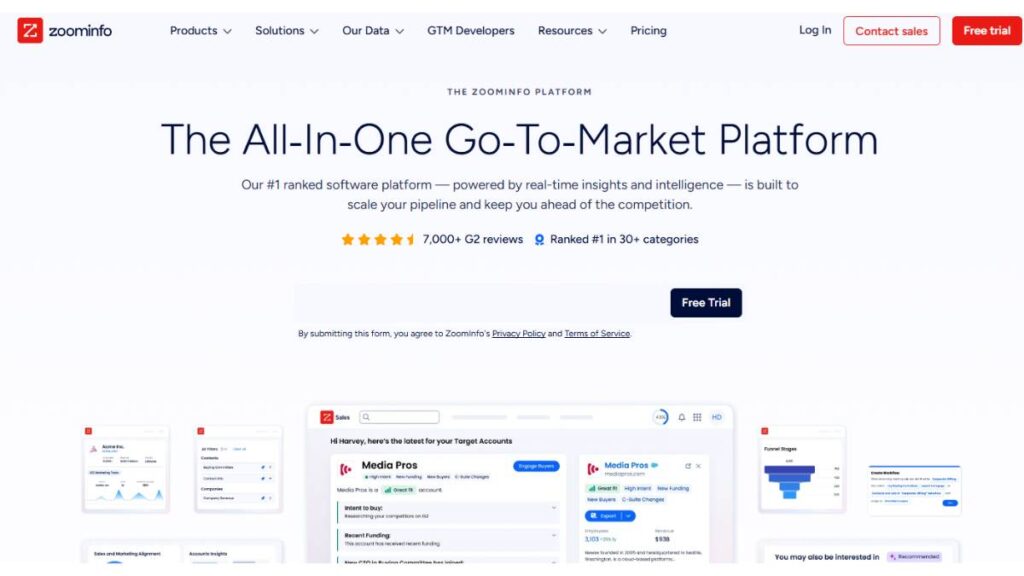
ZoomInfo has moved far beyond being just a contact database.
Its biggest strength is data depth. Company information, org charts, hiring activity, buying signals, technology usage, it’s all layered together in a way that gives sales teams a much clearer picture of who is actually worth contacting.
The addition of Copilot AI pushes it further into workflow automation. Instead of manually digging through records, teams can surface accounts showing real intent, prioritize leads, and trigger outreach based on what prospects are doing.
That matters more than it sounds. A company hiring heavily for cybersecurity roles, for example, is a very different prospect than one quietly maintaining the status quo.
Best fit:
- Enterprise sales teams
- Account-based marketing programs
- Companies with long sales cycles and complex targeting
It’s powerful, but not lightweight. Smaller teams may find it expensive or overly detailed for simpler outreach needs.
Outreach
Outreach has always been strong on execution, cadences, workflows, and sales engagement, but where it stands out now is conversation intelligence.
Kaia AI listens to calls, surfaces objections, highlights next steps, and helps reps understand what is actually happening inside deals. That’s useful because most sales teams don’t struggle with activity. They struggle with knowing which activity matters.
There’s also a predictive layer built in. The platform looks at deal patterns, engagement signals, and rep behavior to forecast which opportunities are moving and which ones are quietly stalling.
For larger teams, that can save a surprising amount of time. Fewer “gut feeling” pipeline reviews. More visibility into what’s real.
Outreach works best when there is already a structured sales process in place. Without that, the platform can feel heavier than necessary.
Apollo
Apollo has become one of the more popular options for startups and smaller sales teams because it combines a few things that are usually separate: lead database, outreach platform, enrichment, and writing assistance.
That all-in-one setup is a big reason people choose it.
The lead database is large enough for most B2B use cases, and the filters are surprisingly useful. Industry, job title, funding stage, company size, technologies used, it’s all there, without needing multiple subscriptions stitched together.
Its email writing assistant is solid, especially for teams that need to move quickly. Not perfect. Sometimes the messaging still needs trimming or a stronger point of view. But it gets past the blank-page problem.
Apollo also includes lead scoring, which helps narrow down which contacts deserve attention first. That’s often where time gets wasted in outreach, not writing emails, but chasing the wrong people.
Best for:
- Early-stage startups
- Lean sales teams
- Companies are looking for one platform instead of several smaller ones
Salesloft
Revenue Orchestration AI
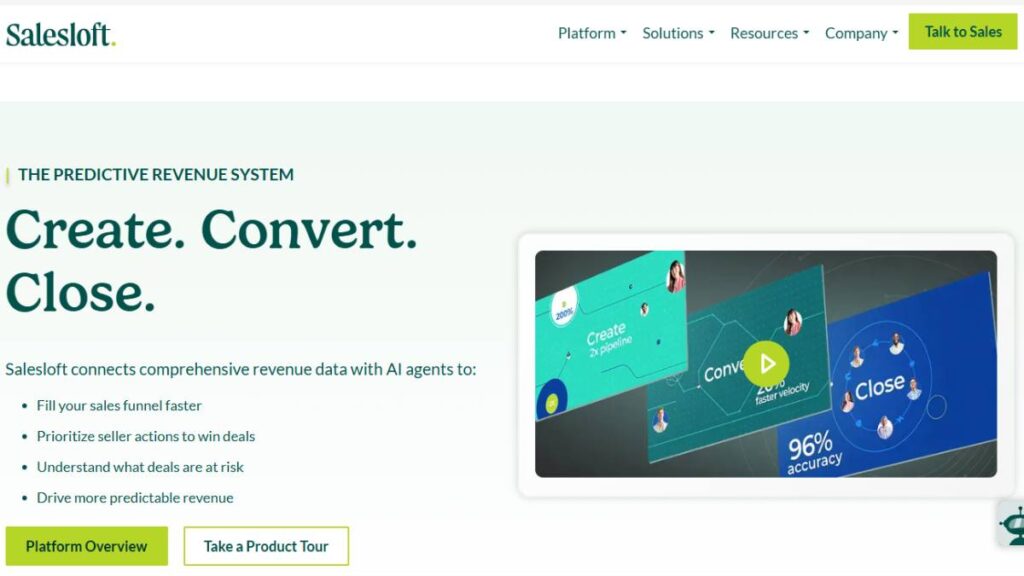
Salesloft leans more toward revenue orchestration than pure outreach.
That sounds like a buzzword at first, but in practice, it means the platform tries to connect outreach activity with pipeline movement and deal health. Rhythm AI is central to that. It looks at what’s happening across accounts and recommends what sales reps should focus on next.
Not just “send another email,” but more specific actions, follow up with this stakeholder, revisit this stalled account, push this deal before it goes cold.
There’s also strong visibility into forecasting and pipeline trends. For managers, that can be more valuable than the outreach features themselves.
Salesloft tends to make the most sense for mid-size and enterprise teams that already have volume and need better prioritization, not just more messages going out.
Reply.io
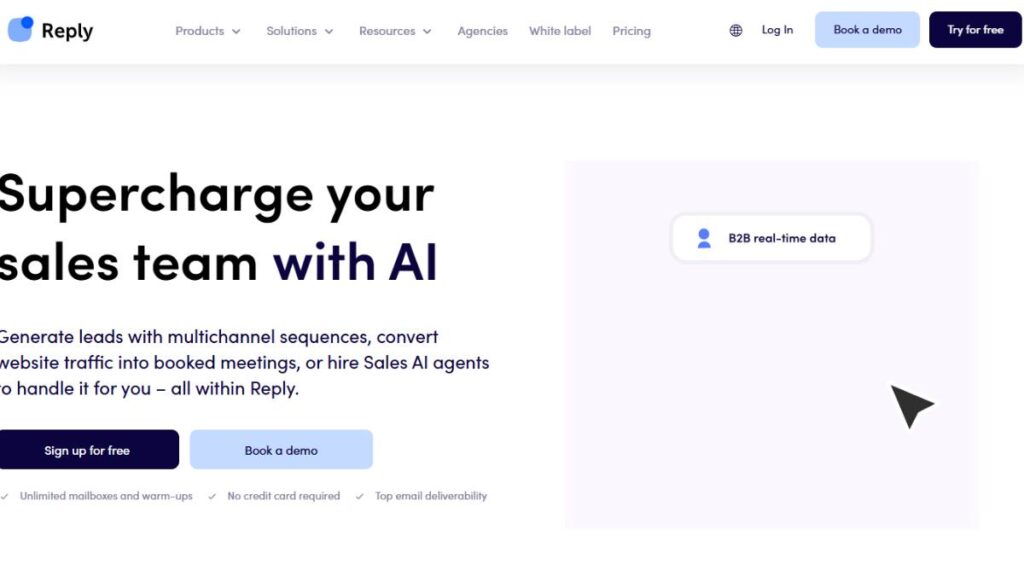
Multichannel Outreach AI
Reply.io is built for teams that don’t want to rely on email alone.
Its main advantage is multichannel sequencing. One prospect might receive an email, then a LinkedIn touch, then an SMS, then another follow-up a few days later, all inside one coordinated sequence.
Jason AI helps generate and optimize those messages. The writing tends to be more usable than many expect, especially for shorter outreach. Less stiff. Less obviously templated.
There’s also a scoring layer that helps identify which sequences and messages are performing well. Useful, because not every audience responds the same way.
Reply.io is especially strong for teams doing outbound at scale but still trying to keep the experience somewhat personal.
Instantly.ai
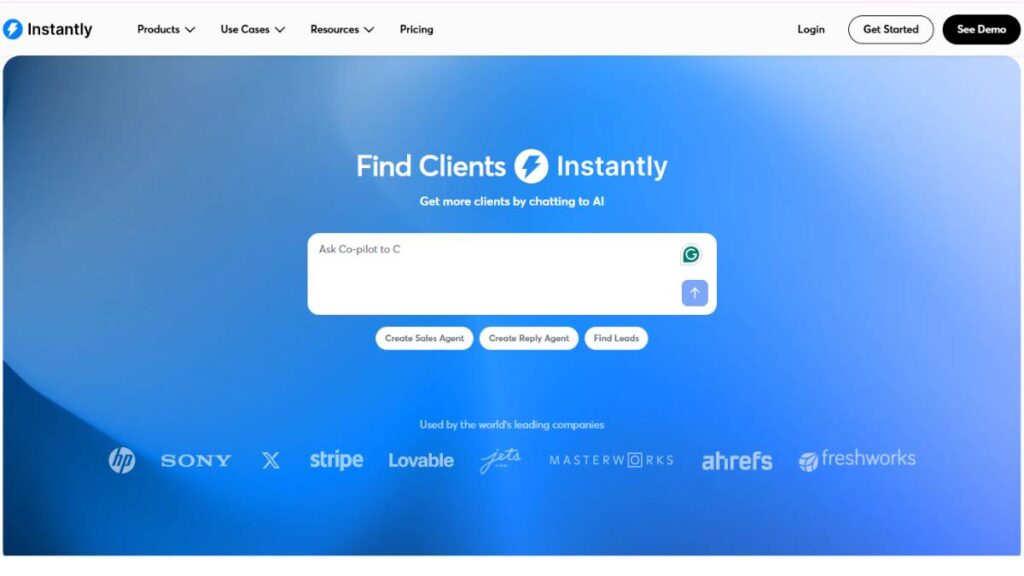
Cold Email Scaling
Instantly.ai is one of the stronger options for high-volume cold email.
The platform is built around scale. Multiple inboxes, large sending volumes, automated warm-up, and personalization layered into campaigns. For teams running aggressive outbound programs, that combination matters.
Where Instantly usually stands out is speed. Campaigns can be launched quickly, lists imported fast, and inboxes managed without much friction.
The personalization features are decent, though not as advanced as some enterprise-focused platforms. But that’s not really the point here. Instantly is more about volume without completely sacrificing relevance.
Best suited for:
- Agencies
- Lead generation teams
- Businesses running large-scale cold email campaigns
The tradeoff is that it works best when there is already a strong offer and clear targeting. Otherwise, scaling just means more people ignore the message.
Smartlead
Deliverability Optimization
Smartlead focuses heavily on deliverability, which has quietly become one of the hardest parts of outbound.
Inbox placement is tougher than it used to be. Sending more emails no longer works if the domain gets flagged or the messages land in spam, which is why many teams start evaluating Smartlead alternatives. Sending more emails no longer works if the domain gets flagged or the messages land in spam.
Smartlead addresses that with inbox rotation, sender management, spam testing, and multi-account support. It’s designed for teams that need to send a lot of outreach but still keep deliverability stable.
The inbox rotation feature is particularly useful because it spreads sending activity across accounts, reducing the chance of burning a domain too quickly.
For companies struggling with poor open rates despite strong messaging, deliverability is often the hidden issue. Smartlead is one of the few platforms built specifically around solving that.
Lemlist
Personalization & Creative Outreach
Lemlist has always taken a more creative approach to outreach.
Instead of relying only on text personalization, it supports dynamic images, custom variables, landing pages, and multichannel campaigns that feel more tailored.
That makes it especially useful for outreach where standing out matters. Agencies, recruiters, consultants, basically anyone competing in crowded inboxes.
The dynamic image feature still gets attention because it can make an email feel much more custom without requiring manual work for every contact.
Lemlist is not the best choice for massive enterprise sales teams. It works better for smaller teams that care more about personalization quality than raw volume.
Lavender
Email Coaching AI
Lavender is less of a full outreach platform and more of a writing coach.
Its main job is to improve the quality of outbound emails before they are sent. It analyzes tone, length, readability, personalization, and overall likelihood of getting a response.
That might sound simple, but most cold emails have the same problems:
- Too long
- Too vague
- Too focused on the sender instead of the prospect
Lavender catches those patterns quickly.
It’s especially useful for sales teams that already have a platform for sending emails but need help improving what those emails actually say.
Gong
Conversation Intelligence AI
Gong is often grouped with outreach tools, but really, it sits a little further down the funnel.
Its strength is analyzing conversations, calls, emails, meetings, and surfacing what is helping or hurting deals.
Gong identifies trends that are easy to miss in day-to-day selling. Which objections show up most often? Which messaging resonates? Which deals are likely to stall?
That information can then feed back into the outreach strategy. Better messaging. Better timing. Better targeting.
For larger teams, Gong often becomes less about monitoring calls and more about understanding the entire sales process in a more honest, less anecdotal way.
6sense
Predictive ABM AI
6sense is built for account-based marketing and predictive targeting.
Instead of focusing only on individual leads, it helps identify which accounts are most likely to buy, and when.
That timing piece is important. A company may fit the ideal customer profile perfectly, but if there is no buying activity, the outreach usually falls flat.
6sense looks at intent data, website behavior, content consumption, and other signals to determine which accounts are moving closer to a decision.
It’s best suited for larger B2B organizations running account-based strategies, especially when sales and marketing need to work from the same set of signals.
Saleshandy
SMB Outreach Automation
Saleshandy is often a better fit for smaller businesses that need something practical, affordable, and fairly easy to use.
The platform covers the essentials, cold email sequences, follow-ups, and deliverability support, and adds AI Sequence Copilot to help build campaigns faster.
Its spam detection features are also useful. Not overly advanced, but enough to catch obvious problems before a campaign goes live.
Saleshandy usually works best for:
- Small businesses
- Freelancers and consultants
- Teams that need outreach without enterprise pricing
It may not have the same depth as larger platforms, but for many businesses, that simplicity is actually an advantage.
Klenty
Cadence Automation AI
Klenty focuses on cadences and multi-touch outreach.
The platform combines email, calls, LinkedIn actions, and follow-ups into structured sequences. KAI AI writer helps draft messages and reduce some of the manual work involved in campaign creation.
Where Klenty stands out is workflow organization. It gives sales teams a clearer system for managing ongoing outreach without needing to juggle multiple tools.
For companies with growing outbound teams, that structure becomes increasingly valuable. Otherwise, things get messy quickly: duplicate outreach, missed follow-ups, inconsistent messaging.
Klenty is a solid middle-ground option. More advanced than entry-level tools, but generally easier to manage than some enterprise platforms.
Enroll Now: AI Marketing Course
How to Choose the Best AI Outreach Tool
Most teams don’t pick the wrong tool because they chose something “bad.” They pick the wrong tool because it doesn’t match how they actually run outreach day to day.
That gap shows up quickly. Campaigns feel clunky. Setup takes longer than expected. People stop using half the features. Eventually, it becomes just another tool sitting in the stack.
So the starting point isn’t features. It’s a use case.
Cold email teams usually care about very different things compared to enterprise sales teams. If the goal is scale, sending thousands of emails, managing multiple inboxes, and keeping deliverability stable, then the tool needs to handle volume without breaking. If it can’t, nothing else really matters.
Sales engagement is a different story. Here, it’s less about sending more and more and more about managing conversations across channels. Emails, LinkedIn touches, follow-ups, all stitched together in a way that feels intentional… not random.
Then there’s ABM. That’s a different layer entirely. Account-level targeting, intent signals, timing, and outreach become more about when to engage than just how.
Trying to force one tool to cover all three usually leads to compromises.
When it comes to features, a few things tend to matter more than others:
- Personalization depth, not just placeholders, but actual context
- Deliverability controls, warm-up, sending limits, and domain handling
- Integrations, especially with CRM and email providers
- Scalability, both in terms of cost and workflow complexity
Everything else is secondary. Nice to have, but not critical.
One thing that often gets underestimated is usability.
Some platforms look powerful, but getting a campaign live takes hours. Or worse, days. That friction adds up. Teams default to shortcuts. Messaging quality drops. The tool ends up doing less than it should.
There’s also a stage factor.
Beginner-friendly tools are easier to set up, easier to run, and usually enough for smaller teams. But they hit limits. Advanced tools give more control, better data, deeper workflows, but they expect structure. Without that, they feel heavy.
A practical way to think about it: pick the tool that fits the current system, not the one that looks impressive in a demo. Scaling into complexity is easier than scaling out of it.
AI Outreach Tools Comparison Table
| Tool Name | Best For | Key AI Feature | Pricing Type | Ease of Use |
| ZoomInfo | Enterprise prospecting & ABM | Intent data + workflow automation | Premium / Enterprise | Moderate |
| Outreach | Sales engagement teams | Conversation intelligence (Kaia AI) | Premium | Moderate |
| Apollo | Startups & SMB prospecting | AI writing + lead scoring | Freemium / Paid | Easy |
| Salesloft | Revenue orchestration | Deal intelligence (Rhythm AI) | Enterprise | Moderate |
| Reply.io | Multichannel outreach | AI sequence generation (Jason AI) | Paid | Easy–Moderate |
| Instantly.ai | Cold email at scale | AI personalization + warmup | Paid | Easy |
| Smartlead | Deliverability-focused outreach | Inbox rotation + spam testing | Paid | Moderate |
| Lemlist | Creative personalization | Dynamic images + AI variables | Paid | Easy |
| Lavender | Email quality improvement | Real-time writing feedback | Freemium / Paid | Very Easy |
| Gong | Sales conversation analysis | Revenue intelligence insights | Enterprise | Moderate |
| 6sense | Predictive ABM targeting | Intent + account-level predictions | Enterprise | Advanced |
| Saleshandy | SMB outreach automation | AI sequence copilot + spam detection | Affordable Paid | Easy |
| Klenty | Structured sales cadences | AI writing + workflow automation | Paid | Moderate |
Tables like this help narrow things down quickly, but they don’t tell the full story. Two tools can look similar here and still feel completely different in practice. That only becomes obvious once campaigns are live.
AI Outreach Best Practices
Most outreach doesn’t fail because of the tool. It fails earlier, at the thinking stage.
Messaging is usually the first thing to slip.
A lot of campaigns look “personalized” on the surface. Name, company, maybe a sentence pulled from a website. But something still feels off. That’s because real personalization isn’t about inserting data. It’s about saying something that actually connects to what the other person cares about.
That part can’t be rushed.
Short emails tend to perform better. Not always, but often enough to notice a pattern. Long emails try to explain too much. Short ones leave space. They get read.
Subject lines follow a similar rule. The ones that look overly clever or optimized often get ignored. Simple, almost plain subject lines tend to blend in better. Which is exactly the point.
Deliverability is another quiet factor.
It’s easy to focus on copy and targeting while ignoring domain health. Then suddenly open rates drop, replies disappear, and it’s not obvious why. Usually, it’s a sending behavior. Too many emails, too fast. Not enough warm-up. Poor list quality.
Fixing that takes time. Avoiding it is easier.
There’s also a tendency to over-automate.
Automation is useful. Necessary, even. But when every step is automated without oversight, the output starts to feel… predictable. Slightly off. Reviewing campaigns, adjusting tone, rewriting key lines, that still matters.
One small tweak can change response rates more than launching a new campaign.
And then there’s metrics.
Open rates look nice on dashboards, but they don’t always mean much anymore. Replies matter more. Positive replies even more. Conversions above all.
Outreach works when it feels intentional. Not mass-produced. The tools can support that, but they don’t guarantee it. That part still comes down to how the campaigns are put together.
Common Mistakes to Avoid When Using AI Outreach Tools
Most outreach doesn’t break all at once. It fades.
Reply rates dip a little. Opens look fine, but conversations slow down. Then someone increases volume to compensate… and things get worse. That pattern shows up more often than it should.
One of the biggest causes is over-automation.
It starts with good intent, saving time, scaling faster, but ends up stripping away the parts that actually make outreach work. Messages become predictable. Sequences feel mechanical. Prospects can sense it, even if they can’t explain why.
Automation works best when it supports thinking, not replaces it.
Another issue is poor targeting. This one is harder to spot because everything looks right. The titles match. The industries match. But something still doesn’t land.
Usually, it’s because the targeting is too broad.
A “marketing manager” at a SaaS startup and a “marketing manager” at an enterprise company operate in completely different worlds. Same title, completely different context. If the messaging doesn’t reflect that, it feels off.
Then there’s deliverability, often ignored until it becomes a problem.
Emails landing in spam, domains getting flagged, inbox placement dropping quietly in the background. By the time it’s obvious, damage has already been done. And fixing it isn’t immediate.
Common triggers tend to be:
- Sending too many emails too quickly
- Skipping domain warm-up
- Using low-quality or scraped lists
- Running multiple campaigns without proper limits
And finally, relying too heavily on generated copy.
It’s tempting. Fast, easy, scalable. But most generated messages sit somewhere in the middle, polished but generic. They don’t offend, but they don’t stand out either.
A quick rewrite, a sharper angle, a clearer point, that small effort often makes a noticeable difference. Skipping that step is where many campaigns lose their edge.
Future of AI Outreach Tools
Outreach is shifting, but not in the way most people expect.
It’s not just about better emails or smarter sequences. The bigger change is happening at the workflow level, how much of the process can run without constant manual input.
There’s already movement toward systems that don’t just assist but operate. Identifying leads, building lists, writing messages, sending follow-ups, adjusting timing… all connected. Less fragmentation, fewer handoffs.
That said, full automation still has limits. Context is tricky. Timing is tricky. And most importantly, judgment is tricky.
Where things seem to be heading is a hybrid model. Systems handle the heavy lifting, data, sequencing, and optimization, while humans step in where nuance matters. Messaging angles. Positioning. Deciding when not to send something.
Another shift is happening in personalization formats.
Text alone is starting to feel saturated. Voice notes, short videos, and dynamic content are getting more attention, partly because they feel harder to fake. Not everyone will adopt them, but they’re becoming harder to ignore.
Timing is also becoming more precise.
Instead of fixed sequences, day 1, day 3, day 7, outreach is starting to respond to signals. Website visits, content engagement, and hiring activity. The message doesn’t just follow a schedule; it reacts to behavior.
And then there’s integration.
Outreach tools are no longer isolated systems. They’re tying into CRMs, analytics platforms, ad data, and customer interactions, building a more complete picture of each account. That opens up better coordination between sales and marketing, which has always been a weak spot.
The direction is clear. Less guesswork. More signals. But still a need for human judgment in the places that matter most.
Conclusion
There isn’t a single “best” outreach tool. That’s usually the wrong question.
Some platforms are built for scale,high-volume campaigns, multiple inboxes, and fast execution. Others focus on depth, better targeting, stronger insights, and more structured workflows. And a few sit somewhere in between.
What matters is alignment.
If the goal is to send more outreach, the tool should support volume without hurting deliverability. If the goal is improving response quality, then personalization and messaging support matter more. For complex sales cycles, insight and timing start to outweigh everything else.
The mistake is choosing based on features alone.
A long feature list looks impressive, but it doesn’t guarantee better results. In many cases, simpler tools outperform more complex ones because they’re easier to use consistently.
Outreach itself hasn’t changed as much as it seems.
Relevance still matters. Timing still matters. Clarity still matters.
The tools just make it easier, or harder, to execute those basics depending on how they’re used.
So the decision comes down to this: pick a tool that fits the way outreach is actually being run, not the way it’s supposed to run in theory. Then build from there.
FAQs:
What are the best AI outreach tools?
There isn’t a clean “top 3” that works for everyone. Some teams lean toward Apollo or Instantly for speed and simplicity, while others go with Outreach or Salesloft for more structured sales processes. It usually comes down to how outreach is being run. The tool that fits the workflow tends to outperform the one with more features.
Which AI tool is best for cold email outreach?
Cold email tools vary quite a bit depending on the goal. If the focus is on scale, platforms like Instantly or Smartlead are often used. If the goal is standing out with better messaging, Lemlist tends to come up more. There’s always a tradeoff between volume and depth, so the “best” option depends on which side matters more.
Are AI outreach tools effective for B2B sales?
They can be, especially in B2B, where consistency is hard to maintain manually. Long sales cycles, multiple stakeholders, and things slip through easily. These tools help keep outreach structured and ongoing. But effectiveness still depends on targeting and messaging. If those are off, no tool really fixes that.
How do AI outreach tools improve email reply rates?
Mostly by making messages feel a bit more relevant. Not dramatically different, just enough to catch attention. Instead of broad templates, the messaging shifts slightly based on role or context. That small adjustment tends to improve replies over time. It’s less about creativity, more about saying something that actually makes sense to the reader.
What features should an AI outreach tool have?
A few things matter more than the rest. Personalization that goes beyond placeholders, solid deliverability controls, and clean integrations with email and CRM systems. Everything else is secondary. Some tools overload features, but if the basics aren’t reliable, those extras don’t really help much in practice.
Are AI outreach tools safe for email deliverability?
They’re generally safe, but not foolproof. Most include warm-up and sending limits, which help. The bigger risk comes from how they’re used, sending too aggressively, poor lists, things like that. Deliverability isn’t something the tool “handles” on its own. It needs a bit of discipline behind it.
Can AI replace sales outreach completely?
Not really. It can take over repetitive parts, drafting, sequencing, and follow-ups, but outreach still needs judgment. Timing, tone, knowing when to push or hold back… those aren’t always obvious. So it ends up being more of a support system than a replacement. Useful, but not independent.
What is the difference between AI outreach and email marketing tools?
They serve different purposes, even if both involve sending emails. Outreach tools are usually one-to-one or small-batch, meant to start conversations. Email marketing tools are built for scale, newsletters, campaigns, and broadcasts. The tone, structure, and intent are completely different once you look closely.
How do AI outreach tools personalize cold emails at scale?
They rely on available data, job roles, company info, sometimes recent activity, and adjust the message around that. It’s not deep personalization every time, but it moves beyond basic merge tags. Done right, it feels slightly more considered. Done poorly, it still reads like a template with extra steps.
What is the difference between AI outreach tools and CRM software?
CRM systems are more about organizing contacts, deals, and pipeline stages. Outreach tools sit in front of that, handling communication with prospects. They often connect to each other, but the roles are different. One keeps track of relationships, the other tries to start or move them forward.
Which AI outreach tools are best for LinkedIn automation?
Tools that support multichannel outreach usually handle LinkedIn alongside email. Reply.io and Lemlist are common examples. That said, LinkedIn automation can get tricky. Overdoing it feels obvious pretty quickly, so even with the right tool, restraint matters more than features.
Do AI outreach tools help with email deliverability and inbox placement?
They help, yes, but within limits. Features like warm-up, sending controls, and basic checks make a difference. Still, deliverability depends a lot on list quality and sending habits. If those aren’t in good shape, the tool can only do so much.
Can AI outreach tools generate leads automatically?
They don’t generate leads out of thin air. What they do is make it easier to find and reach the right people. Better targeting, better timing, those things increase the chances of generating leads. But there’s still a need for a solid offer and clear positioning behind it.
What are the best AI outreach tools for small businesses and startups?
Smaller teams usually look for something simple and flexible. Apollo, Saleshandy, and tools that combine prospecting and outreach without too much setup. They’re easier to manage and don’t require a full sales system to get started. That matters more than having every advanced feature available.
How much do AI outreach tools typically cost?
Costs can vary quite a bit. Some tools start low and scale up with usage, while others are priced for larger teams from the start. What’s often missed is the usage side, how well the tool is actually used. A cheaper tool used well tends to outperform an expensive one that sits underused.
Are AI-generated outreach emails better than manually written emails?
Not automatically. Generated emails are faster and more consistent, but they can feel a bit flat. Manually written ones usually have more edge, more clarity. The middle ground works best. Use the draft, then adjust it. That extra pass often makes the difference.
How can AI outreach tools improve response and conversion rates?
They tighten the process. Better targeting, more consistent follow-ups, slightly improved messaging, nothing dramatic on its own, but it adds up. Over time, that structure tends to lift response rates. Conversions improve when the right people are contacted at the right time.
What integrations should you look for in an AI outreach platform?
At the very least, it should connect smoothly with email and CRM systems. Beyond that, LinkedIn and data tools can be useful, depending on the setup. The goal isn’t to stack integrations, just to avoid manual work and keep data flowing without constant cleanup.