
AI Lifecycle Marketing Tools have started to shift how marketing actually gets done, not in a dramatic overnight way, but gradually, almost quietly. This blog walks through that shift. It covers what lifecycle marketing really looks like in practice, where AI fits in (and where it doesn’t), and why more teams are moving away from one-off campaigns.
There’s also a closer look at 15 tools that are being used across different stages, some better for retention, others for acquisition or analytics. Alongside that, a simple way to think about choosing the right setup, without overcomplicating it. The focus stays practical throughout, what works, what tends to get ignored, and where most setups break.
Table of Contents
What Are AI Lifecycle Marketing Tools?
At a glance, AI lifecycle marketing tools look like just another category in the already crowded marketing stack. But they’re not really about adding more tools. They’re about changing how the whole system runs.
These platforms sit on top of customer data and quietly make sense of it. Not just reporting what happened, but nudging what should happen next. Who needs a follow-up? Who’s about to drop off? Who’s ready to buy again but hasn’t been asked yet.
Traditional lifecycle marketing did try to solve this. But it leaned heavily on fixed rules: “if this happens, send that.” It worked… until it didn’t. As the number of users, touchpoints, and behaviors increased, those rules started breaking down. Too rigid. Too slow to adapt.
AI tools handle that mess differently. They look for patterns instead of waiting for instructions. And those patterns aren’t always obvious; sometimes it’s a mix of small signals that, together, point to intent.
Across the lifecycle, this creates a noticeable shift:
- In acquisition, targeting feels sharper. Less spray-and-pray, more precision
- During activation, onboarding flows adjust based on how people actually behave, not how someone mapped them months ago
- Retention becomes less reactive. Instead of chasing churn, there’s an attempt to prevent it early
- Loyalty builds through consistency, small, relevant touches that don’t feel forced
- Advocacy… that tends to follow when everything else is done right
Underneath all of this, a few things are doing the heavy lifting.
Predictive analytics is one. It’s not magic, but it’s useful. Looking at past behavior to make a decent guess about what’s coming next.
Segmentation also changes quite a bit. Instead of static lists that go stale quickly, users move between groups based on what they’re doing right now. Sometimes, even before a clear shift is visible.
Behavioral tracking ties everything together. Every click, scroll, purchase, it all feeds back into the system. Messy data, yes. But over time, it sharpens.
And then there’s journey orchestration. Probably the least talked about, but the most important piece. This is where messages, channels, and timing come together. When it’s done well, it doesn’t feel like a “journey” at all. Just… a series of interactions that make sense.
What Is Lifecycle Marketing?
Lifecycle marketing sounds more complicated than it actually is.
At its core, it’s just about talking to customers differently depending on where they are. That’s it. No one-size-fits-all messaging. No, assuming everyone is ready to buy right now.
Key Lifecycle Stages
Awareness
People move through stages. Not always neatly, and not always in order, but the pattern is there.
Awareness is the starting point. Someone discovers a brand, maybe through content, maybe an ad, maybe a recommendation. At this stage, attention is fragile. Push too hard, and it’s gone.
Consideration
Then comes consideration. This is where people slow down a bit. They compare, explore, and hesitate. Questions start showing up here, sometimes obvious, sometimes unspoken.
Conversion
Conversion is the moment everyone tracks. A purchase, a signup, some form of commitment. But focusing only on this stage is where things usually go wrong.
Because after conversion… most of the value still hasn’t been realized.
Retention
Retention is where things either stabilize or quietly fall apart. Customers need a reason to come back, to stay engaged, to feel like they made the right choice. This part often gets less attention than it should.
Advocacy
And then, occasionally, advocacy. When customers start recommending a product without being asked. Not something that can be forced, usually a byproduct of everything else working well.
Real-World Example of Lifecycle Marketing in Action
A simple example makes this clearer.
Someone comes across a brand while scrolling. Clicks through, browses a bit, leaves. Later, a reminder brings them back. They buy. After that, instead of random promotions, they get something useful, maybe tips, maybe a relevant offer. Over time, the experience feels… consistent. Not overwhelming, not absent.
Eventually, they mention it to a friend.
Nothing flashy happened there. Just a series of small, well-timed interactions.
That’s lifecycle marketing when it’s working.
Why AI Lifecycle Marketing Is Important for Businesses
Shift from Campaign-Based Marketing to Lifecycle-Based Growth
There’s been a quiet shift in how growth happens.
Not long ago, most strategies revolved around campaigns. Launch something, push traffic, get conversions, move on. It still works in bursts, but it’s getting harder to rely on.
Customer acquisition costs have been creeping up. Attention is scattered. And even when someone converts, there’s no guarantee they’ll stick around.
That’s where lifecycle thinking starts to matter more than campaign thinking.
Instead of constantly chasing new users, the focus shifts toward making existing relationships stronger. Not in a forced way, but by paying closer attention to how people behave after that first interaction.
Importance of Customer Lifetime Value (LTV)
AI fits into this naturally. Not as a replacement for strategy, but as a way to actually execute it at scale.
Personalization is one obvious area. Not just adding a first name to an email, that stopped being impressive a long time ago. This is more about adjusting timing, content, and channel based on behavior. Subtle changes, but they add up.
Churn prediction is another piece that tends to get overlooked. Most teams notice churn after it’s already happened. By then, options are limited. AI tools can flag early signals, maybe engagement is dropping, maybe usage patterns are shifting, and trigger a response before things go cold.
Role of AI in Lifecycle Marketing
Automation also looks different here. It’s less about setting up rigid workflows and more about creating systems that adapt over time. Still structured, but not stuck.
The overall effect isn’t dramatic in a single moment. It’s gradual. But that’s kind of the point.
Small improvements across multiple stages. Fewer missed opportunities. Better timing. Over time, those things compound.
Key Benefits of Using AI Lifecycle Marketing Tools
Higher Customer Retention Rates
The benefits don’t always show up where people expect.
It’s easy to assume the biggest win is saving time. And yes, there’s some of that. But the more noticeable shift is in how decisions get made.
Instead of guessing who to target or when to reach out, there’s a layer of data guiding those choices. Not perfectly, but enough to reduce obvious mistakes.
Retention tends to improve first. Not because of one big change, but because of better timing. Messages go out when they actually make sense, not just because a schedule says so. Customers feel that difference, even if they can’t explain it.
Improved Personalization Across Channels
Personalization also starts to feel less forced. It’s not just about swapping out variables in a template. It’s about sending something that fits the moment. Sometimes that means saying less, not more.
Campaign performance improves, too, though it’s rarely dramatic overnight. It’s more of a steady lift. Better targeting here, better timing there. Over time, those small gains stack up.
Increased ROI and Marketing Efficiency
There’s also a shift in how teams spend their time. Less manual setup. Fewer repetitive tasks. More focus on what’s actually working, and what isn’t.
And then there’s clarity. Probably the most underrated benefit.
With better data and some level of prediction, decisions don’t feel as uncertain. There’s still room for judgment, of course. But it’s supported by patterns that are hard to ignore once they show up consistently.
In the end, it’s not about replacing human thinking. It’s about giving it better inputs.
And when that happens, the whole system starts to run a bit smoother. Not perfect. Just… better.
15 Best AI Lifecycle Marketing Tools
Optimove
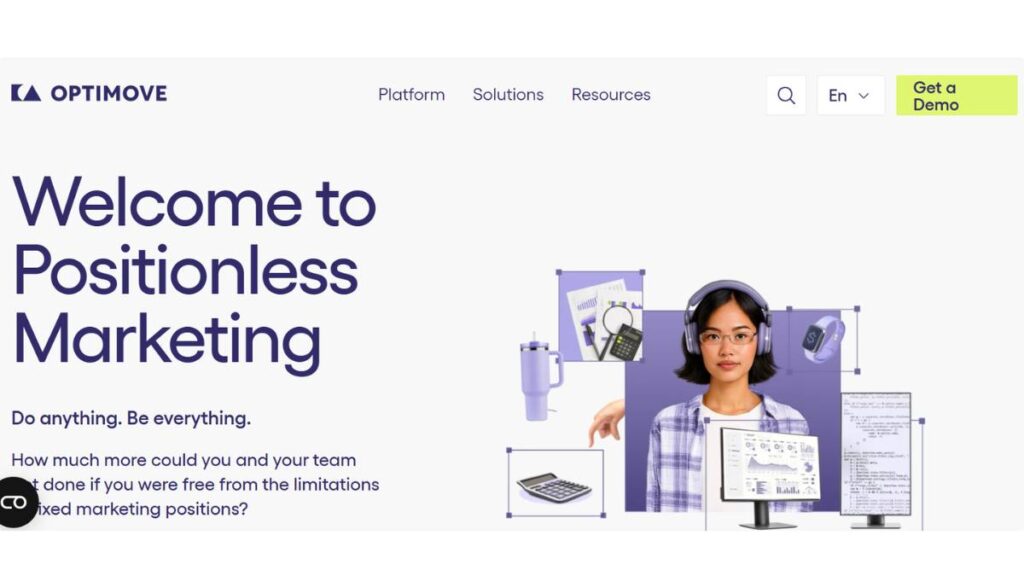
Best for Customer Lifecycle Orchestration
Optimove tends to show up when retention becomes the real problem. Not traffic, not conversions, but what happens after. It’s built for the middle and later part of the lifecycle, where things usually get messy.
There’s a lot going on under the hood, but from the outside, it feels like a system that keeps adjusting itself. Segments shift, journeys evolve… not dramatically, just enough to stay relevant.
Best For
Retention-heavy businesses that already have a steady flow of customers but struggle to keep them engaged over time.
Key Features
- Predictive customer segmentation that updates continuously
- Multi-step journey orchestration across channels
- Built-in testing to refine lifecycle campaigns
Pros
- Strong focus on retention, not just acquisition
- Segmentation feels dynamic, not static
- Works well at scale
Cons
- Takes time to fully understand and set up
- Might feel heavy for smaller teams
HubSpot AI
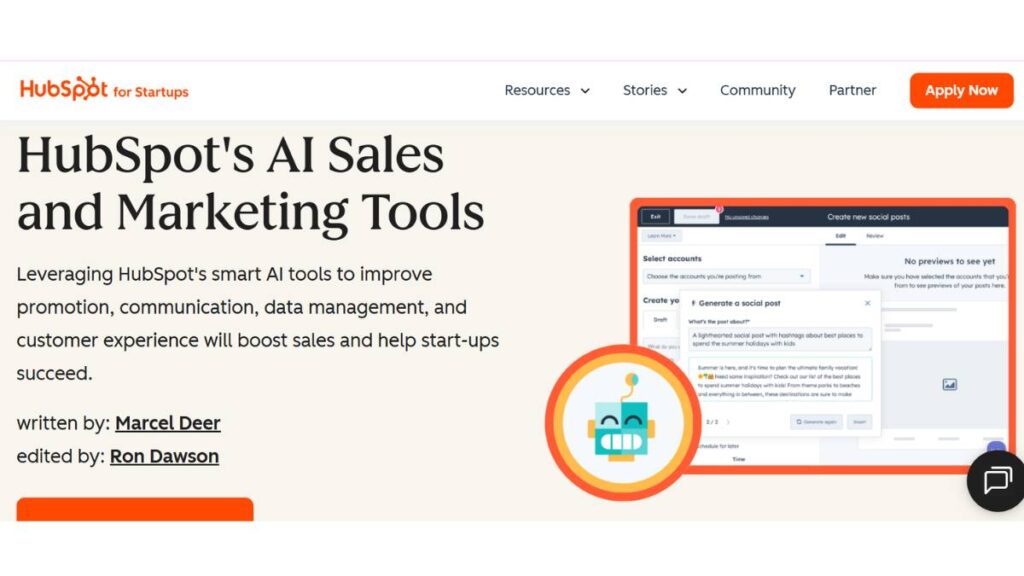
Best for Lead Scoring and Personalization
HubSpot feels familiar to most teams, which is part of its advantage. The AI layer doesn’t try to reinvent everything; it builds on what’s already there. That makes adoption easier, though it’s not always perfect.
Lead scoring is where it quietly does a good job. Not flashy, but useful. Leads get prioritized based on behavior patterns instead of arbitrary rules, which tends to reduce wasted effort.
Best For
Inbound-focused teams that need better clarity on which leads to prioritize.
Key Features
- AI-driven lead scoring based on engagement patterns
- CRM-integrated personalization
- Automated email and workflow triggers
Pros
- Everything sits in one ecosystem
- Easy to use compared to more complex tools
- Strong integration with sales workflows
Cons
- Can get expensive as usage grows
- Limited flexibility compared to specialized tools
Klaviyo
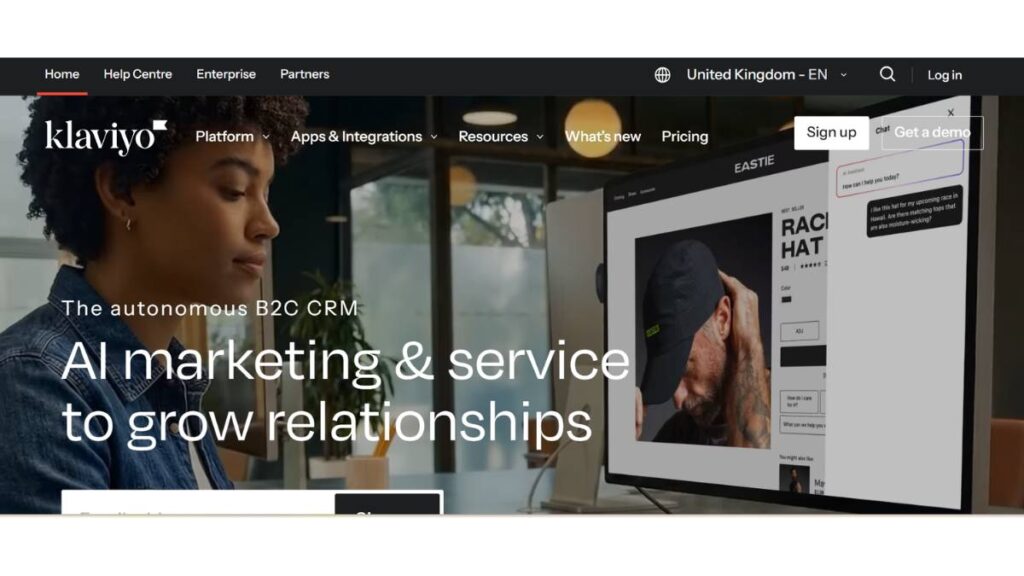
Best for Ecommerce Lifecycle Marketing Automation
Klaviyo is almost built around ecommerce behavior. Orders, browsing patterns, repeat purchases, everything feeds into how campaigns are triggered.
Most teams start with basic flows, then slowly layer complexity. That’s usually where the value shows up. Not in one big change, but in small adjustments across the lifecycle.
Best For
Ecommerce brands that want deeper control over email and SMS lifecycle campaigns.
Key Features
- Advanced segmentation based on purchase behavior
- Pre-built and customizable lifecycle flows
- Strong integrations with ecommerce platforms
Pros
- Easy to get started, but scales well
- Strong data foundation for targeting
- Good balance between control and usability
Cons
- Can become complex with too many flows
- Pricing increases with list size
Braze
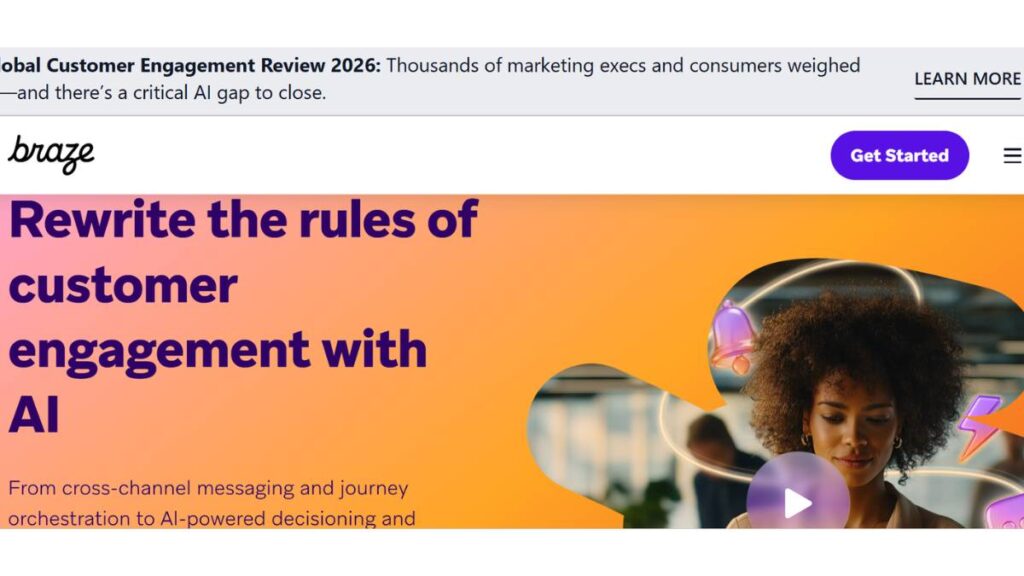
Best Omnichannel Lifecycle Marketing Platform
Braze is built for teams that need everything connected. Email, push, in-app messages, it all runs together. That sounds simple, but in practice, it’s hard to pull off.
Where it stands out is responsiveness. Campaigns can react to user actions quickly, which makes interactions feel more natural… or at least less delayed.
Best For
Large teams managing multi-channel engagement at scale.
Key Features
- Real-time messaging across multiple channels
- Event-based triggers for lifecycle campaigns
- Deep personalization capabilities
Pros
- Strong omnichannel coordination
- Real-time engagement works well
- Flexible campaign setup
Cons
- Steeper learning curve
- Requires proper setup to get full value
Iterable
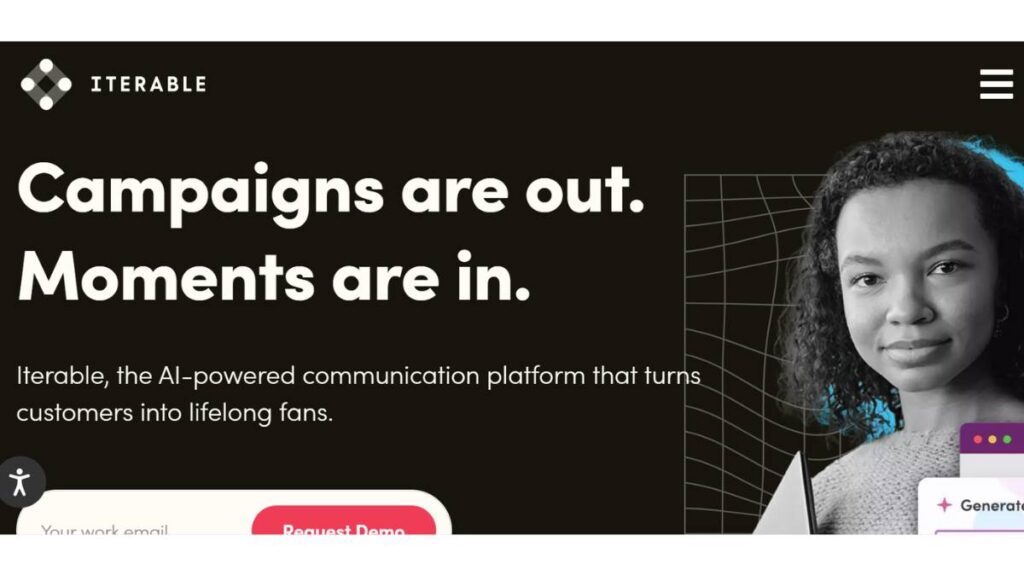
Best for Predictive Customer Engagement Journeys
Iterable gives teams room to experiment. Not everything is locked into rigid flows, which can be a good thing… or slightly overwhelming at first.
The journey builder is flexible enough to test different paths without rebuilding everything from scratch. Over time, that flexibility pays off.
Best For
Teams that want to test and refine lifecycle journeys continuously.
Key Features
- Visual journey builder with multiple paths
- Behavioral targeting and triggers
- Cross-channel campaign management
Pros
- Flexible and adaptable
- Good for experimentation
- Supports multiple lifecycle stages
Cons
- Can feel complex early on
- Requires ongoing optimization
Improvado AI
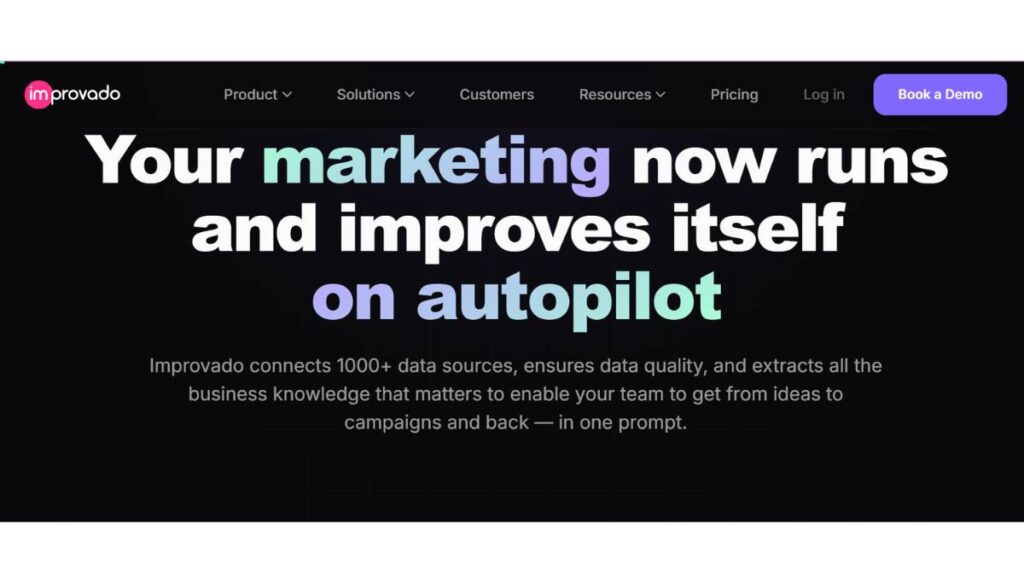
Best for Lifecycle Marketing Analytics
Improvado is less about sending campaigns and more about understanding them. Which sounds obvious, but it’s usually the missing piece.
Data tends to live in different places. Improvado pulls it together. That alone can change how decisions are made.
Best For
Teams that need clearer visibility into lifecycle performance across channels.
Key Features
- Data aggregation from multiple marketing platforms
- Custom dashboards and reporting
- Attribution tracking across the lifecycle
Pros
- Strong data clarity
- Helps connect fragmented insights
- Useful for performance tracking
Cons
- Not a campaign execution tool
- Setup can take time
Jasper
Best AI Content Tool for Lifecycle Campaigns
Content slows things down more than expected. Writing emails, adapting tone, keeping things consistent… it adds up.
Jasper helps with that layer. It doesn’t fix strategy, but it makes execution faster. And sometimes, that’s enough to keep campaigns moving.
Best For
Teams are producing high volumes of lifecycle content.
Key Features
- Content generation for different lifecycle stages
- Tone and style adjustments
- Campaign content scaling
Pros
- Speeds up content creation
- Helps maintain consistency
- Useful across multiple channels
Cons
- Needs human oversight
- Not a full marketing platform
Seventh Sense
Best for Email Send-Time Optimization
Timing often gets overlooked. Same message, different time, completely different results.
Seventh Sense focuses only on that. It adjusts send times based on individual behavior, which sounds small but tends to improve engagement steadily.
Best For
Teams are relying heavily on email engagement.
Key Features
- Personalized email send-time optimization
- Engagement pattern analysis
- Integration with existing email platforms
Pros
- Improves open rates over time
- Easy to integrate
- Doesn’t require major changes
Cons
- Limited to email optimization
- Gains are gradual, not instant
Creatio
Best No-Code Lifecycle Automation Platform
Creatio removes some of the technical friction from automation. That alone makes it appealing for teams that want control without constant developer involvement.
Workflows can be built and adjusted fairly quickly, which matters when strategies change, and they usually do.
Best For
Teams that want lifecycle automation without heavy technical dependency.
Key Features
- No-code workflow builder
- CRM and marketing automation integration
- Customizable lifecycle processes
Pros
- Flexible without coding
- Combines CRM and automation
- Adaptable workflows
Cons
- Initial setup takes effort
- Interface can feel dense
Drift
Best Conversational AI for Lead Qualification
Drift changes how leads enter the funnel. Instead of forms, conversations. It’s a small shift, but it changes the tone of early interactions.
Qualification happens earlier, which tends to save time later. Not every lead is worth chasing, and this helps filter that upfront.
Best For
B2B teams focused on improving lead qualification.
Key Features
- Conversational chat-based lead capture
- Real-time engagement with visitors
- Lead qualification workflows
Pros
- Reduces friction in lead capture
- Improves lead quality
- Works well for sales alignment
Cons
- Not useful for all industries
- Requires thoughtful setup
Mailchimp AI
Best for Audience Segmentation
Mailchimp is often where teams start. It’s simple enough to use without much friction, but still offers enough depth to improve targeting.
Segmentation is where it quietly delivers value. Not overly complex, but effective.
Best For
Small to mid-sized businesses starting with lifecycle marketing.
Key Features
- AI-powered audience segmentation
- Email automation workflows
- Basic analytics and insights
Pros
- Easy to use
- Affordable starting point
- Covers core lifecycle needs
Cons
- Limited advanced features
- Not ideal for large-scale operations
Zapier
Best for Workflow Automation Across Lifecycle Stages
Zapier sits in the background. It connects tools that don’t naturally talk to each other.
It’s not exciting, but it’s necessary. Without it, workflows break. With it, things just… move.
Best For
Teams are using multiple tools that need better integration.
Key Features
- Automation between apps and platforms
- Trigger-based workflows
- No-code setup
Pros
- Saves time on repetitive tasks
- Connects different systems
- Easy to implement
Cons
- Limited to integrations
- Can get messy with too many workflows
Sprout Social
Best for Social Media Lifecycle Management
Social is often treated separately, but it shouldn’t be. Sprout Social brings it back into the lifecycle conversation.
Engagement, listening, response tracking, all of it feeds into how customers experience a brand.
Best For
Brands that rely heavily on social media engagement.
Key Features
- Social listening and monitoring
- Engagement tracking
- Content scheduling and analytics
Pros
- Strong social insights
- Helps manage engagement at scale
- Connects social to the broader lifecycle
Cons
- Focused only on social
- Not a full lifecycle platform
Reply.io
Best for Multi-Channel Outreach Automation
Reply.io is built for outreach. Especially outbound. Email, LinkedIn, structured into sequences that feel coordinated.
It helps keep communication consistent without feeling repetitive, which is harder than it sounds.
Best For
Sales teams manage outbound lifecycle stages.
Key Features
- Multi-channel outreach sequences
- Automation for follow-ups
- Performance tracking
Pros
- Streamlines outreach
- Keeps messaging consistent
- Useful for sales alignment
Cons
- Limited beyond outreach
- Needs careful setup to avoid a spammy feel
Delve AI
Best for Customer Persona & Campaign Optimization
Delve AI focuses on understanding the customer more deeply. Not just who they are, but how they behave.
That insight feeds into better segmentation, better messaging… basically, better decisions across the board.
Best For
Teams looking to refine customer personas and targeting.
Key Features
- AI-generated customer personas
- Behavioral insights and analysis
- Campaign optimization suggestions
Pros
- Improves targeting accuracy
- Helps refine messaging
- Adds depth to segmentation
Cons
- Needs sufficient data to work well
- Not a standalone execution tool
Inflection
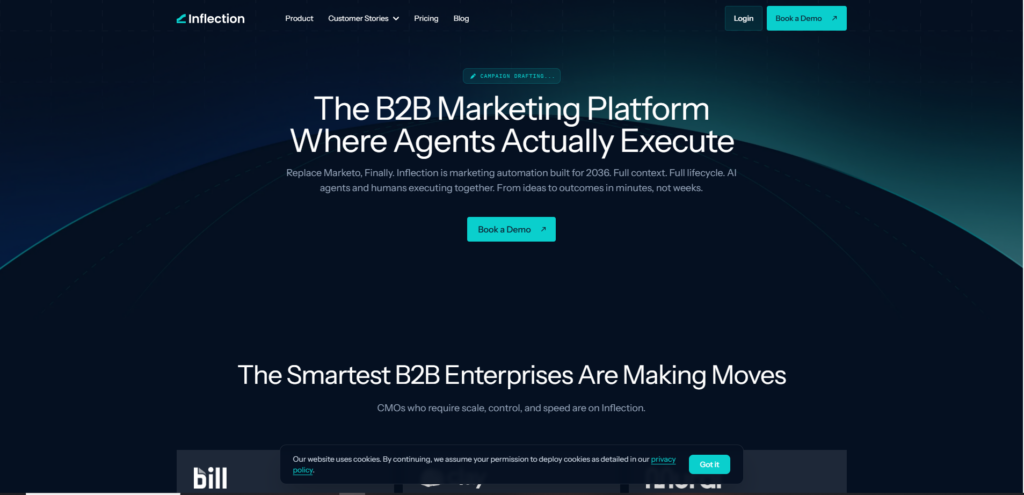
Best for B2B Lifecycle Marketing Automation
Inflection is designed for B2B enterprises that find themselves limited by the rigid rules of legacy marketing automation. It focuses on the full customer lifecycle, using AI to bridge the gap between product data and personalized communication. Rather than just sending emails, Inflection helps teams orchestrate journeys that adapt to how users are actually interacting with a product.
The platform’s strength lies in its ability to handle complex data without making the workflow equally complex. It allows CMOs and marketing teams to maintain control over their messaging while letting AI agents handle the repetitive tasks of segment finding and campaign drafting.
Best For
B2B companies with complex product data that need a more flexible, AI-driven alternative to traditional marketing automation platforms like Marketo.
Key Features
- AI-powered audience discovery and dynamic segmentation
- Automated journey mapping and campaign execution agents
- Direct integration with product data for behavior-triggered lifecycle flows
Pros
- Purpose-built for B2B lifecycle stages (activation, retention, expansion)
- Significantly reduces the manual overhead of managing complex campaigns
- Drives measurable increases in user engagement and reactivation
Cons
- Might be more power than a small startup with a simple funnel requires
- Requires a mindset shift from static rule-based triggers to AI-driven orchestration
Enroll Now: AI Marketing Course
How to Choose the Right AI Lifecycle Marketing Tool
Choosing the right tool sounds straightforward… until it isn’t. Most platforms promise similar outcomes, better engagement, higher retention, and smarter targeting. The difference shows up only after implementation, when some tools quietly fit into the workflow while others create friction.
A better way to approach this is to start from the problem, not the tool.
Define the Lifecycle Stage You Want to Optimize
This is where most decisions go slightly off track. Trying to solve everything at once usually leads to a bloated setup that doesn’t work particularly well anywhere.
Focus on one stage first.
If acquisition is the issue, then the tool should help qualify and convert leads more effectively. If retention is dropping, the focus shifts entirely to timing, messaging, and re-engagement. Different problems, different solutions.
It sounds obvious, but it’s easy to miss. Not every tool is built for every stage, even if it claims to be.
Evaluate AI Capabilities
There’s a difference between automation and intelligence. A lot of platforms automate tasks, send emails, trigger workflows, and move users between lists. Useful, but not enough.
The real question is whether the system adapts.
Does it adjust based on behavior, or does it just follow predefined rules? Does segmentation evolve, or stay fixed unless manually updated? These details matter more than feature lists.
Personalization also deserves a closer look. Not the surface-level kind, but how deeply the tool can adjust content, timing, and channel based on actual user behavior.
Test Usability in Real Marketing Workflows
A tool can look impressive in a demo and still be frustrating in practice.
Usability isn’t just about interface design. It’s about how quickly a team can move from idea to execution. How easily campaigns can be adjusted. How much back-and-forth is needed to make small changes?
Some platforms are powerful, but slow things down. Others are simpler but allow faster iteration. There’s no universal answer here; it depends on how the team works.
But it’s worth paying attention to early. Friction tends to show up later, when it’s harder to switch.
Check Integrations with CRM & Marketing Stack
Lifecycle marketing rarely happens in one tool. Data flows across systems, CRM, email platforms, analytics tools, and ecommerce platforms.
If those systems don’t connect properly, gaps start appearing. Delays in data syncing. Incomplete customer views. Missed triggers.
It doesn’t always break things immediately, but over time, it adds up.
Compatibility with existing tools isn’t just a technical detail. It directly affects how reliable the entire lifecycle system becomes.
Compare Pricing vs Expected ROI
Pricing conversations often focus on cost alone. But that doesn’t tell much.
A more useful lens is impact. What improvement is expected: higher retention, better conversion rates, and more efficient workflows, and how that translates into actual value.
Some tools seem expensive upfront, but pay off quickly if they solve the right problem. Others stay affordable but don’t move the needle enough to matter.
Scalability also comes into play. A tool that works at a small scale may not hold up as the customer base grows. Switching later can be more costly than starting with the right fit.
AI Lifecycle Marketing Tool Selection Decision Tree
Not every team needs the same setup. The “best” tool depends on what’s broken or what’s missing.
A simple way to think about it:
- If retention is the biggest concern, tools like Optimove or Braze tend to handle ongoing engagement more effectively
- If the focus is ecommerce automation, Klaviyo usually fits better because it’s built around purchase behavior
- If everything revolves around CRM and inbound leads, HubSpot is often the natural choice
- If the challenge is connecting multiple tools and workflows, Zapier becomes essential
- If visibility into performance is lacking, Improvado helps bring clarity across channels
It’s not about picking one and ignoring the rest. Most setups end up combining a few. But starting with the primary need keeps things focused.
Key Features to Look for in AI Lifecycle Marketing Software
AI-Driven Segmentation
Feature lists can get long quickly. Most of them sound similar on paper. The difference shows up in how those features actually work day-to-day.
A few capabilities tend to matter more than others.
AI-driven segmentation is one of them. Not just grouping users based on basic attributes, but adjusting those groups as behavior changes. Static segments go stale fast.
Predictive Churn Analysis
Predictive churn analysis is another. Knowing which customers are likely to disengage, before it happens, gives teams a chance to act early. Without that, most retention efforts become reactive.
Omnichannel Campaign Management
Omnichannel campaign management also plays a big role. Customers don’t interact through a single channel anymore. Email, SMS, push notifications, social… these touchpoints need to feel connected, not scattered.
Journey Automation
Journey automation ties everything together. It’s not just about triggering messages, but coordinating sequences that adapt as users move through different stages.
Real-Time Analytics Dashboards
Real-time analytics dashboards help make sense of all this. Without clear visibility, even well-designed campaigns can drift off track without anyone noticing.
Personalization Engines
And then there’s personalization. Not the basic kind, but deeper adjustments based on timing, context, and behavior. When done right, it doesn’t stand out; it just feels appropriate.
None of these features works in isolation. The value shows up when they connect and reinforce each other. When that happens, lifecycle marketing starts feeling less like a set of campaigns… and more like a system that keeps improving on its own.
How AI Lifecycle Marketing Software Improves Customer Retention
Retention rarely breaks in obvious ways. It usually fades, slower engagement, fewer interactions, and longer gaps between purchases. By the time it’s visible, it’s already late.
What lifecycle software does well is catch those early signals. Not perfectly, but early enough to act.
Behavioral Tracking
Everything starts with behavior. What users click, what they ignore, how often they return, and where they drop off. Individually, these signals don’t say much. Together, they start forming patterns.
Over time, those patterns become predictable. Not in a rigid way, but enough to flag when something feels off. A user who used to engage regularly suddenly slows down. Another who browses often but never converts. These are small shifts, but they matter.
Tracking this consistently changes how retention is approached. It moves from reactive to slightly proactive. And that “slightly” makes a difference.
Trigger-Based Campaigns
Once those signals are visible, timing becomes everything.
Trigger-based campaigns respond to behavior instead of schedules. If a user abandons a cart, they get a follow-up. Someone hasn’t logged in for a while, a nudge goes out. It’s simple in theory, but the execution matters.
The key is relevance. Too many triggers, and it starts feeling noisy. Too few, and opportunities get missed. The balance usually takes time to find.
But when it works, it doesn’t feel like a campaign. Just a timely interaction that makes sense in the moment.
Personalized Messaging
Personalization is often misunderstood. It’s not just about adding names or tweaking subject lines. That kind of personalization stopped working a while ago.
What matters more is context.
Why is this message being sent now? What has the user done recently? What might they need next? When messaging reflects that context, it lands better, sometimes quietly, but consistently.
It doesn’t have to be perfect. Just relevant enough to feel considered.
Churn Prediction Models
Churn prediction tends to sound more advanced than it actually is in practice. It’s really about identifying patterns that usually lead to disengagement.
Lower activity. Fewer interactions. Longer gaps between visits. These signals aren’t hidden; they’re just easy to miss without a system looking for them.
Once identified, they give teams a window. Not a huge one, but enough to try something, a reminder, an offer, a piece of content that pulls the user back in.
It won’t always work. But without that early signal, there’s usually no chance at all.
Metrics to Track in Lifecycle Marketing
Metrics can get overwhelming quickly. There’s always more data available than needed. The challenge isn’t collecting it, it’s knowing what actually matters.
A few metrics tend to anchor most lifecycle decisions.
Customer Lifetime Value (LTV) sits at the center. It reflects how much value a customer generates over time, which is ultimately what lifecycle marketing is trying to improve. It’s not always precise, but it gives direction.
Customer Acquisition Cost (CAC) adds context. High CAC isn’t always a problem, unless retention is weak. When both are viewed together, the picture becomes clearer.
Retention rate shows how well customers stick around. It’s one of those metrics that doesn’t move dramatically overnight, but even small improvements compound over time.
Churn rate is the flip side. It highlights how many customers are leaving, and sometimes more importantly, when they’re leaving. Early churn often points to onboarding issues, while later churn suggests deeper engagement problems.
Engagement rate gives a sense of how active users are. Opens, clicks, and interactions are not perfect indicators, but useful signals when tracked consistently.
Conversion rates across lifecycle stages tie everything together. Not just the initial conversion, but repeat purchases, upgrades, and reactivations. Each stage tells a slightly different story.
No single metric tells the full story. It’s the combination, and how those numbers move together, that starts to reveal what’s actually happening.
Is AI Lifecycle Marketing Software Suitable for Small Businesses?
There’s a common assumption that lifecycle tools are built for larger teams. More data, more complexity, bigger budgets. And while that’s partly true, it’s not the full picture.
Smaller businesses often benefit just as much, sometimes more.
Affordable Tools (Mailchimp, Zapier)
There are entry points that don’t require heavy investment. Tools like Mailchimp or Zapier handle core needs without overwhelming the setup process.
They won’t cover everything, but they don’t need to. At an early stage, even basic segmentation and automation can improve how customers are engaged.
The goal isn’t to build a perfect system right away. It’s to avoid obvious gaps.
Scaling with Growth
As the business grows, so does the complexity. More users, more data, more touchpoints. What worked early on starts feeling limited.
That’s usually the point where more advanced tools come into play. Not because they’re better in general, but because they handle scale more effectively.
The transition doesn’t have to be immediate. It can be gradual, layered on top of what already exists.
When to Invest in Advanced Tools
Timing matters here. Investing too early often leads to underutilized features. Investing too late creates bottlenecks.
A simple way to gauge it is if manual processes are slowing things down, or if decisions are being made without enough clarity, it might be time to upgrade.
Otherwise, it’s fine to keep things lean.
Conclusion:
There isn’t a single “best” tool. That’s usually the wrong way to look at it.
Different tools solve different problems. Some focus on retention, others on acquisition, others on connecting everything together. The right choice depends on where the gap is.
For some, it’s about improving onboarding. For others, it’s reducing churn. In some cases, it’s simply making sense of scattered data.
What matters is alignment.
Tools should match the stage that needs attention. Not just in terms of features, but in how they fit into the existing workflow. A powerful tool that doesn’t integrate well or slows things down won’t deliver much value.
It’s usually better to start small. Solve one problem properly. Then expand.
Over time, that approach builds something more sustainable, not a collection of tools, but a system that actually works together.
FAQs: AI Lifecycle Marketing Tools
What is customer lifecycle marketing software?
Customer lifecycle marketing software helps manage how a brand shows up across the entire customer journey. From the first interaction to repeat engagement, everything gets connected: data, timing, messaging. It’s less about running one-off campaigns and more about building a continuous flow, where communication adjusts as customers move and behave differently over time.
How does lifecycle marketing software increase customer lifetime value (LTV)?
It works by extending the relationship, not just optimizing the first sale. Once someone converts, the real work begins, keeping them engaged, bringing them back, and making each interaction feel relevant. Over time, those small improvements stack up. Customers stay longer, buy more often, and the overall value naturally goes up without chasing new users constantly.
What features should I look for in AI lifecycle marketing tools?
The useful features aren’t always the loudest ones on a product page. What tends to matter is how well the tool adapts. Segments that update on their own, insights that surface risks early, and automation that reacts instead of waiting. Strong reporting and multi-channel support also make a difference, especially when things start scaling.
How does lifecycle marketing improve customer retention?
Retention improves when communication feels timely… almost expected. Instead of blasting messages, lifecycle marketing responds to behavior, a drop in activity, a spike in interest, a missed action. These moments create natural opportunities to reconnect. It’s not aggressive, just well-timed. And that usually works better than constant pushing or discounts.
Can AI lifecycle tools integrate with CRM and ecommerce platforms?
Most of them are built with integration in mind. They connect with CRMs, ecommerce platforms, analytics tools, and all the usual pieces. That connection is what makes lifecycle marketing actually work. Without it, data stays fragmented, and campaigns lose context. When everything syncs properly, decisions start making a lot more sense.
How does customer segmentation work in lifecycle marketing?
Segmentation here isn’t static. It shifts. Instead of grouping users once and leaving it there, the system keeps adjusting based on behavior, what people click, ignore, and revisit. Over time, those segments evolve naturally. That’s what keeps messaging relevant, because it reflects what customers are doing now, not what they did weeks ago.
What metrics should be tracked in lifecycle marketing?
There’s always a temptation to track everything, but a few numbers usually carry most of the weight. Lifetime value gives the big picture, while retention and churn show what’s holding up or slipping. Engagement and conversions across stages fill in the details. It’s really about how these metrics move together, not in isolation.
Is lifecycle marketing software good for small businesses?
It can actually be a strong advantage for smaller teams. With limited resources, automation and smarter targeting go a long way. The key is not overcomplicating things early on. Start with a couple of workflows and a few segments. Build from there. Most of the value comes from consistency, not complexity.
How does automation work in lifecycle marketing platforms?
Automation usually runs on triggers, actions, or inactions. Someone signs up, abandons a cart, stops engaging… the system responds. At first, it’s fairly straightforward. Over time, it gets more layered, adjusting based on patterns and outcomes. What starts as simple workflows slowly turns into something more adaptive, almost self-correcting.
What are the biggest benefits of AI lifecycle marketing tools?
The impact isn’t always dramatic upfront. It shows up in smoother execution, better timing, and more consistent engagement. Campaigns start aligning more closely with what customers are actually doing. Over time, retention improves, decisions feel less guessy, and the whole system runs with fewer gaps. Small gains, but they compound.
What is the difference between lifecycle marketing and marketing automation?
Lifecycle marketing is the strategy for how customers move from one stage to another. Marketing automation is just the mechanism that helps execute it. Without the lifecycle layer, automation can feel scattered, like disconnected actions. When both work together, the system feels more intentional, less like a series of random campaigns.
How do AI lifecycle marketing tools use predictive analytics?
Predictive analytics looks at patterns from past behavior and tries to estimate what might happen next. It’s not exact, but it’s useful. Whether someone is likely to churn, convert, or re-engage, these signals help teams act earlier. Without that, most decisions happen after the fact, which is usually too late.
Which AI lifecycle marketing tools are best for startups?
Startups usually need something flexible but not overwhelming. Tools that are quick to set up, easy to adjust, and don’t require a lot of overhead tend to work better early on. The goal isn’t to build a perfect system from day one. It’s to create something that can evolve without needing a full reset later.
How long does it take to see results from lifecycle marketing software?
Some signals show up fairly quickly, open rates, clicks, and small engagement shifts. But the bigger changes take time. Retention, repeat purchases, lifetime value… those build gradually. It’s more of a steady improvement curve than a sudden spike. A few weeks for early feedback, a few months for meaningful trends.
Do AI lifecycle marketing tools require technical expertise to use?
Not as much as people assume. Many platforms are designed to be approachable, at least at the beginning. As things get more advanced, some technical understanding helps, mostly around data and workflows. But it’s less about coding and more about knowing how different pieces fit together.
How does AI improve customer segmentation in lifecycle marketing?
AI helps spot patterns that aren’t obvious at first glance. Instead of relying on fixed rules, it keeps adjusting segments based on how users behave over time. Sometimes it catches shifts early, before they become visible manually. That’s what makes targeting sharper, and messaging feel a bit more in sync.
Can AI lifecycle marketing tools help reduce customer churn?
They can’t eliminate churn, but they can catch it earlier. Small changes in behavior, less activity, and fewer interactions often show up before someone leaves. When those signals are flagged, there’s a chance to step in. It doesn’t always work, but it’s better than reacting after the customer is already gone.
What industries benefit the most from AI lifecycle marketing tools?
Any industry where customers come back, or are expected to, tends to benefit more. Ecommerce, SaaS, fintech, subscriptions… all rely heavily on ongoing engagement. That said, even businesses with longer or less frequent cycles can see improvements, as long as there’s some form of repeat interaction involved.
How do omnichannel campaigns work in lifecycle marketing platforms?
They bring different channels together so the experience feels connected. Instead of separate campaigns running on email, SMS, or social, everything responds to the same behavior. Messaging adjusts based on what the customer does, not the channel. That’s what keeps things from feeling repetitive or out of sync.
What data is required to get started with AI lifecycle marketing tools?
You don’t need a massive dataset to begin. Basic customer details, some interaction history, and a few behavioral signals are enough to start building. As more data comes in, things get sharper. But early on, consistency matters more than volume. Clean, reliable data beats large, messy datasets every time.