
Marketing attribution looks neat in reports. In practice… not so much. Data comes in from everywhere, half of it doesn’t quite match, and somehow the last click still ends up getting more credit than it probably should. It’s been like that for a while.
That’s where AI attribution tools started getting attention. Not because they fix everything, they don’t, but they do a better job of piecing things together. A bit more grounded in how people actually move before buying. Still imperfect, just less blind guessing.
This guide gets into what these tools actually do, where they help, and where expectations usually run a bit too high. There’s also a look at some of the more commonly used platforms and a few trade-offs that tend to show up later, not in the demo. Useful if attribution has started feeling harder to trust than it should be.
Table of Contents
What Are AI Attribution Tools in Marketing?
Attribution has always had this underlying problem: too many touchpoints, not enough clarity. Someone clicks an ad, browses a few pages, disappears, comes back through a different channel days later… and then converts. Trying to give one of those steps full credit never really made sense, but that’s what most models did.
AI attribution tools are built to handle that mess a bit better.
At a basic level, they look at entire customer journeys instead of isolated events. They analyze patterns that tend to happen before conversions, which sequences show up repeatedly, and then assign credit across those touchpoints in a way that’s more reflective of reality. Not perfectly accurate, but closer.
The real shift is subtle. Traditional attribution tells what happened. AI attribution leans more toward figuring out what actually influenced the outcome. Slight difference, but it changes how decisions get made.
Traditional Attribution vs AI-Powered Attribution
Most traditional models are… fixed. You pick one, and it applies the same logic every time.
- Last-click gives all credit to the final interaction
- First-click rewards the initial touchpoint
- Linear spreads credit evenly, whether it makes sense or not
That works fine when journeys are simple. But they rarely are anymore.
AI attribution doesn’t follow a fixed rulebook. It adjusts based on what the data shows over time.
- It learns from past conversion paths
- It shifts weight between touchpoints as patterns change
- It handles overlapping channels without forcing them into a rigid structure
The output can feel a bit less tidy, honestly. But it’s usually closer to how things actually play out.
Role of Machine Learning in Attribution Modeling
This is where things start to move beyond basic reporting.
Instead of assuming what matters, machine learning looks at large sets of journeys and tries to find consistent signals. Not just obvious ones either. Sometimes the patterns are subtle.
For example, it might pick up that:
- Certain top-of-funnel channels bring in higher-quality users
- Mid-funnel interactions quietly push conversions more than expected
- Some campaigns show up often but don’t really influence outcomes much
Over time, those patterns shape how credit gets assigned. And that’s where the value comes in; not just seeing data, but having it adjust as behavior changes.
It’s not instant. Models need time and enough data to stabilize. Early outputs can be a bit noisy. That part often gets overlooked.
Why Marketers Are Shifting to AI-Based Attribution
This shift didn’t happen because AI became a trend. It happened because older methods started falling short.
A few things changed:
- Customer journeys got longer
Conversions rarely happen in one session now. There are multiple touchpoints, sometimes across days or weeks. - Channels multiplied
Paid ads, organic search, social, email, referrals… everything overlaps. Clean separation doesn’t really exist anymore. - Tracking got weaker
Privacy changes, cookie limitations, platform restrictions; visibility isn’t what it used to be. - ROI pressure increased
Budgets are tighter, expectations higher. Decisions based on incomplete attribution don’t hold up for long.
There’s also a practical frustration behind it. Teams spend too much time debating which channel “deserves” credit. AI attribution doesn’t eliminate that entirely, but it cuts down the guesswork enough to move forward.
How AI Attribution Tools Work
On the surface, these tools look like simple dashboards, charts, maybe some recommendations. Underneath, there’s a mix of tracking, data stitching, and modeling happening continuously.
Not always visible. But that’s where most of the work is.
Multi-Touch Attribution Models Explained
Instead of assigning credit to a single interaction, AI attribution spreads it across multiple touchpoints, but not evenly.
It typically works like this:
- Every interaction in the journey gets tracked
- Each touchpoint is evaluated based on influence, not position
- Credit is distributed accordingly and adjusted over time
So a first interaction might get more weight if it consistently brings in high-converting users. Or a mid-funnel step might carry more influence than expected.
There’s no fixed formula. That’s the point.
Predictive Analytics and Data-Driven Attribution
This is where things move beyond just explaining past performance.
AI attribution tools start identifying patterns that hint at future outcomes:
- Which channels are likely to perform better with increased spend
- Where diminishing returns might kick in
- Which campaigns are underperforming earlier than usual
It’s not forecasting in the strict sense. More like directional guidance based on what’s been happening.
Some teams lean on this heavily. Others treat it more cautiously. Probably a good idea to stay somewhere in between.
Cross-Channel Tracking and Identity Resolution
One of the harder problems in attribution is recognizing the same user across different sessions and devices.
Someone might:
- Click an ad on mobile
- Browse later on a laptop
- Convert after coming back directly
Without connecting those steps, attribution breaks.
AI attribution tools try to solve this using a mix of:
- First-party data
- Behavioral patterns
- Probabilistic matching
It’s not perfect. There are gaps, especially with stricter privacy controls. But it’s a lot more complete than looking at each channel in isolation.
And for most teams, that difference alone makes a noticeable impact.
Why AI Attribution Tools Matter
Attribution has moved from a “nice-to-have” to something closer to infrastructure. Without it, marketing decisions are mostly educated guesses.
What changed isn’t just technology; it’s the environment marketers are operating in.
Privacy-First Tracking (Post-Cookies Reality)
The decline of third-party cookies forced a reset.
Tracking is now:
- Less deterministic
- More dependent on first-party data
- Increasingly modeled rather than directly observed
AI attribution tools are built for this environment. They don’t rely entirely on perfect tracking; they work with incomplete data and still produce usable insights.
That’s a big shift from older tools that simply broke when data disappeared.
Need for Accurate Cross-Platform Measurement
Every platform reports its own version of performance:
- Meta shows conversions
- Google shows conversions
- Your CRM shows revenue
And none of them fully agree.
AI attribution tools act as a neutral layer. They consolidate data across platforms and attempt to create a single source of truth; something marketing teams have been trying to build manually for years.
AI-Driven Budget Optimization and Forecasting
One of the more practical benefits is how these tools influence spending decisions.
Instead of reallocating budget based on gut feeling or last-click reports, teams can:
- Identify diminishing returns in specific channels
- Shift spend toward higher-impact touchpoints
- Forecast outcomes before committing the budget
It’s not about automating everything. It’s about reducing blind spots.
Real-Time Decision-Making vs Static Dashboards
Traditional analytics dashboards are retrospective. You look at what already happened, then decide what to do next.
AI attribution tools shorten that loop.
- Insights update faster
- Patterns are flagged automatically
- Decisions can be made mid-campaign, not after it ends
That difference, timing more than anything, has a direct impact on performance.
Key Benefits of AI Attribution Software
The value of AI attribution tools shows up in small, practical ways rather than one big breakthrough.
- Better ROI visibility
You get a clearer picture of what’s actually driving revenue, not just clicks or leads. - Improved ad spend allocation
Budgets start shifting toward channels that contribute meaningfully, not just visibly. - Automated insights and recommendations
Instead of digging through reports, teams get signals about what needs attention. - Full customer journey tracking
Even with imperfect data, you get a more complete view than siloed tools can provide.
None of these benefits is entirely new. What’s changed is how consistently they can be delivered.
Key Features to Look for in AI Attribution Tools
Not all AI attribution tools are built the same. Some focus heavily on ecommerce, others on B2B pipelines. Some lean into forecasting, others into tracking accuracy.
But a few core capabilities tend to separate useful platforms from everything else.
Core Features
These are non-negotiables at this point.
- Multi-touch attribution modeling
The ability to distribute credit across the entire journey, not just the first or last interaction. - Server-side tracking
More reliable than browser-based tracking, especially in a privacy-first environment. - Cross-device and cross-channel tracking
Users don’t stay in one place. The tool should reflect that. - CRM and ad platform integrations
Attribution is only as good as the data feeding it. Seamless integration matters more than feature count.
Advanced AI Capabilities
This is where tools start to differentiate.
- Predictive revenue forecasting
Not just “what happened,” but “what’s likely to happen next.” - AI-driven campaign recommendations
Suggestions based on actual performance patterns, not generic best practices. - Natural language querying (AI chat insights)
Being able to ask questions like “which campaigns influenced high-value deals last month” without digging through dashboards. - Incrementality testing and budget optimization
Understanding what would happen without a campaign, not just with it.
These features aren’t always perfect, but when they work well, they reduce a lot of manual analysis.
Data & Privacy Capabilities
This has become a defining factor in recent years.
- First-party data tracking
The foundation of modern attribution. Tools should prioritize this by design. - Cookieless tracking solutions
Attribution shouldn’t fall apart when cookies are restricted. - Data enrichment and identity graphs
Connecting fragmented data points into a usable customer view.
This is often where tools either hold up or quietly fail.
By this point, the role of AI attribution tools becomes clearer. They’re not just analytics platforms. They sit somewhere between data infrastructure and decision support; closer to the core of how modern marketing actually operates.
12 Best AI Attribution Tools
There’s no single “best” attribution tool. That’s usually the first thing that becomes obvious once you start comparing them seriously. Some are built for ecommerce speed, others for B2B complexity, and a few try to balance both, but end up leaning one way anyway.
Also worth noting… most tools look similar on the surface. Dashboards, reports, attribution models. The real difference shows up after a few weeks of use: how reliable the data feels, how quickly insights turn into decisions, and whether the team actually trusts what they’re seeing.
Here’s a closer look at the tools that tend to come up repeatedly in real conversations, not just lists.
1. Cometly
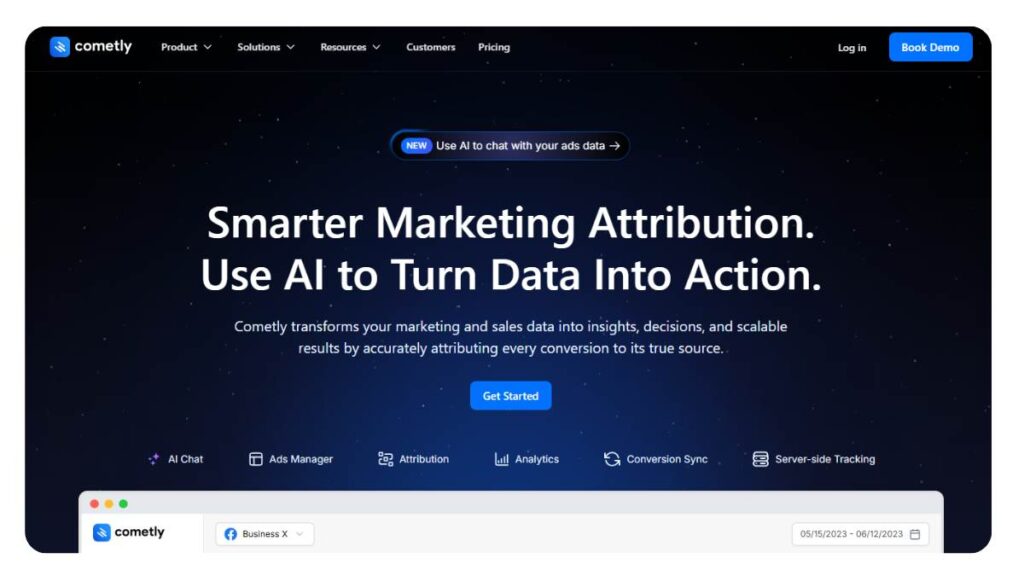
Best for AI-powered optimization + server-side tracking
Cometly feels very much built for performance teams that don’t want to spend hours reconciling data across platforms. The focus is clear: clean tracking, fast feedback loops, and tighter alignment with ad platforms.
Server-side tracking is a big part of the appeal here. Data tends to hold up better, especially when browser-based tracking starts dropping off. That alone can change how confidently budgets are moved around.
There’s also an emphasis on acting on data, not just viewing it. The insights aren’t buried under layers of reports. They’re surfaced in a way that pushes decisions; sometimes quickly, sometimes maybe a bit too quickly, depending on how cautious the team is.
Still, for paid media-heavy setups, it fits naturally.
2. Triple Whale
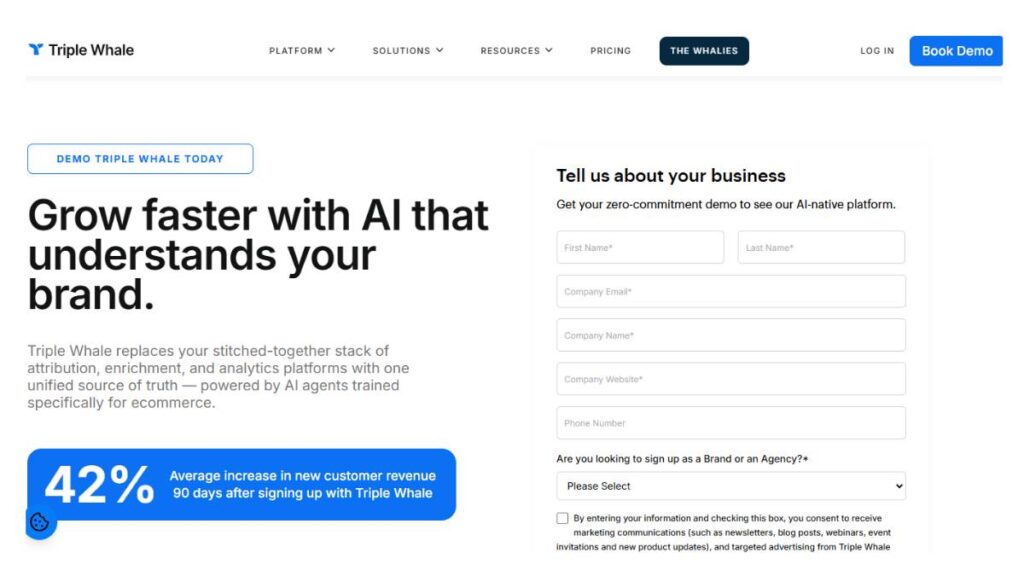
Best for Ecommerce Attribution
Triple Whale has carved out its space in ecommerce, and it shows. The platform leans into what ecommerce teams actually care about: revenue clarity, creative performance, and understanding what’s driving purchases right now, not just in theory.
One thing it does well is connecting attribution to day-to-day decisions. It’s not just “this channel performed.” It’s more like: this ad, this creative, this angle. That level of detail matters when margins are tight.
It’s also fairly opinionated in how it presents data. Some teams like that. Others might find it limiting. But for Shopify-heavy setups, it tends to reduce a lot of guesswork.
3. HockeyStack

Best for B2B Revenue Attribution
B2B attribution is rarely clean. Long cycles, multiple touchpoints, and a mix of online and offline interactions… things get messy fast.
HockeyStack doesn’t try to oversimplify that. It leans into account-level tracking, which makes more sense for B2B, where decisions are rarely made by a single person.
What stands out is how it connects marketing activity to pipeline and revenue, not just leads. That shift, focusing on actual deal impact, changes how teams evaluate campaigns.
It’s not the lightest tool to set up, though. There’s some depth to it. But once it’s running properly, it tends to answer questions that basic analytics tools can’t.
4. Factors.ai
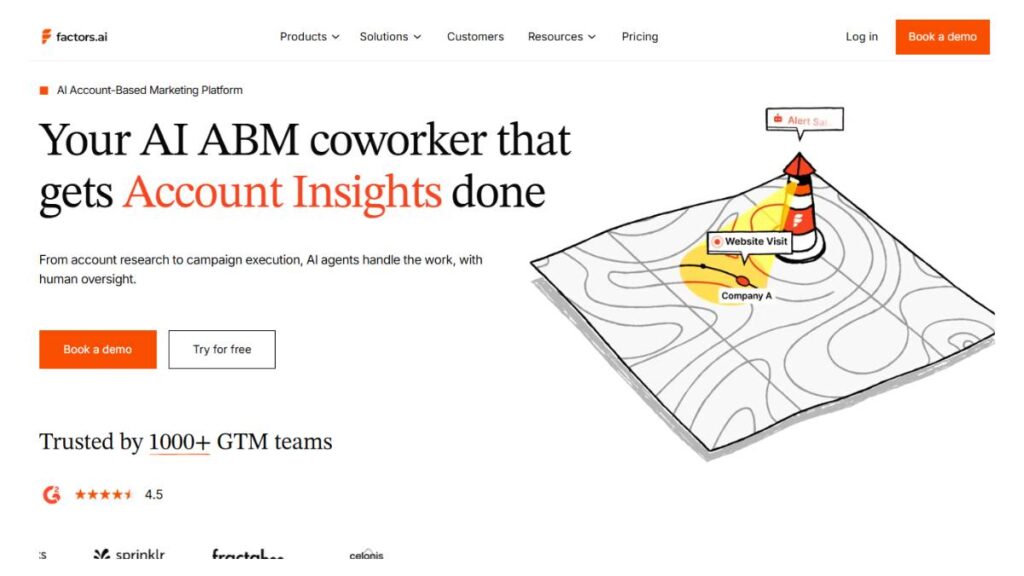
Best for Demand Gen + Attribution
Factors.ai sits in an interesting spot. It’s not just about attribution; it’s also about understanding which accounts are showing intent and how that intent builds over time.
That’s particularly useful for demand generation teams. Instead of looking at isolated conversions, the focus shifts toward engagement signals, account activity, and patterns that suggest buying readiness.
It works well in environments where LinkedIn and Google campaigns play a big role. The integration feels tighter there.
Not everything is perfectly stitched together, but the direction is clear; it’s trying to move attribution closer to real buying behavior.
5. SegmentStream
Best for ML-based Attribution & Budget Optimization
SegmentStream tends to appeal to teams that want to go a layer deeper. Not just “what converted,” but “what actually contributed.”
It puts a lot of emphasis on traffic quality, which sounds simple but isn’t always obvious in standard reports. Some channels look good on paper until you start evaluating what they actually bring in.
The modeling approach here tries to correct that. It reweights channels based on their real contribution, which can shift budgets in ways that feel uncomfortable at first, but often make sense over time.
Not the simplest tool to interpret immediately. But for teams willing to dig in a bit, it offers more nuance than most.
6. Dreamdata
Best for B2B Funnel Attribution
Dreamdata is built with B2B funnels in mind, and it doesn’t try to hide that. Everything revolves around the pipeline, revenue stages, and how deals progress.
What it does well is stitching together data that usually lives in separate systems: CRM, marketing platforms, and website interactions. That combined view makes attribution feel less fragmented.
It’s less about quick wins and more about long-term visibility. Which channels influence early-stage awareness versus late-stage conversion? That kind of breakdown becomes clearer.
It does require clean data to really shine. Without that, the outputs can feel a bit… incomplete.
7. Northbeam
Best for DTC & Paid Media Attribution
Northbeam tends to come up a lot in conversations around scaling DTC brands. Especially when paid media budgets start getting serious.
It blends attribution with media mix modeling, which gives a broader perspective. Instead of relying purely on tracked conversions, it tries to estimate overall impact, including things that aren’t directly measurable.
That’s useful when platform data starts conflicting, which happens more often than most teams would like to admit.
It’s not as focused on granular, day-to-day adjustments. More on strategic direction, where the budget should move over time.
8. Rockerbox
Best for Omnichannel Attribution
Rockerbox is built for brands that don’t operate in just one or two channels. Think a mix of digital, offline, maybe even traditional media.
It tries to bring all of that into one view, which sounds straightforward but is actually quite difficult to execute well.
The combination of multi-touch attribution and media mix modeling helps balance detail with big-picture insights. You’re not just seeing individual touchpoints; you’re seeing how channels work together.
It’s not the most lightweight tool. But for complex setups, that extra depth becomes necessary.
9. Hyros
Best for Advanced Server-Side Tracking
Hyros has built its reputation around one thing: tracking accuracy.
In environments where attribution gaps lead to poor decisions, that focus matters. Especially for funnel-based businesses, where missing even a portion of conversions can distort performance.
It leans heavily on server-side tracking, aiming to capture as much data as possible even when traditional methods fall short.
It’s not trying to be an all-in-one analytics platform. It’s more focused than that. But for teams struggling with unreliable data, that focus can be exactly what’s needed.
10. InfiniGrow
Best for AI Forecasting & Scenario Planning
InfiniGrow approaches attribution from a slightly different angle, less about looking backward, more about planning forward.
The platform leans into forecasting; what happens if budget shifts, if campaigns scale, if certain channels are reduced? That kind of scenario planning becomes useful when decisions involve larger budgets.
It also introduces a more flexible way to explore data, which reduces reliance on rigid dashboards.
Not every team needs that level of forecasting. But for those planning at a strategic level, it adds a different layer of insight.
11. Ruler Analytics
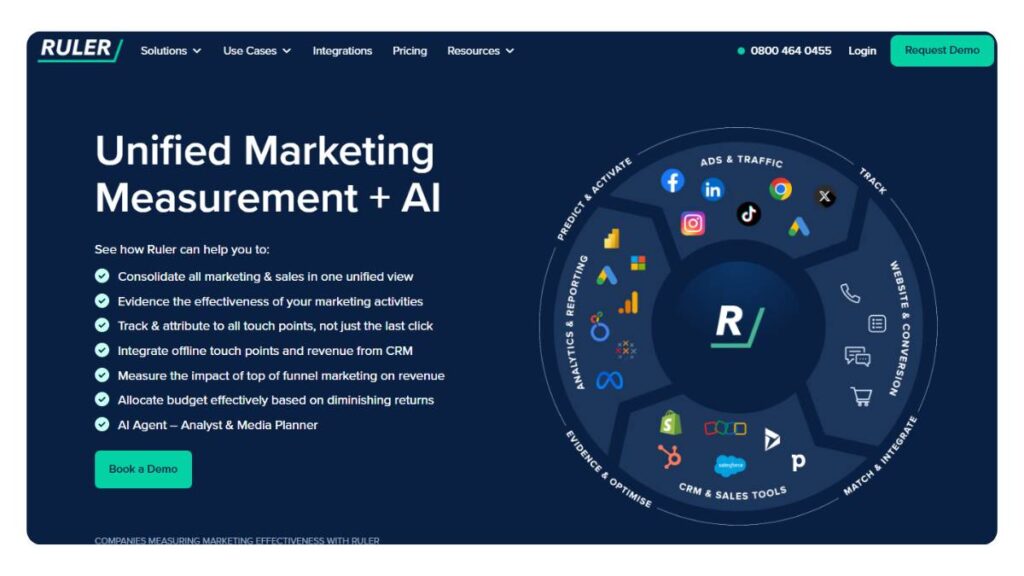
Best for Lead-to-Revenue Attribution
Ruler Analytics focuses on connecting the dots between leads and revenue, which sounds obvious but is often missing in practice.
Many tools stop at conversions. Ruler goes further, tying those conversions back to actual revenue outcomes through CRM integration.
That closed-loop view makes it easier to understand which campaigns are driving valuable customers, not just volume.
It’s particularly useful for businesses where lead quality varies widely. Seeing revenue attached to attribution changes how performance is judged.
12. AppsFlyer
Best for Mobile Attribution + AI insights
AppsFlyer has been around longer than most tools in this space, especially on the mobile side.
It’s built for scale; handling app installs, in-app behavior, and cross-platform tracking without much friction. For mobile-first businesses, that reliability matters.
The insights go beyond installs as well, covering how users engage across platforms and channels over time.
It may not feel as specialized as some newer tools, but that flexibility is part of its strength. It adapts well to different setups without forcing a specific way of working.

Enroll Now: AI Marketing Course
5. Comparison of Top AI Attribution Tools
At some point, it helps to step back and look at these tools side by side. Not in a “which one wins” way, but more in terms of fit. Because most teams don’t need the most advanced platform… they need the one that aligns with how they actually operate.
Here’s a simplified comparison to make that easier to see:
| Tool Name | Best For | Key AI Features | Pricing Type | Ideal Business Type |
| Cometly | Paid media optimization | Real-time attribution, conversion syncing | Custom | Performance marketing teams |
| Triple Whale | Ecommerce tracking | Creative-level attribution, revenue insights | Subscription | Shopify & DTC brands |
| HockeyStack | B2B revenue attribution | Account-level tracking, pipeline attribution | Custom | B2B SaaS companies |
| Factors.ai | Demand generation | Account identification, intent tracking | Subscription | B2B marketing teams |
| SegmentStream | Budget optimization | ML-based attribution, traffic quality scoring | Custom | Data-driven marketing teams |
| Dreamdata | B2B funnel visibility | Revenue-stage attribution, data stitching | Subscription | Mid to large B2B companies |
| Northbeam | DTC scaling | Media mix modeling, predictive attribution | Custom | High-spend ecommerce brands |
| Rockerbox | Omnichannel tracking | MMM + multi-touch hybrid | Custom | Multi-channel brands |
| Hyros | Tracking accuracy | Server-side tracking, conversion capture | Subscription | Funnel-based businesses |
| InfiniGrow | Forecasting & planning | Scenario modeling, predictive analytics | Custom | Strategic marketing teams |
| Ruler Analytics | Lead-to-revenue tracking | Closed-loop attribution, CRM integration | Subscription | Lead-gen focused businesses |
| AppsFlyer | Mobile attribution | Cross-platform tracking, behavioral insights | Enterprise pricing | Mobile-first companies |
There’s a pattern here. Tools tend to cluster around use cases, not industries alone. Once that’s clear, narrowing down options becomes much easier.
How to Choose the Right AI Attribution Tool
Choosing an attribution tool isn’t really about features. Most of them check the same boxes on paper. The real question is: how well does it match the way your business acquires customers?
That’s where most decisions either work out… or quietly fall apart after a few months.
Based on Business Type
Different business models naturally lean toward different tools. Trying to force a mismatch usually leads to confusion more than clarity.
Ecommerce brands
Tools like Triple Whale and Northbeam tend to fit better here. They’re built around fast-moving purchase cycles, heavy paid media, and the need to understand performance at a granular level, sometimes even down to creatives.
B2B SaaS companies
HockeyStack and Dreamdata make more sense in this environment. Attribution needs to account for long sales cycles, multiple stakeholders, and pipeline movement; not just conversions.
Agencies
Cometly and SegmentStream are often better suited for agency workflows. They support multiple accounts, emphasize performance insights, and make it easier to translate data into client-facing decisions.
There’s no perfect overlap. But forcing a B2C-focused tool into a B2B setup (or the other way around) usually creates more friction than value.
Based on the budget
Budget plays a bigger role than most teams expect; not just in terms of cost, but in how much value can realistically be extracted from the tool.
SMB level
Simpler setups, fewer integrations, quicker implementation. Subscription-based tools with clear pricing tend to work better here.
Mid-market to enterprise
More complex data environments, more channels, higher spend. Custom-priced tools often justify their cost when attribution directly impacts large budget decisions.
It’s also worth thinking beyond the tool itself. Implementation, data setup, and ongoing usage all carry a cost; time, more than anything.
Based on Attribution Complexity
Not every business needs deep attribution modeling. In some cases, simpler approaches are actually more usable.
Simple attribution needs
If most conversions happen within short journeys, a lighter tool with basic multi-touch capabilities is usually enough.
Advanced attribution needs
Longer journeys, multiple channels, and higher spend levels call for more sophisticated modeling. Predictive analytics, scenario planning, and deeper integrations start to matter here.
There’s a tendency to overestimate how much complexity is needed. More advanced doesn’t always mean more useful, especially if the team can’t act on the insights.
Common Challenges with AI Attribution Tools
Even the best attribution tools come with trade-offs. Some are obvious upfront. Others show up later, once the tool is fully in use.
It helps to go in with a realistic view of where things can get tricky.
Data accuracy limitations
No attribution system is perfectly accurate. That’s just the reality.
Data gaps still exist, whether from privacy restrictions, tracking limitations, or platform discrepancies. AI models try to fill in those gaps, but they’re still making informed estimates, not absolute truths.
The key is consistency, not perfection. Reliable directional insights tend to matter more than exact numbers.
Cross-device tracking issues
Users move across devices constantly. Mobile to desktop, app to browser, sometimes even across multiple accounts.
Connecting those interactions into a single journey is difficult. Even with identity resolution techniques, there are gaps.
Most tools get close. Few get it completely right.
Attribution vs incrementality confusion
This one comes up often.
Attribution tells you which channels were involved in a conversion. Incrementality tries to answer a different question: would that conversion have happened anyway?
The two are related, but not the same. Relying on attribution alone can sometimes overvalue certain channels, especially retargeting or branded search.
Some tools attempt to address this, but it’s still an area where interpretation matters.
Over-reliance on AI models
There’s a tendency to treat attribution outputs as final answers. That’s risky.
Models are built on assumptions, historical data, and patterns. They’re useful, but not infallible.
Decisions still need context. Market conditions change, campaigns evolve, and what worked last quarter might not hold up today.
Attribution should guide decisions, not replace judgment.
AI Attribution vs Traditional Attribution Models
This is where a lot of confusion still sits. On paper, attribution models haven’t changed much;last-click, first-click, linear, time decay. Those options still exist. But how they’re used… that’s what’s shifted.
Traditional attribution models are rule-based. Simple, predictable, easy to explain. And for a long time, that was enough. You picked a model, stuck with it, and made decisions around it.
The problem is, those rules don’t adapt.
Last-click vs multi-touch vs AI-driven
Last-click attribution
Everything goes to the final interaction. Clean, but misleading in most cases. It ignores all the earlier touchpoints that actually built intent.
Multi-touch attribution
A step forward. It distributes credit across multiple interactions. Better, but still based on predefined logic; linear, time-based, position-based.
AI-driven attribution
This is where things get less rigid. Instead of applying fixed rules, the model adjusts based on real behavior. It learns which touchpoints tend to influence outcomes and weights them accordingly.
What’s interesting is that AI-driven models don’t necessarily replace multi-touch;they evolve it. Same concept, but more flexible.
Rule-based vs machine learning models
Rule-based models are transparent. You always know how credit is assigned. That’s their biggest strength.
Machine learning models, on the other hand, trade some of that transparency for adaptability. They process more variables: channel, timing, sequence, user behavior, and try to find patterns that aren’t obvious upfront.
That creates better alignment with reality… but also requires a bit more trust.
Some teams struggle with that shift. Moving from “we know exactly how this works” to “this model is learning over time” isn’t always comfortable.
Accuracy and scalability comparison
Traditional models tend to break down as complexity increases.
They work fine when:
- There are fewer channels
- Journeys are short
- Data is relatively clean
But once you introduce:
- Multiple devices
- Longer buying cycles
- Cross-channel interactions
…the limitations show up quickly.
AI-driven attribution handles scale better. Not perfectly, but better. It’s built to process complexity rather than simplify it.
Still, accuracy isn’t absolute. Even the most advanced models rely on incomplete data at times. The difference is in how well they compensate for that.
In practice, it’s less about choosing one model over another and more about knowing where each one falls short.
Future Trends in AI Attribution Tools
Attribution isn’t standing still. It’s evolving alongside changes in privacy, user behavior, and how marketing itself operates.
Some trends are already visible. Others are just starting to take shape.
AI agents automating marketing decisions
There’s a gradual shift from insight to action.
Instead of just showing which channels perform, attribution systems are starting to recommend, or even automate, budget adjustments. Small changes at first. Then larger ones as confidence builds.
It won’t replace human decision-making entirely. But it will reduce the number of manual adjustments teams need to make day-to-day.
Cookieless attribution evolution
The move away from third-party cookies isn’t new anymore. What’s changing now is how tools adapt to it.
More reliance on:
- First-party data
- Server-side tracking
- Modeled conversions
Attribution is becoming less about exact tracking and more about probabilistic understanding. Not perfect visibility, but enough clarity to make informed decisions.
That shift isn’t optional; it’s already happening.
Integration with AI search & LLMs
Search behavior is changing. Users aren’t just clicking links; they’re getting answers directly from AI-driven interfaces.
That creates a new kind of attribution challenge. Traditional click-based tracking doesn’t fully capture influence in these environments.
Attribution tools will need to account for visibility, not just interaction. Being part of the decision process, even without a click, starts to matter more.
Still early, but the direction is clear.
Real-time predictive attribution
Reporting after the fact is slowly becoming less useful on its own.
The next phase leans toward prediction:
- Identifying trends before they fully develop
- Flagging underperformance earlier
- Estimating outcomes based on current signals
It’s not about eliminating uncertainty. More about shortening the feedback loop.
The faster teams can react, the more impact attribution actually has.
Conclusion:
AI attribution tools make the biggest difference when:
- There’s meaningful spend across multiple channels
- Customer journeys aren’t straightforward
- Decisions depend on understanding more than just last-click data
In those cases, the value is hard to ignore. Better visibility, more confident budget allocation, fewer blind spots.
But there’s a flip side.
If the setup is simple, limited channels, and short conversion paths, then the added complexity may not justify itself. The insights are only useful if they lead to action. Otherwise, it’s just more data to process.
There’s also a maturity factor. Teams that already have clean data, defined processes, and clear goals tend to get more out of attribution tools. Without that foundation, even the best platform can feel underwhelming.
So it’s less about whether these tools are “worth it” in general… and more about whether they’re worth it right now for a specific business.
Used well, they become part of how decisions are made, not just how performance is reported.
And that’s really the shift.
FAQs: AI Attribution Tools
1. What is the best AI attribution tool?
There’s no clean winner here, despite what most comparison pages claim. The “best” tool usually depends on how messy the customer journey is and where revenue actually gets tracked. Ecommerce teams often need fast, channel-level clarity, while B2B setups care more about the pipeline. Fit matters more than feature lists.
2. Are AI attribution tools accurate?
Accurate enough to guide decisions, not something to treat like ground truth. The output is only as good as the data feeding into it. Missing touchpoints, broken tracking, or siloed platforms can throw things off. Still, compared to last-click models, the picture is far more realistic, just not perfect.
3. How does AI improve marketing attribution?
It shifts attribution from rigid rules to pattern recognition. Instead of assuming the last click did all the work, it looks at what typically happens before conversions. Over time, it starts weighing interactions differently. Not dramatically, but enough to surface what’s quietly driving results behind the scenes.
4. What is multi-touch attribution in AI tools?
At a basic level, it spreads credit across multiple interactions. The interesting part is how that credit gets assigned. With AI involved, the weights adjust based on actual behavior, not a fixed formula. So some touchpoints end up mattering more than expected, others less. It evolves as data builds.
5. Do small businesses need AI attribution software?
Not immediately. Early on, simpler tracking usually does the job. But once spending grows and channels multiply, things get harder to read. That’s where attribution tools start earning their place. It’s less about company size and more about complexity when the path to conversion stops being obvious.
6. What is the difference between AI attribution tools and traditional attribution software?
Traditional models follow preset rules; first touch, last touch, maybe linear if things get fancy. AI-driven tools don’t stick to those rules. They adjust based on how users actually move through the funnel. The result feels less clean, sometimes even messy, but closer to how decisions really happen.
7. Which AI attribution model is the most accurate for marketing campaigns?
The data-driven ones tend to perform better, but only when there’s enough clean data behind them. Without that, even advanced models struggle. In practice, accuracy comes down to setup, tracking, integrations, and consistency. A simpler model with solid data often beats a complex one running on gaps.
8. How do AI attribution tools track users across devices?
They piece together identity from multiple signals: logins, behavior patterns, and sometimes probabilistic matching. It’s not flawless, especially with privacy limits tightening, but it’s more resilient than cookie-based tracking alone. The goal isn’t perfection, just reducing the number of broken journeys in the data.
9. Can AI attribution tools work without cookies?
Yes, and that shift is already underway. Most tools now lean on first-party data and server-side tracking to stay functional. It’s a bit less straightforward than the old cookie-based setups, but also more stable long-term. The trade-off is complexity on the backend, not capability.
10. What is multi-touch attribution in AI marketing tools?
It’s essentially a more flexible version of multi-touch attribution. Instead of splitting credit evenly or following fixed rules, it adjusts based on patterns. Some touchpoints quietly carry more influence than they appear to. Over time, those patterns become clearer, and the model reflects that.
11. How do AI attribution tools improve ROI measurement?
They connect spend to outcomes in a way that feels less guessy. Not perfectly clean, but clearer. Instead of overvaluing the last click, they show how different channels contribute along the way. That usually leads to better budget decisions; small shifts, but they add up over time.
12. Are AI attribution tools suitable for small businesses?
They can be, but only when there’s enough activity to justify them. If campaigns are limited and easy to track, it might be overkill. Once things scale, more channels, longer journeys; that’s when the value starts showing. Timing matters more than business size here.
13. What integrations should an AI attribution tool support?
At a minimum, ad platforms and CRM systems need to be connected. Beyond that, analytics tools, email platforms, and maybe a data warehouse, depending on setup. The key is coverage. If major touchpoints sit outside the system, attribution becomes partial, and partial data tends to mislead more than help.
14. How long does it take to implement an AI attribution platform?
Quick setups can happen in days, but getting it right usually takes longer. Tracking needs to be mapped properly, integrations cleaned up, and data flows checked. Most delays come from internal systems, not the tool itself. It’s one of those things that looks simple until it isn’t.
15. What data do AI attribution tools require to work effectively?
They need a consistent stream of interaction data: clicks, sessions, conversions, plus CRM inputs where possible. Gaps create blind spots. If a channel isn’t tracked properly, it won’t just be ignored; it might shift credit elsewhere. That’s where things get misleading if not handled carefully.
16. Can AI attribution tools replace Google Analytics?
Not really. They answer different questions. Analytics tools focus on what users do on-site, while attribution tools focus on what drove them there in the first place. There’s overlap, sure, but most teams end up using both. Each fills in a different part of the picture.
17. How do AI attribution tools handle offline conversions?
Usually, through CRM data or manual uploads that tie back to earlier touchpoints. It’s not always seamless, but it works if the data is structured well. Sales calls, demos, and even in-store purchases can be mapped back; it just takes a bit more coordination than digital-only tracking.
18. What is the role of machine learning in marketing attribution?
It helps make sense of patterns that aren’t obvious at a glance. Instead of fixed assumptions, it looks at how journeys actually unfold and adjusts accordingly. Over time, it gets better at spotting what influences conversions. Not magic; just pattern recognition at scale.
19. Are AI attribution tools compliant with data privacy laws (GDPR, CCPA)?
Most are built to support compliance, but that doesn’t guarantee you’re covered. It depends on how data is collected and managed on your end. Features like consent tracking and anonymization help, but responsibility still sits with the business. The tool can’t fix a poor data setup.
20. What industries benefit the most from AI attribution tools?
Any space where the buying journey isn’t straightforward tends to benefit more. SaaS, ecommerce, finance, higher-ticket services; basically, where multiple touchpoints shape decisions. Simpler models can get by without it, but once journeys stretch across channels, attribution starts pulling its weight.