
AI article spinner tools used to be easy to spot. A paragraph would start normally, then suddenly drift into weird phrasing halfway through, like the software got tired and started guessing. A lot of early tools felt exactly like that. Technically rewritten, sure, but not something a serious brand would want attached to its name. That’s changed over the last few years, though not evenly. Some platforms are still pumping out stiff, overprocessed copy that sounds polished in a very artificial way.
Others have become genuinely useful for messy day-to-day content work. Updating old blog posts. Reworking repetitive sections. Cleaning up drafts that already have decent information but need better flow. That’s really where most teams get value now. This guide goes into which AI article spinner tools are actually worth paying attention to in 2026, which ones create more problems than they solve, and where human editing still makes a noticeable difference.
Table of Contents
Introduction
There was a time when “article spinner” meant one thing: unreadable garbage.
The older tools would take a sentence, swap random words with synonyms, and somehow expect it to pass as original writing. The result usually sounded strange. Sometimes funny. Sometimes impossible to read without stopping every few lines and wondering what happened.
That’s changed quite a bit over the last few years.
Modern AI article spinner tools don’t really behave like traditional spinners anymore. Most of them are closer to rewriting assistants. They restructure sentences, adjust tone, tighten readability, and in some cases completely reorganize paragraphs while keeping the original meaning intact. Not perfectly, obviously. But far better than what existed before.
That shift is why more marketers, agencies, and content teams have started paying attention again.
Older blog posts need refreshing. Product pages become outdated. Landing pages need multiple versions for testing. Long-form content gets repurposed into newsletters, LinkedIn posts, ad copy, and email sequences. Doing all of that manually every single time gets exhausting. Especially when content velocity matters.
And honestly, rewriting is one of those tasks that sounds simple until there are 70 articles sitting in a content calendar waiting for updates.
That’s where AI rewriting tools fit in.
Some are built for SEO-heavy workflows. Some focus more on readability and tone. Others are designed for bulk article spinning at scale, which… can go very wrong if used carelessly. There’s a pretty wide gap between good tools and bad ones now.
This guide breaks down:
- What AI article spinner tools actually do,
- how modern rewriting systems work,
- whether they’re safe to use,
- and which tools are genuinely useful in 2026.
Not every platform deserves the hype. A few are surprisingly solid, though.
What Is an AI Article Spinner Tool?
An AI article spinner tool is software that rewrites existing content while trying to preserve the original meaning. The wording changes, the sentence flow changes, sometimes even the structure changes, but the core idea usually stays intact.
At least that’s the goal.
The term “article spinner” still carries baggage because older versions were terrible. They relied heavily on synonym replacement and produced content that felt mechanical almost instantly. Readers could tell. Search engines could too.
Modern tools work differently.
Instead of replacing isolated words, they attempt to understand context first. Then they rewrite based on meaning, tone, and structure. Some tools are surprisingly decent at this now. Not human-level writing, no. But much closer than people expect.
Difference between traditional article spinners and AI rewriters
Traditional article spinners mostly operated at the word level.
A sentence like:
“Content marketing helps businesses attract customers online.”
might become:
“Material advertising assists companies in drawing in purchasers on the web.”
Technically rewritten. Practically unusable.
AI rewriters approach the problem differently. They process the sentence as a complete idea instead of a collection of separate words. That allows them to:
- restructure sentences naturally,
- simplify awkward phrasing,
- improve readability,
- and maintain conversational flow better.
The difference becomes obvious once longer paragraphs are involved.
Older spinners tended to collapse under complexity. Transitional phrasing disappeared. Tone became inconsistent. Meaning drifted halfway through the article. Some tools still struggle with this, honestly. Especially the cheaper ones.
How AI-powered article spinning works using NLP and machine learning
Most modern rewriting systems use some combination of natural language processing and machine learning models to interpret content before rewriting it.
In practical terms, the software looks at:
- sentence relationships,
- context,
- writing style,
- semantic meaning,
- and grammatical structure.
Then it generates alternative versions that sound different while attempting to preserve intent.
That “attempting” part matters.
Even strong tools occasionally miss nuance. Technical writing, opinion-heavy content, sarcasm, subtle tone shifts… those areas still need human editing afterward. The software can get close, but close isn’t always enough for publish-ready content.
Still, for first drafts or content refreshes, the time savings can be substantial.
What an AI article spinner actually changes
Good rewriting tools usually alter several layers of the content at once.
Sentence structure changes first. Long sentences might get split into shorter ones. Choppy sections may be merged for smoother flow.
Then comes word choice. Not random synonym swapping, ideally. More contextual substitutions. A decent tool understands that “ranking” and “positioning” aren’t interchangeable in every SEO sentence.
Tone adjustments are common, too. Some platforms can make writing sound more formal, more conversational, or more concise, depending on the setting selected.
Readability often improves as well. Dense paragraphs become easier to scan. Repetitive phrasing gets cleaned up. Transitional wording becomes smoother.
Paragraph flow is another subtle area people overlook. Strong AI rewriters don’t just modify individual sentences. They improve how ideas connect from one paragraph to the next.
That’s usually where weaker tools fail.
Common use cases for AI article rewriting tools
Most marketers using these tools aren’t trying to “trick” search engines anymore. That mindset is outdated.
The more common use cases are practical:
- updating older blog posts without rewriting from scratch,
- repurposing long-form content into shorter formats,
- rewriting ecommerce descriptions across large catalogs,
- creating content variations for campaigns,
- refreshing AI-generated drafts so they sound more natural,
- or reducing repetitive phrasing across similar pages.
Agencies use them heavily for scaling workflows. Affiliate marketers use them for content refreshes. Ecommerce teams use them for bulk rewriting tasks that would otherwise take weeks manually.
The tools save time. That’s really the core appeal.
The quality still depends on the editor afterward, though. Probably more than some people want to admit.
How Does an AI Article Spinner Work?
Natural language processing (NLP) in AI rewriting
Natural language processing is what allows modern rewriting tools to understand language beyond individual words.
Without NLP, article spinning falls apart quickly.
The system needs to recognize:
- sentence relationships,
- grammatical structure,
- topic relevance,
- contextual meaning,
- and how different phrases connect together.
That’s why newer tools sound dramatically better than software from five or six years ago. The rewriting process is no longer purely mechanical.
Well, not entirely mechanical.
The software analyzes how humans naturally structure language, then attempts to recreate similar patterns during rewriting. Sometimes it works impressively well. Other times it produces sentences that technically make sense but still feel slightly… off. Most editors can spot those moments instantly.
Semantic rewriting vs synonym replacement
This is probably the biggest distinction in the entire category.
Old spinners relied heavily on synonym databases. They replaced words individually without understanding the sentence itself.
Semantic rewriting focuses on meaning instead.
Rather than swapping “important” with “significant,” a modern system might completely restructure the sentence:
Original:
“Content optimization is important for search visibility.”
Rewritten:
“Better optimized content usually performs more consistently in search results.”
Different wording with the same idea.
That’s semantic rewriting.
It creates more natural variation because the system rewrites concepts, not isolated vocabulary.
Context-aware sentence restructuring
Advanced AI spinners also restructure sentences based on context and readability patterns.
This includes:
- changing sentence length,
- reordering clauses,
- simplifying overly dense phrasing,
- improving transitions,
- and reducing repetition across paragraphs.
The better tools understand pacing surprisingly well.
For example, if an article contains several long technical paragraphs back-to-back, the software may shorten sentences automatically to improve readability. Sometimes that helps a lot. Sometimes it oversimplifies the writing and removes nuance. Depends on the tool.
That’s why fully automated publishing is still risky.
AI article spinning workflow
Most AI article spinners follow a fairly similar process behind the scenes.
First, the original article gets analyzed for structure and meaning. The software identifies key topics, sentence patterns, and contextual relationships between sections.
Next comes semantic interpretation. This is where the system attempts to understand intent rather than just vocabulary.
Then the rewriting begins. Sentences are reconstructed using alternative phrasing, modified structure, and adjusted tone.
After that, readability refinement kicks in. Awkward phrasing gets smoothed out. Repetitive wording is reduced. Paragraph transitions are cleaned up.
Finally, the rewritten version gets exported for editing.
The important part there is editing.
Even strong tools still benefit from human review. Usually a lot.
Why modern AI spinners are better than old spinning software
Older article spinners were easy to detect because they produced unnatural language patterns repeatedly.
Modern systems are significantly harder to spot immediately because they mimic actual writing behavior more effectively:
- varied sentence lengths,
- conversational phrasing,
- contextual restructuring,
- more natural transitions,
- and better readability overall.
Some tools can even preserve brand tone reasonably well now.
Still, there’s a limit.
AI rewriting tends to flatten strong opinions, remove subtle personality, and over-smooth certain sections. Experienced editors notice this quickly. The writing becomes technically clean but slightly lifeless around the edges.
That’s why the best workflows usually combine AI rewriting with manual editing afterward. The software handles speed. Humans handle judgment.
At least for now.
Are Article Spinner Tools Legal?
Is article spinning legal?
Technically, yes.
Using article spinner tools is legal in most situations. The software itself isn’t illegal, and rewriting content through automation generally doesn’t violate laws on its own.
Where things become complicated is the source material.
Rewriting original content owned by the business? Usually fine.
Reworking public domain information? Fine too.
But rewriting copyrighted articles from competitors and publishing slightly modified versions… that enters much riskier territory. Especially if the rewritten output closely mirrors the original structure, argument flow, or unique phrasing.
A lot of people assume changing enough words automatically makes content “new.” That’s not really how copyright works.
Copyright concerns with rewritten content
Copyright protection isn’t limited to exact wording alone.
If rewritten content closely replicates the original article’s structure, examples, sequencing, or core expression, problems can still arise even after extensive rewriting.
This becomes especially relevant with:
- news articles,
- premium research content,
- editorial opinion pieces,
- and heavily original thought-leadership content.
Most AI spinners are not sophisticated enough to fully separate borrowed structure from borrowed language. They mainly focus on rewriting surface-level phrasing.
That distinction matters more than many marketers realize.
Duplicate content and plagiarism risks
Duplicate content detection has evolved quite a bit over the years.
Search engines no longer rely only on exact phrase matching. Semantic similarity, topic overlap, structural resemblance, and content redundancy all play a role now.
So if a rewritten article says the same thing in slightly different words without adding anything useful, it may still struggle to perform.
This is where low-quality AI spinning usually fails.
The content becomes technically “unique” according to plagiarism tools but still feels thin, repetitive, or lacking in information gain. Readers notice that quickly, too. Engagement signals usually reflect it.
The stronger approach is using AI rewriting as a starting point rather than a final product.
Google’s stance on AI-generated and rewritten content
Google’s position has become more nuanced recently.
The focus is less on how content is created and more on whether the content is genuinely useful, accurate, and satisfying for users.
That means AI-assisted content is not automatically penalized.
Low-quality content is.
There’s a difference.
Mass-produced rewritten pages with little value tend to struggle regardless of whether humans or AI created them. Meanwhile, well-edited AI-assisted articles that include expertise, context, and useful information can perform perfectly well.
Quality still wins most of the time. Eventually.
Ethical ways to use AI article spinners
The safest and smartest use case is augmentation, not replacement.
Good workflows usually involve:
- using AI for first-pass rewriting,
- refreshing outdated sections,
- simplifying repetitive editing work,
- repurposing existing assets,
- or generating alternative drafts faster.
Then human editors step in to:
- add expertise,
- improve nuance,
- fact-check information,
- refine tone,
- and introduce an original perspective.
That combination tends to work best.
Fully automated publishing pipelines exist, obviously. But most experienced content teams eventually run into quality problems if nobody reviews the output carefully. The writing starts sounding strangely similar after a while. Slightly too polished. Slightly too predictable.
Readers pick up on that faster than people think.
The 12 Best AI Article Spinner Tools in 2026
The market for AI article spinner tools has become crowded fast. Every platform now claims to produce “human-like” rewriting, but the gap between marketing claims and actual output is still pretty wide.
Some tools are genuinely useful for rewriting long-form content, updating articles, and repurposing copy at scale. Others still feel like upgraded synonym replacers with cleaner interfaces.
A lot depends on the use case too.
A solo blogger refreshing old posts probably needs something very different from an agency rewriting hundreds of product pages every month. Some tools are better for sentence clarity. Others handle bulk workflows better. A few are surprisingly strong at preserving tone and flow without flattening everything into generic corporate writing.
Below are the tools that consistently stand out in 2026, not just because they’re popular, but because they’re actually being used in real content operations.
Jasper AI
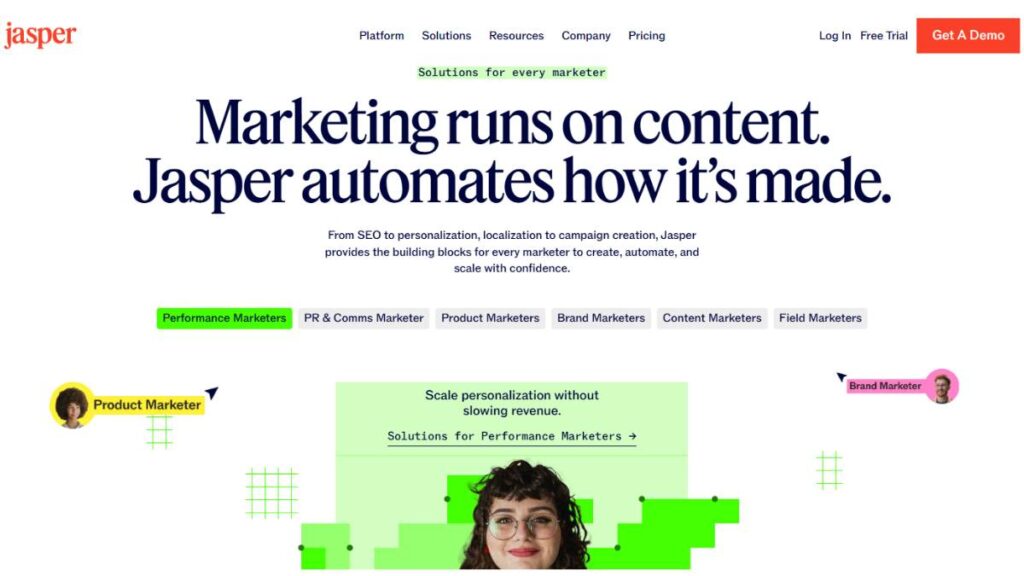
Best AI Article Spinner for Marketing Teams
Jasper AI has moved far beyond being just a writing assistant. The platform now leans heavily into content workflows, campaign management, and brand consistency, which makes it especially useful for larger teams handling high publishing volume.
The rewriting quality is generally strong when the input content already has decent structure. Jasper tends to preserve tone better than many competitors, especially in longer articles where weaker tools start sounding repetitive halfway through.
One thing that stands out is how well it handles content expansion during rewriting. Instead of simply rewording sentences, it often restructures ideas and improves transitions between sections. That makes refreshed content feel less “spun” and more genuinely rewritten.
Not perfect though. Sometimes the output becomes slightly too polished, almost overly smooth in places. Experienced editors usually catch this quickly.
Key features
Jasper includes long-form rewriting, paragraph restructuring, tone customization, workflow templates, collaboration tools, and campaign-level content organization. It also integrates with several marketing and publishing tools, which helps larger teams manage content production centrally.
Pros and cons
The strongest advantage is consistency across large content projects. Teams managing multiple writers usually appreciate that.
On the downside, pricing climbs quickly once advanced features and collaboration seats get involved. Smaller creators may find it excessive if the goal is simple article rewriting.
Pricing
Jasper operates on a subscription model with tiered plans based on usage and workspace features. The entry-level plan is manageable for solo creators, but agency-level usage gets expensive fairly fast.
Best use cases
Best suited for:
- marketing teams,
- agencies,
- content operations,
- and businesses managing ongoing content campaigns.
Less ideal for quick one-off rewrites.
Why it stands out
Jasper feels more like a structured content system than a standalone rewriting tool. That difference matters once workflows become more complex.
QuillBot

Best AI Paraphrasing and Rewriting Tool
QuillBot became popular because it solved a very specific problem well: sentence-level rewriting without making the output unreadable.
Even now, it remains one of the cleanest paraphrasing tools available for shorter content. Students use it heavily, obviously, but marketers, bloggers, and editors rely on it too for refining awkward phrasing and reducing repetition.
Where QuillBot performs best is in controlled rewriting. It usually preserves the original meaning more accurately than aggressive article spinners that attempt full structural rewrites.
The interface is also refreshingly simple. No bloated dashboards. No endless workflow panels.
Rewrite modes
QuillBot offers multiple rewrite styles, including standard, fluency, formal, creative, and concise modes. The differences between them are noticeable enough to actually matter.
The fluency mode, in particular, tends to produce the cleanest output for blog content.
Grammar and summarizer tools
The built-in grammar correction and summarizer features are surprisingly useful additions. Not groundbreaking, but practical enough that many users keep everything inside one workflow instead of jumping between platforms.
SEO rewriting capabilities
For content refreshes, QuillBot works well when combined with manual editing afterward. It’s less effective for large-scale bulk article spinning compared to tools built specifically for mass rewriting.
Still, for improving readability and variation naturally, it performs consistently.
Pros and cons
The biggest strength is sentence clarity. The biggest limitation is scalability.
Long-form article rewriting sometimes requires more manual guidance because QuillBot works best at the paragraph or sentence level rather than entire article restructuring.
WordAI

Best AI Article Spinner for SEO Content
WordAI has been around for years, which in this space usually means one of two things: outdated software or deeply refined software. Fortunately, WordAI leans closer to the second category.
The platform focuses heavily on rewriting articles in ways that preserve readability while creating significant structural variation. That balance is difficult to get right. Many tools either sound too similar to the original or become unreadable, trying to force uniqueness.
WordAI generally avoids both extremes.
Its sentence restructuring engine is particularly strong with informational content. Blog posts, affiliate articles, guides, and category pages tend to rewrite more naturally here than on many competing platforms.
Human-like sentence rewriting
WordAI doesn’t just substitute phrases. It often rewrites sentence logic entirely while keeping the same idea intact. That makes the output feel less mechanical, especially across long sections of content.
The readability is usually cleaner than that of older-generation spinners.
Bulk article spinning
Bulk processing is one of the main reasons agencies still use WordAI heavily. Large batches of content can be rewritten relatively quickly without every article sounding identical afterward.
There’s still editing involved, of course. But the starting quality is decent.
SEO-focused features
WordAI supports bulk exports, API access, content variation generation, and structural rewriting designed for large publishing workflows.
That said, aggressively spinning already weak content rarely produces strong results. The tool works best when the original article is solid to begin with.
Pricing and limitations
Pricing sits in the mid-to-premium range. Probably reasonable for agencies, less appealing for casual users.
Also, while the output quality is strong overall, technical articles sometimes lose nuance during heavy rewriting. Human review still matters there.
Spin Rewriter

Best for Bulk Article Spinning
Spin Rewriter remains one of the more recognizable names in article spinning largely because it focuses unapologetically on scale.
This is not really a lightweight editing tool. It’s designed for users managing large volumes of rewritten content.
That makes it useful for certain workflows and risky for others.
The platform uses what it calls ENL technology, short for Emulated Natural Language. Underneath the branding language, the goal is basically contextual sentence restructuring instead of simple synonym replacement.
Results vary depending on the source content. Strong inputs produce reasonably clean rewrites. Weak content tends to become noticeably unstable after aggressive spinning.
ENL semantic spinning technology
The semantic analysis system attempts to interpret meaning before rewriting. Compared to older spinning software, the output is definitely more readable.
Still, it occasionally over-processes sentences in ways that feel unnatural. Short editorial passes usually fix most of it.
Mass article rewriting
This is where Spin Rewriter really focuses its value.
Users handling:
- affiliate content,
- location pages,
- ecommerce descriptions,
- or high-volume publishing operations
often use it because of the bulk generation capabilities.
It can produce multiple variations of the same article relatively quickly.
SEO use cases
Spin Rewriter is mostly used for:
- content variation,
- updating older articles,
- generating alternate drafts,
- and reducing repetitive copy structures.
Not really ideal for nuanced thought leadership content, though.
Pros and cons
The scalability is excellent.
The downside is that heavily spun content can still develop repetitive phrasing patterns if users rely too aggressively on automation.
That’s usually where content quality starts slipping.
Copy.ai
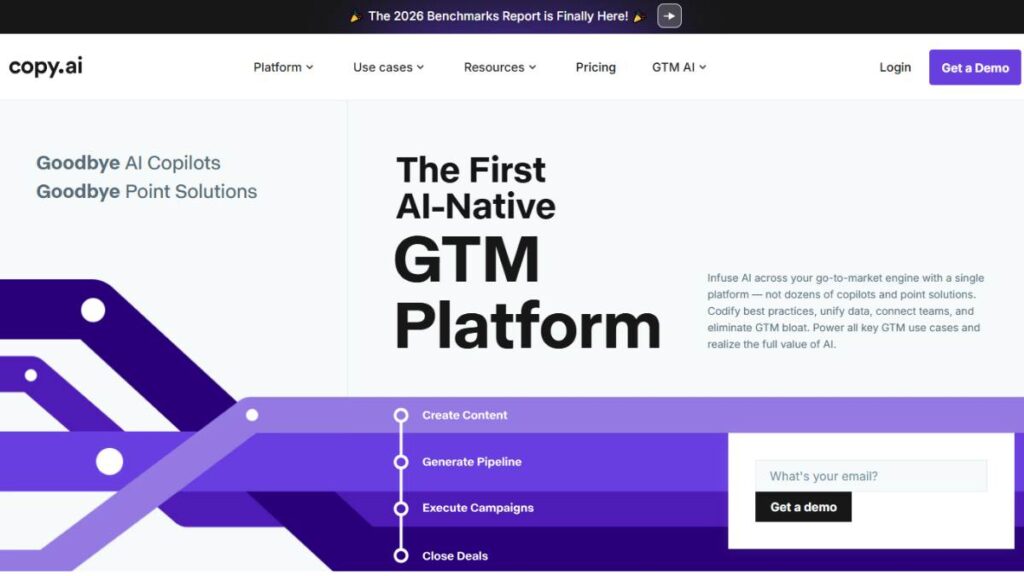
Best AI Rewriter for Marketing Copy
Copy.ai leans more toward marketing content than traditional article spinning, and honestly, that focus helps the platform stand out.
The rewriting feels more natural when dealing with:
- landing pages,
- email copy,
- product messaging,
- social captions,
- and conversion-focused writing.
Long-form article rewriting has improved significantly, too, though shorter persuasive content is still where the platform performs best.
One noticeable difference is tone flexibility. Copy.ai handles conversational rewriting surprisingly well without making everything sound overly casual.
AI workflows
The workflow automation features are one of the platform’s stronger areas. Teams can organize content pipelines, create repeatable rewriting tasks, and streamline campaign production more efficiently than with basic rewriting tools.
Long-form rewriting
Long-form support has become much stronger recently. Earlier versions struggled with consistency across longer articles, but the platform now maintains structure and tone more effectively.
Some sections still need tightening afterward, though. Especially informational content with technical depth.
Tone customization
Tone control is one of Copy.ai’s better features.
The platform adapts reasonably well to:
- conversational,
- formal,
- persuasive,
- or simplified writing styles
without flattening everything into the same voice.
Best use cases
Best suited for:
- marketing teams,
- conversion-focused content,
- brand messaging,
- and campaign copy rewriting.
Less specialized for mass article spinning compared to platforms like WordAI or Spin Rewriter.
Wordtune
Best for Sentence Rewriting
Wordtune approaches rewriting differently from most tools in this category.
Instead of aggressively rebuilding entire articles, Wordtune focuses more on sentence refinement and clarity improvement. That narrower focus actually works in its favor.
The rewrites tend to sound cleaner because the platform prioritizes readability over large-scale variation.
It’s especially useful for polishing rough drafts or simplifying awkward sections that already contain good ideas but poor flow.
Casual vs formal rewrites
Switching between casual and formal tone modes works surprisingly well here. The changes feel subtle instead of exaggerated.
That matters because many rewriting tools overcorrect tone adjustments and end up sounding unnatural.
Clarity improvements
Wordtune excels at tightening bloated writing.
Long, messy sentences usually become more readable without losing their original meaning. For editors refining content manually, this becomes genuinely useful during revision stages.
Chrome extension and integrations
The browser extension is one of the cleaner integrations available. It works across emails, documents, dashboards, and web-based editors without becoming intrusive.
Simple feature. But practical.
GrowthBar
Best AI SEO Rewriter Tool
GrowthBar combines content rewriting with optimization features, which makes it attractive for marketers managing both content production and search visibility inside the same workflow.
The platform isn’t really built for aggressive article spinning. Instead, it focuses more on refreshing and improving existing content while aligning it with keyword targeting and topical structure.
That distinction matters.
The output tends to feel more editorial and less artificially rewritten.
SEO optimization features
GrowthBar includes keyword recommendations, content scoring, topic suggestions, and optimization guidance alongside rewriting functionality.
For content refresh workflows, that combination is genuinely useful.
AI blog rewriting
The article rewriting quality is strongest with blog content and informational pages. The platform handles structural rewrites reasonably well without destroying readability.
Though occasionally, transitions become a little too polished and generic. Some manual refinement helps.
Keyword optimization tools
GrowthBar integrates optimization suggestions directly into the editing process, which reduces the need to jump between multiple platforms during revisions.
Convenient setup overall.
Hypotenuse AI
Best for Ecommerce Content Rewriting
Hypotenuse AI is particularly strong for ecommerce workflows where large amounts of repetitive content need rewriting at scale.
Product catalogs are notoriously difficult to rewrite manually without everything sounding identical after the fiftieth SKU. Hypotenuse handles that challenge better than most platforms in this category.
The content usually stays readable even during bulk generation.
Product description rewriting
This is clearly the platform’s strongest area.
Descriptions can be rewritten across multiple formats while maintaining consistency and reducing repetitive language patterns.
Especially useful for marketplaces and large ecommerce stores.
Blog content refresh
Blog rewriting works reasonably well too, though the platform still feels more optimized for structured commercial content than long editorial articles.
Bulk generation tools
Bulk processing is smooth and relatively fast compared to several competitors.
For ecommerce operations managing hundreds or thousands of listings, that efficiency matters quite a bit.
Chimp Rewriter
Best Desktop Article Spinner
Chimp Rewriter still maintains a loyal user base largely because it offers desktop-based spinning with extensive customization controls.
The interface feels slightly dated compared to newer cloud platforms, but power users often prefer the flexibility.
Especially those managing technical workflows or API-based publishing systems.
API integrations
Chimp Rewriter integrates with several publishing and automation tools, making it useful for advanced workflows involving content scaling or distribution systems.
SEO spinning tools
The platform focuses heavily on article variation and structural rewriting for large publishing operations.
Quality varies depending on settings and source material.
Bulk rewrite support
Bulk spinning support is extensive. Though aggressive automation settings can still produce awkward phrasing if left unchecked.
Careful configuration matters here more than with simpler rewriting platforms.
Spinner Chief
Best Multi-language Article Spinner
Spinner Chief stands out mainly because of its multilingual support and flexible deployment options.
Cloud-based rewriting is available, but desktop versions still exist too, which some users prefer for privacy or workflow reasons.
The interface is not the cleanest in the category. Slightly cluttered at times.
But the feature depth is substantial.
Cloud + desktop versions
Having both deployment models gives users flexibility depending on how content workflows are structured internally.
That hybrid setup is relatively uncommon now.
Team collaboration
Spinner Chief includes collaboration features for teams handling large content operations, though the experience feels less streamlined than newer SaaS platforms.
AI rewriting capabilities
The rewriting engine has improved noticeably over recent years. Earlier versions leaned too heavily on traditional spinning logic, but contextual rewriting is much stronger now.
Still occasionally inconsistent with nuanced editorial writing, though.
Copymatic
Best Budget AI Rewriter
Copymatic positions itself as an affordable alternative for users who need rewriting capabilities without enterprise-level pricing.
For smaller creators and businesses, that matters.
The platform covers:
- blog rewriting,
- ad copy,
- ecommerce content,
- social posts,
- and general marketing content.
The quality is decent overall, especially considering the pricing tier.
AI content generation
Copymatic combines rewriting with broader content generation tools, making it useful for lightweight content workflows where speed matters more than deep editorial refinement.
Blog and ad copy rewriting
Short-form rewriting performs better than long technical articles here.
Marketing copy tends to come out cleaner and more natural.
Ease of use
The interface is simple, fast, and beginner-friendly. Probably one of the easiest platforms to learn quickly.
Speedwrite
Best for Fast Article Rewriting
Speedwrite focuses heavily on rewriting speed and simplicity.
The platform strips away most of the extra workflow complexity found in larger tools. Paste content in, generate rewrites, and edit manually afterward.
Simple process.
What makes Speedwrite interesting is how aggressively it restructures sentences compared to many competitors. The output often looks substantially different from the source article while still preserving the original meaning fairly well.
Research-based rewriting
Speedwrite tends to work well with research-heavy informational content because it rewrites concepts broadly rather than relying on phrase-level substitution.
That usually improves variation quality.
Sentence restructuring
The platform restructures sentence flow aggressively, sometimes almost too aggressively. Certain outputs require tightening afterward to restore natural pacing.
Still, the variation level is impressive.
Pros and cons
The speed is excellent.
The tradeoff is consistency. Some rewritten sections sound very natural, while others feel slightly mechanical and require cleanup before publishing.

Enroll Now: AI Marketing course
Who Uses AI Article Spinner Tools?
AI article spinner tools are no longer sitting in some weird corner of internet marketing. They’ve become part of normal content operations now. Quietly, in most cases.
A lot of teams won’t openly say they use rewriting tools, but once content production scales beyond a certain point, some form of assisted rewriting usually enters the workflow. Not because people suddenly stopped caring about quality. Mostly because rewriting repetitive material manually becomes unsustainable after a while.
The interesting part is how different industries use these tools differently.
SEO agencies
Agencies were probably among the earliest heavy adopters, especially those handling large content retainers across multiple clients.
Think about the volume for a second. Updating old articles, refreshing service pages, rewriting location-specific copy, producing alternate meta descriptions, adapting existing blog content for new keyword clusters… the workload stacks up fast.
Most agencies are not using article spinners to publish untouched machine-written content anymore. That approach burned out years ago. The smarter agencies use them more selectively:
- speeding up first drafts,
- refreshing outdated sections,
- reducing repetitive editing,
- or generating alternate content angles before manual review.
That last part matters.
Human review is usually what separates decent agency output from thin, forgettable content.
Bloggers and affiliate marketers
Bloggers use rewriting tools constantly now, especially for content refreshes.
Older articles lose traffic over time. Search intent shifts. Competitors publish better information. Product recommendations become outdated. Entire categories evolve quietly over two or three years without anyone noticing until rankings start slipping.
Refreshing old content manually takes forever.
That’s where rewriting tools become useful. Existing posts can be restructured, expanded, simplified, or modernized without rebuilding every article from scratch.
Affiliate marketers, especially, rely heavily on this workflow because many sites contain hundreds of comparison pages and reviews that require ongoing updates.
Some tools handle commercial content surprisingly well. Others flatten everything into generic affiliate-style writing almost immediately. The difference becomes obvious after reading enough outputs side by side.
Content marketing teams
Large content teams often use article rewriters less aggressively than people assume.
The goal usually isn’t mass spinning. It’s operational efficiency.
Writers may use rewriting tools to:
- simplify rough drafts,
- restructure difficult sections,
- create alternate headline angles,
- shorten overly dense paragraphs,
- or adapt existing content into different formats.
Repurposing is a huge use case here.
One webinar transcript might become:
- a blog article,
- email sequence,
- LinkedIn carousel,
- social captions,
- sales enablement copy,
- and landing page snippets.
Doing all of that manually from scratch slows teams down badly.
Ecommerce businesses
Ecommerce rewriting is its own category entirely.
Large stores often manage thousands of product descriptions, category pages, marketplace listings, and supplier-provided content blocks that are nearly identical across competitors.
That creates a serious duplication problem.
Article spinners and rewriting tools help ecommerce teams create more variation across:
- product descriptions,
- category introductions,
- feature breakdowns,
- and promotional copy.
Not glamorous work. But extremely common.
The challenge is maintaining readability while scaling. Poor rewriting becomes painfully obvious on ecommerce sites because repetitive patterns show up quickly when users browse multiple products.
Freelance writers
Freelancers use rewriting tools more quietly than agencies, but usage is widespread.
Mostly for editing support.
Tight deadlines create pressure to move faster, especially when handling repetitive assignments across similar industries. Rewriting tools help reduce friction during revision stages:
- tightening paragraphs,
- improving transitions,
- varying sentence structure,
- or cleaning repetitive phrasing.
Good freelancers rarely publish raw outputs, though. Experienced editors can usually spot untouched AI rewriting almost instantly because the rhythm becomes too consistent. Too smooth in strange places.
Human revision still matters quite a bit there.
Students and researchers
This category gets controversial sometimes.
Students often use rewriting tools for paraphrasing academic content, simplifying research material, or restructuring notes. Researchers may use them to improve readability or adjust tone for broader audiences.
The problem is that over-reliance creates obvious risks:
- loss of nuance,
- factual distortion,
- accidental plagiarism,
- or awkward academic phrasing.
Technical content does not tolerate careless rewriting particularly well.
Social media marketers
Social media teams use rewriting tools heavily for content variation.
One campaign message might need:
- five caption versions,
- multiple ad angles,
- shorter hooks,
- platform-specific rewrites,
- or alternate CTA structures.
Doing that manually every day becomes exhausting.
The best tools help generate variation quickly without making every post sound algorithmically identical. Though honestly, social platforms are becoming flooded with that same polished AI cadence lately. Audiences notice it more now than they did even a year ago.
Article Spinner vs Manual Content Rewriting
There’s always debate around this comparison, but honestly, it shouldn’t be framed as either-or anymore.
Most serious content workflows now combine both.
AI article spinners handle speed and variation well. Human rewriting handles nuance, judgment, context, and originality better. Those strengths overlap less than people think.
The real question is where each approach breaks down.
AI article spinner vs human rewriting
Human rewriting still produces stronger content when originality, expertise, and subtle communication matter.
That includes:
- thought leadership,
- opinion pieces,
- technical explainers,
- high-trust industry content,
- and persuasive storytelling.
Machines struggle with nuance. Especially layered nuance.
They can imitate conversational tone fairly well now, but deeper reasoning still tends to flatten during automated rewriting. Strong human writing contains tension, emphasis, uneven pacing, and occasional instinctive phrasing choices. AI outputs often smooth those edges away.
That said, manual rewriting alone becomes painfully slow at scale.
Nobody wants to manually rewrite 300 nearly identical ecommerce descriptions if a decent system can handle the first pass in minutes.
Speed comparison
This is where AI article spinners dominate completely.
A tool can process thousands of words in seconds. Even after editing, the time savings are substantial for repetitive content tasks.
Manual rewriting is slower because humans naturally:
- rethink ideas,
- second-guess structure,
- adjust tone,
- and rewrite sections multiple times during editing.
That process improves quality, but it costs time.
For large content operations, speed becomes difficult to ignore.
Quality comparison
Quality depends heavily on context.
For shallow rewriting tasks, AI tools often perform well enough:
- simplifying content,
- refreshing phrasing,
- reducing repetition,
- or restructuring informational sections.
But for writing that requires:
- emotional intelligence,
- lived expertise,
- strategic persuasion,
- or strong narrative flow,
Human rewriting still wins fairly comfortably.
The biggest weakness in AI-generated rewrites is predictability. Sentences become structurally similar after a while. Transitional phrasing repeats subtly. Rhythm starts feeling engineered instead of natural.
Readers may not consciously identify it, but they feel it.
SEO performance comparison
Search performance depends less on who rewrote the article and more on whether the final content actually satisfies intent.
Thin rewritten content usually struggles regardless of whether humans or AI produced it.
Strong rewritten content tends to:
- improve clarity,
- expand depth,
- update outdated information,
- and provide more useful context.
That’s what matters most long-term.
Pure “spinning” without information gain rarely performs consistently anymore.
Cost comparison
AI rewriting tools are dramatically cheaper at scale.
Hiring experienced editors or writers for large rewriting projects becomes expensive quickly, especially for agencies managing high content volume.
That’s why hybrid workflows have become so common:
- AI handles the initial rewrite,
- humans refine and improve the final version.
The economics make sense for many businesses.
Still, over-automating quality-sensitive content often creates hidden costs later:
- lower engagement,
- weaker trust,
- poor differentiation,
- and declining brand voice consistency.
Cheap content can become expensive eventually.
When manual editing is still necessary
Some areas still demand human oversight almost every time:
- factual accuracy,
- legal or medical content,
- strong brand positioning,
- technical expertise,
- nuanced persuasion,
- and original commentary.
Manual editing also fixes something AI still struggles with consistently: judgment.
Knowing what not to say matters just as much as generating readable sentences.
| Feature | AI Article Spinner | Manual Rewriting |
| Speed | Extremely fast | Slower but more deliberate |
| SEO Optimization | Good for scaling updates | Better for strategic depth |
| Creativity | Limited by patterns | More original and flexible |
| Accuracy | Depends heavily on source content | Usually stronger with expertise |
| Scalability | Excellent for bulk workflows | Difficult at large scale |
Key Benefits of Using AI Article Spinner Tools
The reason article spinner tools survived, despite years of criticism, is simple: they solve real operational problems.
Not perfectly. But effectively enough that marketers keep using them.
The strongest benefits usually appear when these tools are treated as workflow accelerators instead of replacement systems.
Save time on content rewriting
Rewriting is repetitive work. Useful, necessary work sometimes, but repetitive.
Updating intros, refreshing outdated statistics, simplifying sections, rewriting duplicate descriptions, adapting content formats… these tasks eat hours quickly.
AI article spinners reduce that workload substantially.
A rough rewrite that once took forty minutes manually can often be reduced to a few minutes of editing and cleanup. Across hundreds of pages, the time savings become significant.
Especially for agencies and ecommerce teams.
Refresh old blog posts for SEO
Older content naturally loses freshness over time.
Search intent changes. New competitors publish better resources. Information becomes outdated quietly, then rankings start slipping before anyone notices.
Rewriting tools help modernize existing content faster:
- restructuring sections,
- improving readability,
- updating phrasing,
- expanding weak paragraphs,
- and refreshing topical coverage.
The important part is that refreshed content still needs editorial judgment afterward. Otherwise, updates become cosmetic instead of meaningful.
Create unique content variations
Content variation matters more than people realize.
Not just for search engines, but for:
- audience fatigue,
- ad testing,
- campaign personalization,
- and multi-platform publishing.
One message rarely performs equally well everywhere.
AI rewriters help generate alternate versions quickly without rewriting every asset manually from scratch each time.
Though weaker tools still produce suspiciously repetitive phrasing patterns. That issue hasn’t disappeared entirely.
Improve content readability
Some rewriting tools are surprisingly effective at cleaning difficult writing.
Dense paragraphs become easier to scan. Clunky transitions improve. Long sentences get shortened naturally. Redundant phrasing disappears.
This becomes especially useful when editing:
- technical articles,
- rough drafts,
- transcribed interviews,
- or older blog posts written before modern formatting standards became common.
Not every rewrite improves readability, though. Occasionally, tools oversimplify complex topics and remove necessary nuance.
Scale content production
Scaling content manually creates bottlenecks fast.
Even strong writing teams struggle once:
- publishing frequency increases,
- content libraries expand,
- or multiple distribution channels enter the workflow.
Rewriting tools reduce production friction enough that teams can maintain output more consistently without burning out editors on repetitive tasks.
That operational advantage is probably the biggest reason these tools became mainstream again.
Reduce duplicate content issues
Ecommerce sites, marketplace sellers, affiliate publishers, and multi-location businesses deal with duplicate content constantly.
Supplier descriptions get reused everywhere. Service pages become nearly identical across cities. Product specifications repeat endlessly.
Rewriting tools help create variation while preserving core information.
Not a perfect solution. But usually better than publishing copied manufacturer descriptions across hundreds of pages.
Repurpose articles for multiple platforms
Repurposing is one of the smartest use cases for AI rewriting tools.
A single long-form article can become:
- social media posts,
- newsletter snippets,
- YouTube descriptions,
- ad copy,
- short-form summaries,
- and email sequences.
The challenge is adapting tone and structure for each platform without rewriting manually every time.
That’s where these tools save substantial effort.
Rewrite AI-generated content to sound human
This has quietly become one of the biggest modern use cases.
A lot of AI-generated content sounds technically correct but emotionally flat. Sentences become too balanced. Rhythm too predictable. Every paragraph is polished in the same strangely clean way.
Rewriting tools help break some of those patterns:
- varying sentence structure,
- improving pacing,
- simplifying robotic phrasing,
- and restoring conversational flow.
One such tool is an AI humanizer, which has been trained on the data patterns of human writers. So, it can rewrite AI patterns exactly like humans. Though ironically, poor rewriting tools sometimes make AI content sound even more artificial afterward.
How to Use AI Article Spinner Tools Safely for SEO
Using AI article spinners carelessly is still one of the fastest ways to produce weak content at scale.
That’s the part many tutorials skip.
The issue usually isn’t the tool itself. It’s the workflow around it. Poor source material, plus zero editing, plus aggressive automation, almost always creates problems eventually.
Safer workflows look very different.
Avoid publishing raw AI rewritten content
Raw rewritten output almost always needs refinement.
Even strong tools occasionally:
- distort meaning,
- oversimplify ideas,
- repeat phrasing patterns,
- or smooth out nuance too aggressively.
Publishing untouched rewrites creates content that feels generic surprisingly quickly. Readers may not consciously identify why, but engagement usually reflects it.
Manual review remains essential.
Always fact-check rewritten articles
AI rewriting systems are not fact-checking engines.
If the source material contains:
- outdated claims,
- incorrect statistics,
- weak examples,
- or inaccurate explanations,
The rewritten version usually preserves those problems.
Sometimes it introduces new inaccuracies during restructuring, too.
Technical industries are especially vulnerable here because slight wording changes can alter the meaning significantly.
Add human editing for EEAT signals
Experience and expertise still matter.
Strong rewritten content usually includes:
- practical examples,
- nuanced commentary,
- clear positioning,
- and original insight layered into the final article.
Without that human layer, many rewritten articles feel interchangeable after a while.
That sameness becomes difficult to hide at scale.
Maintain topical authority and semantic relevance
Aggressive rewriting sometimes damages topical focus.
Keywords become diluted. Important terminology disappears. Supporting context weakens. Sections drift away from the original intent.
Careful editing helps preserve thematic consistency across the article.
Especially for long-form content covering technical subjects.
Avoid keyword stuffing during rewriting
This still happens constantly.
Some users force target phrases unnaturally into rewritten content, assuming higher repetition automatically improves visibility.
Usually, the opposite happens.
The writing becomes awkward, repetitive, and obviously optimized instead of naturally informative. Readers notice that immediately.
Balanced phrasing tends to perform better long-term anyway.
Preserve search intent
One of the easiest mistakes during rewriting is unintentionally changing intent.
A tool may:
- simplify commercial language too much,
- weaken transactional intent,
- or turn practical advice into a generic explanation.
That shift matters more than many realize.
Successful rewrites preserve the original purpose behind the content while improving clarity and freshness.
Use plagiarism checkers after rewriting
Even advanced AI spinners sometimes retain phrases too closely to source material.
Plagiarism checks help identify:
- structural similarity,
- duplicated phrasing,
- and overly dependent rewrites.
Particularly important when working with external source content or heavily researched material.
Best practices for Google AI Overviews and SGE rankings
Search results are becoming more answer-focused now. Thin rewritten articles struggle more in these environments because systems increasingly prioritize usefulness, specificity, and clarity.
Content that simply says the same thing differently rarely stands out anymore.
Focus on helpful content
The rewritten version should improve usefulness, not just alter wording.
Additional clarity, stronger organization, updated information, and better examples matter more than superficial variation.
Improve information gain
Strong rewrites add something new:
- fresh context,
- updated examples,
- clearer explanations,
- or stronger comparisons.
Without information gain, rewritten content often feels disposable.
Add original insights and examples
This is usually where human editing creates the biggest difference.
Original observations, practical commentary, nuanced recommendations… these elements make content feel credible and lived-in instead of mechanically assembled.
Use expert opinions and statistics
Reliable supporting information strengthens rewritten articles significantly.
Updated research, industry data, and expert references improve trust and topical depth at the same time.
Optimize for topical depth
Thin rewrites struggle because they rarely explore topics deeply enough.
The strongest rewritten content expands useful sections instead of merely replacing wording sentence-by-sentence.
That difference shows up clearly in long-term performance.
What Makes a Good AI Article Spinner Tool?
Most AI article spinner tools advertise the same promises:
- human-like rewriting,
- originality,
- readability,
- natural flow,
- and faster content production.
But once they’re actually used inside real workflows, the differences become obvious quickly.
Some tools genuinely improve content quality. Others simply rearrange words while pretending to understand context.
The best platforms usually get several things right simultaneously.
Context-aware rewriting
Context awareness is probably the most important feature now.
Weak tools rewrite sentences individually without understanding how ideas connect across paragraphs. The result feels fragmented. Transitional flow breaks down. Tone shifts unexpectedly halfway through the article.
Good rewriting tools preserve contextual relationships while restructuring content naturally.
That’s a major difference.
Human-like output quality
“Human-like” gets overused in marketing copy, but readers still recognize unnatural writing patterns faster than many companies expect.
Weak AI rewriting often produces:
- repetitive sentence rhythm,
- overly balanced phrasing,
- generic transitions,
- and strangely polished paragraphs that all sound emotionally flat.
Stronger tools vary pacing more naturally. Sentences become uneven in a believable way. Short lines appear occasionally. Paragraph flow feels less engineered.
That subtle imperfection matters.
SEO-friendly rewriting
Good rewriting tools preserve important topical relevance while improving clarity and uniqueness.
Bad tools accidentally:
- remove key terminology,
- weaken structure,
- distort search intent,
- or flatten important context during rewriting.
Maintaining relevance while creating variation is harder than it looks.
Tone customization
Different content needs different voices.
Product pages, thought leadership, social captions, and technical explainers should not all sound identical. Yet weaker rewriting tools often force everything into the same polished corporate tone.
Strong tools allow:
- conversational rewrites,
- formal restructuring,
- concise simplification,
- or persuasive variation
without destroying readability.
Multiple rewriting modes
Flexibility matters because rewriting goals vary widely.
Sometimes content needs:
- aggressive restructuring,
- light paraphrasing,
- simplification,
- sentence shortening,
- or readability improvements only.
Good platforms provide multiple levels of rewrite intensity instead of forcing one universal output style.
Grammar and plagiarism support
Integrated grammar and plagiarism checks save time during editing workflows.
Not because rewriting tools should replace editors completely, but because catching obvious structural issues early reduces cleanup later.
Especially during bulk content projects.
Bulk article rewriting
Scalability becomes critical for:
- agencies,
- ecommerce businesses,
- affiliate publishers,
- and enterprise content teams.
The ability to process large volumes efficiently without producing repetitive outputs is what separates professional-grade tools from lightweight paraphrasing apps.
Though bulk rewriting always increases the need for editorial oversight afterward.
Multi-language support
Global brands increasingly require multilingual rewriting capabilities.
But many tools still struggle outside English, especially with:
- idiomatic phrasing,
- regional nuance,
- and conversational tone.
Strong multilingual support remains surprisingly rare.
Integrations with SEO tools and CMS platforms
Workflow integration matters more than feature lists sometimes.
Content teams prefer tools that connect smoothly with:
- publishing systems,
- optimization platforms,
- browser extensions,
- and collaborative editing environments.
Small operational improvements save substantial time once content production scales up.
Best Free AI Article Spinner Tools
Free AI article spinner tools are usually where most people start. Makes sense. Nobody wants to commit to expensive software before figuring out whether rewriting tools actually fit their workflow.
But the quality gap between free and paid platforms is still pretty noticeable.
Some free tools are genuinely useful for light rewriting, sentence cleanup, or content refreshes. Others still operate like old-school spinners dressed up with modern branding. Same awkward outputs. Same unnatural phrasing. Just cleaner interfaces now.
The trick is understanding what free tools are realistically good for and where they start breaking down.
Free vs paid AI article rewriters
Free rewriting tools generally work best for:
- short paragraphs,
- sentence-level paraphrasing,
- quick readability improvements,
- and occasional content variation.
Once the workload becomes more serious, limitations show up quickly.
Paid tools usually provide:
- better contextual rewriting,
- stronger long-form handling,
- tone controls,
- bulk rewriting support,
- plagiarism tools,
- and more natural sentence restructuring.
Free versions often restrict these features heavily. Either through word limits, locked rewrite modes, slower processing, or reduced output quality.
Still, for beginners or smaller projects, some free options are surprisingly capable.
Limitations of free article spinner tools
The biggest issue with free tools is consistency.
A short paragraph may rewrite cleanly, then the next section suddenly sounds robotic or overly formal. Transitional flow often breaks apart too because many free systems process sentences individually instead of understanding the article as a whole.
Other common limitations include:
- aggressive word limits,
- limited rewrite depth,
- repetitive sentence patterns,
- weaker grammar handling,
- and lower contextual accuracy.
Some free article spinners also over-prioritize uniqueness at the expense of readability. The output technically becomes different, but also noticeably unnatural.
That tradeoff rarely ends well for publish-ready content.
Privacy can be another concern. Free tools sometimes store or process submitted text in ways businesses may not be comfortable with, especially when handling client content or sensitive drafts.
Best free AI article rewriting tools for beginners
QuillBot free version
QuillBot remains one of the better free options because it focuses heavily on readability and sentence clarity.
The free version has limitations, especially around word count and rewrite modes, but the output quality is generally cleaner than most free alternatives. Particularly for paragraph-level rewriting.
Good for:
- blog editing,
- simplifying content,
- reducing repetition,
- and improving sentence flow.
Less ideal for bulk rewriting.
Spinbot
Spinbot has been around for years and still gets used mostly because of its simplicity.
Paste text. Generate rewritten content. Done.
The output quality can feel inconsistent, though. Some sections rewrite naturally enough, while others drift into awkward phrasing surprisingly quickly. It works better for rough drafts than for final publishing.
Still useful for quick variation generation.
SmallSEOTools Article Rewriter
SmallSEOTools Article Rewriter is widely used because it’s free and accessible without much setup.
The rewriting quality sits somewhere in the middle. Better than old synonym spinners, but still not close to premium contextual rewriting tools.
Works reasonably well for:
- lightweight paraphrasing,
- simple content refreshes,
- and generating alternate drafts quickly.
Long-form readability still needs manual cleanup afterward.
Wordtune free plan
Wordtune offers one of the cleaner free experiences for sentence rewriting.
Instead of aggressively spinning entire articles, Wordtune focuses more on:
- clarity,
- tone refinement,
- and natural phrasing adjustments.
That narrower focus actually helps the output feel more human.
The free plan has daily limits, but for occasional editing and refinement, it’s genuinely useful.
AI Article Spinner Tools Comparison Table
Choosing the right AI article spinner depends less on “best overall” rankings and more on actual workflow needs.
Some tools are designed for agencies handling large-scale content operations. Others work better for bloggers, ecommerce stores, or editorial teams focused on readability and content refreshes.
A platform that works brilliantly for bulk product descriptions may perform poorly for thought leadership articles. That’s where many comparisons become misleading.
The table below gives a more realistic overview of how these tools differ in practice.
| Tool | Best For | Free Plan | AI Quality | SEO Features |
| Jasper AI | Marketing teams and workflows | No | Very strong | Advanced |
| QuillBot | Sentence rewriting and paraphrasing | Yes | Strong | Moderate |
| WordAI | Bulk content rewriting | No | Strong | Advanced |
| Spin Rewriter | Mass article spinning | No | Moderate to strong | Advanced |
| Copy.ai | Marketing and conversion copy | Yes | Strong | Moderate |
| Wordtune | Clarity and readability improvements | Yes | Very natural | Basic |
| GrowthBar | Content refresh and optimization | Limited | Strong | Strong |
| Hypotenuse AI | Ecommerce rewriting | Limited | Strong | Moderate |
| Chimp Rewriter | Desktop bulk rewriting | No | Moderate | Advanced |
| Spinner Chief | Multi-language spinning | Limited | Moderate | Moderate |
| Copymatic | Budget-friendly rewriting | Yes | Decent | Basic |
| Speedwrite | Fast article restructuring | Limited | Moderate to strong | Basic |
No single platform dominates every category.
For example:
- QuillBot and Wordtune often produce cleaner sentence-level rewrites.
- WordAI and Spin Rewriter handle scale better.
- Hypotenuse AI performs especially well for ecommerce workflows.
- Jasper works better when collaboration and content operations become more complex.
The “best” choice usually depends on whether the priority is:
- readability,
- volume,
- workflow integration,
- content variation,
- or editorial refinement.
That distinction matters more than feature lists sometimes.
How to Use an AI Article Rewriter Tool
Using an AI article rewriter properly is less about pressing a button and more about managing the workflow around it.
That’s where many people get disappointed.
The tools work best when they assist strong source material instead of trying to rescue weak content completely. Good inputs usually produce decent rewrites. Poor inputs often become polished-looking weak content afterward.
The process itself is fairly straightforward though.
Step 1: Upload or paste your article
Most tools begin with a simple text input field or a document upload option.
The source article matters more than many expect here.
If the original piece:
- lacks structure,
- contains factual errors,
- repeats itself excessively,
- or feels confusing,
the rewritten version usually inherits those problems in different wording.
Cleaner source content almost always produces better outputs.
Step 2: Select rewriting mode
Many rewriting tools now include multiple modes such as:
- standard,
- creative,
- formal,
- concise,
- or fluency-focused rewriting.
The mode selection changes the tone and intensity of the rewrite significantly.
Aggressive rewriting modes create more variation but sometimes damage readability or clarity. Lighter modes preserve flow better while making smaller structural changes.
There’s usually a balance point somewhere in the middle.
Step 3: Generate rewritten article
Once the rewrite starts, the software analyzes sentence structure, context, and meaning before producing a revised version.
Some tools generate:
- one rewrite,
- several variations,
- or paragraph-level alternatives users can compare manually.
Long-form outputs still need close review afterward because inconsistencies often appear deeper into the article.
Especially with technical content.
Step 4: Edit and optimize manually
This is the step people skip too often.
Even strong rewriting tools occasionally:
- over-simplify complex ideas,
- flatten personality,
- repeat sentence patterns,
- or create awkward transitions.
Manual editing restores natural pacing and improves nuance.
This is also where:
- examples,
- opinions,
- updated context,
- and stronger explanations
usually get added.
Without this step, rewritten content often feels unfinished in subtle ways.
Step 5: Check plagiarism and readability
Before publishing, it’s smart to run:
- plagiarism checks,
- readability reviews,
- grammar checks,
- and factual verification.
Some rewritten sections may remain too close to source material structurally, even when wording changes significantly.
Readability review matters too because AI rewriting occasionally creates strange sentence rhythm patterns that become obvious during final editing.
Step 6: Publish optimized content
Once the article has been reviewed, refined, and cleaned up, it’s ready for publishing.
At this stage, the final version should:
- read naturally,
- maintain topical focus,
- provide genuine value,
- and feel cohesive from start to finish.
The strongest rewritten content rarely feels “rewritten” at all.
That’s usually the goal.
Important Features to Look for in AI Article Spinner Tools
The difference between a genuinely useful AI article spinner and a low-quality rewriting tool usually comes down to a handful of core features.
Not flashy dashboards. Not marketing promises. Actual output quality and workflow reliability.
A tool can advertise “human-like rewriting” all day long, but if the sentences collapse after three paragraphs, none of the extra features really matter.
AI rewriting engine
The rewriting engine is everything.
Strong systems understand:
- context,
- sentence relationships,
- topic structure,
- and natural language flow.
Weak systems mostly rearrange words while pretending to understand meaning.
You can usually tell within minutes which category a tool falls into.
The strongest rewriting engines preserve meaning while restructuring phrasing naturally instead of aggressively forcing variation into every sentence.
Grammar correction
Grammar support matters more than people expect because rewriting tools often introduce small structural issues during sentence reconstruction.
Missing articles. Strange punctuation. Unnatural tense shifts. Overly formal phrasing.
Integrated grammar correction helps reduce cleanup time later.
Though grammar perfection alone doesn’t guarantee natural writing. Some technically flawless AI content still reads strangely robotic.
Sentence rewriter
A strong sentence rewriter should improve flow, not just change wording.
Good tools:
- vary sentence length naturally,
- preserve rhythm,
- improve transitions,
- and avoid repetitive structural patterns.
Weak tools create outputs where every sentence begins sounding mechanically similar after a while.
Readers pick up on that subconsciously.
Tone adjustment
Different content needs different communication styles.
An ecommerce description should not sound like a legal article. A blog introduction shouldn’t read like enterprise software documentation.
Tone adjustment allows users to:
- simplify wording,
- make content conversational,
- tighten formal writing,
- or soften overly technical sections.
The best tools handle this subtly instead of exaggerating tone changes unnaturally.
Plagiarism remover
This feature gets marketed heavily, sometimes misleadingly.
No tool can magically “remove plagiarism” from stolen content ethically. What good rewriting systems can do is reduce unnecessary structural similarity while helping users create more original phrasing.
Still, manual review remains important because contextual duplication can persist even after significant wording changes.
Human-like rewriting
This phrase gets abused constantly in software marketing.
Realistically, “human-like” rewriting usually means:
- varied rhythm,
- natural phrasing,
- contextual sentence flow,
- occasional uneven pacing,
- and less predictable structure.
The strongest tools mimic natural imperfection better.
Perfectly polished writing often feels artificial now, oddly enough.
Bulk article spinning
Bulk processing matters for:
- agencies,
- ecommerce stores,
- affiliate publishers,
- and enterprise content teams.
But scaling content safely requires more than just speed.
The best bulk rewriting tools maintain:
- structural variety,
- readability,
- and contextual consistency
across large batches without every article sounding suspiciously similar.
That’s harder than it sounds.
Multiple rewrite modes
Flexible rewrite modes give users more control over output intensity.
Sometimes only light editing is needed. Other situations require deeper restructuring.
A good platform should allow:
- subtle paraphrasing,
- aggressive rewriting,
- sentence shortening,
- readability enhancement,
- or stylistic variation
without forcing one universal output style.
SEO optimization support
Some rewriting tools include built-in optimization guidance such as:
- keyword suggestions,
- readability scoring,
- topical recommendations,
- or structural analysis.
These features can streamline workflows, especially during content refresh projects.
Though they’re only useful if the underlying rewriting quality is strong to begin with.
Long-form article rewriting
This remains one of the hardest challenges for AI rewriting systems.
Short paragraphs are relatively easy. Maintaining:
- consistency,
- tone,
- flow,
- and contextual accuracy
Across 2,000-word articles is much harder.
The best long-form rewriters preserve narrative structure naturally without creating repetitive pacing deeper into the article.
That’s usually where weaker tools start falling apart.
Common Mistakes to Avoid When Using AI Article Spinner Tools
Most problems with AI article spinner tools come from misuse, not necessarily the tools themselves.
Used carefully, they can save enormous amounts of time. Used carelessly, they create thin, repetitive content that feels generic almost immediately.
The mistakes below show up constantly.
Publishing unedited AI content
This is probably the biggest mistake by far.
Raw AI rewrites almost always contain:
- awkward transitions,
- flattened tone,
- repetitive sentence structures,
- or subtle factual distortions.
Some outputs look polished at first glance, which makes the problem worse because weak sections become easier to overlook.
Human editing is still what turns acceptable drafts into strong content.
Over-spinning articles
Aggressive rewriting often destroys readability.
Some users chase maximum uniqueness scores and end up with content that technically looks different but reads unnaturally. Sentences become overly complex. Phrasing feels forced. Context gets distorted.
A lighter, cleaner rewrite usually performs better than hyper-spun content.
Natural flow matters more than extreme variation.
Ignoring factual accuracy
Rewriting tools do not verify information.
If the original article contains:
- outdated claims,
- incorrect data,
- weak examples,
- or misleading explanations,
Those issues often survive the rewrite process.
Sometimes the tool unintentionally changes meaning too, especially in technical content where wording precision matters.
Fact-checking is still essential.
Creating thin content
Changing wording without improving substance creates thin content quickly.
Readers want:
- clearer explanations,
- stronger examples,
- updated information,
- and useful perspective.
Pure sentence variation alone rarely adds enough value anymore.
That’s why many spun articles struggle despite technically being “unique.”
Using outdated spinning software
Older article spinners still exist, surprisingly.
Most rely heavily on synonym replacement and shallow sentence restructuring. The outputs are usually easy to recognize:
- unnatural phrasing,
- broken flow,
- awkward grammar,
- and repetitive structure.
Modern contextual rewriting tools are dramatically better.
Using outdated software now creates more cleanup work than it saves.
Sacrificing readability for uniqueness
Some rewriting tools aggressively prioritize uniqueness metrics over actual reading experience.
That tradeoff almost always hurts content quality.
Readable, coherent articles consistently outperform technically “unique” content that feels unnatural or difficult to follow.
Readers stay longer when the writing feels comfortable. Simple as that.
Not matching user search intent
This mistake quietly ruins many rewritten articles.
During rewriting, the original purpose sometimes shifts unintentionally:
- Commercial intent weakens,
- informational clarity disappears,
- or practical advice becomes vague and generic.
The best rewrites preserve the core reason someone searched for the topic in the first place.
If the rewritten article no longer solves the original problem clearly, the rewrite failed regardless of how “unique” it became.
Are AI Article Spinner Tools Safe for SEO?
Can spun content rank on Google?
Yes, rewritten content can rank. But that answer needs context because a lot depends on how the content is rewritten and what value it actually adds afterward.
Simply changing words is rarely enough anymore.
Search engines have become much better at understanding:
- topical depth,
- content originality,
- usefulness,
- and overall quality signals.
Thin rewrites with shallow edits usually struggle over time, even if they technically pass plagiarism checks. On the other hand, rewritten articles that include updated information, stronger explanations, clearer structure, and real insight can still perform very well.
The difference often comes down to intent.
If article spinning is used to mass-produce low-value pages, the risks increase quickly. If it’s used as part of a thoughtful content refresh process, the outcome looks very different.
What Google says about AI-generated content
Google’s public guidance has shifted quite a bit over the last couple of years.
The focus now is less about whether content was assisted by AI and more about whether the content is genuinely useful for readers. That distinction matters.
Poor content is poor content regardless of how it was created.
Search systems increasingly evaluate:
- relevance,
- expertise,
- originality,
- trustworthiness,
- and user satisfaction.
So while AI-assisted rewriting itself is not automatically a problem, low-effort publishing absolutely can become one.
Especially when articles exist only to manipulate rankings instead of helping readers understand something better.
Helpful content guidelines
Helpful content tends to share a few common characteristics:
- it answers questions clearly,
- stays focused,
- adds useful context,
- and avoids sounding generic or padded.
That becomes important with rewritten content because many article spinners naturally flatten nuance during the rewrite process. The article may remain technically accurate while losing specificity or depth.
Content that performs well usually includes:
- practical explanations,
- updated examples,
- meaningful edits,
- and a stronger structure after rewriting.
The raw output alone rarely reaches that standard consistently.
How to avoid spam signals
Spam signals often appear when content starts feeling repetitive, templated, or obviously scaled without quality control.
Common warning signs include:
- identical article structures,
- shallow variations across pages,
- awkward phrasing,
- keyword stuffing,
- and thin informational value.
Overusing automation without editorial review usually creates patterns that become noticeable pretty quickly.
One strong article will almost always outperform dozens of rushed rewrites over time. That still holds true.
Best practices for ranking rewritten content
The safest approach is to treat AI article spinners as drafting and editing assistants, not replacement systems for actual content strategy.
Rewritten articles tend to perform better when they:
- preserve search intent,
- include manual editing,
- improve topical depth,
- add updated insights,
- and maintain natural readability.
Content also benefits from:
- original examples,
- expert commentary,
- cleaner formatting,
- and stronger contextual explanations.
The strongest rewritten articles rarely feel “spun.” They simply feel clearer, fresher, and easier to read than the original version.
That’s usually the sweet spot.
FAQs: AI Article Spinner Tools
What is an AI article rewriter, and how does it work?
An AI article rewriter takes existing text and reshapes it into a new version without completely changing the meaning. Good ones do more than swap words around. They look at context, sentence flow, tone, and even rhythm sometimes. Older spinners were painfully obvious. Weird phrasing everywhere. Modern tools are cleaner, though they still need editing if the content actually matters.
What is the difference between an AI article spinner and a paraphrasing tool?
The line between the two gets blurry now, honestly. But generally, paraphrasing tools focus on rewriting individual sentences for clarity or simplicity. Article spinners work at a larger level. Full paragraphs, entire articles, multiple variations. A paraphraser polishes. A spinner reshapes. That’s usually the easiest way to think about it without overcomplicating things.
Is an article spinner safe for SEO?
It can be, but only when used with some restraint. Publishing untouched rewrites at scale tends to create thin, repetitive content pretty fast. Search engines have become better at spotting pages that exist only to recycle information. Rewritten content works best when it actually improves something. Better structure, fresher information, stronger explanations. Otherwise, the rewrite becomes cosmetic, and that rarely lasts.
Can AI article spinners reduce plagiarism?
They can reduce direct duplication, yes. Especially at the wording level. But plagiarism is not only about matching sentences. Structure, ideas, and overall similarity matter too. Some rewritten articles technically pass plagiarism tools while still feeling copied to a human reader. That’s where manual editing still matters. The safest approach is using rewrites as a starting point, not the finished product.
Can AI rewriters preserve original meaning?
Usually, they do a decent job with straightforward content. Problems start showing up with technical topics, nuanced arguments, statistics, or anything requiring precision. A sentence may sound smoother after rewriting, but quietly lose accuracy along the way. Happens more often than people think. Quick review passes help catch those small meaning shifts before they turn into bigger content problems later.
How do AI article spinner tools handle context?
Modern tools try to understand relationships between words and sentences instead of treating every line separately. That contextual understanding is what makes newer rewrites feel less robotic than old-school spinners. Still, context handling isn’t perfect. Long articles, industry jargon, or layered arguments can confuse weaker systems. Sometimes the rewrite technically makes sense, but loses the original point halfway through the article.
Can AI article rewriters rewrite full blog posts?
Yes, most modern tools can handle full-length blog posts now. Some manage surprisingly long content without completely falling apart. But full-post rewrites almost always need cleanup afterward. Transitions can feel off, repetition sneaks in, and certain sections start sounding oddly generic. The first draft may save time, sure, though the editing phase is usually where the article becomes publishable.
Are AI article spinner tools detectable?
Sometimes, yes. Especially when the writing becomes too uniform or strangely polished from beginning to end. Detection systems often look for predictable sentence patterns, low variation, and unnatural consistency. Human writing tends to wander a little. Short sentence here. Abrupt transition there. Slight imperfections actually help. Ironically, trying too hard to sound “perfect” is often what makes rewritten content easier to flag.
Can I rewrite articles in multiple languages?
A lot of rewriting tools support multiple languages now, though quality varies quite a bit. English usually performs best because that’s where most systems are trained heavily. Other languages can feel less natural, especially with idioms or conversational phrasing. The rewrite may be grammatically correct while still sounding… off somehow. Native review becomes important once multilingual content enters the workflow.
Which is the best free AI article spinner?
QuillBot is probably the most widely used free option because it keeps things simple and readable without overwhelming users. Wordtune also works well for shorter rewrites and sentence restructuring. Free tools do come with limits, though. Restricted word counts, fewer rewrite modes, weaker outputs for long-form content. Enough for casual use, maybe not enough for larger publishing needs.
What is the best AI article spinner for SEO?
WordAI, Jasper AI, and Spin Rewriter usually come up in serious content discussions because they handle large-scale rewriting more naturally than many cheaper alternatives. But tool quality alone doesn’t decide rankings. That part gets overstated constantly. Content strategy, editing quality, search intent, topical depth… those things still carry more weight than whichever rewriting platform happens to be generating the draft.
Are AI article spinner tools worth it for bloggers?
For bloggers handling consistent publishing schedules, they can absolutely save time. Especially during content refreshes or first-draft rewriting. But there’s a tradeoff. Overdependence on automated rewriting tends to flatten originality over time. Articles start sounding interchangeable. Readers notice eventually, even if they don’t consciously realize why. The strongest blogs still have a clear voice underneath the automation layer.
Can AI article rewriters help refresh old blog posts?
Yes, and honestly, that’s one of the better use cases for them. Older articles often need cleaner structure, updated phrasing, and tighter readability more than complete rewrites. A decent rewriter can speed up that process. But the biggest gains usually come from adding new information, examples, statistics, or missing context alongside the rewrite. Not just changing wording for the sake of it.
How should AI article spinners fit into a content workflow?
Best used somewhere in the middle of the workflow, not at the beginning, and definitely not at the end. They help with restructuring drafts, refreshing sections, generating variations, and reducing repetitive manual editing. But strategy, fact-checking, and final polish still need human involvement. Otherwise, the content may become technically readable while losing the subtle things that make it genuinely useful.
Do AI article spinner tools help rank in Google AI Overviews?
They can contribute, but not automatically. Rewritten content still needs depth, clarity, and useful information to surface consistently in AI-driven search experiences. Thin rewrites rarely survive long-term visibility shifts. Pages that perform well usually combine strong structure with genuinely helpful insights. Original additions matter a lot here. Without that extra layer of value, rewritten content tends to blend into the noise.