

Selling on Amazon feels different. Not dramatically different at first glance… but enough that the old approach starts to fall apart after a while. This blog looks at how AI Amazon Seller Tools fit into that shift, where they actually help, where they don’t, and how sellers are using them in day-to-day work. Product research, listings, ads, pricing… the usual pressure points are all here. Some tools genuinely make things easier. Others just add noise. There’s also a closer look at free vs paid options, plus a few mistakes that tend to show up once things start scaling. Nothing fancy; just what’s working, what’s changing, and what’s worth paying attention to right now.
Table of Contents
Introduction:
Why AI Amazon Seller Tools Are Essential
Amazon didn’t change overnight. It just… kept moving.
And somewhere along the way, what used to work started giving weaker results. Not failing completely; just underperforming enough to notice.
A while back, decent product research and a “good enough” listing could carry a product. Add some basic ads, keep things running, and that was often enough. That gap has narrowed now. Most sellers are working off similar playbooks, similar strategies.
So the edge shows up somewhere else.
Usually, in speed. Sometimes in timing. Often in how quickly things get adjusted once something stops working.
That’s where AI tools have slipped into the process.
Not in a loud way. No big shift where everything suddenly changes. It’s more like… small decisions start happening faster. Data gets checked more often. Adjustments happen before problems grow.
Things like:
- catching demand shifts a bit earlier than expected
- finding keywords that actually convert, not just look good on paper
- Adjusting bids before ad spend drifts too far
- reacting to competitor pricing without needing constant monitoring
None of this is impossible to do manually. But doing it consistently… that’s where things get heavy.
Because it’s never just one product. Or one campaign. It’s multiple moving parts, all changing at slightly different speeds.
That’s usually when the shift happens. Not out of curiosity, but out of necessity. The manual way still works; it just doesn’t scale the same way anymore.
What Are AI Amazon Seller Tools?
At a basic level, AI Amazon seller tools are software platforms that help sellers make better decisions using data. Product research, listings, ads, pricing; all of it.
But just calling them “data tools” doesn’t really explain why they matter.
Most dashboards show numbers. That’s not new. What’s changed is how those numbers get interpreted.
Instead of just saying what’s happening, these tools try to point toward what to do next. Not perfectly, of course. But often enough to be useful.
They pull from a mix of sources: search behavior, competitor listings, historical trends, pricing patterns, and look for signals. Over time, patterns start to repeat. Certain actions lead to better outcomes. Others don’t.
That’s where the value sits.
Most tools fall into a few familiar categories:
- Product research tools – highlight demand, competition, and potential gaps
- Listing optimization tools – help refine titles, bullets, and keyword placement
- PPC tools – adjust bids, manage campaigns, keep ad spend in check
- Pricing tools – make small adjustments based on market conditions
- Analytics tools – track performance and surface patterns that aren’t obvious at first glance
Some platforms try to bundle everything into one system. Others go deep into a single area.
There isn’t a perfect setup, honestly. It usually comes down to how the business runs, and where things start to break or slow down.
How AI Amazon Seller Tools Work
Most of these tools follow a similar loop. Once that’s clear, the rest starts to make more sense.
It begins with data. A lot of it.
They pull in information from across the marketplace: product listings, keyword rankings, pricing history, reviews, competitor activity. The kind of data that’s technically available to everyone, but almost impossible to track manually at scale.
Then comes the processing layer. This is where things get interesting.
The system looks for patterns. Not just obvious ones, but small signals that tend to repeat:
- certain keywords that consistently lead to conversions
- products that spike in demand before trending publicly
- pricing ranges where sales velocity changes
- ad structures that perform better over time
It’s not guessing. It’s pattern recognition, built on historical data.
And then you get the output. This is what actually shows up inside the tool:
- Suggestions for products or niches
- keyword recommendations
- listing improvements
- automated bid adjustments
- pricing changes
Some outputs are passive (just insights). Others are active, meaning the tool can make changes on its own if allowed.
That last part matters. Because reacting late is often worse than not reacting at all. AI tools reduce that lag. Sometimes by hours, sometimes by days.
And in a marketplace like Amazon, timing tends to compound.
Key Benefits of Using AI Tools for Amazon Sellers
Most sellers don’t start with AI tools. They reach for them when something feels off.
Maybe product research is taking too long. Maybe ad spend keeps climbing without a clear reason. Our listings are getting traffic, but not converting. Small issues at first. Then they stack up.
AI tools step in at those pressure points.
Faster product research
Instead of going down endless rabbit holes trying to validate an idea, these tools narrow things down quickly. Not perfectly, but enough to avoid obvious mistakes. That alone saves a lot of time.
Better keyword targeting
There’s a difference between keywords that bring clicks and keywords that drive sales. It’s subtle. Easy to miss without data. AI tools tend to catch that gap and adjust accordingly.
Improved conversion rates
Listings often fail in small ways: unclear titles, weak positioning, scattered messaging. Optimization tools don’t magically fix everything, but they do tighten things up where it counts.
Automated PPC campaigns
Manual ad management works… up to a point. After that, it becomes inconsistent. AI tools handle bid adjustments, budget allocation, and targeting shifts without constant input. Not perfect, but usually more stable.
Dynamic pricing strategies
Pricing is one of those areas that gets ignored until it becomes a problem. Competitors adjust constantly. AI repricers respond in real time, which helps maintain visibility without racing to the bottom.
Stepping back, the biggest shift isn’t just efficiency; it’s clarity.
Decisions become less reactive. Less based on guesswork. There’s still judgment involved, of course. But it’s informed judgment, not trial and error dressed up as strategy.
9 Best AI Amazon Seller Tools
Choosing the right stack isn’t really about finding the “best” tool overall. It’s about finding the ones that solve the exact bottlenecks in the business right now. Some tools go broad and try to cover everything. Others stay narrow but go deep, and that difference shows once things start scaling.
Below is a breakdown of tools that consistently come up in serious seller workflows. Each one has a role. The mistake is expecting one tool to handle everything perfectly.
1. Helium 10

Best All-in-One AI Amazon Seller Tool
Helium 10 tends to be the default starting point for a lot of sellers, and for good reason. It covers a wide range of functions without feeling too scattered.
It’s particularly strong in keyword research and listing building. The data depth is solid, but more importantly, it’s structured in a way that’s actually usable. Not just numbers thrown on a screen.
Where it stands out is how everything connects. You’re not jumping between disconnected tools to go from product research to listing optimization to performance tracking. It’s all part of the same system.
That said, it’s not always the simplest to navigate at first. There’s a learning curve. But once that’s handled, it becomes a central hub for most day-to-day decisions.
Best suited for sellers who are scaling and need one platform to tie things together.
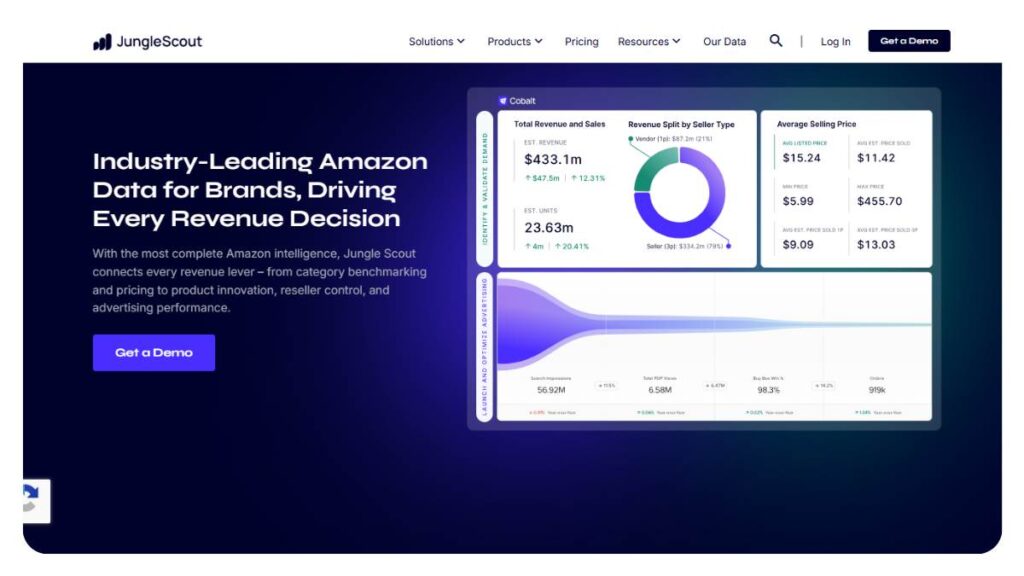
2. Jungle Scout
Best for Beginners
Jungle Scout feels more approachable right out of the gate. The interface is cleaner, less overwhelming, and easier to get used to, especially for newer sellers.
Product research is where it really shines. The data is simplified without being overly basic, which helps in making quicker decisions without second-guessing every metric.
The listing assist features are also useful, though not as deep as some advanced tools. Still, for someone getting started, it’s more than enough.
One thing worth noting: Jungle Scout doesn’t try to do everything at once. And that’s actually a strength. It keeps the focus tight.
Good fit for beginners or sellers who prefer clarity over complexity.
3. Amazon Built-in AI Tools
Best Free Option
Most sellers overlook what’s already inside Amazon itself. That’s a mistake.
Amazon’s native tools, like Opportunity Explorer, Product Performance Spotlight, and Enhance My Listing, are directly connected to first-party data. That alone makes them valuable.
They’re not as feature-rich as third-party platforms, and they don’t offer the same level of flexibility. But the insights tend to be reliable because they’re coming straight from the source.
There’s also no additional cost, which makes them a solid starting point.
The limitation is obvious, though. These tools won’t give you a competitive edge on their own. They’re better used alongside other platforms, not instead of them.
4. ZonGuru

Best for Listing Optimization
ZonGuru leans heavily into listing optimization and niche discovery. It’s not trying to be an all-in-one system, and that focus shows.
The listing tools are designed to refine positioning: how a product is presented, how keywords are used, and how the overall message comes across. Subtle improvements, but they add up.
Its niche finder is also useful for spotting less obvious opportunities. Not always groundbreaking, but it helps avoid crowded categories.
This is the kind of tool that works best when the basics are already in place, and the goal is to improve performance, not just launch products.
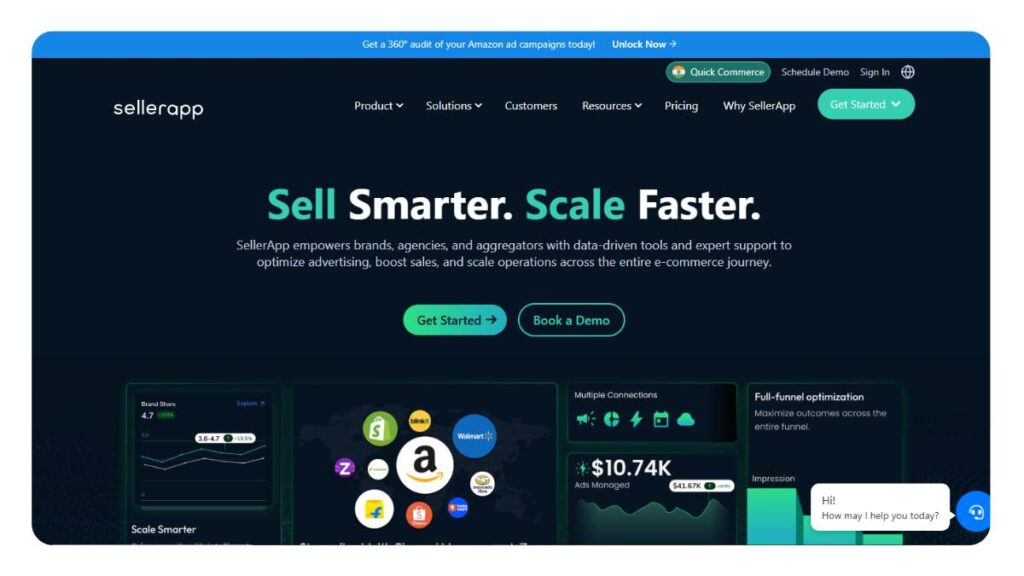
5. SellerApp
Best for Data Insights & Analytics
SellerApp is more data-heavy. It’s built for sellers who want deeper insights into what’s actually driving performance.
The opportunity score feature is often used to evaluate products quickly, but the real value lies in competitor tracking and keyword data. It helps connect what competitors are doing with what’s actually working.
There’s a bit more complexity here compared to beginner tools. Not overwhelming, but it expects the user to spend some time understanding the data.
Works well for sellers who are past the initial stages and want more control over decisions.
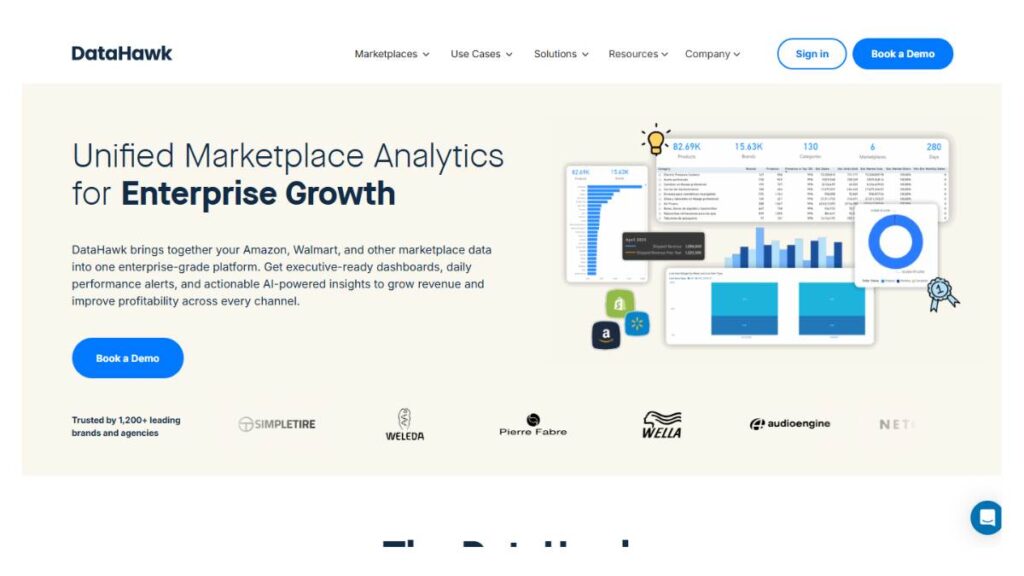
6. DataHawk
Best for Data-Driven Decisions
DataHawk takes a slightly different approach. It’s less about quick wins and more about long-term performance tracking.
The analytics are detailed; sometimes more than necessary for smaller sellers, but for larger catalogs, it becomes useful. Especially when trying to understand trends over time rather than reacting day-to-day.
It also helps with SEO tracking and market intelligence, giving a broader view of where things are heading.
Not the easiest tool to pick up quickly, but valuable once the business reaches a certain scale.
7. Quartile
Best for PPC Automation
Quartile focuses almost entirely on advertising, and does it well. Managing Amazon ads manually becomes difficult once campaigns scale. Too many variables, too many adjustments needed. Quartile handles that layer through automation.
It adjusts bids, reallocates budgets, and optimizes campaigns based on performance data. The goal isn’t just to reduce workload; it’s to stabilize results.
This kind of tool makes the most sense when ad spend is already significant. For smaller budgets, it might feel like overkill.
8. Perpetua
Best for Ad Scaling
Perpetua is often used by sellers who are actively scaling their ad efforts.
It goes beyond basic automation and focuses on growth: how to expand campaigns, where to push budgets, and how to identify profitable segments.
The interface is cleaner than most ad tools, which helps. But the real value is in how it connects data to action.
For sellers running aggressive ad strategies, this becomes less of a tool and more of a control system.
9. AutoDS
Best for Automation & Dropshipping
AutoDS is built with automation in mind, especially for dropshipping models.
It handles product sourcing, order fulfillment, and tracking in a way that reduces manual involvement significantly. That’s the main appeal: hands-off operations.
Product research features are included, though not as advanced as dedicated research tools. Still, for sellers focused on automation, it covers the essentials.
This is less about optimization and more about efficiency. Keeping things running without constant input.

Enroll Now: Product Marketing Course Online
Comparison Snapshot
| Tool | Best For | Pricing Level | Key Strength |
| Helium 10 | All-in-one management | Medium–High | Complete ecosystem |
| Jungle Scout | Beginners & product research | Medium | Simplicity and clarity |
| Amazon Tools | Free native insights | Free | First-party data |
| ZonGuru | Listing optimization | Medium | Positioning and niche discovery |
| SellerApp | Analytics & insights | Medium | Data-driven decision making |
| DataHawk | Advanced analytics | High | Long-term performance tracking |
| Quartile | PPC automation | High | Ad optimization at scale |
| Perpetua | Ad scaling | High | Growth-focused campaign management |
| AutoDS | Automation & dropshipping | Medium | Hands-off operations |
There’s no perfect stack. Most sellers end up combining two or three tools depending on where the pressure is; research, ads, or operations.
The key is not to overcomplicate it. Start with what’s solving the biggest problem right now. The rest can come later.
How to Choose the Best AI Amazon Seller Tool
This is where a lot of sellers get stuck. Not because there aren’t enough options, but because there are too many, and most of them sound similar on the surface.
The better way to approach this isn’t by asking “which tool is best?” but rather, “what’s the biggest friction point right now?”
Because the right tool usually solves a specific problem, not everything at once.
If things are still early and messy, tools that simplify product research and keyword discovery tend to give the most immediate value. Clean inputs lead to better decisions downstream. Without that, everything else becomes harder.
For sellers who are already up and running, the focus shifts. Ads start eating into margins. Listings plateau. Competitors move faster. At that point, tools that improve efficiency, especially around PPC and analytics, start to matter more.
A few things worth considering before choosing:
- Experience level
Some platforms are intuitive; others take time. Jumping into a complex system too early usually leads to underusing it. - Budget
Not just what the tool costs, but whether it actually replaces manual work or other subscriptions. A cheaper tool that doesn’t move the needle ends up being more expensive in the long run. - Business model
FBA sellers, FBM sellers, and dropshippers operate differently. The tool should align with how inventory, fulfillment, and pricing are handled. - Primary use case
Product research, listing optimization, advertising, analytics; they’re different layers. Trying to solve all of them at once usually leads to clutter.
There’s also a tendency to stack tools too early. More dashboards, more data, more “insights.” It feels productive, but often just creates noise.
A tighter setup, built around actual needs, tends to work better.
Free vs Paid AI Amazon Seller Tools
Free tools are usually where most sellers start. And to be fair, they’re not useless. In fact, some of them are surprisingly solid for basic insights.
Amazon’s own tools, for example, provide direct access to marketplace data. That’s valuable. No guesswork around accuracy. But they’re limited in scope. They show what’s happening, not always what to do next.
That’s the trade-off.
Free tools generally offer:
- Basic product and keyword data
- Limited access to analytics
- Fewer automation features
- Restrictions on usage or depth
For someone testing ideas or learning the platform, that’s often enough. There’s no need to over-invest early.
But the limitations show up pretty quickly.
You start hitting caps. Data feels shallow. Tasks that should be automated still require manual effort. And decisions take longer than they should.
That’s usually the point where paid tools start making sense.
Paid tools bring:
- Deeper data sets and more accurate estimates
- Automation (ads, pricing, tracking)
- Better competitor insights
- Time savings that actually compound
The shift isn’t just about “more features.” It’s about reducing friction in daily operations.
Still, upgrading too early can backfire. If the fundamentals aren’t in place, even the best tools won’t fix that.
A practical approach works better; start with free AI Amazon seller tools where possible, identify gaps, and then upgrade only when those gaps start slowing things down.
Common Mistakes When Using AI Amazon Seller Tools
Most issues with these tools don’t come from the tools themselves. They come from how they’re used, or misused.
One of the more common patterns is over-reliance. Letting automation handle everything without questioning the output. It sounds efficient, but it often leads to decisions that don’t fully align with the business.
AI can process data. It can suggest actions. But it doesn’t understand context the way a seller does. That gap matters more than it seems.
Another mistake is ignoring data validation.
Not all data points are equally reliable. Estimates can be off. Trends can be temporary. Blindly trusting every recommendation usually leads to inconsistent results. A quick sanity check goes a long way.
Then there’s the issue of tool stacking.
Using multiple tools isn’t the problem. Using too many overlapping ones is. It creates confusion; different numbers, different insights, different conclusions. Instead of clarity, it adds friction.
A few more things that tend to trip sellers up:
- Chasing every recommendation
Not every suggestion needs to be acted on. Some are worth testing, others are just noise. - Expecting instant results
These tools improve decision-making, but they don’t bypass the fundamentals. Results still take time to compound. - Ignoring strategy
Tools can optimize execution, not direction. Without a clear strategy, even the best systems feel scattered.
There’s a subtle balance here. Use the tools for what they’re good at: processing data, spotting patterns, saving time, but keep the decision-making grounded.
That’s usually where the difference shows.
Future Trends in AI Amazon Seller Tools
The direction is changing, but not in a loud, obvious way. It’s more subtle than that.
A lot of sellers expect “more features” to be the next big thing. That’s not really what’s happening. The shift is more about how tools quietly influence decisions without needing constant input.
Content is a good place to notice this.
Listings aren’t being treated as one-time work anymore. They’re becoming… adjustable. Small edits, tested over time. A different phrase in the title. Slightly sharper bullets. Even image swaps are based on performance. None of it feels dramatic in isolation, but stacked together, it moves conversion in a way big rewrites often don’t.
Pricing is following a similar pattern.
Not aggressive changes. Not constant undercutting. Just small, controlled adjustments. A few percentage points here and there, reacting to demand shifts or competitor movement. Enough to stay in the game without killing margins. Static pricing, honestly, feels a bit outdated at this point.
Then there’s demand prediction.
Still not perfect; far from it. But it’s getting more usable. Tools are starting to pick up signals earlier. Search behavior, category momentum, and even off-Amazon trends are creeping in. It’s less about reacting late and more about spotting direction early. That window… even a small one… can make a difference.
One thing that doesn’t get talked about enough is Amazon’s own ecosystem.
More native features are coming in quietly. They’re not replacing third-party tools, at least not yet, but they’re filling gaps. For some sellers, that changes how many tools they actually need. The stack gets leaner. More focused.
Overall, things are moving toward less hands-on work.
Not fully automated. That’s still a stretch. But definitely less manual tweaking. More systems are running in the background, adjusting as things shift. And timing; this part matters more than people expect. Often, it’s not about doing more. It’s about doing the right thing a little earlier than everyone else.
FAQs:
1. What are the best AI Amazon seller tools?
Helium 10, Jungle Scout, and SellerApp tend to come up most often, with Perpetua in the mix for advertising. But “best” depends on what’s actually needed. Some tools are stronger for research, others for ads or analytics. Most sellers end up choosing based on their current bottleneck, not popularity alone.
2. Are AI tools necessary for Amazon FBA?
Not strictly required, but going without them makes things slower than they need to be. As competition increases, decisions based on guesswork don’t hold up well. These tools help shorten the gap between data and action. Without them, it’s still possible to compete, just with more effort and less clarity.
3. Can beginners use AI Amazon tools?
Yes, and most tools are designed with that in mind now. Interfaces are simpler, workflows are more guided. The challenge isn’t complexity; it’s trying to do too much too soon. Starting with one clear goal, like finding a product, usually works better than exploring every feature right away.
4. Are free AI Amazon tools worth it?
They’re useful early on. Amazon’s built-in tools, especially, give a reliable starting point. But there’s a limit to how far they go. As the need for deeper insights or automation grows, free options tend to fall short. They’re good for learning, but not always enough for scaling.
5. How do AI Amazon seller tools help with product research?
They cut through a lot of manual effort. Instead of checking demand, competition, and pricing separately, everything shows up in one place. Patterns become easier to spot. It doesn’t remove risk, but it makes decisions feel more grounded and less based on assumptions.
6. Which AI tool is best for Amazon product research?
Helium 10 and Jungle Scout are usually the go-to options. Both combine multiple data points: demand, keywords, and competition, into a single view. The difference often comes down to how detailed the analysis needs to be and which interface feels easier to work with over time.
7. Can AI tools improve Amazon listing SEO?
Yes, though the impact builds gradually. They help structure listings better, identify relevant keywords, and align content with search behavior. It’s not about instant ranking jumps. More like steady improvement as listings become more aligned with what customers are already searching for.
8. Are AI Amazon seller tools safe to use?
For the most part, yes. Established tools stick to data analysis and optimization within Amazon’s rules. Problems usually come from trying to push beyond that; automation that crosses into manipulation. Staying within guidelines keeps things straightforward and avoids unnecessary risk.
9. Do AI tools work for Amazon FBA and FBM sellers?
They do. The insights: keywords, demand, competition; apply across both models. Where things differ is execution, like fulfillment or logistics. But the data itself stays relevant regardless of how orders are handled behind the scenes.
10. How much do AI Amazon seller tools cost?
There’s a wide range. Some tools start around $20 per month, while more advanced setups can go well beyond $300. It depends on features, usage limits, and level of automation. The real question is whether the tool actually saves time or improves outcomes enough to justify that cost.
11. What is the best free AI Amazon seller tool?
Amazon’s native tools are usually the first choice. They’re reliable and easy to access since everything sits inside Seller Central. That said, they’re limited in depth. For more detailed insights or automation, most sellers eventually move beyond free options.
12. Can AI tools manage Amazon PPC campaigns automatically?
Yes, many tools handle bid changes, budget adjustments, and targeting on their own. It takes a lot of manual work off the table. Still, occasional oversight helps keep things aligned. Automation works best when it’s guided, not completely hands-off.
13. Do AI tools guarantee higher sales on Amazon?
No, and that’s worth being clear about. They improve how decisions are made, which can lead to better outcomes over time. But results still depend on execution, product quality, and market conditions. The tools support the process; they don’t replace it.
14. How accurate are AI Amazon seller tools?
They’re fairly reliable for spotting trends and direction, but exact numbers can vary. Most tools work with estimates rather than direct Amazon data. The margin of error is usually small, though enough that decisions shouldn’t rely on a single data point alone.
15. Can beginners use AI Amazon seller tools effectively?
Yes, as long as things are kept simple in the beginning. Many tools guide users through the basics, so learning happens while using them. Trying to master everything at once tends to slow things down. Gradual use works better.
16. What features should I look for in AI Amazon seller tools?
The basics matter most: product research, keyword tracking, listing optimization, and analytics. Beyond that, automation features can help as things grow. It’s less about having every feature and more about having the ones that actually get used consistently.
17. Are AI Amazon seller tools worth the investment?
For sellers taking this seriously, they usually are. Time savings alone can make a difference, but the bigger impact comes from better decisions. Over time, that tends to outweigh the monthly cost, especially as operations become more complex.
18. Can AI tools help with competitor analysis on Amazon?
Yes, they make competitor behavior more visible: pricing changes, keyword targeting, listing performance. That clarity helps identify gaps or missed opportunities. Instead of guessing what others are doing, decisions can be based on actual patterns.
19. What is the future of AI in Amazon’s selling?
It’s moving toward systems that adjust quietly in the background. Pricing, ads, and even content are becoming more responsive. Not fully automated, but closer to it than before. The focus is shifting from reacting to changes toward staying slightly ahead of them.