
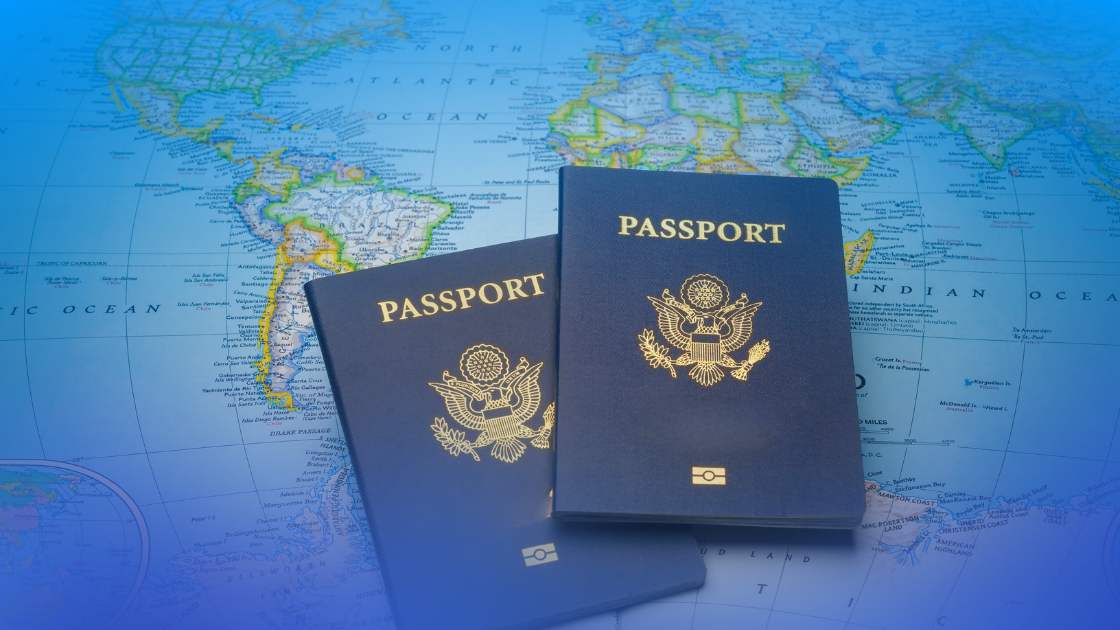
Here’s a number worth sitting with for a moment: 67%.
That’s how much US second passport applications have surged recently. And if you work in marketing – especially remotely – it’s not hard to understand why.
The profession has changed dramatically. Roughly 44% of marketing professionals now operate in remote or hybrid roles. Clients are global. Campaigns span continents. And yet, a single passport from the wrong country can quietly limit where you go, who you meet, and ultimately how much your career grows.
That’s where Caribbean Citizenship by Investment (CBI) programs enter the conversation. For a minimum investment starting at $200,000, marketers can obtain a second passport from countries like St. Kitts & Nevis, Antigua, or Grenada – unlocking visa-free access to 145–157 countries and a set of career advantages that go well beyond just faster airport queues.
Let’s break down exactly how a second passport changes the game for marketing professionals in 2026.
Table of Contents
1. Visa-Free Access to the Markets That Actually Matter
Most marketing work eventually comes down to access – access to clients, conferences, creative partners, and decision-makers. The problem? That access is heavily gated by your travel document.
The Schengen Zone alone covers 27 countries and represents one of the wealthiest consumer markets on earth. The UK adds another layer. Singapore and the UAE are critical hubs for APAC and Middle East business development. With a Caribbean passport, all of these destinations become visa-free.
Antigua & Barbuda’s passport, for example, is visa-free to China – one of the largest advertising markets in the world and a destination where many Western passport holders still face cumbersome visa applications.
Grenada’s passport opens the door to 148 countries, including the UK (visa-free for up to 180 days). For an independent marketing consultant pitching to London agencies or attending events like Advertising Week Europe, that’s an enormous practical advantage.
The EU ETIAS system, which rolled out mandatory electronic travel authorization requirements for Schengen visitors, has added friction for non-EU passport holders. A well-chosen second passport removes that friction entirely.
2. The Tax Efficiency Angle That Most Marketers Overlook
This one doesn’t get talked about nearly enough in marketing circles – but it should.
Caribbean CBI nations operate on territorial tax systems. That means if you establish genuine tax residency in one of these jurisdictions, you’re not taxed on your worldwide income. For a freelance content strategist billing clients in New York, London, and Dubai simultaneously, that structure can be transformative.
There’s also the inheritance and wealth tax angle. Caribbean nations like Dominica, St. Lucia, and St. Kitts impose zero wealth or inheritance taxes. Compare that to EU Golden Visa countries, where ongoing residency fees and tax obligations pile up year after year.
To be clear: tax residency isn’t automatically granted by citizenship. You’d still need to actually establish residency in the jurisdiction and satisfy relevant legal criteria. A qualified tax advisor familiar with multi-jurisdiction structuring is essential here. But the framework exists, and for digital service providers – which describes a significant portion of today’s marketing workforce – it’s worth understanding deeply.
CBI outperforms residency programs on one crucial point: permanence. A golden visa in Portugal or Greece can be revoked if rules change. Caribbean citizenship is yours for life, and passes to your children.
3. Real Business Expansion Becomes Easier
There’s a quiet but real barrier that affects marketing entrepreneurs trying to set up operations abroad: banking and company incorporation.
Opening a business bank account in Singapore as a US citizen? Complicated. Setting up an entity in the UAE? Possible, but often requires local sponsorship or free zone navigation. A second passport from a well-regarded Caribbean nation changes the calculus substantially.
Grenada’s citizenship program stands out here with a unique advantage that no other Caribbean passport offers: eligibility for the US E-2 Investor Visa. This is a non-immigrant visa that allows nationals of E-2 treaty countries to enter the US for the purpose of managing an investment. Grenada has a treaty with the US; most Caribbean nations don’t.
For a marketing agency owner who wants to establish a US presence without the complexity of an EB-5 visa or the uncertainty of O-1 approval, this pathway is remarkably underutilized.
CARICOM membership also comes with the CBI package. The Caribbean Community gives citizens the right to work across member states – a meaningful benefit for marketers building presence in growing Caribbean markets.
4. Networking Without Borders (Literally)
The best marketing relationships aren’t built on Zoom calls. They’re built at summits in Cannes, creative festivals in São Paulo, pitch meetings in Singapore, and networking dinners in London. Every visa restriction is a tax on professional relationships.
Consider what happens to a marketer who misses a critical industry event because their visa application was delayed by six weeks. They miss the panel. Miss the dinner. Miss the connection that leads to a three-year retainer client. That’s a quantifiable cost – it just never shows up on anyone’s balance sheet.
With a Caribbean passport, most of those friction points disappear. St. Kitts & Nevis passport holders can enter 157 countries without a visa – the strongest passport of any Caribbean CBI program. Antigua & Barbuda covers 152 countries.
It’s worth noting that the processing time for these programs is remarkably fast: 3–6 months for all five major Caribbean programs. Compare that to EU residency routes, which can take years to process and require sustained physical presence to maintain.
5. A Plan B That Protects Your Family – and Your Business
Not everything about a second passport is about growth. Some of it is about security.
The geopolitical landscape in 2026 is volatile. US visa enforcement has tightened considerably. Digital nomads who’ve been working remotely on tourist visas have started receiving fines and warnings. The EU’s ETIAS rollout created new hurdles for non-EU nationals trying to maintain consistent access to European markets.
Caribbean CBI programs allow you to include your entire family in a single application—spouse, dependent children, and in many cases parents. That means one investment secures generational mobility. Children inherit the passport. They access better schools, healthcare systems, and eventually professional opportunities across the CARICOM region and beyond.
There’s an asset protection dimension here too. Jurisdictional diversification- holding citizenship, assets, and potentially residency in multiple countries -is a strategy historically employed by the ultra-wealthy. Caribbean CBI makes it accessible at a far lower investment threshold than EU alternatives or traditional naturalization routes.
The cheapest entry point into a Caribbean second passport is Dominica at $200,000 (donation route), with no ongoing residency requirements and access to 145 countries visa-free. St. Lucia offers a bond option that’s partially redeemable, making it one of the more financially interesting structures for cost-conscious applicants.
Comparing the Five Caribbean Programs
For anyone actively researching this, here’s a quick breakdown:
| Program Min. Investment (Donation/RE) Visa-Free Countries Processing Time Key Advantage | ||||
| St. Kitts & Nevis | $250k / $400k | 157 | 3–6 months | Strongest passport; oldest program |
| Antigua & Barbuda | $200k / $300k | 152 | 3–6 months | China visa-free access |
| Grenada | $230k / $270k | 148 | 3–6 months | E-2 US visa eligibility |
| St. Lucia | $200k / $300k | 147 | 3–6 months | Redeemable bond option |
| Dominica | $200k / $200k | 145 | 3–6 months | Lowest entry cost |
Budget approximately $50,000 on top of investment minimums for due diligence and government fees. Approval rates are high once due diligence is passed – the main risk is an incomplete application, not rejection for arbitrary reasons.
For a detailed side-by-side breakdown of eligibility requirements, real estate options, and passports strengths, the Caribbean CBI programs compared guide from Global Residence Index is one of the most thorough resources publicly available on the topic.
Final Thoughts
A second passport isn’t a magic bullet. It won’t close deals that aren’t there, and it won’t replace the hard work of building a marketing career. But it removes a layer of friction that quietly holds a lot of talented people back -friction that compounds over a career into missed relationships, lost market access, and constrained business structures.
The marketers who are thinking about global mobility in 2026 aren’t just doing so for adventure. They’re doing it because the profession demands it. And Caribbean CBI, with its speed, permanence, and genuine passport strength, is increasingly the most rational way to get there.
If you’re considering making the move, Global Residence Index has worked with clients across more than 500 citizenship and residency applications – including Caribbean programs specifically – and can walk you through which program fits your professional profile and long-term goals.