

Marketing teams collect data from everywhere now. Google Ads, Meta, Shopify, HubSpot, GA4, CRM tools, spreadsheets that somehow still survive inside big companies… and most of it rarely connects cleanly. That’s really where marketing data connectors start becoming less of a “nice-to-have” and more operational infrastructure. This guide breaks down how connectors actually work, the different types available, and why they matter so much for reporting, attribution, forecasting, and modern analytics workflows. It also looks at the leading platforms, where each one fits best, and the common mistakes teams make when scaling data operations. Some tools are built for lightweight reporting. Others are built for serious warehouse environments. Big difference, honestly.
Table of Contents
Introduction
Marketing teams are drowning in data. That’s not really the problem anymore. The real problem is that the data lives everywhere.
Your paid media data sits inside Google Ads and Meta Ads. Attribution data is trapped in GA4. CRM data lives in HubSpot or Salesforce. Ecommerce metrics come from Shopify. Then someone exports everything into spreadsheets, manually updates dashboards every Monday, and hopes the numbers match before the leadership meeting starts.
Usually, they don’t.
And, this fragmentation problem has become even more painful because modern marketing is increasingly dependent on AI-driven analysis, automation, and forecasting. AI tools can surface incredible insights, but only if the underlying data is centralized, clean, and connected. Bad inputs still produce bad outputs. That hasn’t changed.
A lot of marketing teams are discovering this the hard way.
You can’t run reliable predictive models if campaign data is scattered across platforms. You can’t trust attribution when every channel measures conversions differently. You can’t automate reporting if analysts spend half their time exporting CSV files from ad platforms.
This is exactly where marketing data connectors come in.
Marketing data connectors help businesses move data between platforms automatically. They centralize information from advertising channels, CRMs, analytics tools, ecommerce systems, and data warehouses into a unified reporting or analytics environment.
That sounds technical, maybe even boring at first glance. But honestly, these connectors have quietly become one of the most important layers in the modern marketing stack.
They solve problems like:
- Multi-channel reporting chaos
- Inconsistent attribution
- Dashboard delays
- Spreadsheet dependency
- Data silos between teams
- Broken automation workflows
- AI systems trained on incomplete datasets
More importantly, they create what many companies are now calling “AI-ready marketing data.”
That phrase gets thrown around a lot, but the idea is simple: structured, centralized, normalized data that AI systems can actually use reliably.
The companies building strong marketing data infrastructure today are already moving faster than competitors who still rely on disconnected dashboards and manual reporting processes. Not because they magically have better marketers, but because they can make decisions faster and with more confidence.
In this guide, we’ll break down:
- What marketing data connectors actually are
- How they work behind the scenes
- Why they’ve become essential for AI-powered marketing
- The different types of connectors available
- The best marketing data connectors in 2026
- How agencies, enterprises, and SMBs use them
- What to look for before choosing a connector platform
If you work in growth marketing, performance marketing, analytics, RevOps, or even ecommerce operations, understanding this space is becoming less optional every year.
And maybe that sounds dramatic. But when reporting infrastructure breaks, marketing decisions usually break right after it.
What Are Marketing Data Connectors?
Marketing data connectors are tools or integrations that automatically move marketing data between platforms.
At a basic level, they connect systems that normally don’t communicate well with each other.
For example:
- Pulling campaign data from Google Ads into BigQuery
- Sending Meta Ads performance metrics into Looker Studio
- Syncing HubSpot lead data with Salesforce
- Combining Shopify revenue with GA4 attribution data
- Feeding advertising data into AI analytics platforms
Without connectors, teams often rely on manual exports, spreadsheets, or one-off scripts. That might work for a while. But once reporting complexity increases across channels, regions, or clients, manual workflows become fragile very quickly.
Marketing connectors automate this process.
They continuously collect data from source platforms, standardize it, and deliver it into a destination system where teams can analyze, visualize, or activate the data.
How Marketing Connectors Move Data Between Platforms
Most connectors follow a fairly straightforward process:
Step 1: Extract Data
The connector pulls data from a source platform using APIs.
This could include:
- Ad spend from Google Ads
- Campaign metrics from LinkedIn Ads
- Sessions and conversions from GA4
- Customer lifecycle data from HubSpot
- Revenue data from Shopify
The connector authenticates access through APIs and periodically retrieves updated information.
Step 2: Transform and Normalize Data
This is where things get more important than many marketers realize.
Different platforms structure data differently. Meta Ads may define conversions differently than Google Ads. Naming conventions vary wildly between teams. Currency formats, attribution windows, campaign structures, and dimensions often don’t align cleanly.
Good connector platforms normalize and transform data so reporting becomes consistent.
This can include:
- Currency conversion
- Channel standardization
- Campaign naming cleanup
- Deduplication
- Attribution alignment
- Metric mapping
- Data enrichment
Without transformation layers, centralized reporting becomes messy very fast.
Step 3: Load Data Into a Destination
Once transformed, the connector pushes data into a destination platform such as:
- BigQuery
- Snowflake
- Looker Studio
- Power BI
- Tableau
- Google Sheets
- CRMs
- AI analytics tools
This creates a centralized environment where marketers can build dashboards, run attribution analysis, or train AI models on unified datasets.
Difference Between APIs, Connectors, ETL Tools, and Integrations
People often use these terms interchangeably, but they’re not exactly the same.
APIs
APIs are the underlying communication interfaces provided by platforms.
Google Ads API, Meta Marketing API, and HubSpot API all expose platform data programmatically.
But APIs alone aren’t plug-and-play solutions. They still require engineering work.
Connectors
Connectors sit on top of APIs and simplify data movement.
Instead of building custom API pipelines manually, marketers can use connectors to automate syncing with minimal technical setup.
ETL Tools
ETL stands for:
- Extract
- Transform
- Load
Traditional ETL tools focus heavily on data engineering workflows across many business systems, not just marketing platforms.
Modern marketing connector platforms often include ETL or ELT functionality.
Integrations
Integrations are broader application connections between platforms.
For example:
- Slack notifications from HubSpot
- CRM lead syncing
- Ecommerce automation workflows
Not every integration is designed for analytics or centralized reporting.
That distinction matters more than most teams expect.
Why Connectors Matter for Modern Marketing Stacks
Modern marketing stacks are fragmented by design.
A typical mid-sized company might use:
- Google Ads
- Meta Ads
- LinkedIn Ads
- TikTok Ads
- GA4
- HubSpot
- Salesforce
- Shopify
- Looker Studio
- BigQuery
- Snowflake
- Customer data platforms
- Attribution tools
Every platform generates valuable data. But individually, each only tells part of the story.
Marketing connectors bridge those gaps.
They help companies create a single source of truth across acquisition, engagement, conversion, retention, and revenue metrics.
And increasingly, they help AI systems access unified data environments instead of fragmented platform silos.
That shift is becoming incredibly important.
How Marketing Data Connectors Work
Most marketing connector platforms work through scheduled or real-time synchronization pipelines.
A simplified workflow looks something like this:
- Authenticate source platforms
- Select metrics and dimensions
- Define transformation rules
- Schedule refresh intervals
- Push data into destination systems
- Monitor sync health and pipeline reliability
Some platforms refresh data every few hours. Others support near real-time syncing.
The right setup depends on business requirements.
For example:
- Executive dashboards may only require daily updates
- Media buying teams may need hourly spend refreshes
- AI bidding systems may require near real-time campaign signals
This is why connector architecture matters more at scale.
Real-Time vs Scheduled Syncs
Scheduled Syncs
Most businesses use scheduled syncs because they’re more stable and cost-efficient.
Common refresh intervals include:
- Hourly
- Every 6 hours
- Daily
- Weekly
Scheduled syncing works well for reporting environments and BI dashboards.
Real-Time Syncs
Real-time or near real-time syncing is increasingly important for:
- Budget pacing
- Campaign optimization
- AI-driven automation
- Fraud detection
- Dynamic attribution models
The tradeoff is complexity and cost.
Real-time pipelines require stronger infrastructure and more API handling capacity.
Not every team actually needs this level of sophistication, despite what some software vendors imply.
Examples of Marketing Data Sources
Most connector platforms support dozens or hundreds of marketing systems.
Common sources include:
Advertising Platforms
- Google Ads
- Meta Ads
- LinkedIn Ads
- TikTok Ads
- Microsoft Ads
- Pinterest Ads
- Amazon Ads
Analytics Platforms
- Google Analytics 4 (GA4)
- Adobe Analytics
- Mixpanel
- Amplitude
CRM and Sales Platforms
- HubSpot
- Salesforce
- Pipedrive
Ecommerce Platforms
- Shopify
- WooCommerce
- Magento
Data Warehouses and BI Tools
- BigQuery
- Snowflake
- Redshift
- Looker Studio
- Tableau
- Power BI
The larger the marketing operation becomes, the more critical these cross-platform connections become.
Why Marketing Teams Need Data Connectors
Eliminating Manual Spreadsheet Reporting
Manual reporting slows teams down.
It also creates version-control chaos, inconsistent calculations, and human errors that quietly distort decision-making.
Most marketers underestimate how much operational drag spreadsheets create until reporting becomes automated.
Building a Single Source of Truth
Different platforms rarely report the same numbers.
A connector-based architecture allows companies to normalize data definitions centrally so everyone works from consistent metrics.
That alone can reduce massive internal confusion.
Improving Attribution Accuracy
Attribution becomes unreliable when conversion paths are fragmented across systems.
Centralized datasets help marketers:
- Analyze cross-channel journeys
- Compare attribution models
- Measure blended CAC
- Track incrementality more accurately
Scaling Reporting Across Channels
As businesses expand into more acquisition channels, reporting complexity grows exponentially.
Connectors make it possible to scale reporting infrastructure without scaling manual operations at the same pace.
Enabling AI Analytics and Forecasting
This is probably the biggest shift happening right now.
AI systems need structured, historical, centralized datasets.
Marketing connectors help create the data foundation required for:
- Predictive forecasting
- Budget optimization
- Automated anomaly detection
- AI-generated reporting
- Revenue modeling
- Media mix modeling
Without connected infrastructure, AI capabilities stay limited.
That’s becoming increasingly obvious across enterprise marketing teams.
The Critical Importance of Marketing Data Connectors in AI-Powered Marketing
Why AI Depends on Connected Marketing Data
AI has changed how marketing teams analyze performance, forecast growth, optimize budgets, and generate insights. But there’s something many companies overlook when adopting AI tools:
AI systems are only as useful as the data infrastructure behind them.
If marketing data is fragmented across disconnected platforms, AI outputs become unreliable very quickly.
For example:
- One platform may use click attribution
- Another may use view-through attribution
- CRM conversion timestamps may not align
- Revenue data may lag behind ad data
- Campaign naming conventions may be inconsistent
When AI models process fragmented or inconsistent datasets, prediction quality drops.
That affects:
- Forecasting accuracy
- ROAS predictions
- CAC modeling
- Budget recommendations
- Customer segmentation
- Lifetime value analysis
In practice, disconnected data often creates misleading AI insights that look sophisticated on the surface but fail under scrutiny.
Connected marketing data solves this problem by centralizing and standardizing information before AI systems analyze it.
That’s the foundation.
Not the AI interface itself.
Why Disconnected Data Reduces AI Accuracy
AI models rely on patterns.
If the underlying dataset contains gaps, duplicates, inconsistencies, or missing relationships, those patterns become distorted.
Some common examples:
Channel Silos
Google Ads data lives separately from Meta Ads and LinkedIn Ads, preventing unified cross-channel analysis.
Attribution Fragmentation
Different attribution windows create conflicting conversion signals.
Missing Revenue Mapping
Campaign performance data lacks CRM or sales outcomes.
Inconsistent Taxonomy
Campaign naming conventions vary between teams or regions.
AI systems struggle to produce reliable insights in these environments.
The problem isn’t the AI model. It’s the infrastructure feeding the model.
And honestly, many companies are still trying to layer AI tools on top of fundamentally broken reporting foundations.
That usually creates more confusion instead of clarity.
How Connectors Improve Predictive Analytics and Campaign Optimization
Centralized connector-based data pipelines improve AI performance because they create cleaner datasets with broader historical context.
This allows marketers to build more reliable systems for:
- Predicting customer acquisition costs
- Forecasting conversion trends
- Identifying spend inefficiencies
- Detecting performance anomalies
- Allocating budget dynamically
- Modeling lifetime value
- Improving media mix analysis
When AI has access to integrated datasets across ad platforms, CRM systems, analytics tools, and revenue systems, optimization becomes significantly more intelligent.
For example:
A connector pipeline might combine:
- Meta Ads spend
- GA4 behavioral data
- Shopify purchases
- Salesforce pipeline revenue
- Customer retention metrics
That unified dataset creates a much stronger foundation for forecasting than isolated ad platform reporting.
The difference is massive.
Marketing Data Connectors and AI Workflows
Marketing connectors increasingly power AI workflows behind the scenes.
Not just dashboards.
Feeding Data Into AI Platforms
Many organizations now pipe centralized datasets into:
- ChatGPT-based analytics copilots
- Claude workflows
- Gemini-powered reporting assistants
- Internal AI forecasting systems
- BI copilots
- Machine learning environments
These systems rely heavily on structured data pipelines.
Without connectors, AI tools often end up working with incomplete snapshots instead of comprehensive historical datasets.
AI-Generated Marketing Insights
Modern AI analytics tools can automatically identify:
- Performance anomalies
- Budget inefficiencies
- Channel saturation
- Seasonal shifts
- Creative fatigue
- Conversion drop-offs
But again, insight quality depends on data quality.
Connector infrastructure becomes the invisible layer enabling these workflows.
Automated Anomaly Detection
AI systems are increasingly used to detect unusual marketing patterns automatically.
Examples include:
- Sudden CPC spikes
- Tracking failures
- Conversion drops
- Spend pacing issues
- Revenue anomalies
Real-time connector pipelines make this monitoring possible.
AI-Powered Budget Allocation
Some advanced marketing teams now use AI systems to recommend budget shifts dynamically across channels.
This requires centralized historical data from multiple advertising platforms.
Without connectors, budget optimization remains siloed and incomplete.
Predictive ROAS and CAC Modeling
Predictive modeling depends heavily on historical consistency.
Connector-based infrastructure helps teams:
- Train forecasting models
- Compare blended CAC trends
- Estimate future ROAS
- Analyze marginal returns
- Simulate spend scenarios
That’s becoming increasingly important as acquisition costs rise across digital channels.
The Rise of AI-Ready Data Pipelines
A few years ago, many marketing teams could still operate reasonably well using spreadsheets and disconnected dashboards.
That’s getting harder now.
Modern growth teams increasingly require:
- Automated pipelines
- Centralized warehouses
- Attribution standardization
- Historical data retention
- Cross-channel visibility
- AI-compatible datasets
This is why connector platforms are evolving into broader marketing intelligence infrastructure.
Not just reporting tools.
Why Marketers Are Moving Beyond Spreadsheets
Spreadsheets still have value. They’re flexible, fast, and familiar.
But they break down when teams need:
- Multi-channel attribution
- Real-time reporting
- AI forecasting
- Large-scale automation
- Governance controls
- Cross-region standardization
At scale, spreadsheet dependency creates operational bottlenecks.
Connector-based infrastructure removes much of that friction.
First-Party Data and Cookieless Tracking
As third-party cookies decline, first-party data strategies are becoming more important.
Marketing connectors help companies centralize:
- CRM data
- Website behavior
- Purchase history
- Lead lifecycle data
- Subscription activity
This creates stronger first-party datasets for attribution and personalization.
Marketing Intelligence Platforms Powered by Connectors
Many modern marketing intelligence platforms are essentially built on top of connector ecosystems.
Their competitive advantage often comes down to:
- Connector breadth
- Data normalization quality
- Pipeline reliability
- Transformation capabilities
- AI compatibility
The connector layer quietly powers much of the reporting, forecasting, and automation happening behind the scenes.
Most executives never see it directly.
But when the pipelines fail, everyone notices very quickly.
Three Types of Marketing Data Connectors
Not all marketing data connectors work the same way.
Some are lightweight native integrations built directly into platforms. Others are enterprise-grade ETL systems capable of orchestrating thousands of data pipelines globally.
Understanding the differences matters because the right solution depends heavily on:
- Team size
- Technical maturity
- Reporting complexity
- Data governance requirements
- Attribution sophistication
- AI and warehouse strategy
Broadly speaking, most marketing connectors fall into three categories.
Native Connectors (First-Party Integrations)
What Native Integrations Are
Native connectors are built directly by the platforms themselves.
For example:
- Google Ads connecting to BigQuery
- HubSpot syncing with Salesforce
- Shopify integrations with GA4
- Meta Ads integrations inside CRM platforms
These integrations are usually designed to make core workflows easier within a vendor ecosystem.
They’re often the simplest starting point for smaller teams.
Examples of Native Platform Integrations
Common native connector ecosystems include:
- Google Ads – BigQuery
- GA4 – Looker Studio
- HubSpot – Salesforce
- Shopify – Google Analytics
- Meta Leads Ads – CRM syncs
Some platforms heavily encourage staying inside their own ecosystem through native integrations.
Which makes sense commercially, honestly.
Benefits of Native Connectors
Native integrations usually offer:
- Simple setup
- Lower cost
- Minimal technical overhead
- Strong platform compatibility
- Faster onboarding
For smaller businesses with relatively straightforward reporting needs, native integrations can work surprisingly well.
Especially early on.
Limitations of Native Integrations
The problems start once reporting complexity increases.
Native connectors often struggle with:
- Multi-platform standardization
- Advanced transformations
- Cross-channel attribution
- Historical backfills
- Governance controls
- Large-scale automation
- Enterprise reporting consistency
They’re also heavily dependent on platform priorities.
If a vendor changes API rules or limits functionality, businesses often have limited flexibility.
That becomes risky at scale.
Built-In Connectors
Connectors Available Inside BI or CRM Platforms
Many business intelligence and CRM tools now include built-in connectors.
These are slightly different from native integrations because they’re embedded within broader reporting or operational platforms.
Examples include:
- Looker Studio connectors
- Power BI integrations
- Tableau data connections
- HubSpot reporting connectors
- Salesforce data sync tools
The goal is usually to simplify the reporting setup for business users.
Examples From Popular Platforms
Looker Studio
Looker Studio supports direct integrations with:
- GA4
- Google Ads
- Search Console
- YouTube Analytics
- BigQuery
It also supports third-party connector ecosystems.
Power BI
Power BI includes hundreds of built-in data connections for:
- Advertising platforms
- Databases
- Cloud systems
- Enterprise applications
HubSpot and Salesforce
CRM platforms increasingly include native reporting integrations and workflow synchronization features.
These can work well for operational reporting.
When Built-In Connectors Are Enough
Built-in connectors are often sufficient for:
- Basic dashboarding
- Small reporting teams
- Limited channel complexity
- Simple KPI tracking
- Early-stage companies
But limitations emerge once organizations require:
- Advanced harmonization
- Enterprise governance
- Large-scale historical retention
- Multi-region standardization
- AI-ready warehouse infrastructure
That’s where third-party platforms usually become necessary.
Third-Party Marketing Data Connectors
Specialized ETL/ELT Platforms
Third-party connector platforms specialize in centralized data movement, transformation, and orchestration.
These platforms are built specifically to handle:
- Multi-platform reporting
- Marketing attribution
- Warehouse synchronization
- Transformation pipelines
- Governance management
- AI-ready infrastructure
Examples include:
- Coupler.io
- Adverity
- Improvado
- Fivetran
- Funnel
- Supermetrics
Many of these platforms support hundreds of integrations simultaneously.
Multi-Platform Reporting Tools
Third-party connectors are especially valuable for organizations managing:
- Multiple ad platforms
- Large reporting environments
- Agency client accounts
- Enterprise regions
- Cross-channel attribution models
They help unify fragmented ecosystems into centralized analytics environments.
Enterprise Connector Ecosystems
Enterprise-grade connector platforms often include:
- Schema management
- Data validation
- Permission controls
- Monitoring systems
- Transformation layers
- Reverse ETL
- Pipeline orchestration
- AI integrations
This is far beyond simple dashboard syncing.
At that point, connector platforms start functioning as core marketing infrastructure.
Advantages Over Native Integrations
Third-party connector platforms usually provide:
- Broader connector libraries
- Better transformation capabilities
- More reliable synchronization
- Advanced governance
- Warehouse flexibility
- Cross-channel standardization
- Better attribution support
- Scalability across teams and regions
The tradeoff is usually cost and complexity.
Smaller teams may not need enterprise-grade infrastructure immediately.
But as reporting maturity grows, connector limitations become impossible to ignore.
Best Marketing Data Connectors
The marketing data connector space has evolved fast over the past few years. What used to be a relatively simple reporting problem has now become a broader infrastructure challenge involving attribution, warehousing, governance, automation, and increasingly, AI-driven analytics.
And honestly, not all connector platforms are solving the same problem.
Some are designed for marketers who just want dashboards updated automatically. Others are built for enterprise data teams managing billions of rows across global reporting environments. Some focus heavily on attribution modeling. Others lean into reverse ETL and operational workflows.
That’s why choosing the “best” connector depends heavily on your actual requirements.
A small agency running Looker Studio dashboards has very different needs compared to an enterprise brand centralizing data from thousands of ad accounts across multiple regions.
Still, a few platforms consistently stand out because of their connector depth, reliability, transformation capabilities, and scalability.
Coupler.io
Why Coupler.io Is Popular Among Marketing Teams
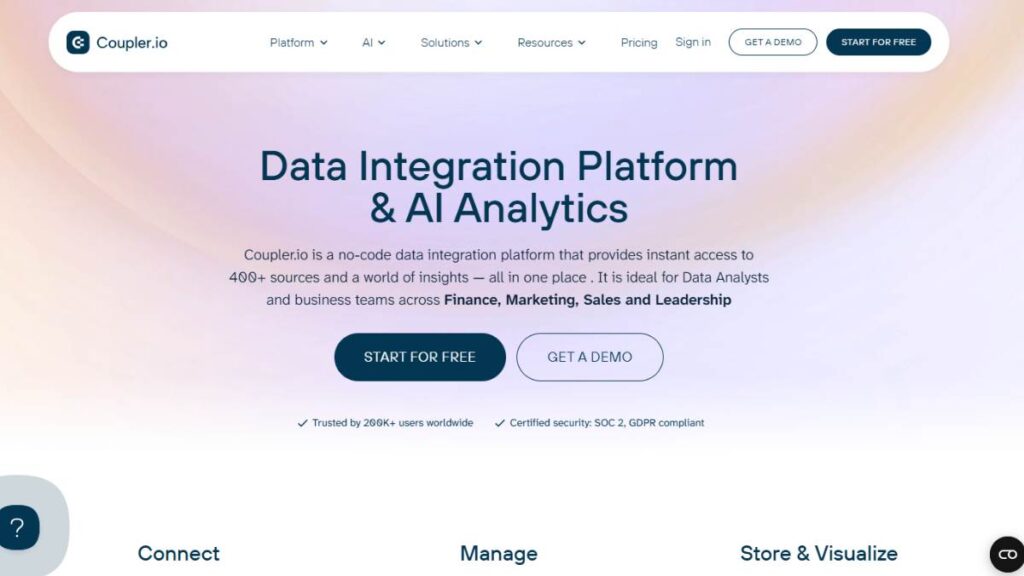
Coupler.io has become one of the more versatile connector platforms for marketing teams that want automation without needing a dedicated data engineering department.
A big reason for its growth is accessibility. The platform balances usability and flexibility better than many competitors in the mid-market segment. Teams can connect advertising platforms, CRMs, spreadsheets, databases, and BI tools relatively quickly without building custom pipelines from scratch.
Coupler.io supports hundreds of integrations across marketing, analytics, ecommerce, and reporting ecosystems. It works especially well for teams that still rely heavily on Google Sheets or Looker Studio but want cleaner, more automated reporting workflows.
What’s interesting is that the platform has quietly expanded beyond simple reporting automation. Many teams now use it as a lightweight centralized data pipeline layer connecting marketing systems with warehouses like BigQuery.
For companies moving toward more advanced analytics environments, that flexibility matters.
The platform also handles scheduled refreshes, transformations, and multi-source blending reasonably well for a no-code tool. It’s not trying to compete directly with enterprise ETL giants, but for SMBs and growing marketing teams, it often hits a very practical middle ground.
Best Use Cases for Coupler.io
Coupler.io works particularly well for:
- Multi-channel marketing reporting
- Agency dashboard automation
- Automated Google Sheets reporting
- Looker Studio integrations
- Marketing data exports into BigQuery
- SMB and mid-market analytics operations
- Cross-platform KPI reporting
Agencies managing multiple clients often like it because onboarding new reporting environments is relatively straightforward.
Pros and Cons of Coupler.io
One of Coupler.io’s biggest strengths is simplicity. Teams can launch useful reporting pipelines quickly without needing SQL-heavy workflows or deep engineering involvement.
Its pricing structure is also generally more approachable than enterprise-focused competitors.
On the downside, larger enterprise environments may eventually outgrow some of its governance and orchestration capabilities. Very large-scale transformation pipelines or highly customized attribution systems may require more advanced infrastructure.
Still, for many growing marketing teams, it covers far more ground than expected.
Best Integrations Supported
Some of its most commonly used integrations include:
- Google Ads
- Meta Ads
- LinkedIn Ads
- TikTok Ads
- GA4
- HubSpot
- Shopify
- Google Sheets
- BigQuery
- Looker Studio
Adverity
Enterprise Marketing Data Operations Platform
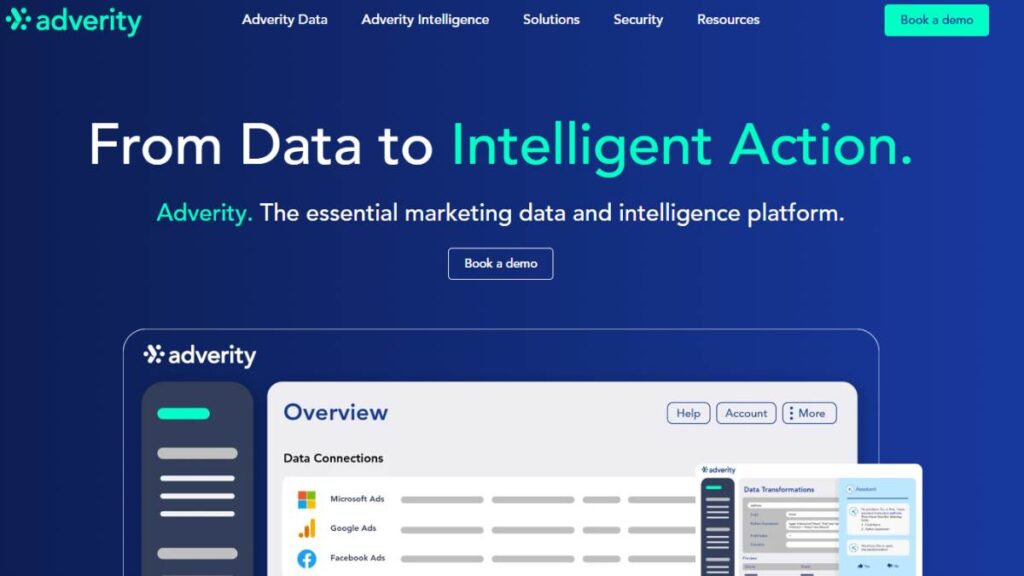
Adverity sits firmly in the enterprise category.
This platform is less about lightweight dashboard automation and more about centralized marketing data operations at scale. Large global brands and enterprise marketing teams often choose Adverity because of its strong governance capabilities, transformation engine, and connector ecosystem.
The platform supports hundreds of integrations across advertising, ecommerce, CRM, analytics, and offline systems. But what really differentiates Adverity is its focus on data quality and standardization.
That becomes extremely important when organizations manage reporting across regions, agencies, or business units where campaign naming structures and attribution logic can become wildly inconsistent.
Adverity gives enterprises stronger control over harmonization, validation, and governance layers before data reaches dashboards or warehouse environments.
Its transformation capabilities are also much deeper than what most SMB-oriented connector tools offer. Teams can standardize metrics, normalize dimensions, enrich datasets, and automate complex reporting logic centrally.
For enterprise reporting maturity, that matters more than flashy dashboards.
Best Use Cases for Adverity
Adverity is often used for:
- Enterprise marketing operations
- Global reporting standardization
- Multi-region campaign governance
- Complex cross-channel analytics
- Large-scale warehouse synchronization
- Centralized KPI normalization
Pros and Cons of Adverity
The platform’s biggest strength is enterprise readiness. It’s designed for organizations operating at high reporting complexity with serious governance requirements.
Its transformation and monitoring capabilities are also very strong.
The tradeoff is complexity and cost. Smaller teams may find the platform heavier than necessary for basic reporting needs. Setup and implementation can also require more operational involvement compared to plug-and-play connector tools.
Improvado

Marketing-Focused Enterprise Connector Platform
Improvado has positioned itself very specifically around marketing analytics, attribution, and performance intelligence.
Unlike broader ETL vendors, Improvado was designed primarily for marketing and revenue operations teams. That specialization shows up in its connector library, transformation templates, and attribution-oriented workflows.
The platform supports hundreds of marketing and sales integrations while focusing heavily on data harmonization across advertising ecosystems.
That’s important because marketing data is messy in uniquely frustrating ways.
Different ad platforms structure campaign hierarchies differently. Attribution models vary. Naming conventions break constantly. Improvado spends a lot of effort solving those normalization problems for enterprise marketers.
The platform is particularly strong for organizations building advanced performance reporting environments across paid media, CRM systems, and revenue attribution pipelines.
It also integrates well with warehouse-centric architectures, which has become increasingly common among larger organizations.
Best Use Cases for Improvado
Improvado works especially well for:
- Enterprise attribution modeling
- Cross-channel performance analytics
- Marketing mix modeling
- Revenue reporting environments
- Enterprise media intelligence
- Centralized campaign analytics
Pros and Cons of Improvado
Its biggest advantage is marketing specialization. The platform understands marketing datasets deeply, which reduces a lot of manual harmonization work.
Connector breadth is also strong across advertising and CRM systems.
The downside is that smaller organizations may find the platform more sophisticated than necessary. Pricing also tends to align more with enterprise environments than SMB reporting teams.
Fivetran
Warehouse-First ELT for Marketing Data
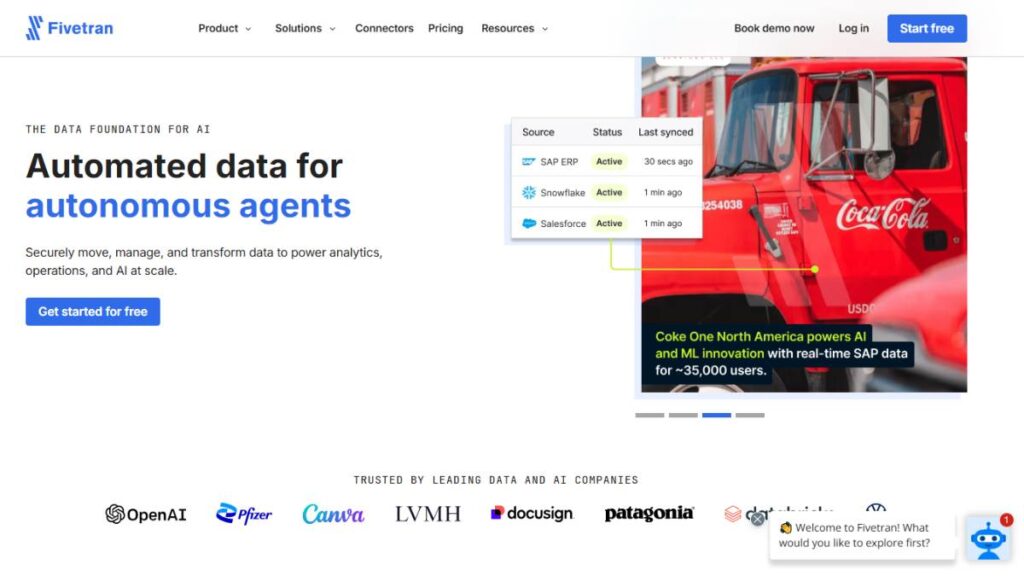
Fivetran approaches the connector problem from a more engineering-first perspective.
Rather than focusing primarily on dashboards or marketer-friendly interfaces, Fivetran specializes in reliable ELT pipelines feeding centralized data warehouses.
It has become extremely popular among modern data teams because of its automation capabilities around schema management, connector maintenance, and pipeline reliability.
One of the biggest operational headaches in data infrastructure is handling API changes, schema drift, and connector maintenance. Fivetran automates much of that complexity.
That reliability has made it a preferred choice for organizations heavily invested in warehouse architectures like BigQuery or Snowflake.
Marketing teams often use Fivetran alongside broader analytics stacks where data engineers manage infrastructure centrally while analysts and marketers consume warehouse-level reporting downstream.
It’s less focused on quick dashboard deployment and more focused on long-term infrastructure scalability.
Best Use Cases for Fivetran
Fivetran is particularly strong for:
- Enterprise warehouse synchronization
- BigQuery and Snowflake pipelines
- Large-scale ELT operations
- Data engineering environments
- High-volume marketing datasets
- Infrastructure-heavy analytics stacks
Pros and Cons of Fivetran
Reliability is probably Fivetran’s biggest differentiator.
Connector maintenance overhead is significantly reduced compared to many custom API pipelines. Automatic schema handling also saves engineering time.
The downside is that it’s not always the most marketer-friendly platform. Teams without technical resources may struggle more compared to no-code connector tools.
Pricing can also increase significantly as data volume grows.
Rivery
Advanced Enterprise ETL and Reverse ETL Platform
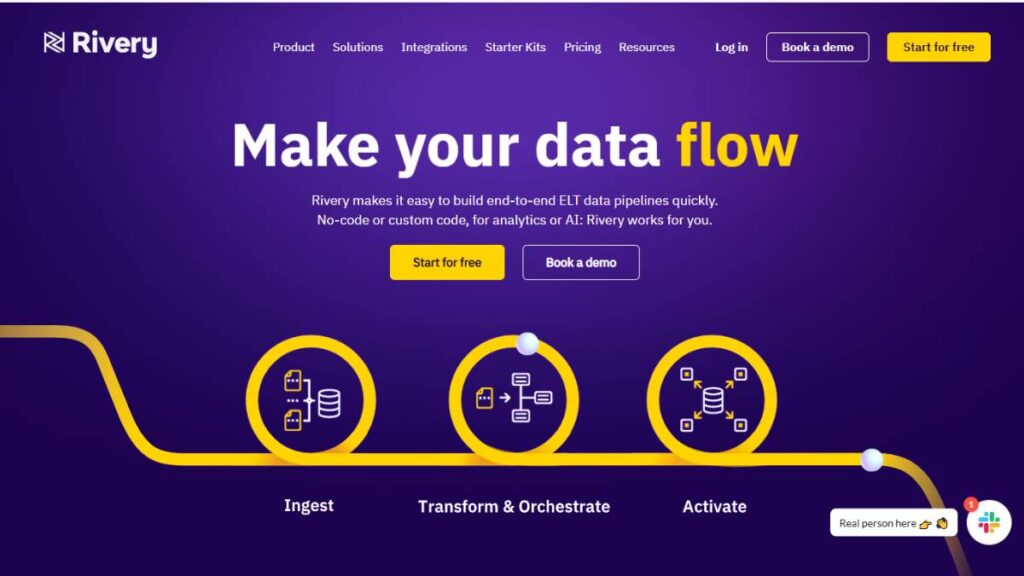
Rivery combines traditional ETL capabilities with orchestration and reverse ETL functionality, making it appealing for enterprise teams building more operationalized marketing data ecosystems.
The platform supports complex workflows involving extraction, transformation, warehouse synchronization, and downstream activation.
That last part matters increasingly in modern marketing infrastructure.
Connector platforms are no longer just moving data into dashboards. Many organizations now want warehouse data pushed back into operational systems like CRMs, advertising platforms, customer engagement tools, or personalization engines.
Rivery supports those workflows well.
Its orchestration capabilities also make it attractive for organizations managing multiple interconnected pipelines across departments.
This is the kind of platform that becomes valuable once data environments become operationally complex.
Best Use Cases for Rivery
Rivery is commonly used for:
- Reverse ETL workflows
- Complex enterprise orchestration
- Real-time marketing syncs
- Operational data activation
- Multi-team analytics infrastructure
- Advanced warehouse workflows
Pros and Cons of Rivery
The platform’s orchestration and automation flexibility are major strengths.
It’s also well-suited for organizations trying to unify analytics and operational activation workflows within one environment.
However, smaller teams may find implementation complexity higher compared to simpler connector platforms.
Funnel
Marketing and Sales Reporting Platform
Funnel has become especially popular among marketing teams that want centralized reporting without building a heavy engineering stack.
The platform focuses strongly on marketer usability while still offering relatively advanced standardization and governance capabilities.
That balance has helped Funnel gain traction among agencies, ecommerce brands, and mid-market companies.
Its connector ecosystem is broad, particularly across advertising and analytics platforms. But where Funnel really stands out is data normalization.
Marketing teams constantly struggle with inconsistent metrics, broken naming conventions, and reporting fragmentation across channels. Funnel helps standardize those datasets into cleaner reporting structures before they reach BI platforms.
That saves enormous operational time.
The platform is also designed more for business users than technical engineering teams, which makes onboarding easier for many organizations.
Best Use Cases for Funnel
Funnel is commonly used for:
- Cross-platform campaign reporting
- KPI standardization
- Ecommerce analytics
- Agency reporting automation
- Marketing performance dashboards
- Centralized media reporting
Pros and Cons of Funnel
Its biggest strength is usability, combined with relatively mature reporting governance.
Marketing teams can centralize reporting workflows without needing deep engineering involvement.
However, organizations requiring highly customized transformation logic or large-scale warehouse engineering may eventually outgrow some of its flexibility.
Windsor.ai
Attribution-Focused Marketing Connector
Windsor.ai has carved out a strong niche around attribution modeling and cross-channel ROI analysis.
The platform focuses heavily on helping marketers unify ad spend, conversion data, and revenue metrics across multiple acquisition channels.
That specialization has made it particularly useful for performance marketing teams trying to improve attribution visibility beyond individual platform reporting.
Windsor.ai integrates across advertising platforms, analytics tools, CRMs, and ecommerce systems while emphasizing blended performance analysis.
The platform also supports data exports into BI tools and warehouses, which allows teams to build more customized attribution environments if needed.
For organizations heavily focused on ROAS analysis and budget optimization, that positioning can be very attractive.
Best Use Cases for Windsor.ai
Windsor.ai works especially well for:
- Multi-touch attribution
- Cross-channel ROI analysis
- Budget optimization
- Performance forecasting
- Marketing spend centralization
- Attribution reporting
Pros and Cons of Windsor.ai
Its attribution-oriented approach is a major advantage for performance-driven organizations.
The platform is also generally more accessible than some enterprise-heavy attribution systems.
The tradeoff is that organizations seeking broader enterprise orchestration or governance capabilities may need additional infrastructure layers.
Supermetrics
Widely Used Marketing Reporting Connector
Supermetrics is probably one of the most recognizable names in marketing reporting automation.
A lot of agencies and in-house marketing teams started using it primarily because of its deep integration with Google Sheets and Looker Studio. And honestly, that simplicity is still one of its biggest advantages.
The platform makes it easy to pull data from advertising channels directly into spreadsheets, dashboards, and BI environments without requiring complicated setup processes.
For many marketing teams, especially agencies, that’s enough.
Supermetrics supports a wide range of advertising and analytics integrations and has built strong adoption among performance marketers managing recurring reporting workflows.
Its spreadsheet-centric flexibility remains surprisingly useful, even as warehouse adoption grows.
Best Use Cases for Supermetrics
Supermetrics is ideal for:
- Looker Studio dashboards
- Google Sheets reporting
- Agency client reporting
- Automated KPI tracking
- Lightweight reporting automation
- Cross-platform dashboard refreshes
Pros and Cons of Supermetrics
Ease of use is the biggest selling point.
Marketing teams can automate reporting quickly without engineering dependencies.
The downside is that larger-scale transformation, governance, and warehouse orchestration capabilities are more limited compared to enterprise platforms.
At high reporting complexity, spreadsheet-based architectures can eventually become difficult to manage cleanly.
PowerMyAnalytics
Lightweight Connector for Small Marketing Teams
PowerMyAnalytics focuses on simplicity and affordability for smaller teams that need straightforward reporting automation.
The platform works particularly well for SMBs and smaller agencies that want faster dashboard deployment without investing heavily in enterprise infrastructure.
Its Google-centric reporting ecosystem appeals strongly to organizations already using:
- Looker Studio
- Google Sheets
- GA4
- Google Ads
Setup is relatively fast, and the learning curve is manageable for non-technical users.
Accessibility is a major reason smaller marketing teams adopt it.
Best Use Cases for PowerMyAnalytics
PowerMyAnalytics is commonly used for:
- SMB dashboard automation
- Small agency reporting
- Google ecosystem reporting
- Fast KPI visualization
- Basic cross-channel reporting
Pros and Cons of PowerMyAnalytics
Affordability and simplicity are clear strengths.
The platform works well for organizations with relatively straightforward reporting requirements.
However, larger enterprises will likely outgrow its scalability, governance, and transformation capabilities fairly quickly.
Porter Metrics (Porter)
Budget-Friendly Marketing Connector for Agencies
Porter Metrics has become popular among freelancers, boutique agencies, and smaller marketing teams looking for affordable reporting automation.
The platform focuses heavily on simplicity.
Teams can connect ad platforms, generate dashboards, and automate reporting workflows without needing technical implementation support. Its Looker Studio compatibility has been especially important for agencies managing multiple client dashboards.
Porter doesn’t try to position itself as enterprise-grade infrastructure. Instead, it focuses on solving practical reporting problems quickly and affordably.
For many smaller teams, that’s actually the right tradeoff.
Best Use Cases for Porter Metrics
Porter works especially well for:
- Freelancer reporting workflows
- Small agency dashboards
- Lightweight Looker Studio reporting
- Automated client reporting
- Non-technical marketing teams
Pros and Cons of Porter Metrics
Ease of onboarding is one of its biggest strengths.
Smaller teams can automate reporting without large operational overhead.
The limitation is scalability. Organizations requiring deep transformations, advanced warehousing, or enterprise governance will likely need more sophisticated infrastructure eventually.
How Companies Use Marketing Data Connectors
Agency Scales Client Reporting 5–7x Faster
Agencies were some of the earliest adopters of marketing data connectors because manual reporting becomes surprisingly unsustainable.
Once an agency starts managing multiple clients across Google Ads, Meta Ads, LinkedIn Ads, TikTok Ads, CRM systems, and ecommerce platforms, spreadsheet workflows start collapsing under their own weight.
What usually happens is this:
- Analysts spend hours exporting CSVs
- Dashboards break when APIs change
- Campaign naming becomes inconsistent
- Reporting delays pile up
- Account managers lose trust in the numbers
Connectors solve a huge portion of that operational friction.
Agencies now centralize campaign data automatically into platforms like Looker Studio, BigQuery, or Tableau while standardizing KPIs across client accounts.
That creates several advantages immediately.
Client onboarding becomes faster because reporting templates already exist. Dashboards update automatically. Teams spend less time collecting data and more time analyzing performance.
A lot of agencies report dramatic efficiency gains once reporting automation matures. Not because analysts disappear, but because their time shifts away from repetitive extraction work toward strategy and optimization.
The reliability improvements are equally important.
When reporting pipelines become standardized, tracking inconsistencies and missing data issues become easier to detect early.
That operational stability matters enormously at scale.
Marketing Team Reduces Reporting Time from Days to Minutes
In-house marketing teams often experience a similar transition.
Many companies still rely heavily on manual reporting processes across acquisition channels, analytics platforms, CRM systems, and ecommerce tools. Reporting cycles become painfully slow because every department owns a different dataset.
Leadership requests a blended CAC report and suddenly, three teams are reconciling numbers from five different platforms.
Connector infrastructure changes that dynamic.
Once data pipelines centralize campaign metrics automatically, reporting latency drops significantly. Executive dashboards refresh continuously instead of requiring manual spreadsheet updates every week.
The impact isn’t just time savings.
Faster reporting changes how organizations make decisions.
Marketing leaders can identify budget inefficiencies earlier. Performance shifts become visible faster. Attribution analysis improves because datasets remain connected instead of fragmented across isolated spreadsheets.
And honestly, one underrated benefit is psychological.
Teams stop dreading reporting cycles.
That sounds small, but operational friction quietly drains enormous energy inside marketing organizations.
Enterprise Brand Standardizes Thousands of Ad Accounts
Enterprise environments introduce a completely different level of complexity.
Large brands often manage:
- Multiple business units
- Regional marketing teams
- External agencies
- Thousands of ad accounts
- Different currencies
- Different attribution frameworks
- Different reporting taxonomies
Without centralized connector infrastructure, reporting consistency becomes nearly impossible.
This is where platforms like Adverity, Improvado, and Rivery become valuable because they allow enterprises to normalize reporting standards centrally.
Campaign taxonomies can be standardized. KPIs can be harmonized across regions. Attribution rules can be enforced consistently.
Governance becomes far more manageable.
That’s especially important for executive reporting environments where leadership requires consistent cross-region comparisons.
Connector platforms increasingly act as operational control layers for enterprise marketing organizations.
Not just reporting tools.
Reducing Manual ETL Work With Automated Pipelines
Data engineering teams also benefit heavily from marketing connector infrastructure.
Custom API pipelines require ongoing maintenance:
- APIs change constantly
- Authentication breaks
- Schema structures evolve
- Rate limits create failures
- Historical backfills become difficult
Connector platforms automate much of this operational overhead.
Instead of building and maintaining dozens of fragile custom scripts internally, organizations can rely on managed synchronization infrastructure.
That improves scalability significantly.
Data teams can spend more time on modeling, governance, forecasting, and analytics rather than constantly fixing broken ingestion pipelines.
Reliability also improves because enterprise-grade connector platforms typically include:
- Monitoring systems
- Error handling
- Alerting workflows
- Schema management
- Retry mechanisms
- Historical sync support
At scale, those operational capabilities become incredibly valuable.
Benefits of Marketing Data Connectors
Centralized Marketing Data
One of the biggest advantages of marketing data connectors is centralization.
Without connectors, marketing data usually exists in disconnected silos:
- Ad platforms
- Analytics tools
- CRM systems
- Ecommerce platforms
- BI dashboards
- Offline reporting files
That fragmentation creates reporting inconsistencies and slows down decision-making.
Connector infrastructure creates a unified environment where teams can analyze performance holistically instead of channel by channel.
This becomes especially important once organizations start comparing acquisition costs, attribution paths, retention metrics, and revenue outcomes across multiple systems.
Centralization is really the foundation for everything else.
Without it, advanced analytics becomes extremely difficult.
Faster Reporting and Dashboard Creation
Manual reporting consumes an incredible amount of operational time.
Even relatively small teams often spend hours every week exporting reports, cleaning spreadsheets, reconciling metrics, and updating dashboards manually.
Connectors automate most of this workflow.
Dashboards refresh automatically. Reporting pipelines remain continuously updated. Executive reporting becomes far more efficient.
The time savings compound quickly as organizations scale into more channels and regions.
And maybe more importantly, automated reporting tends to reduce human error significantly.
Improved Marketing Attribution
Attribution has always been messy.
Different platforms report conversions differently. Attribution windows vary. CRM systems often disconnect from advertising platforms entirely.
Marketing connectors improve attribution by centralizing datasets from multiple touchpoints into one environment.
This allows teams to analyze:
- Cross-channel customer journeys
- Blended CAC
- Assisted conversions
- Multi-touch attribution
- Incrementality
- Revenue influence
No connector magically “solves” attribution on its own. That’s important to understand.
But centralized infrastructure makes attribution modeling dramatically more reliable than isolated platform reporting.
Better Data Accuracy and Consistency
One hidden problem inside many organizations is metric inconsistency.
Different departments often calculate the same KPI differently.
For example:
- One dashboard excludes refunds
- Another includes view-through conversions
- Another uses different attribution windows
- Campaign naming structures vary between teams
Connector platforms help normalize those inconsistencies centrally.
That improves confidence in reporting.
And trust in reporting matters more than many companies realize. Once teams stop trusting dashboards, operational alignment starts breaking down very quickly.
Scalable Multi-Channel Analytics
Modern marketing is inherently multi-channel.
Most companies now run campaigns across:
- Search
- Social
- Ecommerce marketplaces
- Influencer channels
- Affiliate networks
- Programmatic platforms
Connector infrastructure allows organizations to scale reporting across these channels without exponentially increasing manual operational workload.
That scalability becomes essential as reporting complexity grows.
AI-Ready Data Infrastructure
A major reason connector platforms are becoming more strategic is their role in AI-compatible data infrastructure.
AI systems require:
- Historical datasets
- Structured schemas
- Consistent metrics
- Unified taxonomies
- Centralized storage
Disconnected spreadsheets and siloed dashboards don’t support that environment well.
Connector-based architectures help organizations create cleaner datasets for forecasting, predictive analytics, anomaly detection, and automated insights.
The companies investing in this infrastructure early are building a real operational advantage.
Reduced Manual Work and Human Errors
Manual reporting introduces risk constantly.
Files get overwritten. Formulas break. Analysts pull incorrect date ranges. CSV exports fail silently.
Connector automation reduces much of this operational fragility.
It doesn’t eliminate errors entirely, obviously. Data governance still matters enormously.
But automation dramatically improves consistency compared to spreadsheet-heavy workflows.
Better Collaboration Across Teams
Marketing, sales, analytics, finance, and leadership teams often operate from different reporting systems.
That fragmentation creates alignment problems.
Centralized connector infrastructure gives teams shared visibility into common metrics and datasets.
That improves collaboration across departments because everyone operates from a more consistent reporting foundation.
Improved Forecasting and Decision-Making
Ultimately, marketing connectors improve decision-making speed and confidence.
When reporting becomes centralized, timely, and reliable, teams can:
- Forecast more accurately
- Identify performance shifts faster
- Optimize budgets earlier
- Detect anomalies sooner
- Allocate resources more effectively
That operational responsiveness matters increasingly in competitive acquisition environments.
Common Use Cases for Marketing Data Connectors
CRM Integration
Syncing Marketing and Sales Data
One of the most common use cases for marketing data connectors is connecting advertising and analytics platforms with CRM systems.
Marketing teams want visibility into what happens after the click.
Not just leads, but:
- Sales-qualified leads
- Pipeline progression
- Closed revenue
- Retention outcomes
- Customer lifetime value
Connectors help bridge that gap by syncing marketing and sales datasets into centralized reporting environments.
This becomes especially valuable for B2B organizations where conversion cycles are long and attribution complexity is high.
Lead Attribution Workflows
Connector infrastructure also supports lead attribution workflows across systems like:
- HubSpot
- Salesforce
- Google Ads
- Meta Ads
- LinkedIn Ads
This allows companies to analyze which campaigns actually generate qualified revenue outcomes rather than just top-of-funnel conversions.
That distinction matters a lot.
Business Intelligence and Dashboards
Looker Studio
Looker Studio remains one of the most common reporting destinations for connector platforms, particularly among agencies and SMBs.
Marketing teams use connectors to automate dashboard refreshes across advertising, analytics, and CRM platforms.
Power BI
Enterprise organizations often push centralized datasets into Power BI environments for executive reporting and advanced analytics.
Tableau
Tableau remains popular among data-heavy organizations requiring highly customized visualization environments.
Connector platforms simplify ingestion into these systems significantly.
Marketing Attribution
Multi-Touch Attribution
Marketing connectors help organizations build multi-touch attribution models by centralizing customer journey data across channels.
This creates visibility into how multiple touchpoints contribute to conversions over time.
ROAS Tracking
Cross-platform ROAS analysis becomes much easier when spend, conversion, and revenue datasets are centralized.
CAC Analysis
Connector infrastructure allows organizations to calculate blended CAC more reliably across channels, campaigns, and regions.
Data Warehousing
BigQuery
BigQuery has become one of the most popular warehouse destinations for marketing connector platforms because of its scalability and compatibility with modern analytics stacks.
Snowflake
Large enterprises often centralize marketing data inside Snowflake environments for advanced reporting and governance.
Redshift
Some organizations continue using Redshift for warehouse-based marketing analytics infrastructure.
Connector platforms increasingly support all three environments natively.
AI and Predictive Analytics
Feeding AI Models With Unified Datasets
AI systems require centralized historical data to generate reliable forecasts and recommendations.
Connector platforms help build those datasets by aggregating information across advertising, CRM, analytics, and revenue systems.
AI-Powered Campaign Optimization
Many organizations now use centralized connector infrastructure to support automated forecasting, budget optimization, anomaly detection, and predictive performance modeling.
The quality of those systems depends heavily on pipeline consistency.
Data Migration
Moving Between Platforms
Companies regularly migrate between:
- CRM systems
- BI platforms
- Ecommerce systems
- Analytics environments
- Warehouse architectures
Connector platforms simplify those transitions significantly.
Historical Campaign Preservation
Historical marketing data often becomes difficult to preserve during migrations.
Connector infrastructure helps maintain centralized historical datasets across platform changes.
Application Integration
Cross-Platform Workflow Automation
Connector ecosystems increasingly support operational workflows beyond analytics.
This includes:
- Trigger-based automation
- Audience syncing
- CRM enrichment
- Campaign activation
Customer Journey Orchestration
Some organizations use connectors to unify customer journey signals across marketing, sales, and engagement systems.
That creates more connected lifecycle reporting environments.
Data Governance and Compliance
Standardization
Large organizations use connector infrastructure to standardize campaign naming, taxonomy structures, and KPI definitions across teams.
Data Validation
Connector platforms increasingly include monitoring and validation capabilities to detect anomalies or synchronization failures automatically.
Permission Management
Enterprise reporting environments require controlled access layers and governance frameworks.
Many connector platforms now support permission management and audit controls directly within their ecosystems.
How to Choose the Right Marketing Data Connector
Choosing a marketing data connector is less about finding the “best” platform and more about finding the right fit for your operational maturity.
That’s where many companies make mistakes.
A small agency often buys enterprise-grade infrastructure too early and struggles with complexity. Large enterprises sometimes rely too long on lightweight spreadsheet connectors that eventually become operational bottlenecks.
The right connector depends on:
- Reporting complexity
- Team structure
- Data volume
- Attribution requirements
- Technical resources
- Warehouse maturity
- Governance needs
And honestly, future scalability matters more than most teams initially expect.
Step 1: Map Your Integration Requirements
Required Platforms and Ad Networks
Start with the obvious question:
Which systems actually need to connect?
This usually includes:
- Advertising platforms
- Analytics tools
- CRM systems
- Ecommerce platforms
- BI tools
- Warehouses
Some connector platforms specialize heavily in marketing integrations while others focus more broadly on enterprise systems.
Coverage matters.
Reporting Destinations
The destination environment is equally important.
Some teams primarily use:
- Looker Studio
- Google Sheets
- Tableau
- Power BI
Others centralize everything into:
- BigQuery
- Snowflake
- Redshift
The connector should align naturally with your reporting architecture.
API Limitations
Not all connectors handle API limitations equally well.
Some platforms struggle with:
- Historical backfills
- Rate limits
- Large-volume extraction
- Schema drift
- Real-time syncing
This becomes more important as data complexity increases.
Sync Frequency Needs
Not every organization requires real-time infrastructure.
Daily reporting may be completely sufficient for some teams.
Others may require:
- Hourly refreshes
- Near real-time monitoring
- Live budget pacing
- Operational activation workflows
The connector architecture should match those operational expectations realistically.
Step 2: Assess Your Team’s Technical Capacity
No-Code vs Developer-Focused Tools
Some connector platforms are designed for marketers.
Others assume engineering involvement.
This distinction matters enormously.
No-code platforms reduce onboarding friction but may limit advanced customization later.
Developer-oriented platforms offer more flexibility but require stronger technical resources.
Managed vs Self-Hosted Solutions
Managed connector platforms reduce operational maintenance significantly.
Self-hosted or highly customizable systems may provide more control but increase infrastructure responsibility internally.
There’s no universal right answer here.
Maintenance Requirements
A lot of companies underestimate maintenance overhead.
Pipelines break. APIs change. Authentication expires. Schemas evolve.
The connector platform should reduce operational burden rather than creating new infrastructure headaches.
Step 3: Evaluate Scalability
Connector Reliability
Reliability becomes critical once reporting infrastructure supports executive decision-making.
Frequent sync failures quietly destroy trust in analytics environments.
That trust is hard to rebuild once lost.
Data Volume Support
As organizations scale, reporting environments expand rapidly.
More channels. More campaigns. More regions. More historical data.
The connector platform should handle growing data volumes without severe performance degradation.
Multi-Client Architecture
Agencies especially need strong multi-client workflow support.
Centralized account management and reusable reporting templates become increasingly important operationally.
Enterprise Governance
Larger organizations often require:
- Access controls
- Audit trails
- Monitoring systems
- Standardization layers
- Compliance workflows
Not every connector platform handles governance maturity equally well.
Step 4: Consider AI and Attribution Needs
AI Workflow Compatibility
Modern analytics environments increasingly rely on centralized warehouse-compatible datasets.
Connector platforms should support clean exports into environments powering forecasting, anomaly detection, and automated analysis workflows.
Data Transformation Support
Raw data alone is rarely enough.
Transformation capabilities matter because marketing datasets are notoriously inconsistent.
Connector platforms should support:
- Harmonization
- Normalization
- Deduplication
- Taxonomy mapping
- Currency conversion
- KPI standardization
This becomes incredibly important for attribution accuracy.
Attribution Modeling Capabilities
Some organizations require sophisticated attribution infrastructure involving:
- Multi-touch attribution
- Incrementality analysis
- Revenue weighting
- Cohort analysis
Not every connector platform is optimized for these use cases.
Step 5: Compare Pricing Carefully
Connector-Based Pricing
Some vendors price based on the number of active connectors or destinations.
This model works reasonably well for smaller environments but can become expensive as integrations scale.
Usage-Based Pricing
Warehouse-focused platforms often use usage-based pricing tied to:
- Rows processed
- Compute consumption
- Pipeline frequency
- Data volume
Costs can scale quickly if governance controls are weak.
Warehouse Compute Costs
Connector pricing is only part of the equation.
Warehouse compute costs, storage costs, and BI infrastructure costs also affect total reporting expenses.
Organizations sometimes underestimate this significantly.
Hidden Scaling Fees
One of the biggest surprises for growing teams is how quickly pricing changes once reporting complexity increases.
Additional regions, clients, refresh frequencies, or historical backfills often increase costs substantially.
Understanding those scaling dynamics early prevents painful migrations later.
Decision Matrix: Which Marketing Data Connector Is Right for You?
Choosing a marketing data connector gets confusing quickly because most platforms overlap in at least some capabilities.
Almost every vendor claims to support hundreds of integrations, automated pipelines, centralized reporting, and advanced analytics. On the surface, they can start sounding interchangeable.
They aren’t.
The differences usually become obvious only after implementation begins. Some tools feel incredibly intuitive for marketers but struggle once warehouse complexity grows. Others are technically excellent but require engineering support for even relatively simple reporting tasks.
The right choice depends heavily on operational maturity.
A startup running five ad accounts does not need the same infrastructure as a multinational ecommerce brand operating across 30 regions with multiple BI environments and strict governance controls.
That’s why this decision matrix matters.
Best Marketing Data Connector for Agencies
For most agencies, the biggest priorities are:
- Fast onboarding
- Multi-client reporting
- Dashboard automation
- Reliability
- Ease of use
- Low operational overhead
This is why tools like Supermetrics, Funnel, Coupler.io, and Porter remain extremely popular in agency environments.
Supermetrics still dominates many Looker Studio workflows because agencies value speed and familiarity. Teams can launch reporting systems quickly without deep engineering involvement.
Funnel has become increasingly attractive for larger agencies because it introduces stronger standardization and governance capabilities while remaining marketer-friendly.
Coupler.io sits in an interesting middle ground. It offers enough flexibility for more advanced workflows while still remaining accessible for smaller reporting teams.
Porter works well for freelancers and boutique agencies focused primarily on lightweight dashboard automation.
Agencies should generally avoid overengineering early.
A lot of smaller teams jump into enterprise ETL ecosystems too soon and end up spending more time managing infrastructure than improving reporting quality.
Best Connector for Enterprise Data Teams
Enterprise environments require completely different capabilities.
At large scale, priorities shift toward:
- Governance
- Reliability
- Warehouse synchronization
- Monitoring
- Schema management
- Transformation depth
- Multi-region standardization
This is where platforms like Adverity, Improvado, Fivetran, and Rivery stand out.
Adverity is especially strong for enterprise marketing operations requiring centralized governance and reporting consistency across large organizations.
Improvado works particularly well for marketing-heavy enterprise environments where attribution and campaign harmonization are major priorities.
Fivetran remains one of the strongest choices for warehouse-centric data engineering teams because of its reliability and automated schema handling.
Rivery becomes valuable for organizations needing orchestration and reverse ETL workflows beyond traditional reporting pipelines.
Enterprise organizations usually benefit more from infrastructure flexibility than lightweight usability.
That tradeoff becomes increasingly important over time.
Best Connector for AI-Powered Marketing Analytics
As organizations move toward forecasting, predictive analytics, anomaly detection, and automated decision-making systems, connector infrastructure becomes much more strategic.
The most AI-compatible connectors tend to share several characteristics:
- Strong warehouse integrations
- Historical data retention
- Transformation capabilities
- Reliable synchronization
- Cross-platform harmonization
- Scalable pipeline infrastructure
Platforms like Fivetran, Adverity, Improvado, and Coupler.io are increasingly used inside AI-compatible analytics environments because they support centralized, structured datasets effectively.
The connector itself isn’t the AI system, obviously.
But the connector determines whether AI systems receive fragmented datasets or unified reporting environments.
That difference affects everything downstream.
Best Budget-Friendly Marketing Connector
Budget constraints matter. Especially for SMBs and growing agencies.
Fortunately, smaller teams no longer need enterprise-level infrastructure just to automate reporting.
Some of the strongest lower-cost options include:
- Porter Metrics
- PowerMyAnalytics
- Supermetrics
- Coupler.io
These platforms generally prioritize simplicity and accessibility over deep enterprise orchestration.
For many SMBs, that’s exactly the right approach.
A lightweight connector that teams actually use consistently is usually more valuable than an enterprise platform nobody fully understands internally.
Best Connector for Looker Studio
Looker Studio remains one of the most common dashboarding environments for marketers, particularly agencies and performance teams.
The strongest Looker Studio connector ecosystems currently include:
- Supermetrics
- Porter Metrics
- Coupler.io
- PowerMyAnalytics
Supermetrics still has one of the deepest Looker Studio integrations overall.
Porter is attractive for smaller agencies because of affordability and ease of setup.
Coupler.io provides more flexibility for teams that may eventually expand into warehouses or broader reporting infrastructure later.
Best Connector for Data Warehouses
Warehouse-first architectures continue growing rapidly because organizations increasingly want centralized historical data environments.
The strongest warehouse-focused connector platforms include:
- Fivetran
- Adverity
- Rivery
- Improvado
These platforms support stronger:
- BigQuery synchronization
- Snowflake integration
- Large-scale ingestion
- Historical retention
- Governance controls
- Transformation pipelines
Warehouse-centric infrastructure usually becomes necessary once reporting complexity grows beyond dashboard automation.
Best Connector for Attribution Modeling
Attribution remains one of the hardest problems in modern marketing analytics.
The platforms most focused on attribution workflows currently include:
- Improvado
- Windsor.ai
- Adverity
These tools emphasize:
- Cross-channel harmonization
- Revenue mapping
- Multi-touch attribution
- Blended performance analysis
- Conversion standardization
Attribution quality still depends heavily on broader tracking architecture, though.
No connector can fully solve broken attribution foundations on its own.
That’s important to keep in mind.
Red Flags That Signal You Need to Upgrade Your Connector
A lot of companies don’t realize their reporting infrastructure is becoming a bottleneck until operational friction becomes impossible to ignore.
Usually the warning signs appear gradually.
Dashboards refresh slower. Reporting inconsistencies increase. Analysts spend more time fixing spreadsheets. Attribution starts drifting. Leadership questions the numbers more often.
At first, teams patch the problems manually.
Eventually, the entire reporting environment becomes fragile.
That’s typically the point where organizations realize their connector infrastructure no longer matches their operational complexity.
Frequent Data Sync Failures
This is one of the clearest warning signs.
If pipelines constantly fail, authentication breaks repeatedly, or dashboards stop updating reliably, operational trust starts eroding quickly.
And trust is incredibly hard to rebuild once executives or stakeholders stop believing the data.
Frequent sync issues usually indicate one of several problems:
- Connector scalability limitations
- Weak API handling
- Poor monitoring systems
- Increasing data volume pressure
- Infrastructure maturity gaps
Manual intervention should not become a daily reporting requirement.
If teams constantly babysit pipelines, the infrastructure probably needs upgrading.
Broken Dashboards and Missing Metrics
Broken dashboards create more damage than most organizations realize.
Once teams start seeing:
- Missing KPIs
- Inconsistent numbers
- Delayed refreshes
- Partial data pulls
- Incorrect campaign mappings
they begin creating backup spreadsheets “just in case.”
That’s usually the beginning of reporting fragmentation returning again.
A mature connector environment should improve confidence in centralized reporting, not reduce it.
Manual Spreadsheet Dependency
Spreadsheets themselves aren’t the enemy.
Most marketing teams will continue using spreadsheets in some capacity for years.
The problem starts when spreadsheets become the core reporting infrastructure instead of the final analysis layer.
If teams still manually:
- Export CSV files
- Copy-paste metrics
- Reconcile data across platforms
- Update executive reports manually
- Merge attribution datasets manually
The organization is likely operating below modern reporting maturity.
Manual workflows simply don’t scale well anymore.
Inconsistent Attribution Data
Attribution inconsistency is one of the biggest operational pain points in modern marketing.
If different dashboards report different CAC numbers, ROAS values, or conversion counts, the reporting environment is already compromised.
This often happens because disconnected systems apply different:
- Attribution windows
- Naming conventions
- Currency structures
- Conversion logic
- Tracking methodologies
Connector upgrades often become necessary once attribution fragmentation starts affecting budgeting decisions.
Slow Reporting Workflows
Reporting speed matters more than many teams expect.
If executives wait days for performance reports or analysts spend entire mornings assembling dashboards manually, operational responsiveness declines.
Slower reporting means:
- Slower optimization
- Slower budget shifts
- Slower anomaly detection
- Slower decision-making
Connector infrastructure should accelerate operational visibility, not delay it.
Limited Connector Support
Marketing stacks evolve constantly.
New advertising platforms emerge. Ecommerce systems change. Analytics environments expand.
If the existing connector ecosystem supports only a narrow subset of required platforms, teams eventually start rebuilding fragmented reporting workflows manually again.
That usually creates more complexity over time.
Connector breadth matters increasingly as organizations diversify acquisition channels.
Scaling Issues With Multiple Clients or Regions
This becomes especially painful for agencies and enterprises.
What works fine for five accounts often breaks completely at fifty.
Reporting environments become dramatically more complicated once organizations manage:
- Multiple regions
- Different currencies
- Large historical datasets
- Agency structures
- Cross-team reporting standards
Many lightweight connector platforms struggle once operational scale increases substantially.
Poor Governance and Data Quality Controls
As reporting environments mature, governance becomes unavoidable.
Organizations eventually need:
- Permission management
- Audit trails
- Standardized taxonomies
- Data validation
- Monitoring systems
- Centralized transformations
If the connector infrastructure cannot support governance maturity, reporting quality eventually deteriorates.
Usually slowly at first.
Then very suddenly.
Marketing Data Connectors vs Traditional ETL Tools
Key Differences Between Marketing Connectors and Generic ETL
Marketing data connectors and traditional ETL platforms solve similar problems at a high level.
Both move data between systems.
But the design priorities are very different.
Traditional ETL tools were built primarily for broad enterprise data engineering workflows across finance, operations, product systems, databases, and backend infrastructure.
Marketing connectors were built specifically around the chaos of marketing platforms.
And marketing data is uniquely chaotic.
Every advertising platform structures metrics differently. APIs change constantly. Attribution logic varies. Campaign taxonomies break all the time. Rate limits become unpredictable.
Marketing-specific connector platforms abstract much of this complexity away from users.
That’s why many marketers prefer specialized connectors over generic ETL frameworks.
Why Marketing-Specific Connectors Matter
Marketing-specific connectors usually include prebuilt logic for:
- Advertising APIs
- Attribution normalization
- Campaign mapping
- KPI harmonization
- Conversion handling
- Marketing taxonomy structures
This dramatically reduces implementation overhead.
For example, a generic ETL tool may technically connect to Meta Ads, Google Ads, LinkedIn Ads, and TikTok Ads.
But the organization still needs to:
- Normalize schemas
- Handle API changes
- Build transformations
- Manage extraction reliability
- Maintain pipelines internally
Marketing-focused connector platforms often automate much of this operational complexity.
That’s their real value.
Not just data movement.
When Generic Data Pipelines Make More Sense
Generic ETL platforms still make sense in several situations.
Especially for organizations with strong internal data engineering teams.
Large enterprises sometimes prefer generic ETL environments because they offer:
- Full infrastructure flexibility
- Deeper customization
- Broader enterprise integrations
- Custom orchestration logic
- Centralized engineering governance
Platforms like Airflow, dbt, Talend, or Informatica may fit better inside highly mature enterprise ecosystems where marketing data is only one part of a broader organizational data architecture.
But these environments require significantly more technical ownership internally.
That tradeoff matters.
Hybrid Marketing Data Stack Approaches
Increasingly, organizations use hybrid architectures.
For example:
- Marketing connectors handle ingestion
- Warehouses centralize storage
- DBT handles transformations
- BI platforms handle visualization
- Reverse ETL tools manage activation
This layered architecture is becoming increasingly common because it combines marketing-specific usability with enterprise-level flexibility.
Connector platforms are becoming foundational components inside broader data ecosystems rather than standalone reporting tools.
That shift is reshaping the entire analytics landscape.
The Future of Marketing Data Connectors
AI-Native Marketing Data Infrastructure
Marketing data infrastructure is moving toward AI-native architectures much faster than many companies expected.
Historically, connectors existed mainly to automate dashboards and reporting.
That’s no longer enough.
Modern marketing systems increasingly require infrastructure capable of supporting:
- Predictive analytics
- Automated optimization
- AI copilots
- Forecasting engines
- Intelligent anomaly detection
- Autonomous reporting systems
This changes what organizations expect from connector platforms.
Connectors are evolving from passive reporting pipes into active intelligence infrastructure.
That transition is already happening.
Real-Time Attribution and Predictive Analytics
Reporting cycles are compressing rapidly.
A few years ago, daily refreshes were considered fast enough for most organizations.
Now many teams expect:
- Near real-time spend monitoring
- Live attribution updates
- Dynamic pacing alerts
- Predictive budget forecasting
- Instant anomaly detection
As acquisition costs rise and competition intensifies, delayed reporting becomes an increasingly expensive operation.
Connector platforms are responding by investing heavily in real-time synchronization capabilities and streaming architectures.
This shift will probably accelerate significantly over the next few years.
Reverse ETL and Activation Workflows
The traditional reporting model moved data into dashboards.
The newer model pushes centralized data back into operational systems.
This is where reverse ETL becomes increasingly important.
Organizations now want warehouse intelligence activated directly inside:
- CRMs
- Advertising platforms
- Customer engagement tools
- Sales systems
- Personalization engines
That creates much tighter operational feedback loops between analytics and execution.
Connector platforms are expanding aggressively into this space because businesses increasingly want analytics environments that influence campaigns automatically rather than simply reporting on them afterward.
First-Party Data Ecosystems
Privacy changes continue to reshape digital marketing infrastructure.
As third-party tracking weakens, organizations are investing much more heavily in first-party data ecosystems built around:
- CRM systems
- Ecommerce behavior
- Owned audience data
- Subscription data
- Customer lifecycle analytics
Connector infrastructure becomes critical here because first-party data only becomes valuable when systems are unified properly.
Disconnected first-party datasets create almost as many problems as fragmented ad platform reporting.
The companies building strong first-party architectures now are likely positioning themselves far better for long-term measurement stability.
Privacy-First Marketing Analytics
Privacy regulations are also changing connector infrastructure expectations.
Organizations increasingly require:
- Stronger governance
- Access controls
- Consent-aware tracking
- Regional data compliance
- Auditability
- Secure warehousing
Connector platforms are becoming more deeply integrated into compliance workflows rather than existing purely as reporting utilities.
This is especially important for enterprise organizations operating globally.
Autonomous Reporting and AI Agents
One of the more interesting shifts happening now is the move toward autonomous reporting systems.
Instead of analysts manually surfacing insights, AI systems increasingly monitor datasets continuously and generate alerts automatically.
Examples include:
- Budget pacing warnings
- Conversion anomalies
- Forecast deviations
- Attribution inconsistencies
- Campaign fatigue detection
These systems depend heavily on a centralized, reliable connector infrastructure underneath.
Without unified data pipelines, autonomous analytics environments become unreliable very quickly.
Connector platforms may eventually become less visible to marketers directly while becoming even more important operationally behind the scenes.
That’s probably where the industry is heading.
Conclusion
Key Takeaways
Marketing data connectors have quietly become foundational infrastructure for modern marketing organizations.
A few years ago, many teams could still operate with fragmented spreadsheets, disconnected dashboards, and manual reporting workflows. That environment is becoming much harder to sustain now.
Marketing complexity has increased dramatically.
Organizations operate across more platforms, more regions, more attribution systems, and larger datasets than ever before. At the same time, expectations around reporting speed, forecasting accuracy, and operational visibility continue rising.
Connector infrastructure sits at the center of that shift.
Without centralized data pipelines, modern analytics environments become fragile very quickly. Attribution suffers. Dashboards break. Forecasting quality declines. AI systems struggle with incomplete datasets.
The companies building strong connector architectures now are creating a major operational advantage, even if that infrastructure remains mostly invisible internally.
And honestly, that’s often the sign of good infrastructure.
Nobody notices it when it works properly.
Marketing Data Connectors Are Now Core Infrastructure for Modern Marketing Teams
Connector platforms are no longer just reporting utilities.
They now support:
- Attribution systems
- Warehouse architectures
- Executive reporting
- AI forecasting
- Operational automation
- Governance workflows
- Cross-channel analytics
For many organizations, they’ve become as important as the CRM or analytics stack itself.
That shift is significant.
AI-Powered Marketing Depends on Centralized, High-Quality Data
AI systems amplify the quality of the underlying infrastructure.
If data pipelines are fragmented, inconsistent, or unreliable, AI-generated insights become unreliable too.
Connector platforms help organizations centralize and standardize the datasets required for forecasting, anomaly detection, budget optimization, and predictive analytics.
That’s becoming increasingly important across both enterprise and mid-market environments.
The Best Connector Depends on Team Size, Reporting Complexity, and Warehouse Maturity
There is no universal “best” connector platform.
The right solution depends heavily on:
- Team structure
- Technical maturity
- Reporting scale
- Attribution requirements
- Warehouse strategy
- Governance needs
- Budget constraints
Smaller teams may benefit more from lightweight usability.
Enterprises often require deeper orchestration and governance infrastructure.
Choosing the wrong operational maturity level is one of the most common implementation mistakes.
Agencies, Enterprises, and SMBs Require Different Connector Strategies
Agencies usually prioritize:
- Dashboard speed
- Multi-client workflows
- Ease of onboarding
- Reporting automation
Enterprises care more about:
- Governance
- Standardization
- Warehousing
- Scalability
- Reliability
SMBs often need flexibility without overwhelming operational complexity.
The connector ecosystem reflects these differences increasingly clearly now.
Final Recommendations
Best Overall Marketing Data Connector
Coupler.io remains one of the strongest overall choices for balancing usability, flexibility, and reporting capability across growing marketing teams.
Best Enterprise Connector
Adverity stands out for enterprise governance, transformation depth, and large-scale reporting standardization.
Best Budget-Friendly Option
Porter Metrics and PowerMyAnalytics remain strong options for smaller agencies and SMB reporting environments.
Best AI-Ready Connector
Fivetran and Improvado are particularly well-positioned for warehouse-centric analytics environments supporting advanced forecasting and AI-compatible workflows.
Ultimately, the best connector is the one that reduces operational friction while supporting where your reporting environment is heading next, not just where it is today.
FAQs:
What is a marketing data connector?
A marketing data connector basically acts like the bridge between disconnected platforms that never naturally talk to each other very well. Ad platforms, CRMs, analytics tools, ecommerce systems… all sitting in separate silos. Connectors pull that data together so reporting stops becoming a spreadsheet nightmare. Without them, teams spend more time fixing numbers than actually understanding performance.
How do marketing data connectors work?
Most connectors pull data through APIs, clean it up a little, then send it somewhere useful like a dashboard, warehouse, or CRM. Sounds simple on paper. In reality, different platforms structure data differently, which is where good connectors matter. Some sync every few minutes, others hourly or daily. Depends on reporting needs, API limits, and honestly, budget too.
How is a connector different from a native integration?
Native integrations are usually lightweight and convenient at first. Click a few buttons, data appears, everyone’s happy. Until reporting gets more complicated. That’s where dedicated connectors pull ahead. They handle transformations, historical storage, multi-platform normalization, and large-scale reporting far better. Native integrations work for basic visibility. Serious analytics operations usually outgrow them pretty quickly.
What’s the difference between ETL and ELT?
The difference mostly comes down to when the data gets transformed. ETL transforms data before loading it into a destination. ELT loads raw data first, then transforms it inside the warehouse later. These days, ELT has become more common because cloud warehouses are powerful enough to process huge datasets without slowing everything down too badly.
Do marketing data connectors support AI tools like ChatGPT or Claude?
Indirectly, yes. AI systems are only as useful as the data feeding them. If marketing data is scattered across ten platforms with inconsistent naming and broken attribution, outputs become unreliable fast. Connectors help centralize and standardize that information. That clean foundation matters more than most teams realize. Garbage in, garbage out still applies, maybe more than ever.
Which marketing data connector is best for agencies?
For agencies, Supermetrics and Funnel still come up constantly because they reduce reporting friction without requiring heavy engineering support. Coupler.io and Porter Metrics are strong options too, especially for smaller teams. The “best” connector usually depends on client volume, dashboard complexity, and how much customization is needed. Agencies rarely need the same stack enterprises do.
Which connector works best with Looker Studio?
Supermetrics still dominates a lot of Looker Studio workflows, mainly because it’s familiar and covers a ridiculous number of ad platforms. But it’s not the only option anymore. Coupler.io, Porter Metrics, and PowerMyAnalytics have improved a lot over the last few years. Some teams prioritize flexibility, others just want dashboards running fast without constant maintenance headaches.
What should enterprises look for in a connector?
Enterprise teams should care less about flashy dashboards and more about reliability, governance, and scalability. Things break differently at enterprise scale. One failed sync can affect dozens of regional teams. Good connectors need strong monitoring, warehouse compatibility, permission controls, and transformation flexibility. Historical retention matters too. Especially when leadership suddenly asks for three years of campaign data.
How many connectors does a marketing team actually need?
Usually fewer than they think. A lot of teams slowly accumulate connectors over time until nobody fully understands the stack anymore. One tool for dashboards, another for attribution, another for warehouse syncing… it gets messy fast. Ideally, the setup stays centralized and manageable. More connectors do not automatically create better reporting. Sometimes the opposite happens.
Do connectors handle data transformation or only data movement?
Depends on the platform. Basic connectors mostly move data from point A to point B. More advanced systems also standardize naming conventions, clean messy fields, merge datasets, and normalize attribution logic. That transformation layer becomes incredibly important once reporting spans multiple regions or channels. Raw marketing data is rarely clean enough to analyze properly without some restructuring first.
Are marketing data connectors secure?
Most established connector platforms take security seriously because enterprise buyers demand it. Encryption, access controls, audit logs, and compliance certifications are fairly standard now. Still, not all vendors handle governance equally well. Teams should look carefully at permission management and data residency controls. Security problems in reporting infrastructure can quietly become very expensive problems later on.
Can marketing connectors support real-time reporting?
Some can, yes, though “real-time” gets used pretty loosely in marketing software. Many platforms still depend on API refresh windows, which create delays. Near real-time reporting is more common than true instant syncing. For campaign pacing or anomaly detection, that’s usually enough. But highly complex streaming environments often require stronger infrastructure beyond standard connector setups.
Which connectors support BigQuery and Snowflake?
Most serious connector platforms support both BigQuery and Snowflake now because warehouses have become central to modern reporting stacks. Fivetran, Adverity, Improvado, Rivery, Funnel, and Coupler.io all support warehouse syncing. The bigger question is usually transformation flexibility and cost management. Warehouses scale beautifully… until compute usage starts surprising finance teams every month.
What is reverse ETL in marketing analytics?
Reverse ETL pushes warehouse data back into operational tools instead of keeping insights trapped inside dashboards. So audiences, lead scores, lifecycle stages, or predictive models can actually activate campaigns automatically. It closes the loop between analytics and execution. Without reverse ETL, warehouses sometimes become expensive reporting archives instead of systems that influence real marketing decisions.
How much do marketing data connectors cost?
Pricing ranges all over the place. Smaller tools may cost less than a typical ad subscription, while enterprise platforms can become major operational expenses. Costs usually scale with connectors, sync frequency, warehouse usage, and data volume. Hidden costs catch teams off guard sometimes. Especially API overages, compute fees, or scaling charges tied to growing client accounts.
What are the limitations of native connectors?
Native connectors work fine until reporting complexity increases. Then limitations start showing up everywhere. Missing historical data, weak transformations, limited destinations, inconsistent metrics… pretty common issues honestly. They’re designed for accessibility, not deep operational analytics. For smaller businesses, that may be enough. Larger organizations usually need more control once attribution and governance requirements become stricter.
Which connector is best for attribution modeling?
Improvado, Windsor.ai, and Adverity are usually stronger choices for attribution-heavy environments because they focus heavily on harmonization and cross-channel reporting logic. Still, attribution quality never depends only on the connector itself. Tracking setup, CRM hygiene, conversion architecture, and naming consistency matter just as much. Sometimes more. Bad input data can ruin even sophisticated attribution systems.
Can small businesses use enterprise-grade connectors?
Technically yes, though it’s often unnecessary early on. Enterprise-grade systems bring complexity that smaller teams may not need yet. Simpler connectors can handle reporting perfectly well for many SMBs without introducing operational overhead. There’s a tendency to overbuild analytics stacks too early. That usually creates maintenance burdens long before it creates meaningful analytical advantages.
How do connectors improve marketing attribution?
Connectors help attribution mainly by centralizing fragmented data into one reporting environment. That sounds obvious, but fragmented systems create inconsistent conversion logic constantly. One platform counts differently than another. CRM timestamps don’t align. Campaign names drift. Connectors reduce those gaps by standardizing and syncing data more consistently, which improves visibility across the customer journey over time.
What are the best AI-ready marketing data connectors in 2026?
Fivetran, Adverity, Improvado, and Coupler.io are leading choices right now because they support structured warehousing, scalable transformations, and cleaner cross-platform reporting environments. But “AI-ready” honestly depends more on data quality than branding claims. A connector can’t magically fix broken attribution models or messy CRM architecture. Strong foundations still matter more than flashy positioning.