
A lot of marketing today looks impressive on the surface. Big reach numbers. Viral posts. Millions of impressions. But once the excitement settles, the uncomfortable question shows up pretty quickly:
Did any of it actually convert?
That’s where direct response marketing keeps pulling attention back toward itself. Especially now.
Businesses are under pressure to show results faster than before. Ad costs keep climbing. Attribution is messier. Teams are expected to defend budgets with revenue numbers, not just awareness metrics buried inside slide decks nobody revisits after the meeting.
So naturally, marketers are leaning harder into campaigns that generate measurable action.
Not vague “brand lift.” Actual responses.
Clicks. Leads. Purchases. Demo bookings. Email signups. Trial activations.
Direct response marketing is built around that idea. The goal isn’t just visibility. It’s getting someone to do something immediately, or at least soon enough that the action can still be tracked clearly.
And honestly, consumers have changed too.
People scroll fast. Attention is fragmented. Most audiences don’t sit around admiring ad creativity anymore unless the message feels relevant to them personally. Offers matter. Timing matters. Clarity matters. Sometimes the simplest campaigns outperform the prettiest ones for that exact reason.
A straightforward ad saying:
“Get 30% Off Before Midnight.”
will often outperform a beautifully branded campaign with no urgency, no CTA, and no obvious next step. Not always. But often enough that performance marketers pay attention to it.
That doesn’t mean branding is dead. Far from it. Strong brands still win long-term. But many companies are realizing that awareness without conversion systems underneath it becomes expensive very quickly.
Direct response marketing fills that gap.
It creates a direct line between marketing activity and business outcome. That’s what makes it so valuable across ecommerce, SaaS, coaching businesses, local services, DTC brands, and even traditional industries trying to modernize acquisition.
And the interesting part? None of this is actually new.
Long before digital ads existed, direct response marketing was already everywhere. TV infomercials ask viewers to “Call Now.” Newspaper coupons. Catalog mailers. Radio offers with promo codes. Those campaigns worked because they asked for immediate action and made the response measurable.
Digital platforms just made the process faster, cheaper to optimize, and far more precise.
Now marketers can track user behavior across funnels, retarget abandoned visitors, personalize messaging based on intent, and test dozens of creatives simultaneously. The mechanics evolved. The psychology didn’t.
People still respond to strong offers, emotional triggers, social proof, urgency, and clarity.
This guide breaks down how direct response marketing actually works today, where brands get it wrong, what separates profitable campaigns from forgettable ones, and how businesses can use direct response principles to generate consistent growth without wasting budget chasing vanity metrics.
Table of Contents
What Is Direct Response Marketing?
Direct response marketing is a type of marketing designed to generate an immediate, measurable action from the audience.
Not passive attention. Not just recognition.
Action.
That action could be purchasing a product, signing up for a webinar, booking a consultation, downloading a guide, starting a free trial, filling out a lead form, or even making a phone call. The specific conversion changes depending on the business model, but the structure stays mostly the same: show a compelling offer, create urgency or relevance, then drive the user toward a clear next step.
Traditional advertising usually plays a longer game. It tries to build familiarity over time. A lot of billboard campaigns work like that. Big TV spots too. The expectation isn’t always instant conversion. Sometimes the goal is simply staying memorable.
Direct response marketing works differently.
Every campaign is tied to performance.
If an ad generated 42 leads yesterday, marketers can see it. If one landing page converted at 9% while another struggled at 2%, that becomes visible too. The feedback loop is immediate, which is partly why performance-focused companies rely on this approach so heavily.
And there’s another thing worth mentioning here.
Good direct response marketing doesn’t feel pushy when it’s done properly. That’s a common misunderstanding. People assume direct response always means aggressive sales language or cheap tactics. In reality, strong campaigns usually succeed because they align closely with what the audience already wants.
A relevant message at the right moment tends to outperform forced persuasion.
How Direct Response Marketing Works
Most direct response campaigns follow a fairly predictable structure, even if the creative execution looks different across platforms.
First comes targeting.
The campaign needs a clearly defined audience. Broad messaging usually weakens performance because different customer segments respond to different motivations. Someone discovering a product for the first time behaves differently from someone already comparing alternatives.
Then comes the offer.
And honestly, this is where many campaigns quietly fail.
Marketers spend weeks debating visuals, fonts, transitions, ad hooks… meanwhile, the offer itself isn’t compelling enough to motivate action. A weak offer rarely survives, even with excellent creative around it.
Strong offers reduce friction.
That could mean:
- Free shipping
- A discount
- A free consultation
- Bonus access
- Risk-free trials
- Faster results
- Limited-time pricing
- Extra value bundles
After the offer comes messaging. This includes ad copy, headlines, landing pages, email sequences, video scripts, and retargeting ads, all of it working together toward the same conversion goal.
Then the campaign drives users toward a dedicated conversion point. Usually, a landing page is optimized around one specific action.
That focus matters more than people think.
Too many campaigns try to do everything at once. Educate, entertain, explain the company story, list every feature, add multiple CTAs… and somewhere in the middle, the original objective gets diluted.
High-converting direct response campaigns are usually very clear about what they want users to do next.
And once traffic starts flowing, optimization begins.
Marketers monitor click-through rates, conversion rates, cost per acquisition, return on ad spend, customer quality, and retention rates. Sometimes small adjustments create surprisingly large improvements. Different headline. Shorter form. Better testimonial placement. Simpler CTA.
Tiny details compound.
Why Direct Response Marketing Matters
Marketing has become more measurable, but also more competitive.
That combination changes everything.
Acquiring customers through paid channels is more expensive than it was a few years ago. Attention is fragmented across platforms. Consumers see thousands of ads constantly, most of which disappear from memory almost immediately.
At the same time, leadership teams expect clearer accountability from marketing departments. There’s less patience for campaigns that “might pay off eventually” without supporting data attached to them.
Direct response marketing fits naturally into that environment because it prioritizes measurable outcomes.
But there’s another reason it matters now.
Personalization expectations are much higher.
Generic campaigns feel easy to ignore because audiences are overwhelmed with content already. Users expect relevance. They expect brands to understand intent, timing, and behavior patterns better than before.
That’s why direct response campaigns increasingly rely on:
- Behavioral targeting
- Retargeting systems
- Dynamic product ads
- Personalized email flows
- Segmented audiences
- First-party data strategies
Privacy changes have made this more complicated, obviously. Attribution isn’t as clean anymore. But if anything, that’s pushed marketers even further toward performance-focused systems they can control directly through owned audiences and measurable funnels.
There’s also a noticeable shift happening in creative itself.
The polished “perfect ad” aesthetic doesn’t always win anymore. Sometimes raw, conversational, creator-style ads outperform highly produced campaigns because they feel more believable. More native to the platform. Less manufactured.
Consumers can sense overly engineered messaging surprisingly fast.
Direct Response Marketing Funnel Explained
Direct response marketing usually operates through a funnel, though real customer journeys are rarely as linear as diagrams make them look.
At the awareness stage, the goal is attention.
This often happens through social ads, video content, influencer partnerships, search ads, lead magnets, or organic content designed to introduce the offer or problem.
Then comes interest and consideration.
Users start comparing options, reading reviews, checking testimonials, visiting landing pages, and maybe abandoning the cart once or twice before returning later. This stage matters a lot because most conversions don’t happen instantly anymore, especially for higher-ticket products or B2B services.
Retargeting plays a huge role here.
A surprising number of conversions happen only after multiple touchpoints. Someone sees a TikTok ad, later searches the brand on Google, joins an email list, gets retargeted on Instagram, then finally converts through an offer email three days later.
That’s normal now.
Eventually comes the conversion stage, where the user takes the desired action.
But good direct response marketing doesn’t stop there.
Retention campaigns often become even more profitable than acquisition campaigns over time. Existing customers are easier to upsell, cross-sell, retain, and reactivate compared to acquiring brand-new users repeatedly.
That’s why modern funnels usually include:
- Email nurturing
- Loyalty programs
- Subscription offers
- Upsells
- Referral incentives
- Re-engagement campaigns
- Customer education flows
The strongest brands build systems around lifetime value, not just first purchases.
Direct Response Marketing vs Traditional Advertising
Key Differences Between Direct Response and Brand Marketing
Direct response marketing and traditional brand advertising are often treated like opposites. In reality, they solve different problems.
Traditional advertising is usually focused on memory and perception. The campaign wants the audience to remember the brand later, associate it with certain emotions, maybe develop trust over time.
Direct response marketing wants movement now.
That’s the biggest difference.
A direct response campaign typically includes a very clear CTA:
- Start your free trial
- Claim the discount
- Book a demo
- Download the guide
- Buy now
Traditional campaigns often avoid hard CTAs altogether because the objective is broader visibility or emotional positioning.
Measurement differs too.
Direct response campaigns are heavily performance-driven. Metrics like CPA, ROAS, conversion rate, and lead quality become central. Traditional advertising tends to focus more on reach, impressions, recall, and brand awareness studies.
Neither approach is automatically superior.
But businesses with tighter budgets usually need some level of direct response strategy because cash flow matters. Awareness alone doesn’t pay acquisition costs.
And honestly, there’s been a noticeable shift lately where even brand campaigns are becoming more conversion-aware. The separation between branding and performance marketing isn’t as rigid as it used to be.
Which Businesses Benefit Most From Direct Response Marketing?
Some business models naturally align with direct response marketing more than others.
Ecommerce brands are probably the clearest example because purchases can be tracked directly from ads to checkout. A campaign either generates profitable sales or it doesn’t. The feedback is immediate.
SaaS companies also rely heavily on direct response systems through free trials, demo booking funnels, webinars, lead magnets, and onboarding sequences.
DTC brands use it aggressively across Meta, TikTok, YouTube, and influencer partnerships. A lot of modern consumer brands scaled primarily through direct response before investing heavily in broader branding campaigns later.
Coaches, consultants, agencies, and service businesses benefit too because lead generation becomes measurable.
Even local businesses can use direct response effectively.
Dental clinics offering free consultations. Gyms promoting trial memberships. Real estate firms are generating seller leads. Restaurants are pushing limited-time offers through SMS campaigns. The principles work surprisingly well at the local scale when targeting and offers are strong.
Startups especially tend to lean toward direct response because they need fast feedback loops. Spending months on broad awareness campaigns without understanding conversion economics usually isn’t realistic for smaller companies.
Can Brand Marketing and Direct Response Work Together?
They should work together.
Actually, the strongest companies usually blend both approaches instead of choosing one side completely.
Brand marketing creates trust, familiarity, and emotional positioning. Direct response marketing captures demand and converts it efficiently. When those systems support each other properly, campaigns become much more effective.
A recognizable brand often lowers acquisition costs over time because audiences convert faster when trust already exists.
At the same time, direct response data can strengthen branding decisions too. Performance metrics reveal which messaging angles resonate, which customer pains matter most, and which offers generate action. That insight becomes valuable far beyond paid campaigns.
This is why the term “performance branding” keeps gaining traction.
Modern marketing funnels aren’t clean anymore. Consumers bounce between platforms constantly. They discover products through creators, search engines, retargeting ads, podcasts, reviews, emails, and communities. The entire experience shapes conversion behavior.
So the real goal isn’t brand versus direct response.
It’s alignment.
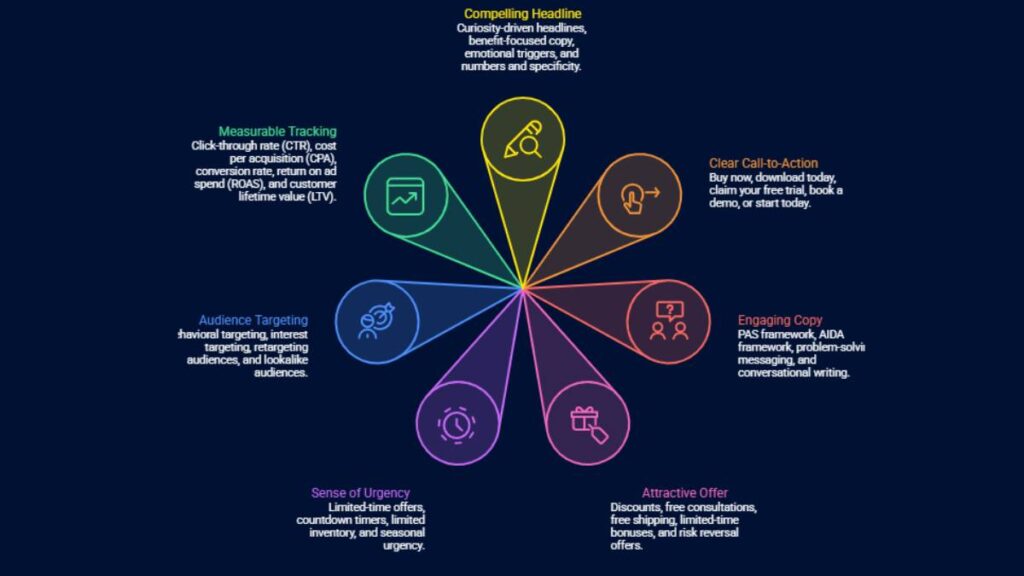
Key Elements of Direct Response Marketing
Compelling Headline
Most campaigns win or lose attention in the first few seconds.
Usually faster than marketers want to admit.
The headline carries a huge amount of pressure because audiences decide almost instantly whether something feels relevant enough to continue reading. Weak headlines kill otherwise solid campaigns all the time.
Good direct response headlines tend to do one or more of these things:
- Promise a specific outcome
- Create curiosity
- Highlight urgency
- Address a pain point directly
- Make the value obvious immediately
Specificity helps a lot.
“Get Better Marketing Results” sounds generic.
“Reduce Cost Per Lead Without Increasing Budget” feels more concrete, more believable.
Emotional triggers matter too, though not always in dramatic ways. Sometimes subtle tension works better than exaggerated hype.
Clear Call-to-Action (CTA)
People need direction.
That sounds obvious, but many campaigns still make the next step unnecessarily confusing. Multiple CTAs. Vague wording. Too many options competing for attention.
Strong direct response campaigns simplify the decision.
Common CTAs include:
- Start Free Trial
- Claim Your Offer
- Book a Demo
- Download Now
- Start Today
- Get Instant Access
Simple works surprisingly well here.
And placement matters more than many landing pages account for. Some users convert quickly. Others scroll first, skim testimonials, check pricing, and maybe pause halfway through before deciding.
That’s why high-converting pages often repeat CTAs naturally throughout the experience instead of hiding them once at the bottom.
Engaging and Persuasive Copy
Direct response copywriting isn’t really about sounding clever.
It’s about understanding motivation.
Good copy enters the customer’s existing internal conversation instead of forcing artificial messaging on top of it. That usually means understanding frustrations, hesitations, objections, fears, desired outcomes… all the messy human stuff underneath buying decisions.
A lot of weak copy focuses too heavily on features.
Customers care more about outcomes.
Nobody buys “advanced automation workflows” because the phrase sounds impressive. They buy faster execution, fewer repetitive tasks, more efficiency, and less stress. The emotional translation matters.
And conversational writing usually performs better than corporate-sounding language now. Especially on social platforms where polished ad copy can feel unnatural beside regular user content.
Attractive Offer
The offer often matters more than the ad itself.
That’s probably one of the hardest lessons newer marketers learn.
A mediocre creative with a strong offer can still generate excellent performance. A beautiful campaign attached to a weak offer struggles almost every time.
Strong offers reduce hesitation.
That might mean:
- Free shipping
- Risk-free trials
- Limited-time bonuses
- Discounts
- Free onboarding
- Exclusive bundles
- Money-back guarantees
The best offers make the decision feel easier, safer, or more valuable immediately.
Sense of Urgency
Without urgency, people delay decisions.
And delayed decisions often become forgotten decisions.
Urgency gives users a reason to act now instead of “later,” which usually translates to never. But there’s a difference between authentic urgency and fake pressure tactics.
Consumers notice artificial scarcity pretty quickly.
Real urgency works better because it feels credible:
- Limited enrollment periods
- Seasonal offers
- Flash sales
- Bonus expiration dates
- Event deadlines
- Inventory limitations
Used properly, urgency helps users prioritize action rather than endlessly postponing it.
Audience Targeting
Even strong messaging struggles when shown to the wrong audience.
Targeting shapes performance more than many creative teams initially expect.
Modern direct response campaigns use behavioral data, interests, demographics, purchase intent, engagement history, and retargeting signals to improve relevance.
Retargeting remains especially effective because it reaches people already familiar with the brand. Warm audiences usually convert at much higher rates than completely cold traffic.
Lookalike audiences help scale campaigns too by identifying users who resemble existing customers behaviorally.
Better targeting generally lowers acquisition costs while improving conversion quality.
Measurable Conversion Tracking
One reason direct response marketing became so dominant digitally is simple: it’s measurable.
Marketers can track almost every stage of the customer journey now.
That includes:
- Click-through rates
- Conversion rates
- Cost per acquisition
- Return on ad spend
- Customer lifetime value
- Funnel drop-off points
And once visibility improves, optimization becomes easier.
A weak landing page can be adjusted. An underperforming ad can be replaced. A strong audience segment can receive more budget allocation.
Campaigns evolve through data, testing, and iteration rather than assumptions alone.
Benefits of Direct Response Marketing
Measurable Results and ROI Tracking
One of the biggest advantages of direct response marketing is clarity.
Businesses can usually see what’s working and what isn’t without waiting months for vague brand studies or broad market signals. That speed matters. Especially when budgets are tight or growth targets are aggressive.
Performance data creates faster decision-making loops.
If one campaign produces lower acquisition costs, budget can shift there quickly. If a landing page suddenly underperforms after a creative change, teams notice it almost immediately.
That level of visibility makes marketing feel less speculative.
Not perfect, obviously. Attribution still gets messy sometimes. Multi-touch journeys complicate things. But compared to traditional advertising models, direct response still offers far stronger performance transparency.
Cost-Effective Customer Acquisition
Direct response marketing tends to reduce wasted spend because campaigns are optimized around outcomes instead of broad exposure alone.
That doesn’t mean every campaign becomes profitable instantly. Far from it. Testing still matters. Creative fatigue happens. Audience saturation happens, too.
But performance-focused systems allow businesses to improve efficiency over time through optimization.
Better targeting. Better offers. Better conversion funnels.
Small improvements compound surprisingly fast when acquisition systems are scaled.
Highly Targeted Marketing Campaigns
Relevance drives conversion.
Modern audiences ignore generic messaging constantly because they’re overloaded with content already. Direct response marketing works well partly because it allows campaigns to become more personalized and behavior-driven.
Someone who abandoned checkout shouldn’t receive the same messaging as someone discovering the brand for the first time.
That difference matters.
Segmentation helps businesses tailor communication based on intent, customer stage, interests, purchase history, and engagement behavior. The more aligned the message feels, the stronger conversion rates usually become.
Faster Conversions and Sales
Direct response campaigns are designed to shorten the path between attention and action.
That makes them useful for:
- Product launches
- Flash sales
- Webinar registrations
- Lead generation
- Seasonal promotions
- Limited-time offers
The timeline depends on the business model, of course. High-ticket B2B services still involve longer buying cycles. But even there, direct response campaigns help move prospects deeper into the funnel faster through lead magnets, demos, and nurturing systems.
Better Customer Relationship Building
A lot of people associate direct response marketing purely with quick sales tactics. That’s incomplete.
The best campaigns continue building relationships after the initial conversion.
Email nurturing sequences, loyalty campaigns, onboarding flows, retargeting systems, referral programs, personalized offers… these all strengthen retention and long-term customer value.
And retention matters more now because acquisition costs continue rising across most platforms.
Brands that only focus on first purchases usually hit scaling problems eventually.
Scalability Across Channels
One reason direct response marketing remains so adaptable is because the principles work across multiple channels.
Paid social. Email. Search ads. SMS. Influencer campaigns. Landing pages. Affiliate partnerships.
Different platforms require different creative approaches, but the core structure remains similar:
Strong message. Clear offer. Immediate action.
That flexibility helps businesses diversify traffic sources instead of depending too heavily on one platform algorithm or advertising system.
How to Create a High-Converting Direct Response Marketing Campaign
Define Your Target Audience
A surprising number of direct response campaigns fail before the ad even goes live. Not because the creative is bad. Not because the budget is too small. Usually because the targeting is too broad or completely disconnected from buyer intent.
Direct response marketing depends heavily on relevance. The closer the message feels to the audience’s actual situation, the higher the chances of conversion.
That means surface-level demographics aren’t enough anymore.
Knowing someone is between 25 and 40 years old doesn’t really explain much. Two people in the same age bracket can behave completely differently online, respond to different emotional triggers, and buy for entirely different reasons.
Psychographics matter more than many brands realize.
What frustrations does the audience already have? What are they trying to solve urgently? What objections are slowing them down? What language do they naturally use when describing the problem?
Those details shape campaigns that feel believable instead of generic.
Strong direct response marketers spend time understanding:
- Pain points
- Buying triggers
- Awareness level
- Motivation patterns
- Risk perception
- Desired outcomes
- Common objections
Intent matters too.
Someone casually browsing content behaves differently from someone actively searching for a solution. Campaign messaging should reflect that difference. Cold audiences usually need more context and emotional positioning. Warm audiences often need clarity, urgency, and reassurance more than education.
This is where many campaigns overcomplicate things, honestly.
They try to speak to everyone at once.
But direct response works best when the message feels narrowly relevant, even if that means intentionally excluding people who aren’t the right fit.
Conduct Audience and Competitor Research
Good campaigns are rarely built on assumptions.
Audience research changes the quality of messaging dramatically because it reveals how customers already think about the problem. And that matters more than clever copywriting formulas.
Reviews, Reddit discussions, YouTube comments, customer support conversations, competitor testimonials… these places usually contain the exact language real buyers use naturally. Not polished marketing language. Real frustrations.
Sometimes, one sentence from a customer review explains the emotional buying trigger better than an entire brainstorming session.
Competitor research matters too, though not in the copy-everything sense.
The goal is to understand positioning gaps.
Questions worth looking at:
- What promises are competitors making repeatedly?
- Which emotional angles appear most often?
- Where do competitors sound identical?
- What objections are customers still mentioning in reviews?
- What offers seem overused?
- What feels missing from the market conversation?
Patterns emerge pretty quickly once enough campaigns are analyzed.
For example, many industries lean too heavily on feature-heavy messaging while ignoring emotional outcomes completely. Others overpromise aggressively, which creates an opportunity for simpler, more grounded positioning.
And honestly, customer language is often messier than marketers expect. That’s usually a good thing. Real buyers don’t speak in perfectly optimized phrases. They ramble a bit. They exaggerate. They describe symptoms instead of technical problems.
That raw language often converts better because it feels authentic.
Craft a Compelling Offer
A weak offer kills campaigns faster than weak creative.
This part gets overlooked constantly because marketers spend too much time obsessing over ad formats, visuals, and hooks while the actual value proposition remains forgettable.
Direct response marketing depends heavily on perceived value.
People need a reason to act now instead of later. Or worse, choose a competitor instead.
The offer doesn’t always have to mean a discount either. That’s an important distinction.
Sometimes the strongest offers involve:
- Faster results
- Reduced risk
- Simplicity
- Convenience
- Exclusive access
- Added bonuses
- Better guarantees
- Personalized support
- Time savings
A SaaS company offering free onboarding can outperform one offering a small discount. An ecommerce brand offering hassle-free returns may convert better than one pushing aggressive percentage-off banners.
Risk reduction matters a lot.
The more uncertainty removed from the decision-making process, the easier conversion becomes. That’s why free trials, guarantees, demos, consultations, and flexible cancellation policies consistently appear in high-performing campaigns across industries.
And there’s another thing many brands miss.
The offer usually matters more than the ad itself.
A mediocre ad can still generate strong performance if the offer feels genuinely valuable. The reverse rarely works.
Write Persuasive Direct Response Copy
Good direct response copy feels like it understands the customer already.
Not in a manipulative way. More like the messaging reflects problems the audience has quietly been thinking about themselves.
That’s why generic copy struggles.
Phrases like “industry-leading solution” or “innovative platform” sound polished, but they rarely trigger emotion or urgency because they’re disconnected from real customer tension.
Strong direct response copy focuses on outcomes.
Not just features. Not technical specifications. Outcomes.
A project management tool isn’t really selling dashboards or automation workflows. It’s selling reduced chaos, fewer missed deadlines, cleaner communication, less stress. The emotional translation matters more than the feature list itself.
Frameworks like PAS and AIDA still work because human psychology hasn’t changed much.
PAS focuses on:
- Problem
- Agitation
- Solution
AIDA focuses on:
- Attention
- Interest
- Desire
- Action
But rigid formulas alone aren’t enough anymore. Audiences are exposed to too much marketing content daily. They can sense forced persuasion quickly.
That’s why conversational copy often performs better now, especially on social platforms.
Slightly imperfect phrasing. Natural rhythm. Short pauses. Sentences that don’t sound overly engineered. Sometimes even a small unfinished thought pulls people in more effectively than perfectly polished copy.
Objection handling matters too.
Strong copy quietly answers customer hesitation before it becomes resistance:
- “Will this actually work for my situation?”
- “Is this worth the price?”
- “What’s the catch?”
- “How long will this take?”
- “Can this solve the problem faster than alternatives?”
The best campaigns reduce mental friction continuously throughout the funnel.
Design Strong CTAs
A direct response campaign without a clear CTA usually creates confusion instead of momentum.
People need clarity.
The next action should feel obvious, simple, and low-friction. Weak CTAs often fail because they sound passive or vague. There’s no urgency attached to them. No emotional direction.
“Learn More” works in some situations, but stronger CTAs tend to communicate value directly:
- Start Your Free Trial
- Claim Your Discount
- Book Your Demo
- Get Instant Access
- Download the Free Guide
- Start Today
Small wording changes can affect conversion rates more than expected.
Placement matters too.
Some users convert quickly. Others need more reassurance before acting. That’s why high-converting landing pages often repeat CTAs strategically throughout the page instead of relying on a single button at the bottom.
Mobile behavior changes things as well.
Buttons need to feel obvious and easy to tap. Forms should be short. Friction compounds fast on smaller screens. Even minor annoyances can reduce conversions significantly.
And honestly, too many brands still overload users with options.
One campaign. One primary action. Usually that works best.
Choose the Right Marketing Channels
Not every channel performs equally for every business model.
This sounds obvious, but many campaigns fail because brands choose channels based on trends instead of audience behavior.
A B2B SaaS company targeting decision-makers may perform well through LinkedIn ads and email nurturing. A visually driven DTC brand might scale faster through TikTok and Instagram. Local service businesses often see stronger intent from Google Ads because the customer is already searching actively.
Intent changes everything.
Search traffic usually converts differently from interruption-based social traffic. Someone searching “best CRM software for small business” already has commercial intent. Someone scrolling Instagram may not even realize they have a problem yet.
That changes messaging strategy completely.
Different channels also reward different creative styles.
TikTok rewards native-feeling content. Email rewards clarity and sequencing. Search ads reward intent matching. SMS works best when messages feel timely and concise rather than overly promotional.
The strongest direct response campaigns usually build multi-channel systems instead of depending entirely on one traffic source.
That diversification matters more now because platform algorithms, ad costs, and audience behavior shift constantly.
Build Optimized Landing Pages
A great ad can still fail if the landing page creates friction.
This happens constantly.
The ad generates curiosity or intent, then the landing page overwhelms users with cluttered layouts, weak messaging, confusing navigation, or too many competing actions.
High-converting landing pages are usually simpler than expected.
The best ones focus heavily on message continuity. The promise made in the ad should match the landing page experience immediately. If users click an ad offering a free audit, they shouldn’t land on a generic homepage talking broadly about company history.
Consistency builds trust.
Strong landing pages also prioritize above-the-fold clarity. Visitors should understand three things quickly:
- What the offer is
- Why it matters
- What action to take next
Trust signals help reduce hesitation too:
- Testimonials
- Reviews
- Case studies
- Client logos
- Guarantees
- Security badges
- Social proof
And honestly, less usually converts better.
Too much copy, too many popups, too many form fields… friction accumulates quickly. Especially on mobile.
Set Up Conversion Tracking
Without proper tracking, direct response marketing turns into guesswork.
Campaigns need visibility into what’s actually driving conversions. Otherwise optimization becomes reactive instead of data-informed.
Basic tracking setups typically include:
- Meta Pixel
- Google Analytics 4
- UTM parameters
- CRM integrations
- Event tracking
- Conversion APIs
The goal isn’t tracking everything obsessively. It’s understanding the customer journey clearly enough to improve performance intelligently.
Important metrics often include:
- Click-through rate
- Conversion rate
- Cost per acquisition
- Return on ad spend
- Lead quality
- Funnel drop-off points
- Customer lifetime value
And one overlooked point here: not all conversions are equally valuable.
A campaign generating cheap leads sounds great until sales teams realize those leads never convert into paying customers. Quality matters more than volume eventually.
That’s why advanced direct response strategies focus on downstream revenue metrics, not just top-level conversion numbers.
Launch, Test, and Optimize
No direct response campaign launches perfectly the first time.
That’s normal.
Even experienced marketers get surprised by what audiences respond to sometimes. Messaging that looked strong internally may underperform completely. Unexpected creatives suddenly outperform polished campaigns. Small CTA adjustments change conversion rates more than major redesigns.
Testing is part of the process, not a backup plan.
High-performing teams constantly test:
- Headlines
- Offers
- Creatives
- Landing pages
- CTA wording
- Audience segments
- Ad formats
- Funnel sequences
And usually, the improvements come from accumulation rather than one dramatic breakthrough.
A slightly higher CTR. A slightly lower CPA. Better retention. Improved conversion rate. Those gains compound over time.
Creative fatigue matters too.
Even winning campaigns decline eventually as audiences become oversaturated. Refreshing angles, hooks, and offers becomes necessary long term.
The brands that scale consistently usually treat optimization as an ongoing system rather than a one-time campaign setup.
Best Direct Response Marketing Strategies You Must Try
Run Targeted Social Media Advertising Campaigns
Social media advertising became one of the strongest direct response channels for a simple reason: attention already lives there.
People spend hours scrolling through feeds every day, which gives brands repeated opportunities to capture interest, generate clicks, and drive conversions. But the style of advertising that works today looks very different from the polished corporate campaigns that dominated years ago.
Most audiences have developed a kind of “ad blindness.” They scroll past anything that feels overly scripted or obviously promotional. That’s why modern direct response social campaigns often look more native, conversational, and creator-driven.
The strongest campaigns usually combine three things:
- A strong hook in the first few seconds
- A clear emotional or practical outcome
- A low-friction CTA
And honestly, the first few seconds matter more than almost anything else on platforms like TikTok or Instagram Reels. If the hook fails, the rest of the creative rarely gets seen.
Facebook and Instagram Ads
Meta platforms still dominate direct response advertising for many businesses because the targeting capabilities remain extremely strong.
Facebook and Instagram work especially well for:
- Ecommerce brands
- Lead generation campaigns
- Webinar funnels
- Subscription offers
- Retargeting campaigns
- DTC products
Carousel ads, short-form video ads, testimonial creatives, before-and-after transformations, and UGC-style formats continue performing well because they feel more organic inside the feed.
Retargeting is particularly powerful on Meta.
Someone who viewed a product page but didn’t purchase can later receive dynamic product ads showing the exact items they browsed. That familiarity often increases conversion rates significantly because the customer already recognizes the product.
Creative fatigue becomes a real issue here, though.
Even high-performing ads eventually decline as audiences become overexposed to them. Brands that scale successfully on Meta usually refresh creatives constantly rather than relying on one winning ad forever.
TikTok Direct Response Ads
TikTok changed how many brands think about direct response creative.
Traditional polished advertising often struggles there because TikTok users respond more strongly to authenticity, speed, and personality. Ads that feel too corporate usually get ignored quickly.
The best TikTok direct response ads tend to blend into native content naturally.
Short hooks work well:
- “Nobody talks about this…”
- “This solved a problem we didn’t realize existed.”
- “Wish this had been found sooner.”
- “Here’s why most people waste money on this.”
The pacing matters too. Fast cuts, subtitles, direct language, and conversational delivery tend to hold attention better than slow, highly produced storytelling.
And surprisingly, imperfect content often outperforms expensive production.
That doesn’t mean low quality. Just less polished in a way that feels believable.
LinkedIn Ads for B2B Leads
LinkedIn works differently from other social platforms because user intent is more professionally oriented.
For B2B direct response campaigns, LinkedIn can generate strong lead quality, especially for:
- SaaS products
- Consulting services
- Enterprise solutions
- Webinars
- Whitepaper downloads
- Demo bookings
The challenge is cost.
LinkedIn clicks and leads are often more expensive than Meta or TikTok traffic, which means the messaging and targeting need to be much tighter. Generic campaigns become expensive very quickly there.
Thought leadership-style ads tend to perform better than aggressive promotional messaging. Decision-makers usually respond more positively to expertise, industry insight, and practical outcomes rather than hype-heavy copy.
Retargeting Campaigns
Retargeting is probably one of the most profitable direct response strategies available when done properly.
Most users don’t convert on the first interaction. That’s normal.
People compare options, get distracted, postpone decisions, open multiple tabs, forget offers, then come back later after seeing another touchpoint.
Retargeting keeps the brand visible during that process.
Strong retargeting campaigns usually feel sequential rather than repetitive. Instead of showing the exact same ad repeatedly, the messaging evolves based on user behavior.
Someone who visited a pricing page may need reassurance. Someone who abandoned checkout may respond better to urgency or incentives. Someone who watched 75% of a video ad may already understand the core offer and simply need a stronger CTA.
That progression matters.
Use Email Marketing for Direct Conversions
Email remains one of the highest-converting direct response channels despite constant predictions about its decline.
Mostly because email reaches people directly without depending entirely on platform algorithms.
The strongest email campaigns don’t just push promotions constantly. They create momentum over time through timing, segmentation, and relevance.
And honestly, inbox competition is intense now. Generic promotional blasts rarely work consistently anymore.
Promotional email campaigns
Promotional campaigns still drive significant revenue when the offer and timing align properly.
Common examples include:
- Product launches
- Flash sales
- Seasonal offers
- Limited-time discounts
- Exclusive member access
- Cart recovery promotions
The best promotional emails feel focused.
One clear message. One main CTA. Minimal distractions.
Overloading promotional emails with too many offers usually weakens response rates because users struggle to prioritize action.
Subject lines matter heavily too. Not in a gimmicky way, but curiosity and clarity still drive open rates.
Automated email sequences
Automation becomes incredibly valuable because it allows brands to respond to user behavior automatically.
A well-built automated sequence can nurture leads, educate prospects, handle objections, and recover abandoned conversions without constant manual effort.
Common automated flows include:
- Welcome sequences
- Trial onboarding
- Abandoned cart emails
- Re-engagement campaigns
- Post-purchase follow-ups
- Upsell sequences
The strongest sequences feel conversational rather than overly sales-heavy.
People respond better when emails sound human, direct, and useful instead of aggressively optimized for clicks.
Cart abandonment emails
Cart abandonment campaigns remain surprisingly effective because many abandoned purchases happen due to distraction rather than rejection.
Users leave because:
- They get interrupted
- They want to compare prices
- Shipping costs surprise them
- They need more reassurance
- They simply forget
Good abandonment emails address hesitation directly.
Sometimes urgency helps. Sometimes testimonials work better. Sometimes a simple reminder is enough.
Timing matters here too. Sending the first reminder quickly usually improves recovery rates significantly.
Lead nurturing workflows
Not every conversion happens immediately.
Especially in B2B or higher-ticket industries, buyers often need more time before making decisions. Lead nurturing workflows help maintain attention during that process.
Educational content, case studies, testimonials, practical insights, and objection-handling emails gradually build trust over time.
The key is balance.
Too much selling creates fatigue. Too little momentum weakens conversions.
Launch Referral Marketing Programs
Referral marketing works because trust transfers more naturally between people than between brands and cold audiences.
Recommendations from friends, colleagues, creators, or customers usually carry more credibility than direct advertising alone.
That’s why referral systems often produce high-quality leads at relatively low acquisition costs.
The best referral programs make participation simple and rewarding:
- Discounts for both users
- Store credits
- Free upgrades
- Exclusive perks
- Early access rewards
Dropbox became a famous example of this years ago by offering additional storage space for referrals. That simple loop helped accelerate growth massively.
Referral programs also tend to compound over time when customer satisfaction remains strong.
But the product or service still needs to deliver genuine value. Weak experiences don’t spread sustainably, regardless of incentive structure.
Send Targeted SMS Marketing Campaigns
SMS marketing works because of immediacy.
Open rates remain extremely high compared to most digital channels, which makes SMS valuable for time-sensitive offers and urgent communication.
But there’s very little room for bad messaging here.
Text messages feel more personal than emails, so overly aggressive promotions can become annoying quickly. Brands that over-message usually see opt-outs rise fast.
SMS campaigns perform best when communication feels relevant and timely:
- Flash sales
- Order updates
- Appointment reminders
- Limited-time offers
- Back-in-stock alerts
- VIP promotions
Shorter messages generally work better.
Clarity matters more than creativity in most SMS campaigns.
Start Upselling and Cross-Selling
Many brands focus heavily on customer acquisition while ignoring revenue opportunities after the first purchase.
That’s a mistake.
Upselling and cross-selling often increase profitability significantly because existing customers already trust the brand more than new audiences do.
Effective upsells usually feel connected naturally to the original purchase.
Examples:
- Product bundles
- Subscription upgrades
- Premium features
- Complementary accessories
- Extended warranties
- Additional service packages
Timing matters here too.
A relevant upsell immediately after purchase usually performs better than unrelated promotions sent randomly weeks later.
And honestly, subtlety matters. Aggressive post-purchase selling can damage the customer experience if it feels excessive.
Use Chatbots and Push Notifications
Conversational marketing has become more important because customers increasingly expect immediate responses.
Chatbots help businesses qualify leads, answer common questions, recommend products, and reduce friction during the buying process.
The best chatbot experiences feel helpful rather than robotic.
Simple flows usually outperform overly complex conversational systems because users want quick answers, not endless automated conversations.
Push notifications work similarly when used carefully.
They perform well for:
- Limited-time offers
- Cart reminders
- Breaking announcements
- Product launches
- Flash sales
But overuse creates fatigue fast.
Most users disable notifications quickly if the messages feel repetitive or low value.
Run Contests and Giveaways
Contests and giveaways can generate rapid attention, engagement, and lead growth when structured properly.
Especially on social platforms.
The strongest giveaway campaigns usually create some form of participation loop:
- Tagging friends
- Sharing content
- Joining email lists
- Following accounts
- Submitting entries
But there’s a tradeoff many brands overlook.
Large giveaway campaigns sometimes attract low-intent audiences who only want free products without genuine interest in the business itself.
That’s why relevance matters.
A niche giveaway tied closely to the product or audience often performs better long term than broad prize campaigns attracting random participants.
Retarget Website Visitors
Website retargeting deserves separate attention because it consistently drives some of the highest ROI across direct response campaigns.
Most visitors leave without converting initially. That’s normal behavior now.
Retargeting allows brands to reconnect with users based on specific actions:
- Product views
- Cart abandonment
- Pricing page visits
- Webinar registration attempts
- Content engagement
- Demo page visits
Dynamic retargeting performs especially well for ecommerce because users see the exact products they previously explored.
Sequential messaging improves performance too.
The first retargeting ad may remind users about the product. The second may introduce testimonials. The third may add urgency or incentives.
That layered approach usually converts better than repeating identical ads endlessly.
Direct Response Marketing Examples
Ecommerce Direct Response Ad Examples
Ecommerce brands probably use direct response marketing more aggressively than almost any other industry.
Mostly because results are measurable immediately.
A product ad either generates profitable sales or it doesn’t. That feedback loop allows ecommerce marketers to optimize campaigns quickly.
Limited-time sale campaigns remain one of the most common examples.
“24-Hour Flash Sale”
“Buy One, Get One Free”
“Last Chance Before Prices Increase”
These offers work because urgency pushes hesitant buyers toward action.
Free shipping campaigns also perform surprisingly well. Sometimes removing shipping friction improves conversion rates more than increasing discount percentages.
Retargeting ads are another major ecommerce strategy.
A customer browses sneakers on a website, leaves without purchasing, then later sees those exact products again on Instagram or Facebook. That familiarity often reactivates purchase intent.
Brands like Gymshark, Allbirds, and Dollar Shave Club built significant growth partly through direct response-focused ecommerce advertising combined with strong creative positioning.
SaaS Direct Response Marketing Examples
SaaS companies rely heavily on direct response systems because software purchases often require nurturing before conversion.
Free trial campaigns remain one of the most common approaches.
The goal is simple: reduce friction enough for users to experience the product before committing financially.
Demo funnels also work well, especially for B2B SaaS products with longer sales cycles.
A typical SaaS direct response funnel might look like this:
- LinkedIn ad promoting a solution
- Landing page offering a demo
- Lead form submission
- Email nurturing sequence
- Sales consultation
- Product onboarding
Webinar lead generation campaigns are common too because webinars allow companies to educate prospects while collecting qualified leads simultaneously.
Brands like HubSpot and Salesforce have used educational direct response strategies extensively for years.
DTC Brand Examples
DTC brands changed modern direct response advertising in a big way.
Many of them grew rapidly through social-first advertising built around storytelling, creators, UGC, and emotional positioning rather than traditional polished commercials.
UGC-style ads perform well because they feel more relatable.
A customer casually explaining why they like a product often feels more believable than highly scripted brand messaging. Especially on TikTok and Instagram.
Influencer-led direct response campaigns work similarly.
The creator introduces the product naturally, demonstrates usage, addresses objections casually, then drives viewers toward a direct CTA.
The strongest DTC brands usually combine:
- Strong creative volume
- Fast testing cycles
- Clear offers
- Mobile-first funnels
- Consistent retargeting
B2B Direct Response Campaign Examples
B2B direct response marketing tends to focus more on lead generation than immediate purchases.
LinkedIn lead generation ads are a common example. A company promotes an industry report, webinar, or whitepaper in exchange for contact information.
The lead then enters a nurturing sequence designed to educate and qualify them further.
Webinar funnels work particularly well in B2B because they allow brands to demonstrate expertise while building trust gradually.
Whitepaper downloads, ROI calculators, audit offers, and free consultations also remain common B2B direct response tactics.
The sales cycle is usually longer than ecommerce, but the principles stay similar:
Clear value proposition. Relevant audience. Strong CTA.
Direct Mail Marketing Examples
Direct mail still works surprisingly well in some industries despite digital dominance.
Especially when campaigns feel personalized.
Real estate companies frequently use direct mail campaigns targeting homeowners in specific neighborhoods. Healthcare providers use reminder mailers. Retail brands send QR-code-driven promotional offers.
Physical mail creates a different kind of attention because inboxes and social feeds are already overcrowded. Businesses can create a QR code that links recipients directly to a landing page, product catalog, or exclusive offer, making printed campaigns more interactive and measurable.
QR codes have modernized direct mail significantly too by connecting offline campaigns directly to digital conversion funnels.
Television and Radio Direct Response Ads
Traditional direct response advertising existed long before digital marketing platforms.
Infomercials, toll-free numbers, and “Call Now” campaigns were classic direct response tactics.
Even today, TV and radio direct response campaigns still work in certain industries:
- Home improvement
- Insurance
- Legal services
- Fitness products
- Financial services
Strong offers, urgency, and repeated CTAs remain central to these campaigns.
The platforms changed over time. The psychology mostly stayed the same.

Enroll Now: AI-Powered Performance Marketing Course
Best Practices for Direct Response Marketing
Focus on Benefits Instead of Features
Customers rarely buy products because of features alone.
They buy outcomes.
A skincare brand isn’t really selling ingredients. It’s selling confidence. A project management tool isn’t selling dashboards. It’s selling clarity and reduced chaos.
That emotional translation matters more than many campaigns account for.
Feature-heavy messaging often sounds impressive internally but fails to connect emotionally with buyers. Benefits create relevance because they explain why the product actually matters in everyday life.
The strongest direct response campaigns constantly answer one silent customer question:
“What’s in this for me?”
Use Social Proof and Testimonials
Trust has become harder to earn online.
Consumers see exaggerated claims constantly, so skepticism is normal now. Social proof helps reduce that skepticism because people trust other customers more than brand messaging alone.
Reviews, testimonials, case studies, before-and-after examples, and user-generated content all help strengthen credibility.
Specificity matters here too.
“Great product” doesn’t carry much weight anymore.
Detailed testimonials explaining actual outcomes feel far more believable.
UGC performs particularly well because imperfect customer content often feels more authentic than polished branded creatives.
Create a Sense of Urgency and Scarcity
Without urgency, many users postpone decisions indefinitely.
Urgency creates momentum.
Limited-time offers, enrollment deadlines, flash sales, bonus expiration dates, and inventory scarcity all encourage faster action when used authentically.
But fake urgency damages trust.
Customers notice when every “last chance” sale magically returns the next week.
Real scarcity works better because it feels credible.
Personalize the Customer Experience
Personalization improves conversion rates because relevance improves attention.
People respond more positively when messaging aligns closely with their interests, behaviors, or purchase stage.
Behavioral segmentation allows brands to tailor:
- Product recommendations
- Retargeting ads
- Email content
- Offers
- Landing page experiences
A returning customer shouldn’t receive the same messaging as a first-time visitor. Someone browsing premium products likely responds differently from discount-focused shoppers.
Small personalization improvements often create meaningful conversion gains over time.
Make the Conversion Process Simple
Complex funnels kill conversions constantly.
Long forms, slow-loading pages, confusing navigation, unnecessary checkout steps… friction compounds faster than many marketers realize.
The best direct response funnels feel easy to move through.
That usually means:
- Fewer form fields
- Faster checkout experiences
- Mobile-friendly layouts
- Clear CTA placement
- Minimal distractions
Simplicity often outperforms complexity.
Continuously Test and Optimize Campaigns
Direct response marketing depends heavily on iteration.
Even experienced marketers rarely predict winning campaigns perfectly every time. Audience behavior shifts. Platforms evolve. Creative fatigue happens.
That’s why testing remains essential.
High-performing teams regularly test:
- Headlines
- CTAs
- Offers
- Landing pages
- Creative formats
- Audience segments
- Messaging angles
And usually, the biggest gains come from accumulated small improvements rather than one dramatic breakthrough.
Use Retargeting to Recover Lost Conversions
Most users won’t convert immediately.
Retargeting keeps the conversation going after the first interaction.
A customer abandons checkout. Leaves a pricing page. Watches part of a video ad. Visits a landing page without converting. Retargeting campaigns help re-engage those users with more relevant follow-up messaging.
Sequential retargeting tends to perform best because it adapts communication gradually instead of repeating identical ads endlessly.
Align Messaging Across the Funnel
Consistency matters more than many brands realize.
If an ad promises simplicity but the landing page feels cluttered, trust weakens immediately. If the email sequence sounds completely different from the ad creative, the experience feels disconnected.
Strong direct response funnels maintain continuity across touchpoints:
- Ads
- Landing pages
- Emails
- Retargeting creatives
- Checkout flows
That consistency reduces friction and reinforces trust throughout the customer journey.
Personalization in Direct Response Marketing
Why Personalization Improves Conversion Rates
Personalization works because relevance captures attention faster.
Generic messaging gets ignored constantly now. Most consumers are overwhelmed with content, ads, and promotions every day, so campaigns that feel broadly targeted usually disappear into the background.
Relevant messaging feels different.
A recommendation tied to previous browsing behavior. An email reflecting recent activity. A location-specific offer. Those small adjustments make campaigns feel more aligned with customer intent.
And intent matters a lot in direct response marketing.
People are more likely to act when the message feels timely and connected to something they already care about.
Types of Personalization in Marketing Campaigns
Behavioral personalization is one of the most common forms used in direct response campaigns.
A user who abandoned a shopping cart may receive reminder emails or dynamic product ads. Someone repeatedly visiting pricing pages might enter a more conversion-focused retargeting sequence.
Geographic personalization also performs well, especially for local businesses and regional campaigns.
Weather-based offers, city-specific promotions, event targeting, and localized messaging all increase relevance.
Product recommendations remain extremely effective too.
Ecommerce brands often increase average order value significantly through personalized product suggestions based on browsing or purchase history.
Dynamic ads take this further by automatically adjusting creatives based on user behavior.
AI and Automation in Direct Response Marketing
Automation has changed how quickly brands can personalize campaigns at scale.
Audience segmentation, predictive targeting, dynamic recommendations, and automated creative testing now allow marketers to optimize campaigns faster than manual processes alone could support.
But technology alone doesn’t guarantee performance.
The strategy underneath still matters more.
Poor offers, weak messaging, or unclear positioning won’t suddenly improve just because automation exists. The strongest campaigns still rely on understanding customer psychology deeply first.
Automation simply helps execute those insights more efficiently.
Best Tools for Direct Response Marketing Campaigns
Best Email Marketing Platforms
Email platforms play a huge role in direct response marketing because email still drives strong ROI across many industries.
Different platforms suit different business models.
Mailchimp works well for smaller businesses and simpler automation needs. Klaviyo has become extremely popular among ecommerce brands because of its segmentation and behavioral automation capabilities.
ConvertKit tends to work well for creators, educators, and newsletter-focused businesses. ActiveCampaign is often preferred for more advanced automation workflows and CRM integrations.
The best platform usually depends less on popularity and more on workflow complexity, audience size, and segmentation needs.
CRM Software for Lead Management
Lead management becomes messy quickly without a proper CRM.
Especially once campaigns start scaling across multiple channels.
HubSpot remains popular because it combines CRM functionality with marketing automation and lead tracking. Salesforce is widely used by larger organizations needing extensive customization and enterprise-level reporting.
Zoho CRM works well for businesses looking for flexibility without enterprise-level pricing.
The goal of a CRM isn’t just organization. It’s visibility into the customer journey from first interaction through conversion and retention.
Ad Tracking and Analytics Tools
Direct response marketing depends heavily on tracking accuracy.
Google Analytics 4 helps businesses understand website behavior, traffic sources, and conversion flows. Meta Ads Manager remains central for Facebook and Instagram campaign management.
Platforms like Triple Whale and Hyros became popular partly because attribution has become more complicated after privacy changes affected tracking visibility.
No tracking system is perfect anymore, honestly.
But stronger attribution still improves optimization decisions significantly compared to operating blindly.
Landing Page Builders
Landing pages influence conversion rates more than many advertisers initially expect.
A strong ad can fail completely if the post-click experience creates friction.
Unbounce, Leadpages, and Instapage are widely used because they simplify landing page creation and testing without requiring heavy development resources.
The best landing page builders prioritize:
- Speed
- Mobile responsiveness
- Easy testing
- Clean layouts
- Integration flexibility
And honestly, simpler pages usually convert better than overly complicated designs.
A/B Testing and CRO Tools
Testing tools help marketers improve conversion performance through experimentation rather than assumptions.
VWO and Optimizely allow teams to test headlines, layouts, CTAs, forms, and user flows systematically. Hotjar helps visualize user behavior through heatmaps, recordings, and session analysis.
Sometimes the insights are surprisingly small.
A form field removed. A CTA repositioned. A headline simplified.
Tiny changes can create meaningful conversion improvements when traffic volume scales.
SMS and Push Notification Tools
SMS and push notification tools became increasingly important because mobile engagement dominates customer behavior now.
Attentive and Postscript are widely used for SMS marketing, especially in ecommerce. OneSignal remains popular for push notifications across websites and apps.
These channels work best when communication feels timely and relevant.
Overuse creates fatigue quickly.
But when used strategically, SMS and push notifications can drive extremely strong engagement and recovery rates for abandoned carts, flash sales, and time-sensitive campaigns.
Effective Channels for Direct Response Marketing
Email Marketing
Email keeps surviving every “email is dead” prediction for one simple reason: it converts when it’s handled properly.
Not perfectly. Properly.
There’s a difference.
A good email campaign doesn’t feel like a broadcast sent to 80,000 people at once. It feels timely. Specific. Maybe even a little direct in a way most marketing isn’t anymore. One message. One action. No wandering around.
That’s where a lot of brands get stuck, actually. They treat email like a newsletter when it should function more like a sales conversation.
The strongest direct response emails usually lean into clarity over creativity. A sharp subject line. A real offer. Some urgency if it’s genuine. Then straight to the point.
And weirdly enough, shorter emails often outperform the overdesigned ones packed with banners and polished graphics. Especially on mobile. People skim fast now. Faster than most marketers want to admit.
Automated sequences quietly carry a huge amount of revenue too:
- Welcome emails
- Cart recovery flows
- Lead nurturing sequences
- Re-engagement campaigns
- Post-purchase upsells
Most customers never notice the system behind it. They just experience the timing.
That’s the part that matters.
Social Media Advertising
Social media advertising changed direct response marketing completely because attention itself changed.
People don’t sit down and “watch ads” anymore. Ads interrupt scrolling. Or blend into it. Usually both.
That’s why highly polished campaigns sometimes underperform against rougher, more native-looking creatives. Audiences have developed an instinct for filtering out anything that feels overly produced. The second something looks too much like an ad… attention drops.
Especially on TikTok and Instagram.
Short-form creative works because it matches platform behavior. Fast hooks. Movement early. Captions. Direct messaging. Clear payoff.
Not subtle branding campaigns that take 40 seconds to explain themselves.
Targeting still matters, obviously. But creative quality matters more than many teams are comfortable admitting now. Weak creative gets punished quickly even with strong audience targeting behind it.
The best-performing paid social campaigns usually understand platform psychology really well:
- Curiosity first
- Clarity second
- Branding later
That order matters more than most brands think.
Search Engine Marketing (SEM)
Search traffic behaves differently because intent already exists before the ad appears.
That changes everything.
Someone searching “best project management software for agencies” is already problem-aware. Maybe even solution-aware. The campaign doesn’t need to create demand from scratch. It needs to capture existing demand before competitors do.
That’s why search campaigns can become incredibly profitable when the funnel is aligned correctly.
Especially for:
- Local services
- SaaS companies
- Ecommerce stores
- Appointment-based businesses
- Emergency or high-intent industries
A lot of search success comes down to alignment more than visibility.
The keyword. The ad copy. The landing page. The offer. They all need to feel connected. If the ad promises one thing and the landing page shifts direction halfway through, conversion rates usually collapse pretty fast.
And small adjustments matter here. Sometimes frustratingly small.
A different headline. A stronger CTA. Faster page speed. Better trust signals. Tiny improvements stack over time in SEM campaigns more than people expect.
Direct Mail Marketing
Direct mail sounds outdated until it starts producing results.
Then suddenly nobody calls it outdated anymore.
Physical mailboxes are quieter now than digital inboxes. That alone creates opportunity. A well-designed mail piece often gets more focused attention simply because people aren’t receiving twenty of them every hour.
Certain industries still rely heavily on direct mail because it continues to work:
- Real estate
- Healthcare
- Financial services
- Home improvement
- Local businesses
The interesting part is how modern direct mail connects with digital funnels now.
QR codes changed a lot. Personalized URLs too. A postcard can drive someone directly into a landing page, SMS flow, or booking funnel within seconds.
That trackability made direct mail much more attractive again for performance-focused campaigns.
But generic mailers still fail most of the time. Relevance matters. Locality matters. Timing matters.
A random coupon sent to everyone usually gets ignored.
A targeted offer sent at the right moment? Different story.
Television and Radio Advertising
TV and radio built direct response marketing long before digital platforms existed.
A lot of modern performance marketing principles actually came from old-school direct response television. Strong hooks. Repetition. Scarcity. Immediate action.
“Call now.”
That formula survived for decades because human behavior hasn’t changed as much as platforms have.
And despite all the attention around digital channels, television and radio still perform surprisingly well in some industries. Especially regional businesses where broad geographic targeting still matters.
Things like:
- Legal services
- Insurance
- Healthcare clinics
- Home services
- Financial products
Radio, especially, still works well for local recall because repetition builds familiarity quickly.
The campaigns that usually fail in traditional media are the ones trying to sound overly corporate. Direct response works better when the message feels immediate and human instead of polished beyond recognition.
SMS and Mobile Marketing
SMS marketing works because text messages still feel personal.
Maybe too personal sometimes.
That’s why bad SMS campaigns become annoying almost instantly. There’s very little room for weak messaging inside someone’s notification screen.
Good SMS campaigns respect attention.
Short message. Clear value. Direct CTA.
That’s it.
No long introductions. No complicated branding language. Just useful communication delivered at the right moment.
SMS performs especially well for:
- Flash sales
- Cart recovery
- Appointment reminders
- Limited-time offers
- Event promotions
The timing matters almost more than the copy itself.
A strong offer sent at the wrong time still underperforms. Meanwhile, a simple reminder sent exactly when purchase intent peaks can drive surprisingly strong conversions.
And honestly, mobile experience affects everything now. Not just SMS.
Most direct response traffic happens on phones first, yet plenty of campaigns still feel awkward on mobile. Tiny buttons. Slow pages. Endless forms. People leave fast when friction appears.
Usually faster than brands realize.
Influencer and Creator Partnerships
Creator-led marketing became powerful because audiences trust people more than brands. Simple as that.
Especially online.
A creator casually demonstrating a product inside normal content often feels more believable than a polished ad campaign with massive production behind it. That authenticity changes how people respond.
And smaller creators frequently outperform larger influencers in direct response campaigns. Not always, but often.
The reason is audience trust.
Niche creators usually have tighter communities and stronger credibility within specific interests. Their recommendations carry more weight because followers still see them as relatively genuine.
At least compared to traditional celebrity endorsements.
The best creator partnerships also avoid sounding scripted. Forced messaging kills performance quickly because audiences can sense it immediately.
That’s why flexible creator briefs usually outperform rigid ad scripts.
Affiliate partnerships became a major part of this shift too. Performance-based structures align incentives naturally. The creator wins when conversions happen. The brand only pays heavily when measurable results exist.
That model fits direct response marketing perfectly.
Common Direct Response Marketing Mistakes to Avoid
Weak or Confusing CTAs
A lot of campaigns fail at the final step.
Not because the targeting was wrong. Not because the product was weak. Because the CTA didn’t clearly tell people what to do next.
That happens constantly.
Marketers sometimes try to sound clever instead of clear. The result is vague buttons like:
- Learn More
- Explore Now
- Discover
Not terrible. Just soft.
Strong direct response CTAs create momentum. They reduce hesitation instead of increasing it.
Things like:
- Start Your Free Trial
- Claim Your Discount
- Book a Demo
- Get Instant Access
Those phrases communicate value immediately.
And too many CTAs on one page usually hurts performance too. When every button competes for attention, users hesitate. Once hesitation enters the funnel, conversions start slipping.
Targeting the Wrong Audience
Even excellent campaigns fail when they reach the wrong people.
That sounds obvious, but it still happens constantly because businesses chase scale too early. Bigger audiences look exciting inside dashboards. More impressions. More reach. More clicks.
But reach without relevance burns budget fast.
Direct response marketing depends heavily on matching:
- The right audience
- The right message
- The right offer
- The right stage of awareness
Cold audiences need education differently than warm audiences do. Returning visitors need reassurance, not introductions. Existing customers respond differently than first-time buyers.
And demographics alone rarely explain enough anymore.
Behavior matters more now. Intent matters more. Frustrations, objections, motivations… that’s where stronger campaigns usually come from.
Ignoring Landing Page Optimization
Some brands spend weeks improving ad creatives while barely touching the landing page.
That disconnect quietly destroys conversion rates.
A strong ad only earns attention. The landing page still has to close the action.
If the page loads slowly, feels cluttered, asks for too much information, or breaks the promise made in the ad, users leave. Usually fast.
Landing pages perform better when they remove friction instead of adding persuasion overload.
Simple structure helps:
- Clear headline
- Obvious CTA
- Fast loading speed
- Social proof
- Minimal distractions
And honestly, overly complicated landing pages often convert worse than cleaner, simpler layouts. More design doesn’t automatically mean more trust.
Sometimes it just creates confusion.
Focusing on Features Instead of Outcomes
Customers rarely care about features as much as marketers think they do.
They care about outcomes.
A software company might obsess over integrations, dashboards, or technical capabilities while the customer is thinking something much simpler:
“Will this save time?”
Or maybe:
“Will this make life easier?”
That emotional layer drives buying decisions far more often than feature lists alone.
Strong direct response campaigns translate features into real-world benefits naturally. Less stress. Faster results. Better efficiency. More confidence. Increased revenue.
The transformation matters more than the mechanism behind it.
Not Testing Creatives and Offers
Direct response marketing depends heavily on testing because audience behavior is unpredictable sometimes.
A campaign that looks average internally can outperform the polished “safe” version by a huge margin once real traffic hits.
That’s why testing matters constantly.
Not once.
Constantly.
Good campaigns evolve through iteration:
- Headlines
- Hooks
- Creative angles
- Offers
- CTAs
- Landing pages
- Audience segments
Small adjustments compound over time.
And honestly, most winning campaigns usually look obvious in hindsight. Before launch, they rarely feel obvious at all.
Poor Mobile Experience
Most users interact with direct response campaigns through phones now. Yet many funnels still feel designed for desktop screens from 2017.
Tiny text. Slow pages. Cluttered layouts. Impossible forms.
People leave quickly when mobile friction appears because there are endless alternatives available one swipe away.
Strong mobile experiences prioritize simplicity:
- Fast loading pages
- Thumb-friendly buttons
- Short forms
- Clean layouts
- Clear navigation
Every extra second of delay or extra field inside a form increases drop-off risk.
And mobile frustration compounds fast. Faster than many teams realize while reviewing campaigns internally on large monitors.
Tracking the Wrong Metrics
Vanity metrics create false confidence.
A campaign generating cheap clicks or huge impressions can still lose money badly.
Direct response marketing only works when measurement connects back to actual business outcomes.
Things like:
- Conversion rate
- Cost per acquisition
- Return on ad spend
- Lead quality
- Customer lifetime value
- Retention
Those numbers matter far more than surface-level engagement.
And sometimes the campaigns with lower traffic outperform the high-volume campaigns because the customer quality is dramatically stronger.
That distinction becomes more important every year as acquisition costs continue climbing.
Is Direct Response Marketing Still Relevant?
Why Direct Response Marketing Is Growing Again
Direct response marketing feels more important now because businesses are under more pressure to prove results.
Awareness alone doesn’t satisfy most leadership teams anymore. Not when ad costs keep increasing across almost every platform.
Companies want measurable growth.
Revenue tied to campaigns. Leads tied to spend. Conversion data connected directly to business outcomes.
That environment naturally favors direct response strategies.
Privacy changes also pushed brands toward stronger first-party data systems, retention strategies, and owned audiences. Email lists matter more. Customer relationships matter more. Repeat purchases matter more.
And direct response marketing fits that shift well because it’s built around measurable customer action from the beginning.
Not vague visibility metrics.
How AI Is Changing Direct Response Marketing
AI is speeding up direct response marketing more than replacing it.
That’s probably the clearest way to frame it.
Campaigns can now test variations faster, personalize messaging more efficiently, and analyze performance patterns at larger scale. Predictive systems also help platforms identify likely buyers more effectively than before.
But the fundamentals still decide whether campaigns work.
Strong positioning still matters. Good offers still matter. Audience psychology still matters.
Bad marketing doesn’t suddenly become profitable because automation enters the picture.
What changes is execution speed.
Brands can move faster now. Test faster. Iterate faster. Optimize faster.
The companies gaining the biggest advantage usually combine strategic thinking with faster operational systems instead of relying blindly on automation itself.
Future Trends in Direct Response Advertising
Direct response advertising is becoming more conversational and experience-driven.
Consumers expect interaction now. Passive advertising alone feels weaker than it used to.
That’s why conversational commerce keeps growing through chat-based selling experiences, live shopping, interactive product demos, and instant lead generation systems.
People want faster answers before buying.
Interactive ad formats are expanding too:
- Polls
- Quizzes
- Instant forms
- Shoppable videos
- Live product showcases
These formats reduce friction because they shorten the distance between interest and action.
Creator-led advertising will probably keep growing as well. Audiences trust people they follow more than highly polished brand campaigns. That trust changes conversion behavior significantly.
And first-party data strategies will matter even more moving forward. Brands relying entirely on rented platform attention may struggle as privacy regulations continue shifting.
But underneath all the platform changes and technology trends, the core principle stays surprisingly consistent:
Give people a compelling reason to act now.
Conclusion
Key Takeaways
Direct response marketing works because it focuses on action instead of vague visibility.
Not impressions for the sake of impressions. Not attention without outcomes.
Actual movement.
Leads generated. Purchases completed. Calls booked. Revenue tracked.
That accountability is exactly why direct response marketing keeps growing across industries. Businesses want clearer connections between marketing spend and business performance.
And honestly, the campaigns that usually win aren’t always the loudest or most polished ones.
They’re usually the clearest.
Strong offers still matter more than flashy visuals in many cases. Clear CTAs matter. Audience understanding matters. Testing matters a lot more than assumptions.
Multi-channel systems tend to perform better too because customer journeys rarely happen in one step anymore. Someone sees an ad, leaves, gets retargeted later, opens an email, visits again from search, then finally converts.
That’s normal now.
Personalization also became harder to ignore. Generic campaigns increasingly struggle because audiences are exposed to constant marketing every day. Relevance cuts through faster.
Final Thoughts
Direct response marketing sits in an interesting place between psychology, creativity, and performance.
The creative side matters deeply. Strong hooks matter. Messaging matters. Emotional positioning matters.
But measurable outcomes matter equally.
That balance is what makes direct response marketing challenging sometimes. And valuable.
The brands that consistently perform well usually understand customers at a deeper level. They remove friction carefully. They communicate clearly. They keep testing instead of assuming.
And maybe that’s the bigger shift happening underneath everything else.
Marketing is becoming less about broadcasting polished messages to huge audiences and more about creating relevant moments that move people toward action naturally.
FAQs: Direct Response Marketing
What’s the Difference Between Direct Response Marketing and Traditional Advertising?
Direct response marketing asks the customer to do something immediately. Click, sign up, book a call, buy now. The response is measurable, which is why performance-focused brands lean on it heavily. Traditional advertising works differently. It’s more about visibility and memory over time. Think brand campaigns, TV spots, sponsorships… slower impact, usually harder to tie directly to revenue.
How Do I Know if My Direct Response Campaign Is Working?
The easiest way to tell? Look beyond clicks. Plenty of campaigns attract attention but fail to drive meaningful action. Strong direct response campaigns generate leads, purchases, booked demos, or profitable customer acquisition at sustainable costs. Metrics like conversion rate, CPA, and ROAS matter far more than vanity numbers. And usually, patterns become clearer after enough testing cycles.
Can Small Businesses Benefit From Direct Response Marketing?
Absolutely. In fact, smaller businesses often need direct response marketing more because budgets leave less room for waste. A local clinic, ecommerce store, consultant, or startup can track what’s actually generating revenue instead of guessing. That visibility helps businesses adjust quickly. Sometimes, even small campaigns perform surprisingly well when the offer and audience alignment are strong enough.
What Kind of Budget Do I Need to Start?
There’s really no perfect starting number. Some industries burn through budgets quickly because competition is aggressive, while others can generate leads relatively cheaply. What matters more is controlled testing early on. Smaller budgets with focused targeting usually outperform large, unfocused campaigns. A lot of businesses scale too early before understanding what actually converts. That part gets expensive fast.
What Are the Most Effective Direct Response Marketing Channels?
It depends heavily on customer behavior. Search ads work well when intent already exists. Social media performs better for attention and discovery. Email remains one of the strongest conversion channels because audiences are already warm. SMS works for urgency. Retargeting helps recover lost buyers. Usually, the best-performing systems combine multiple channels instead of relying on only one traffic source.
Is Direct Response Marketing Only for Ecommerce Brands?
Not even close. Ecommerce brands use it aggressively, sure, but direct response marketing fits almost any business model that depends on measurable customer action. SaaS companies, real estate firms, coaches, healthcare providers, financial services, education brands… all use direct response strategies in different ways. If a business needs leads, bookings, trials, or purchases, the model still applies naturally.
How Important Is A/B Testing in Direct Response Advertising?
Very important. Honestly, most campaigns improve through testing rather than instant breakthroughs. Small adjustments sometimes change performance dramatically. A different headline, stronger offer, shorter form, cleaner CTA… tiny details can shift conversion rates more than expected. Testing removes guesswork. Without it, campaigns rely too heavily on assumptions, and assumptions tend to become expensive eventually.
What Metrics Should I Track in Direct Response Campaigns?
The useful metrics are the ones tied to actual business outcomes. Conversion rate, customer acquisition cost, return on ad spend, customer lifetime value… those numbers reveal whether campaigns are sustainable. Surface-level metrics can look impressive while revenue stays flat. That happens more often than marketers admit. Good direct response tracking focuses on profitability, not just activity or traffic volume.
How Long Does It Take to See Results?
Some campaigns produce results almost immediately, especially retargeting or high-intent search campaigns. But stable, scalable performance usually takes time. Early campaigns often function more like data collection phases. Patterns emerge slowly. Offers get refined. Messaging improves. Audiences narrow down. Most profitable direct response systems aren’t built overnight, even though social media sometimes makes it look that way.
What Makes a High-Converting Direct Response Ad?
Usually, it comes down to relevance and clarity. The audience needs to feel understood quickly. Strong ads speak directly to problems, frustrations, or desired outcomes without sounding overly polished or complicated. Good offers matter too. So does timing. And honestly, the highest-converting ads often feel surprisingly simple. Clear message. Clear benefit. Clear next step. Nothing confusing in between.
Can AI Improve Direct Response Marketing Campaigns?
It can definitely improve speed and efficiency. Campaign testing, audience analysis, personalization, optimization… all of that moves faster now. But automation doesn’t magically fix weak strategy. Poor positioning still underperforms. Weak offers still struggle. The fundamentals haven’t disappeared. Technology helps execution scale faster, but the campaigns that usually win still rely on strong messaging and genuine customer understanding underneath.
What Are Some Examples of Successful Direct Response Marketing Campaigns?
Limited-time ecommerce discounts are classic direct response campaigns. Same with free trial SaaS offers, webinar funnels, abandoned cart emails, lead-generation ads, and SMS flash sales. Even older tactics still work in the right market. Direct mail coupons, “Call Now” television ads, radio promotions… those formats never fully disappeared. The channels changed over time, but human buying behavior really didn’t.