

Let’s be real—getting attention online in 2026 isn’t easy. The internet’s louder than ever, ads are everywhere, and inboxes are full of junk. But what hasn’t changed is this: businesses still need leads. And not just any leads—qualified ones that are more likely to convert. That’s where smart lead generation comes in.
Table of Contents
Whether you’re a solo consultant or running a fast-growing B2B team, finding the right people to talk to (and keeping them engaged) is half the battle. You can have the best product in the world, but if no one knows about it—or worse, no one’s interested—then what’s the point?
This is why using the right lead generation software matters more than ever. It’s not just about collecting emails or adding names to a list. It’s about building a pipeline that works for your business, your sales process, and your audience. And with so many tools out there now, the software you choose could seriously shape how fast (or slow) your business grows.
1. What is Lead Generation?
At its core, lead generation is the process of attracting people who might want what you’re selling—and getting them to raise their hand in some way. Maybe they fill out a form, book a call, download a guide, or just show up to a webinar. That action? That’s a lead.
Leads are usually the very top of your sales funnel. They’re not customers yet, but they’re showing some interest. The goal from there is to nurture them—help them understand what you offer and guide them toward making a decision. That’s the whole game.
Now, the way lead generation works can look really different depending on your business model.
B2B vs B2C Lead Generation: Key Differences
If you’re in B2B lead generation, it tends to be longer and more relationship-based. You’re probably targeting decision-makers, maybe at mid-size or enterprise companies, and there are usually multiple people involved in the buying process. Tools like Apollo.io, LinkedIn automation, and CRMs are often at the center of it.
In B2C, it’s faster and more emotional. You’re talking directly to the customer. The lead could come from an Instagram ad, a pop-up offer on your site, or a limited-time email campaign. Funnels are shorter, and often more automated.
So yeah—lead generation is not a one-size-fits-all thing. And that’s why the tools need to match your flow.
Also Read: What is B2B and B2C? The Key Differences
2. What is Lead Generation Software?
Lead generation software is the kind of tool that helps you find, capture, and manage leads—without doing everything manually. Think of it like the engine running behind the scenes, turning cold traffic into warm prospects.
A basic lead gen tool might help you create a form and collect emails. But most tools today go way beyond that.
They can:
- Identify people visiting your website (even if they don’t fill anything out)
- Score leads based on their activity or fit
- Automatically send emails, reminders, or DMs
- Sync with your CRM so your sales team gets notified instantly
- Create landing pages or pop-ups to drive sign-ups
Basically, lead generation software connects your marketing, sales, and often even customer service together. When done right, it creates one smooth system where new leads get captured, sorted, followed up on, and converted—without dropping the ball.
Also Read: 15 Best WhatsApp Marketing Software Tools
3. How to Choose the Right Lead Generation Software
Here’s the truth: the “best” tool doesn’t exist. It all depends on what your business actually needs. Before jumping into any platform, it helps to get super clear on a few key things.
🔍 Key Factors to Consider
- Use Case: Are you B2B or B2C? Need cold outreach or inbound funnel tracking?
- Team Size: Solo founder, small sales team, or large enterprise?
- Budget: Can you invest monthly, or do you need a free plan to start?
- CRM Compatibility: Will it connect easily to your existing CRM (or does it come with one)?
- Automation: Does it save time, or just give you more things to manage?
Quick Checklist Before You Choose a Tool
- Do they offer a free trial or free plan?
- Is the interface clean and not overwhelming?
- Can your team actually use it without training for weeks?
- Does it integrate with your current tools (email, CRM, ads, calendar)?
- Can it grow with you, or will you outgrow it in 6 months?
It’s easy to get pulled in by big feature lists, but the real test is whether the tool helps you do what you need faster and better than what you’re doing now.
Also Read: 52 Best Affiliate Marketing Tools
4. Comparison Table: Best Lead Generation Software (2026)
| Tool Name | Best For | Key Features & Strengths | CRM / Marketing Automation Compatibility |
| HubSpot CRM | Startups and growing SMBs | All-in-one CRM with forms, email tracking, pipelines, and reporting. Highly scalable and user-friendly. | Built-in CRM and marketing tools |
| Zoho CRM | Freelancers, SMBs with small teams | Customizable workflows, lead capture, email sync, and part of the larger Zoho ecosystem. | Yes — tightly integrated across Zoho tools |
| Freshsales | Small sales teams with automation needs | Clean UI, AI-powered lead scoring, workflow automations, and built-in email campaigns. | Yes — native CRM + automation |
| Apollo.io | Outbound B2B sales teams | LinkedIn integration, email scraping, large contact database, multichannel sequences. | Integrates with HubSpot, Salesforce, others |
| Leadfeeder | B2B companies with inbound website traffic | Identifies anonymous visitors, shows company details, integrates into CRMs for quick follow-up. | Yes — multiple CRM integrations |
| Pipedrive | Sales-driven teams needing funnel visibility | Intuitive drag-and-drop pipelines, activity reminders, and workflow automation. | Yes — via integrations or API |
| monday sales CRM | Visual thinkers & teams using monday.com | Highly visual and customizable. Great for organizing pipelines and automating sales workflows. | Connects with Gmail, Mailchimp, etc. |
| Closely | LinkedIn-based B2B lead generation | Automates profile views, connection requests, and follow-ups on LinkedIn. | Exports to CRM and email tools |
| GetResponse | Solopreneurs and marketers running funnels | Combines email marketing, landing pages, webinar tools, and autoresponders into one tool. | Yes — connects with CRM and ecommerce tools |
| Mailchimp | Newsletter creators & small ecommerce brands | Drag-and-drop editor, forms, campaigns, and light CRM functions with contact tagging and segmentation. | Supports ecommerce, ad tools, and more |
| Webador | Non-tech users building basic websites | Easy website builder with form-based lead capture and simple page creation. | Minimal integrations |
| Web.com | Local businesses moving online | Website builder with marketing add-ons like SEO and form tools. | Basic lead gen integrations available |
| Reply.io | SDR teams with cold outreach strategies | Manages multichannel outreach (email, LinkedIn, SMS) with automation and personalization. | Yes — syncs with popular CRMs |
| InfoFlo CRM | Teams needing local CRM hosting | One-time software with offline CRM, lead capture, calendar, and tagging. | Limited integrations |
| Capsule CRM | Simple CRM needs for freelancers | Lightweight CRM with task management, contact history, and Gmail/Outlook plugins. | Works with Mailchimp, Zapier, G Suite |
| Attio | Modern, fast-moving sales teams | Sleek, collaborative CRM with dynamic views, real-time updates, and smart contact management. | API and Zapier-based integrations |
| Thryv | Local service providers | Combines client communication, scheduling, payments, and CRM under one dashboard. | Yes — part of broader marketing suite |
| Quickbase CRM | Operations-heavy or regulated businesses | No-code CRM builder for creating custom lead workflows, dashboards, and integrations. | API and connector tools |
| Creatio CRM | Enterprises with deep process automation | CRM plus full marketing automation with drag-and-drop process builder and omnichannel campaign tools. | Strong CRM + marketing automation |
| Success.ai | Lean teams doing AI-powered outreach | Cold outreach tool with AI-written emails, inbox warm-up, and personalization tools. | Yes — integrates with CRMs and ESPs |
| Zendesk Sell | Support-driven sales pipelines | Simple CRM with lead scoring, pipeline views, and Zendesk integration for service-to-sales handoff. | Works well with Zendesk ecosystem |
| Zoho Meeting | Webinars and product demo lead capture | Collects leads via webinar registrations and follow-ups, fully synced with Zoho CRM and other tools. | Fully integrated in Zoho suite |
Also Read: Top 25 Content Marketing Tools
5. Best Lead Generation Software for B2B, CRM & Automation
5.1. CRM-Centric Lead Gen Tools
These tools are built to do more than just store contacts. They serve as full-scale platforms to manage your leads, automate follow-ups, and keep marketing and sales on the same page. Ideal for teams that want to centralize operations and drive smarter pipeline movement.
1. Zoho CRM
A well-balanced CRM designed with small to medium businesses in mind, Zoho CRM offers a full suite of features for lead generation, marketing automation, and sales tracking – without breaking the bank.
- Built-in lead scoring and workflow automation
- Seamless integration with Zoho Campaigns and Zoho Forms
- Great for SMBs needing an all-in-one system that grows with them
2. Quickbase CRM
Quickbase is unique in this list because it’s more of a no-code development platform than a traditional CRM. But its customization power makes it a fantastic choice for companies with complex or evolving lead gen needs.
- Create lead capture forms and workflows without writing code
- Automate repetitive tasks and alerts
- Ideal for operations-heavy teams or those with unique processes
3. Cognism
Cognism provides premium B2B sales intelligence with a focus on high-quality, compliant data for European and global markets. Its flagship offering, Diamond Data, features manually phone-verified mobile numbers, ensuring high connection rates for outbound teams. Cognism is uniquely positioned for EMEA prospecting, offering DNC/TPS screening across 15 countries and a GDPR-first approach to data processing. By focusing on data accuracy and compliance, it helps revenue teams build pipeline with the confidence that their data is both accurate and compliant.
Type: B2B contact data + intent + EU compliance.
Key Features:
- Diamond Verified Data: Phone-verified EU mobile numbers built on manual verification.
- Compliance Footprint: GDPR and CCPA compliant with DNC/TPS screening across 15 countries.
- Intent Intelligence: Bombora-powered intent signals to identify accounts actively researching solutions.
- Browser Extension: Real-time prospecting and data enrichment on LinkedIn and Sales Navigator.
- Native Integrations: Bidirectional sync with Salesforce, HubSpot, Outreach, and Salesloft.
Pricing: Anchor pricing starts at $12,750 for Standard and $17,000 for Pro tiers.
G2 Rating: 4.6/5 based on 1,300+ reviews.
Pros:
- Industry-leading accuracy for European mobile data and regional compliance.
- Transparent starting price points compared to category norms.
- High connection rates from manually verified phone data.
Cons:
- Narrower platform scope compared to all-in-one solutions.
- Global mobile coverage outside of Europe is less dense than some enterprise providers.
How Cognism compares against ZoomInfo
Cognism’s approach favors phone-verified EU data and a “data-first” framing that integrates into existing stacks. While ZoomInfo offers broader global scale and a more unified platform with its GTM Context Graph, Cognism provides a highly specialized and compliant alternative for teams focused on the European market.
4. Pipedrive
Built by salespeople for salespeople, Pipedrive is a visual CRM that makes lead management more intuitive and less of a chore. It’s all about seeing your funnel in motion.
- Drag-and-drop pipeline interface
- Tracks calls, emails, and contact history automatically
- Best for small teams who want to stay organized without the overwhelm
5. Monday sales CRM
Part of the monday.com ecosystem, this CRM blends visual project management with sales and marketing workflows. It’s colorful, modern, and very flexible.
- Highly customizable with automation recipes
- Integrates with popular tools like Mailchimp, Gmail, Slack
- Best for teams that want visibility and flexibility in one place
6. Capsule
Capsule CRM focuses on simplicity, offering core lead tracking features without trying to do too much. It’s an excellent entry-level CRM for those starting their lead gen journey.
- Clean interface with contact and sales opportunity management
- Gmail and Outlook plugins for seamless email integration
- Ideal for consultants, freelancers, and small teams
7. InfoFlo CRM
A rare gem in the CRM space, InfoFlo offers a one-time purchase model—making it a budget-friendly option for businesses that don’t want monthly fees.
- Lead capture, tagging, and document management built-in
- Local hosting options for businesses with strict data requirements
- Great for teams with limited budgets but long-term plans
8. Attio
Attio is a new-age CRM that feels more like a collaborative database. It’s fast, intuitive, and designed for companies that move quickly and value customization.
- Dynamic data views and real-time syncing
- Collaborative tools for teams managing shared relationships
- Ideal for tech startups, agencies, or high-growth sales teams
9. Creatio CRM
Creatio is a powerful CRM and automation platform designed for enterprises that need flexibility, scale, and strong workflow capabilities. It bridges the gap between marketing, sales, and operations.
- Visual process designer for lead and customer journeys
- Marketing automation, email campaigns, and scoring features
- Best for large organizations or multi-department teams
10. Salesforce
There’s a reason Salesforce is a global leader—it’s incredibly powerful and scalable. For businesses that need a CRM with deep lead management, analytics, and marketing sync, this is often the go-to.
- Advanced AI features with Einstein for lead scoring and insights
- Supports complex sales structures and multi-stage funnels
- Rich ecosystem of integrations and third-party tools
Also Read: What Is Customer Relationship Marketing: A Comprehensive Guide
5.2. Sales Acceleration & Engagement Platforms
These tools aren’t your traditional CRMs—they’re built to help you find, contact, and convert leads faster. From identifying site visitors to automating LinkedIn outreach, they focus on outbound strategies and real-time engagement.
10. Apollo.io
Apollo.io is a favorite among outbound sales teams. It combines a massive contact database with email automation and enrichment tools, helping reps find and convert prospects faster.
- Access 275M+ contacts with verified emails
- Chrome extension for LinkedIn scraping
- Built-in dialer, email sequences, and engagement tracking
11. Closely
Closely is a LinkedIn-focused lead generation and automation tool. It helps agencies, freelancers, and sales teams scale their outreach without getting lost in spreadsheets.
- Smart inbox with reply detection and multi-account support
- Automate connection requests and follow-up messages
- Great for B2B outreach and LinkedIn campaigns
Also Read: LinkedIn X-Ray Search: The Hidden LinkedIn
12. Leadfeeder
Leadfeeder identifies companies that visit your website, even if they don’t fill out a form. It connects anonymous traffic to actual businesses, giving sales a head start.
- Tracks visitor activity and assigns company info
- Integrates with CRMs like HubSpot, Zoho, Pipedrive
- Excellent for B2B companies that get solid web traffic
13. Qualified
Qualified offers real-time engagement based on buyer intent. When a high-value lead hits your site, it triggers live chat or connects them with a rep immediately.
- Uses Salesforce data to prioritize leads
- Integrates with marketing automation tools
- Ideal for B2B SaaS or high-ticket service providers
14. Zendesk Sell
Previously known as Base CRM, Zendesk Sell focuses on lead engagement and pipeline management. It’s a lean tool that still offers meaningful lead tracking and automation.
- Lead scoring and smart list segmentation
- Built-in calling, texting, and email tracking
- Best for service-based businesses or Zendesk support users
5.3. All-in-One Platforms for Small Businesses
Not every small business needs a heavy-duty CRM or enterprise tool. Some just want an easy, no-fuss platform to manage clients, capture leads, and keep communications smooth. These all-in-one marketing tools are perfect for solopreneurs, freelancers, or local businesses that want lead generation without getting too technical.
15. Thryv
Thryv is a business management and marketing tool rolled into one. It’s great for local service businesses that need to handle everything from scheduling to capturing leads and sending follow-ups—all from a single dashboard.
- Includes CRM, invoicing, appointment scheduling, and social media
- Automates email and SMS campaigns to stay in touch with leads
- Designed specifically for small, service-based businesses
16. Webador
If you’ve never built a website before but want to start capturing leads online, Webador is one of the easiest tools out there. It’s perfect for non-tech users who need simplicity over bells and whistles.
- Drag-and-drop website builder with forms and lead capture
- No technical skills required—ideal for beginners
- Affordable plans, especially for small business websites
17. Web.com
Web.com is an older player in the website builder space, but its lead generation integrations give it new life. It works well if you want to build a basic business website with lead capture tools baked in.
- Built-in form builder and contact management
- SEO tools to help small businesses rank locally
- Good for startups or brick-and-mortar shops moving online
18. Freshsales
Freshsales (from Freshworks) offers a clean, modern UI with powerful CRM features, automation tools, and AI-driven lead scoring. It’s ideal for growing small businesses ready to take marketing and sales seriously.
- Includes email campaigns, lead capture, and workflow automation
- Offers a generous free plan with essential features
- Great balance between simplicity and power
5.4. Email, Meeting & Outreach Tools
When it comes to direct lead engagement, email marketing and online meetings still reign supreme. These tools are designed to help you connect with leads via personalized emails, webinars, and demos, making them essential parts of any lead generation strategy.
19. Success.ai
Success.ai is a newer player that brings AI into cold email outreach. It streamlines campaign creation, personalizes emails, and helps you scale outreach without getting spammy.
- AI-generated email copy tailored to different personas
- Built-in warm-up for inbox deliverability
- Best for freelancers, SDRs, and agencies doing cold outreach
20. Zoho Meeting
Zoho Meeting is more than just a video conferencing tool—it lets you turn meetings, demos, and webinars into lead generation channels. A great add-on if you’re already using Zoho CRM or other Zoho tools.
- Collect leads via webinar registrations
- Follow up with attendees automatically
- Budget-friendly and integrates with the full Zoho suite
6. Additional Top Tools to Consider in 2026
While the earlier tools are solid picks, there are a few more lead generation platforms that deserve attention in 2026. These either specialize in certain channels—like email or education marketing—or offer freemium plans that are great for bootstrapped teams.
21. GetResponse
GetResponse is a long-standing player in the email marketing world, but its landing page and automation features make it a strong lead generation tool too.
- Create funnels with landing pages, forms, and follow-up emails
- Webinars and SMS are included in higher-tier plans
- Best for digital marketers and educators building sales funnels
22. HubSpot CRM (Free)
HubSpot’s free CRM is probably one of the best values out there. It’s packed with features that many paid tools still don’t offer, making it a favorite among startups and growing teams.
- Lead capture forms, email marketing, and sales pipelines
- Integrates with marketing automation tools and ads
- Scales with your business—start free, upgrade when needed
23. Mailchimp
Once just an email platform, Mailchimp has evolved into a mini-marketing suite. It’s great for small businesses wanting to run simple campaigns, create forms, and manage their email list all in one place.
- Drag-and-drop email builder and form designer
- Basic CRM and audience segmentation
- Excellent for e-commerce and newsletter-based businesses
24. LeadSquared
LeadSquared focuses on capturing, nurturing, and converting leads, especially in high-volume industries like education, healthcare, and real estate. It’s more niche, but very powerful where it fits.
- Smart lead scoring, workflows, and sales acceleration
- Great for education marketing and inquiry management
- Best for teams managing large volumes of incoming leads
25. Reply.io
Reply.io is all about outbound multichannel outreach. It lets you automate LinkedIn messages, emails, SMS, and even calls, all while personalizing at scale.
- A/B testing, analytics, and deliverability tracking
- Built-in email finder and verification
- Designed for outbound-heavy B2B teams and SDRs

Enroll Now: Live Advanced Digital Marketing Course
7. Free Trials and Pricing Insights
| Tool Name | Free Plan / Trial | Trial Duration | Free Plan Highlights | Paid Plan Starts At | Best For |
| HubSpot CRM | ✅ Free Plan (Forever) | Unlimited | Full CRM, forms, emails, pipelines, automation basics | $20/month | Startups & SMBs |
| Zoho CRM | ✅ Free Plan (3 users) | Unlimited | Sales automation, workflows, email sync | $14/user/month | Freelancers, early-stage startups |
| Freshsales | ✅ Free Plan (Limited) | Unlimited | Email, phone, contact/deal mgmt. (no reports) | $11/user/month | Small teams |
| Apollo.io | ✅ Free Plan + Free Trial | 14 Days (trial) | Email sequences, lead database, enrichment | $49/user/month | Outbound-heavy B2B teams |
| Leadfeeder | ✅ Free Plan (Lite) | Unlimited (7-day data) | See anonymous visitors, basic filters | $99/month | B2B traffic-based lead gen |
| Pipedrive | ✅ Free Trial | 14–45 Days* | Sales pipeline, email sync, activity tracking | $14/user/month | Sales-focused businesses |
| monday sales CRM | ✅ Free Trial | 14 Days | Automation workflows, custom views | $12/seat/month | Visual teams & monday.com users |
| Closely | ✅ Free Trial | 7 Days | LinkedIn automation, inbox management | $50/month | B2B LinkedIn campaigns |
| GetResponse | ✅ Free Plan + Trial | 30 Days (trial) | Landing pages, email marketing, forms | $19/month | Funnel builders, educators |
| Mailchimp | ✅ Free Plan | Unlimited (500 contacts) | Campaign builder, landing pages, automations | $13/month | Email marketing for beginners |
| Webador | ✅ Free Plan | Unlimited | Website + basic forms | $6/month | Non-tech solo users |
| Web.com | ✅ Free Trial | Limited (varies) | Basic website builder with form plugins | ~$10/month | Local small businesses |
| Reply.io | ✅ Free Trial | 14 Days | Email, SMS, multichannel automation | $60/month | Cold outreach for SDRs |
| InfoFlo CRM | ❌ One-time payment | N/A | Full CRM, lead tracking, offline access | $99 one-time | Privacy-first/offline businesses |
| Capsule CRM | ✅ Free Plan | 250 Contacts Limit | Contact management, sales tracking | $18/user/month | Freelancers, simple CRM needs |
| Attio | ✅ Free Plan | Unlimited | CRM views, collaborative features, contact tracking | $29/user/month | Startups and agile teams |
| Thryv | ✅ Free Trial | 14 Days | CRM + scheduling + marketing | ~$20/month (custom) | Local service providers |
| Quickbase CRM | ✅ Free Trial | 30 Days | No-code CRM builder, integrations | $500/month | Operationally complex teams |
| Creatio CRM | ✅ Free Trial | 14 Days | Enterprise CRM + automation | Custom Pricing | Enterprise lead management |
| Success.ai | ✅ Free Trial | 7 Days | AI email writer, inbox warm-up | $39/month | Smart outbound outreach |
| Zendesk Sell | ✅ Free Trial | 14 Days | CRM with lead scoring and reporting | $19/user/month | Teams using Zendesk |
| Zoho Meeting | ✅ Free Plan | Unlimited | Webinar-based lead capture | $3/month | Demo & webinar marketers |
8. How These Tools Help Your Marketing & Sales Teams
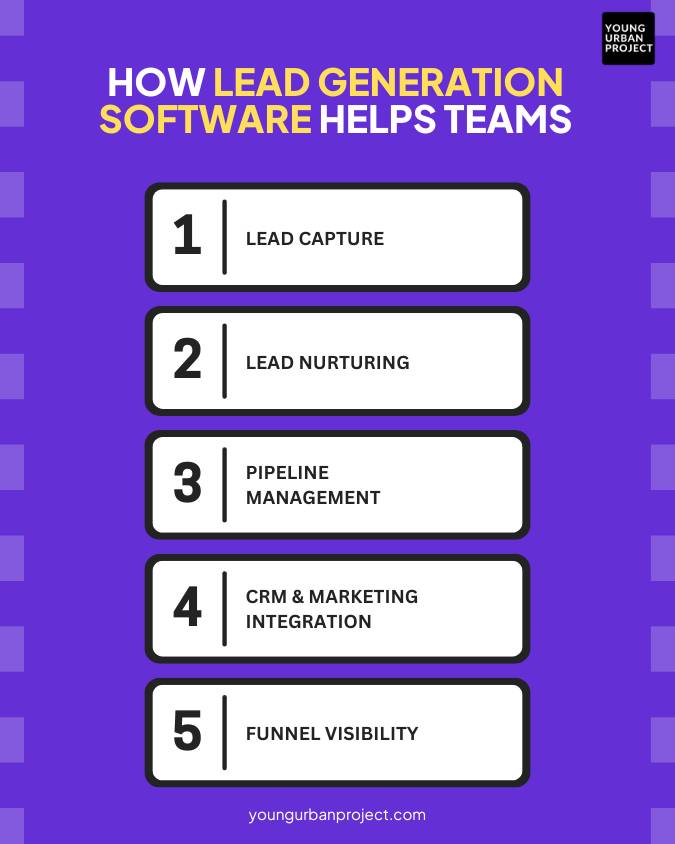
Lead Capture
You can easily collect leads using tools like landing pages, pop-ups, or website forms. Most of these platforms come with built-in features for that—whether it’s Zoho, GetResponse, or even HubSpot. It takes a few clicks and you’re pulling in contacts automatically.
Lead Nurturing
Once a lead comes in, these tools help you stay in touch without manually writing every follow-up. Email campaigns, automation flows, even webinars—these can all be set to run in the background. Tools like Mailchimp, Freshsales, or Success.ai handle this part really well.
Pipeline Management
Visual pipelines (like in Pipedrive or monday sales CRM) let your team see where every lead stands. Instead of guessing who’s ready to buy or who needs a nudge, everything’s right there. It’s great for keeping your sales process clean and organized.
CRM & Marketing Integration
If your tools don’t talk to each other, you’re wasting time. That’s why most lead gen tools now integrate with email platforms, CRMs, or ad managers. So your campaigns, data, and follow-ups are all synced and working together.
Funnel Visibility
The biggest win? You get a clearer view of your sales funnel. These tools show you where leads drop off, which campaigns bring results, and how well your sales team is converting. It’s easier to improve when you can see what’s actually happening.
9. Final Thoughts
There’s no single best tool out there—what works for one team might totally flop for another. If you’re working solo or freelancing, simple tools like Capsule, Webador, or Mailchimp can do the trick. Small businesses usually need something a little more complete—Zoho CRM or Freshsales are great choices. For B2B companies with longer sales cycles and bigger pipelines, you’ll want something like Salesforce, Apollo.io, or Qualified that’s built for scale.
In the end, just make sure the tool matches how your team works and what your goals are. If it doesn’t fit your flow, even the best tool will feel like a bad one.
10. FAQs: Lead Generation Software
1. What’s the difference between a CRM and a lead generation tool?
A CRM helps you manage existing contacts and track deals. Lead gen tools are more about finding new leads and pulling them into your system. Some tools combine both, but usually, CRMs focus more on the “after you get the lead” part.
2. Can small businesses benefit from lead generation software?
Yes—100%. Small teams can automate things they’d normally do manually, like sending follow-up emails or tracking leads. It saves time, keeps you organized, and honestly, helps you look more professional without hiring a whole team.
3. Which is the best lead generation tool for B2B sales?
If you’re selling B2B, tools like Apollo.io or Leadfeeder are really solid. They help you find the right companies and contacts, and keep you focused on accounts that actually matter. Salesforce is also great if you need something more advanced and scalable.
4. Do free lead generation tools actually work?
Surprisingly, yes. Tools like HubSpot CRM or Mailchimp’s free plan offer more than most people expect. You can set up lead forms, track basic engagement, and even automate some follow-ups—without spending anything upfront.
5. What integrations should I look for in a lead gen platform?
Look for the stuff you already use. If your team uses Gmail, Zoom, or Google Ads—make sure your tool connects with those. Also, make sure it connects with your CRM so leads don’t get lost. The smoother the handoff, the better.
6. Is LinkedIn still effective for generating leads in 2026?
Definitely. LinkedIn is still one of the best places to reach decision-makers, especially in B2B. And with tools like Closely or Apollo.io, you can automate outreach in a smart, non-spammy way. It still works—it just takes the right approach.